Week 1:- Introduction to BiW and Fixtures Challenge
- What is BIW & define its parts?
BIW- It is a stage in automotive design in which sheet metal parts of a car body are beign assembled by any joining process.
It represents the main structure of a vehicle, excluding other components such as engine, seats, transmission and steering.
Actually BIW is a key determinant of how the car will perform.
Based on struture there are two main categories of automobiles, Monocoque and Body on frame structure.
Now a days , Monocoque is generally used.
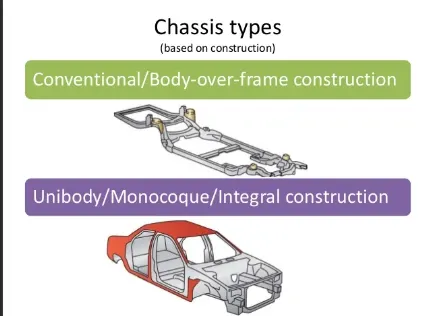
It defines size, design and strength of a vehicle.
The structure is made from steel sheet (Galvanised coated) pressings welded together by robots.
Weight of a BIW structure without closures acounts about 20% of total weight of the vehicle.
Purpose Of BIW-
1. Asthetics- BIW provides appealing appearacne, surface quality to the vehocle.
2, Strength- It supports weight of passengers as various components of the vehicle required for propulsion and control of various systems.
3. Ergonomics and roominess-
4, Aerodynamics -
5. Visibility-
6. Safety-
7. Insulation to NVH
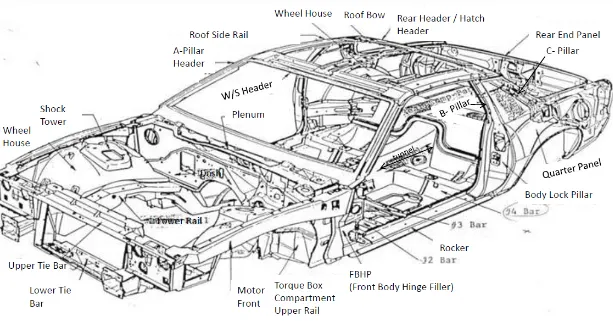
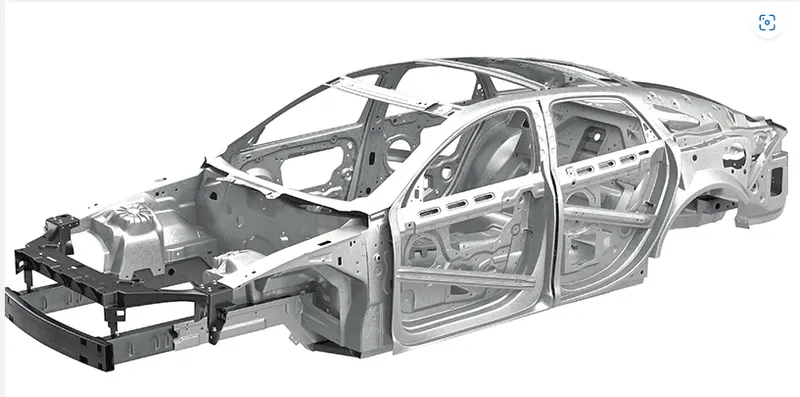
Prts of BIW mainly includes-
- Body Sides- A, B, C Pillars.
- Under Body- Front end Under frame, Rear End Underframe, Main Floor.
- Closures- Front Doors, Rear Doors, Back door. Front hood
- Roof - Inner and Outer Roof.
- Front and rear fender
2. What do you understand by BIW nomenclature?
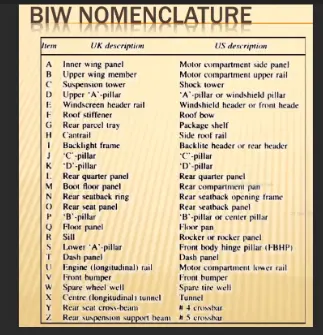
Form the nomenclature, it is understood that, basically globally there are two main termonologies 1. UK and 2, US, for nomenclature. for an automobile.
Beiung two separate termonologies, they alike.
almost for all parts are named as per their position and function. A slight variation is there , but only in naming.
And this is not for all parts, C-Pillar, B Pillar, D- pillar etc are same for both.
- What is fixture & its types?
A fixture is device, which holdes a part which is to be processed.
It supports the workpiece till the process completes.
Locate it by using 3-2-1 principle. It should arrest all gegrees of freedom of the part till the process completes and also it should not interfere the process.
A fixture should provide repeatability, accuracy, and interchangeability in the manufacturing of products.
It shoul be strong enough to sustaing stresses and load at the time of processing.
Weldign are ashould be clear form any parts of fixture.
A fixture should be rigid enough and stav=ble enough. It should not vibrate.
Fixture is part of tooling.
Types of Fixtures-
Production Fixture- It is used for the mass production product.
Fix asse end customer.
It shoul be tested fir - hardness, asthetic purpose.
Final design and Tolerance should be proper.
It sholud be approchable to maintenance.
Pre-productioin Fixture- It is a prototype fixture. Design to check pr-production.
Large prod cycle time.
More involvement of manual operators.
Checking Fixture- Its used for inspecting assembly.
Inbuilt fixtutre gauges are used for the checking purpose.
3. What is the basic principle of fixture design?
3-2-1 Principle-
Every part has 12 degrees of freedom.
6 translation in X, Y and Z direction,
6 Rotatonal DOF arouncd X, Y and Z axes.
All the dof should be restricted for a fixture design.
Principle- A fixture should be designed in such a wa that it should be capable of arresting all 12 degrees of freedom while machining is done.
Even the machininh force should not deflect the part on fixture, in other words, clamping and holding force should be more than the machining forces.
You know that any free body has a total of twelve degrees of freedom as below:
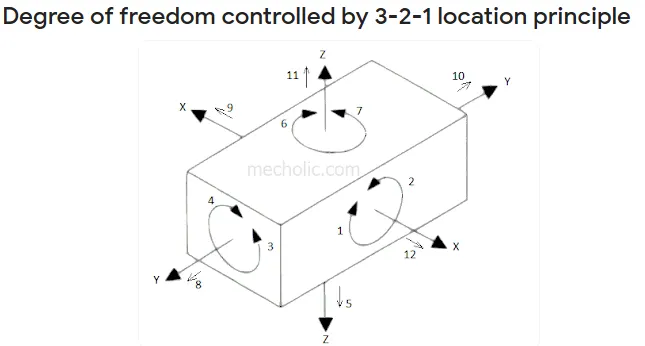
6 translational degrees of freedom**: +X- 12, -X - 9, +Y-- 10 , -Y -- 8 , +Z -- 11 , -Z -- 5
And 6 rotational degrees of freedom:
- Clockwise around X axis (CROT-X)- 1
- Anticlockwise around X axis (ACROT-X)-2
- Clockwise around Y axis (CROT-Y)4
- Anticlockwise around Y axis (ACROT-Y)3
- Clockwise around Z axis (CROT-Z)-6
- Anticlockwise around Z axis (ACROT-Z)- 7
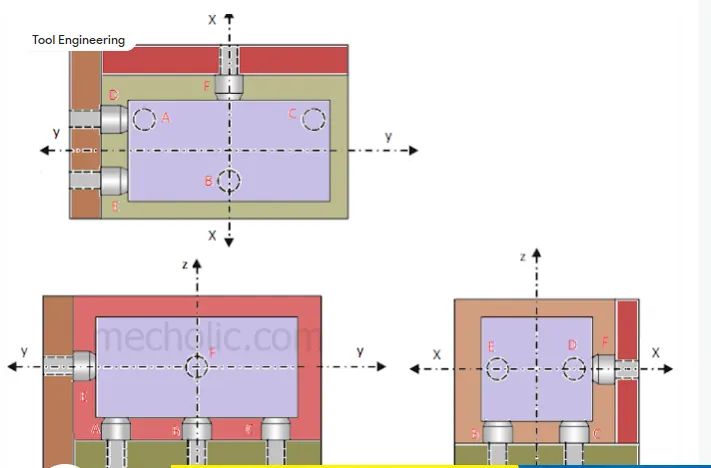
Rule1. First ("primary") reference
As three points are required to define a plane. Hence Pins A, B and C are located on a plane using following rules-
- Select largest surface of the part for the first ("primary") reference.
- Position the three support points as far apart as possible.
- If needed more than three support points to prevent deflection, make the additional points adjustable.
Secondary Plane-
Second Plane- Pin D and E
A second plane, if it is perpendicular to the first, can be defined by two points i.e. D and E.
The part is now constrained to one degree of freedom i.e. movement along the Y axis. (The part cannot move along the X or Z axes because it is held against the planes by clamping force.)
Third Plane -Pin F.
A third plane, if it is perpendicular to both of the first two planes, can be defined by one point, the "1" ie pinF .
The part is now constrained entirely.
It cannot move along or rotate about the X, Y, or Z axes.
Basic rules for location
Basic rules for locating components are
- Use a lesser number of locator. Locators should be spaced as much as apart possible.
- Reduce the degrees of freedom to zero.
- Locator must be foolproof. The component can only be loaded into the fixture in the correct position , It should not be loaded if tried in wrong position.
- Locator should provide swarf trap and clearance if it is essential to clear machining burr.
5. Elaborate types of BIW Stations?
In an assembly line all parts are assembled. Its perfomed at various zones like side body zone, under body zone, hood zone, roof zone etc., which ar eagain divided into various stations e.g. front flooer panel, rear floor panel cross members etc.
At a time various zones and stations are working on different parts of an automobile.
Variouns BIW stations are-
1. Tools- A tool is a fixture which consists of number of units together to hold a car part.
Following are the types of Tools:
i) )Geo Tool:
In this station geometry of the mating two parts is fixed. 3-2-1 Pronciple is used to fix parts.
ii) Re-spot Tool- It is a production tool made so that it can locates and holds the work piece for re-welding.
In Respot already welded panel will be welded.
The weld spots are done in this tool only for providing rigidity or stiffness to the joint.
iii) Marriage Tool- In this Station inner and outer panels are joined eithe rusign welding, hemming, rivetting.
In this station to avoid the imprssion on the skin surface (A class surface), copper strips are used in betweenn the weld tip and A-class surface.
iv) Framer Tool: After marriage tool, framer tool ocme into play. As it is framing a part like e.g. roof placed after joining, it is completing a
frame.
v) Checking Station- It is a fixture where checking of assembly is done. Where dimesions, positions and co-ordinstes of an assembly ischecked.
Checking station can be either Gauge Type, Fixed type or automated
- Gauge Type- Checking station is used to to check a workpiece held with the help of many gauges.
- Fixed type- checking station is one where part is fixed on a machine bed with clamps and clips and with CO-Ordinate Measuring MAchine (CMM) all features checked (compared) with nomonal size.
- Automated Type- There are very costly. Hence not commonly used.
2. Grippers-
Also known as End of Arm Tooling. Basicaly Gripper is a fixture, with lesser parts and lesser weight.
These are fixed on arm or end connector of at manipualting end of robot arm.
Purpose- To hold parts while operations or transfer form one station to another.
There various gripper uses are to hold components and fixed to manipulating end of robot.
It should be light in weight as well as strogn enough to hold th ecomponent load.
Various types of grippers are-
i)Material Handling Gripper: It is designed to handle the car panel from one tool to another tool.
These gripper can pick from one place and drop it to another place.
ii)Process Gripper: These grippers to used to carryout some specific processes in addition with material handling from one station to another station. Either material handling will be done or some specific process will be done using in process griper
iii)Combo Gripper:Combo gripper are designed for handling the car panel from one tool to another tool by processing and material handling at the same time.
iv)Dual Gripper: Two sided grippers ar ere for handling the car panel from two sides, to reduce thr idle time.
3. Stands-
Stands are Permanent structure fixed to floor to avoid any small movement.
Depending on application they are known as Gluiing stand, Docking stand, Date stamping Stand, pedestal gun stand etc.
4. Mescelleaneous- Buffer storage- storage for parts for next operation, Conveyors to transfer parts between station to station.
6. What are the basic terminologies used in the BIW fixture?
Very commonly used parts in BIW FIxture are Mylar, Pin, Blade, L Block, Pin Block, Riser, Weldment, etc.
Mylar Or Fingers Or NC Block :
Mylar is a kind of block that touches the panel and holds or clamps the panel between a set of blocks.
Mylars are always designed in CAR LINE.
height of mylar can be adjusted by using Shimming.
Nylon mylars are used for ‘A’ class surfaces .
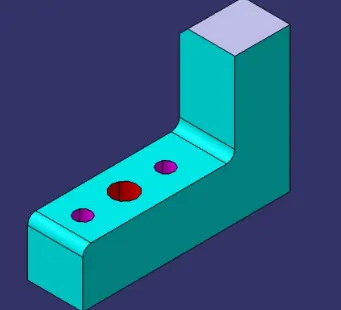
There are two types of Mylers, as clamping Myler and Resting Myler. Every clamping Myler is with resting myler.
To provide a firm support to psnel while welding operation.
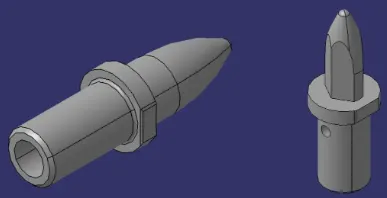
PLP Primalr Locating Pin-
Pins are used to locking panels, to restrict rotational movement of the panel.
There two types of Pins, one is Round Pin and another one is a Diamond pin.
Two and three-directional shimming for pins as per the angle of the pin w.r.t. the carline are used.
Collared pin can be used in some cases, when the pin is supposed to support the panel as well.
For this kind of pin, 3 way shimming is provided irrespective of pin angle to the carline.
Riser-
Risers, risers are prived a height or rise in fixture assembly. They are L tyep or Wekded frame type.
They are mounted on base palte and holds clamps. It can be a standard part or a manufacuted part, or it can be a welded part.
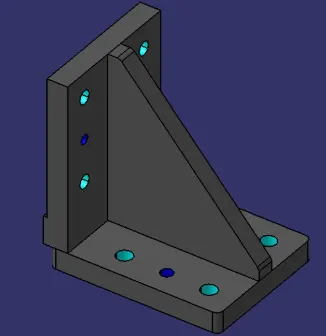
Blade :
Blades is plate which is atached to risers, and on risers Clamping is done.
BLades plays an important role in building the unit.
Blades can be of any shape. But it should be as compact as possible.
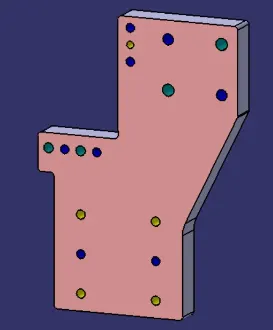
Shims-
In order to adjust stack up tolerance, for better fit, shims are used.
Shim is a set of thin plates (2 mm, 1mm, 0.5 mm, 0.25mm) that are used to adjust the gap for a better fit.
Shimming can be of thickness 5mm, 8mm, or 10mm.
If there is no proper fitting between mylar and Panel due to any manufacturing errors, the gap is filled by using shims.
Shims are placed in the carline position so that gap can be adjusted in the required direction like X, Y, or Z.
There are three types of shimming- one-way, two-way, and three-way.
Number of shimming depends upon the NC cut angle and PIN angle with the car line.
If NC cut is less than 15 deg then mylar will have one-way shimming.
If NC cut is more than 15 deg in one direction then mylar will have a 2-way direction shimming
If NC has more than 15 deg angle in two directions then mylar will have 3-way directional shimming.
Rough Locators- Used in majrly in manual fixture only.
Purpose is to avoid wrong postion of part or panel in an assembly.
It will help operator to roughly decide correct position of the parts.
They acts as a guide.
Hardware- Bolts , fastners ect,
CMM -
Units - A fixture is an assembly of different units as per their functions.
Base unit, Pin unit , clamp unit etc.
Number Unit- Number ing is provided to each unit to identify each in an assembly.
Co-ordinate Plates- These are tooling holes or master holes through which all other hole are checked.
To avoid danage to these holes due to any operation or even enviornmental condition these hoel are covered and on this platem co-ordinates of the plate are provided.
Name Plate- a marking of basic Info of Fixture,
Clamp Arm- an assembly that moves is known as clamp unit.
Pivot- A pin around which clamp arm moves is Pivot.
Class A surface- Skin of the car . This is outer surface or asthetic surface of an automobile.
Units - A fixture is an assembly of different units as per their functions.
Base unit, Pin unit , clamp unit etc.
Number Unit- Number ing is provided to each unit to identify each in an assembly.
Co-ordinate Plates- These are tooling holes or master holes through which all other hole are checked.
To avoid damage to these holes due to any operation or even enviornmental condition these hoel are covered and on this platem co-ordinates of the plate are provided.
Electriacal Parts are used only in automated fixtures or when pneumatic sysytyms are used.
Reed Switches- These are magnetically operated swithces
A reed switch is a switching devic, which oprates electromgnetically.
Two ferromagnetic blades are enclosed in a hermetically sealed glass envelope.
A reed switch is an electromechanical switching device.
The overall structure is simple. Two ferromagnetic blades that are hermetically sealed in a glass envelope.
A magnet interaction ( presence (or absence) of a magnetic field ) produced by a permanent magnet or electromagnetic coil causesopens and closes the reed contacts.
These swithches are representing presesnt position of piston, and the accordingly the indicator is displayed.
Sensors- are avialabel to detect the existance of part in ideal position and also it detects position of the part.
It helps to confirm accurate part at accurate position, hence accurate assempbly is created by using sensors.
overall no of units in an assembly should be same as number of sensors.