Week 1 Challenge
1. Aim and Introduction:
To determine which truss type is efficient among the tow truss shown in the image
Procedure and explanation:
- the Truss A is called as the "PRATT TRUSS"
- the diagonal member will act as a tension member whe vertical(gravity load) is applied on it
- Here the vertical member are in compression and diagonal member are in tension
- so the steel in the diagpnal member can be reduced as it also reduces the cost of the strucutre and self weight of the structure
Result:
The Truss A is determined as the efficeient truss compared to Truss B
2. Aim and introduction:
To draw the Bending moment and deflection shapes for the frame & beam
Procedure:
Bending moment diagram
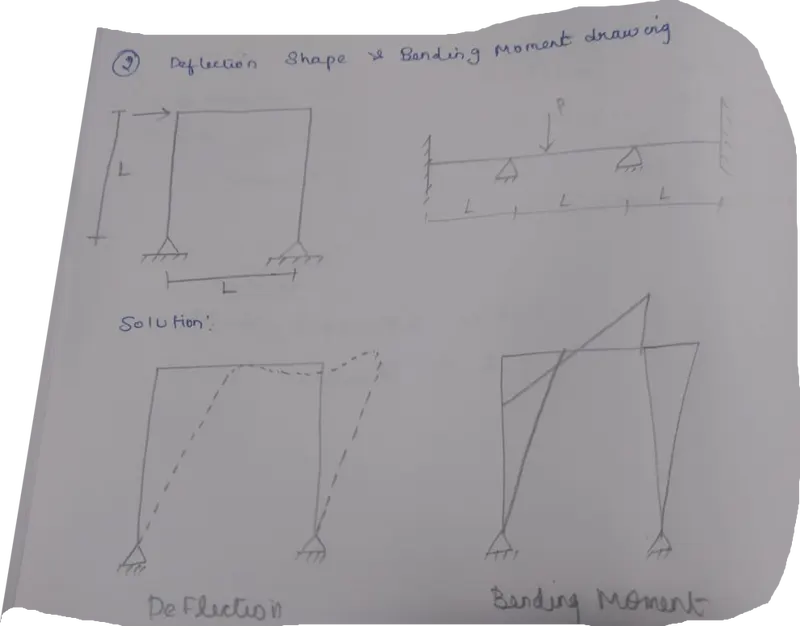
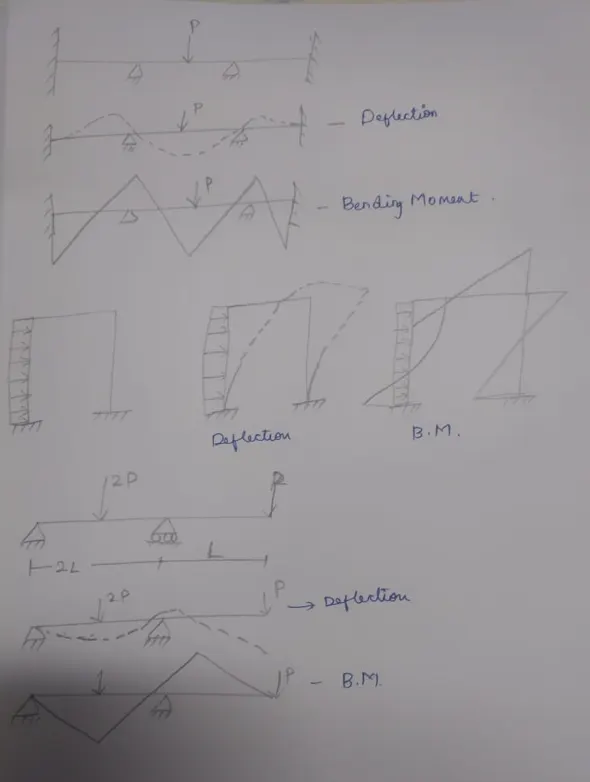
Result:
The Deflection and BM diagrams havebeen drawn for the given frame and beam
3. Aim and Introduction:
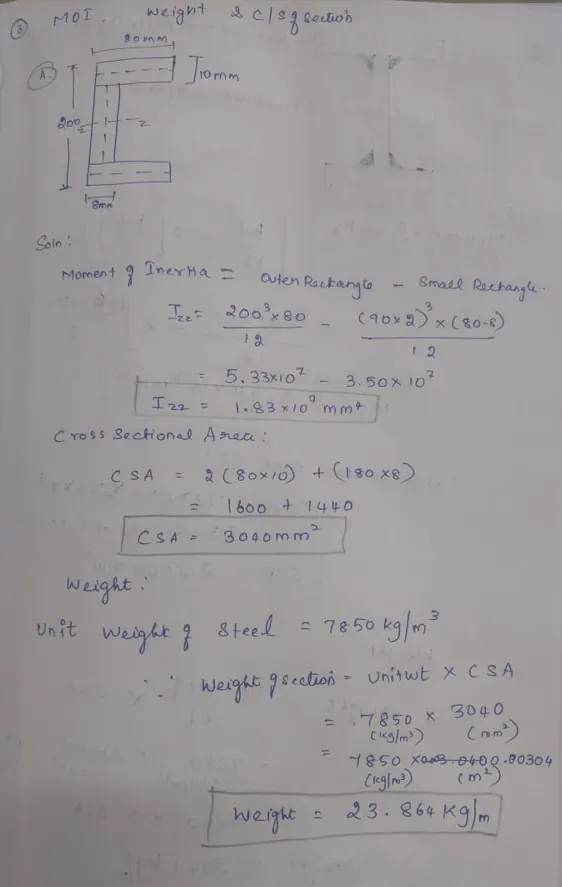
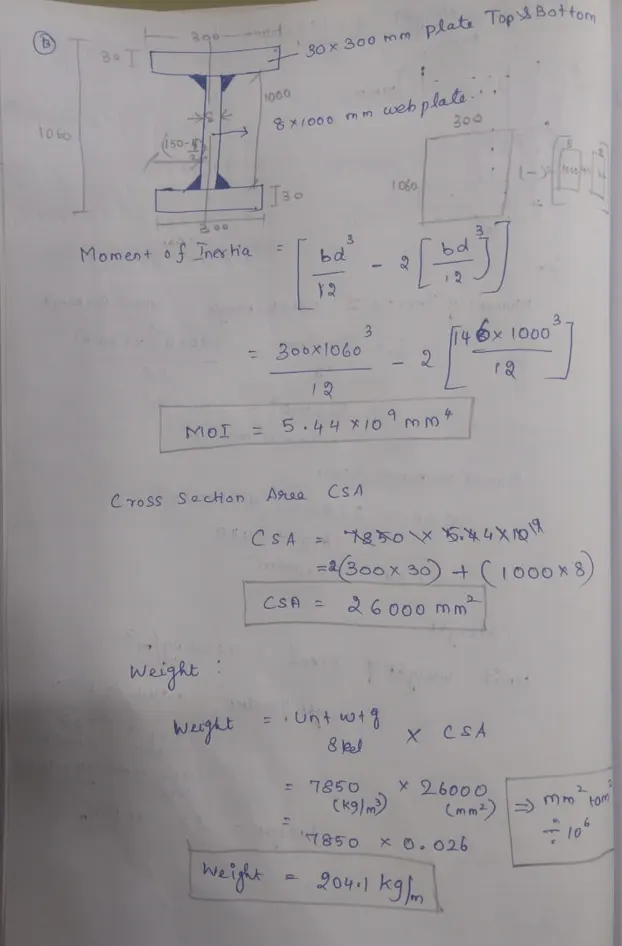
To find he Moment of inertia, weight and Cross section area
Procedure:
A. MOI, CSA, weight for C section
B. MOI, CSA, weight for girder section
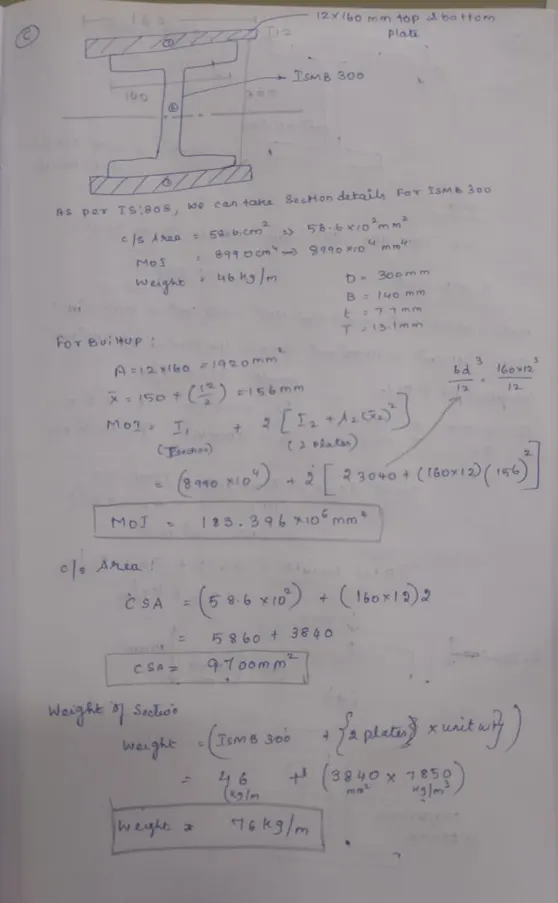
C. MOI, CSA, weight for I with plate at top and bottom section
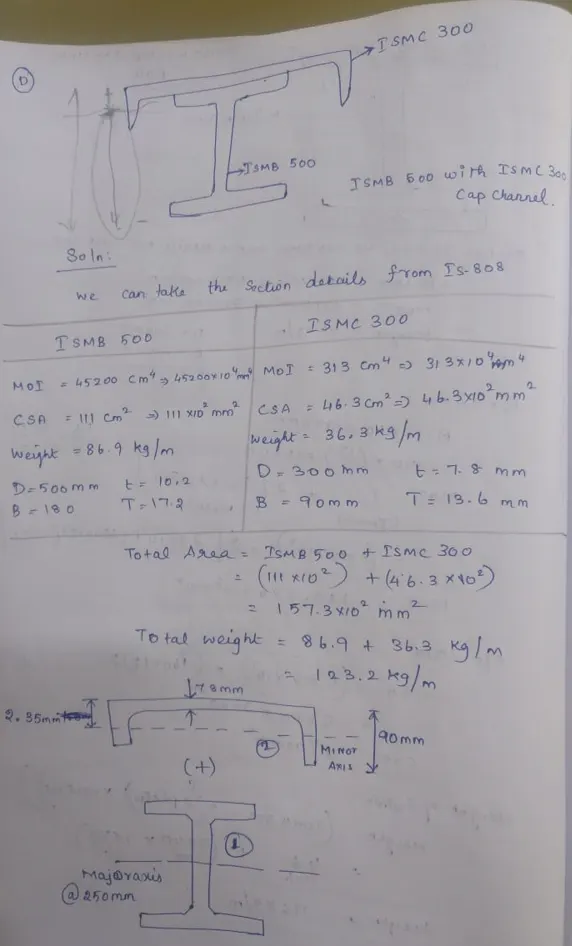
D. MOI, CSA, weight for I-section with C cap at top
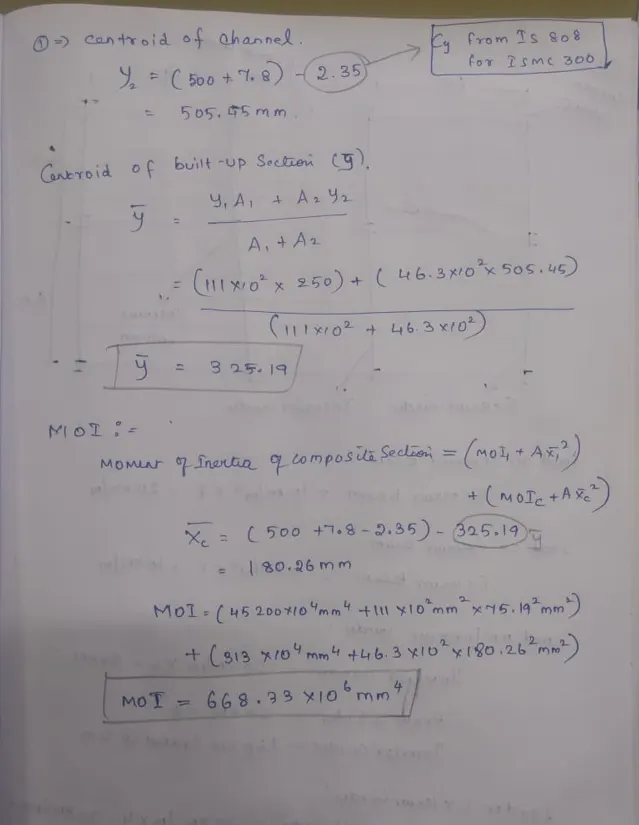
Result :
The Moment of inertia, weight and CSA have been determined for the built up sections given
4. Aim and Introduction:
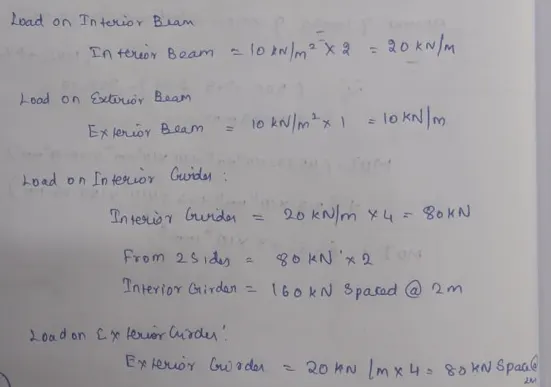
To calculate the load on the interior beam and girder for the floor plan given
Procedure:
Results:
the loads have been successfully calculated onthe beams and girder
5. Aim and introduction:
To calculate the length difference for temperature changes
Procedure :
Change in length (`/_\`L) = L `alpha`T
= 2000 x 12 x `10^-6` x (40-(-20))
= 1.444 m [length difference at 40 degree C]
Result:
The change in length has been calculated