Week 1 Challenge
1.
We can clearly see that the Truss A is a Pratt Truss and Truss B is a Howe Truss.
Pratt Truss : It is one of the common forms of the truss and is made up of vertical and diagonal members that forms an N shape or pattern .The diagonal members are arranged so that they only develop tensile forces.As such ,they can be designed to resist axial tension only ,avoiding the need for a compression buckling analysis .The vertical members in a pratt truss develop compression forces .This means they will typically be more robust and capable of resisting buckling .
Howe Truss : It is opposite to the Pratt Truss in terms of geometry .In fact looking at a pratt truss upside-down will visualise a howe truss of sorts.
Pratt truss have their vertical members in compression and diagonal members in tension upon the applicattion of gravity loads at the joints of the top chord.
For Howe truss the reverse become true as diagonal members are now in compression , while the vertical members are in tension.
Hence Pratt Truss (Truss A) is more efficient in carrying the gravity load.
2.
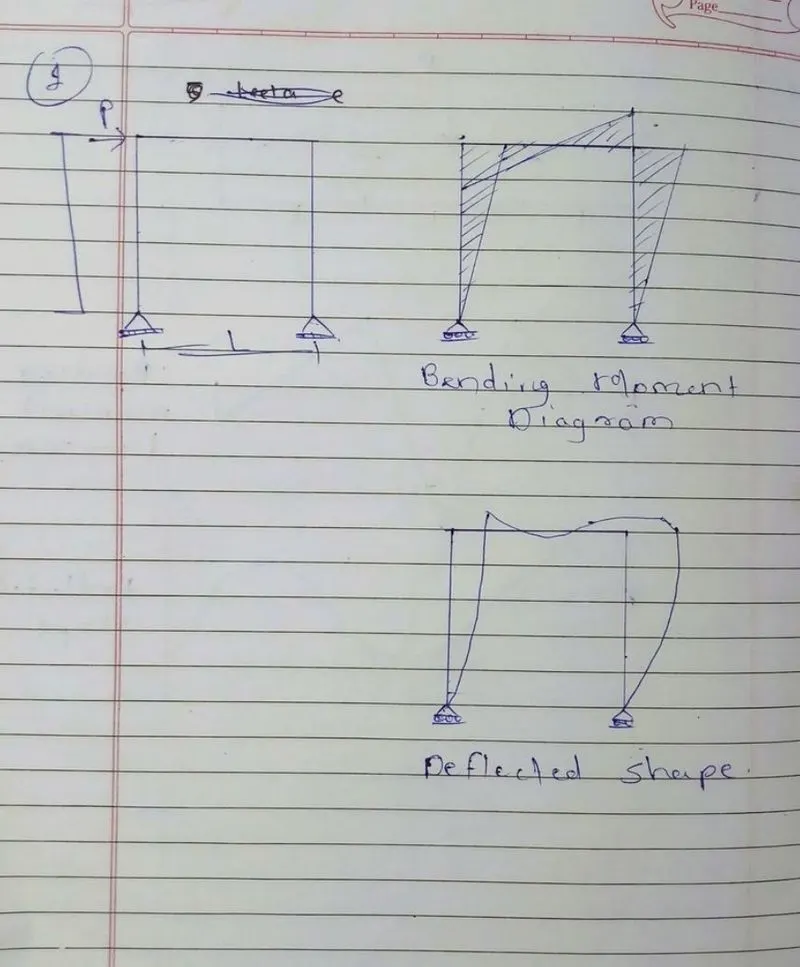
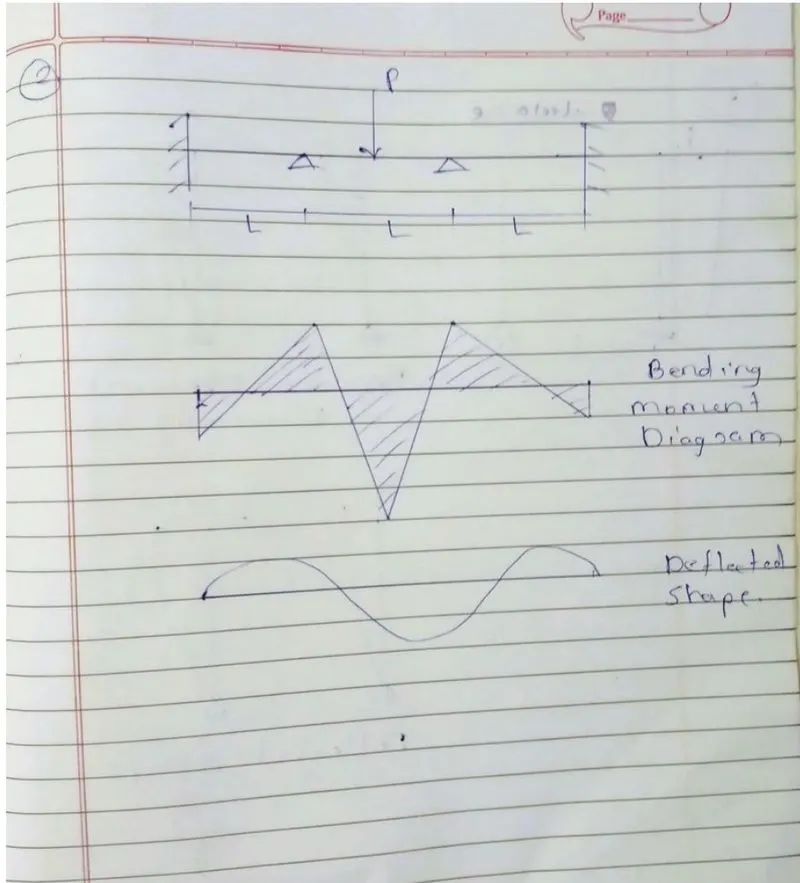
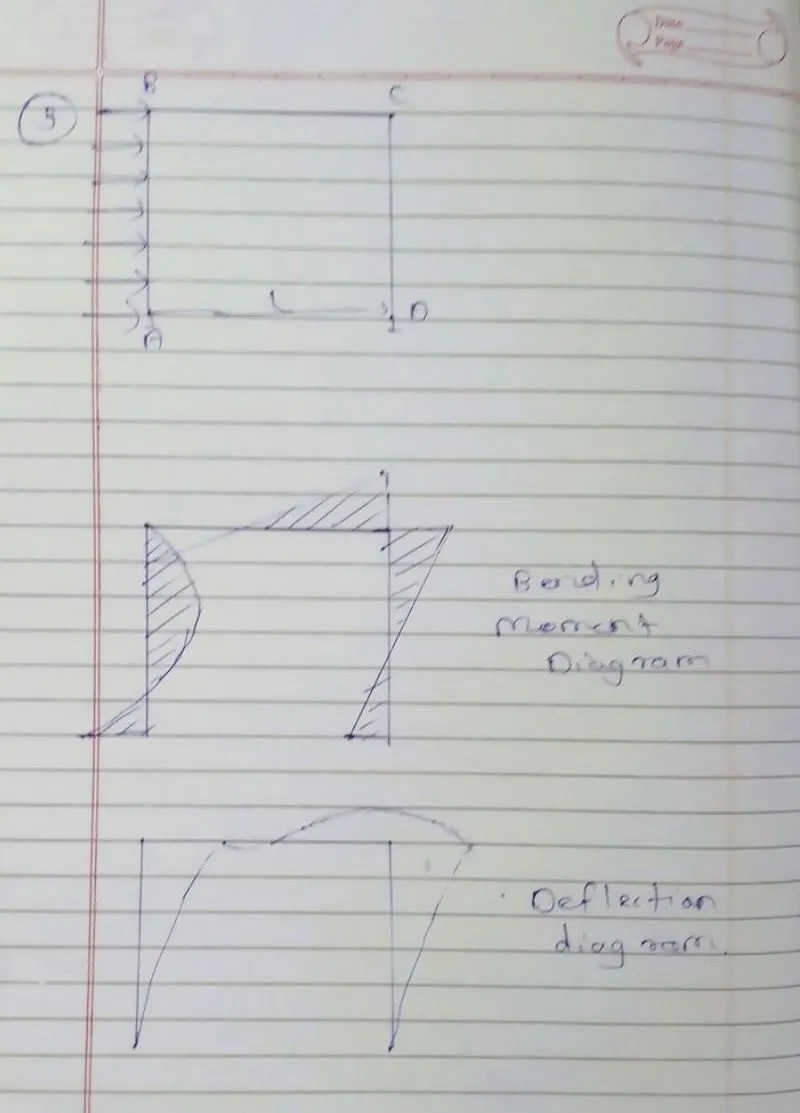
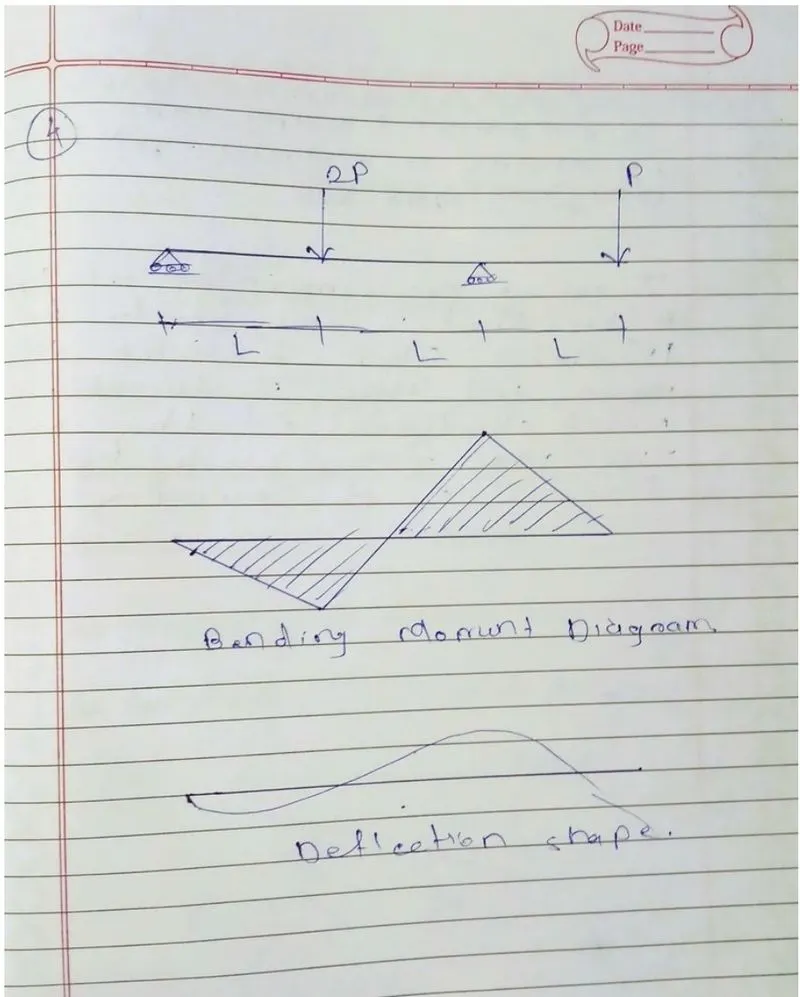
3.
4.
Floor Load = 10 kN/m2
Tributary width of exterior girder = 0.5*(0+8)= 4m
Tributary width of interior girder = 0.5*(8+8) = 8m
Tributary width of exterior beam = 0.5*(0+2) = 1m
Tributary width of interior beam = 0.5*(2+2) = 2m
Load on Beam = Tributary width*Floor Load
Load on exterior girder = 4*10 = 40 kN/m
Load on interior girder = 8*10 = 80 kN/m
Load on exterior beam = 1*10 = 10 kN/m
Load on interior beam = 2*10 = 20 kN/m
5.
Change in length = coefficient of thermal expansion x original length x change in temperature
= (12x10^(-6))x(2000)x(40-(-20)) = 1.4m