Underbody Coating
INTRODUCTION:
Underbody coating is usually a dense cladding applied uniformly to the undercarriage of the automobile. It is normally sprayed or painted on when the car is just out of the dealership and is clean. But even if you are getting the underbody coating applied after a couple of years, it’s fine too. This is because it can prevent further damage to the undercarriage.
The main purpose of underbody coating is to check rust especially in the body components like frame rails along with other exposed metal parts. Underbody coating can also reduce wear and tear.
SIGNIFICANCE:
- underbody coating helps to provide an additional layer of insulation and protection to the undercarriage of your vehicle.
- The underbody coating covers most of the car’s underside, including floor boards, frame, gas tank, pans, wheel wells and mufflers, suspension parts and exhaust pipes. This effect can be likened to black coating parking lot or a road.
- underbody coating materials adhere to metal, even if it is painted. Most of them come in pressurized cans for easy spray-on application, while an even spread may be tough to achieve without professional applicators.
- Ingredients used in the manufacturing of underbody coating include fiberglass, ceramics, rubber, asphalt and silicone. Each has different properties in terms of heat resistance and retention, but all gives protection against the elements and damage.
- Auto underbody coating protects the undercarriage, a vehicle’s most vulnerable area. Unlike the visible portions of your vehicle, the undercarriage doesn’t get washed frequently but it absorbs most of the moisture, grime, salt and other substances when you come in contact with those, as you drive.
- In addition to protecting your vehicle from elemental damage, good underbody coating can also reduce engine noise, leaving you quieter than ever before.
- Even though if you buy a new car with underbody coating from the dealer, remember that underbody coating wears off typically within a short period of 1 year. Worn, patchy car underbody coating can get damaged when water and other elements then get trapped under the coat, further eroding metal.
TYPES OF underbody coating:
Rubberized underbody coating
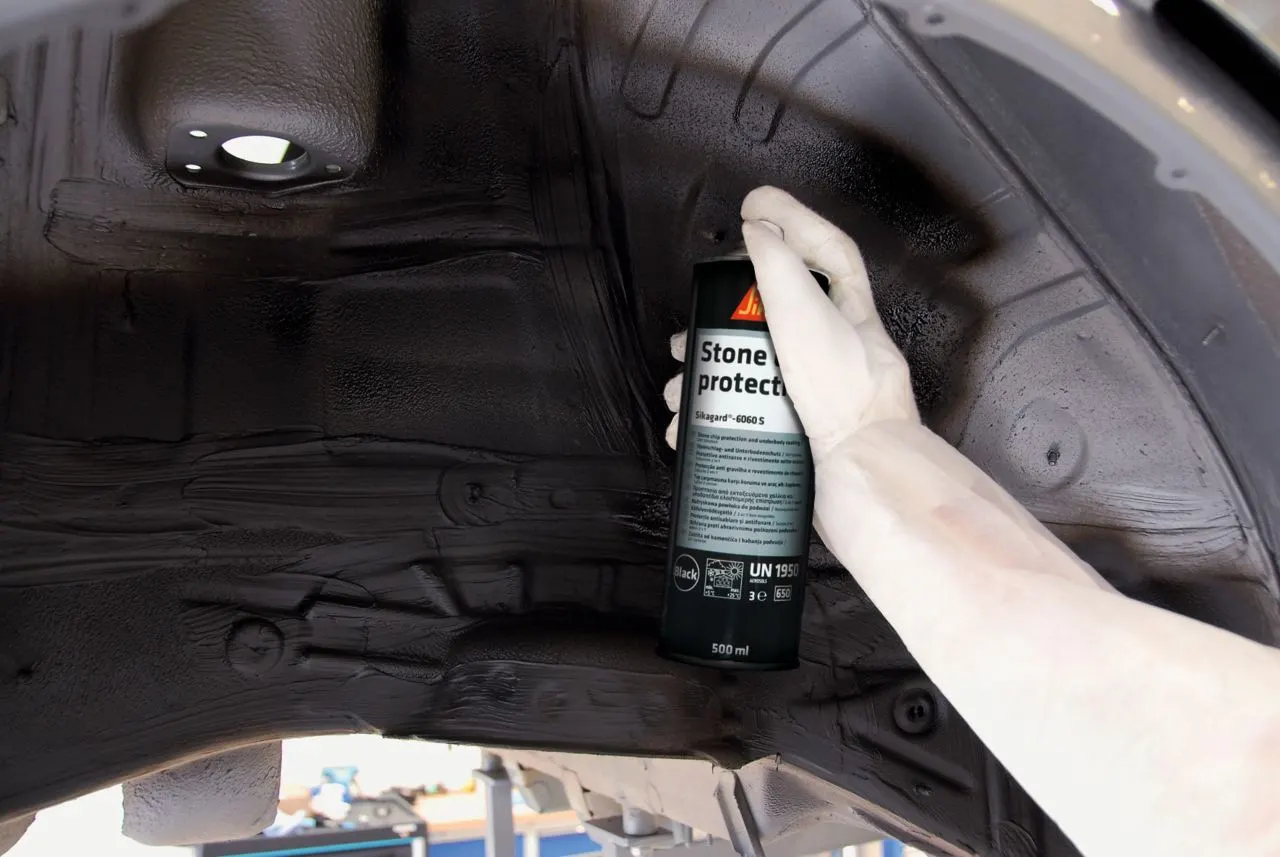
- Rubberized underbody coating is easy to apply and offers sound-cushioning as well as protection from dust, moisture, and dings or dents.
- In addition to your undercarriage, rubberized underbody coating is also safe to use on wheel wells and quarter panels, and dries to a soft rubbery finish that prevents further rust, damage, or moisture seeps.
- The coating can be painted over and, if necessary for bodywork, can be easily removed with an underbody coating removal spray.
- Overall, rubberized underbody coating is generally the best option for protecting your vehicle's undercarriage, as it provides the simplest and best protective measures against rust and moisture.
Parrafin or wax underbody coating
- parrafin or wax-based underbody coating is made from oil and they have greater deflective abilities for road salts and grime.
- The parrafin or wax base helps repel ice and water better than water-based underbody coating.
- This type of underbody coating also needs to be replaced once in a year.
Polyurethane underbody coating
- Polyurethane coating is easy to apply and works by sealing up cracks and seams.
- The compound displaces salt and moisture and protects the unoxidized metal from rust.
- It’s often sold in canisters that are ready to preload into an application gun.
- It, however, requires some surface prep work before application, like degreasing, and applying an etching primer to the bare metal.
Asphalt based underbody coating
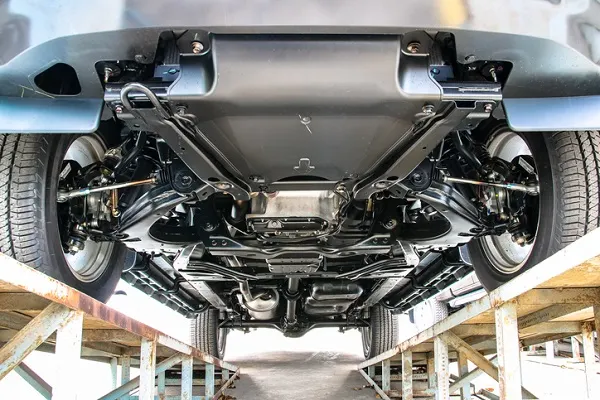
- Asphalt-based underbody coating is the strongest underbody coating available and it is used in military vehicles and on all-terrain.
- Asphalt-based underbody coating will last long and is the best option for vehicles which endure heavy road use.
- Asphalt-based underbody coating is the thickest coating which has the most damage-resistant properties.
ADVANTAGES:
- Fights rust
It plays an important role in keeping corrosion at bay. Underbody coating can come in handy especially if you live near the sea, where there is too much humidity, and rusting is just one of those everyday things. You should also seriously consider underbody coating if you reside in a place where it snows in winter.
- Absorbs noise
Believe it or not, very thick underbody coating can soften the noises that reach the cabin. Since the underbody coating is often made up of rubber it absorbs some of the rackets. The occupants of the car could spare themselves of the road noises – at least up to a certain extend.
- Reinforcements
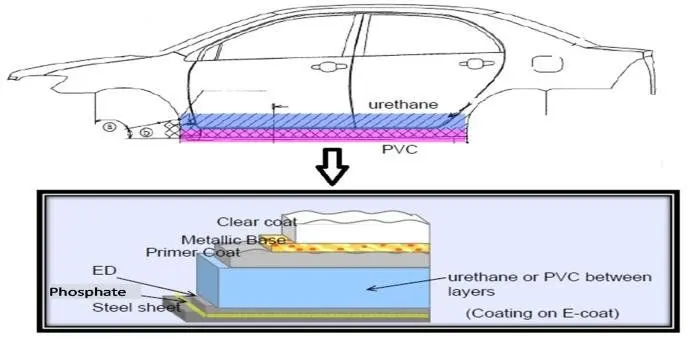
If your car comes with stock underbody coating, using another coating on top of it, is not going to hurt. It will offer additional reinforcement, protecting the underbody from water, road debris, gravel and small pebbles. There would also be a lesser chance for the factory coat to flake away.
- Prolonged life

Good underbody coating not only defends the underbody from corrosion but also protects the engine and transmission as well! Less rusting coupled with slower wear and tear can surely add years to the lifespan of your vehicle. There would be fewer dents, dings and scratches on the undercarriage for you to fret about.
DISADVANTAGES:
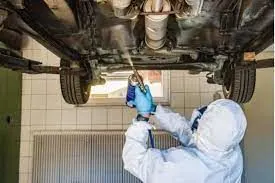
- Like many chemical-rich products, the average undercoating is a gateway to organ failure, cancer, infertility, and genetic defects. After doing some of the case studies showing that 25% of the mixture consists of ingredients of unknown acute toxicity.So safety equipments like wear a ventilation mask, protective eyewear, gloves, and a painter’s suit when working with undercoating is must.
- Lanolin a waxy substance which is derived from a naturally occurring gland secretion found in fluffy animals like sheep is used as waterproof coat that keeps them dry and warm in winter. This repulsive aroma is even more notable when lanolin is exposed to warmer temperatures too. So it smells really bad at high temperature.
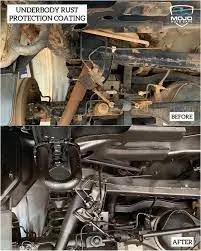
- Though the coating lasts for only a year. Since the coating can be applied easily to a new car but when the car which are exposed to the roads, sunlight and waters the quality of coating gets lost.
- Also the rust should be removed before the coating which is a expensive one and so the coating losts for few years only so the process of underbody coating is extravagant