Underbody Coating
Underbody Coating
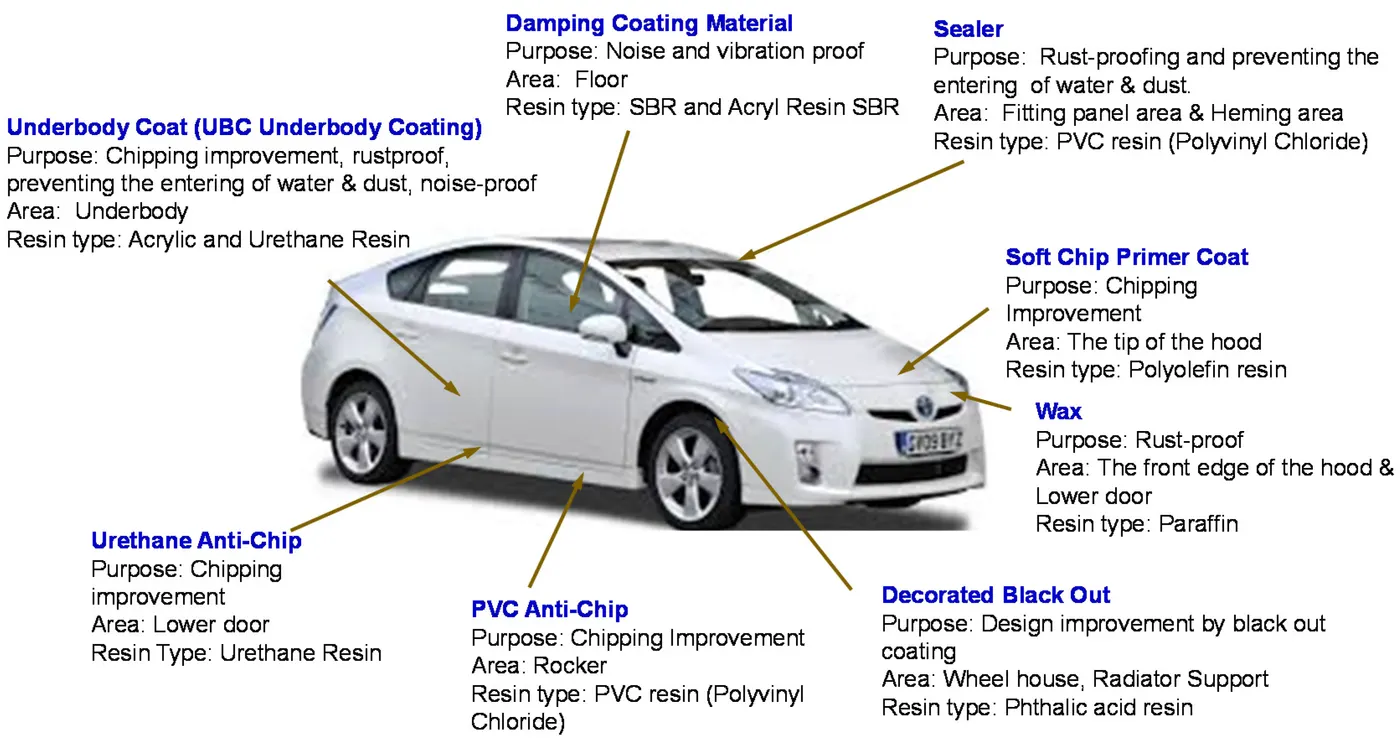
Underbody coating is usually a dense cladding (often based on rubber) applied uniformly to the undercarriage of the automobile.
In Indian road conditions, a cars underbody is most prone to corrosion. Underbody coating provides long term protection from corrosion to car’s underbody. It also protects parts like internal body panels, frame rails and other inner cavities that are not physically accessible but are prone to corrosion. Underbody coating (if living in coastal region or not) is a must to make sure the underbody is given a layer of protection from all grime and grit and annual clean up and touch up is necessary
Rust or other corrosive debris is another issue that often pops up in industrial applications. Often the materials that are hard enough to actually build machinery from are also very likely to corrode over time
The main purpose of undercoating is to check rust especially in the body components like frame rails along with other exposed metal parts. Underbody coating can also reduce wear and tear. nderbody coating provides long term protection from corrosion to car's underbody. It also protects parts like internal body panels, frame rails and other inner cavities that are not physically accessible but are prone to corrosion. oatings help protect against the damage caused by wear-prone applications. They have been designed to be wear resistant, reduce friction, protect against caustic/acidic materials and cleaning agents, and increase line efficiencies.
the primary functions of coatings are to protect and decorate substrates. More recently, growth has occurred in the research and development, as well as commercialisation, of coatings which have novel functions in addition to having traditional protection and decoration properties
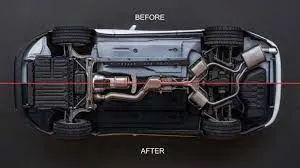
Underbody car coating types
- Rubberized Underbody Coating.
- Wax Based Underbody Coating.
- Asphalt Based Automotive Undercoating.
- Polyurethane Underbody Coating.
Rubberized Underbody Coating.
Rubberized undercoating creates a protective barrier that seals out grit, grime and moisture that could otherwise corrode the metal components. This extra protection is a low-cost measure that can pay off by potentially extending the service life of a vehicle. Rubberized undercoatings do a great job of keeping existing rust all covered up and looking sharp, but it does absolutely nothing to slow down the spread of rust and corrosion sometimes the trapped air and moisture may even contribute to rust formation as was the case with GodwinAustin. This is generally thought of as the best underbody coating for your car. It preserves the underbody well, protecting it from scratches. Applying this to the undercarriage is not much of a hassle either n Indian road conditions, a cars underbody is most prone to corrosion. Underbody coating provides long term protection from corrosion to car's underbody. It also protects parts like internal body panels, frame rails and other inner cavities that are not physically accessible but are prone to corrosion
Wax Underbody Coating
Wax underbody coating Spray is a solvent containing, bitumen free anticorrosive agent based on wax, polymers and anticorrosive additives. The product can be precision and exhibits excellent sag resistance. It is fast drying, and even in a thin layer thickness it forms a closed water protecting film. Surfaces to be treated with Wax Underbody Coating Spray have to be cleaned well and rust must be
removed. The areas must be dry and grease, dirt and dust free. In the case of new vehicles,
protective wax must be steam-cleaned. If applied to older vehicles, watch out for beginning of rust formation, which has to be removed with a wire brush.
Wax Underbody Coating Spray should have room temperature at time of application.
Asphalt Based Automotive Undercoating.
Asphalt Based Undercoating does provide some benefits over Waxed Based Undercoating. They both stick well to most any surfaces and do a great job sealing out moisture, road chemicals and oxygen. But mainly, Asphalt undercoating has the benefit of being less expensive. They protect anywhere up to 5 years and dry to a Firm to Hard coating.
Asphalt Based Undercoating does require a thicker film thickness meaning you will have to apply more product to the surface to be protected then if you use a Wax Based Undercoating. Additionally, Asphalt based products require more surface preparation because they can actually seal in rust and moisture allowing it to continue to grow. Finally, Asphalt based products continue to dry out over time causing cracks in the coating surface.
Polyurethane Underbody Coating
Polyurethane Undercoat is a two-pack modified polyurethane based. on the chemical reaction of polyfunctional acrylic and isocyanate. based material. TYPE. : Two-component polyfunctional acrylic and isocyanate Polyurethane Underbody Coating This coating closes up splits and fractures on the underbody of the vehicle. It offers up good protection against corrosion and also bonds with the metal. Unlike in the case of asphalt-based coating, you can paint over the polyurethane coating n Indian road conditions, a cars underbody is most prone to corrosion. Underbody coating provides long term protection from corrosion to car's underbody. It also protects parts like internal body panels, frame rails and other inner cavities that are not physically accessible but are prone to corrosion.
Benefits of underbody coatings
• Minimizes Sound: It minimizes the sound from underneath the car resulting a noiseless, smooth driving experience.
• Heat Insulation: It insulates the interior of the car from extreme temperatures from beneath the vehicle providing a comfortable cabin experience.
• Anti-chipping property: If any stone hits the coating it does not get chipped away hence protects the underbody from exposure to water.
The Pros of Undercoating
The obvious pros of undercoating are the protection it provides to the carriage of your vehicle. If you live in an area where salt and sand are used on the roadways in cold weather, these materials can be corrosive to your vehicle. Undercoating gives you an extra layer of protection against rust and corrosion, protecting your car. Undercoating will eventually wear out, but you can get years of protection from it. Even vehicles in warmer climates gain protection as debris is repelled and kept away from eating at the vehicle.
Cons of Undercoating
When examining the vehicle undercoating pros and cons, you do want to look at potential downsides to getting undercoating. Undercoating will work best on new vehicles that have not been exposed to road conditions. A used vehicle may already have residue on the bottom of the car or even have spots of rust and corrosion. Undercoating will not help you if corrosion already exists and the corrosion needs to be removed first before it can be applied, which can be expensive for you.