Underbody Coating
UNDER-BODY COATING
Automotive Underbody Coatings
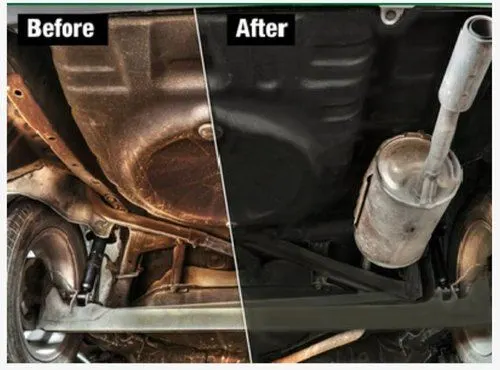
Underbody coating is a special coating given to the underbody of an automobile. The primary reason the coating is applied is to prevent and reduce corrosion/rusting of the surface, which occurs due to oxidation of the metal. It is also necessary to apply this coating to reduce damage caused by the flying debris from the tyres onto the surface. This coating can be specified by the customer to be applied onto the surface during the manufacturing process or can be applied separately after the vehicle is recieved.
Most of these coatings provide chemical and corrosion resistance, along with several other properties based on different product formulations. Protection of underbody and wheel arches against chip damage is achieved by applying automotive underbody coatings, which protect the metal from debris of gravel, stones, salts, etc. tossed by the road.
Automotive underbody coatings also offer protection against humidity, moisture, and wet conditions that can seep through the undercarriage of a vehicle through joints or cracks in the paintwork; and cause corrosion.
|
PVC (PVAc) Resin |
20-40% |
|
Plasticiser |
30-50% |
|
Adhesion promoter |
0.5 - 1.5% |
|
Natural coated fillers |
20-30% |
|
Additives and Pigments |
1-3% |
|
Swelling Agent |
1-3% |
|
Phenolic resin (resorcin) |
0.2-1.2% |
|
Solvents |
1-3% |
- And thickness of the coating varies for different vehicle. For example Ford figo have:
|
Sl no. |
Part name/area |
Coating thickness (µm) |
|
A |
Front floor |
665 |
|
B |
Side extension member FR |
127 |
|
C |
Extension member rear floor |
184 |
|
D |
Front sill |
321 |
TYPES OF UNDERBODY COATING:
Different types of underbody coating are
- Rubberized Underbody Coating
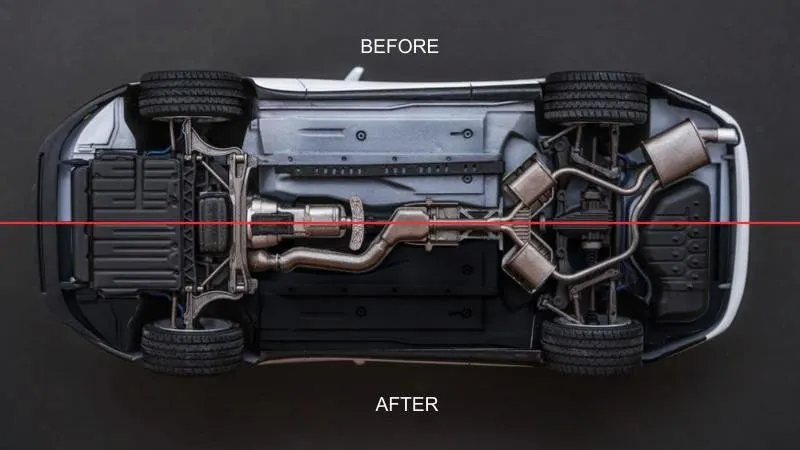
Rubberized vehicle undercoating is easy to apply and offers sound-cushioning as well as protection from dust, moisture, and dings or dents.In addition to your undercarriage, rubberized undercoating is also safe to use on wheel wells and quarter panels, and dries to a soft rubbery finish that prevents further rust, damage, or moisture seeps. The coating can be painted over and, if necessary for bodywork, can be easily removed with an undercoating removal spray.This is generally thought of as the best underbody coating for your car. It preserves the underbody well, protecting it from scratches. Applying this to the undercarriage is not much of a hassle either.
- Wax Based Underbody Coating
This – more or less – ephemeral undercoating will wear away in a few months’ time. On the upside, wax-based undercoating puts up a big fight against moisture. It is also the most affordable option out there.A paraffin-based undercoating will be the cheapest and quickest option available with which to protect the undercarriage of your vehicle. However, keep in mind that it will wear off quicker than other types of undercoating and will need to be stripped and reapplied at least once every year.Wax-based undercoatings never truly harden. During application, they drip or flow into seams and cracks to provide protective properties. They are usually available in a spray gun canister or in an aerosol can and offer at least a base protection in moderately humid climates.
- Asphalt Based Automotive Undercoating
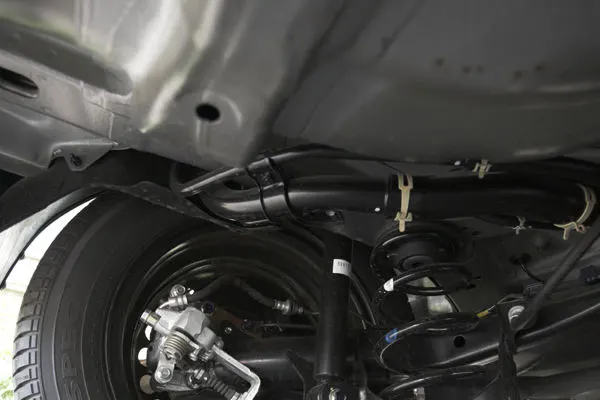
Best suited for lorries, trucks and large vehicles this provides a greater degree of protection compared to rubber-based coatings. However, asphalt-based coatings contain little amounts of rubber for sound-insulation purposes. The process of applying this coating is a bit time-consuming though.For standard vehicles, any of the aforementioned types of undercoating will provide sufficient protection. For large trucks and heavy machinery, asphalt-based undercoating provides a bit of extra durability against rocks, chips, and moisture.Asphalt-based undercoating generally contains a little bit of rubberized material that sets up firmly and also helps soften noise. Generally sold in five gallon containers, this type of undercoating also needs more cure time than the other three, and is NOT paintable, making it best to use only for undercarriages.
- Polyurethane Underbody Coating
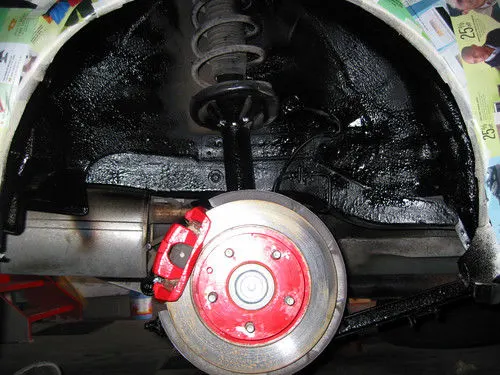
This coating closes up splits and fractures on the underbody of the vehicle. It offers up good protection against corrosion and also bonds with the metal. Unlike in the case of asphalt-based coating, you can paint over the polyurethane coating.Oftentimes, polyurethane undercoating will come in canisters ready to preload into an application gun. This type of sealant works by seeping into all cracks and seams, displacing salt and moisture and oozing around rusty areas to bond with and protect unoxidized metal. It also sands quickly in case you'll need to perform bodywork and can be painted over.On the flipside, this type of car undercoating generally requires a little bit more surface prep work before applying -- sanding and applying an etching primer to bare metals before using are generally recommended.
Advantages of Underboady coating
- Fights Rust
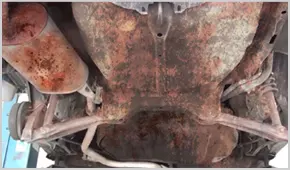
Underbody coating ideally should be applied when the car comes out new from the factory, when there are no dust particles present. This will result in a good adhesive coating to prevent rusting of the underbody surface and also extending the life of the parts. It becomes extremely important to apply this coating when the vehicle is to be driven close to coastal areas.
- Absorbs Noise
Applying thick layers of covering can reduce the sound within the cabin upto a certain degree. Rubberized paint can reduce the noise from the tyres, the road and the debris.
- Reinforcement
If your car comes with stock underbody coating, using another coating on top of it, is not going to hurt. It will offer additional reinforcement, protecting the underbody from water, road debris, gravel and small pebbles. There would also be a lesser chance for the factory coat to flake away.
- Prolong Car’s Life
By giving a uniform coating, the underbody is well protected from moisture, which means that for cleaning the underbody water can be used. A good coating can ensure that water does not enter the components and start rusting prematurely. The coating also prevents retention of water within the parts, which can lead to creation of slush.
Disadvantages of an undercoating
- High cost
The cost of underbody coating has reduced over the years, but it is still expensive. The option of applying a coat at the dealership can get quite expensive, since dealerships will look forward to making profits and hence increasing the price for an underbody coating.
2. Damage during application
In case of thick rubberized paints, if the coating is not applied properly, then there is a possibility of the paint getting into moving parts and create mechanical failures. It can affect the differential, propeller shafts, joints and even the suspension. If not done carefully, there is also the possibilty of the coat damaging the paint job at the lower edges of the car.
Added weight
Although insignificant, there is a possibility that the extra weight can affect the fuel economy of the vehicle.