Steady Vs Unsteady flow over a cylinder
Karman vortex street: In fluid dynamics, a particular Karman Vortex Street is a representation of a pattern of swirling vortices, caused by a process known as vortex shedding. And this swirling is responsible for the unsteady separation of the flow of fluid behind the cylinder(In our challenge).
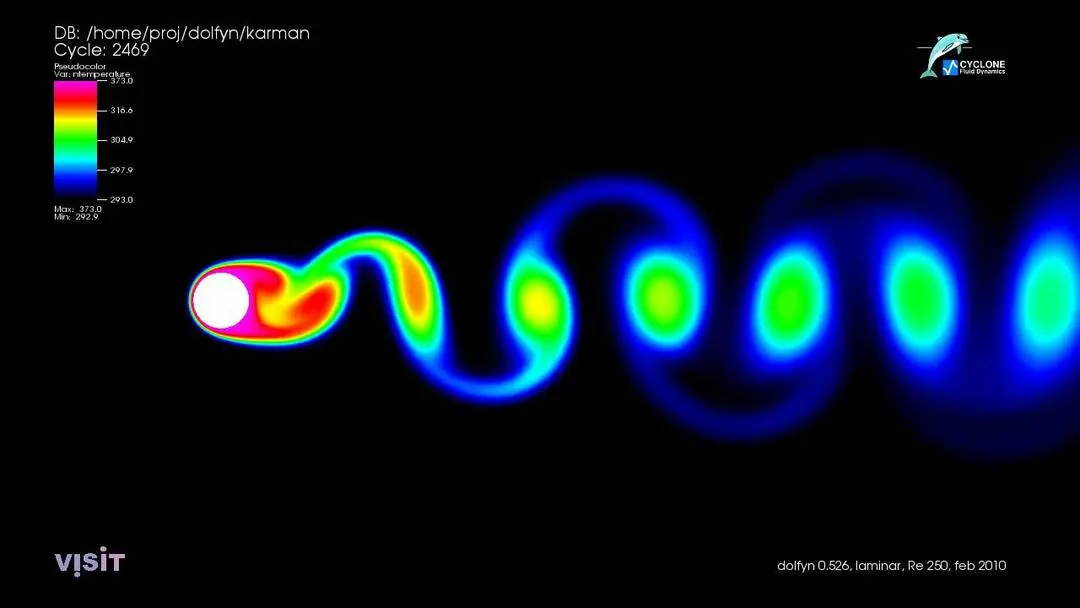
Simulation of Flow over a cylinder
- This challenge comprises of two parts. In the first part, we compute flow over a cylinder using steady and unsteady methods and the prescribed Reynolds number will be 100.
- After executing the flow using the above parameters we will find out the Strouhal Number.
- The following pictures depict the methodology and processes of analyzing the flow.
Setting Up The Geometry
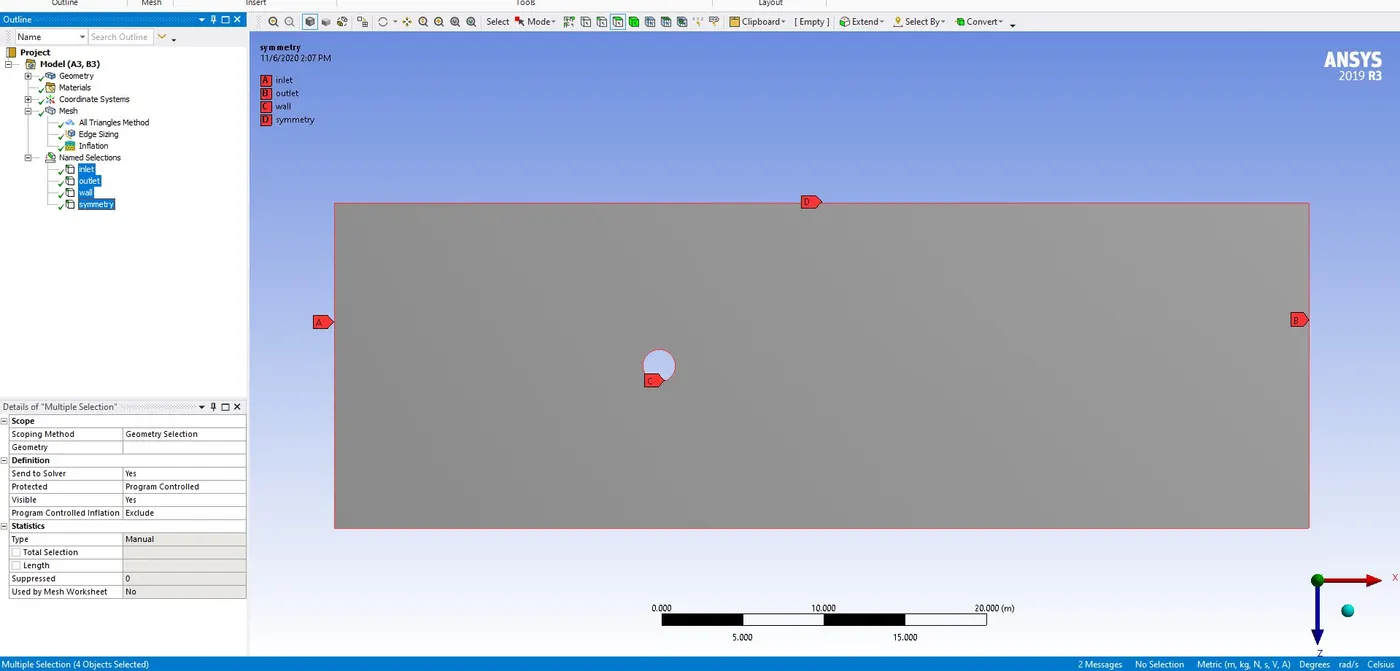
- In this case, the geometry is in 2D and we use SpaceClaim for drawing the diagram.
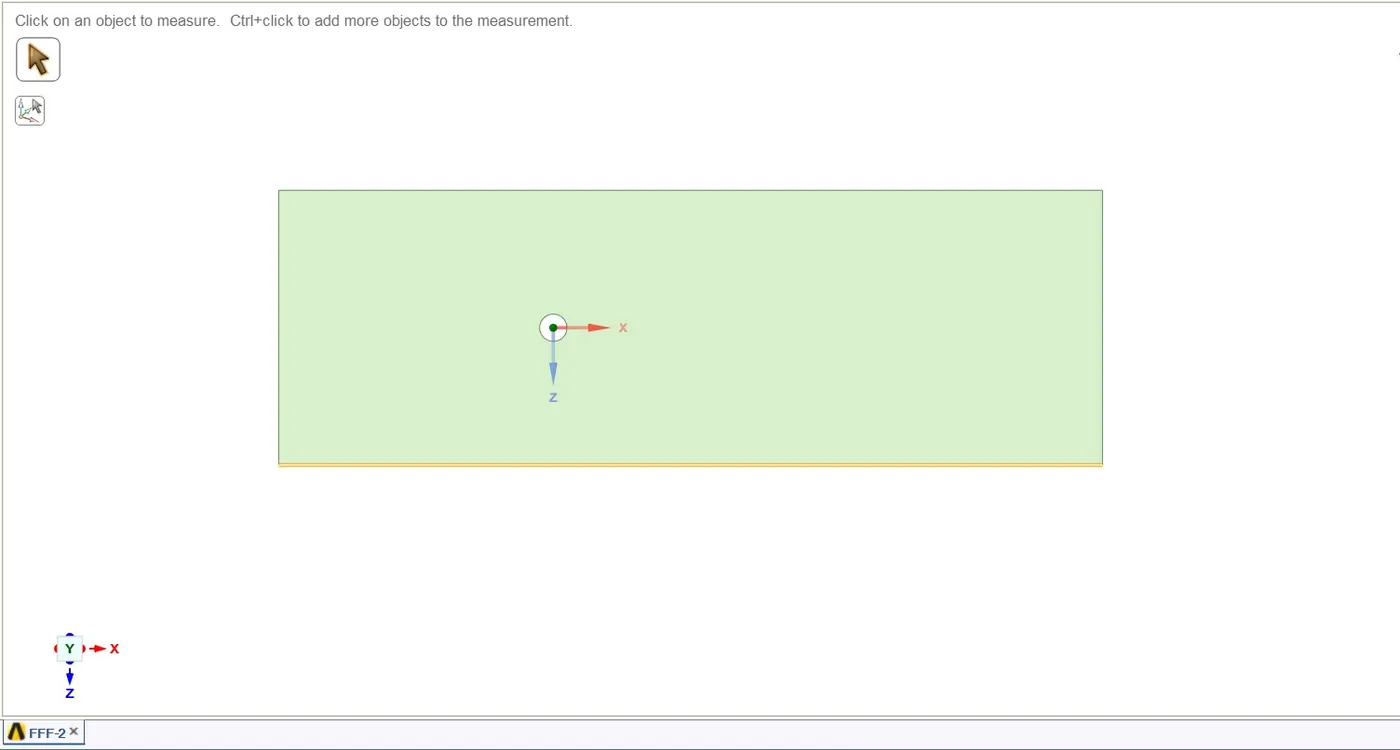
- The dimensions of the geometry are 60 x 20 meters and the diameter of the circle is 2 meters.
- Next, we move to meshing process.
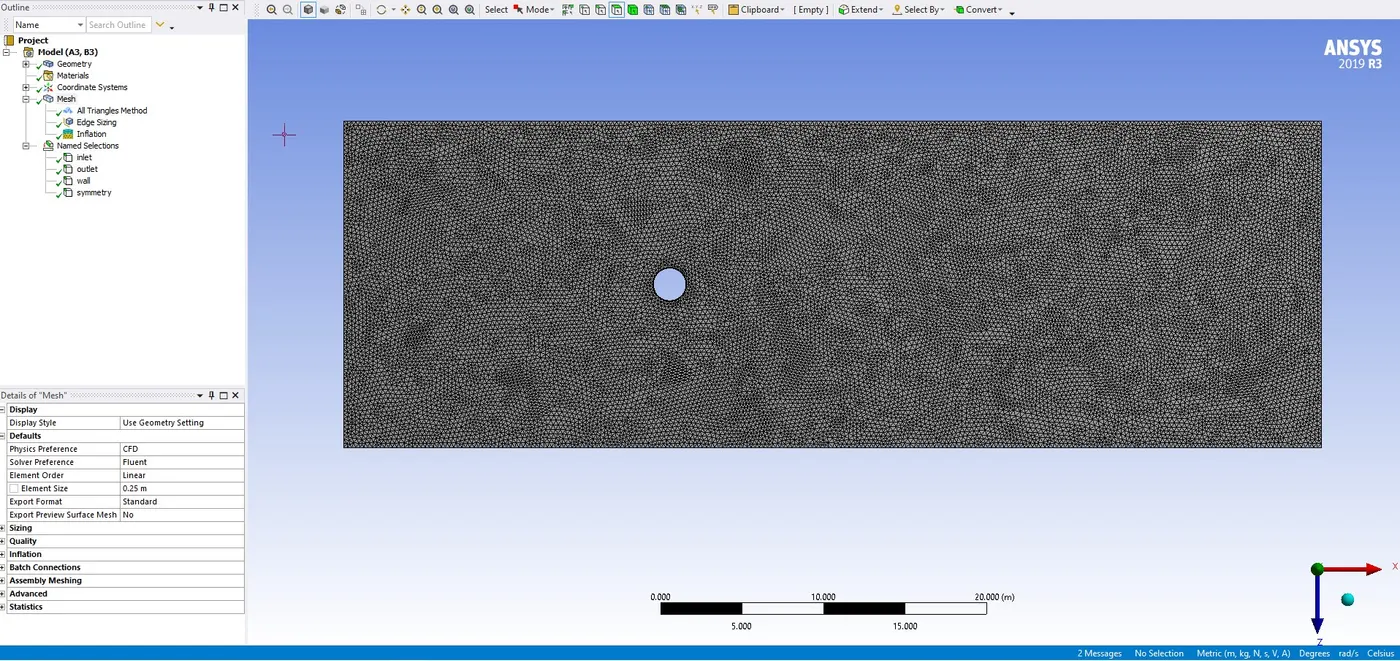
- In the meshing process, we change the method of meshing from quadrilateral to triangles.
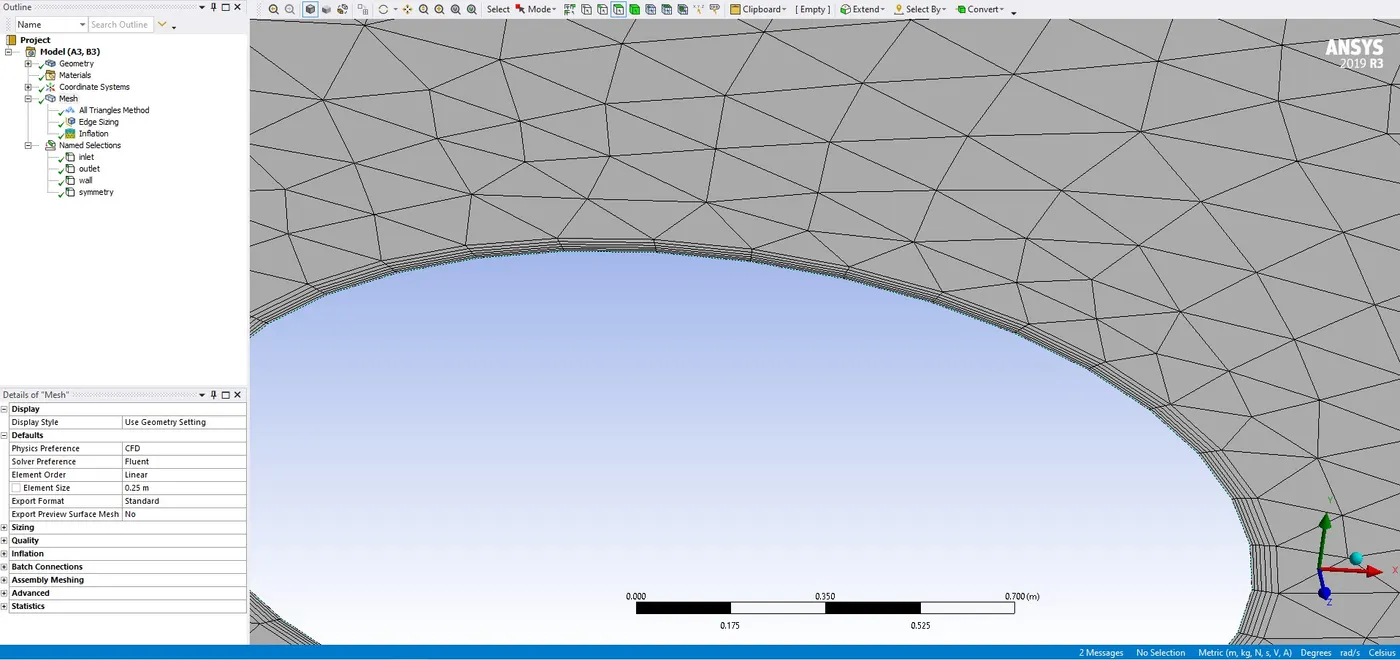
- To make the cylinder look smooth and fine we increase the size by adding a sizing method to it and the number of divisions to be 36.
- In the last, add the inflation layer to the cylinder. Let the thickness to be 5e-3, and use the thickness by the first layer option and give the number of layers to be 6.
- Initially, generate the default mesh and check. I, prefer to have a greater number of cells. My element size is 0.25 meters.
- Lastly, name the edges of the model.
MESH:
INFLATION LAYERS:
NAMING THE BOUNDARIES:
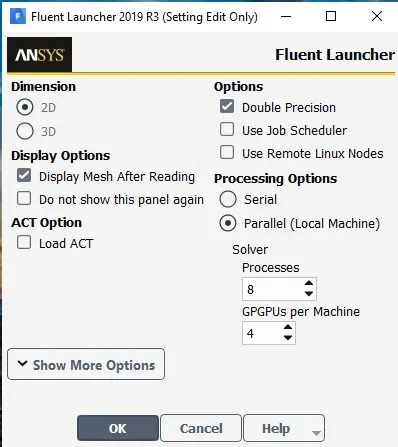
SETTING UP THE FLUENT SETUP:
- General Settings choose Steady-State and Pressure based solution.
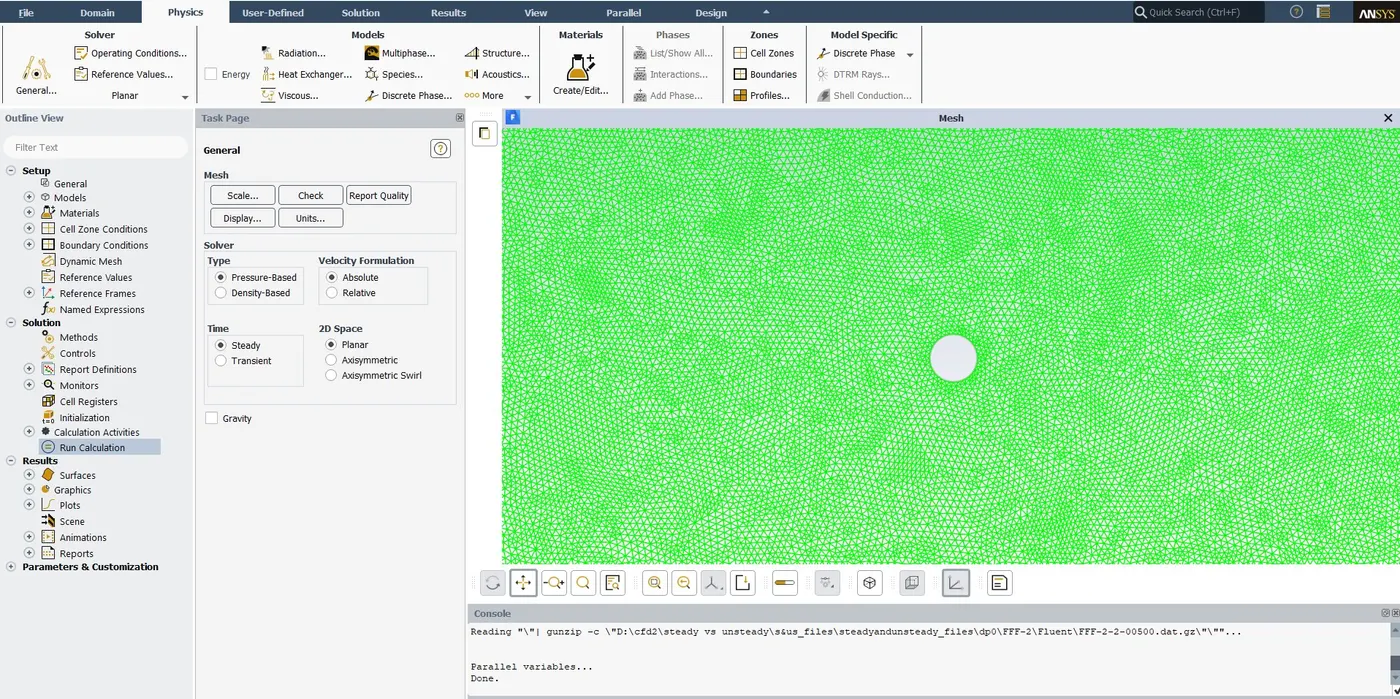
- The type of flow should be Laminar.
- Materials and Boundary Conditions
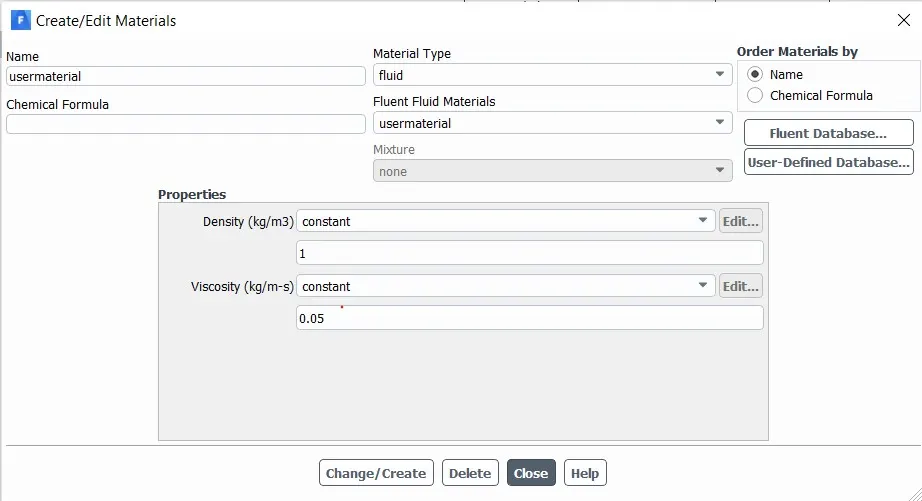
- copy the air material and name it as per your choice and change the density and viscosity values as shown below.
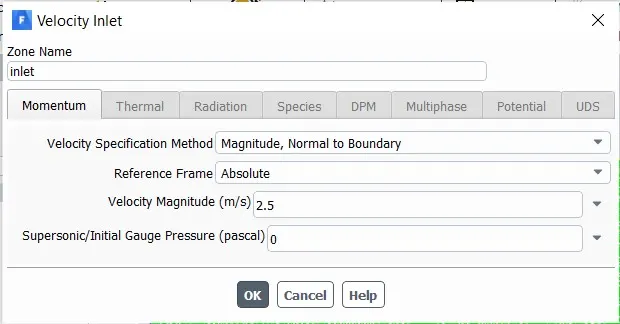
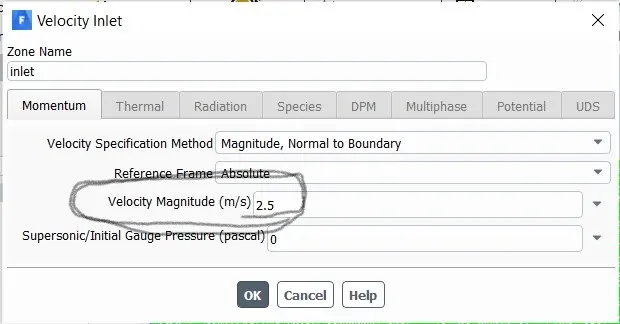
- To change the Reynolds Number change the inlet velocity.
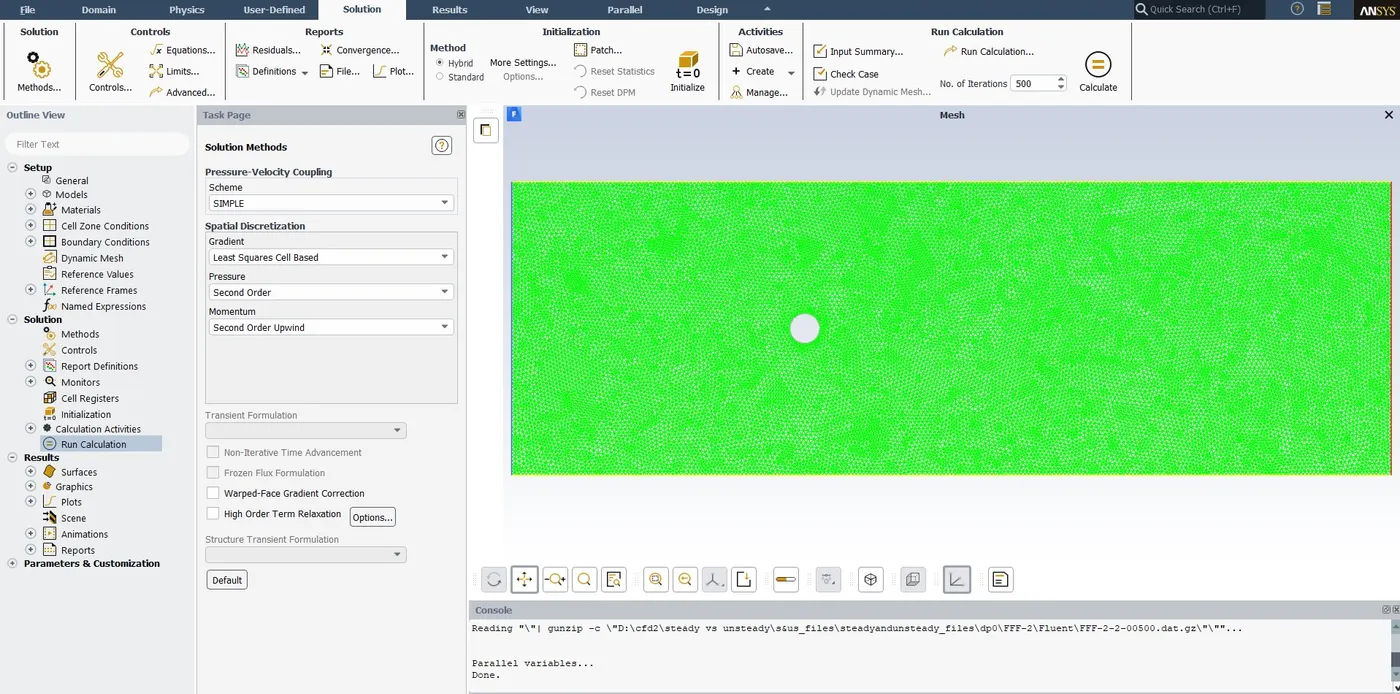
METHOD FOR SOLUTION SHOULD BE SIMPLE:
RESULTS:
PART1:
STEADY-STATE TYPE
Raynolds Number =100
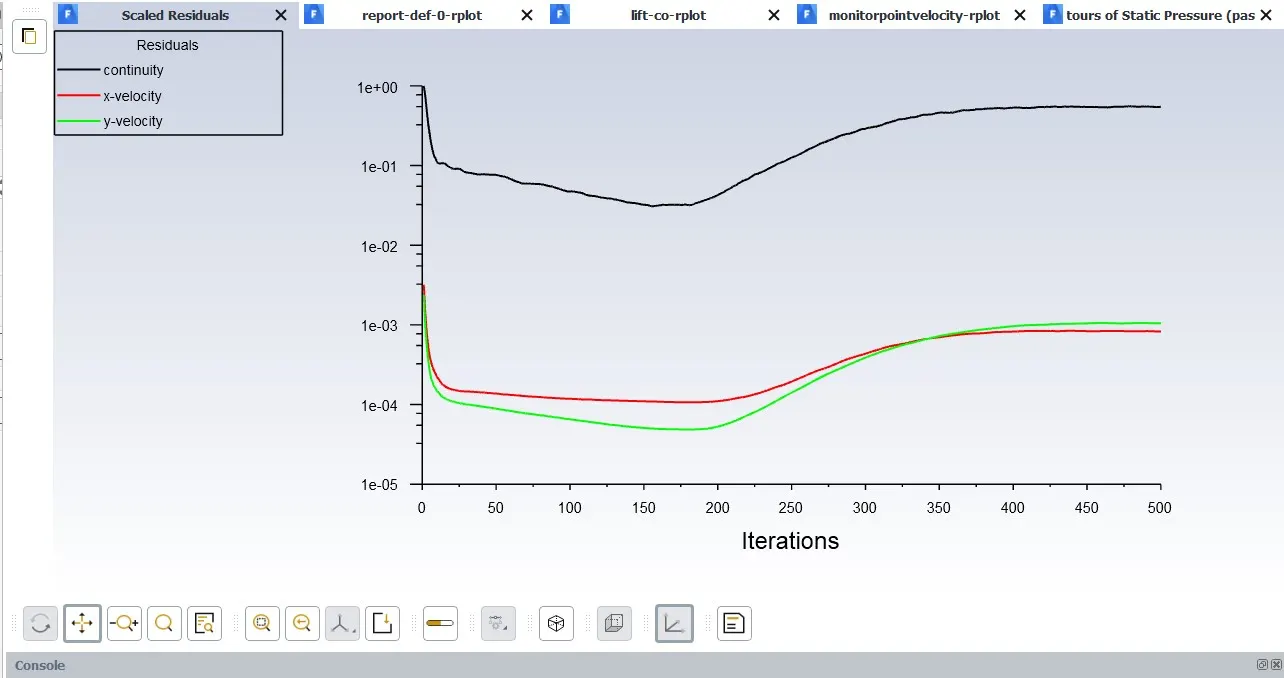
- Scaled Residuals.
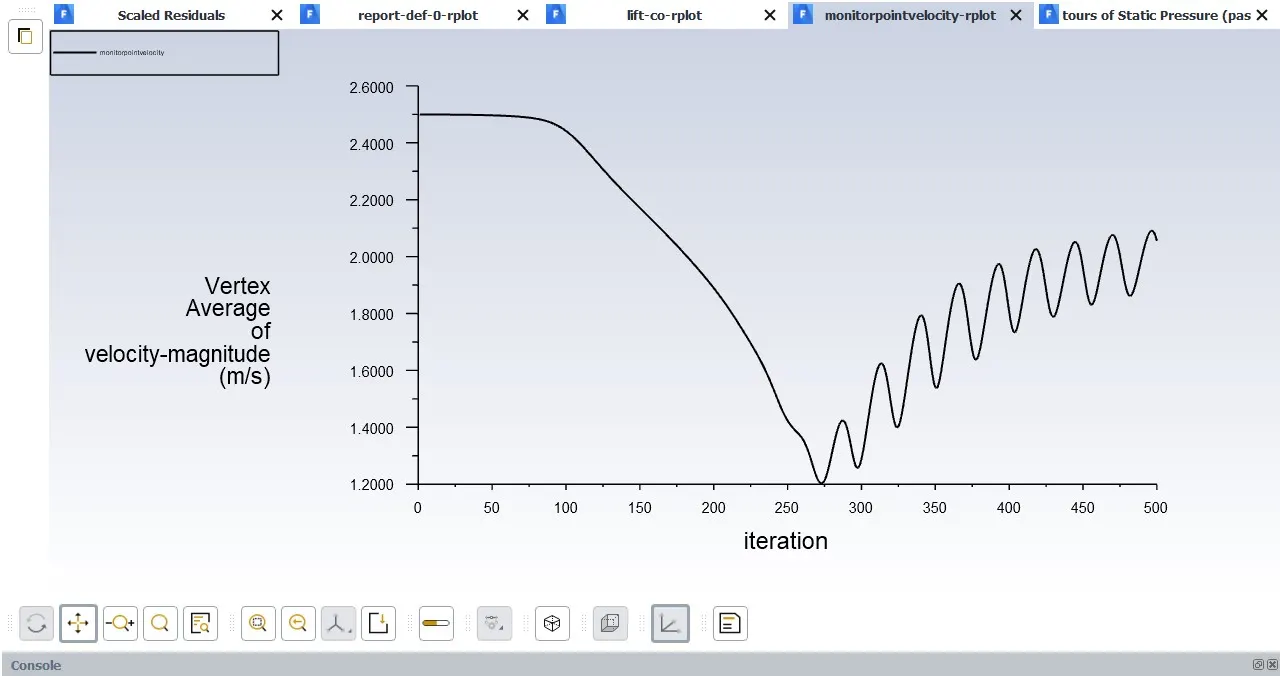
- Velocity monitoring point aways from the cylinder
- Drag coefficient
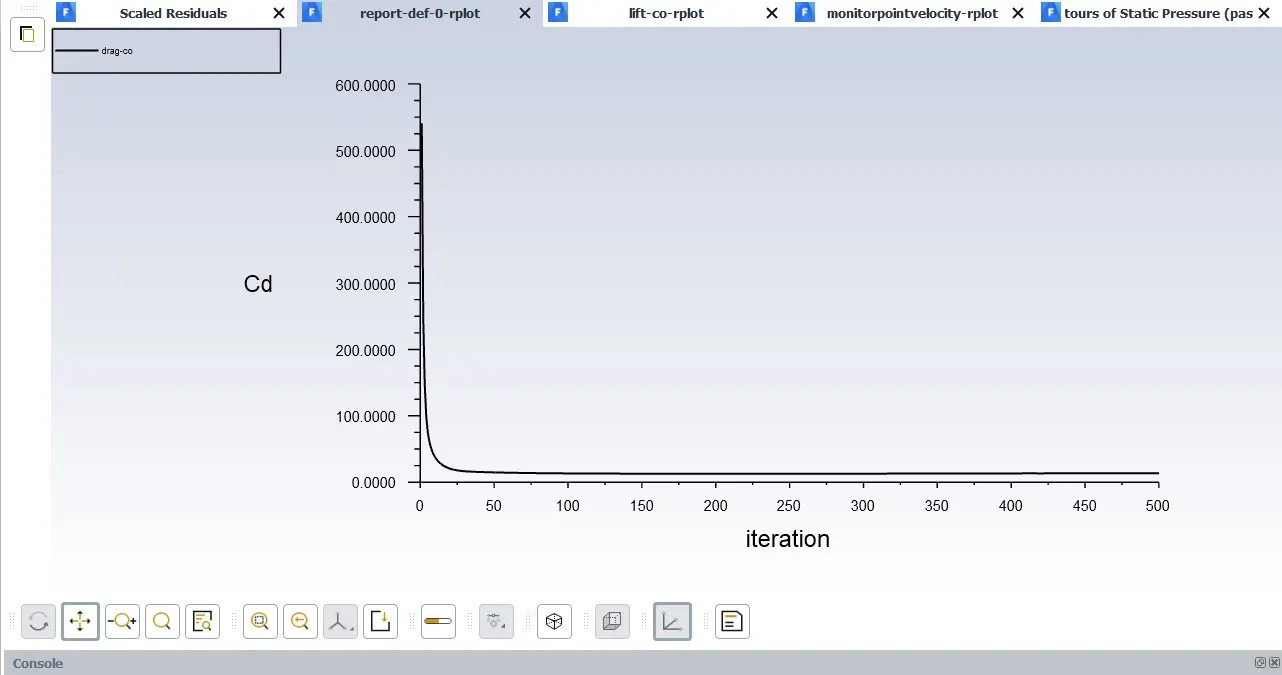
- Lift coefficient
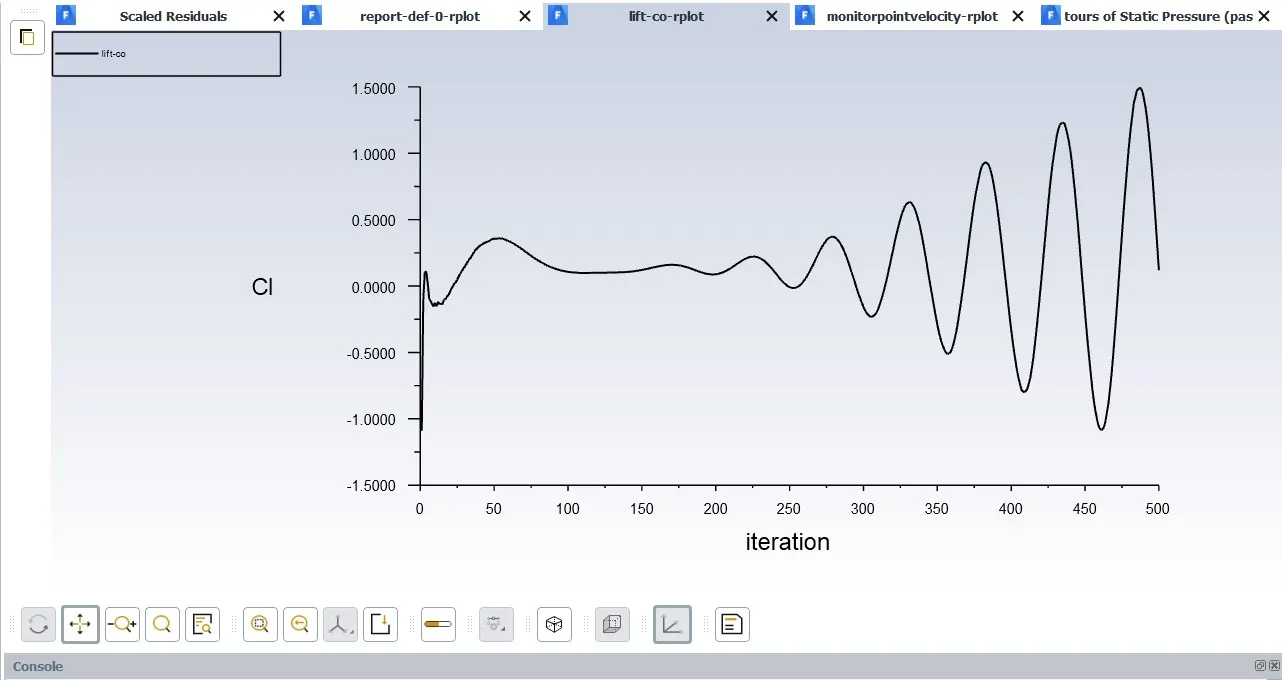
- Velocity contour
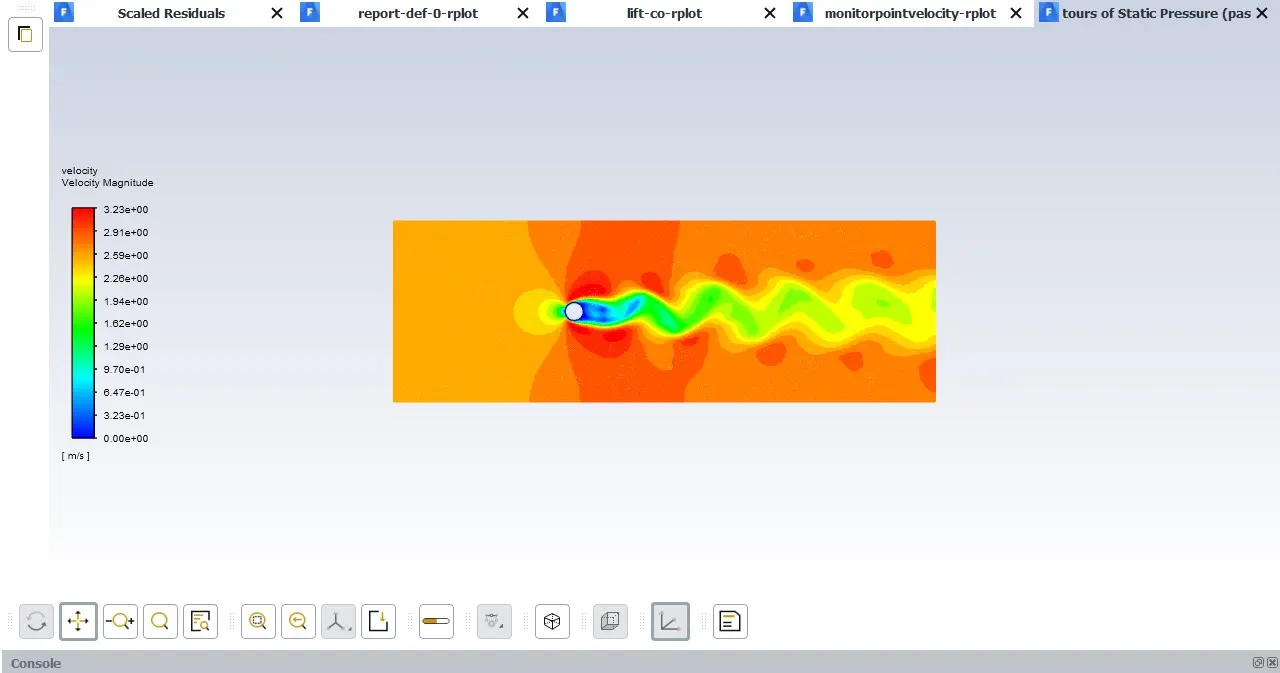
- Strouhal Number
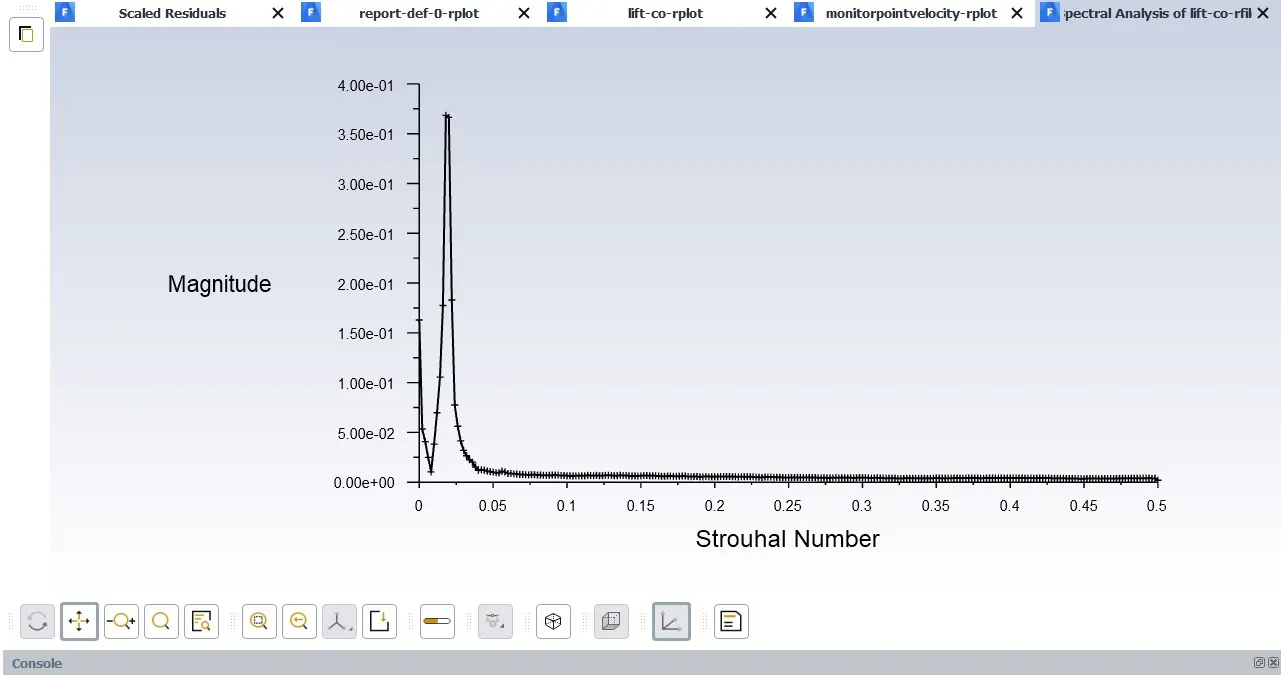
STROUHAL NUMBER FOR THE ABOVE SOLUTION IS EQUAL TO 0.052.
PART1:
UNSTEADY TYPE
Raynolds Number =100
Scaled Residuals
Vortex Shedding
Drag coefficient
Lift coefficient
Velocity Contour
Strouhal Number
STROUHAL NUMBER FOR THE ABOVE SIMULATION IS = 0.054.
Effect of Reynolds Number on the coefficient of drag:
- One thing I have observed in this challenge as the Reynolds number increases, which is a change in inlet velocity increase the drag force decreases.
------------------------------------END OF PART1---------------------------------------------------------------------
Part-2:
- Calculating the coefficient of Drag and Lift over a cylinder by implementing different Reynolds Number of [10, 100, 1000, 10000, 100000]. Using Steady-state solver.
- The process of setting the geometry, mesh, and fluent is the same as mentioned above.
- To change the Reynolds number wee keep the density and viscosity the same and change the inlet velocity.
Reynold number formula:
Re=`(rhovD)/(mu)`
`rho=1`
`v=?`
`D=2m`
`mu=0.05`
`Re=10`
`v=(10*0.05)/(2)`
`v=0.25`
| Reynold number | Inlet Velocity |
| 10 | 0.25 |
| 100 | 2.5 |
| 1000 | 25 |
| 10000 | 250 |
| 100000 | 2500 |
RESULTS:
CONVERGENCE PLOTS:
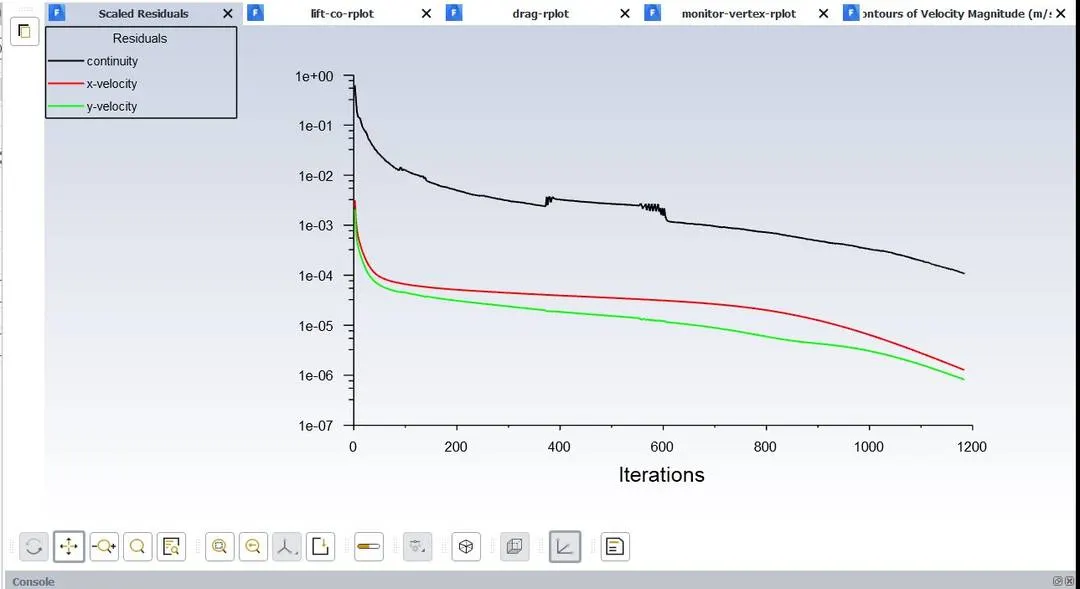
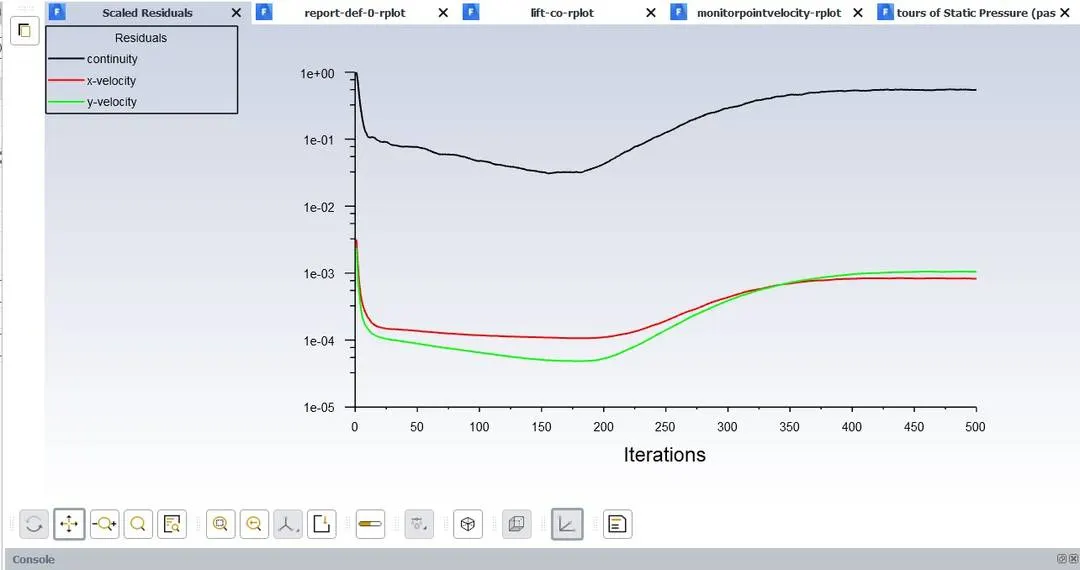
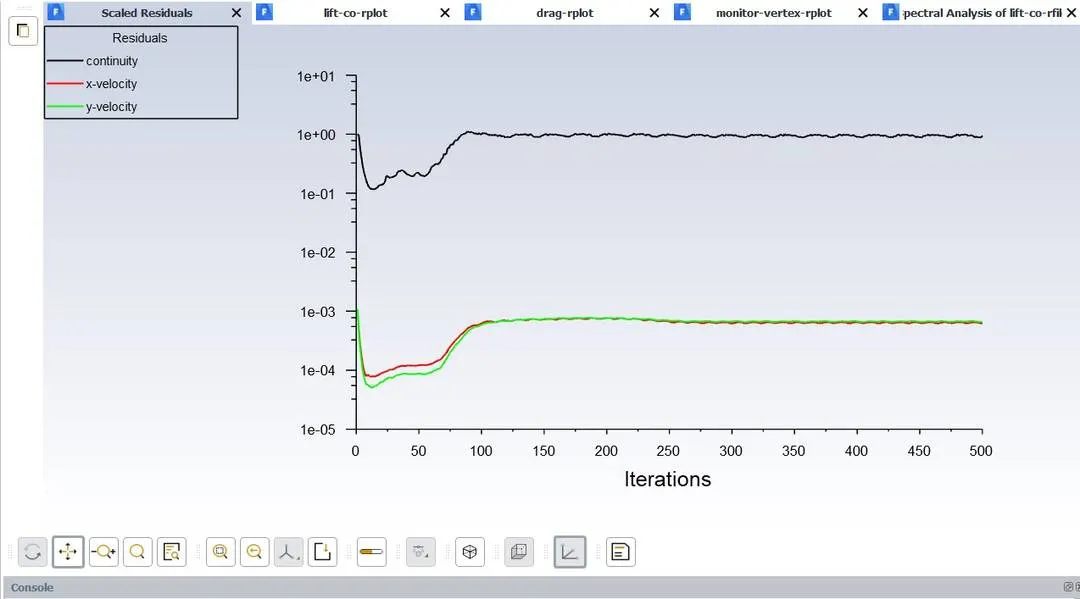
- The below plots will depict the flow convergence.
- Scaled Residuals represent the flow convergence and this is dependent on the number of iterations we calculate and the solving method.
RE=10
RE=100
RE=1000
RE=10000
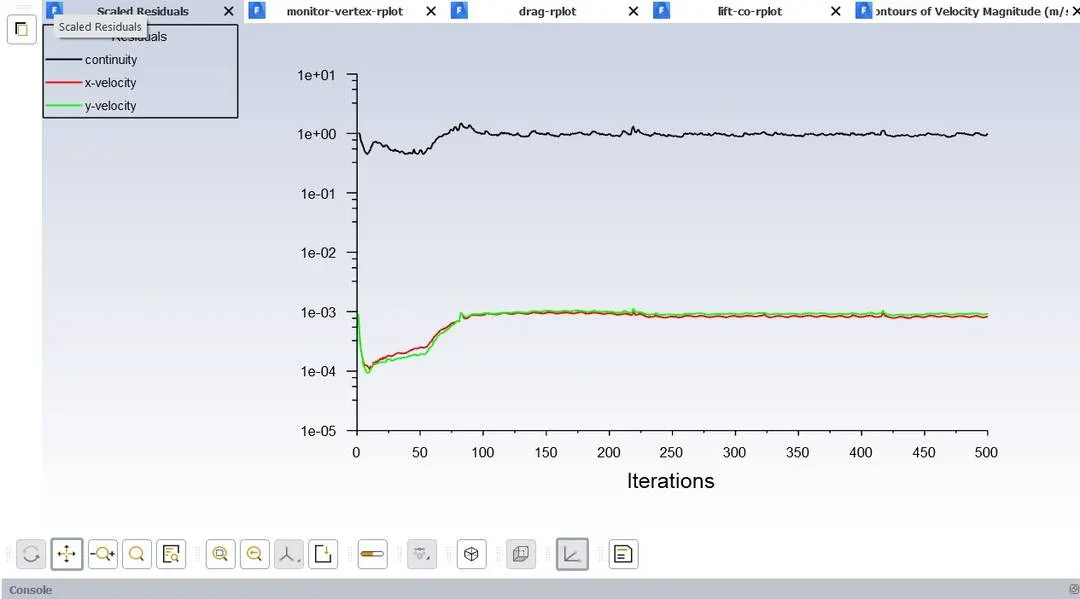
RE=100000
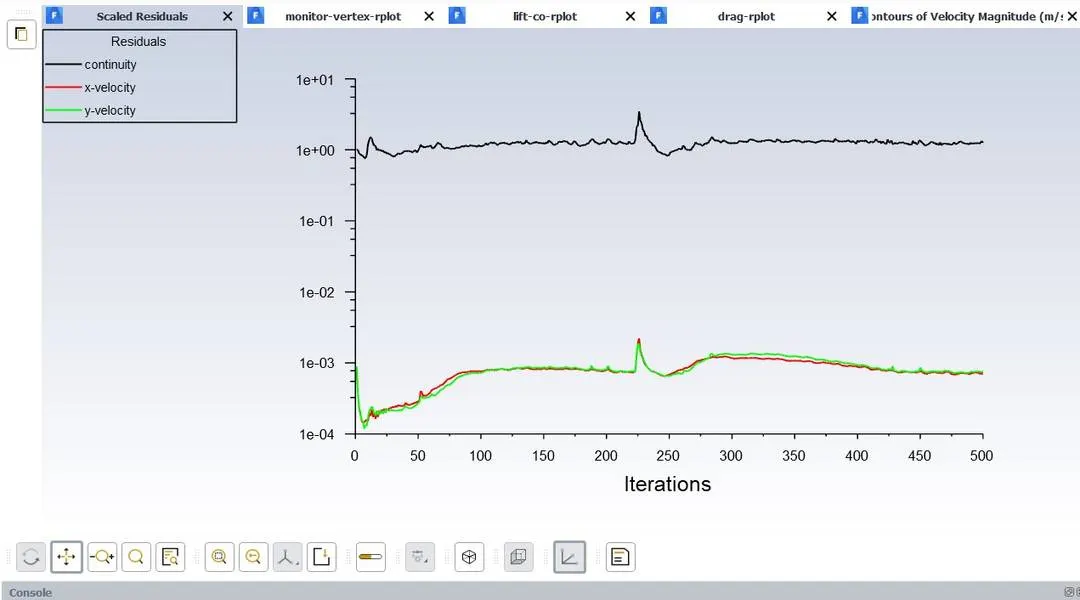
DRAG AND LIFT CO-EFFICIENTS PLOTS:
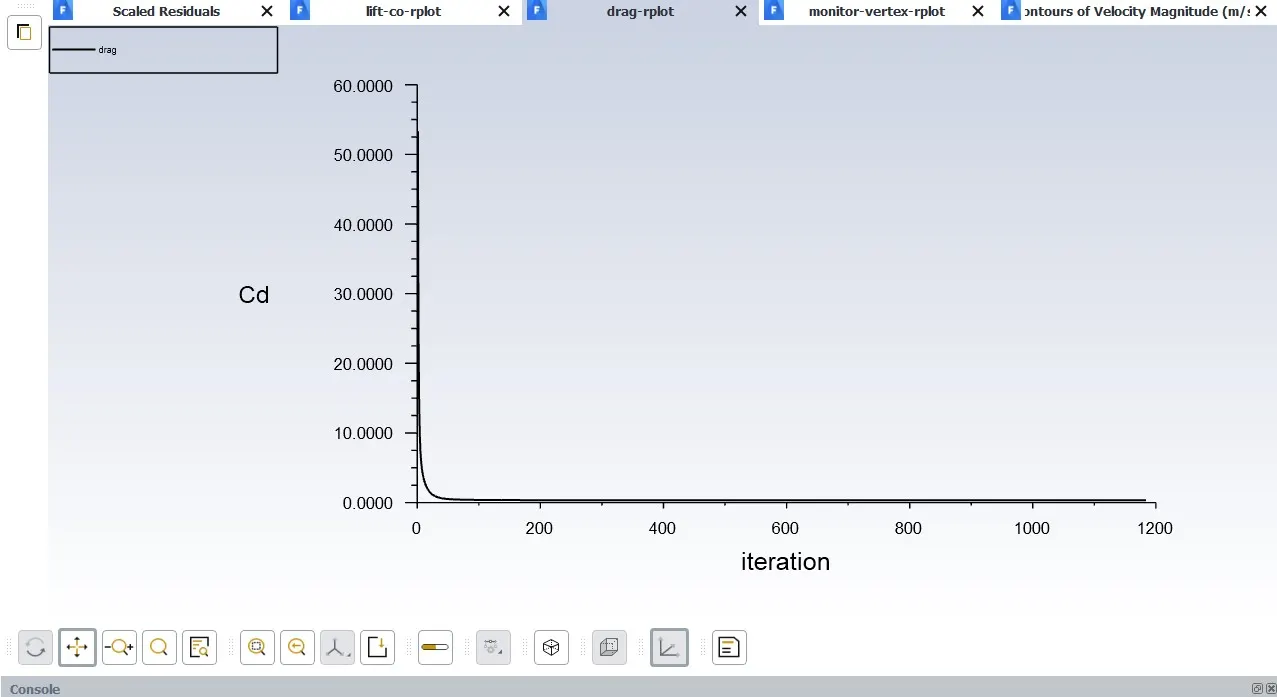
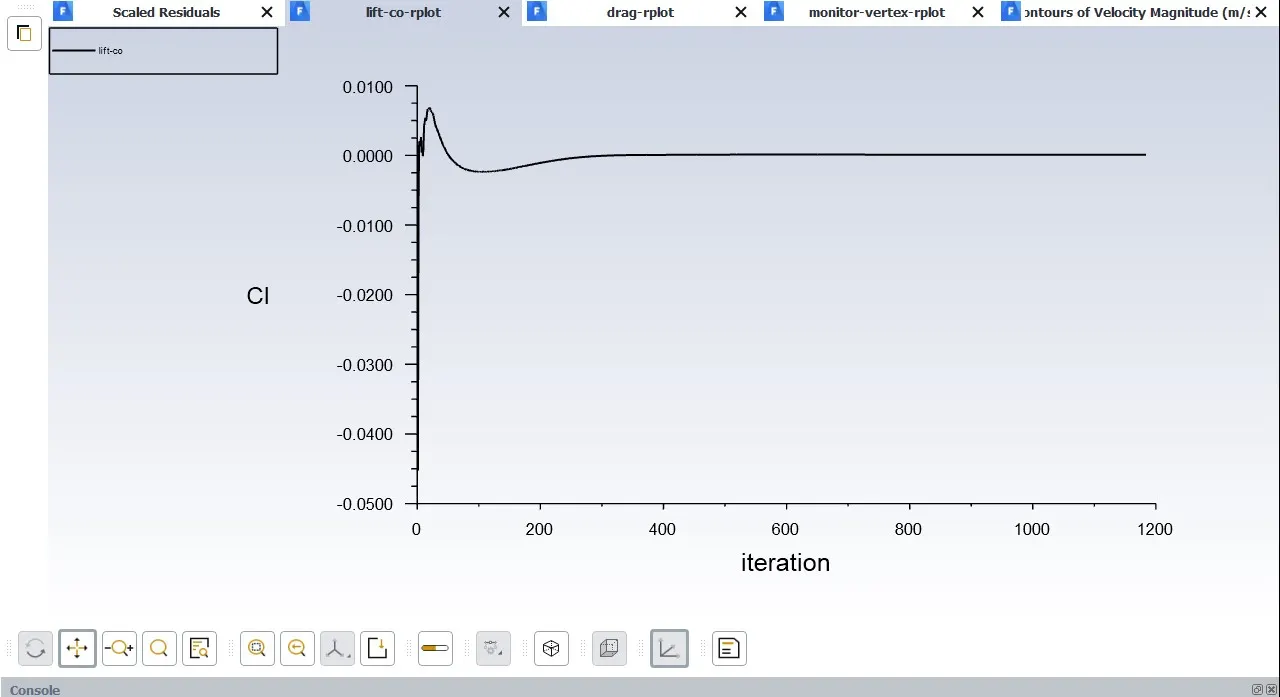
- The Co-efficient of Drag and Lift of Reynold Number 10:
Drag Co-efficient:
Lift Co-efficient:
- The Co-efficient of Drag and Lift of Reynold Number 100:
Drag Co-efficient:
Lift Co-efficient:
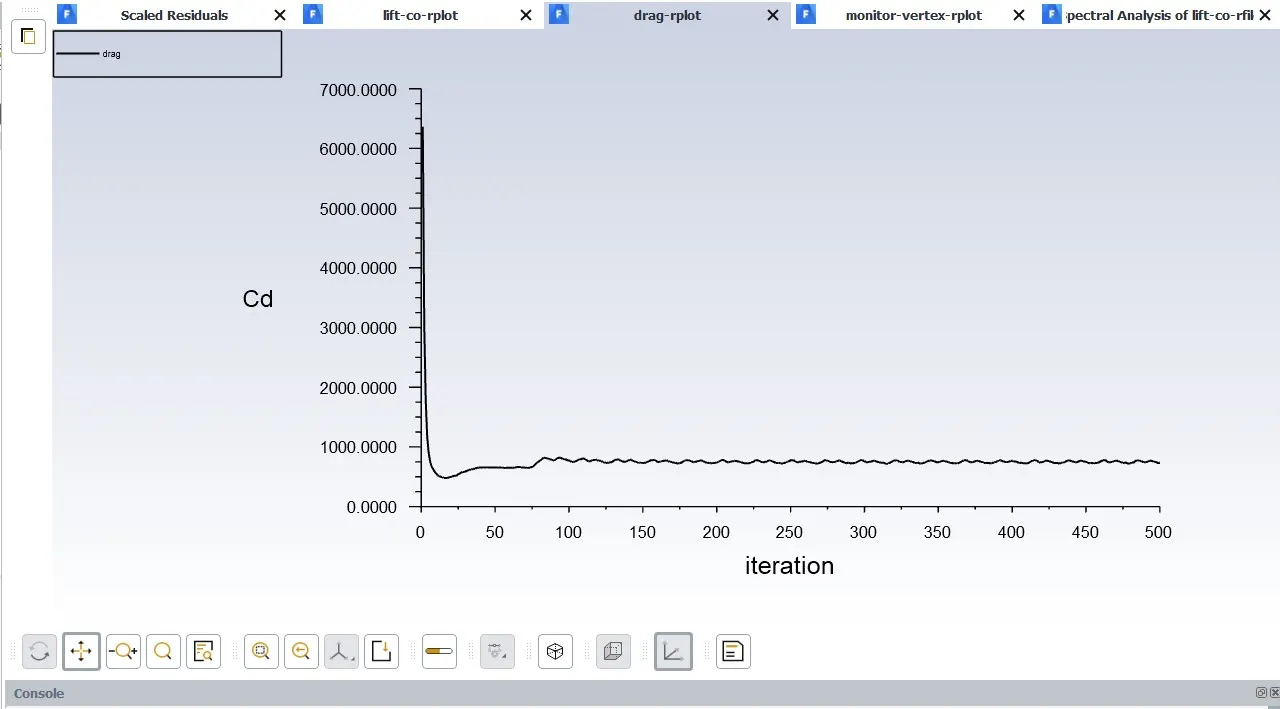
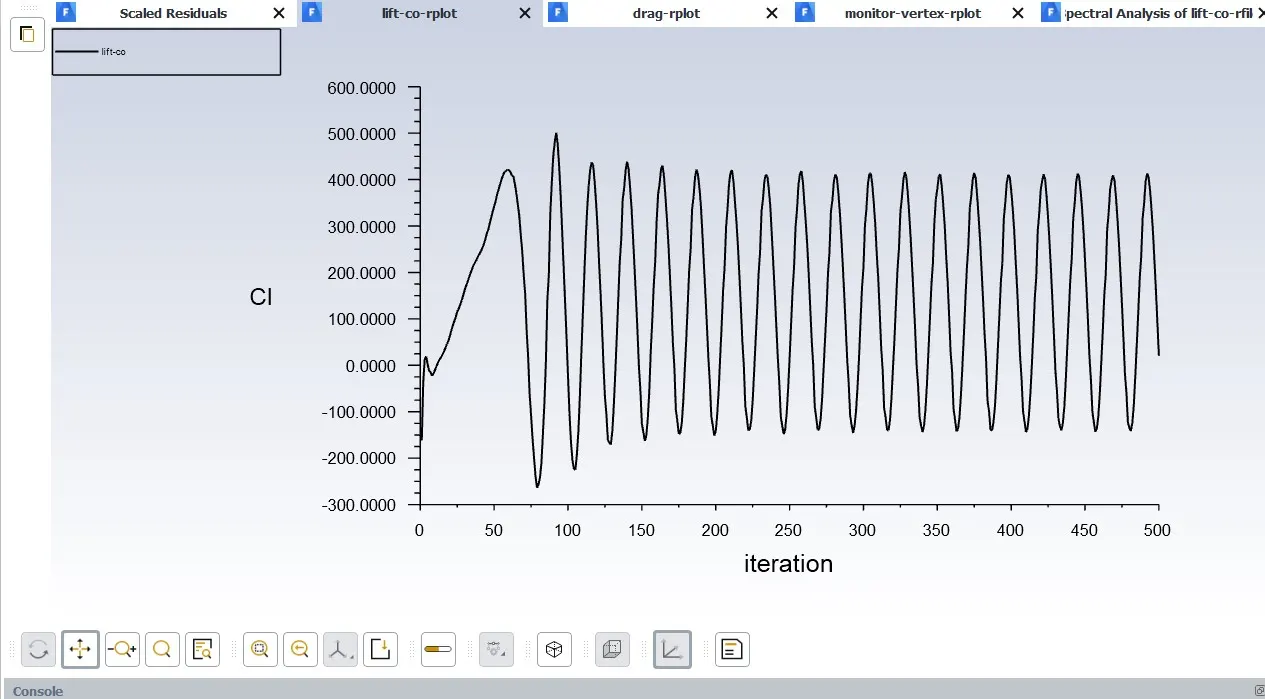
- The Co-efficient of Drag and Lift of Reynold Number 1000:
Drag Co-efficient:
Lift Co-efficient:
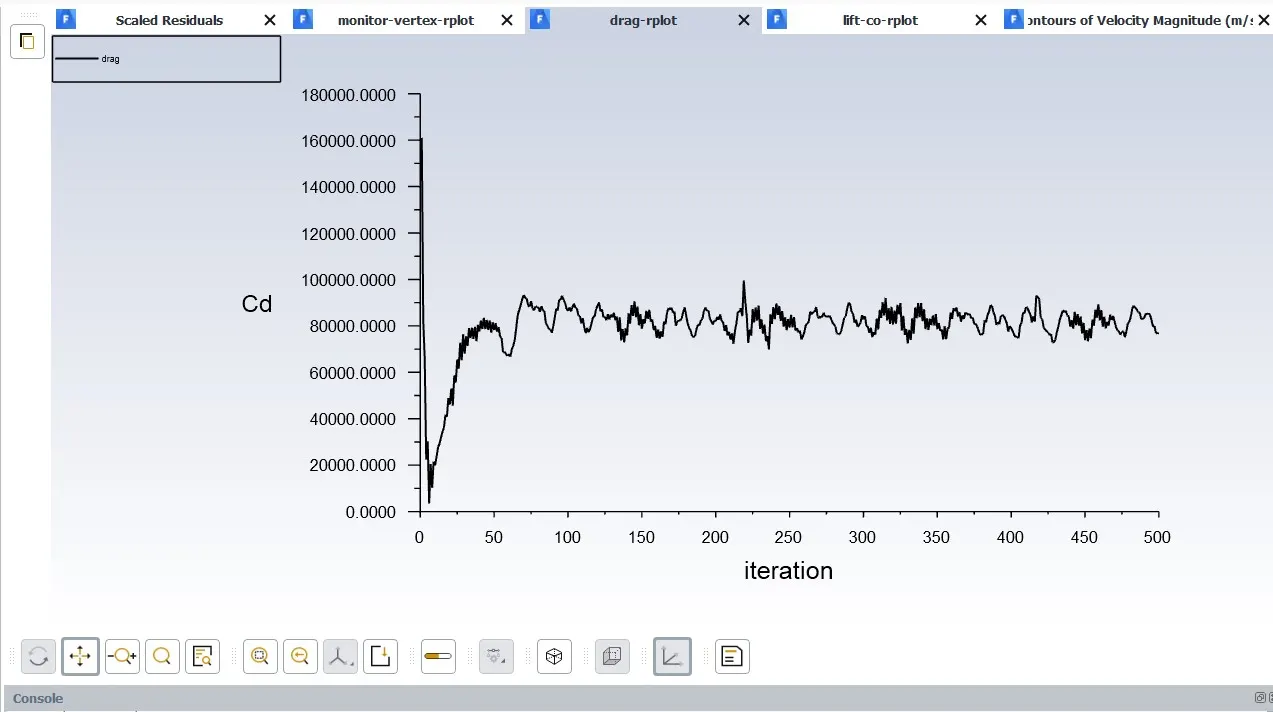
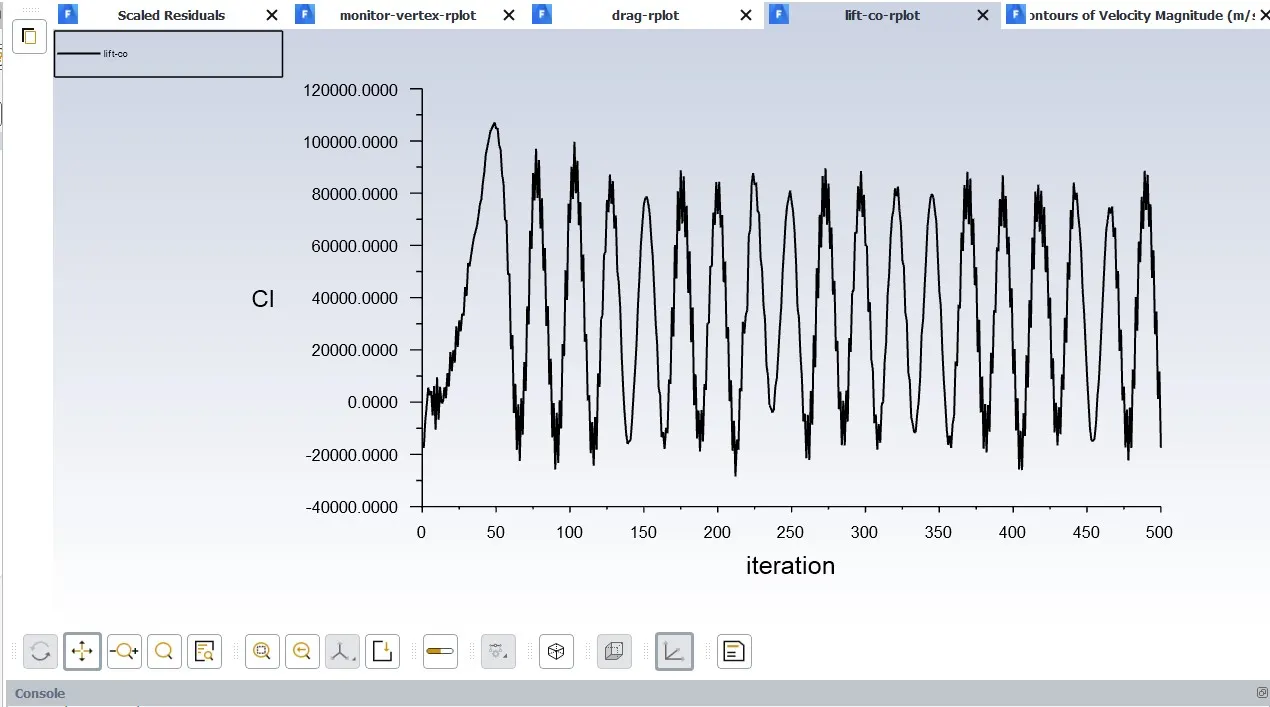
- The Co-efficient of Drag and Lift of Reynold Number 10000:
Drag Co-efficient:
Lift Co-efficient:
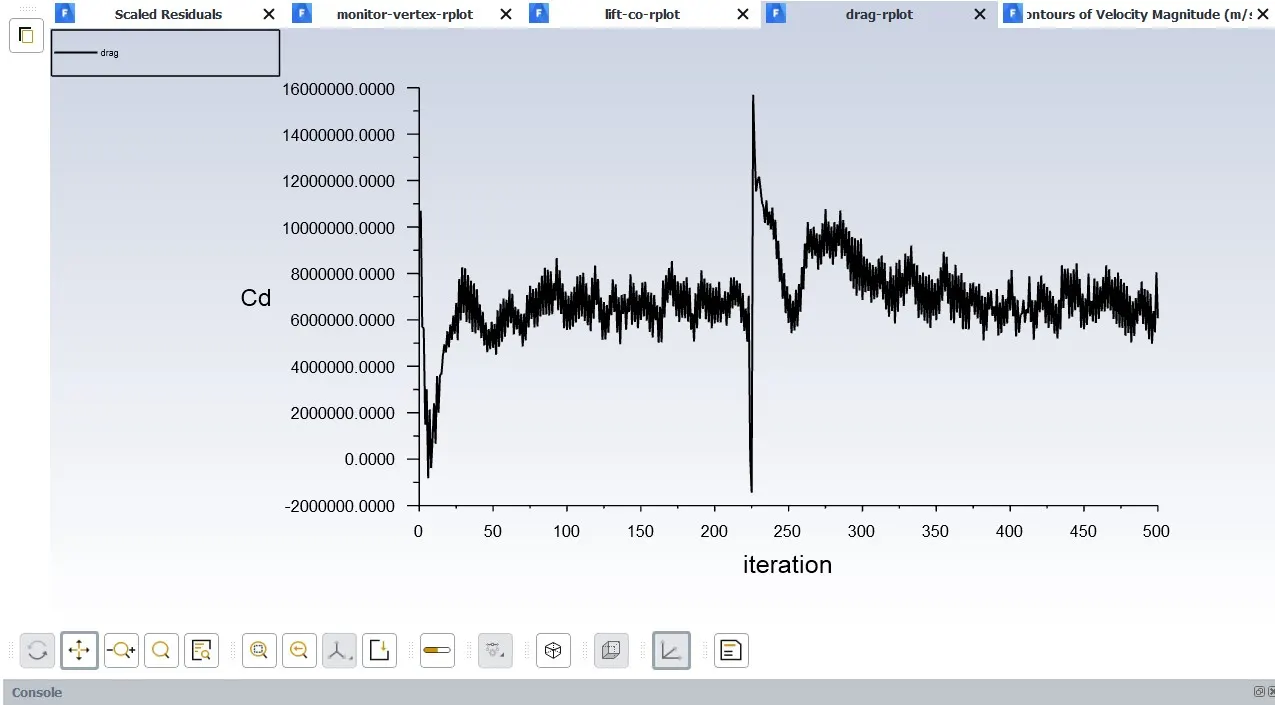
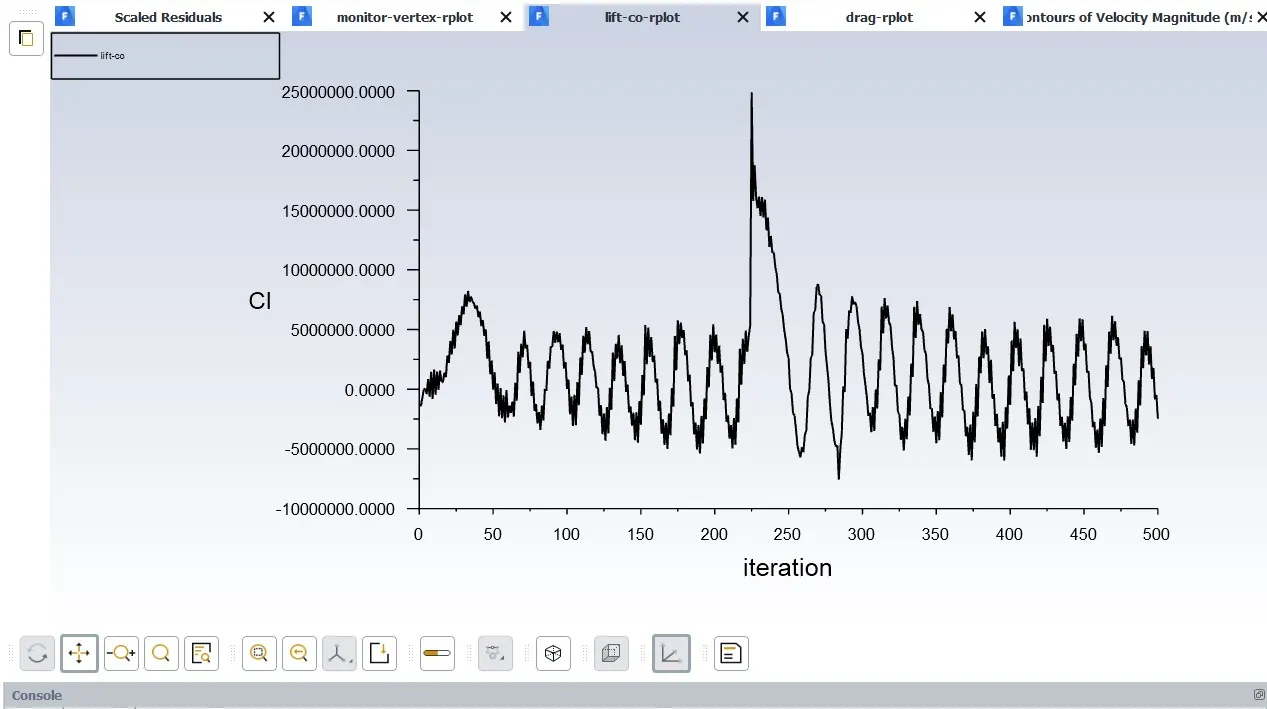
- The Co-efficient of Drag and Lift of Reynold Number 100000:
Drag Co-efficent:
Lift Co-efficient:
| Reynolds Number | Cd | Cl |
| Re 10 |
3.3275995 |
0.00099020123 |
| Re 100 |
1.342033 |
0.10376475 |
| Re 1000 |
0.7190862 |
0.020355668 |
| Re 10000 |
0.73618916 |
-0.080626564 |
| Re 100000 |
0.66549542 |
-0.30160743 |
VORTEX SHEDDING:
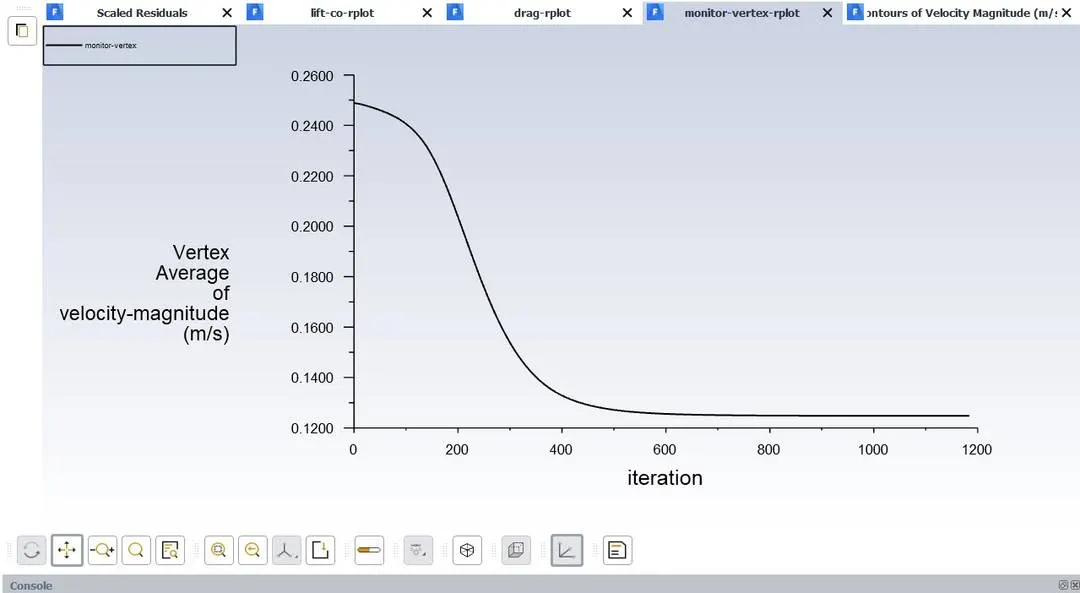
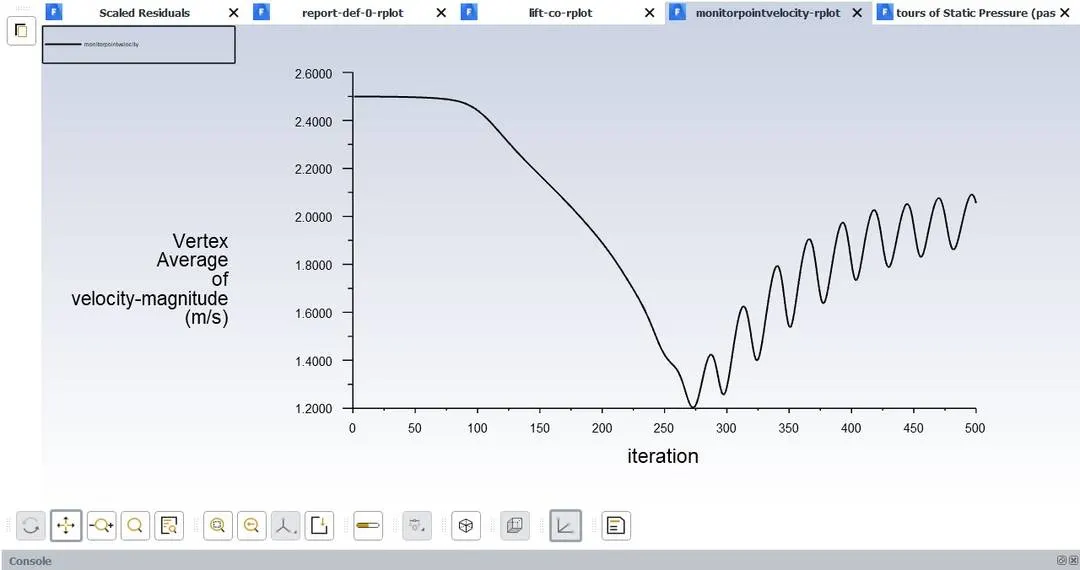
- The vortex shedding graph is plotted by creating a point behind the cylinder at a distance of 8 meters.
- The values tend to change as the Reynolds number increase.
RE=10:
RE=100:
RE=1000:
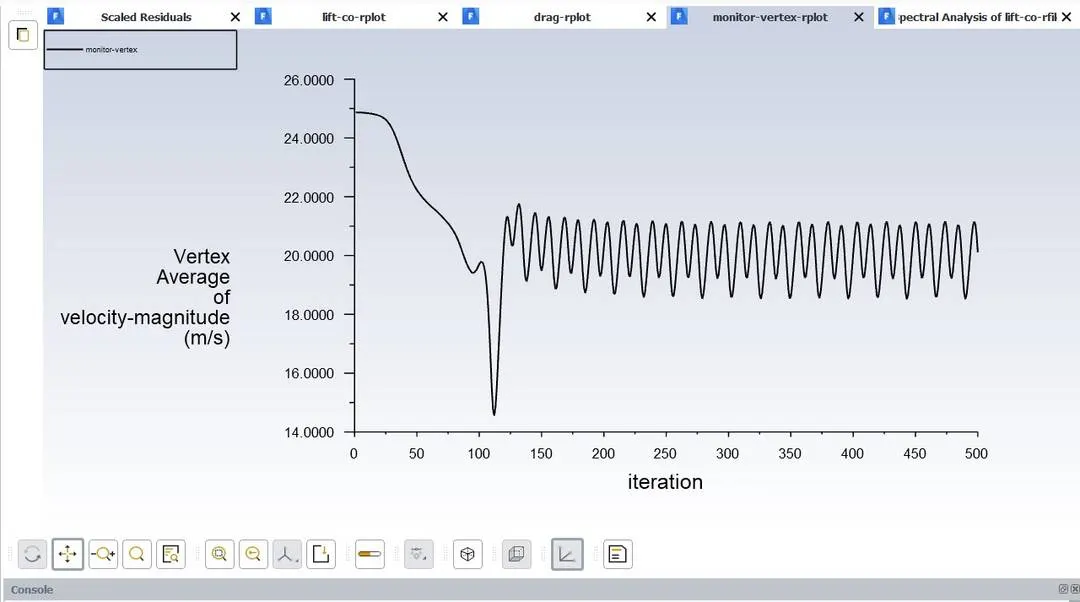
RE=10000:
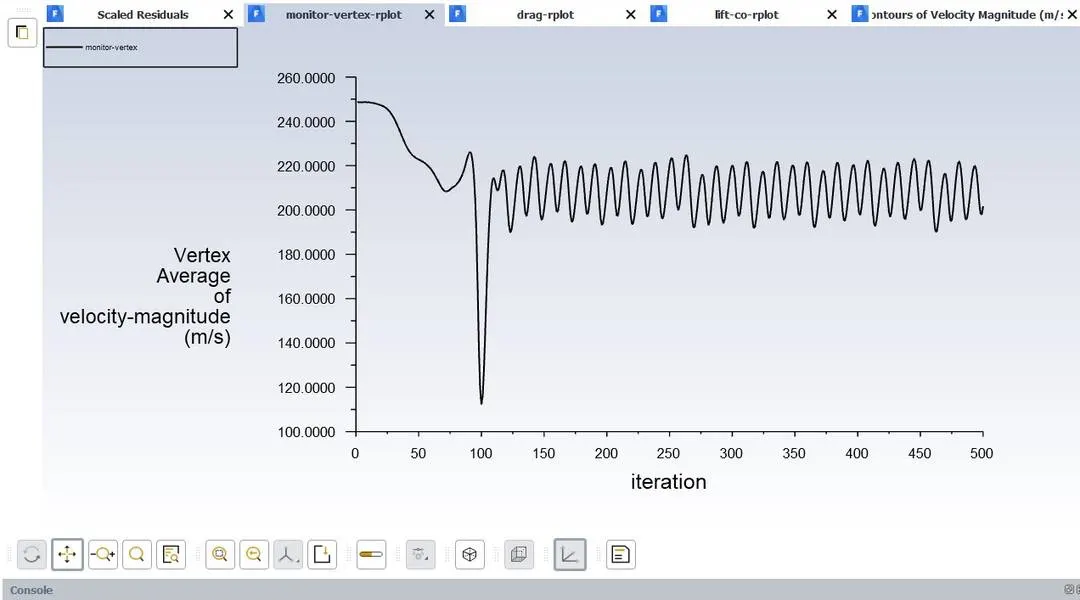
RE=100000:
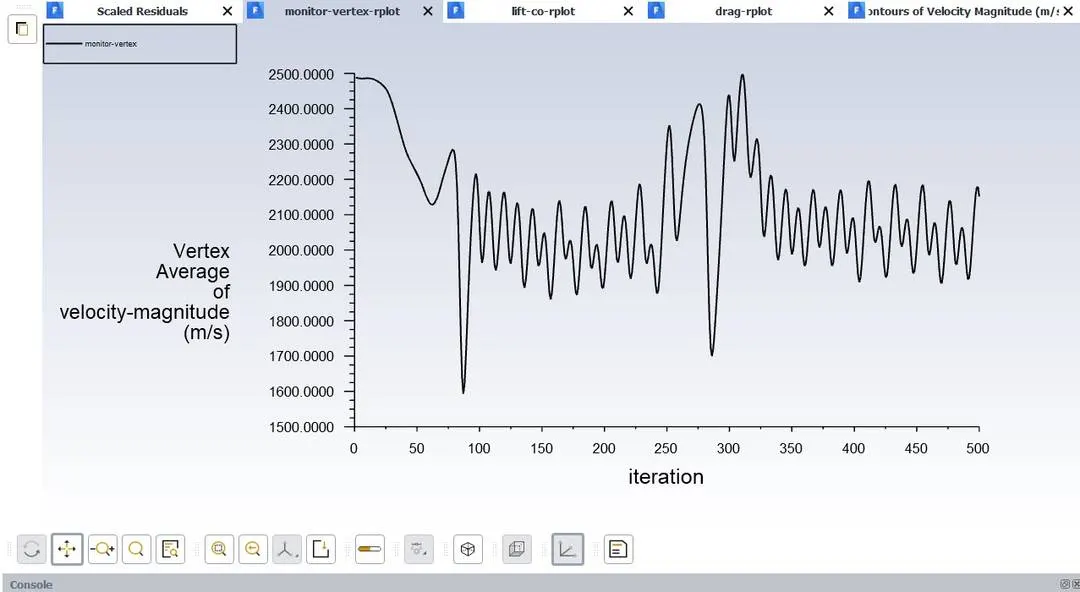
REFERRED MATERIAL:
- I have followed the materials suggested in the video.
- My Density is 1 kg/m^3, Dynamic Viscosity is 0.05 m^2/S, and my velocity varied as the Reynold number increased.
SUPPORTING DOCUMENTS (G-DRIVE LINK):
https://drive.google.com/drive/folders/1l9QzqB7toTk1047d5siehZE94SscjCGi?usp=sharing