Section Modulus calculation and optimization
Aim :- The Objective of this project is to understand the section modulus of the previously designed hood of the car by using section modulus formula and optimizing the bending strength of the hood.
Theory :-
Section Modulus :-
- Section modulus is a geometric property for a given cross-section used in the design of beams or flexural members, it is also referred to as the Polar Modulus or the Torsional Sectional Modulus.
- Other geometric properties used in design include area for tension and shear, radius of gyration for compression, and moment of inertia and polar moment of inertia for stiffness.
- The relationship between these properties are highly dependent on the shape of given object.
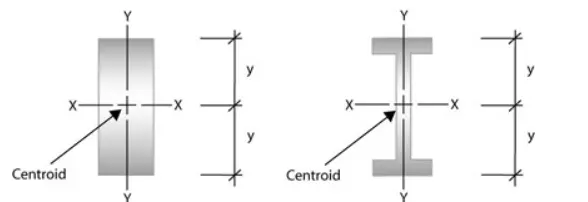
- Mathematically it is the ratio of Moment of inertia and the Distance from the nutral axis to extreme fiber under consideration.
- The unit of section mdulus is `mm^3`.
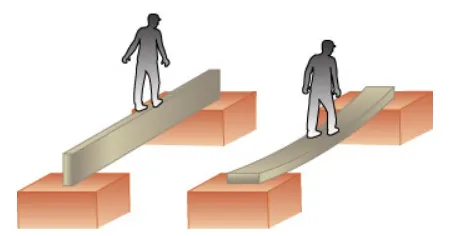
- In Layman's terms, in this position there is more material from axis to the specific direction, to resist the load which makes less bend amd improves the strength.
- Changing the position can show the difference in bending which is because of the centroid distance from extreme fiber end.
- There are two types of section moduli, the Elastic section modulus and the Plastic section modulus.
Elastic Section Modulus :-
- The elastic section modulus is used, applying up to the yield point for most metals and other common materials.
- The elastic section Modulus is a single parameter that measures a cross section’s strength in bending.
- The elastic Section Modulus is defined as the ratio of the second moment of area (or moment of inertia) and the distance from the neutral axis to any given (or extreme) fiber.
- The elastic section modulus is defined as :-
`S=I/y`
Here I= Second moment area( unit is `mm^4`.)
y=The distance from the neutral axis to any given fibre
S=Section Modulus(Unit is `mm^3`.)
Plastic Section modulus :-
- The plastic section modulus, Zx, is used to determine the limit-state of steel beams, defined as the point when the entire cross section has yielded.
- This property is unique to steel, since neither of the other materials we are considering has the necessary ductility to reach this state.
- it is defined as the sum of all elemental areas above or below the Centroid (x-axis) of the cross section multiplied by the distance from each of the individual elemental centroids to the centroid of the cross section as a whole.
-
The plastic section modulus is the sum of the areas of the cross section on each side of the PNA (which may or may not be equal) multiplied by the distance from the local centroids of the two areas to the PNA:

the Plastic Section Modulus can also be called the 'First moment of area'
- For Example we take a rectangular cross section body and calculate the section Modulus.
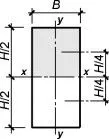
- Here the section modulus is
Zx = B(H/2)(H/4) + B(H/2)(H/4) = BH2/4.
Let's Study the previously made Hood design part and calculate the section Modulus :- - The Intersection of the hood part was taken and then section Inertia Analysis was done-
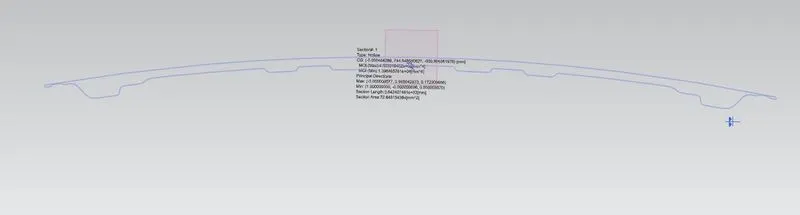
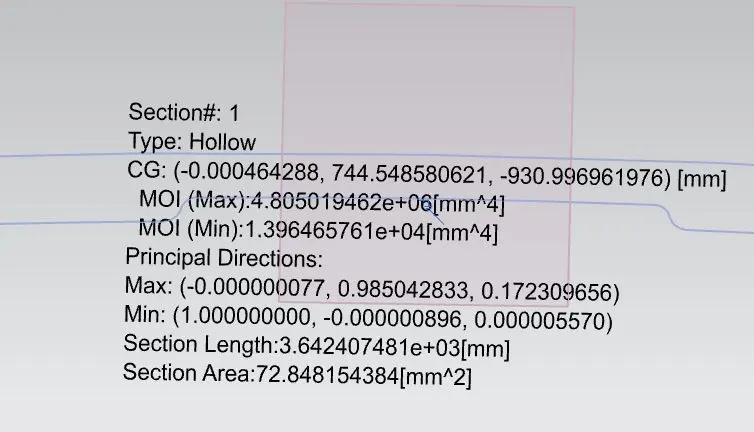
Here we got the Maximum MOI is `4.805019*10^6`
and Minimum MOI is `1.396465*10^4`
`Y=489.062/2=244.5341 mm`
S=I/Y
`s=(1.396465*10^4)/244.5341=57.02 mm^3`
Hood Design Optimization :-
Now we increasing the depth of the inner panel by 0.5 mm and calculate the section Modulus
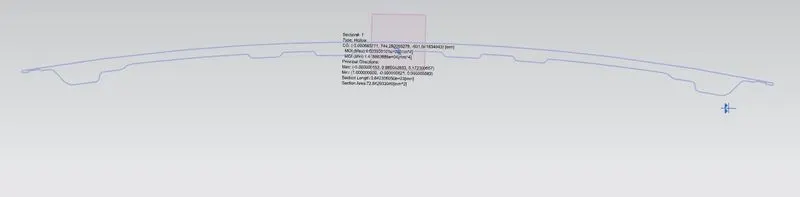
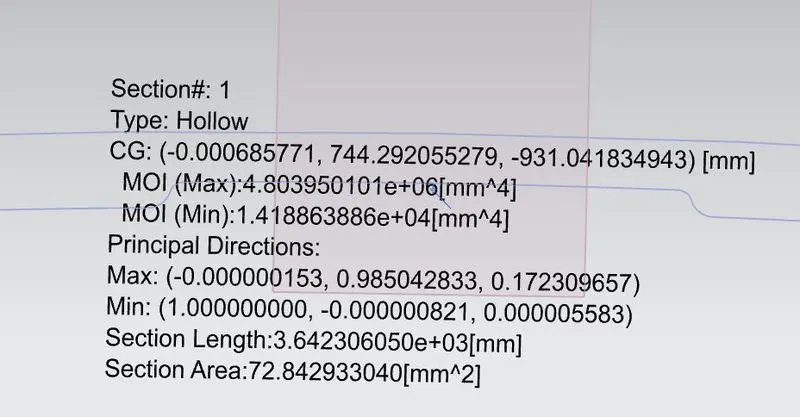
Here we got the Maximum MOI is `4.803950*10^6`
and Minimum MOI is `1.418863*10^4`
`Y=489.062/2=244.5341 mm`
S=I/Y
`s=(1.418863)/244.5341=58.02 mm^3`
conclusion :-
- So, here the difference can be seen in the moment of inertia and the change in the section modulus can be seen by the change in the design(depth).