Section Modulus calculation and optimization
AIM
To calculate the Section Modulus of the Hood Design and make a new section that has improved Section Modulus.
THEORY
Moment of Inertia
Moment of Inertia, often denoted as "I," is a fundamental property in physics and engineering that quantifies how an object's mass is distributed around a given axis. It plays a crucial role in understanding an object's resistance to rotational motion and its ability to store rotational kinetic energy.
The formula for the moment of inertia is the “sum of the product of mass” of each particle with the “square of its distance from the axis of the rotation”. The formula of Moment of Inertia is expressed as I = Σ miri2.
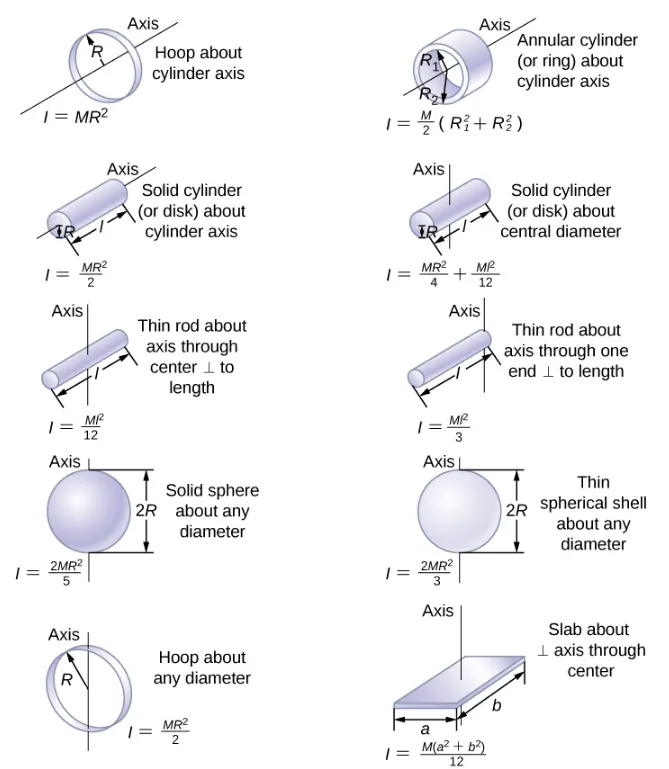
The formula for the moment of inertia depends on the specific shape of the object. Here are a few common formulas for calculating moment of inertia for simple shapes:
Section Modulus
The section modulus is a geometric property of a shape, typically a structural cross-section, that quantifies its ability to resist bending or flexural stresses. It is a critical parameter in structural engineering and design, helping engineers determine how a structure will behave under different types of loads, particularly bending moments. The section modulus is denoted by the symbol "Z."
The section modulus is calculated differently depending on the type of cross-section being analyzed, such as rectangular, circular, I-beam, or other shapes. In general, it is calculated as the ratio of a cross-sectional area to the maximum distance from the neutral axis (the axis that experiences no bending) to the outermost fiber of the section.
The section modulus (Z) is given by:
Z = I / c
Where:
Z is the section modulus.
I is the moment of inertia of the cross-section about the neutral axis.
c is the distance from the neutral axis to the outermost fiber (often referred to as the "extreme fiber").
There are two primary types of section modulus used in structural engineering and design: the "elastic section modulus" (S) and the "plastic section modulus" (Z).
- Elastic Section Modulus (S)
- Plastic Section Modulus (Z)
Elastic Section Modulus (S)
The Elastic Section Modulus (S) is a critical parameter in structural engineering and design, particularly when analyzing structures subjected to bending loads. It quantifies a structural element's ability to resist bending within its elastic limit, which means that it's a measure of how effectively a given cross-sectional shape can distribute and withstand bending stresses without causing permanent deformation or yielding of the material.
The Elastic Section Modulus, denoted as "S," is a geometric property of a cross-section that represents the capacity of that cross-section to resist bending stress without exceeding the elastic limit of the material it's made of.
S is calculated as the ratio of the moment of inertia (I) of the cross-section to the maximum distance (c) from the neutral axis (the axis that experiences no bending) to the outermost fiber of the section. In mathematical terms, it's expressed as S = I / c.
Plastic Section Modulus (Z)
The Plastic Section Modulus (Z) is a crucial concept in structural engineering used to analyze and design structural elements that undergo plastic deformation when subjected to bending loads. Unlike the Elastic Section Modulus (S), which evaluates a structure's behavior within its elastic limit, the Plastic Section Modulus considers how a structure responds when it exceeds its yield point and enters the plastic deformation phase.
The Plastic Section Modulus, denoted as "Z," is a geometric property of a cross-section that quantifies its capacity to resist bending beyond the material's yield strength. It reflects the ability of a cross-sectional shape to redistribute stresses and resist plastic deformation when subjected to bending loads.
Z is calculated as the ratio of the moment of inertia (I) of the cross-section to the distance (y) from the neutral axis (the axis with no bending) to the extreme fiber at the point of yielding or plastic deformation. Mathematically, it's expressed as Z = I / y.
PROCEDURE
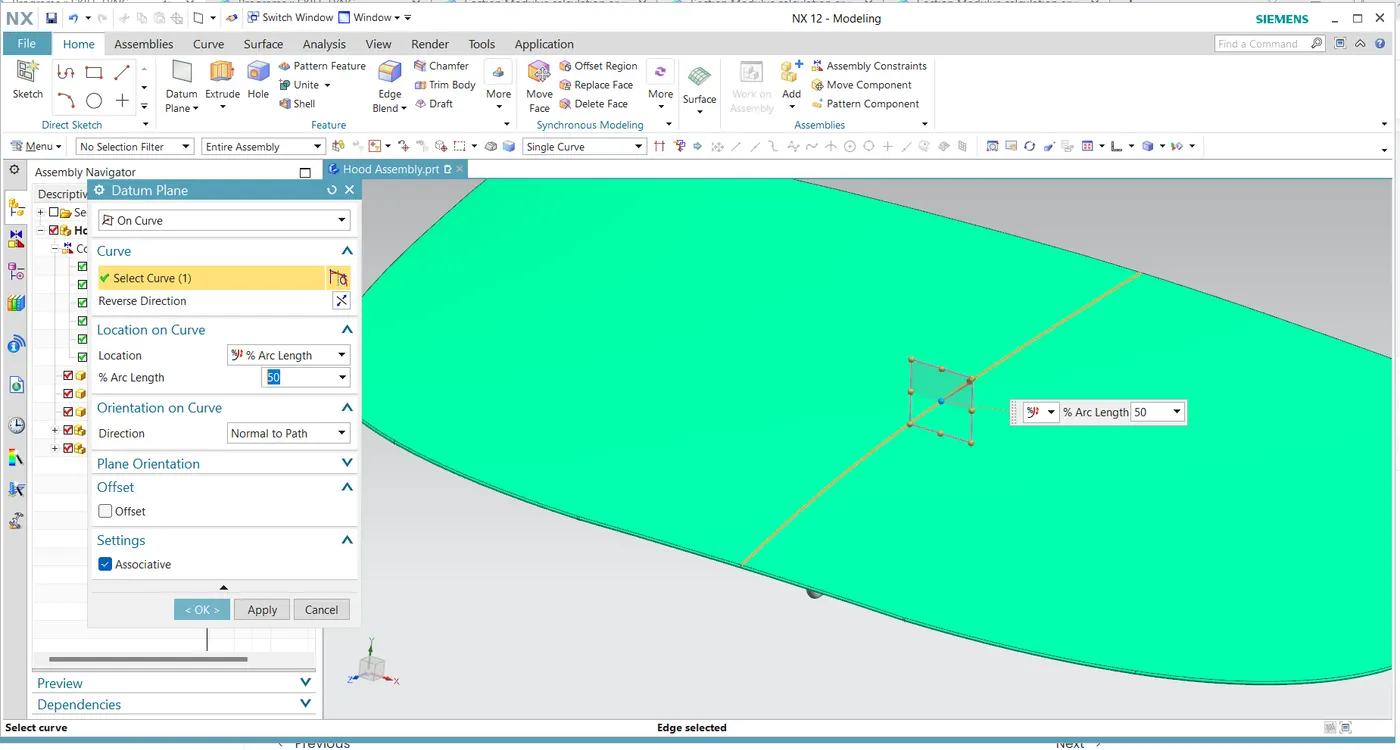
Step 1 : Create Datum plane normal to hood surface for section inertia analysis
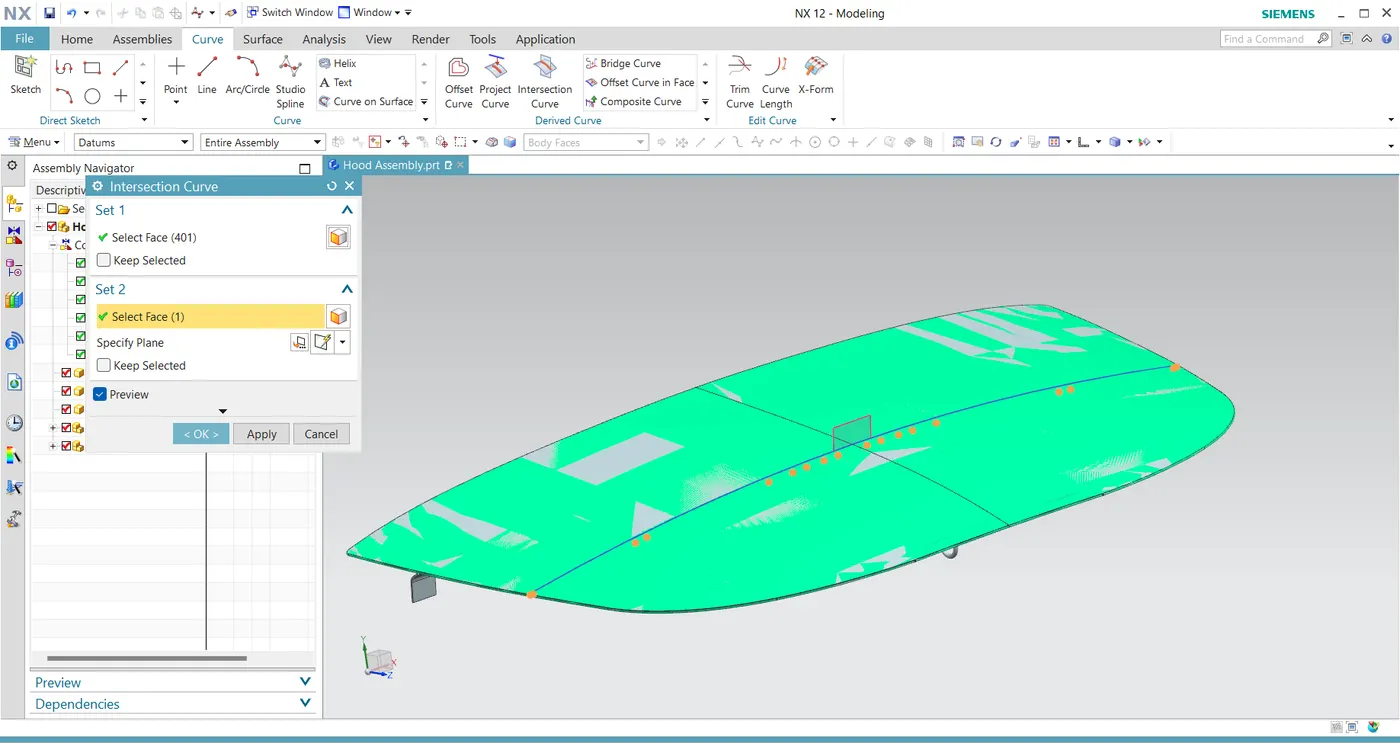
Step 2 : Take intersection of the hood inner and outer panel, project the intersection curve andusing sketch make it a single closed area.
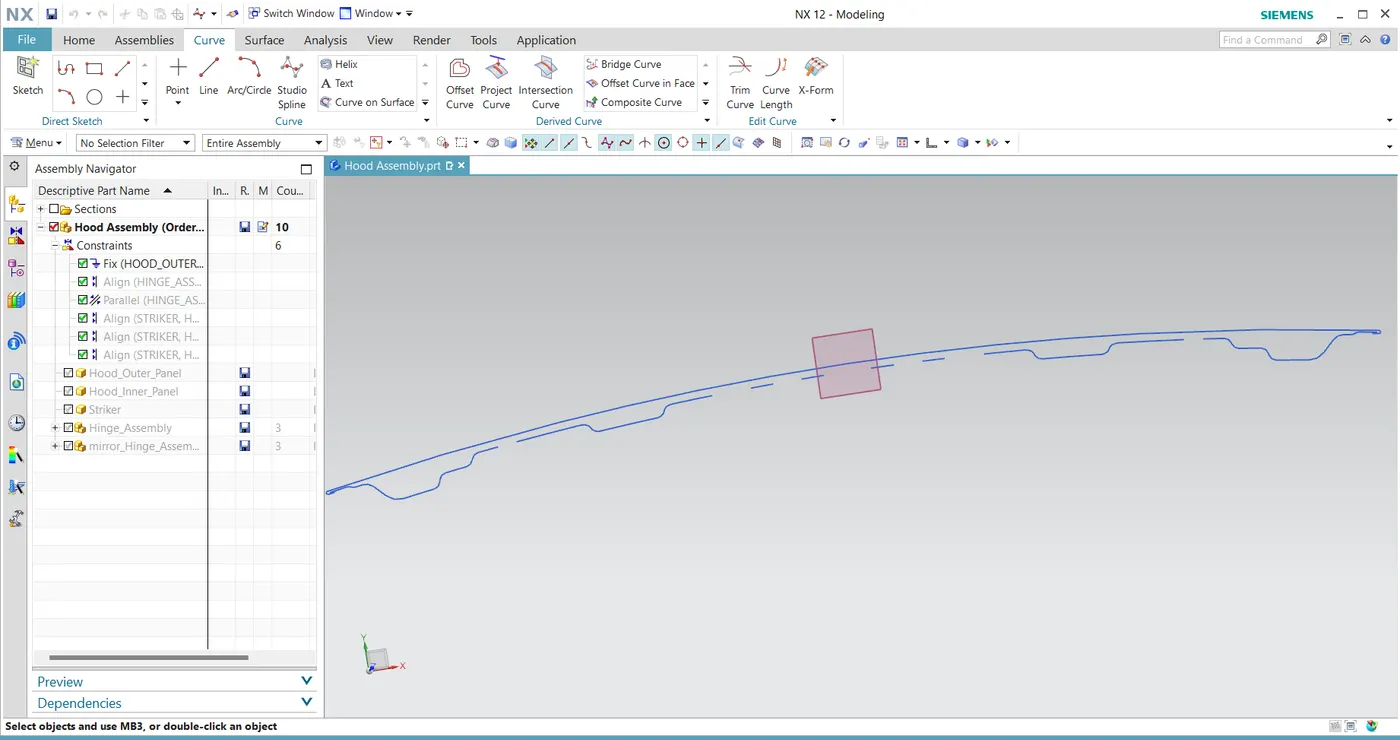
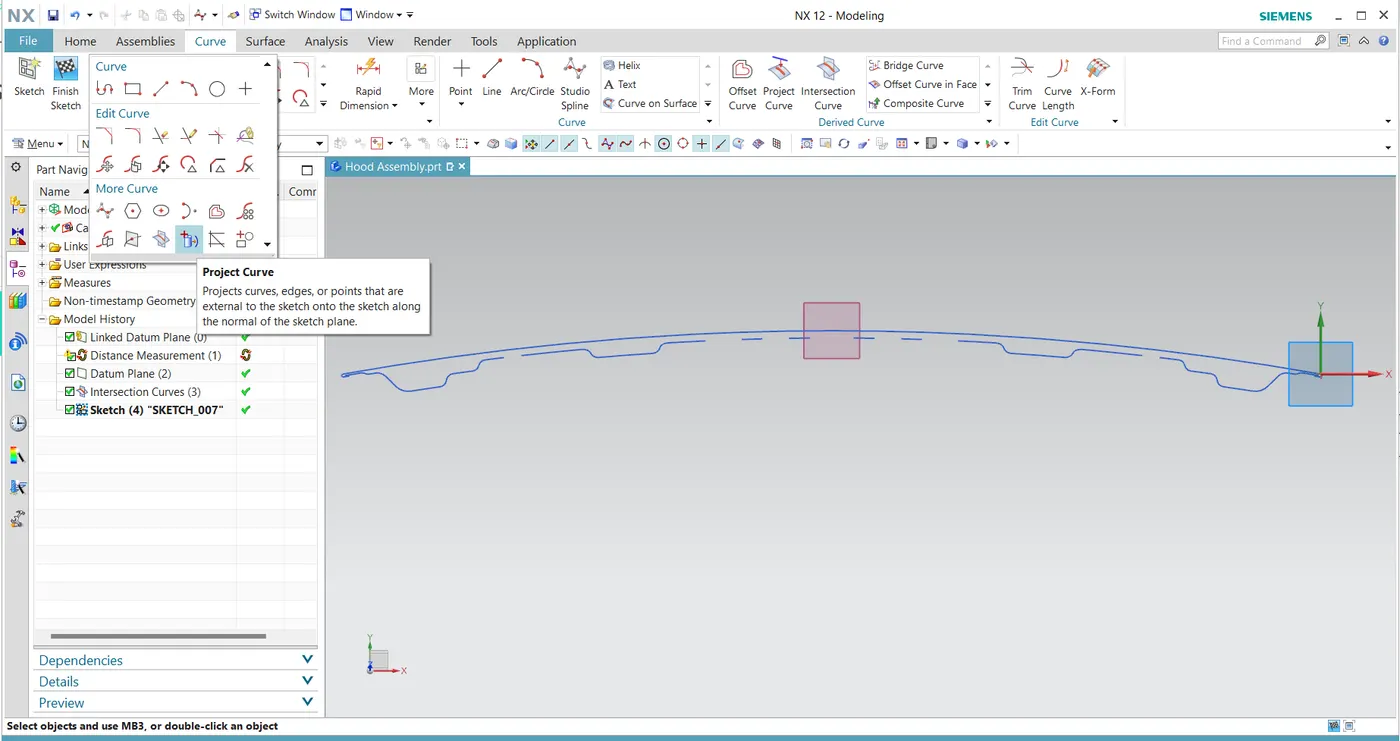
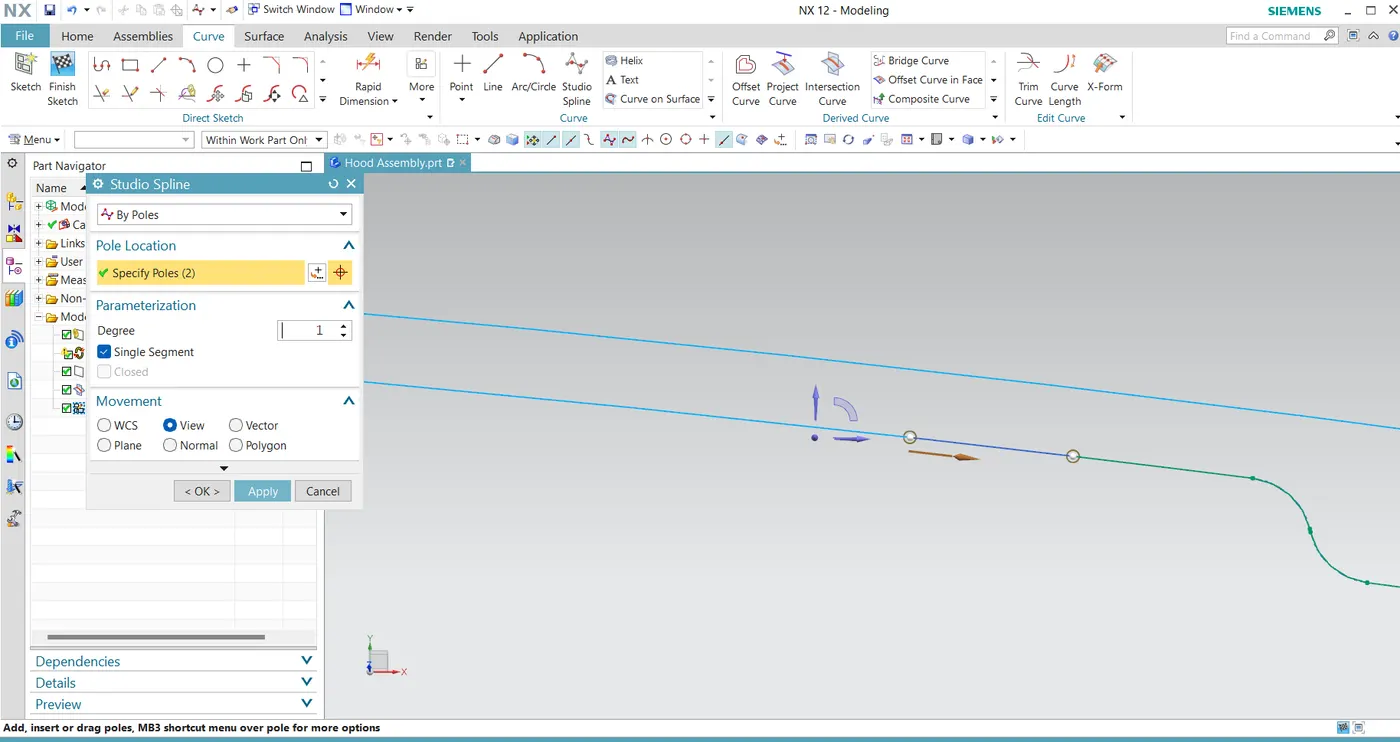
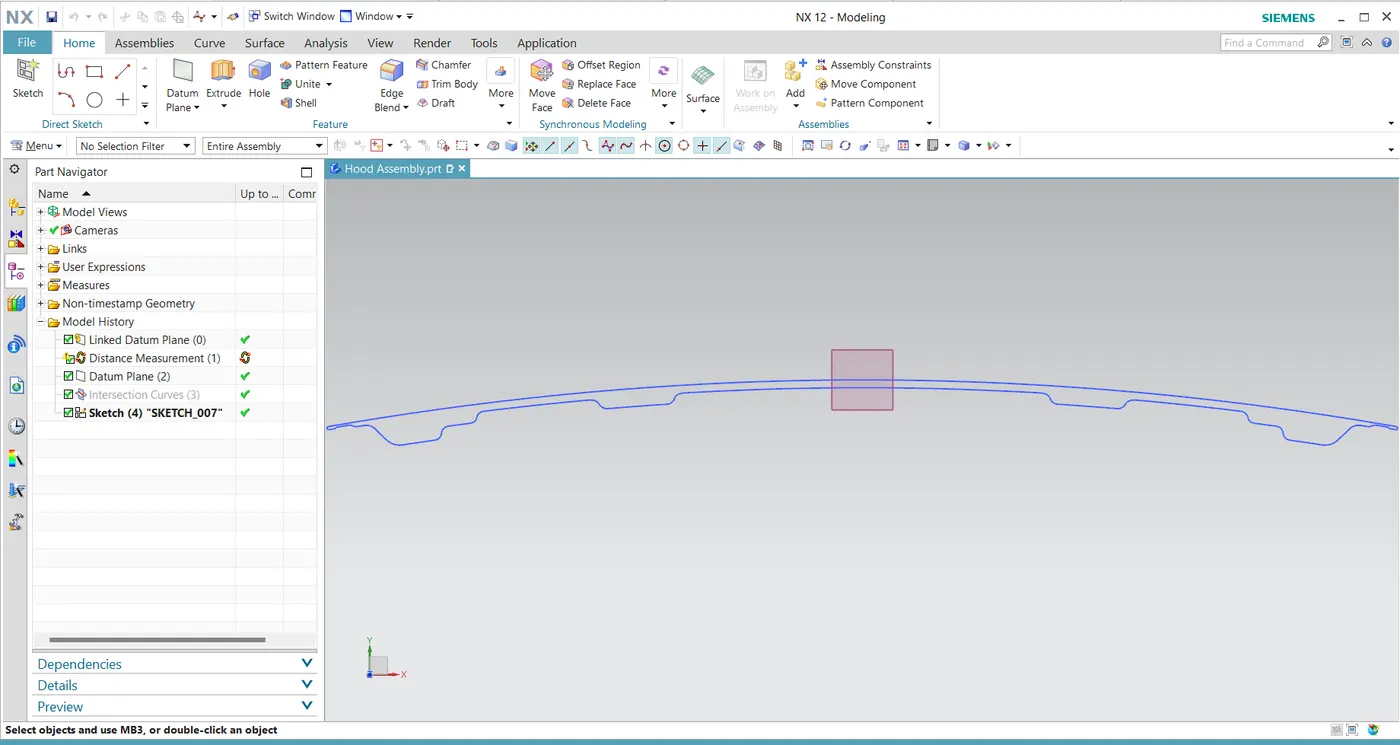
Step 3 : Find the Section Inertia and the section end to end distance and then calculate the Section Modulus.
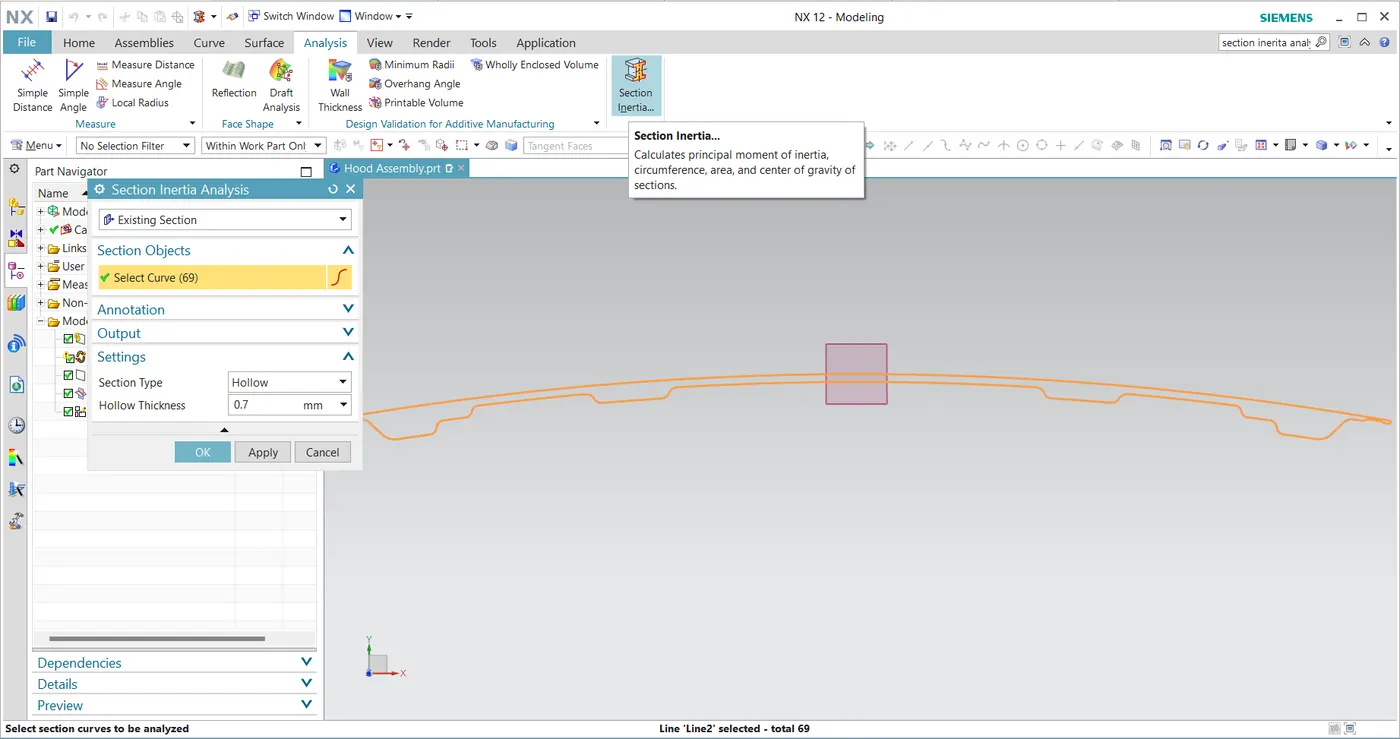
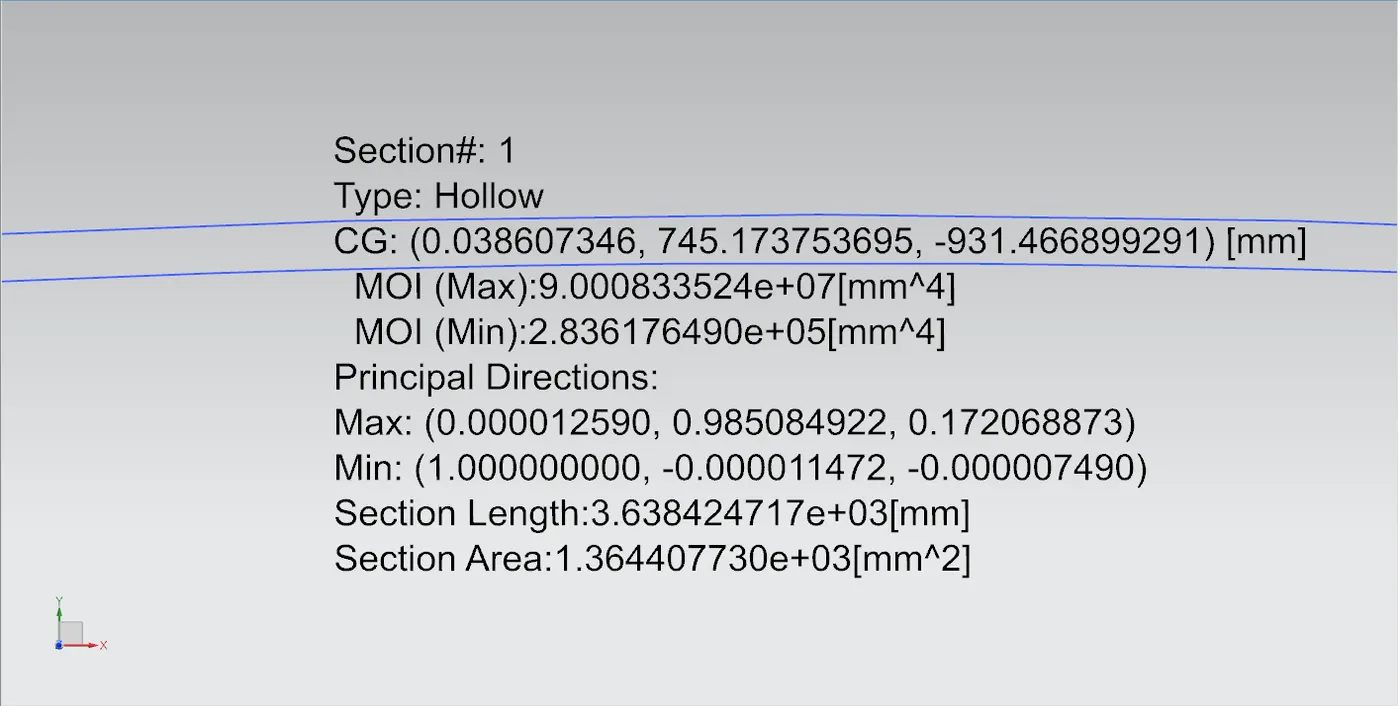
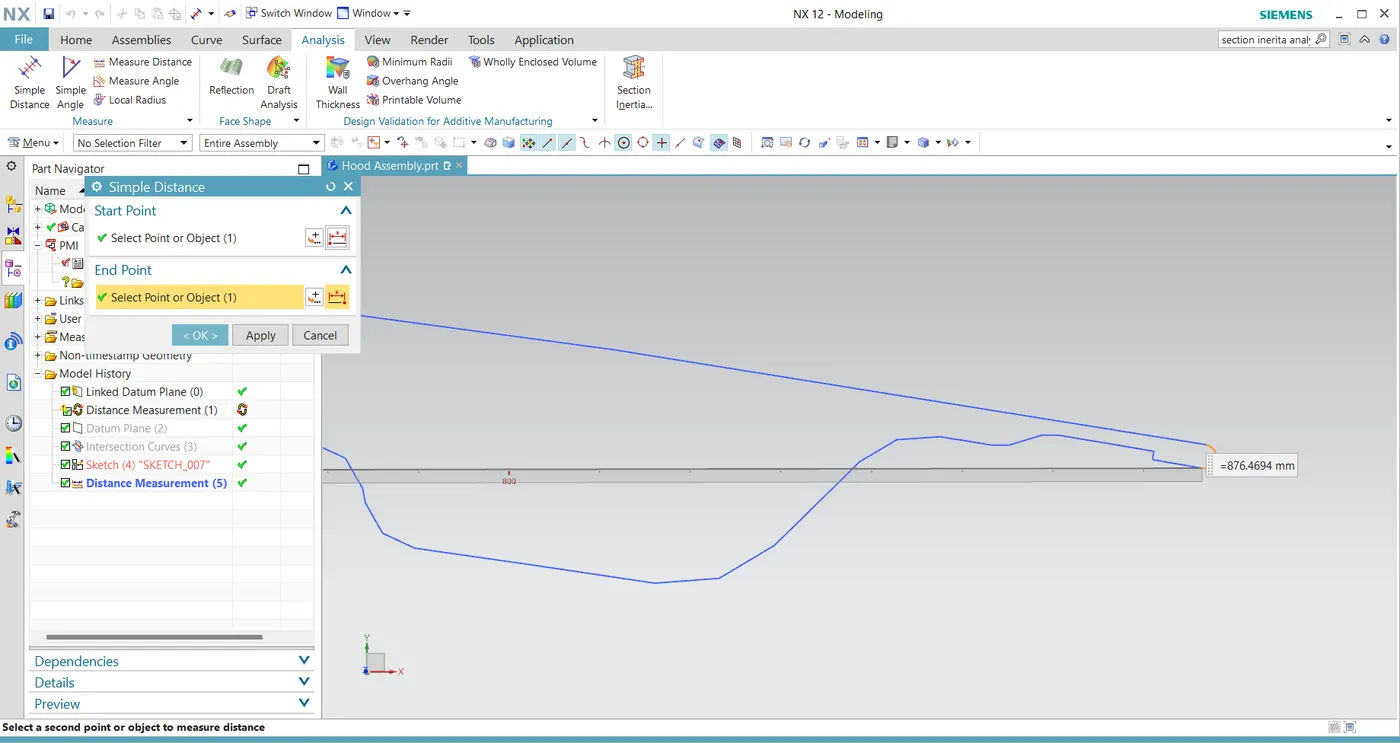
I max = 9.000834 x `10 ^7`mm^4
I min = 2.836176 x `10^5`mm^4
Y = 876.469 /2
= 438.235 mm
Section Modulus (`S1_min`)
= 2.836176 x `10^5` / 438.235 mm^3
`S1_min` = 647.182 mm^3
So, the Section Modulus of the first design is found to be 647.182 mm^3
Now the design is improved by changing the distance between the inner and outer panel by offseting the inner panel curve to a distance of 0.75 mm
Redesigning
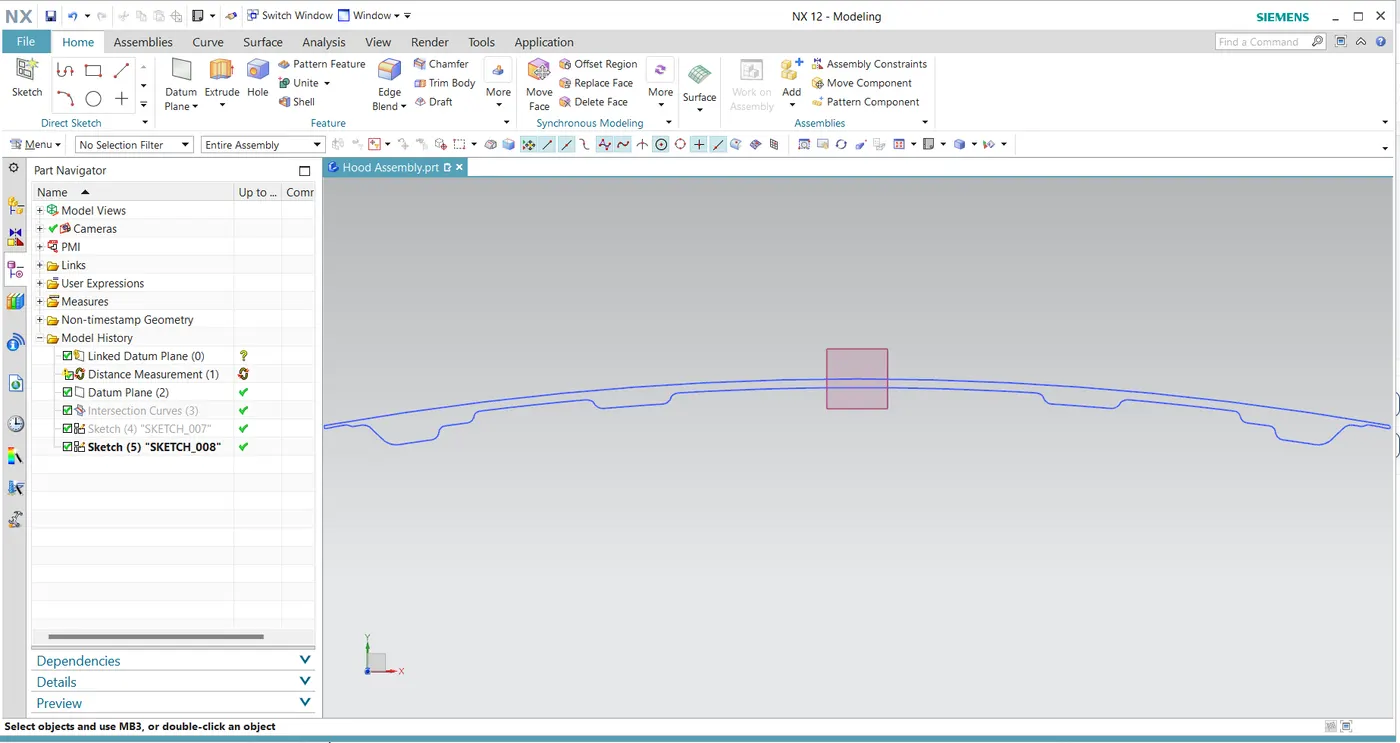
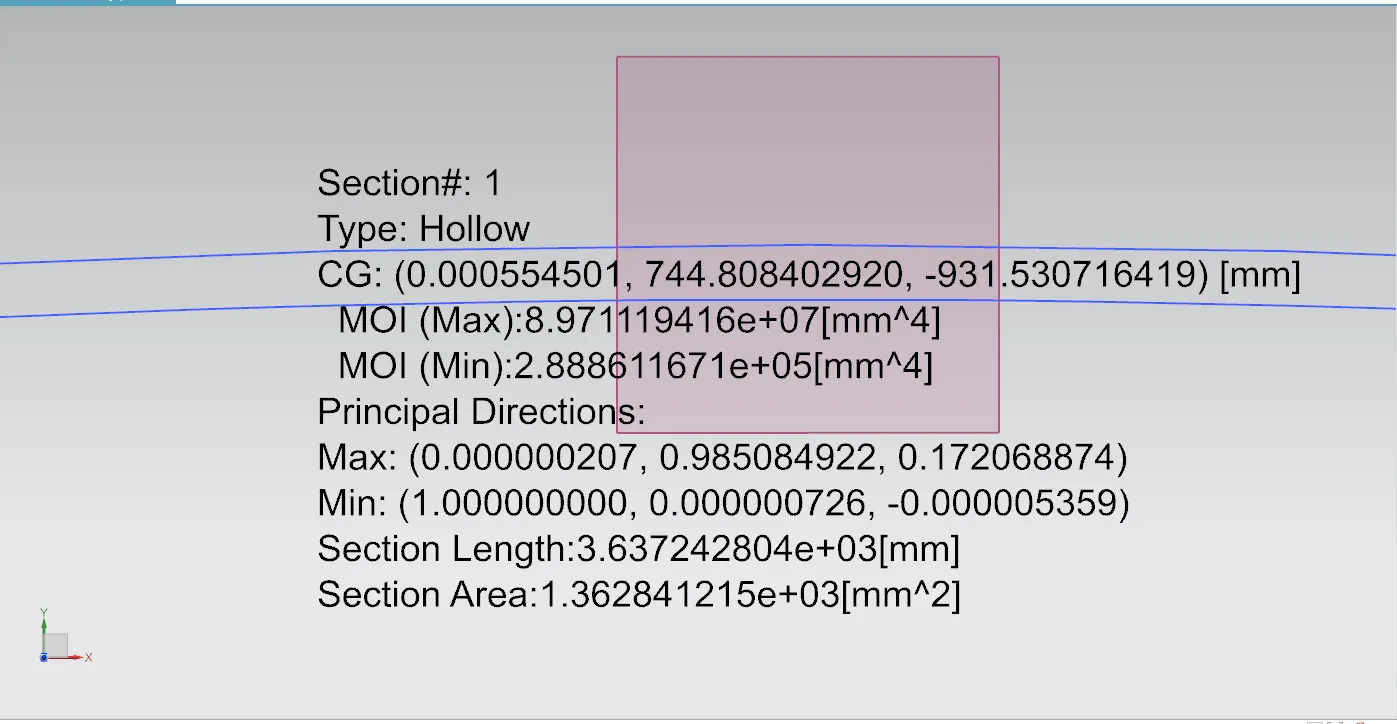
I max = 8.971119 x `10 ^7`mm^4
I min = 2.888612 x `10^5`mm^4
Y = 876.469 /2
= 438.235 mm
Section Modulus (`S2_min`)
= 2.888612 x `10^5` / 438.235 mm^3
`S2_min` = 659.147 mm^3
So it is found that by increasing the distance between the inner and outer panel the section modulus is also increasing.
By increasing the distance the cross sectional area increases which will increase the Moment of Inertia, since the distance from the nutral fiber 'y' is constant the increase in Moment of Inertia 'I' will increase the Section modulus.
Section Modulus in design 1 : `S1_min` = 647.182 mm^3
Section Modulus in design 2 : `S2_min` = 659.147 mm^3
Increase in Section Modulus by offsetting Inner panel by 0.75 mm = 11.965 mm^3
CONCLUSION
- Calculated the Section Modulus of the Hood Design and Redesigned the section which improved Section Modulus than the previous design.
- It is found that by increasing the distance the cross sectional area increases which will increase the Moment of Inertia, since the distance from the nutral fiber 'y' is constant the increase in Moment of Inertia 'I' will increase the Section modulus.