Roof Design
Objective : To create a roof with proper roof structure and supports also satisfy heat distrotion and snow load criteria.
Introduction:
A roof structure for a vehicle body includes a roof opening defined by a pair of spaced apart side rails, each having a flange extending inwardly and being vertically offset below the roof surface, and by front and rear headers, each having a flange defining a window opening.
types of roof comonly found:
Hardtops:
Above image shows a typical example of non removable Hard top
This type of rooftops are either metal or plastic and commonly found.The fixed hardtop is your traditional car roof and is suitable for all climes and weather. It protects car occupants from the sun and wind when driving. It also offers more sense of privacy and noise-free driving. Many cars designed this way also tend to be more stable and solid than other types of roofs.
- The detachable hardtops
- The retractable hardtops
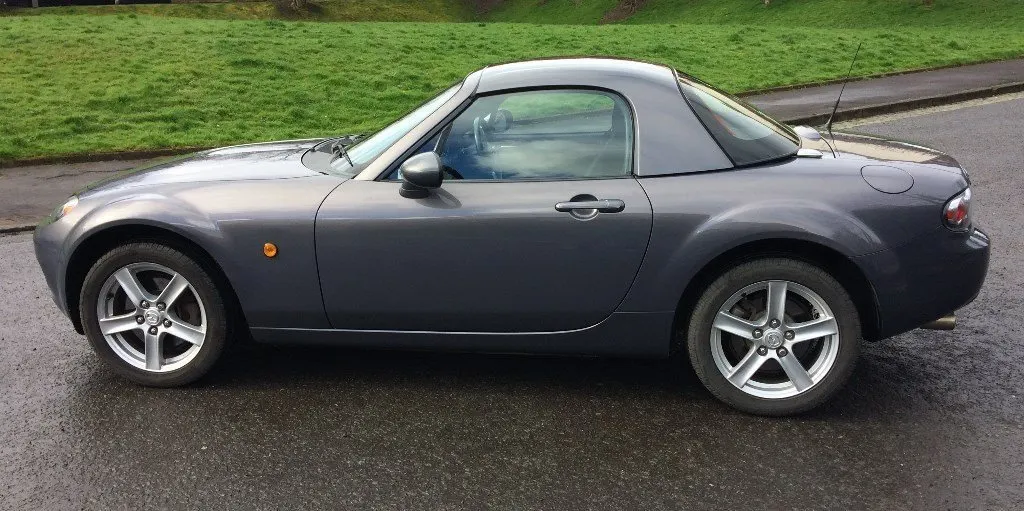
Above image of car , a Mazda mx5 with detachable hardtop.
in detachable hardtops the roof top has to removed and may or maynot have a provision to store it with in the car,.
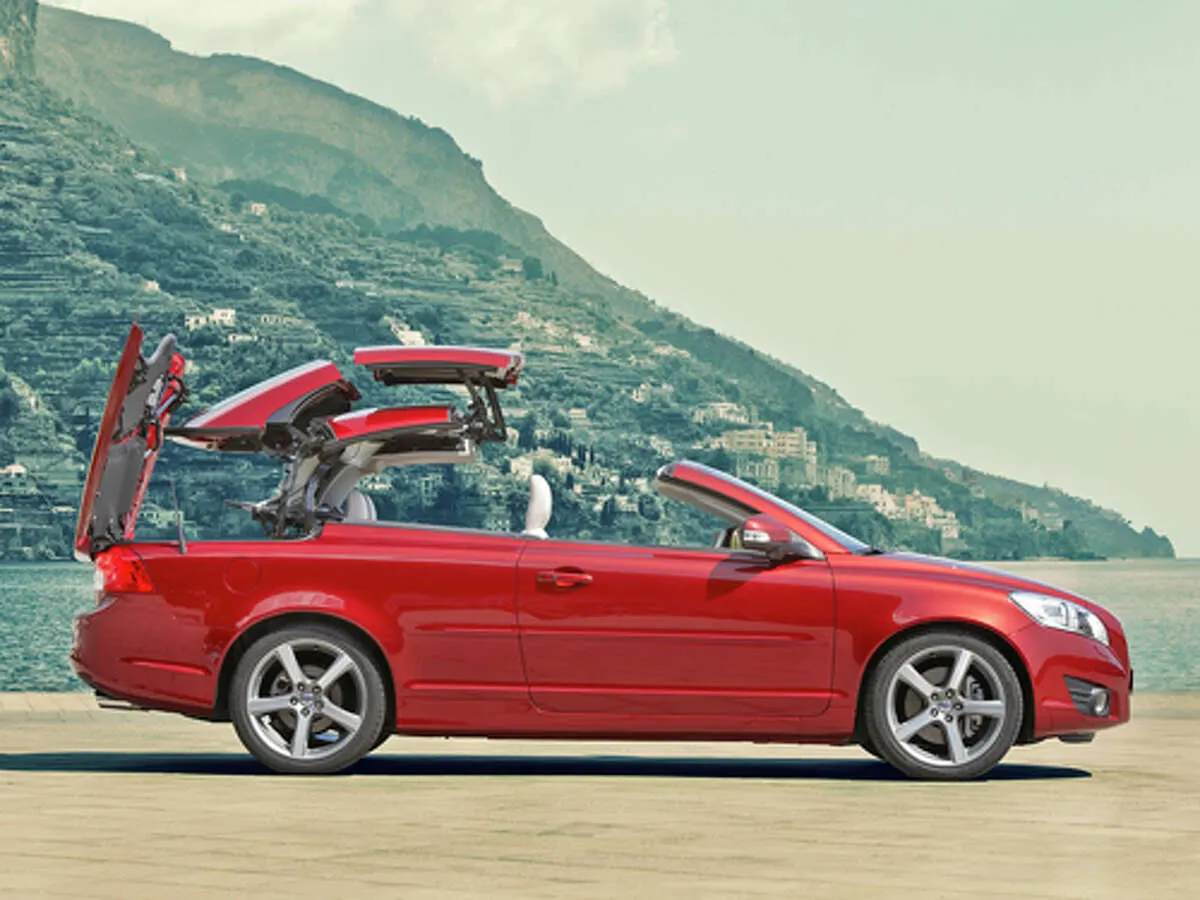
above image is a volvo c70 with retractable hardtop
In a retractable hardtop the the hard top splits and retracts into trunk of the vehicle.
Sunroof:
Sunroofs, the part of the vehicle allowing light and/or air inside via the roof, have been a part of cars since the early days of the automobile’s history. There are many different types of sun roofs, each with their own functions and benefits – but all sun-roofs are a great style statement in themselves.
Having a sunroof can making riding in a vehicle much more agreeable by allowing a direct flow of natural light and air inside and are a fun way to enjoy pleasant weather.
Popular Sunroof Designs
There also various different types of sunroofs in regards to their construction, with the four most popular being the built-in, the spoiler, the pop-up, and the panoramic designs.
1. Built-in
The classic design, a built-in sunroof features the popular style of the sunroof panel sliding out of view, inside the roof of the car. This enables great opened space but is only possible on larger vehicles.
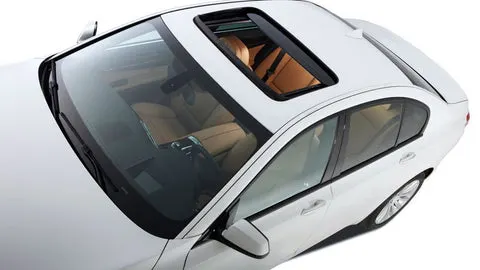
2. Spoiler
Similar to the built-in design, a spoiler sunroof has a mechanism in which the sunroof slides on top of the roof (instead of inside).
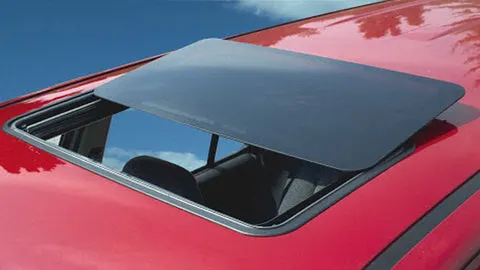
3. Pop-up
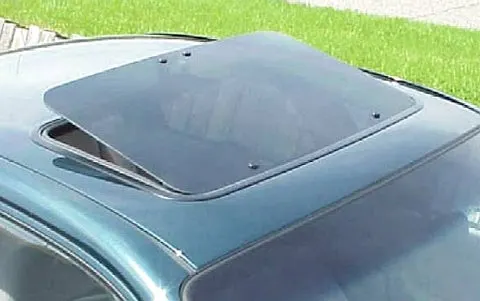
The pop-up sunroof is the least inexpensive of all sunroof designs. The roof panel is opened and closed manually using a liver hatch, although older models may have a rotary crack mechanism, and tilts slightly to allow a vent of air inside the passenger area of the car. For some vehicle designs, these panels are completely removable.
4. Panoramic
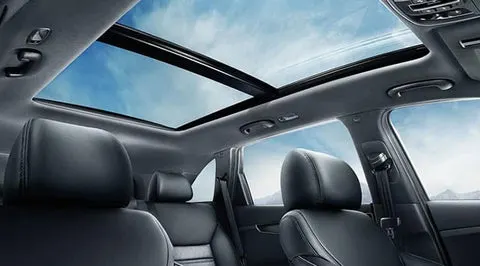
This style is becoming more and more common on newer car models; panoramic moonroofs have several glass panels covering a large proportion of the entire roof, with the option of opening the most forward panel. While more expensive than other varieties, this is sure to elevate your experience. If you’re driving on a clear night, this design is sure to display a great view!
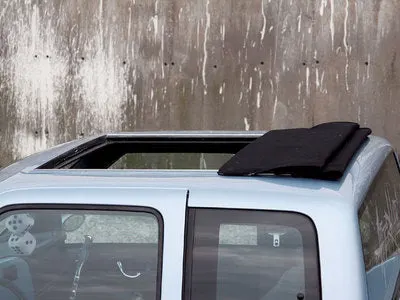
5.Folding/Rag Top: The folding/ragtop sunroof comes with integrated foldable fabric, which folds back to open the roof. These can be considered an cheap, yet practical alternative to convertible cars because unlike the foldable roof, they don’t eat up space in the cargo space.
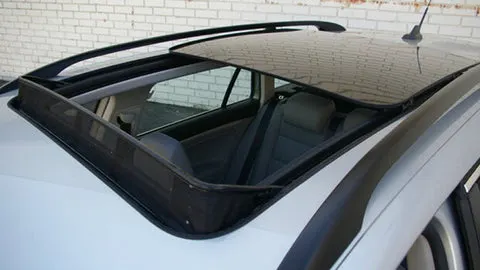
6.Top-mount Sliding Roof: In this type of sunroof, the metal roof panel slides open above the car’s roof using tracks, thus this saves the cabin from compromising headroom, as in the case of in-built sunroofs. These are also fitted with wind deflectors that pop-up automatically, when the roof is opened, thus it banishes wind noise and small objects from entering the cabin.
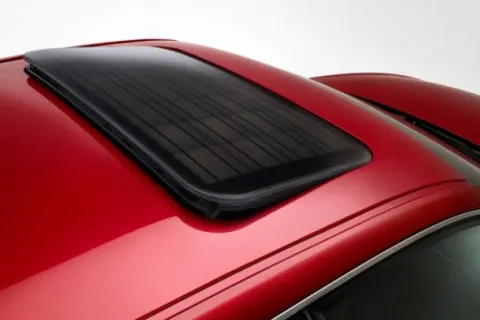
7.Solar Sunroof: Similar to any sunroof, this can also be tilted and slid. However, the solar sunroof consists of photovoltaic cells that generate electricity in sunlight, like solar panels, Hence these can store energy from direct sunlight falling on the roof, and power various electronics inside the car.
Soft Top
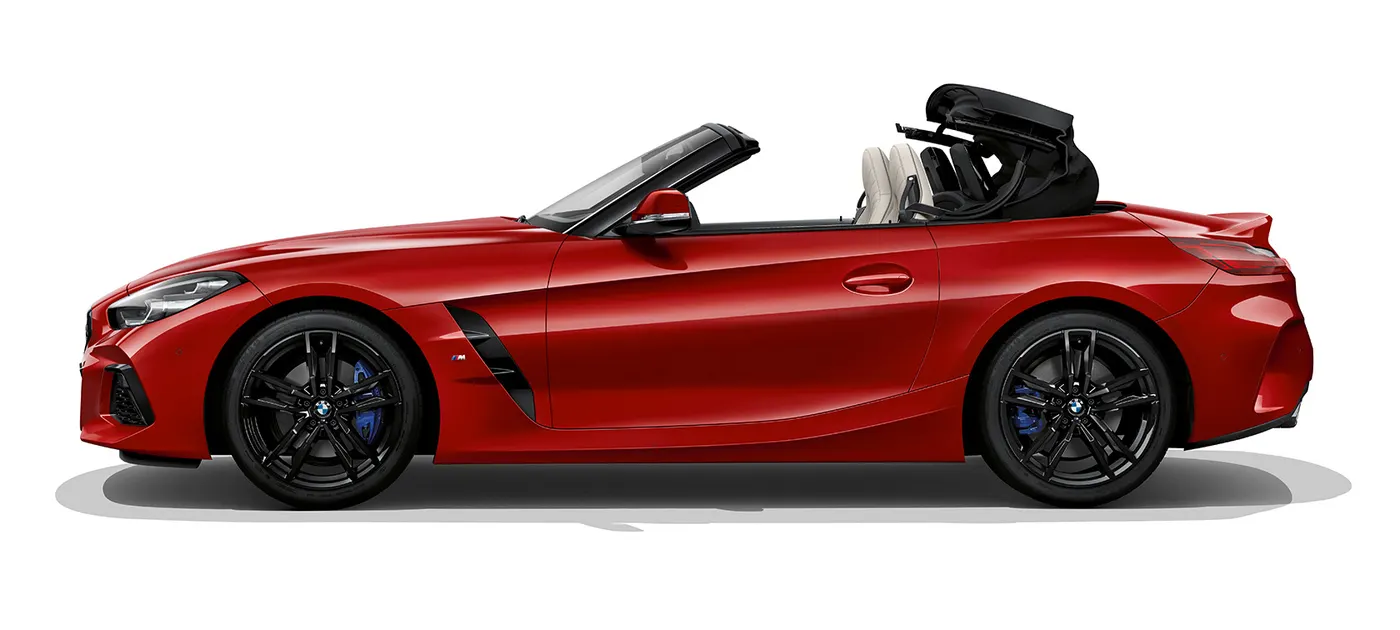
These vehicles are named “soft-top” because the roof is made up of fabric. The material could be made of nylon or even PVC. One of the major advantages of soft-top compared to hardtop convertibles is that they reduce weight on the vehicle. The storage is easier due to the flexibility of the fabric, and they are much easier to manufacture. But the safety is doubtful in the case of these convertibles.
These soft-top convertible models are great – BMW Z4, MINI Cooper, Rolls Royce Dawn, Lamborghini Huracan Evo Spyder, and Aston Martin DB11.
 saefty
some of the factors needed to be considerd during roof design are
- Visibility criteria
- Head clearance
- Heat distortion and snow load criteria
- Draft analysis
- Safety parameters
- roof styling/type of roof
- stregth of roof struture
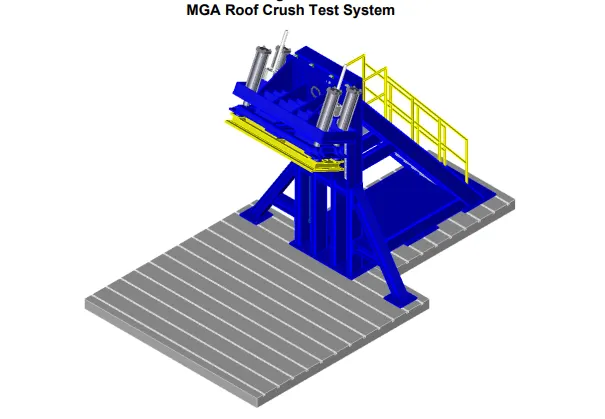
Above image shows how the roof testing is dun under a crushing rig.
Roof strength evaluations are conducted on a quasi-static test system manufactured by MGA Research Corporation (Figure 3). The system consists of an upright assembly and an attached loading head that can be fixed at varying heights from the ground as well as at pitch angles ranging from −5 to +5 degrees to accommodate testing on the driver or passenger side. The roll angle is permanently fixed at 25 degrees.
Four hydraulic actuators control the movement of the platen along two linear guides. The entire system is mounted on a T-slot bed plate anchored to the floor of the test facility.
- How fast the car can reforms to its original shape after the roll over and
- How deep is the protrusion after the roll over
During a crash the roof must not colapse to passengers head area.
also jaming of doors must be minimal.
Given data
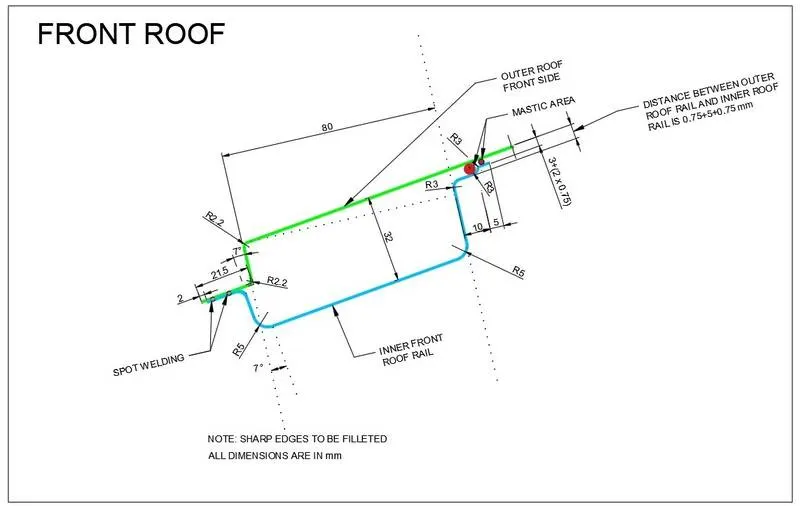
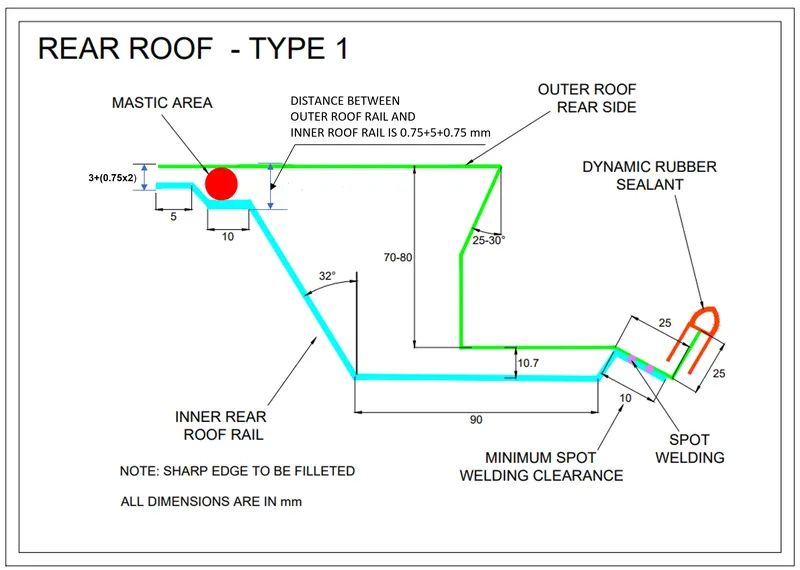
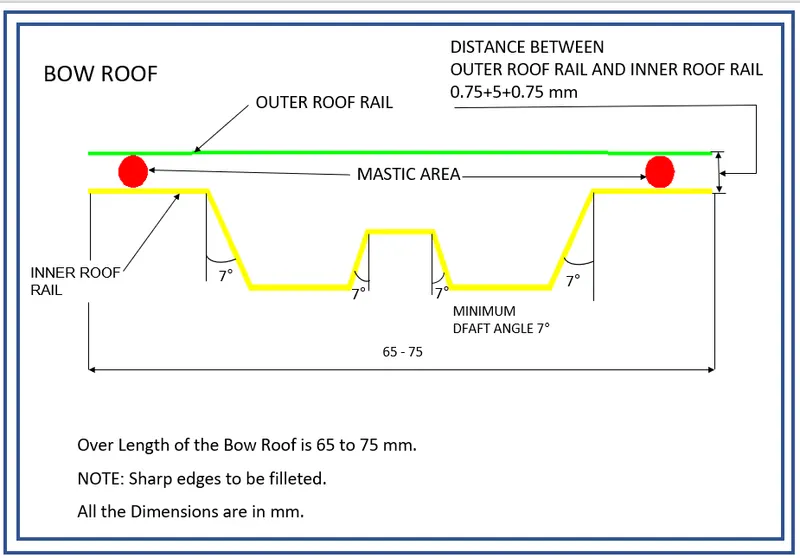
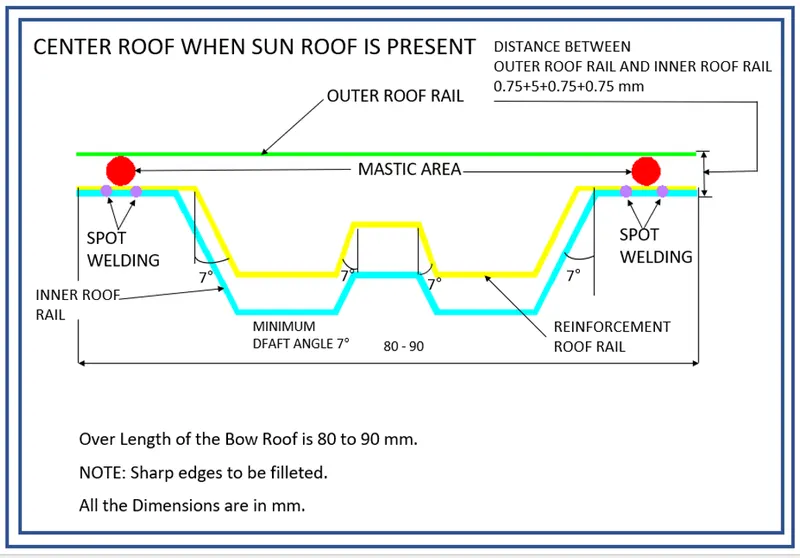
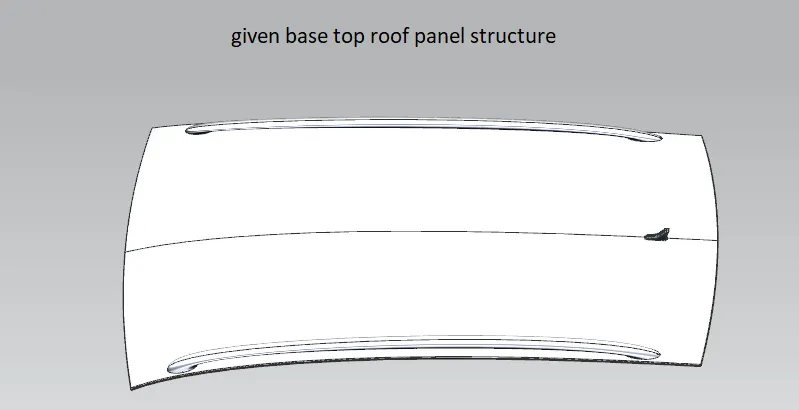
Car roof:
It is the entire structure that includes the roof pannel, bow roof supports, center roof rail , front and rear roof rail.
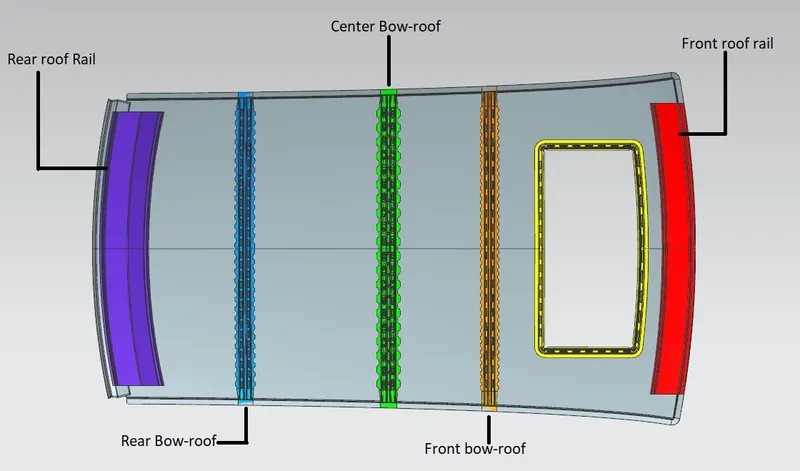
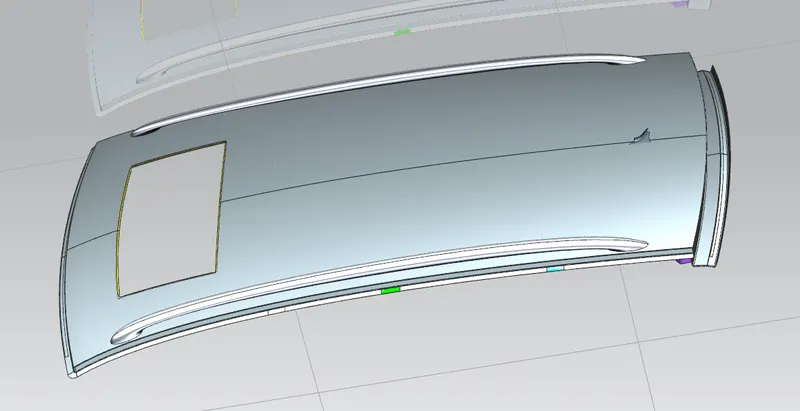
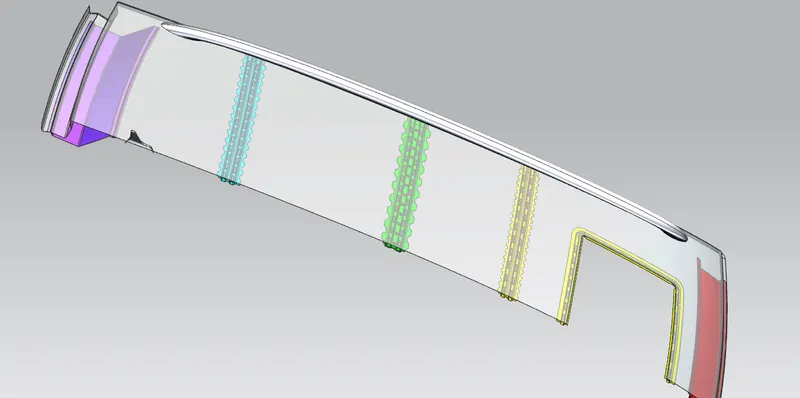
Roof Panel
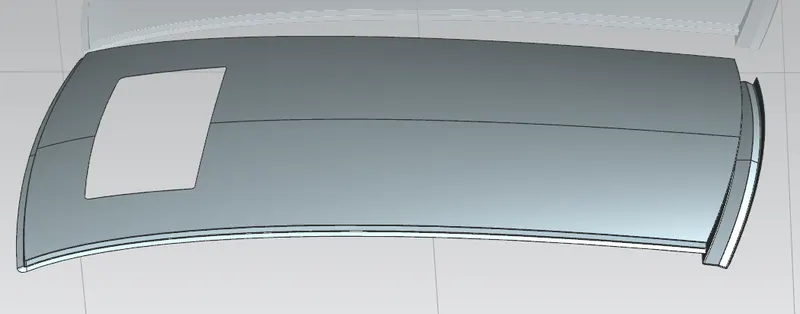
Process involved
- roof panel is used aw wave geometry link is kept unassosiative foe all parts genaration
- later the parts are assambled
- offset surface ,
- law extention
- sew,
- trimsheet,
- emboss,
- thicken,
- mirror geometry,
- sweep,
- bridge curve are most common functions used.
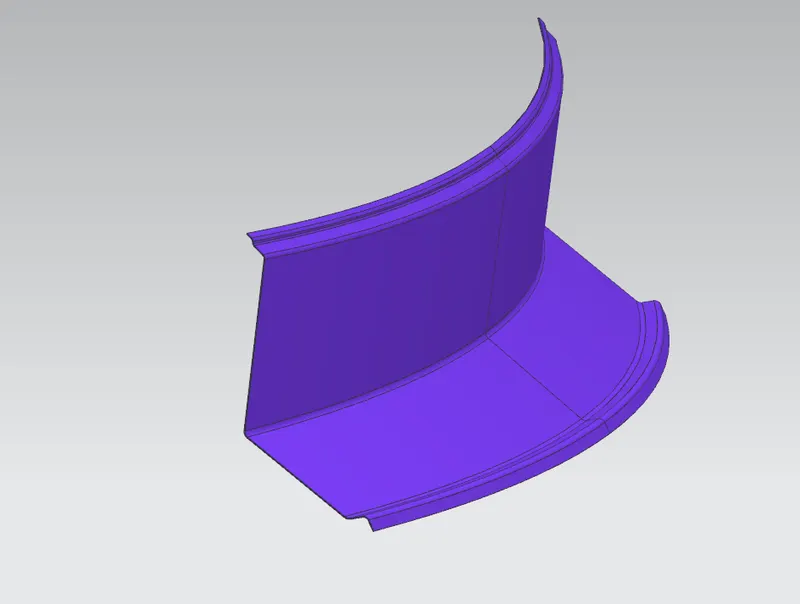
Rear RailRoof
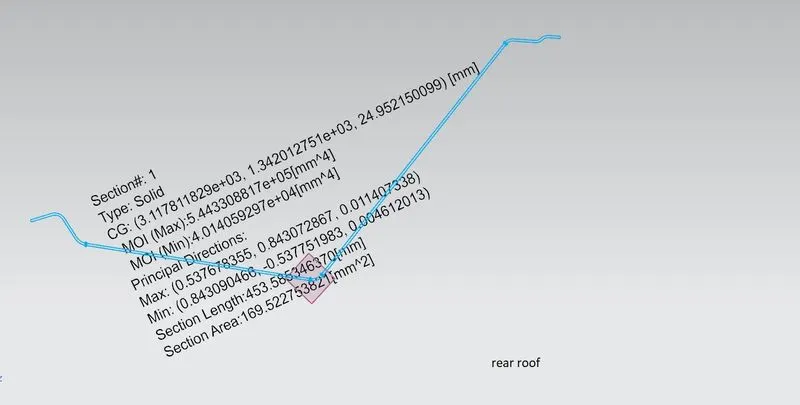
section inertia
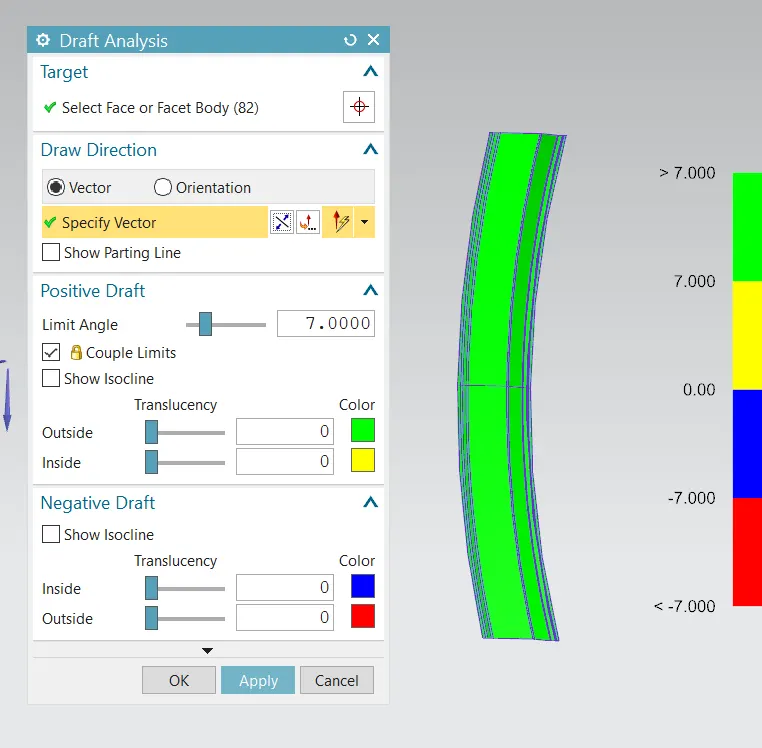
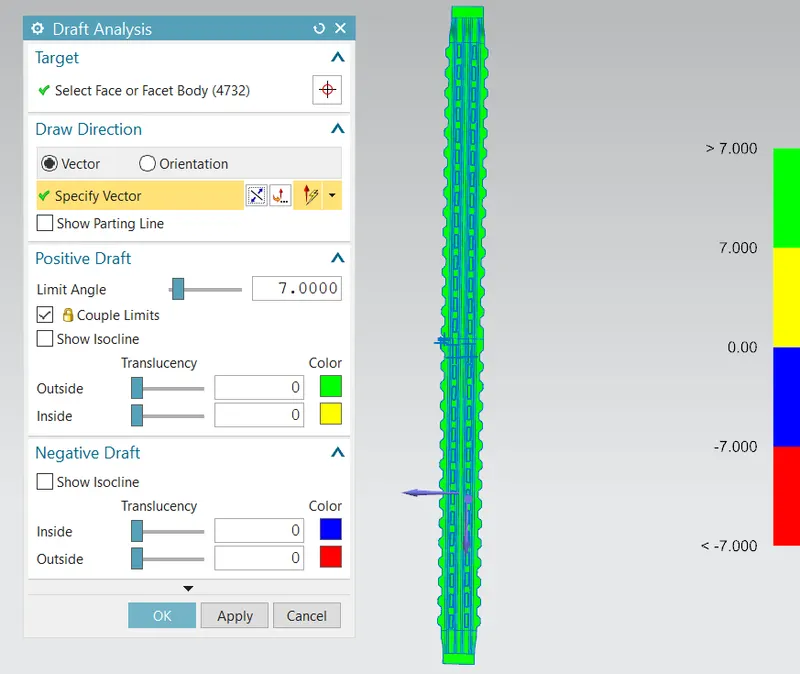
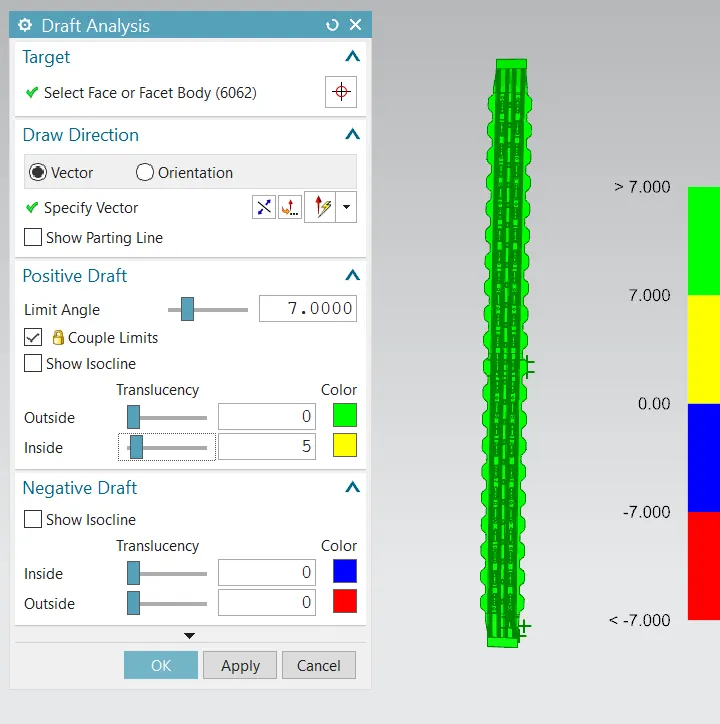
Draft analysis
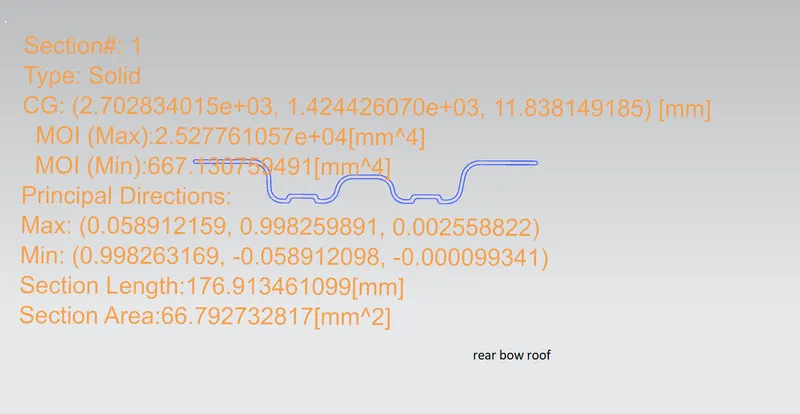
rear bow-Roof
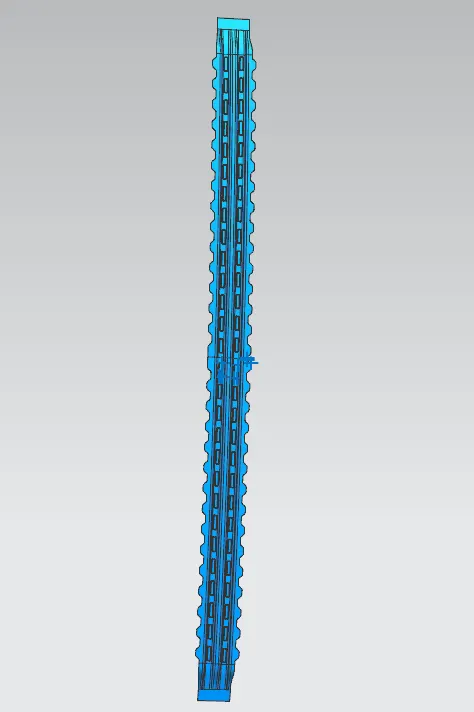
section inertia
Draft analysis
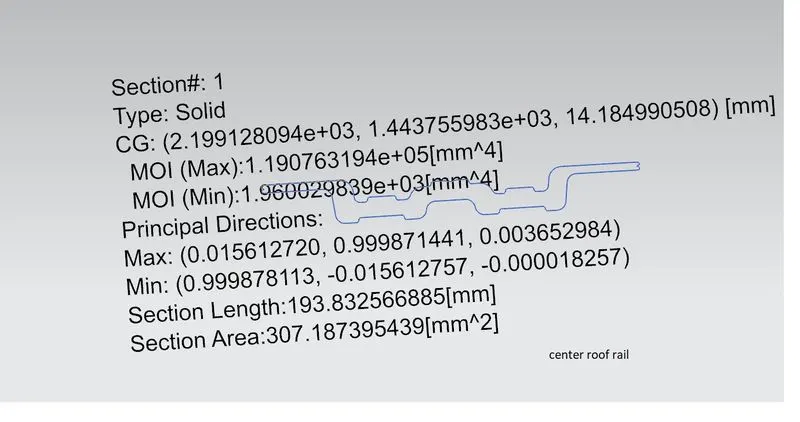
center roof rail
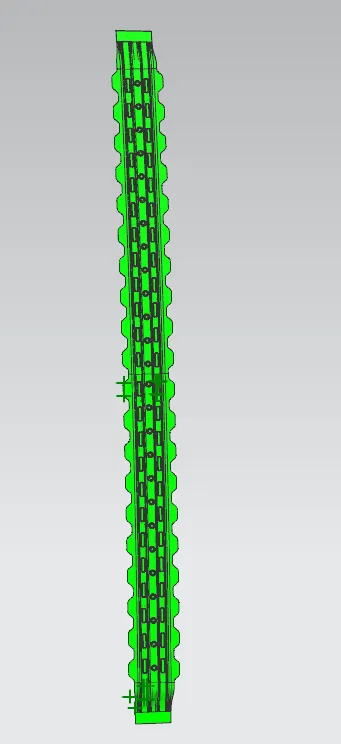
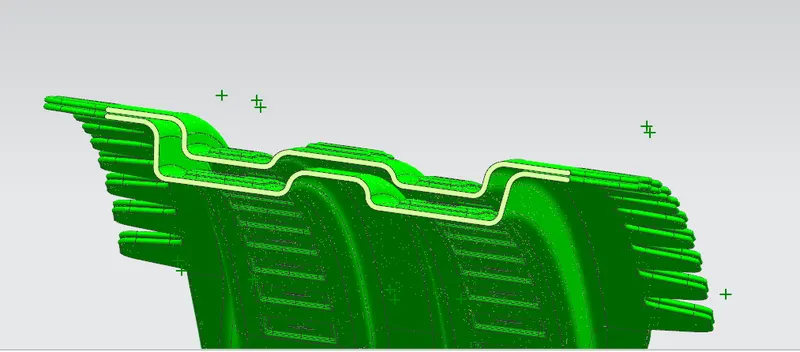
section inertia
Draft analysis
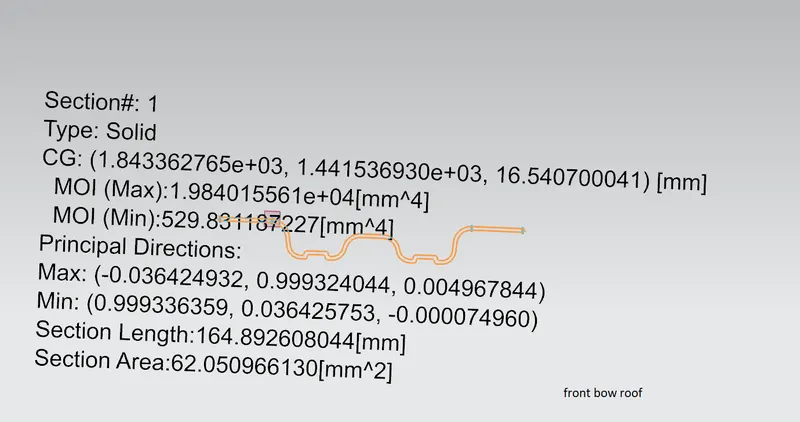
Front bowroof
section inertia
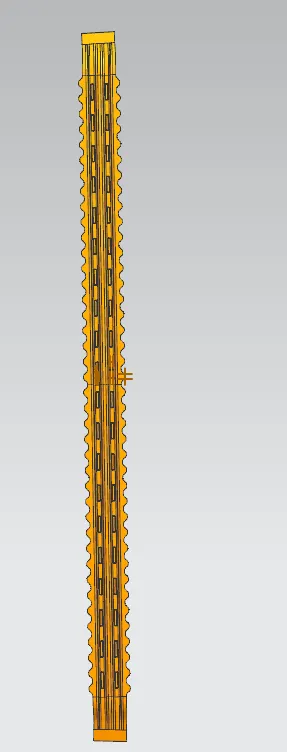
Draft analysis
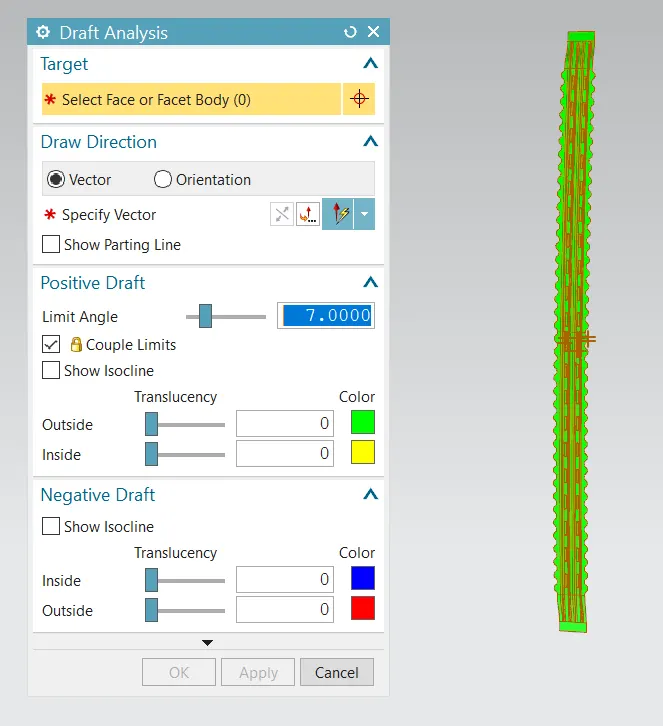
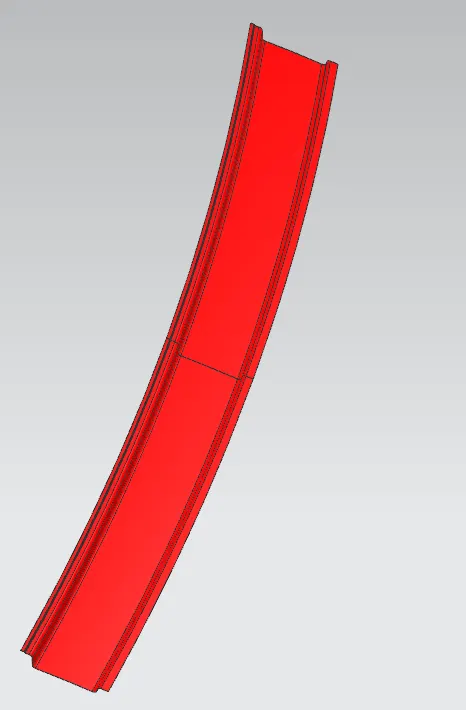
Front roof rail
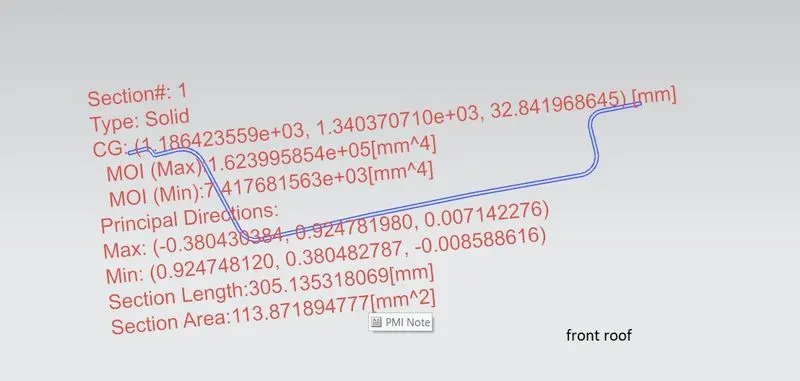
section inertia
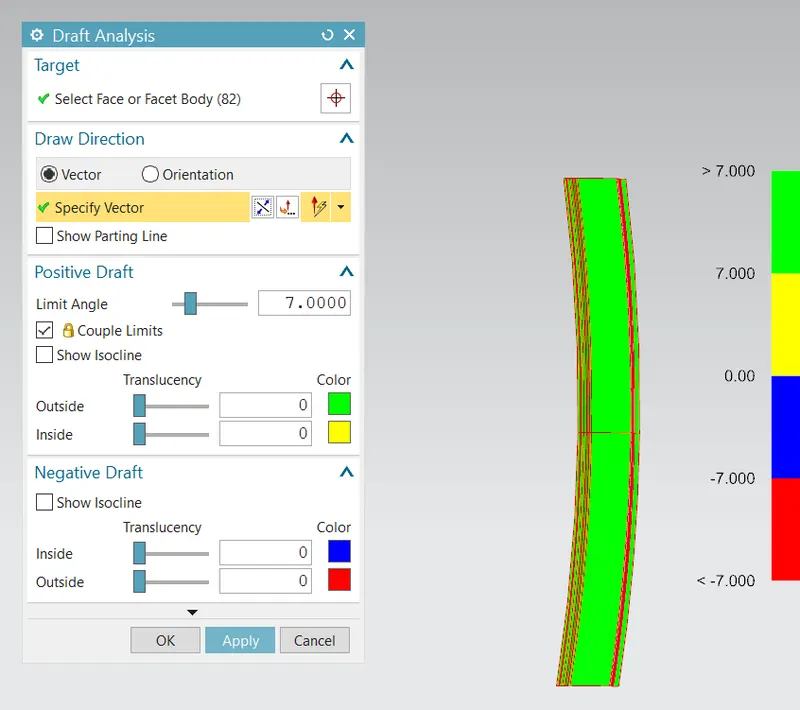
Draft analysis
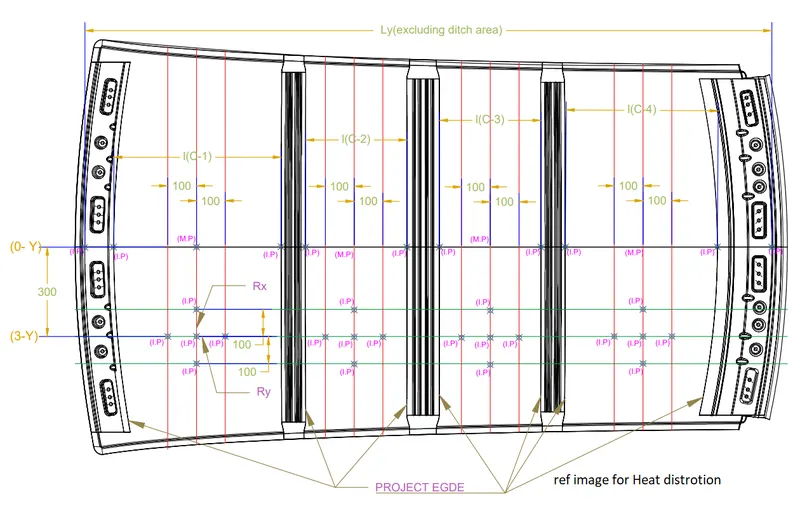
Bow–Roof Prediction Formula
`W = [1.73 xx10^(-3) xx L] + [1.85 xx 10^(-8) xx (R^2)/t] + [ 1.10xx10^(-3) xxl] - 2.68`
Where,
L = Roof Length in X-Direction[mm](Roof dimension in 0-Y)
R = Roof curvature
`R = 2(RxxRy)/(Rx+Ry)`
Rx = X curvature
Ry = Y curvature
t = Roof plate thickness [mm]
l = Bow Roof Span [mm]
Judgment Condition
OK< 2.7
| S.No | Bow Pos | Rx | Ry | R | L | t | l | w | Result |
| 1 | Front bowrroof - center roofrail | 4729.2447 | 7171.2604 | 5699.6984 | 2028.9327 | 0.75 | 295.6041 | 1.9565 | OK |
| 2 | center roof rail -rear bow roof | 3920.5485 | 10873.54087 | 5763.1454 | 2028.9327 | 0.75 | 442.2134 | 2.1357 | OK |
| 3 | rear bow roof - rear roof rail | 3268.5533 | 14658.3306 | 5345.2161 | 2028.9327 | 0.75 | 286.6496 | 1.85011 | OK |
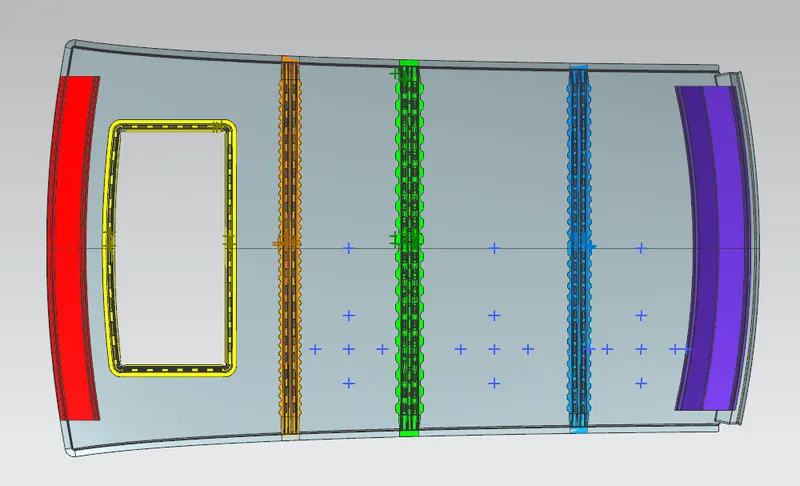
As sunroof is present the section between front roof rail and front bow roof can be neglected for calculations.
Result: our w value is less than 2.7 , all the 3 bow roof passes the test.
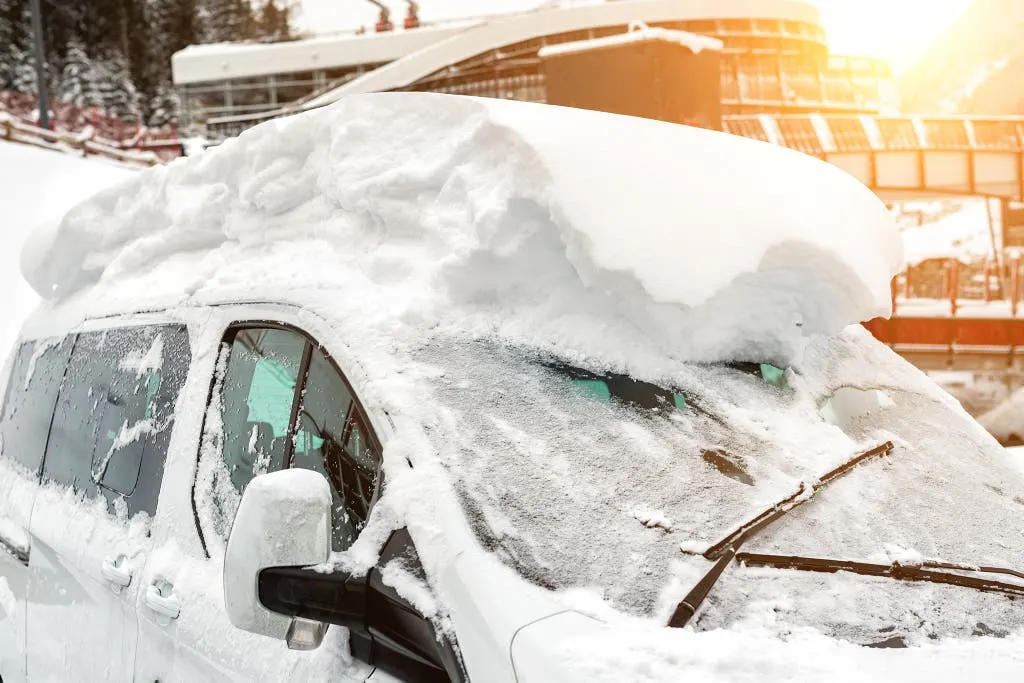
SNOWLOAD CONDITION
Snow Load Prediction Formula
`Qr = [Iy xx t2] / [α xx s xx [(Rx + Ry)/2]2 xx 10^-8]`
Note: The Qr value given over here is correct. There was a typo error in the formula given in the video.
Where,
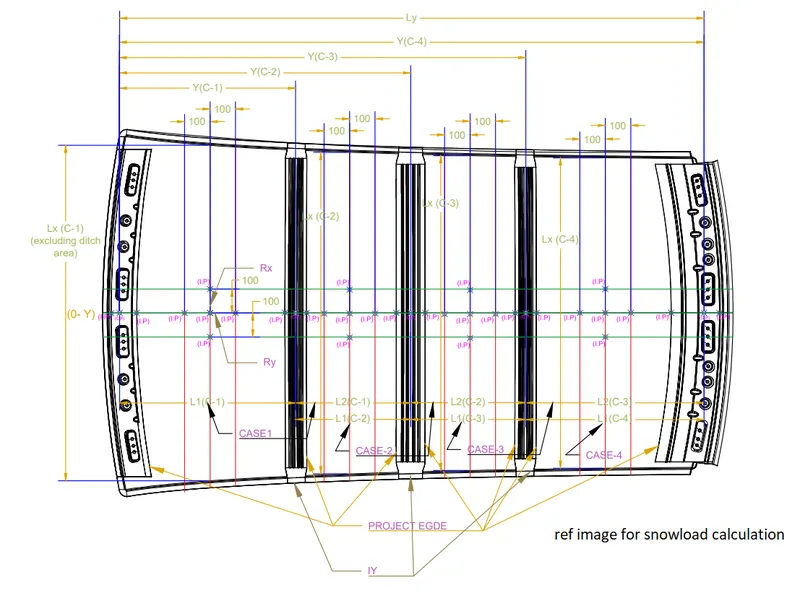
α = My x Lx2 x 10-12 , My = Y(Ly-Y)
t = Roof plate thickness [mm]
Ly = Distance between the front and rear roof Rails on the Vehicle along with 0Y[mm]
Length of Roof panel with the center point between Roof rail Front /Rear as the front and rear reference point.
Lx = Distance between the Left and Right end of the roof on the Roof BOW [mm]
The width of the roof panel is exposed on the surface.
Y = Distance front Front Roof Rail to Roof BOW[mm]
s = Distance for which Roof BOW bears divided load [mm]
s = L1/2 + L2/2
Iy = Geometrical moment of inertia of Roof BOW (Y cross-section )[mm4]
Rx = Lateral direction curvature radius of roof panel Y cross-section on Roof BOW [mm]
Roof panel curvature Radius of the Length Lx in Front view
Ry = Longitudinal Direction curvature radius of the Roof panel X cross-section on Roof BOW [mm]
Roof panel X curvature radius of length s in Side view
Judgment condition
Qr ≥ 3.1
250 ≤ s ≤ 380
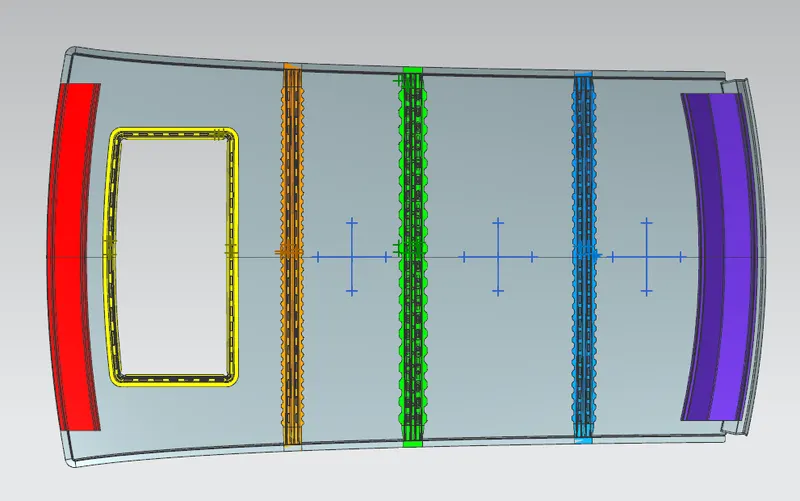
| S.no | Bow pos | Lx | Ly | Rx | Ry | t | y | L1 | L2 | My | s | Iy | α | Qr | Result |
| 1 | front bowroof - center roof rail | 1078.7475 | 2028.9327 | 3841.9506 | 7139.6506 | 0.75 | 1018.2046 | 355.8657 | 503.7019 | 10,29,128.0007 | 429.7837 | 1960.0298 | 1.1975 | 7.1054 | OK |
| 2 | center roof rail - rear bow roof | 1056.9498 | 2028.9327 | 4299.7069 | 11443.215 | 0.75 | 1521.9066 | 503.7019 | 422.7515 | 7,71,646.3679 | 463.2266 | 667.1307 | 0.862 | 3.03355 | NG |
Result:
The s value stays in the given limit for the bow roofs,:250 ≤ s ≤ 380
Qr value passes for front bowroof - center roof rail but fails for center roof rail - rear bow roof by a value of 0.07. The error can be corrected by increasing the embos height. or bt increasing the size of the bow roof.
NOTE: the files are uploaded as zip file onto drive*
https://drive.google.com/file/d/1zRIZCOuDAqruHKTMRFZxk50co3SRbZa9/view?usp=share_link
reference
https://www.iihs.org/media/46940e89-46cb-4e6e-81ee-8230bb3b5dd9/Qk3tzg/Ratings/Protocols/current/test_protocol_roof.pdf