Radar Mast & Final Assembly of Yacht
1.RADAR MAST
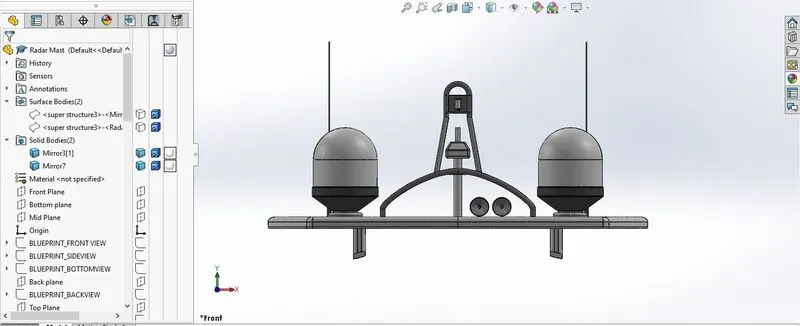
FRONT VIEW OF RADAR MAST:
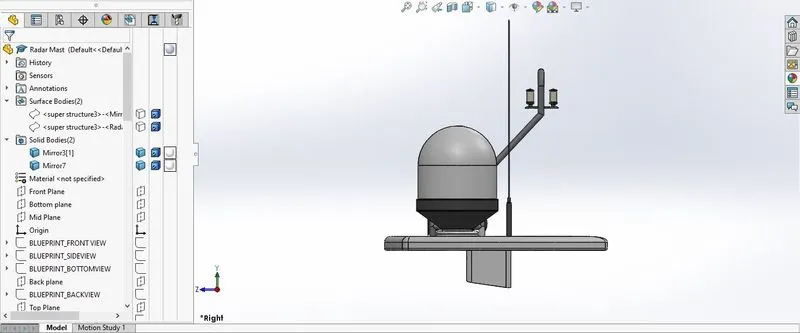
SIDE VIEW OF RADAR MAST:
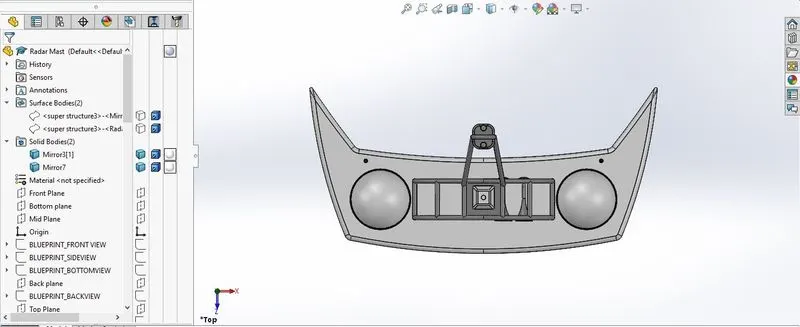
TOP VIEW OF RADAR MAST:
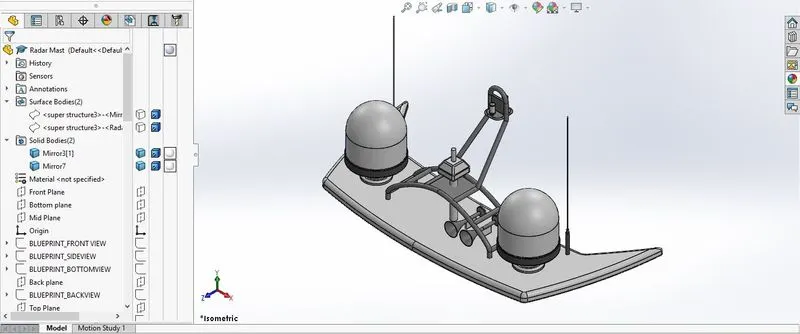
ISOMETRIC VIEW OF RADAR MAST:
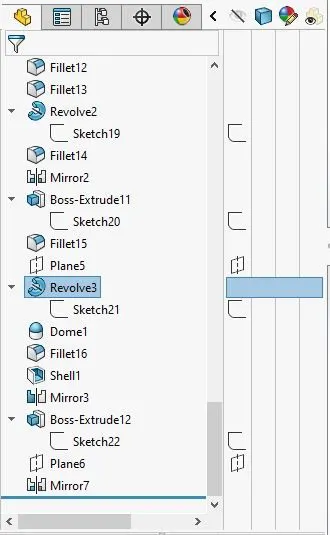
FEATURE TREE IMAGES OF RADAR MAST:
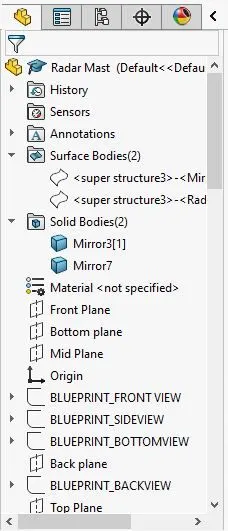
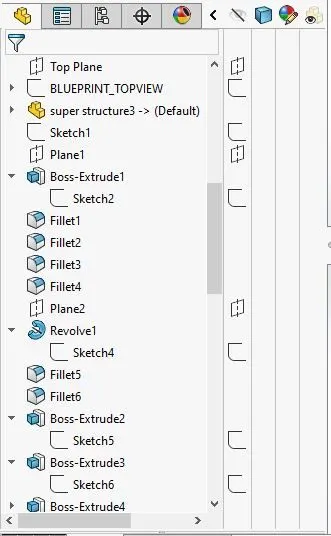
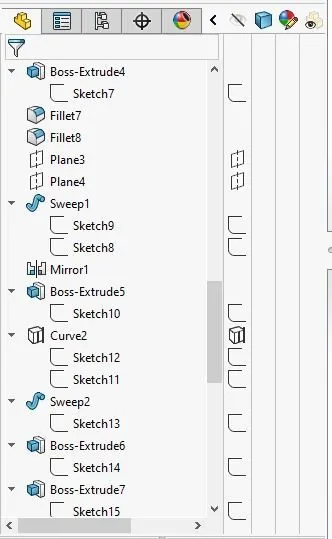
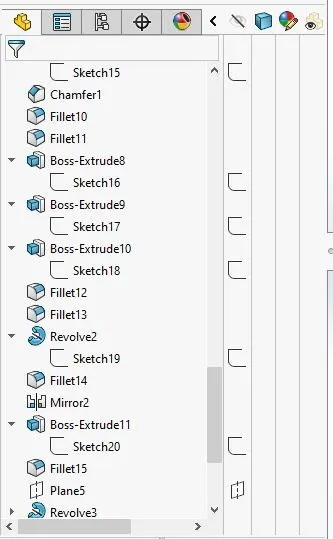
2. ASSEMBLY OF YACHT;
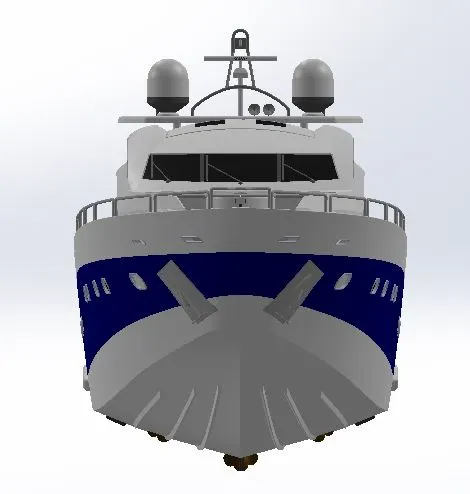
FRONT VIEW OF YACHT:
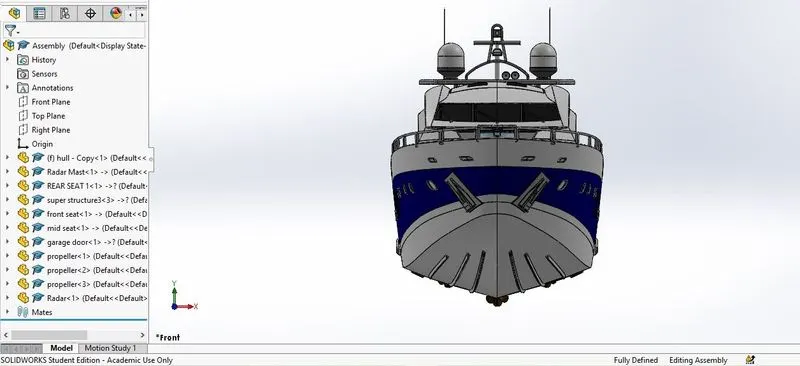
SIDE VIEW OF YACHT:
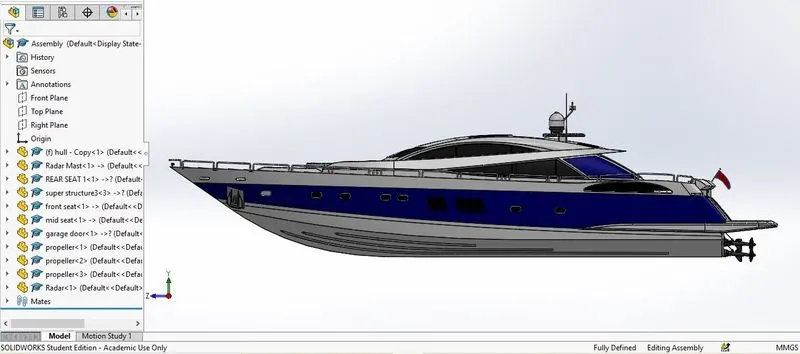
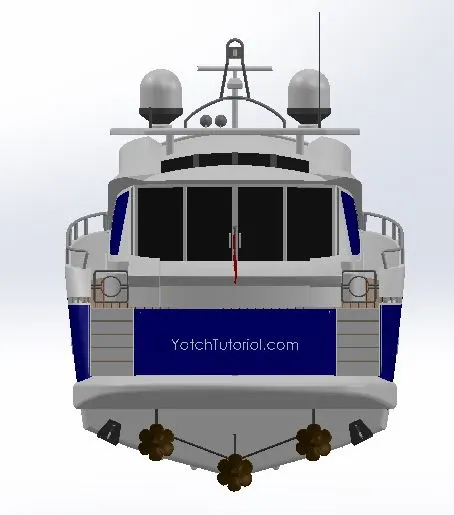
BACK VIEW OF YACHT:
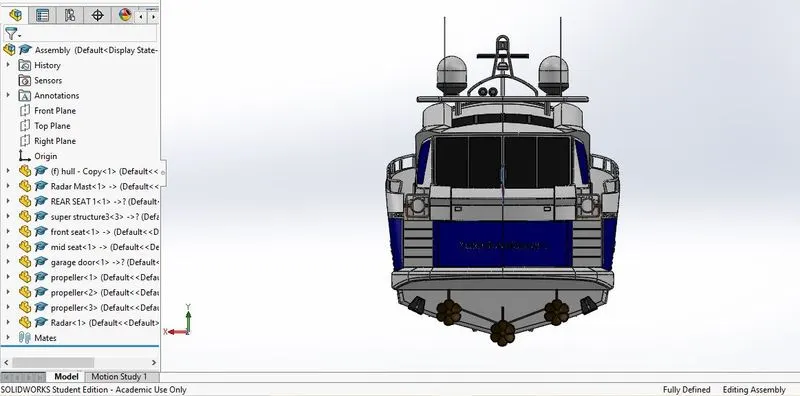
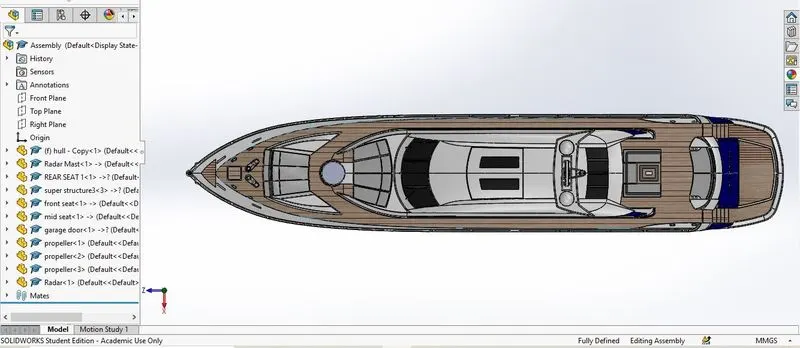
TOP VIEW OF YACHT:
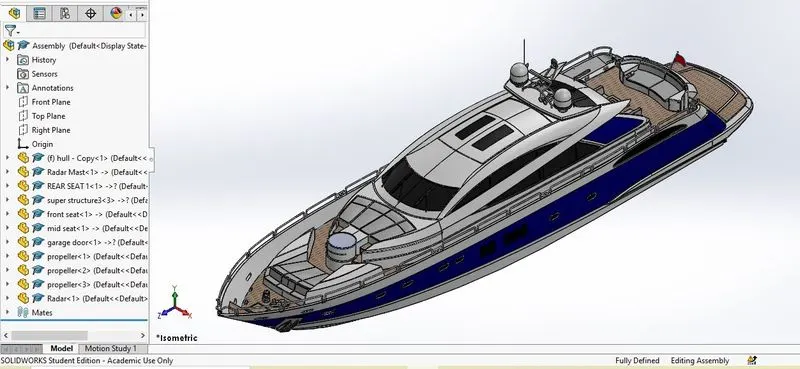
ISOMETRIC VIEW OF YACHT:
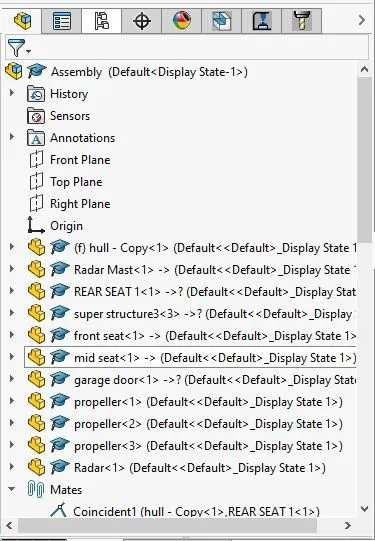
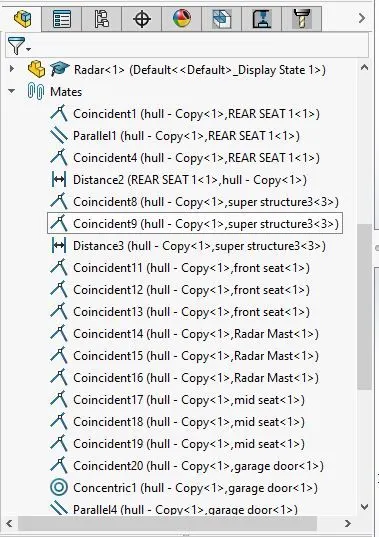
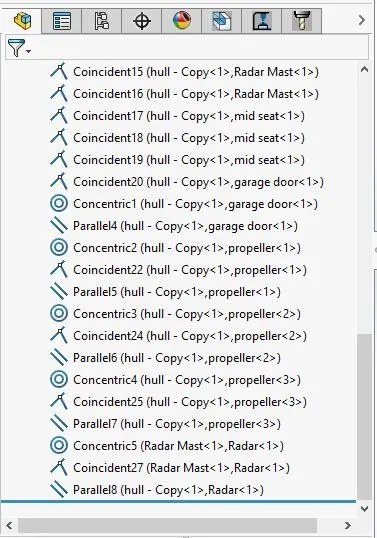
FEATURE TREE IMAGES OF YACHT:
PROJECT REPORT OF SUNSEEKER PREDATOR YACHT:
DESIGN AND ASSEMBLY OF SUNSEEKER PREDATOR YACHT
INTRODUCTION:
The project report contains detailed explanation about designing of Sunseeker Predator Yacht and tools used to create Yacht which designed in SOLIDWORKS from each part modelling to final assembly.
OBJECTIVE:
The objective of this project is to develop the design of yacht with individual design of each component and assembling it to get required Yacht.
The following steps where undertaken while designing the American chopper:
- Designing of individual components of an Sunseeker yacht.
- Assembly of Sunseeker predator yacht.
- Set up decals.
- Final rendering of Sunseeker predator yacht.
ABOUT SUNSEEKER PREDATOR YACHT:
Yacht is a sail or powerful vessel used for pleasure, cruising, or racing. There is no standard definition, so the term applies to such vessels that have a cabin with amenities that accommodate overnight use. To be termed a yacht, as opposed to a boat, such a pleasure vessel is likely to be at least 10m in length and may have been judged to have good aesthetic qualities.
TYPES OF YACHTS:
The term yacht refers to a luxury pleasure boat. Many charter yachts available are considered a super yacht which is 24m long and can carry a large number of guests, with luxury amenities on board. Mega yacht is another term that are usually refers to larger superyachts above 80m.
Luxury charter comes into various types, they are
MOTOR YACHT:
Motor yacht are most widely available charter yachts and the most popular vessels for a luxury yacht. As a rule, they usually future more on-board space than sailing yachts and are available in various size and shape, even though they have a mono-hull design. Due to their capacity for interior and exterior volume motor yacht are usually capable of playing host to a range of amenities including Jacuzzi’s, Swimming pools, entertainment system and various toys on board.
SAILING YACHT:
A sailing yacht is a vessel which is predominantly propelled by wind power, offering the feeling of freedom associated with sailing the wide-open waves. Many sailing yachts are equipped with low power engine which can be used condition are too calm or when the vessel is to be manoeuvred in and out of difficult anchorages. There is a variety of sailing yachts are available to charter, with each type differ in terms of rigging, power and performance.
- CLASSIC SAILING YACHTS: A classic sailing yacht is typically a vessel which is built in 1920’s and 1970’c and are usually constructed from wood or steel
- NEO CLASSIC YACHT: A Neo-classic yacht is a combination of classic, elegant design with the technological elements of the modern era. For enthusiast who are keen to experience the feel of classic sailing yacht with modern simplicity and efficient of a new build yacht.
- MOTOR SAILER: Predominantly of a monohull design, a motor of sailer equipped with a hybrid propulsion system which means the vessel can either be powered by sail or motor depending on how the conditions dictate.
- LUXURY GULET: The gulet sailing yacht originated in Turkey and boasts the traditional design of a schooner. A schooner is a sailing yacht which features two masts or more, one to the fore and one to the aft of the yacht, the foremast began no taller than the rear masts. Gullet yacht are predominantly wooden with stunning exterior look and feel of a traditional ship.
- LUXURY CATAMARAN: A sailing catamaran features has two hulls referred to as pontoons, usually constructed from fiberglass that are connected by a rectangular deck. This reduced the roll-motion effect often experienced on mono-hull yacht to offer smoother, more comfortable.
EXPIDITION YACHT:
An expedition yacht is a unique and versatile which has the ability to cruise self-sufficiently for long periods of time at sea. Designed and built with power, stability and efficiency foremost to mind, with the addition of deep displacement hull. They are one of the safest charter yachts available for long range cruising.
CLASSIC CHATER YACHT:
The definition of classic yacht is not clearly defined although those in industry would agree that a classic yacht is a vessel built between 1920-1970 by wood or steel.
OPEN YACHT:
Open yacht is a high-performance super yacht is not a far cry from the exhilarating thrill of a sports car. With a focus on speed and comfort, open yacht is looking to cover a lot of cruising ground over a weekend at full throttle.
CATAMARAN YACHT:
A catamaran yacht is a multi-hulled vessel, which unlike a mono-hulled yacht combines two hulls as opposite to one, ideal for entering shallow waters such as the Caribbean and Bahamas. The two hulls are known as pontoons and are often constructed from fiberglass, connected by rectangular deck. The revolutionary design is a modern take on traditional sailing yachts that provides comfortable cruising and is rapidly gaining popularity. They are mainly two types of catamaran yachts. They are,
Sailing catamaran yacht
Powered catamaran yacht
Powered catamaran yacht also known as power cat. A recent development in catamaran design has seen the evolution which are predominantly propelled by an engine rather than the traditional mainsail.
SPORT FISHER YACHT:
Similarly, to the expedition yacht, a sport fishing yacht is designed to be self-sufficient in order to withstand long periods of time at sea. Sport fisheries are performed oriented with the amenities tailored towards the objective of big game fishing, however as many are super yachts.
GULET YACHT:
Gulet yacht are originated from turkey. It is a type of sailing yacht which comes under the category of a schooner, a sailing vessel which consist of two or more masts, one to the fore and one to the aft of the yacht. The foremast began no taller than the rear masts. Gullet yacht are predominantly wooden with stunning exterior look and feel of a traditional ship with a beautiful wooden hull traditionally made of wood such as pine, African mahogany and Iroko (west African teak).
TOOLS USED IN SOLIDWORKS TO DESIGN SUNSEEKER PREADATOR YACHT:
SKETCH:
Sketch is a 2D representation of the model with respect to plane/view of the part. In solid works there are sketch option to create a sketch. There are so many sketch tools available like circle, rectangle, arc, spline, line, ellipse etc. we can create a new sketch by selecting the plane or surface of part model or we can edit the previous sketch also. Every 2D sketch need to be fully defined/ constrained to convert into 3D model or a part.
EXTRUDE BOSS/BASS:
Extrude is a type of tool to convert a 2D sketch into 3D model for a given dimensions.
SWEEP:
Sweep feature is used to generate a 3D model part by using two 2D sketches which should not in same plane.
REVOLVE:
To create a cylindrical shaped part with the help of 2D sketch in a plane. The sketch revolves around the reference axis. This reference axis of revolve should be in sketch or origin or any other sketch(line).
LOFTED BOSS/BASS:
Loft is like sweep feature. The lot feature tool allows you to generate complex geometry in a single feature. The 3D part on loft tool is generated by interpolating surfaces between various cross sections of a model. These cross sections can be sketches, faces, edges. In the loft created model, these cross-sections are also known as loft profiles.
EXTRUDE CUT:
Extrude cut is a cool feature which helps to subtract materials from created 3D modelled part. This is quite opposite of Extrude boss/bass tool. This tool is mainly used for creating holes, groves etc.
SWEEP CUT:
The exact 3D modelled part is subtracted from the original 3D part. This is similar to extrude cut. If we want to subtract materials with complex shape sweep cut is used.
REVOLVE CUT:
The subtraction of materials along a cylindrical path of a modelled part with the help of 2D sketch and reference axis. Revolve cut, Sweep cut and extrude cut comes under the same features of subtraction of materials.
DOME:
Dome can be applied on single or planar or non-planar faces. The centroid of a dome lies on above the face. This feature allows to apply domes to irregular shaped counters. There are two types of domes available in solid works, they are circular dome and elliptical dome.
FILLET:
Fillet creates a round shaped edge to a sharp edge. Every product should not contain a sharp edge. Due to this stress is involved. So, to get stress concentration fillet is necessary to overcome stress.
CHAMFER:
Chamfer is mainly used on shafts and cylinders to fit onto a hole freely with less effort. Also, it converts a sharp edge into a slope slightly rather than being perfectly square. They are few types of chamfers like angle-distance chamfer, distance-distance chamfer etc.
OFFSET:
One or more sketch entities, selected model edges, or model faces by a specified distance. For example, you can offset sketch entities such as splines or arcs, set of model edges, loops etc. you can offset closed sketch, lines, arcs and splines.
TRIM ENTITIES:
Erasing of sketch which should not need can be trim by using trim entities. Power trim is the most used tool on 2D sketch. We can erase either in 2D sketch or on 3D plane. On the trim entities one of the useful tools, extend entities which is quite opposite to trim. By using this tool, it extends up to the sketch which going to coincide on the same path. This mainly works of extending the arc, line, spline etc.
DYNAMIC MIRROR:
Dynamic mirror has a silent feature and important tool in solid works. It reduces the sketch by selecting the mirror reference line. As you sketch entities, they are mirrored about the pre-selected sketch entity.
COMBINE:
Combine tool combines the 2 or more parts with a minimum interference to generate into a single product.
SHELL:
To convert a complete solid body into a close shell type box with a user defined thickness, shell feature is used.
CIRCULAR PATTERN:
To convert a feature or body or sketch in a circular pattern , this tool is used by selecting a reference circle or circle edge or point.
LINEAR PATTERN:
This is similar to circular pattern but it converts the face or body or sketch in a liner way by selecting a reference as a linear line or a spline.
PROJECT CURVE:
To project a 3D curve with the help of two 2D sketches project curve tool is used. It is not possible to draw a direct 3D curve. So, this helps to project a 3D curve instantaneously.
EXTEND SURFACE:
Extend surface is used to extend the surface which is already created. There are different options available on the extend surface. We can extend the surface as same surface or we can extend the surface tangent to the surface.
LOFTED SURFACE:
Loft surface are surfaces generated by multiple 3D curves or existing edges creating a smooth tangency between the selected curves.
SWEAPT SURFACES:
Sweep surfaces are the surfaces that are generated from a section curve positioned along a path.
FILLED SURFACE:
The filled surface feature constructs a surface patch with any number of sides, within a defined boundary by existing model edges, sketches, or curves, including composite curves.
SURFACE KNIT:
Surface knit is used to knit the two free edges or open edges together. It reduces the gap between two edges of the surface.
EXTEND SURFACE:
Extend surface is used to extend the surface which already created. They are few options available on extend surface. We can extend the surface or we can extend the surface tangent to the surface.
APPEARANCES:
To visualize the part while designing appearance tool is used. It doesn’t affect the physical properties even when user specified the material of appearances. Every material is assigned a default appearance that emulates the look of material.
DIFFERENT TYPES OF PARTS USED TO MODEL AND ASSEMBLE THE SUNSEEKER PREADATOR YACHT
PROPELLER: A propeller is a device with rotating hub and radiating blades that are set at a pitch to form helical spiral, that, when rotated performs an action which is similar to Archimedes screw. It transforms rotational power into linear thrust by acting upon a working fluid, such as water or air. The rotation motion of blades converted into thrust by creating a pressure difference between two surfaces. A given mass of working fluid is accelerated in one direction and the craft moves in the opposite direction.
Design of propeller:
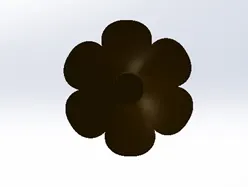
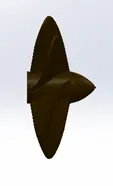
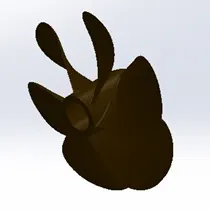
The modelled propeller which designed for yacht consist of 6 blades. The thickness of blade is 12mm, length of propeller blade is 400mm and the height of the blade is 360mm from the centre of shaft. The total width of the propeller is 350mm and radius of hub is 80mm.
Features used to design Propeller:
- Revolve boss/bass
- Loft boss/base
- Fillet
Side views of propeller:
HULL:
A hull is the watertight body of a ship or boat. The hull may open at the top (such as dinghy), or it may be fully or partially covered with a deck. At top of the deck may be a deckhouse and other superstructures, such as a funnel, derrick, or mast. The line where hull meets the water surface is called the waterline.
They are mainly 10 types of hulls. The following type of hulls are,
Displacement Hull: Large ships, some travellers and traditional sailboats have displacement hulls. They are slower moving but quite study under way and are capable of carrying large loads with relatively small propulsion units.
Planing Hulls:
Most power boats and personal watercraft have planning hulls that ride on the water at higher speeds. They behave like displacement hulls at low speed around 15-16MPH depending on the design and load.
Flat bottom hulls:
Flat bottomed boats are very stable and can carry a heavier load. They require only a small engine to get on plane but can ride rough and wet in chop or heavy weather. Small aluminum or fiberglass bay and dishing boats often benefit from flat hulls, which have a shallow draft and provide a good amount of deck space.
V-Bottom: Deep V hulls cut through waves and ride smoothly in chop. They take a bit more power to push up onto a plane, tend to roll or bank in sharp turns and due to the angle of the hull, have less interior volume for stowage or accommodations. Fast, distance fishing boats like center consoles tend to have a V bottom so they can run fast on open water to get to the fishing grounds quickly.
Tri-Hull or Tunnel Hull: Popular with fisherman as well as with sport boat enthusiasts, tri-hulls, also called cathedral hulls, have a combination M-shaped bottom. They’re quite buoyant and stable and they get on plane quickly. They offer good volume below and significant deck space above. At speed, they tend to pound when they encounter choppy water so they’re ideal for lakes of calm bays.
Pontoon: pantoon boats ride on (typically) aluminium tubes. Traditional pontoons have two tubes but newer designs have three and are called tritoons.Pontoon boats are all about deck space and make excellent boats for families and entertaining on the water. The newer tritoons can carry large outboards and so they’ve become planing boats capable of towing for water sports or reaching distant fishing spots.
Semi-Displacement Hulls:
Semi-displacement hulls combine rounded sections for increased storage and tankage, and flatter hull sections to partially lift the forward part of the hull out of the water, thereby decreasing drag at high cruising speeds. They generate large bow and stern waves and may need high horsepower engines to get on plane. Larger, crusing motor yachts clean toward the semi-displacement design.
Multi-Hulls
Boats with separate and distinct hulls are called multi-hull and can be catamarans or trimarans. Multi-Hulls can be either power or sailboats and have displacement or planing hulls depending their shape and the size of their engines.
Catamarans: Catamarans have two hulls with a deck or trampoline in between. Their benefits include excellent stability and depending on size and type, significant living space aboard. Large cats (35 feet and over) have become popular in charter use because they offer more interior and deck space and an easier motion to induce less seasickness. With two engines, catamarans are very maneuverable but they do require more room to turn and berth. Small catamarans usually have just a trampoline in between the hulls and make fun daysailers.
Trimarans: Trimarans are often (but not always) sailboats. They have three hulls: a main hull and two amas (side hulls used for stability). On some smaller trimarans, the arms that hold the amas can fold inward, making the trimaran narrower and in some cases trailerable. Trimarans require smaller engines and they sail faster
Design of Hull:
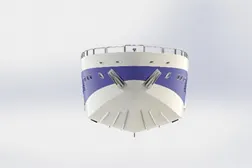
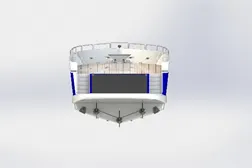
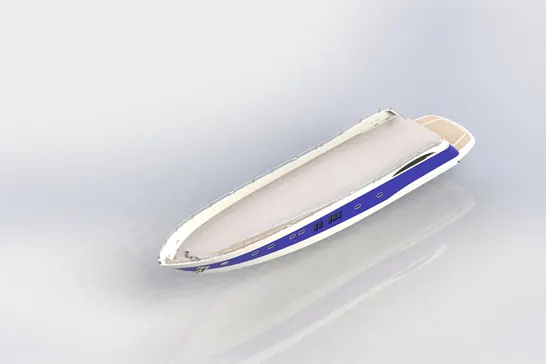
For this sunseeker predator yacht V-type hull is designed with a width 6472 mm and length is around 30485mm. the height of the hull at front side is 6051mm and height at back side is 4697mm. The hull consists of a deck, garage and propulsion system which attached to it. The two sides of steps are attached from bottom of hull to surface of deck. The hull is designed with a thickness of 12mm. It consist of a garage to store goods and car also to travel by it whenever used.
Features used to design Hull:
- Project curve
- Lofted surface
- Extrude surface
- Shell
- Mirror
- Cut extrude
- Extrude boss/bass
- Surface trim
- Surface knit
- Surface fill
- Fillet
- Chamfer
- Sweep
- Revolve
- Linear pattern
- Helix/spiral
Side views of Hull:
PROPULSION SYSTEM:
Propulsion system is the power train They are different types of propulsion systems used in yachts. The following types are:
- Straight shaft inboard: Straight Shaft inboards are the most traditional type of propulsion in use today. It is comprised of a rear-facing engine connected to a transmission which has a driveshaft going straight out of the bottom of the boat.
- V-drive inboard: V-drive inboard yachts have forward facing motors with a transmission that re-directs the drive shaft towards the back. On the bottom of the boat the running gear looks the same as on a straight shaft inboard. You will see this application on cruising motor yachts that want to maximize the amount of interior cabin space, and where performance is not necessarily a top priority.
- Jet drive: The jet drive is very common today in runabouts and tenders, primarily because of the perceived safety of the propeller (called an impeller here) being on the inside of the boat and the shallow draft. Because there is no way to reverse the impeller, a cover goes over the jet nozzle to re-direct the thrust backward to move the yacht in reverse
- Surface drive: Surface drive yachts share a lot of similarities in function to the jet drives. The propulsion unit comes out of the back (transom) of the yacht instead of the bottom and the thrust can be directed with a number of hydraulic rams attached to the shaft. The main difference is the propeller is on the outside of the boat. They are called surface drives because the top half of the propeller is out of the water while underway, which reduces cavitation and kicks up a really cool rooster tail
- Pod drive: Pod drives first hit the scene in 2006 and since then they have gained a very prominent place in the yachting industry. There are 3 manufacturers that are making pod drives: Volvo Penta (IPS Pods), Mercruiser (Zeus Pods) and ZF Marine (ZF Pods).
Design of propulsion system:
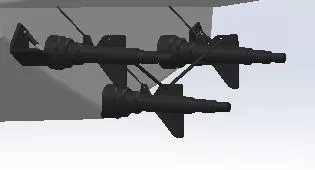
The propulsion system is designed along with hull. It consists of three jet drives. In this sunseeker predator yacht, surface jet drive propulsion system is used. the shaft attached to hull is bent to an angle about 86 degrees from face. The length of the shaft is 1670mm and radius of shaft to attach the propeller is 57mm on one side and another side which attach to the face of hull is 200mm. The shaft consists of step turning with 5 steps with different length and radius along with the length of the shaft. For each jet drive a support element is fixed to hull to avoid deflection. One jet drive is at the mid plane while other two drive systems are attached with a linear distance of 1600mm and parallel to edge of hull.
Features used in propulsion system:
- Revolve boss/bass
- Fillet
- Extrude boss/bass
- Linear pattern
- sweep
SUPERSTRUCTURE:
On water craft, the superstructure consists of the parts of the ship or a boat, including sailboats, fishing boats, passenger ships, and submarines, that project above her main deck. This does not usually include its masts or any armament turrets.
Design of superstructure:
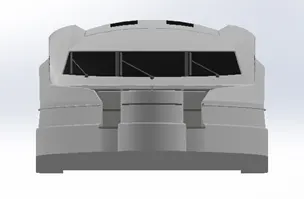
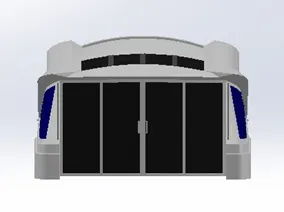
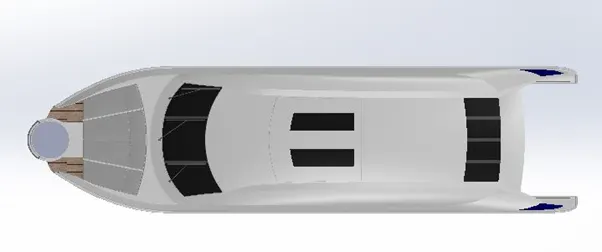
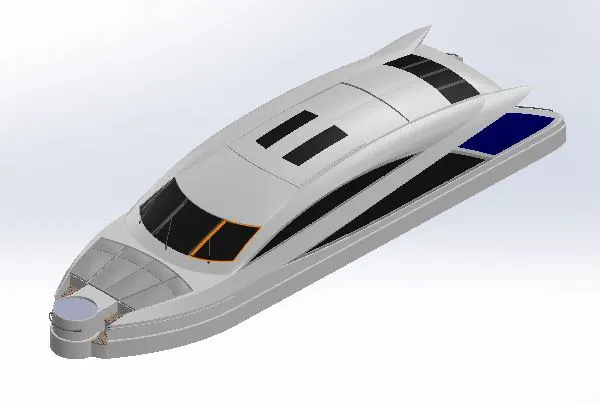
the super structure of sunseeker predator yacht is design to locate above the deck surface. The super structured is completely modelled by surface modelling. The length of the modelled superstructure is about 17600mm and its width is 1900mm. It consists of four seats on front side of super structure and in back side, it consists of two doors. The modelled super consists of three wipers to clean the mirrors. The superstructure is also modelled with extra 4 seats also on front part of it.
Features used to design Superstructure:
- Extrude surface
- Ruled surface
- Sweep surface
- Surface full
- Surface trim
- Extrude boss/bass
- Loft
- Cut extrude
- Project curve
- Ruled surface
- Surface extend
- Dome
Side views of super structure:
SEATS:
Seats are used in yachts to sitting and resting purpose. Every seat in transportation must designed ergonomically for the comfort of passenger.
They are 3 seats which are modelled in sunseeker predator yacht. They are
1.front seat
- rear seat
- middle seat
Design of front seat:
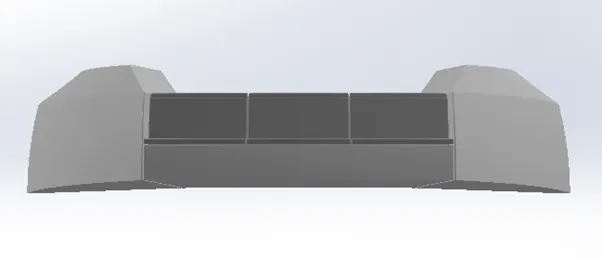
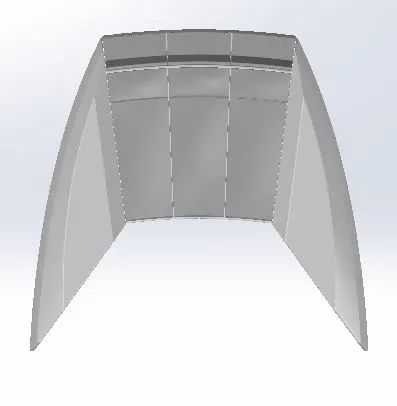
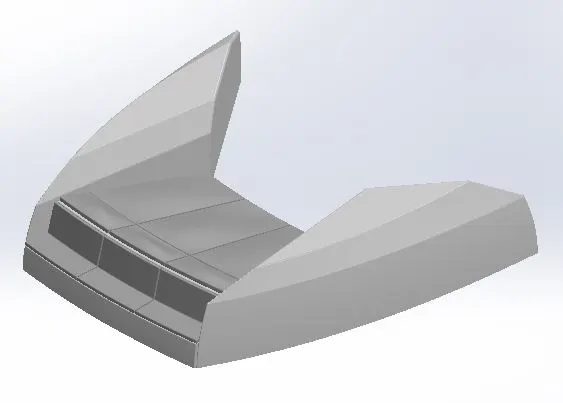
The front seat consists of 6 seats, 3 seats are for relax and 3 seats are for sitting and having outer edge shape surface to support. The seating system is towards hull. For this support edge, the height of support edge is 1000mm and its length is about 4350mm. the height of seat for sitting purpose is 700mm and with width 350mm. and for relaxing seats, the height on one side is 200mm and another side edge is connected with seat for sitting.
Side views of front seat:
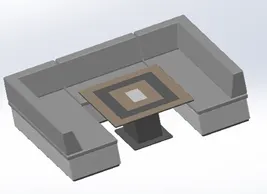
Design of middle seat:
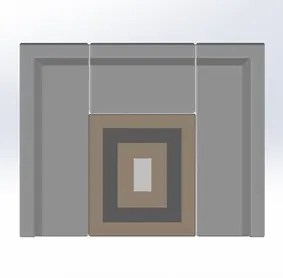
Middle seat is a u-shaped seat used for only sitting purpose, it’s seating capacity is for 8 members. The width of the middle seat is 2560mm and length is 2000mm. the ergonomic design specially for only sitting purpose is 675mm along all sides. The height of seat from base is extruded upto 300mm and total height from base is 720mm. a slant face is designed to relax. For this middle seat a table is designed in between rear seat and front seat. The table consist of a base shaped square whose sides is 100mm. and its height is 75mm from base. The table is also designed with square shape whose side is 395mm and the thickness of plate is 20mm.
Side views of middle seat:
Design of rear seat:
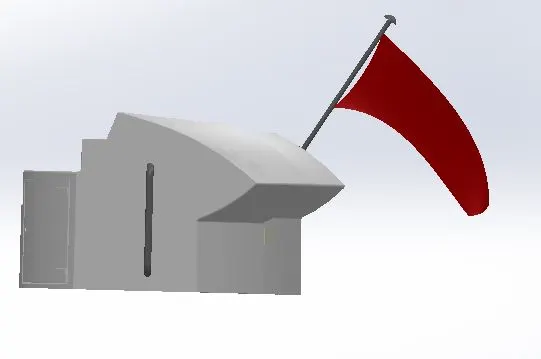
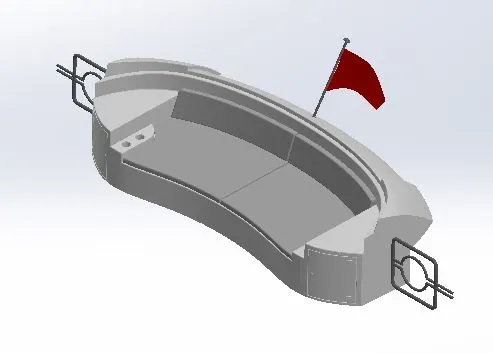
The seating capacity for rear seat is 2 members. It was completely modelled by using surface modelling. The total height of rear seat is 912mm, length is 5000mm and width is 1140mm. It was also consists of flags, lights surface to support and bottle holders. The rear seat is also designed to allow doors on both sides.
Side views of rear seat:
Features used to design seats:
- Boss extrude/bass
- Sweep
- Surface sweep
- Fillet
- Chamfer
- Surface knit
- Cut extrude
- Surface trim
- Surface extend
- surface loft
RADAR:
Marine radars are X band or S band radars on ships, used to detect other ships and land obstacles, to provide bearing and distance for collidence avoidence and navigation at sea. They are electronic navigation instruments that use a rotating antenna to sweep a narrow beam of microwaves around the water surface surrounding the ship to the horizon, detecting targets by microwaves reflected from them, generating a picture of the ship's surroundings on a display screen. Radar is a vital navigation component for safety at sea and near the shore. Captains need to be able to maneuver their ships within feet in the worst of conditions and to be able to navigate "blind", when there is no visibility at night or due to bad weather. In addition to vessel-based marine radars, in port or in harbour, shore-based vessel traffic basic radar systems are used by harbour masters and coast gaurd to monitor and regulate ship movements in busy waters.
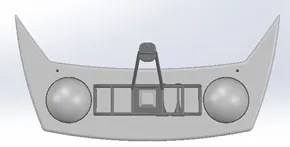
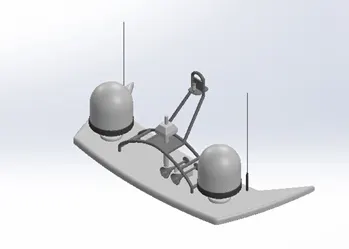
Design of radar:
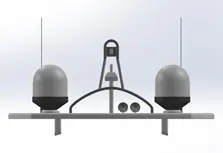
Radar consists of two antennas. Each part is which modelled on radar is supported on a plate in complex shape structure whose length is 4760mm and width is 2320mm. the thickness of plate is 140mm. this is an x-band radar. It also consists of two horns whose length is 580mm.
Features used to design radar:
- Extrude boss/base
- Revolve
- Shell
- Dome
- Fillet
- Project curve
- Mirror
Side views of radar:
X-BAND RADAR:
Radar is a vital navigation component for safety at sea and near sea shore. Captains need to be able to manoeuvre their ships within feet in the worst of conditions and to able to navigate blind, when there is no visibility at night due to bad weather. It radiates a narrow vertical fan-shaped beam of microwaves perpendicular to the long axis of the antenna, horizontally out to the horizon. With each rotation the beam scans the surrounding surface
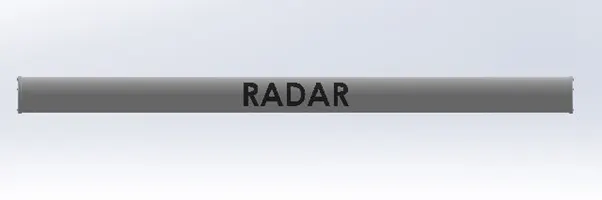
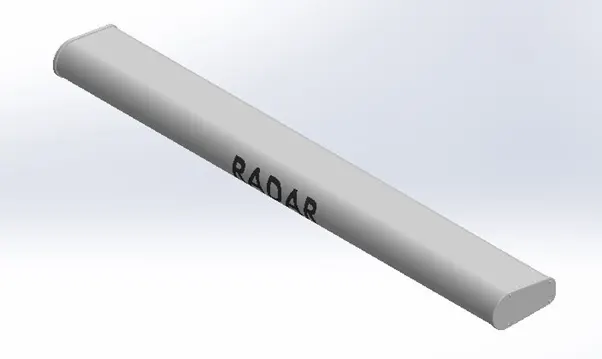
Design of radar:
The width of the modelled radar is 200mm. The thickness at one side of radar is 65mm and another side is 100mm.The outer edges are closed with an 300mm offset entity. It looks like a plate whose thickness to close the path is 10mm. the plate has 4 Allen screws whose width is 3.5mm on both sides
Features used to design Radar:
- Revolve boss/bass
- Loft boss/base
- Fillet
- Split line
- Mirror
- Sketch driven pattern
- Extrude cut
Side views of X-band radar:
GARAGE DOORS:
A garage door is a large door on a garage that opens either manually or by an electric motor (a garage door opener). Garage doors are frequently large enough to accommodate automobiles and other vehicles. Small garage doors may be made in a single panel that tilts up and back across the garage ceiling. Larger doors are usually made in several jointed panels that roll up on tracks across the garage ceiling, or into a roll above the doorway. The operating mechanism is spring-loaded or counterbalanced to offset the weight of the door and reduce the human or motor effort required to operate the door. Less commonly, some garage doors slide or swing horizontally. Doors are made of wood, metal, or fiberglass, and may be insulated to prevent heat loss. Warehouses, bus garages and locomotive sheds have larger versions
Design of Garage doors:
the design of garage door is completely elevated from a split object of hull. With that part of the object the garage door is designed with the equal hull slope on back side of it. The garage door consists of holes to fit like a fulcrum to rotate easily with 50mm diameter.
Features used to design garage doors:
- Cut extrude
- Shell
- Fillet
- Mirror
Side views of Garage door:
ASSEMBLY OF SUNSEEKER PREDATOR YACHT:
In mechanical terminology, assemble is a refers to a unit where all manufactured/designed products are gathered and fix as per the design to make it a single product. Simply, a machine is a device which is combination of several parts to create a motion.
To assemble the Sunseeker predator yacht , already designed products is needed to mate it as per the design and to make final yacht.
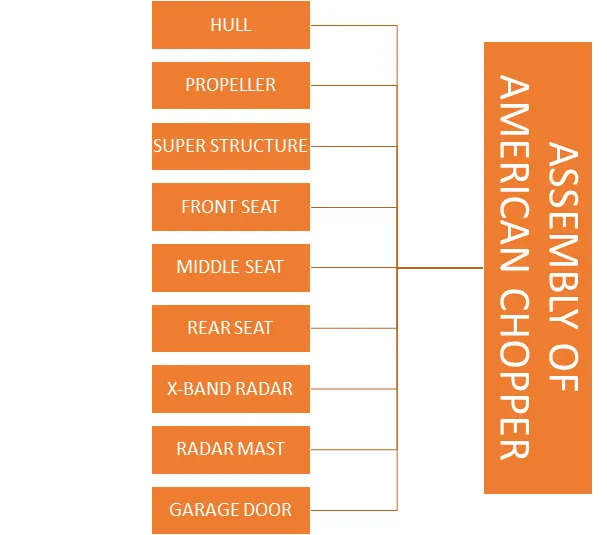
The following parts are needed to assemble the sunseeker predator yacht:
- Propeller
- Hull
- Super structure
- Rear seat
- Middle seat
- Front seat
- Garage door
- Radar
- Radar mast
FEATURES USED IN ASSEMBLY:
INSERT PART:
Insert part feature is used to insert single or more than one designed components to start assembly.
MATE:
Mate is the feature to create geometric relationships to fix the part with respect to another part. Mates are defined the allowable locations or directions of linear with distance, parallel, makes an angle with other plane and rotational with some limit angle. We can move a part with its degree of freedom by visualizing the assembly behaviour.
ASSEMBLY TREE OF SUNSEEKER PREDATOR YACHT:
ASSEMBLY OF SUNSEEKER PREDATOR YACHT USING SOLID WORKS:
Insert the needed components required for the assembly of sunseeker predator yacht. Fix the main part(hull) with respect to the planes povided in the assembly workbench. With the different features available in solidworks like concentric, face mate, parallel mate, etc create the entire assembly of senseeker predator yacht.
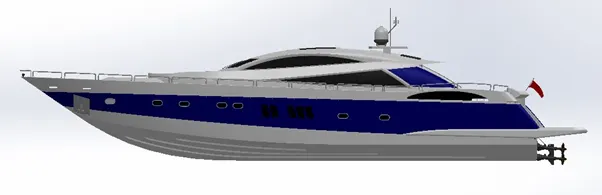
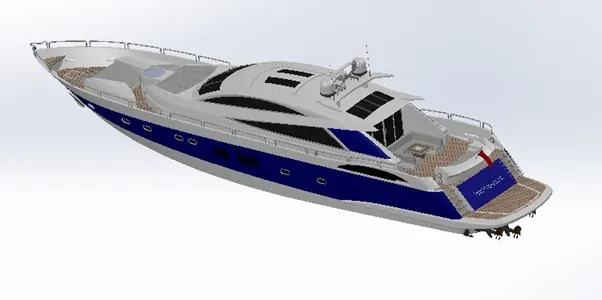
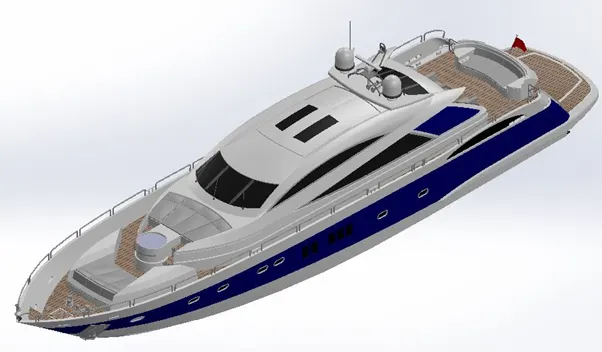
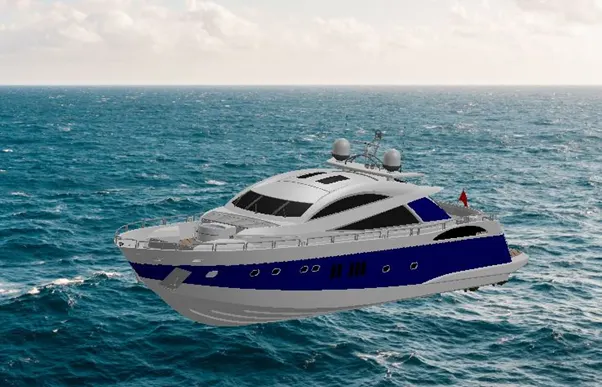
Side views and camera view of sunseeker predator yacht:
CONCLUSION:
- Each and every part sunseeker predator yacht were modeled as per the required dimensions
- The designed parts are inserted into the assembly environment and sunseeker predator assembly had done.