Project
Aim:
A case study of system-level simulation of a BAJA all-terrain vehicle.
Objectives:
Prepare a technical report on BAJA all-terrain vehicle model explaining the model properties & comments on the results.
All Terrain Vehicle:(ATV): It is look like as in below fig:
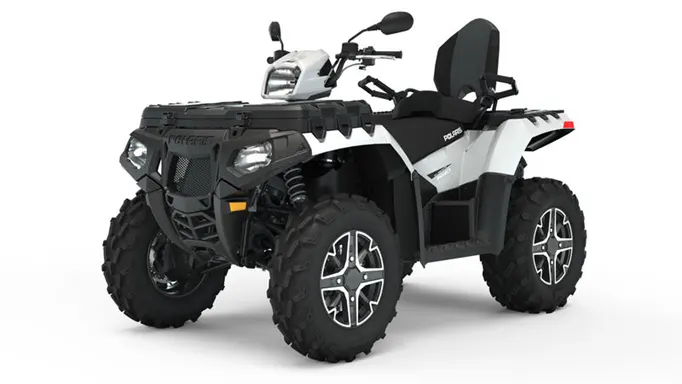
- It is an motorized off-highway vehicle designed.it have four low-pressure or non-pneumatic tires and seat designed to be straddled by the operator and handlebars for steering control.
- They are two types design by the manufacturer. one is ATVs use by a single operator and no passenger.Another is ATVs are manufacturer for use by an operator and a passenger, and are equipped with a designated seating position behind the operator.
Continuously Variable Transmission: (CVT)
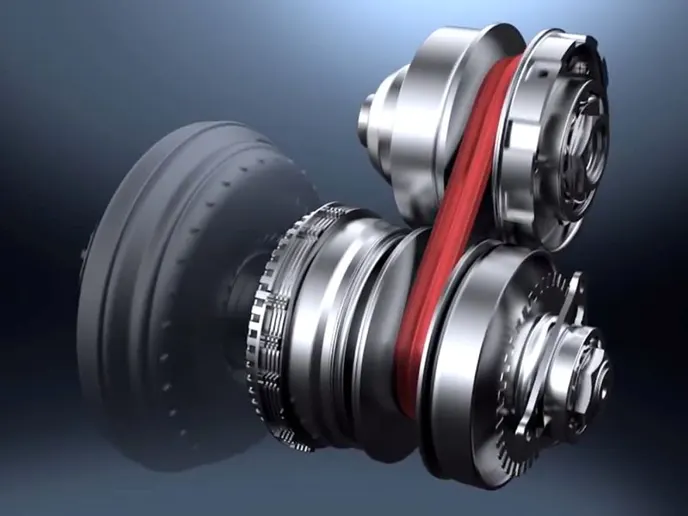
- CVT is automatic transmission that can change seamlessly through a continuous range of gear ratios.
- This contrasts with other transmissions that provide a limited number of gear ratios in fixed steps.
- While the vehicle moves at varying speeds the flexibility of a CVT with suitable control may allow the engine to operate at a constant RPM .
- A Continuously Variable Transmission (CVT) must be used to increase the output obtained from the engine without modifying the engine.
- By changing the diameter of the CVT cones a CVT transmits power from the engine to the wheels.
- It can also adjust a vehicle’s engine’s torque in an infinite number of ways.
- This makes a CVT far more efficient than a normal gearbox.
- it is possible to improve the vehicle’s power output while ensuring that the vehicle is still fuel efficient by properly tuning the CVT. Additionally, since a CVT functions similarly to an automatic transmission, no pneumatic clutch is required in this system since it is powered by a torque converter.
- As they have a large range of transmission ratios, are lightweight and easy to tune CVT’s are desirable in this situation.
Common Model Blocks:
Generic Engine:
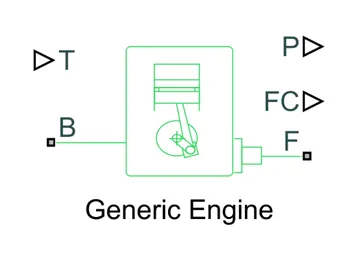
- This block represents a general internal combustion engine
- Engine types include spark-ignition and diesel. Speed-torque and Speed-power parameterization are provided.
- A throttle physical signal input specifies the normalized engine torque
- Optional dynamic parameters include crankshaft inertia and response time lag.
- A physical signal port outputs engine fuel consumption rate based on choice of fuel consumption model. Optional speed and redline controllers prevent engine stall and enable cruise control.
- The throttle input signal T specifies the torque demanded from the engine as a fraction of the maximum possible torque, and lies between zero and one.
- The engine torque is blended to zero if the engine speed falls below the Stall speed. The simulation stops and issues an error message If the engine speed exceeds the Maximum speed. Connections F and B are mechanical rotational conserving ports associated with the engine crankshaft & engine block, respectively.
- Connections P and FC are physical signal output ports by which engine power & fuel consumption rate are reported.
Variable Ratio Transmission:
Variable Ratio Transmission:
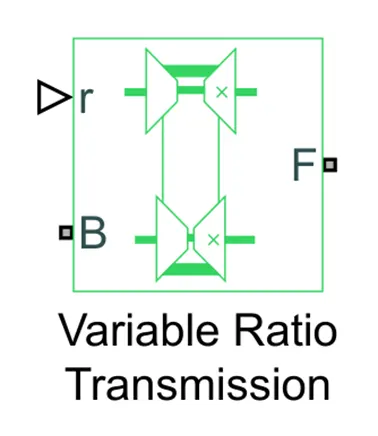
- This block represents a gearbox that dynamically transfers motion and torque between the two connected drive shaft axes, base and follower.
- A variable ratio gearbox implemented by mechanical belt CVT, electric, or hydraulic transmissions.
- The physical signal input r defines the ratio of input to output angular shaft velocities & Connections F (follower) and B (base) are mechanical rotational conserving ports this Specify the relation between base and follower rotation directions with the Output shaft rotates parameter
Simple Gear:
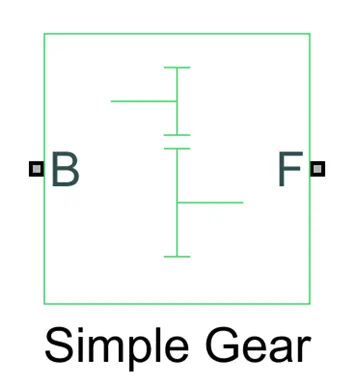
- This block represents a gearbox that constrains the connected driveline axes of the base gear, B, and the follower gear, F, to corotate with a fixed ratio that you specify.
- You can choose whether the follower axis rotates in the opposite or same direction as the base axis.
- If they rotate in opposite directions, ωF and ωB have opposite signs
- If they rotate in the same direction, the angular velocity of the follower, ωF, and the angular velocity of the base, ωB, have the same sign
Vehicle Body:
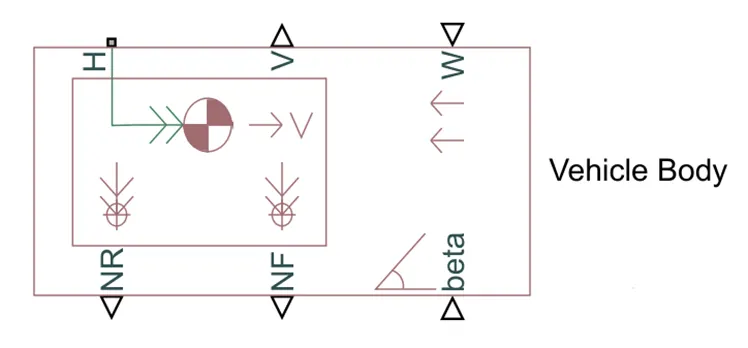
- This block represents a two-axle vehicle body in longitudinal motion.
- On each axle, the vehicle can have the same or a different number of wheels
- Assumed the vehicle wheels are identical in size.
- The vehicle can also have a center of gravity (CG) that is at or below the plane of travel. The block accounts for body mass, road incline, aerodynamic drag, and weight distribution between axles due to acceleration and road profile.
- Optionally, include pitch and suspension dynamics.
- The vehicle is not move vertically relative to the ground. The block has an option to include an externally-defined mass and an externally-defined inertia. The mass,center of gravity of the vehicle body and inertia can vary over the course of simulation in response to system changes.
Case 1: Study the BAJA ATV model:
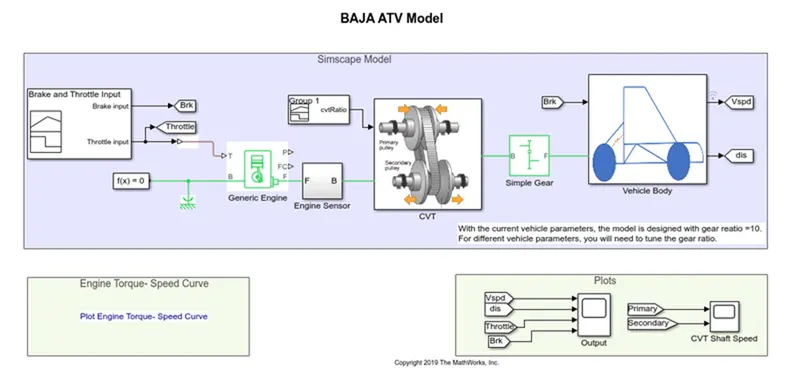
- Above shown model is of BAJA ATV
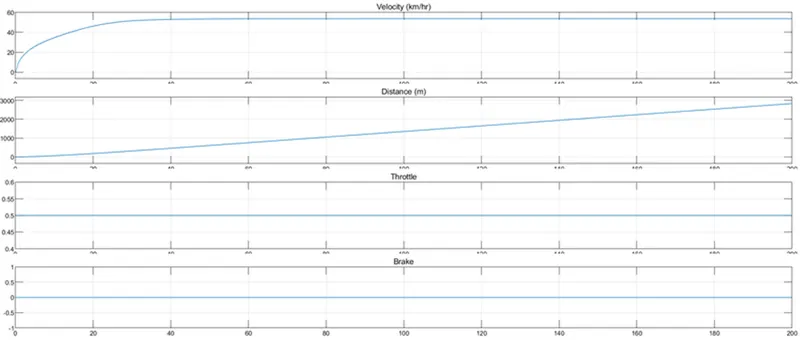
- Signal builder are used For brake and throttle in this signal builder, brake signal is 0 and throttle signal is 0.5.
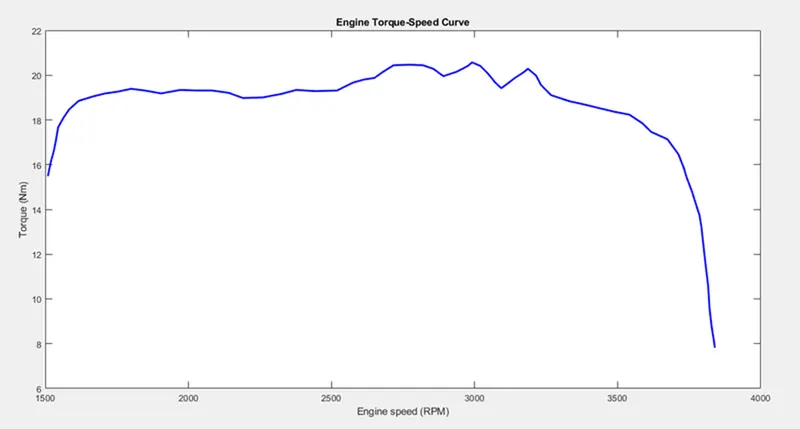
- Speed and torque parameter fetch from Engine speed torque curve,in the engine block and it shows in below fig
- Also selected interpolation method is linear.
- Engine sensor is an ideal rotational motion sensor block to determine engine RPM.
Engine torque speed curve:
Below fig shows the inside model of continuous variable transmission (CVT) used ideal rotational, inertia, motion sensor, variable ratio transmission, etc
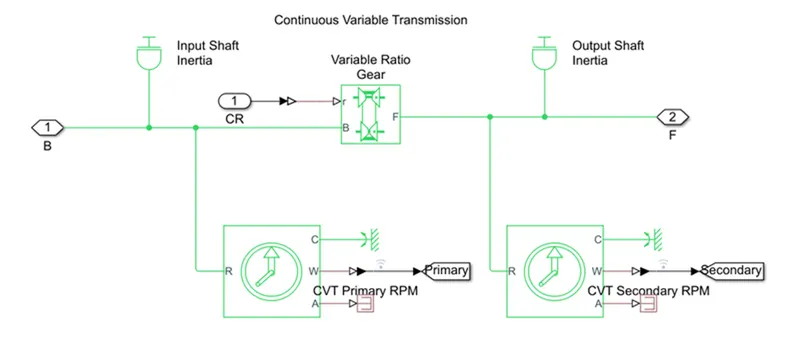
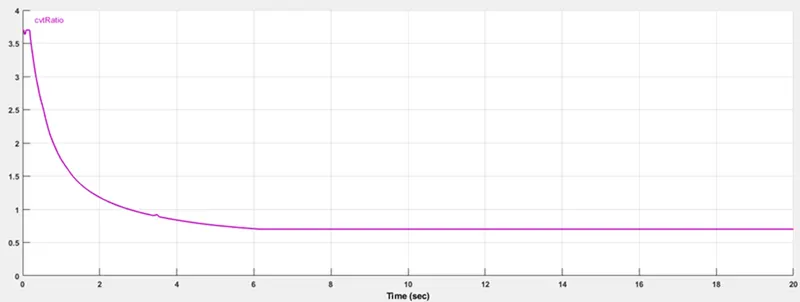
- Required CVT ratio signal for variable ratio gear, build in signal builder and its look like below fig
- For input shaft inertia and output shaft inertia of value 3.5 kg*m^2 and 3.2 Kg*m^2 in CVT there used inertia block
CVT Ratio signal
- Simple Gear is a physical simscape block, its work as fixed or variable gearbox and its teeth ratio is 10.
- Below fig shows inside the model of vehicle body, this used vehicle body, tier, double shoe brake, etc.
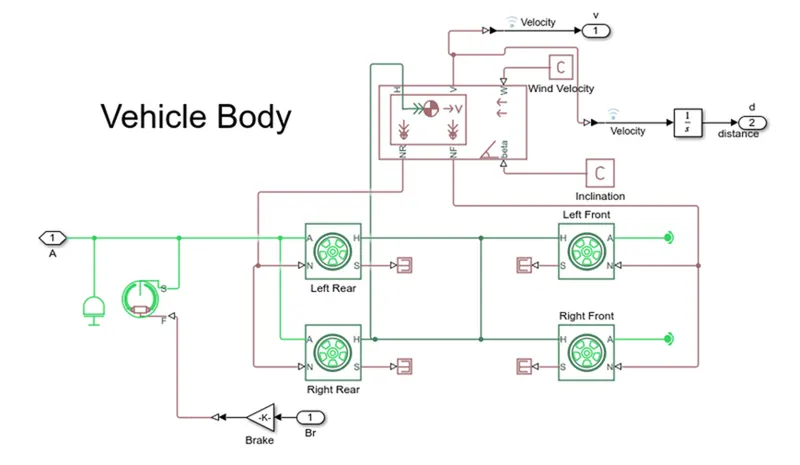
- Velocity of vehicle and displacement travelled by vehicle determined by the vehicle body model
- Below fig shows graph of output result velocity, displacement, and input brake, throttle signal
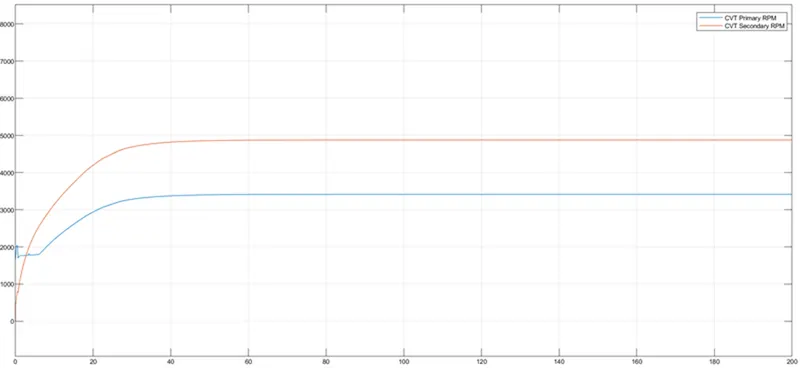
Similarly, below fig shows primary and secondary CVT shaft speed curve.
Case 2: Study the BAJA ATV model with Dashboard.
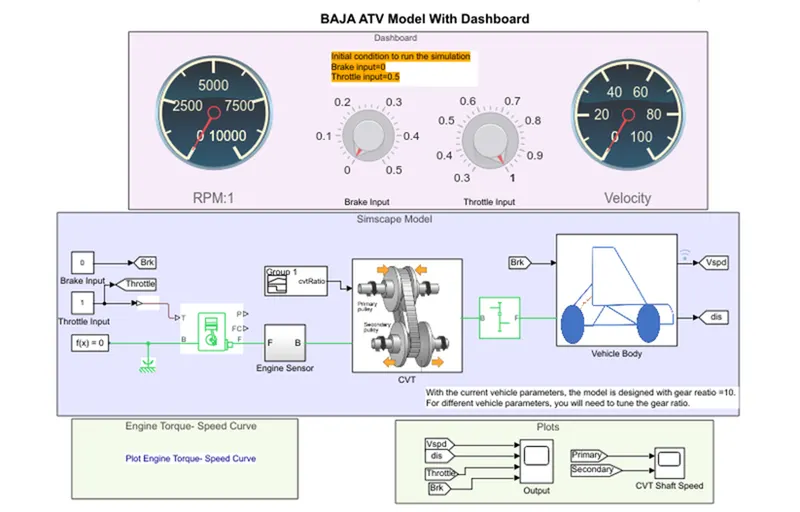
- Above is an ATV Model with dashboard. It is same as case 1 model only difference is, now the user control brake and throttle input
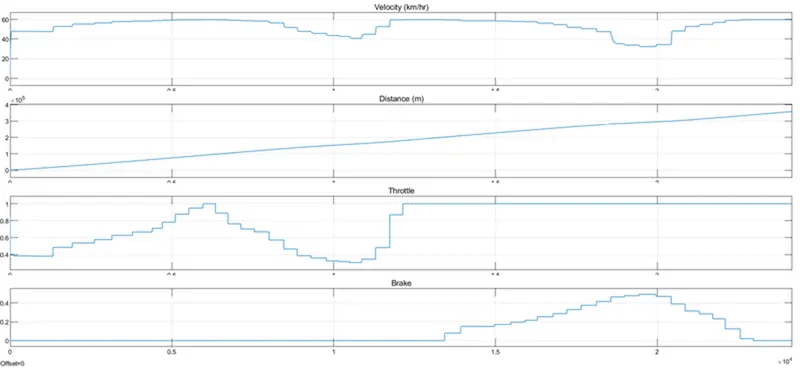
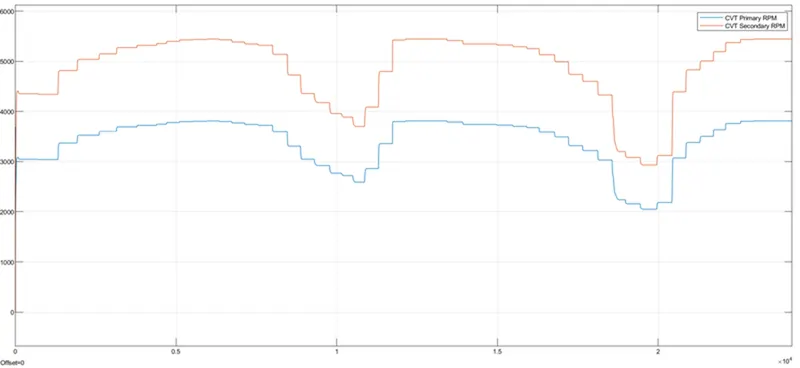
- Below fig. shows graphs of scope output & CVT Shaft Speed
Case 3: Study the BAJA ATV model using a Lookup table.
- In fig above shows the ATV Model by using a lookup table.
- It is similar to case 1 model, but the difference is that use of the lookup table.
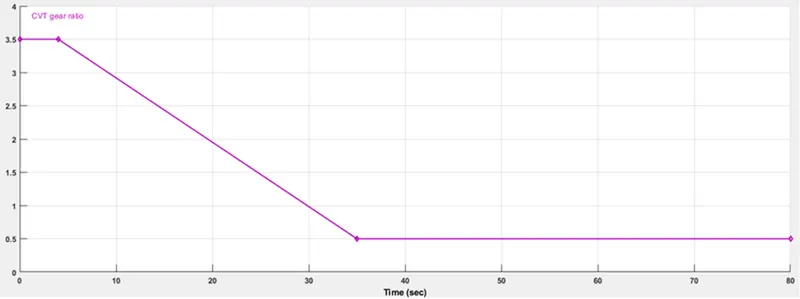
- Rather than use of the CVT ratio graph here used the 1-D lookup table and calculate the CVT ratio by using cvtr (i.e. below graph) as a table data, speedV (i.e. speed value of engine speed torque curve shown in previous fig) as a breakpoint1 data and engine RPM gave an input signal.
CVT Graph fig:
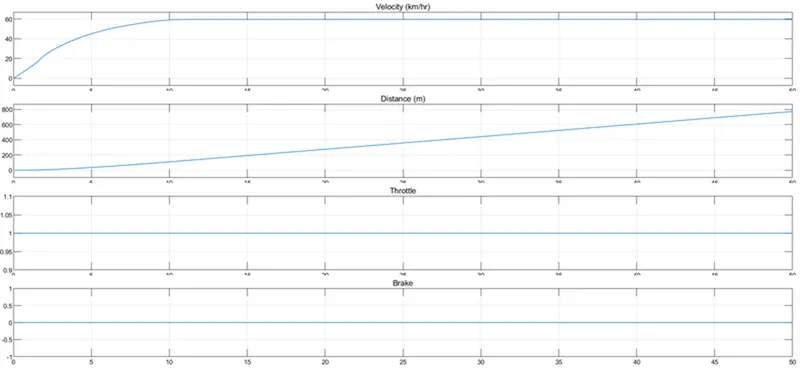
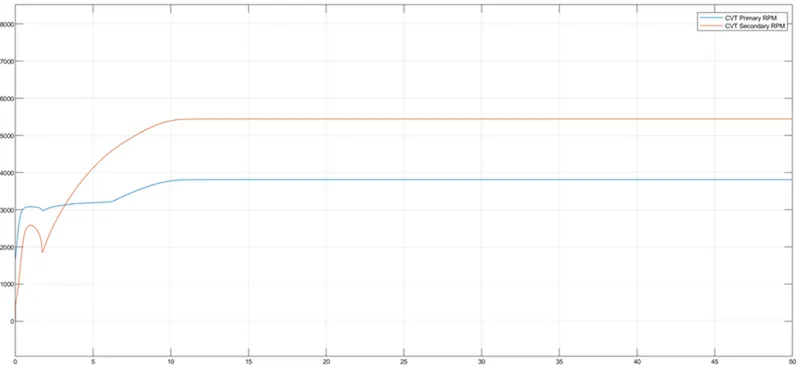
- Below is graphs of scope output and CVT Shaft Speed:
Case 4: Study the BAJA ATV model using a Lookup table with Dashboard
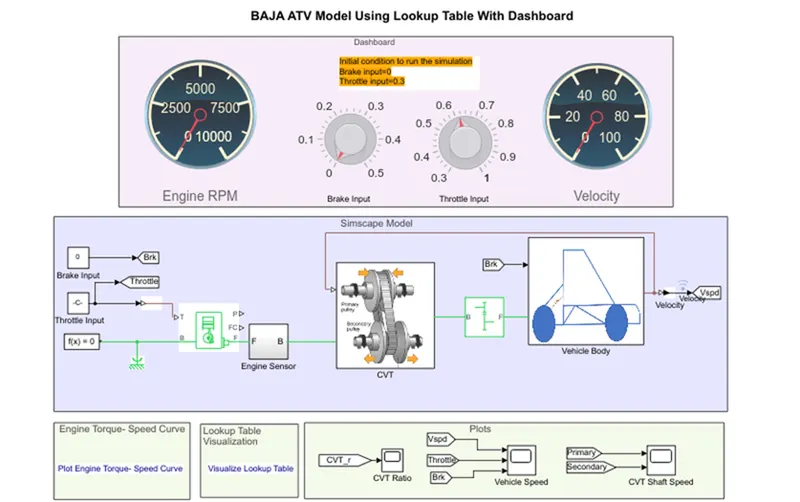
- Above fig shows the ATV Model by using a lookup table with dashboard.
- It is similar to case 2 model but difference is that use of lookup table.
- The lookup table is similar close to case 3 lookup table, just different is, now input signal as vehicle velocity instead of engine RPM is used
- Below is lookup table visualization.
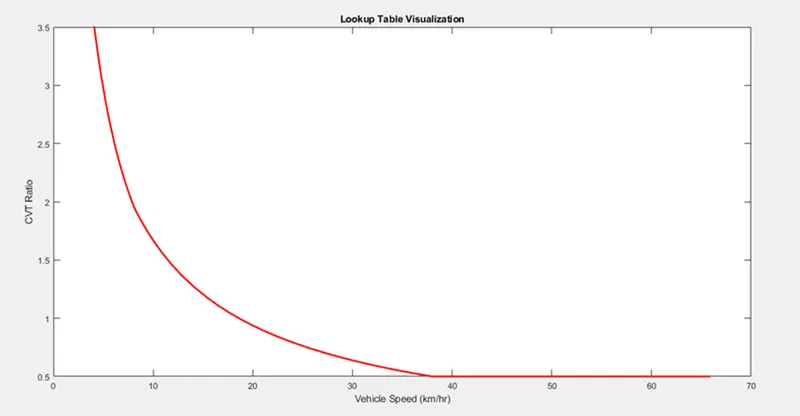
- We can see that in above fig As when vehicle speed increases, CVT ratio decreases.
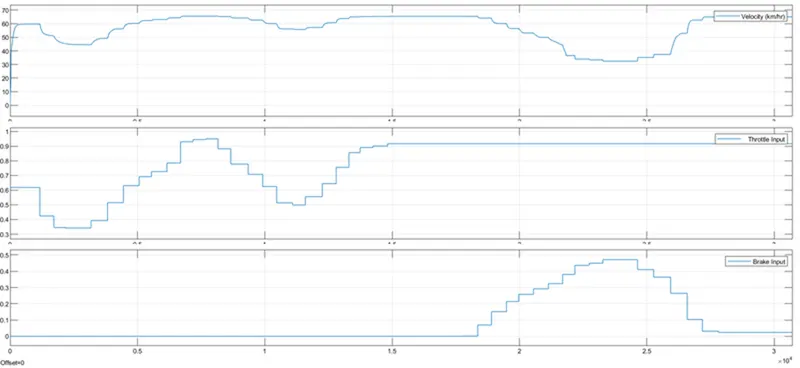
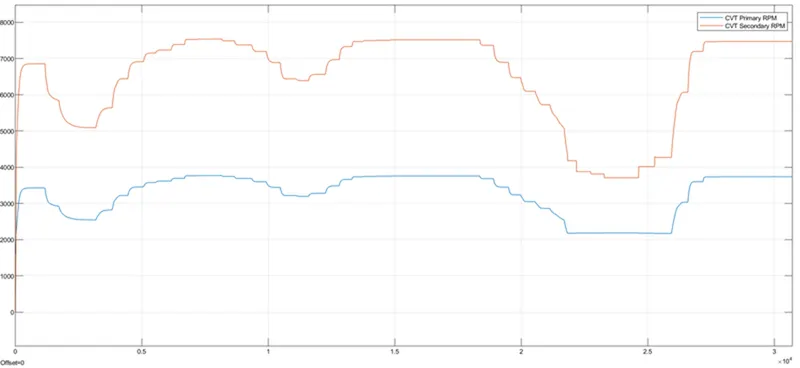
Below graphs of scope output and CVT Shaft Speed
Conclusion:
- When we increased the throttle or decreased break , the speed of the vehicle increases and vice versa.
- When we use lookup table Fluctuation in CVT shaft speed is more as compared to without use of lookup table in model.