Project
Aim
To Carry out a system-level simulation of an all-terrain vehicle.
Objective
Develop a system-level simulation model of an ATV using Simulink.
Analyze the model's response to various input parameters, such as throttle, brake, and terrain conditions.
Evaluate the model's performance and identify potential areas for improvement.
Introduction
All Terrain Vehicle
An all-terrain vehicle (ATV), also known as a light utility vehicle (LUV), a quad bike or quad (if having four wheels), is a vehicle that travels on low-pressure tires, has a seat that is straddled by the operator, and has handlebars1. It is designed to handle a wider variety of terrain than most other vehicles.
Continuously Variable Transmission (CVT)
A Continuously Variable Transmission (CVT) is an automated transmission that can change through a continuous range of gear ratios. This contrasts with other transmissions that provide a limited number of gear ratios in fixed steps. The flexibility of a CVT with suitable control may allow the engine to operate at a constant angular velocity while the vehicle moves at varying speed.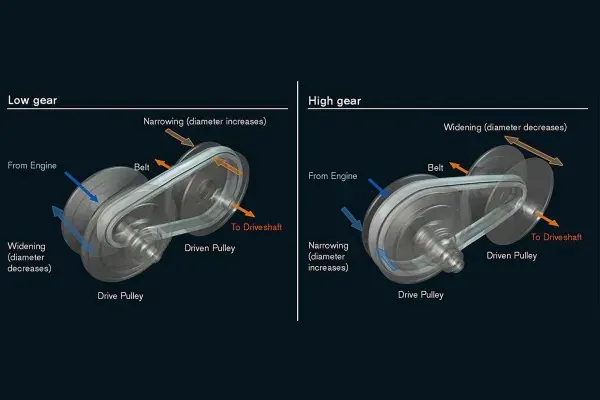
Simulink Model
Case 1
All Terrain Vehicle with CVT Model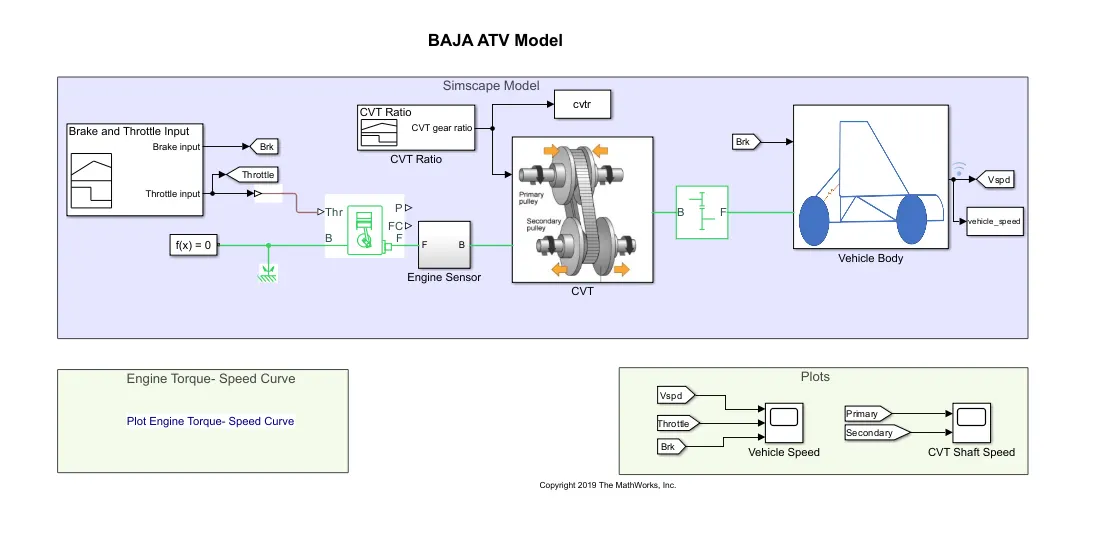
Model Description
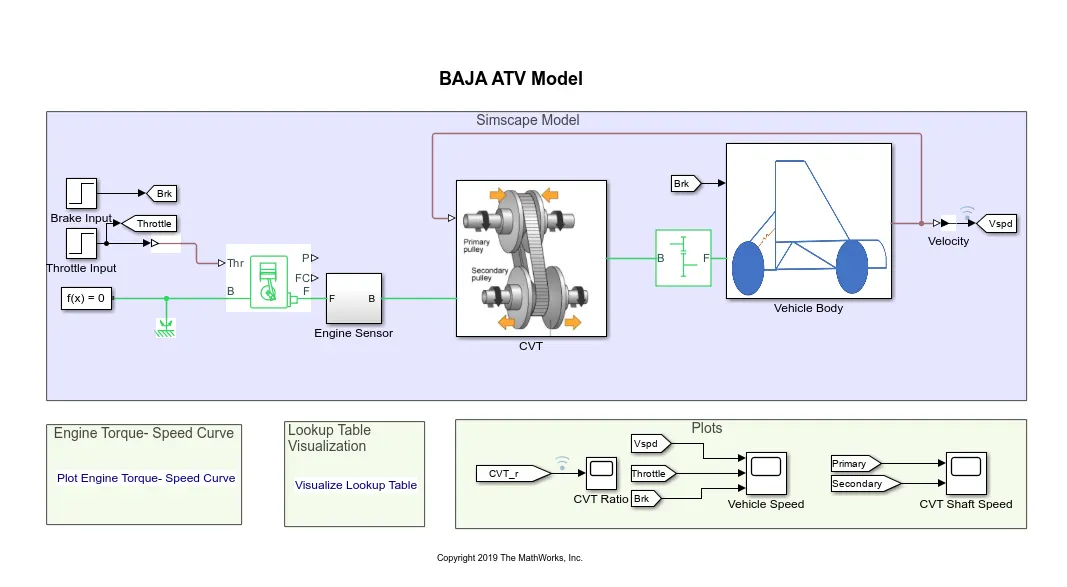
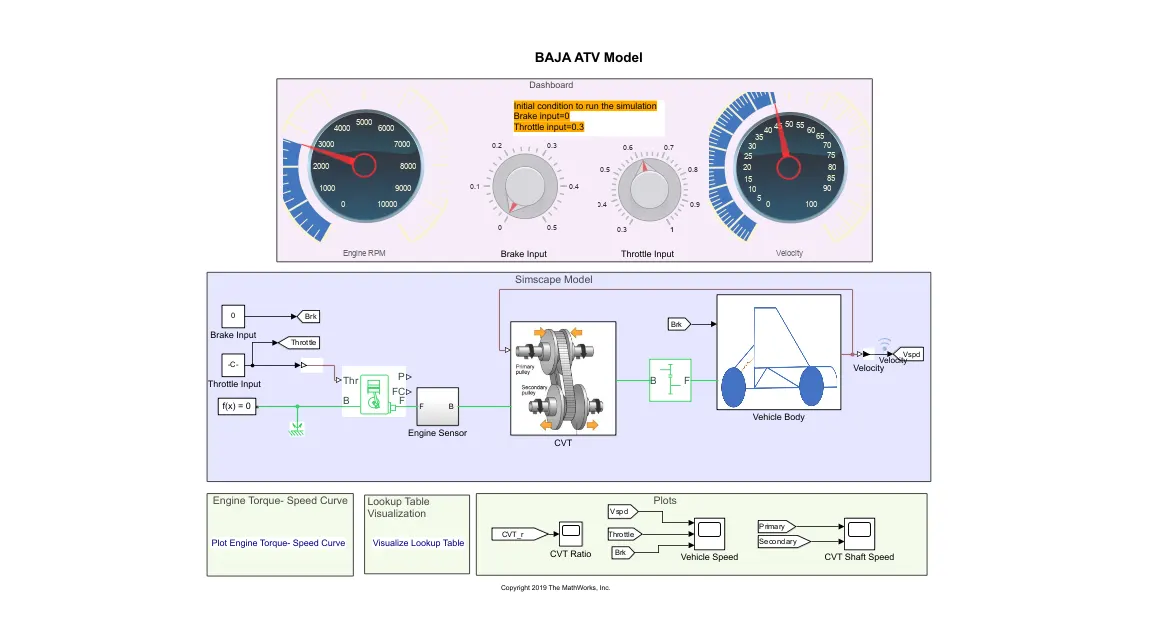
The BAJA ATV model from MATLAB's File Exchange is a comprehensive representation of an ATV incorporating a CVT. The model consists of subsystems representing the engine, transmission, driveline, chassis, and suspension. These subsystems interact to simulate the vehicle's behavior under different input conditions. The CVT plays a crucial role in optimizing vehicle performance by adjusting the gear ratio to match engine RPM and vehicle speed.
Simulation Methodology
The simulation was conducted using MATLAB's Simulink environment. The input parameters for the simulation included accelerator pedal position and CVT ratio. The output parameters of interest were vehicle velocity and engine RPM. The simulation was run for different combinations of input parameters to analyze the vehicle's response under various operating conditions.
System Modeling
The ATV simulation model is built using Simulink, a graphical programming environment for modeling and simulating dynamic systems. The model consists of several subsystems, each representing a key component of the ATV, including:
Engine: Represented by a generic engine block that provides engine torque based on throttle input and engine speed.
Continuously Variable Transmission (CVT): Modeled using a CVT block that adjusts the gear ratio to maintain optimal engine power and vehicle speed.
Drivetrain: Represented by a simple gear block that transmits power from the CVT to the wheels.
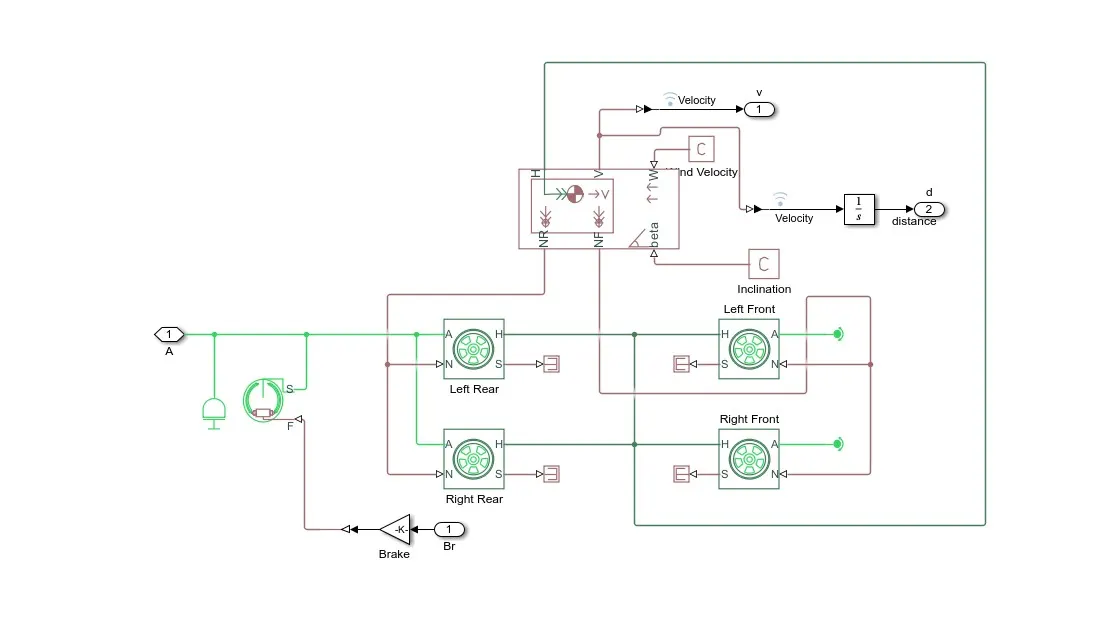
Vehicle Body: Modeled as a rigid body with mass and inertia, subjected to forces from the engine, wheels, and terrain.
Suspension: Modeled as a simplified suspension system with damping and stiffness to absorb terrain irregularities.
Tires: Modeled using tire models that consider tire properties, contact forces, and slip characteristics.
Terrain: Represented by a block that generates terrain profiles with varying slopes and roughness.
Simulation Results
The simulation model is subjected to various input parameters, including throttle, brake, and terrain conditions. The model's outputs are analyzed to understand the ATV's performance characteristics.
Throttle Response:
Increasing throttle increases engine torque, resulting in a rise in vehicle velocity. The rate of acceleration depends on the throttle input, engine power, and vehicle resistance.
Brake Response:
Applying the brake applies a retarding force to the wheels, causing a decrease in vehicle velocity. The braking force can be modulated to control deceleration.
Terrain Response:
The vehicle's response to terrain variations depends on the suspension characteristics and tire properties. Rough terrain can cause oscillations and vibrations, while steep slopes can affect traction and stability.
Model Properties
The ATV simulation model exhibits several key properties:
Modular Design: The model is organized into subsystems, allowing for easy modification and adaptation.
Parametrizability: Model parameters can be adjusted to represent different ATV configurations and terrain conditions.
Real-Time Simulation: The model can be simulated in real-time, enabling interactive analysis of vehicle behavior.
Visualization: The model's outputs are visualized using charts and graphs, providing insights into vehicle performance.
Contionous Variable Transmission Subsystem
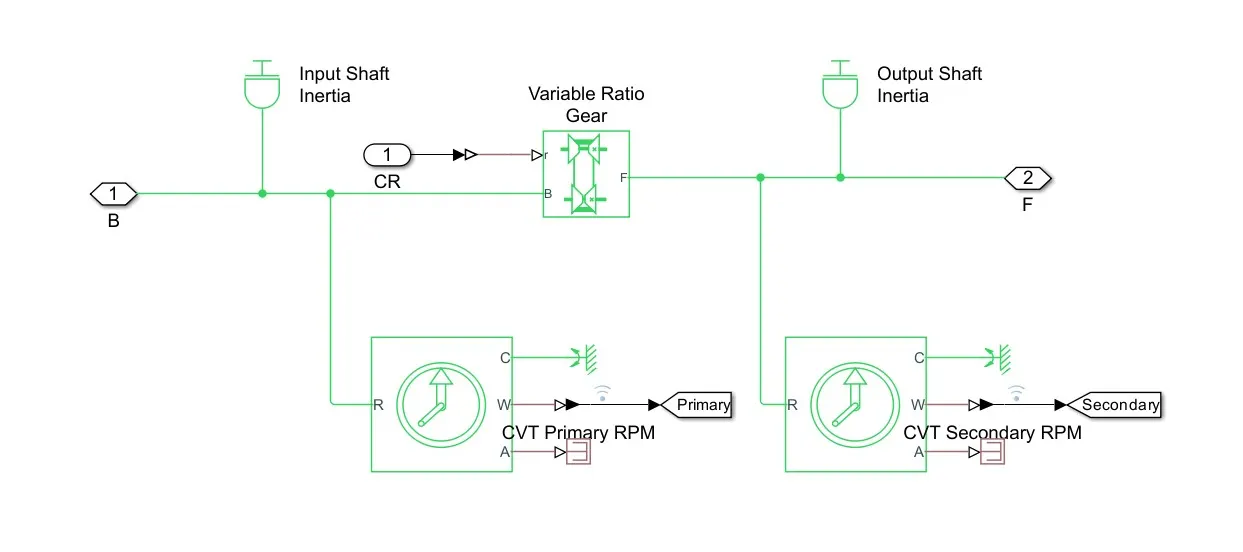
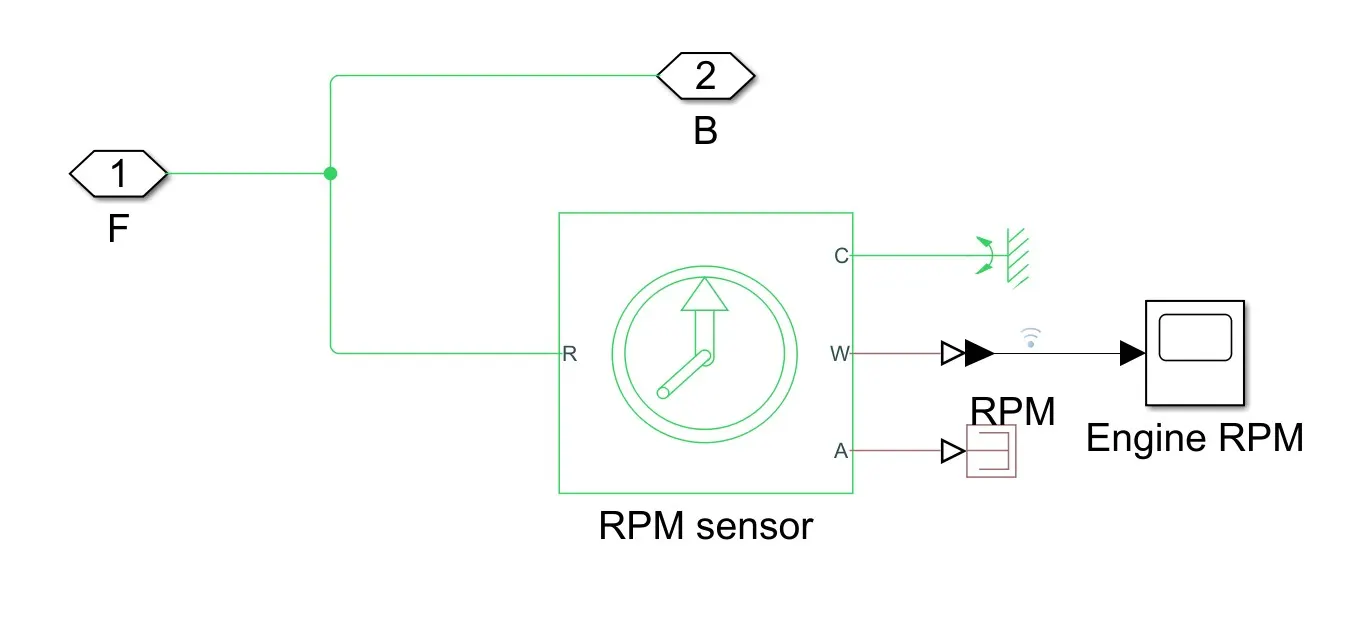
Engine Sensor Subsystem
Vehicle Body
Brake Input and Throttle input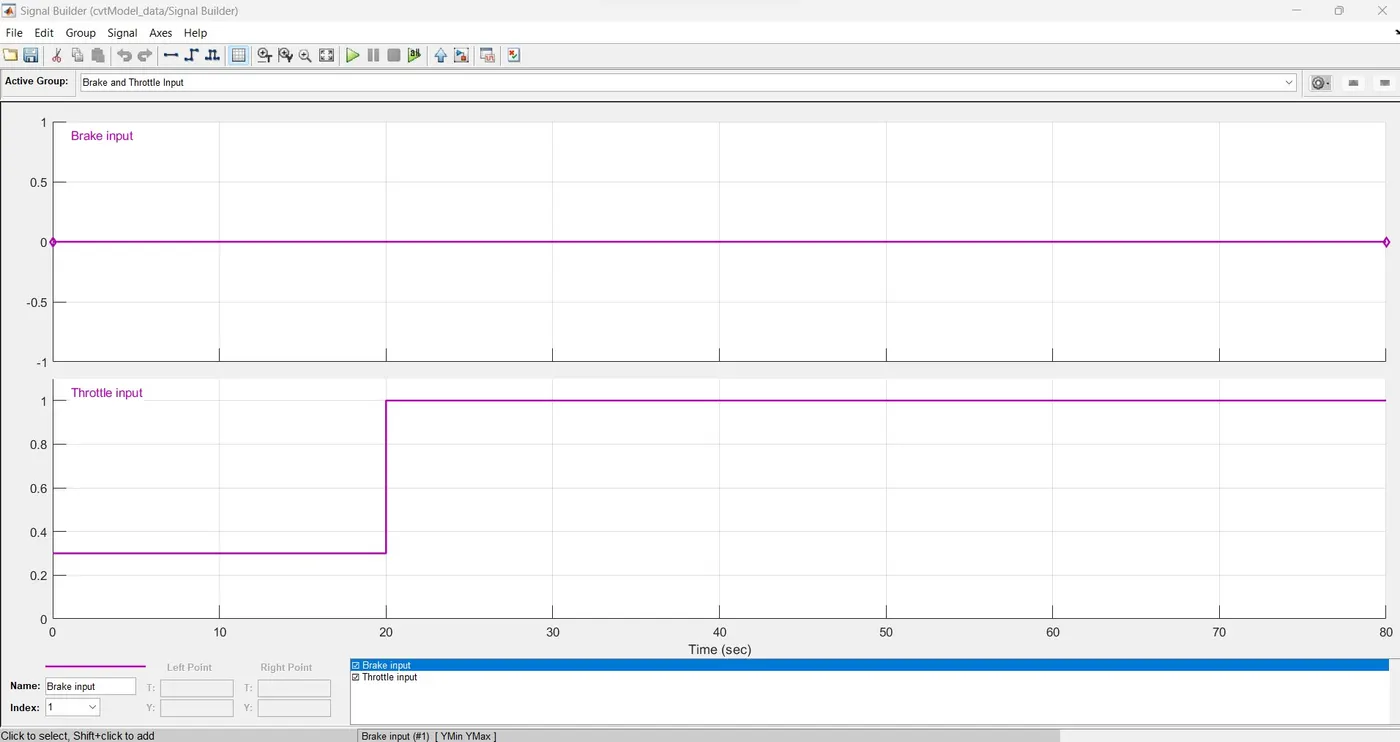
Speed Torque Curve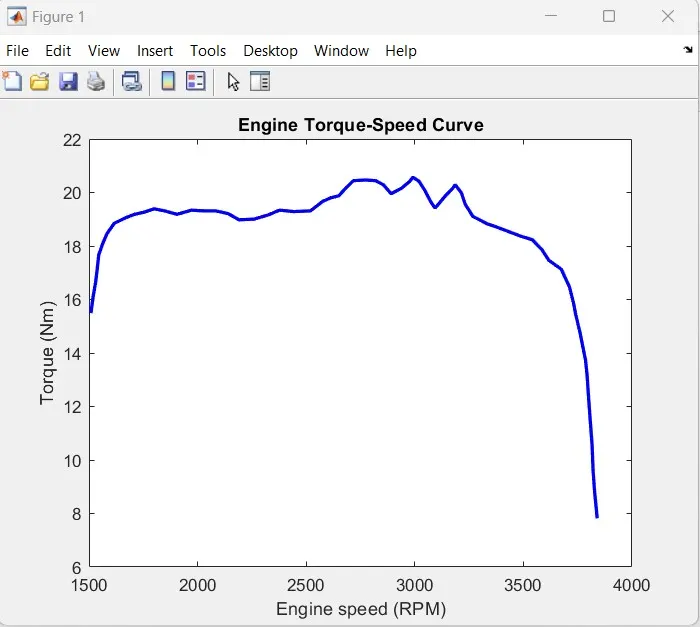
CVT Gear Ratio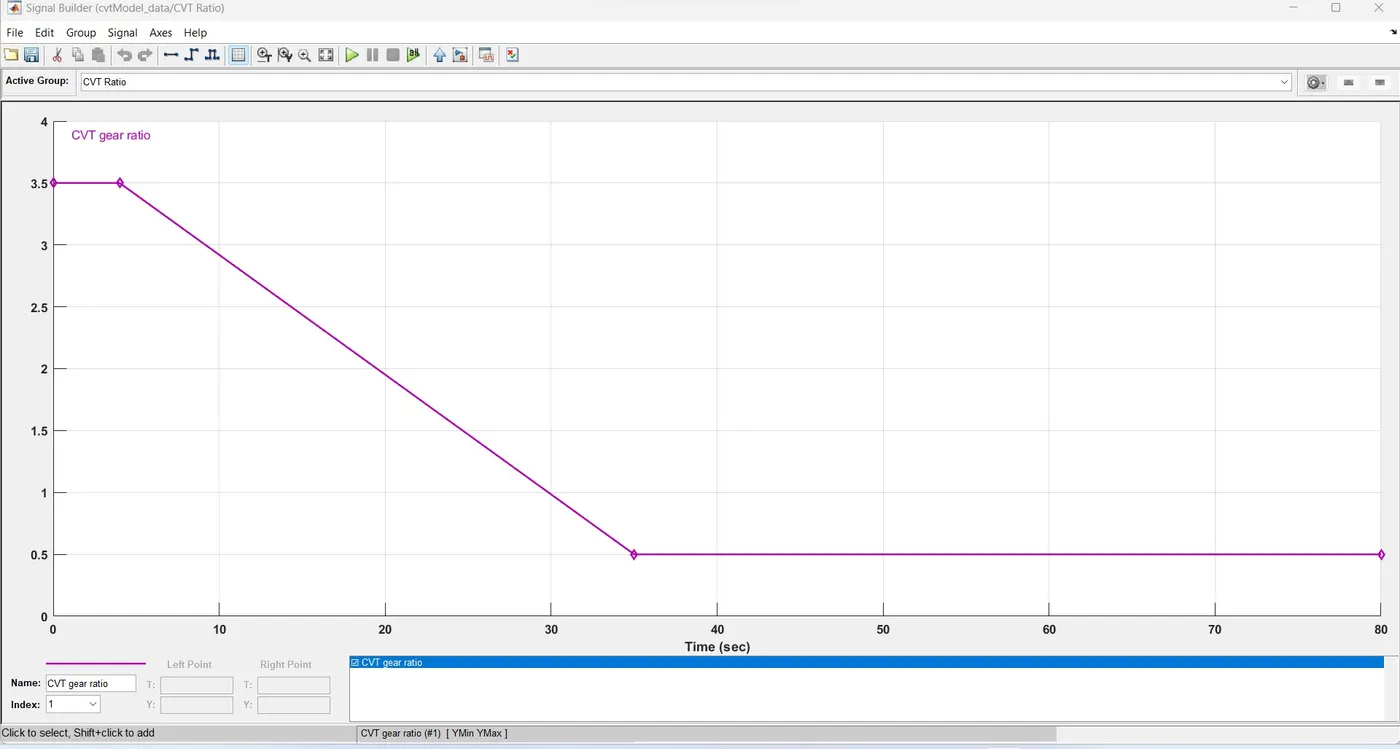
Vehicle Speed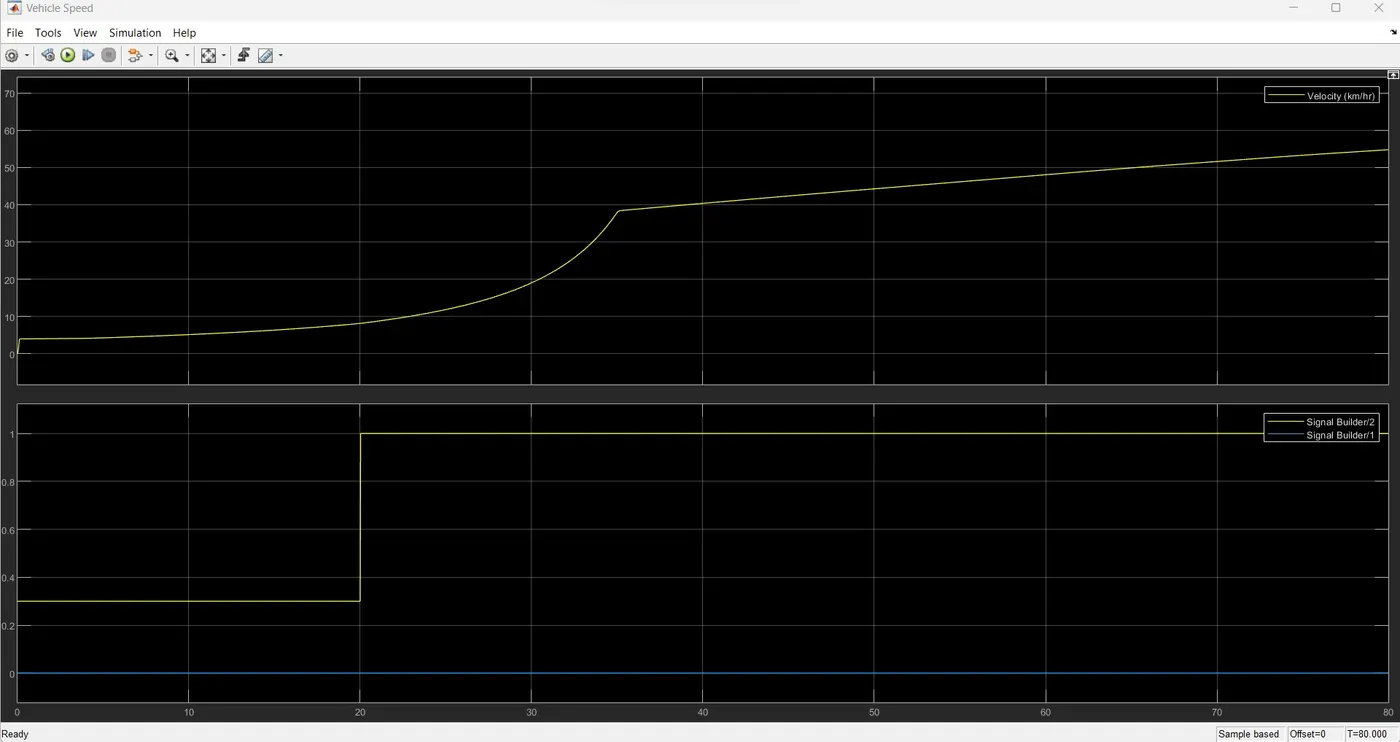
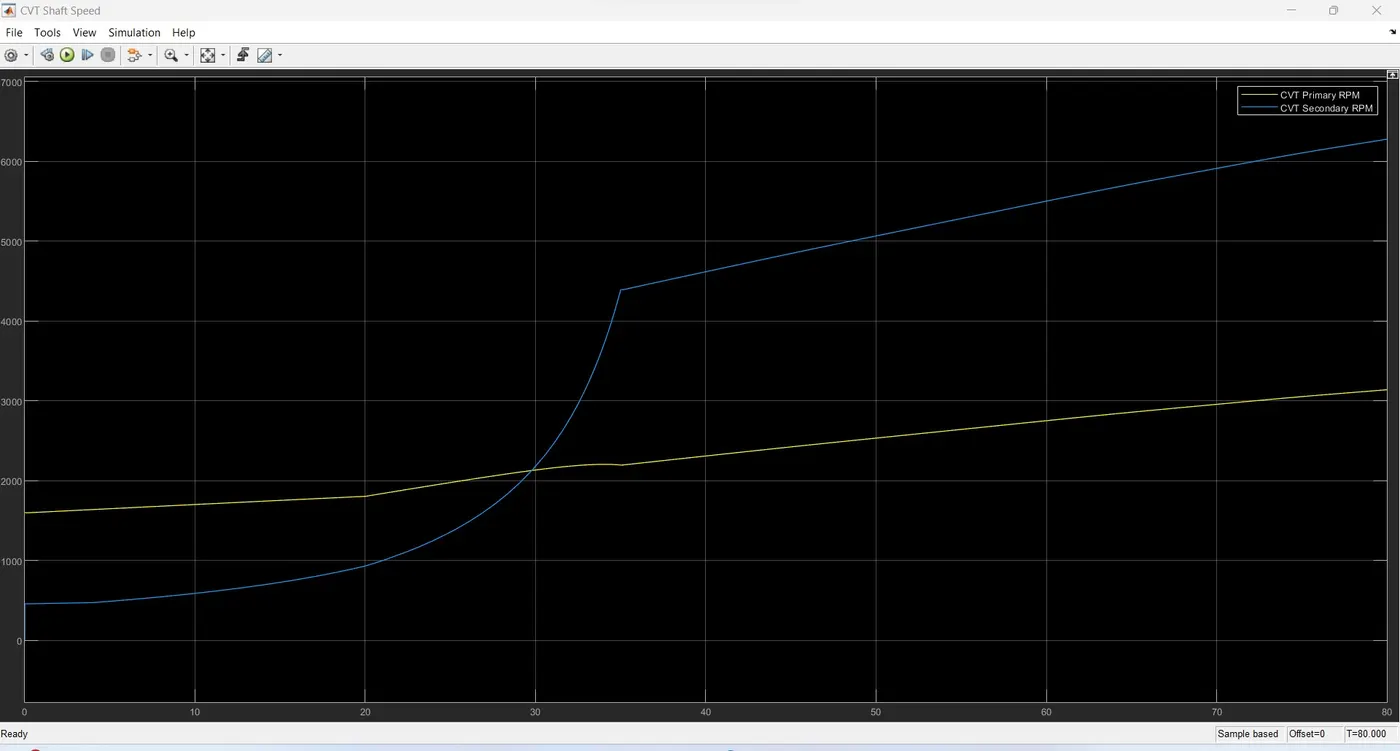
CVT Shaft Speed
Case 2
All Terrain Vehicle with CVT and Dashboard
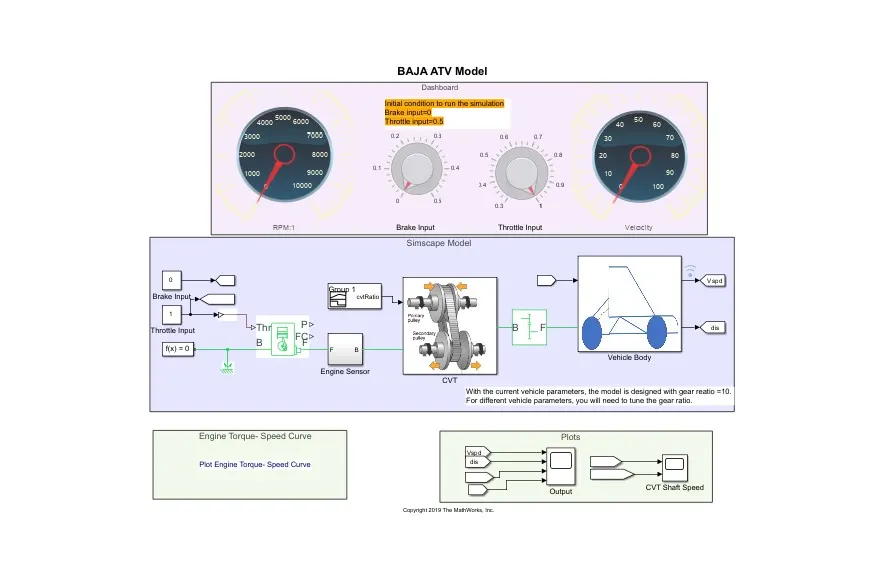
CVT Gear Ratio
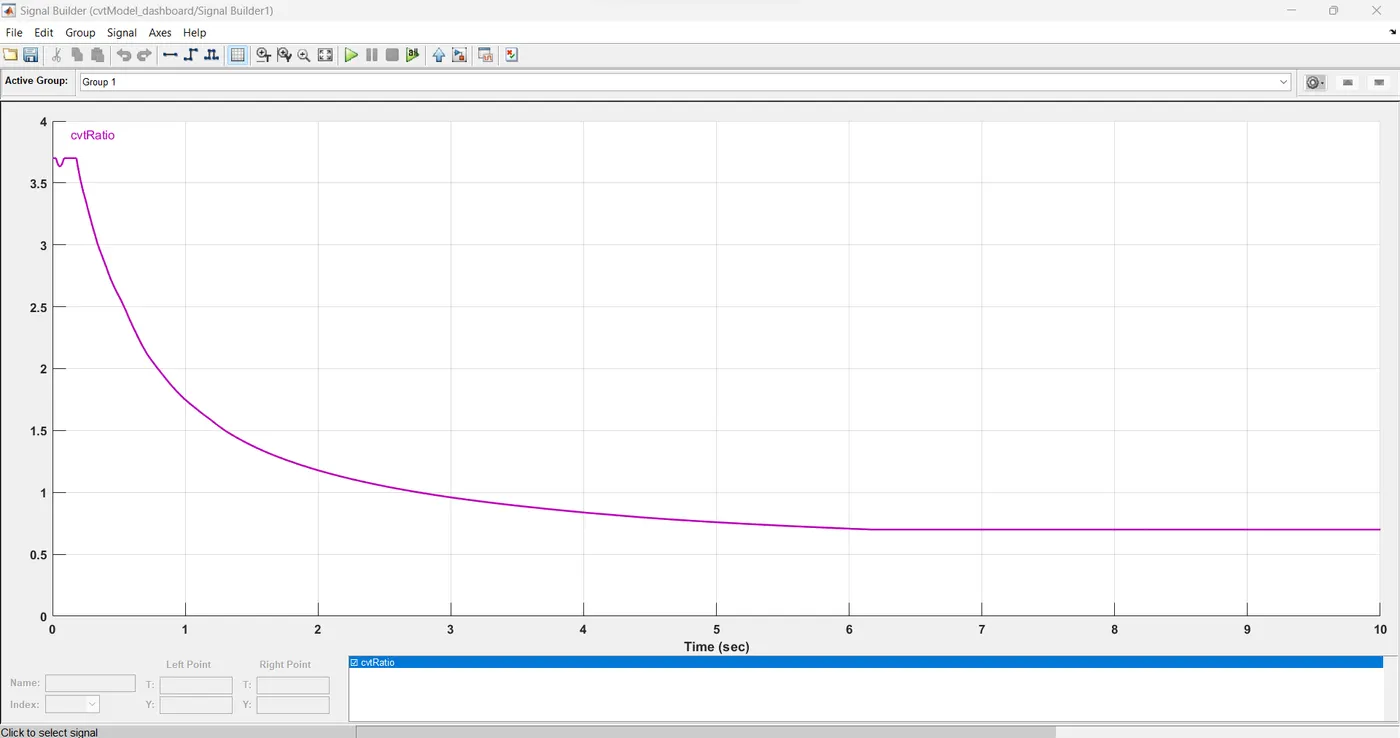
Torque Speed Curve
Vehicle Speed 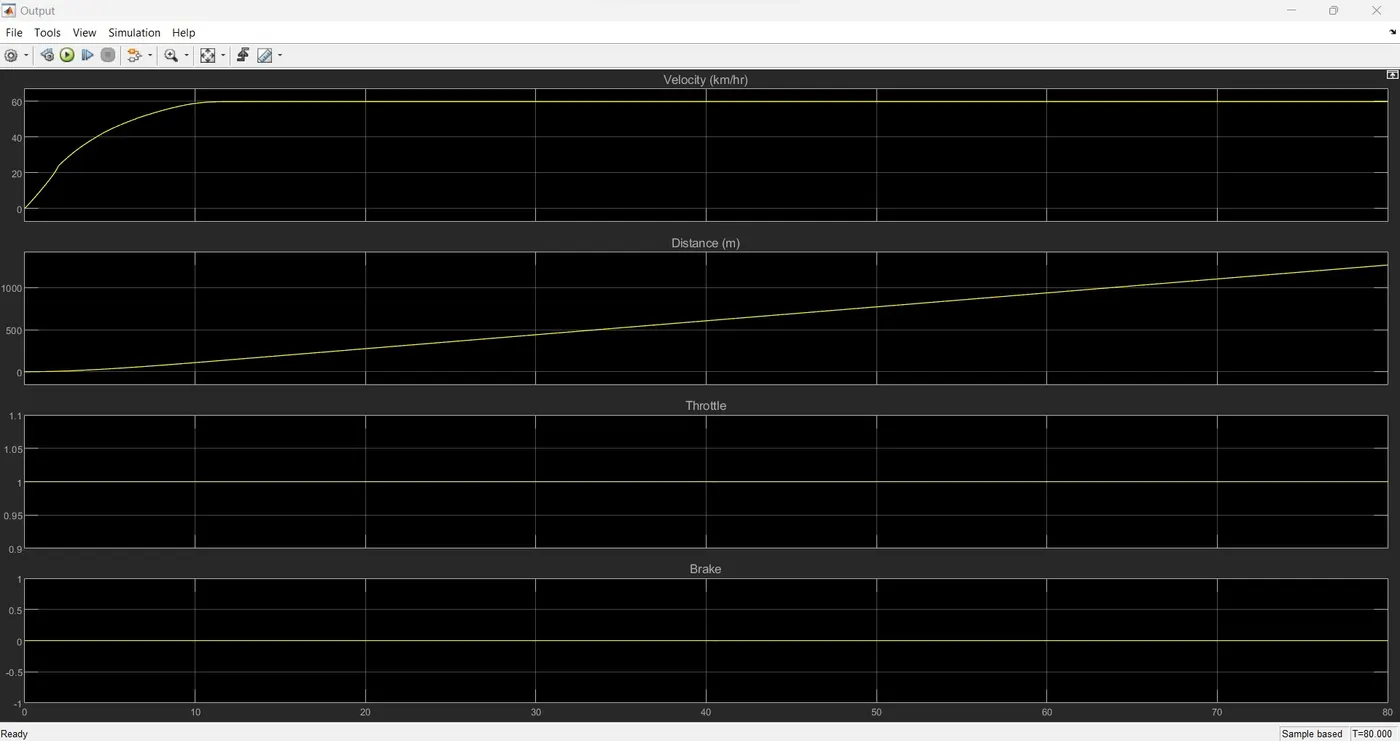
CVT Shaft Speed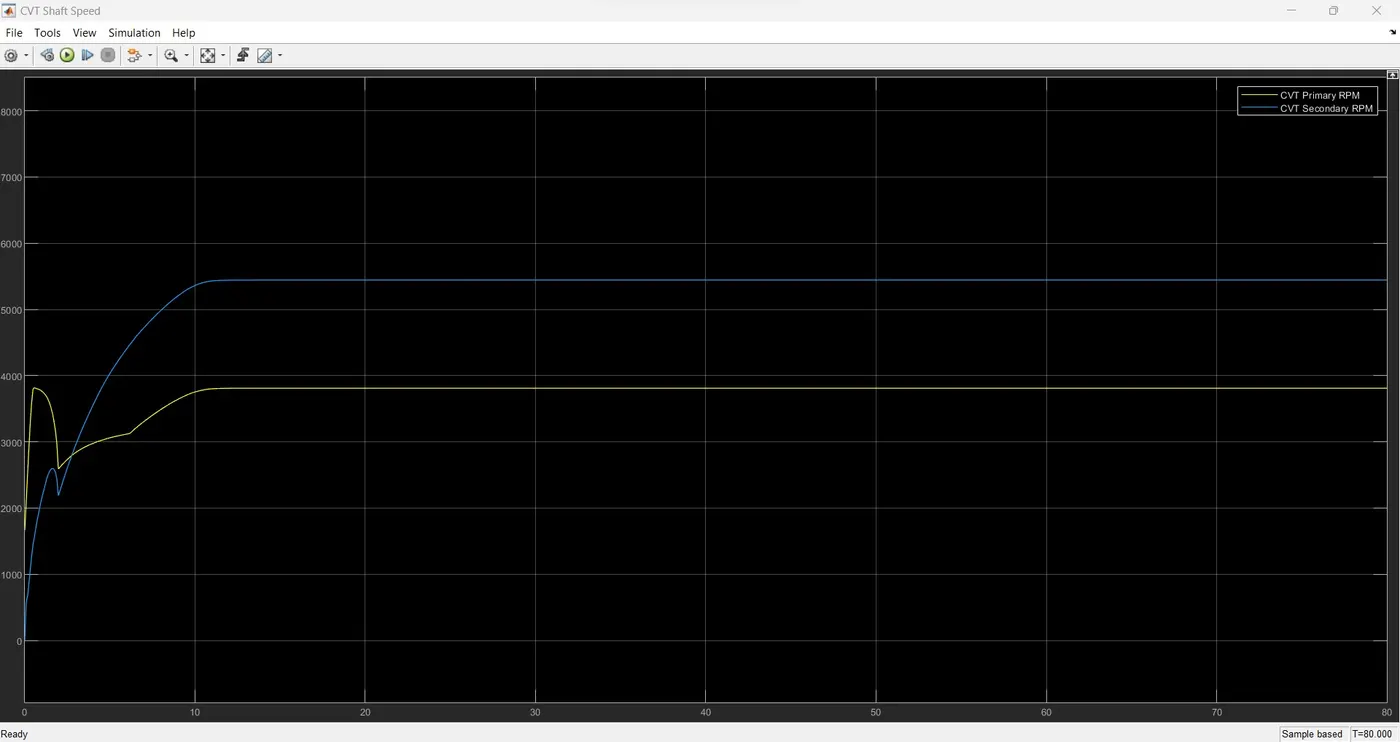
Engine Speed 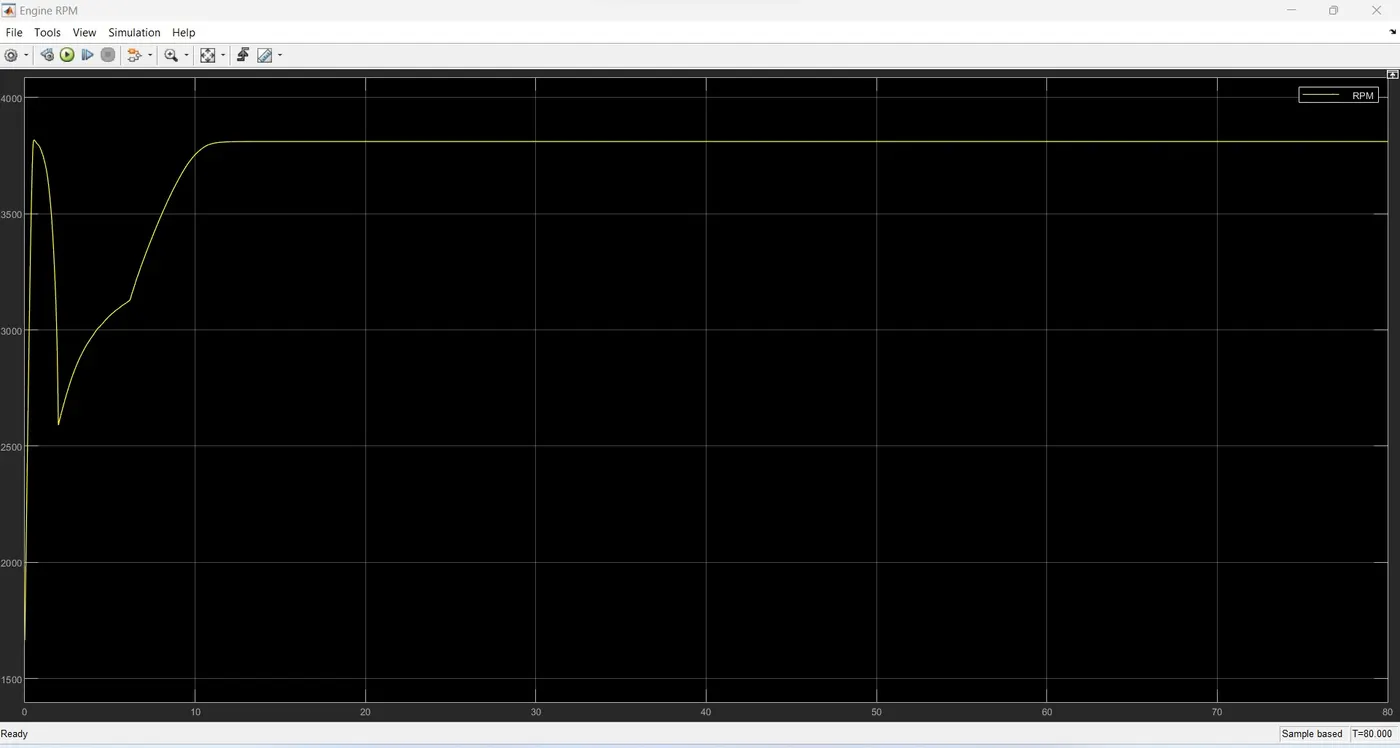
Case 3
All Terrain Vehicle with Lookup table
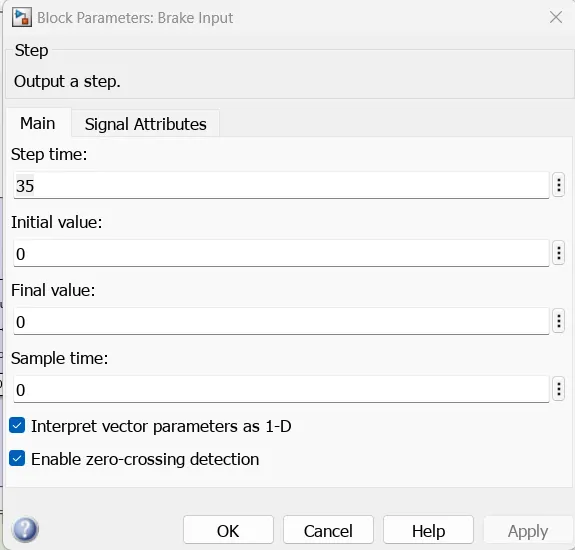
Brake Input
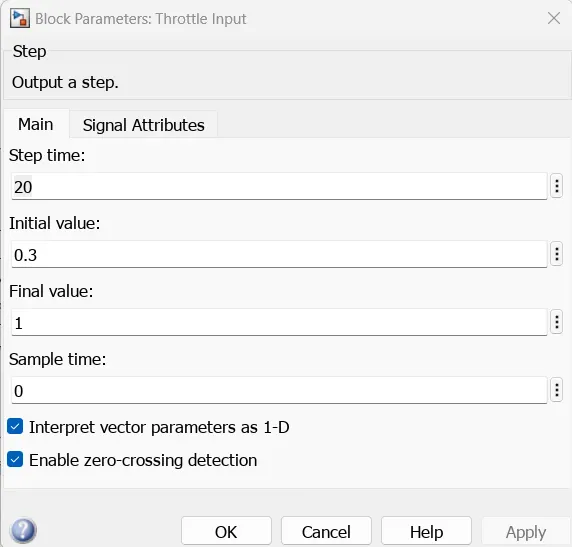
Throttle Input
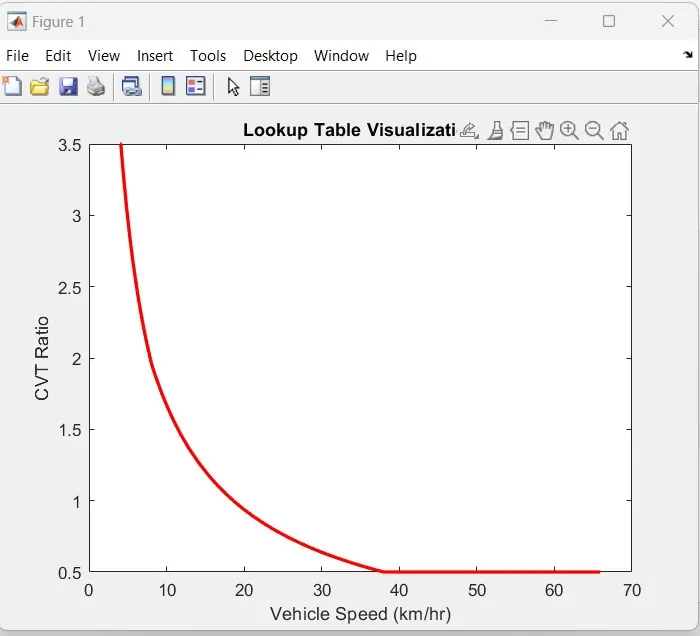
Matlab code for Lookup table Visualization
%% Load and simulate the model
cvtModel_data
sim('cvtModel_data')

%% Visualize the lookup table
plot(vehicle_speed,cvtr,'r','LineWidth',2)
xlabel ('Vehicle Speed (km/hr)')
ylabel ('CVT Ratio')
title ('Lookup Table Visualization')
CVT Gear Ratio Vs Vehicle Speed
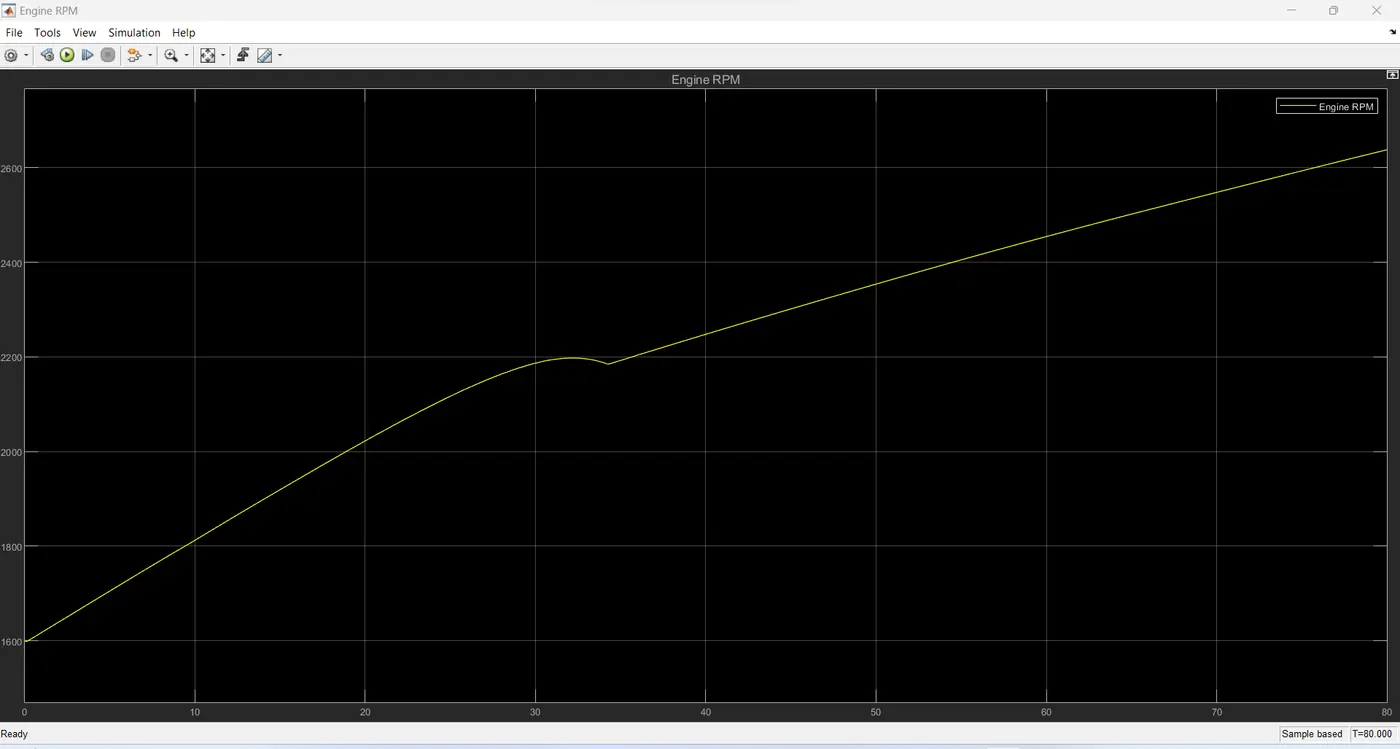
Engine RPM 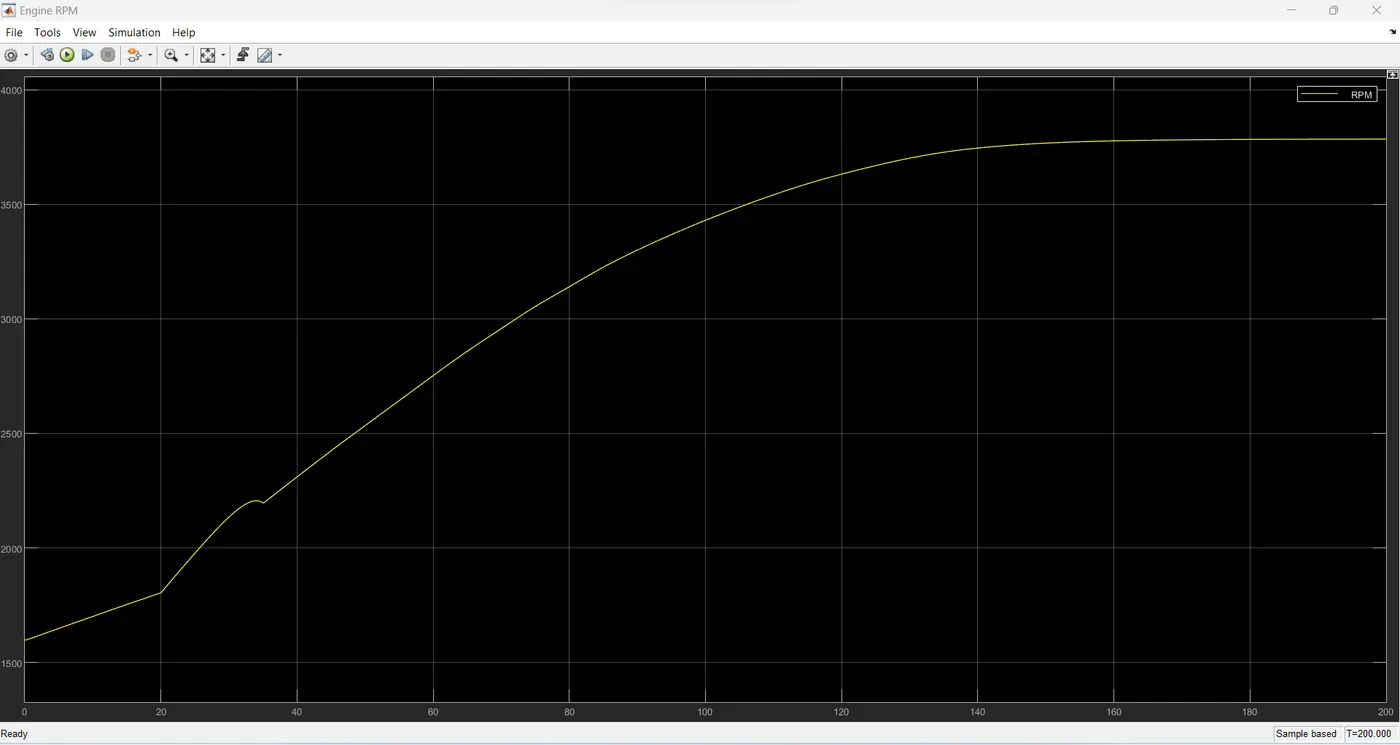
CVT Shaft Speed 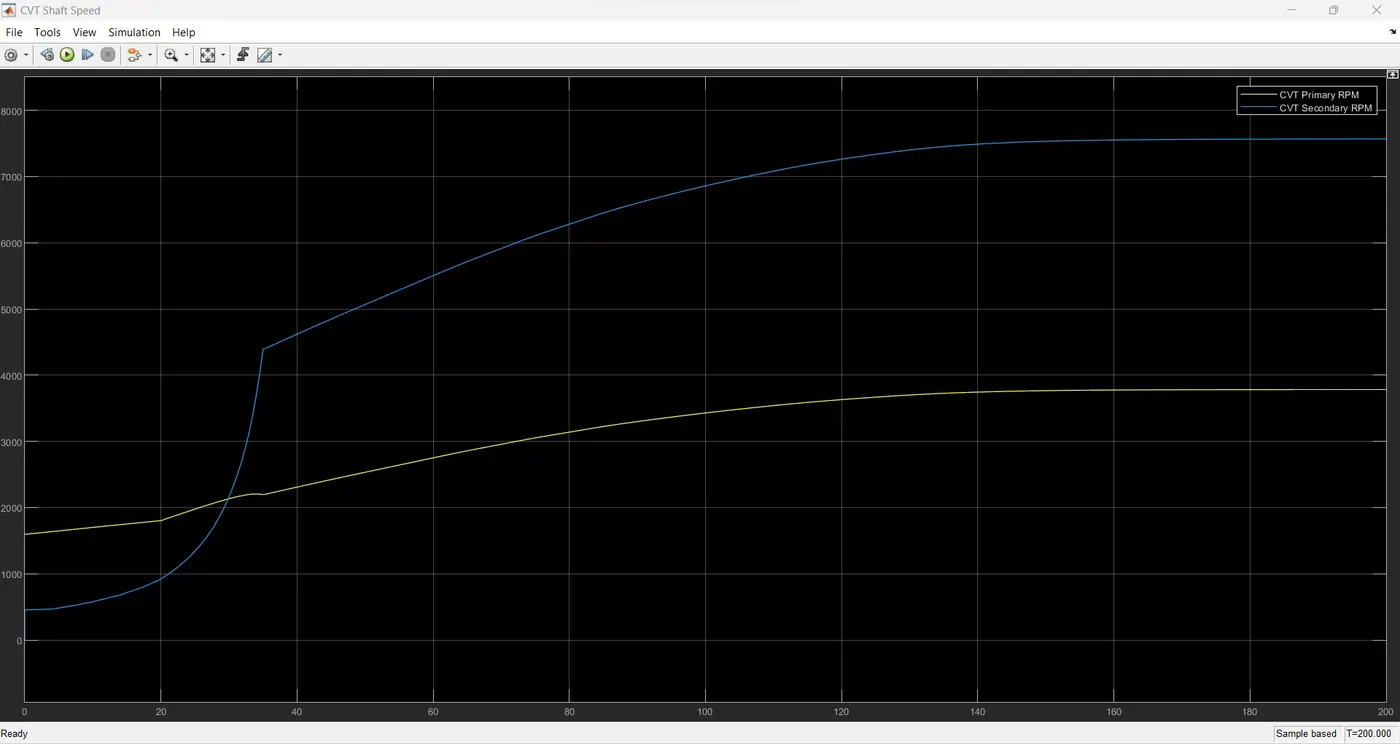
Vehicle Speed
Case 4
All Terrain Model with CVT Ratio and Lookup Table
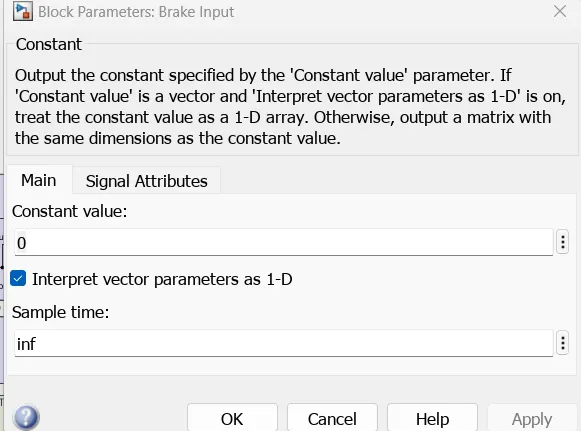
Brake Input
Throttle Input
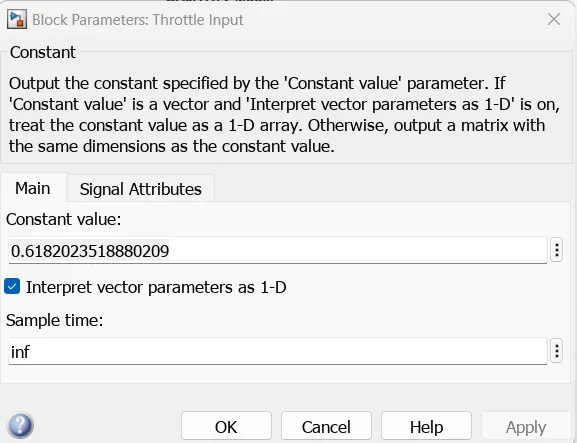
Lookup table Visulization
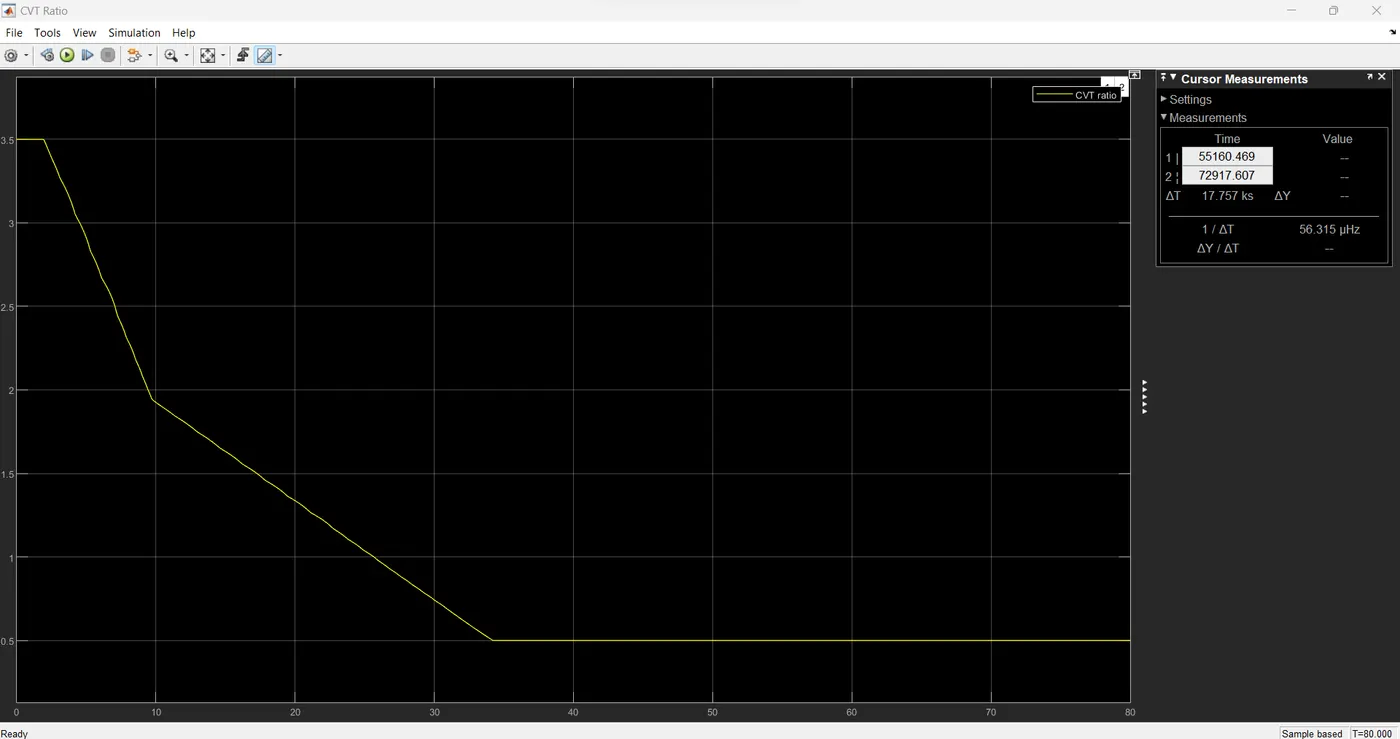
CVT Ratio
Vehicle Speed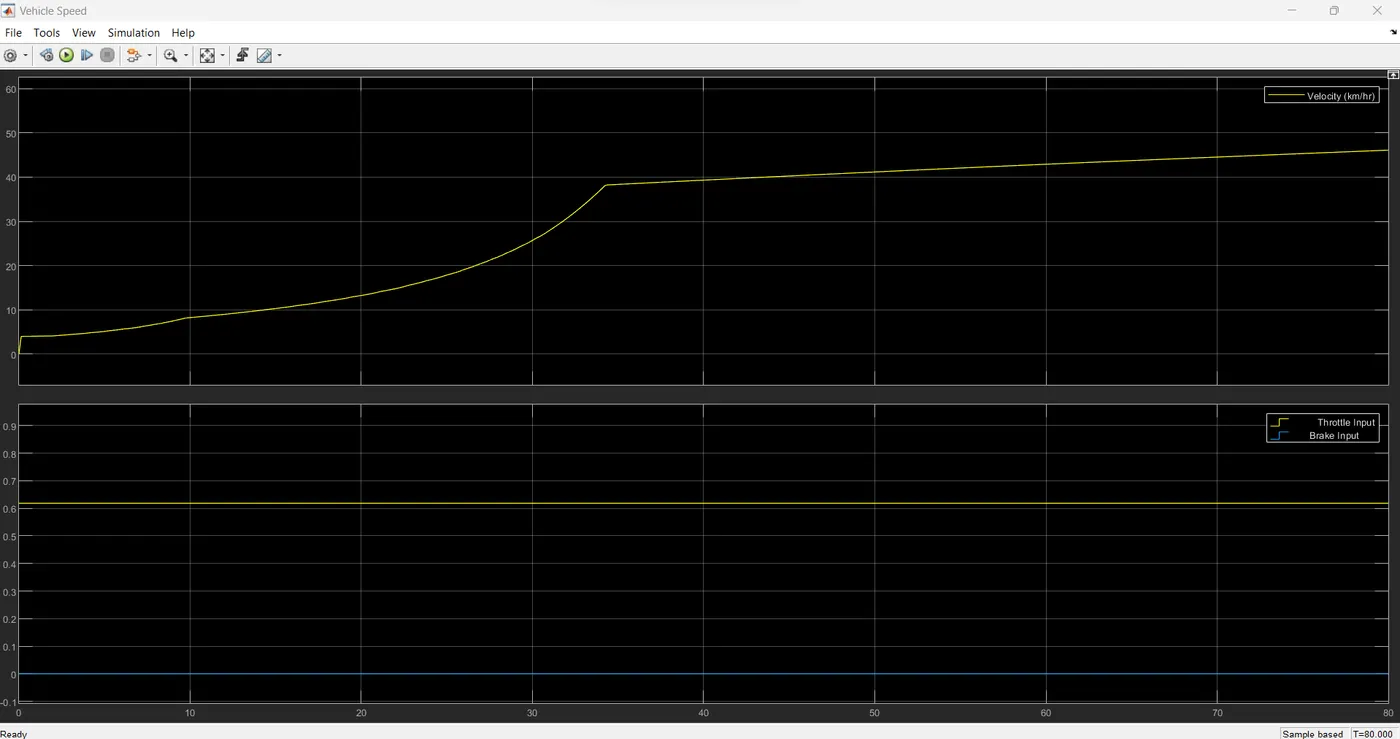
CVT Shaft Speed 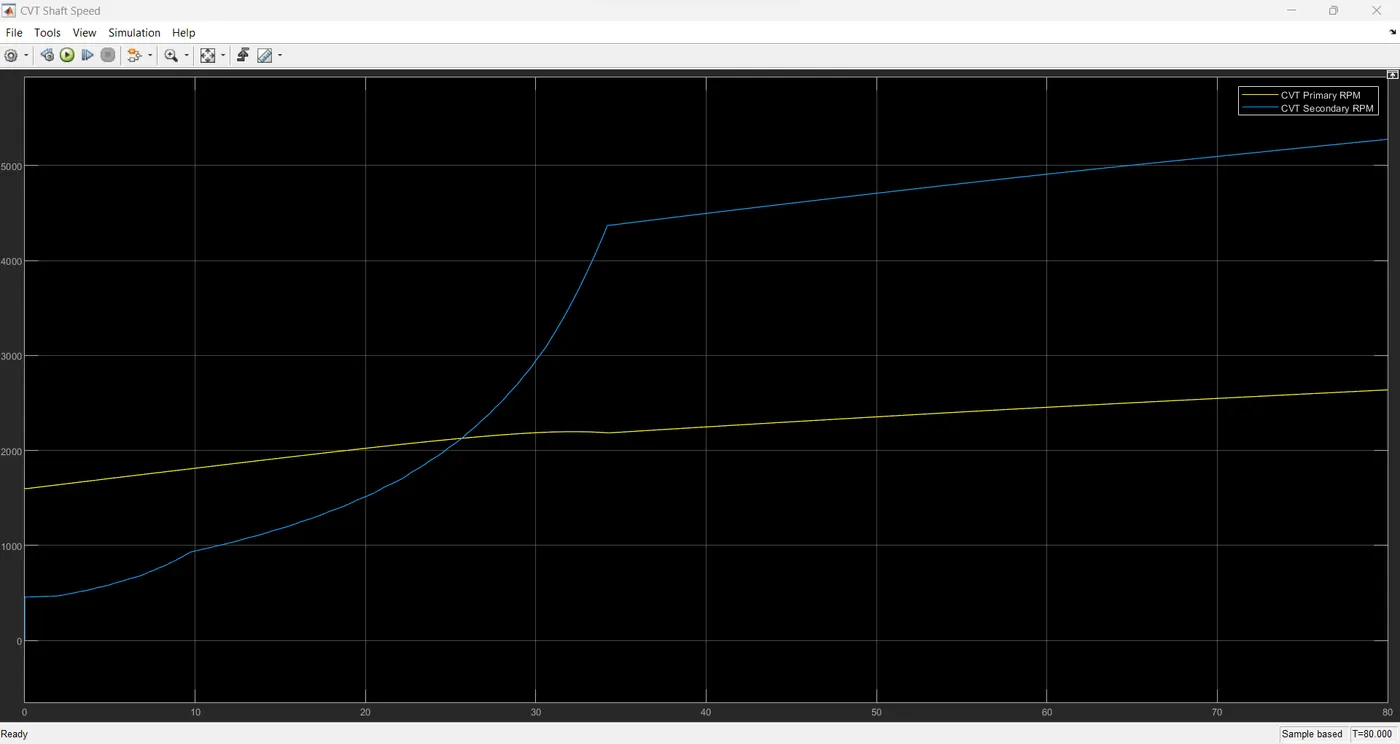
Engine Speed