Project 3 - Design and Development of Disposable Syringe (Medical Technology)
PROJECT 3- DESIGN AND DEVELOPMENT OF DISPOSABLE SYRINGE(MEDICAL TECHNOLOGY)
DISPOSABLE SYRINGE
- Disposable syringes are becoming ever more common within the medical industry. This is due in no short part to both the want to streamline the workload and to prevent the spread of blood-borne illnesses.
- They’re also relatively cheap and easy to mass-produce allowing for a higher level of accessibility.
- Generally speaking, syringes are instruments used to either insert or draw solutions from a larger body. Typically operated via a piston-pump system, they are the primary method by which a doctor or nurse would administer medication to their patients.
- Historically, syringes would be cleaned and reused. However, within more modern times the disposable syringe has risen in popularity over the traditional reusable syringe.
- The primary difference being that a disposable syringe is intended for one-time use and is then disposed of, typically into a contamination unit.
Types of Disposable Syringes
While simple in concept, syringes have multiple variants and parts that are interchangeable depending on the intended use of the syringe. Generally speaking, these are factors that may vary dependent on the syringe being used.
- Size
- Tip
- With / Without Needles
- Needle Length
- 2-part Disposable Syringe
- 3-part Disposable Syringe
TASK 1
MARKET ANALYSIS
1-Existing and potential customers, addressable market size
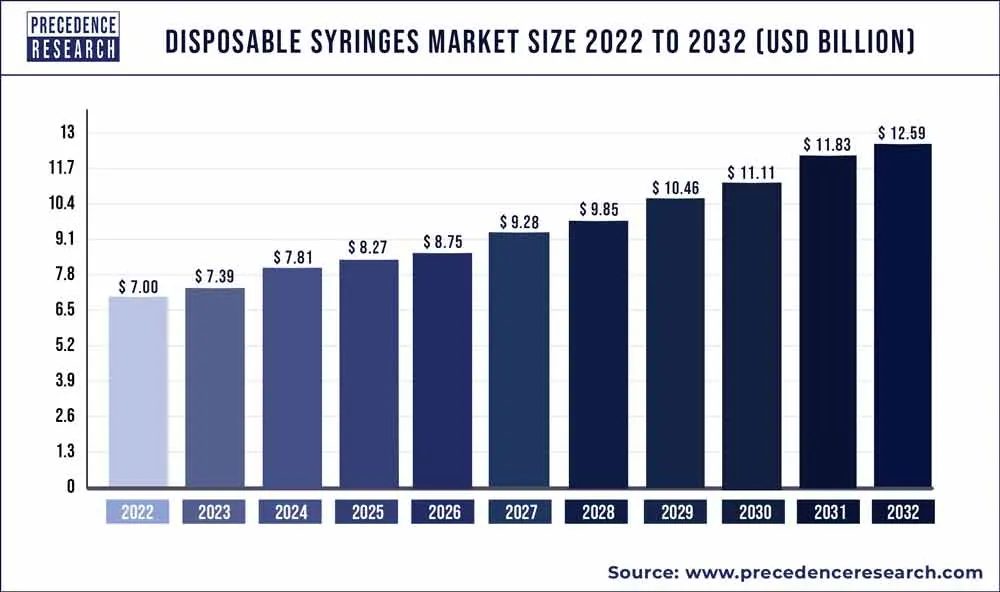
-
The global disposable syringes market was estimated at USD 6.73 billion in 2021 and is predicted to reach USD 11.02 billion by 2030, expanding growth at a CAGR of 5.6% over the forecast period 2022 to 2030.
-
As a substitute for the glass hypodermic needles, disposable plastic syringes have been launched. These are used in all the healthcare services across the globe to provide medicines to uncountable patients following this breakthrough.
-
Syringes are accessible in bulks and are among other items, can be used to administer medications via intravenous, intramuscular or intradermal routes. Disposal of them can have impact on the environment which is a major concern.
-
This is ill-suited to demand for supportable growth, but healthcare organization is growing worldwide in response to the growing demand for decent medical care and the rise in chronic diseases, drug administration is becoming increasingly prevalent. In any healthcare environment, it is a actual simple operation, and disposable syringes are an integral part.
-
Dealings like the latest COVID-19 epidemic make investing in the future more profitable for the market for disposable syringes. The growth of the global demand for disposable syringes is motivated by an increase in the incidence of needle stick injuries, increased healthcare spending worldwide, supportive government policies, and a rise in chronic conditions and infectious diseases.
- However, costly disposable syringes for protection and access to various distribution modes inhibit the growth of the market. On the other hand, in developed countries, the rise in untapped capacity generates new prospects in the coming years.
2-Top Players contending in the Market:
- The market is highly fragmented and is characterized by high competition with the presence of major global players. These companies particularly focus on enhancing product quality by adopting advanced and innovative techniques to enhance their market presence and expand their geographical reach.The key players are concentrating on research and development is anticipated to lead the disposable syringes market.
- Key companies like Baxter International and Fresenius Kabi AG are aiming towards profitable development by accepting strategies like mergers and acquisitions, weighty investments in the industrial facilities that is expected to fuel the worldwide market growth in near future. This tendency is likely to continue and will enhance growth of the aiming industry in forecast time frame. Also, stringent government regulations regarding usage of secure and engineered devices in medical sector will flourish target market growth over the forecast time frame.
Foremost players challenging in global disposable syringes market are:
- Fresenius Kabi AG
- Flextronics International Vita Needle Company
- Braun Medical, Inc.
- Baxter International, Inc.
- Terumo Corporation
- Novo Nordisk
- Henke-Sass, Wolf
- Retractable Technologies, Inc.
- UltiMed, Inc.
- Covidien
- Becton, Dickinson and Company.
3-History of the product
Syringe is one of the most widely used instruments in medical institutions, and it is an item that nurses must come into contact with every day. It is necessary for us to have some understanding of its historical knowledge.
The word syringe comes from the Greek word “syninx”, which means “tube, barrel”. As early as the 15th century, the Italian Cartinel proposed the principle of the syringe. In 1657, Englishmen Boyle and Wren, based on Catinel’s hypothesis, used a feather tube as a puncture needle and a dog’s bladder as a liquid container, and squeezed the dog’s bladder. into the human body. But because it is very inconvenient to use, it has not been widely used.
In 1809, the French physiologist Francois Magendie pierced the patient’s body with strychnine-coated wood chips through the skin, but unfortunately, his patient died.
In 1844, Irish doctor Francis Reid invented a hollow needle-21, which has a very important significance in the history of the invention of the syringe.
In order to relieve the pain of a neuralgia patient, Scotsman Alexander Wood invented hypodermic injection therapy by injecting morphine through a syringe near the nerve involved in the pain. Since then, the patient no longer has to endure the pain caused by cutting the skin.
The invention of subcutaneous injection facilitates another route of administration in addition to oral administration. Because it can act quickly and directly enter tissues without passing through the intestinal tract, it reduces the damage of digestive enzymes to the drug, so it is highly favored by doctors. favor.
Soon, intelligent human beings discovered the microbe and its relationship to human disease, so there was a lot of focus on the use of sterile items when injecting.
Therefore, people began to sterilize the syringe by boiling it or soaking it in ethanol. Needles become dull after multiple applications, so there is a practice of periodically grinding the needle on a whetstone.
In 1869, the Frenchman wulingLu developed Ferguson’s improved syringe, and the syringe entered the stage of history with a new look, and the all-glass syringe he made made sterilization easier.
Later in the clinical application process, people gradually changed the shape of the syringe, which made it more convenient and firm to take the syringe, and made it possible to operate with one hand. In order to prevent medical workers from infecting diseases in the process of injecting multiple patients with one needle, Arthur e smith invented a single-use syringe from 1949 to 1950 and obtained a number of US patents.
In 1955, plastic was used in the design of syringes and the world’s first disposable plastic syringes came out. Since then, plastic syringes have become very popular, and new, safer, more wear-resistant and cheaper products have appeared in the field of human health. Syringes have played a very important role in promoting human health.
4-State-of-the-art products
Depending on their intended use, syringes can come in a wide variety of different shapes and sizes. Syringes made to penetrate bone are not as thin and brittle as those used simply to provide insulin to the blood stream. Despite the variation in size however, the general idea behind the device remains more or less uniform.
While simple in concept, syringes have multiple variants and parts that are interchangeable depending on the intended use of the syringe. Generally speaking, these are factors that may vary dependent on the syringe being used.
- Size
- Tip
- With / Without Needles
- Needle Length
- 2-part Disposable Syringe
- 3-part Disposable Syringe
5-Market Trends/Key Takeaways
- The current COVID-19 pandemic has, in general, stressed on the use of single-use plastics and disposable syringes in the healthcare sector.
- New and single-use products are more hygienic and aid in preventing infectious diseases.
- However, widespread use of plastics and disposable products also increases biowaste. Such scenario has given rise to a major debate over the use of disposables in the healthcare sector.
- High prevalence of needlestick injuries in emerging economies is expected to aid in growth of the global disposable syringes market.
- For instance, according to an Environmental Health and Preventive Medicine study published in August 2019, the prevalence of needlestick injuries among the Ethiopian healthcare workers was 28.8% and 43.6% for the 12 months and lifetime, respectively.
TASK 2
PRODUCT PLANNING AND CONCEPT GENERATION
1-Customer needs study
- Customers are increasingly emphasizing purchasing advanced products to improve their lifestyle and health.
- Customers are always worried about the poor hygiene of syringes in the hospital as they spread wide range of diseases from one person to another.So, customers are always looking for a hygiene way of injecting medicine into the body.
- For customers injecting medicines regularly, always require syringes in large quantity. So, they prefer syringes which are affordable and have quality.
- Customers need to inject different dosage of medicine as prescribed by the doctor, so they prefer having syringes with proper label and in different range of quantities.
- Consumer Trends Change Over Time. It’s no surprise that with the changing environment comes a change in consumer trends and consumer shopping patterns. Many customers enjoy the ease of shopping and purchasing what they need online and have it shipped straight to their front door. This trend is made even easier with mobile phones allowing customers to browse while on their phones on the syringe production line.
- As manufacturers, it’s important to listen to customers and stay ahead of the trends, so that time and resources are not wasted manufacturing products which are no longer in demand.
- Customers now require the same level of service from producers as they do from retailers. One of the best ways to address this need is by directing more energy towards communication technology. Utilize technology to help improve communication between employees, as well as customer service, because remaining connected is a basic necessity.
- This is especially true as we see the consequences of globalization, which opens up more business opportunities and demands a greater level of communication. At this stage, manufacturers can no longer rely simply on telephones to stay connected but should try to incorporate instant messaging and video conferencing to enhance communication.
2-Value proposition of the product
- Value proposition-"Your health is in our hands and your peace of mind starts here"
A Value proposition comes from the heart of the product or service you’re selling. And that, without exception, gives way to a more emotive proposition. At the end of the day, people buy from people. And people are not cold, fact-driven, decision-making machines. Actually, our emotions tend to come into play first, then we use the facts to post rationalise our judgments. A purely fact-based play might make sense rationally, but it’s unlikely to help build those emotional connections.
3-Mission statement
Product Description:- A convenient and affordable disposable syringe with wide variety of syringe sizes that are ideal for different applications.
Benefits Statement:- A safe, hygiene, comfortable and affordable disposable syringe.
Business Objectives:- Keeping the health of the customers at the top of our priority list, we aim to provide a healthy and hygiene way of injecting medicine into your body.
Core Market :-U.S; Canada; UK; Germany; France; Italy, Spain;Japan; China; India; Australia; South Korea; Brazil;Mexico; Colombia; Argentina; South Africa; Saudi Arabia;UAE
Stakeholders:-Defines customers, shareholders, in-vestors, employees, suppliers, government agencies, research institutes and communities that directly and indirectly affect its business operations as its stakeholders.
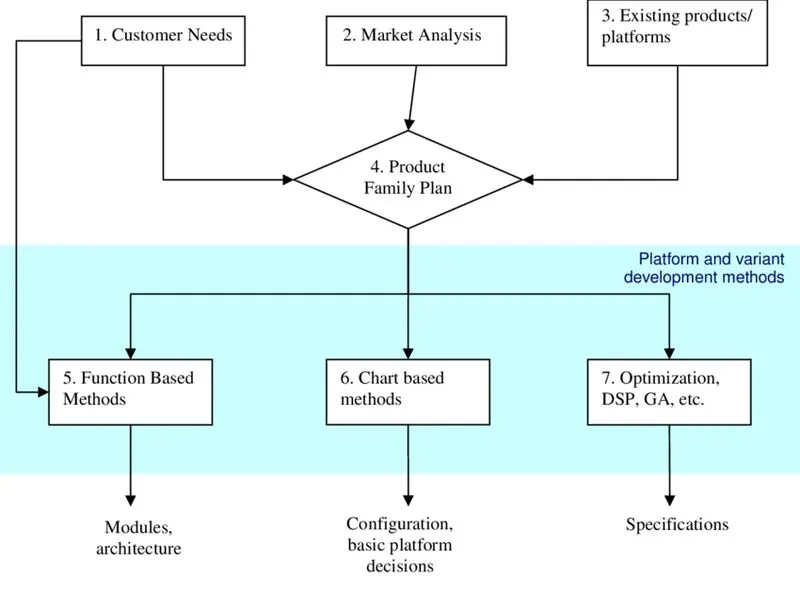
3-Product platform plan for current and future products
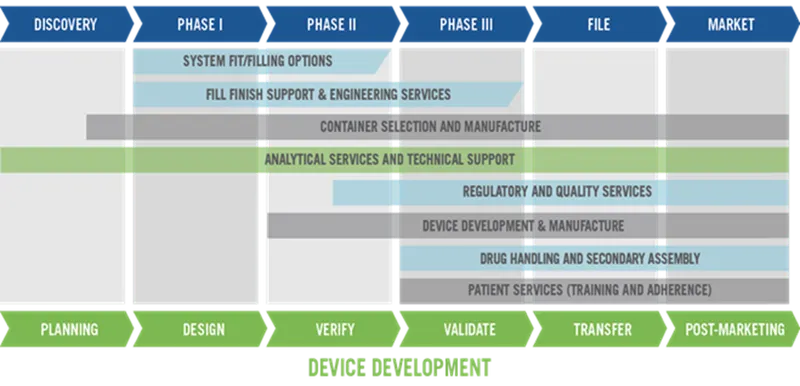
4-Product roadmap
5-Resource allocation and concept generation
Staffing requirements:
- Generally we require mechanical and industrial engineers.
- No. of staffs depends on the volume of production.
Budget requirements:
- To develop a disposable syringe, requires lot many parts like Raw materials, Specialty chemicals, needles, Technology components and cost of these parts depends on the company that we buy from.
- the cost of the staff, depends on the volume of production, high production means requires many staff members.
- It also includes fixed cost like land, machines etc.
The concept generation was based on the major benefits of disposable syringes which include being the most cost-effective type of syringe, non-toxic and disposed of safely, ease of handling with minimal instruction, training or explanation before use (although syringe should only be used by medical professionals) and durable construction.
TASK 3
PRELIMINARY DESIGN AND DEVELOPMENT PHASE
(A)-Systems-based product design and planning
1-Feasibility study summary
As a substitute for the glass hypodermic needles, disposable plastic syringes have been launched. These are used in all the healthcare services across the globe to provide medicines to uncountable patients following this breakthrough. Syringes are accessible in bulks and are among other items, can be used to administer medications via intravenous, intramuscular or intradermal routes. Disposal of them can have impact on the environment which is a major concern. This is ill-suited to demand for supportable growth, but healthcare organization is growing worldwide in response to the growing demand for decent medical care and the rise in chronic diseases, drug administration is becoming increasingly prevalent. In any healthcare environment, it is a actual simple operation, and disposable syringes are an integral part. Dealings like the latest COVID-19 epidemic make investing in the future more profitable for the market for disposable syringes. The growth of the global demand for disposable syringes is motivated by an increase in the incidence of needle stick injuries, increased healthcare spending worldwide, supportive government policies, and a rise in chronic conditions and infectious diseases. However, costly disposable syringes for protection and access to various distribution modes inhibit the growth of the market. On the other hand, in developed countries, the rise in untapped capacity generates new prospects in the coming years.
Crucial factors accountable for market growth are:
- Increasing number of patients at risk of developing stroke
- Increasing patient awareness
- Increased health care expenditure
- Large pool of geriatric population
COVID-19 Impact on Global Disposable Syringes Market
The implications on the overall market, including both the demand side and supply side viewpoints, of the Covid-19 pandemic will be played out and analyzed. All nations around the globe have conducted life saving immunization programs for different diseases and viral infections, increasing the market for disposable syringes. In addition, the WHO has proposed the use of disposable and auto-disable syringes to obtain blood samples from 19 patients with Covid, which in turn helps prevent transmission through healthcare facilities.
Future of Global Disposable Syringes Market
Key companies like Baxter International and Fresenius Kabi AG are aiming towards profitable development by accepting strategies like mergers and acquisitions, weighty investments in the industrial facilities that is expected to fuel the worldwide market growth in near future. This tendency is likely to continue and will enhance growth of the aiming industry in forecast time frame. Also, stringent government regulations regarding usage of secure and engineered devices in medical sector will flourish target market growth over the forecast time frame.
2-Concept of Operation (ConOps) document
- Identify the required mission(s) in functional terms.
- Define the risks to accomplishing the functional outcomes.
- Describe capabilities required by the customer or its’ stakeholders/partners to accomplish the mission.
- Describe the capabilities independently of whether or not the customer currently possesses them.
- Do not specify capabilities in terms of assets, equipment, or other means that might satisfy the need; i.e., state the capability (need), not the solution (equipment).
- Measures of Effectiveness - Operational measures of success that are closely related to the achievements of the mission or operational objectives evaluated in the operational environment, under a specific set of conditions.
- Measures of Performance ‒ characterize physical or functional attributes relating to the system operation, measured or estimated under specific conditions.
- Key Performance Parameters ‒ capabilities and characteristics so significant that failure to meet them can be cause for reevaluation, reassessing, or termination of the program
Without the ConOps, we're laying the groundwork for project trouble and these root causes ...
3-Requirements for the product
Some of the basic machines and equipment needed to make disposable syringes are the following:
- Injection Moulding Machine
- Sterilization Plant
- Scrap Grinding Machine
- Air Compressor
- Bilster Packing Machine
- Water Pump
- Chilling Plant
- Different types of Moulds
- Vacuum Dust Cleaner
- Rubber-tip Washing Machine.
- Foil stamping or screen printing equipment.
- Lab Equipment
- Weighing Devices
- Granulator
- Packing Materials
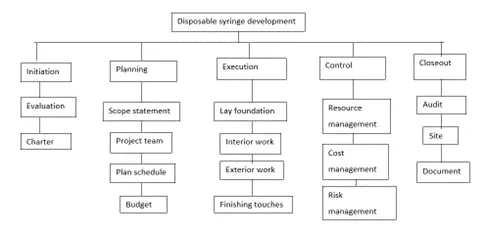
4-Work Breakdown Structure (WBS)
5-Product verification and validation plan
Tasks V and V – Planning
- Contract verification.
- Concept document evaluation.
- Performing a risk assessment
Requirement phase – V & V tasks
- Software needs are assessed.
- The interfaces are evaluated and analyzed.
- The creation of a test plan for the systems.
- The creation of a strategy for acceptance testing.
Design Phase V&V Tasks
- Software design evaluation.
- The Interfaces' Evaluation/Analysis (UI).
- Integration test plan creation.
- The Component test plan is created.
- Creating a test design.
V&V Tasks - Phase of Implementation
- Source code evaluation.
- Documentation evaluation.
- Test cases are created.
- The test process is created.
- Components test cases are executed.
Test Phase of V&V Tasks
- Execution of a test case for a system.
- The acceptance test case is executed.
- Metrics for traceability are being updated.
- Risk assessment
V&V Tasks - Phases of Installation and Checkout
- Installation and configuration audit.
- The installation candidate build's last test.
- The final test report is created.
V&V Tasks - Phase of Operation
- A new constraint is being evaluated.
- Evaluation of the proposed modification.
V&V Tasks - Phase of Maintenance
- The abnormalities are assessed.
- Migration evaluation.
- The characteristics of the retry are evaluated.
- Evaluation of the proposed modification
- Validating the concerns with the production.
(B)-Product architecture study
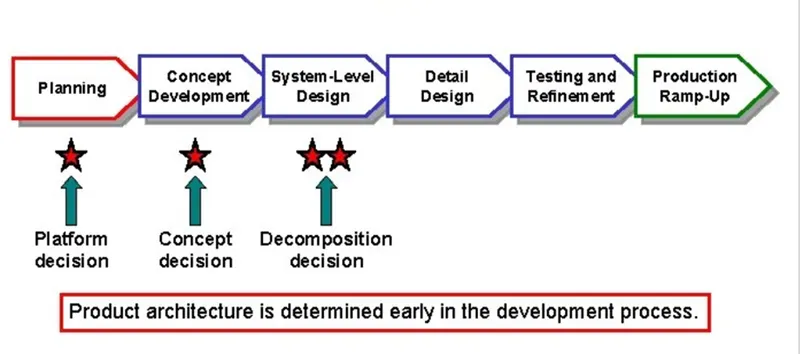
1- Modular Architecture
- Easy disposable
- can change needles of different sizes
- can replace any damaged part immediately
- Easy to manufacture
- Easy to operate and handle
- Understandable
2-Product architecture (Schematic)
3-Interface document
A syringe interface is provided for attaching a syringe to an injector. The syringe includes, a first and second set of generally opposing, radially outward projecting mounting flanges, and a second set of flanges offset from the first set of mounting flanges. The syringe interface includes a first set of generally opposed slots adapted to receive therethrough the first set and second set, respectively, of mounting flanges, and a first and second set of generally opposed retaining flanges adapted to releasably engage the first and second set respectively, a set of mounting flanges, when the syringe is rotated within the syringe interface. The syringe verification mechanism includes at least one flange interaction element disposed within at least one slot of the first set of slots, and at least a first flange abutment member being positioned to prevent engagement of the second set of mounting flanges with the second set of retaining flanges unless the flange verification element interacts with at least one of the flanges of the first set of mounting flanges.
(C) Industrial design
1-Simplify the design
- Developing a modular structure, will help in easy handling of the product.
- Using less no. of parts/components
- Make sure the syringe body is transparent enough, to read the drug flow
2-How to make the user experience intuitive?
- Producing a easy and understandable structure
- Make sure the syringe body is transparent enough, to read the drug flow.
- Provide accurate volume/quantity readings
- Taking a Consultative Approach to Improve User Experience
- Testing and Monitoring
- Making It Social
- Educating Consumers
- Using Customer Surveys
3-Aesthetics
- Aesthetics for syringes are not significant.
- Syringes have to be transparent enough, to read the drug flow.
- Provide accurate volume/quantity readings on the surface
4-Ergonomics
- Better movement:- Easy handling of the product with the help of fingers.
- Reduce strain:- while administering the drug, the pressure applied on to the plunger should not give much strain/stress to the finger.
- Reduce any injuries
- Increase Productivity
TASK-4
Solidworks- Syringe 3D model, Rendering sketch and 2D drawing- PDF ATTACHED
TASK 5
(A)FAILURE MODE AND EFFECT ANALYSIS(FMEA)
1-
| Components/ process | Failure mode | Failure effects | SEV | Potential cause | OCC | Detection method | DET | RPN |
| Barrel |
Damage/fracture,bending, Inaccurate volume/quantity readings, Cracks and scratches. |
Drug leakage, Not operable, Inaccurate volume/quantity readings | 8 |
spillage of chemicals or water,
damage during manufacturing, production and transportation.
High temperature and pressure.
|
4 |
Appearence, leakage
|
4 | 128 |
| Plunger |
Damage,bending, cracks and scratches.
|
Drug leakage, Not operable
|
8 |
High temperature and pressure,
spillage of chemicals or water,
damage during manufacturing, production and transportation.
|
5 | Appearence, leakage | 4 | 160 |
| Tip |
Cracks, Damage, improper dimensions.
|
Drug leakage, Not operable | 8 |
High temperature and pressure,
damage during manufacturing, production and transportation,
spillage of chemicals or water.
|
4 | Appearence, leakage
|
4 | 128 |
| Needle |
Breakage, bending, rust
|
Drug leakage, Not operable, improper dimensions of tip may harm patient.
|
9 |
spillage of chemicals or water,
High temperature and pressure,
damage during manufacturing, production and transportation.
|
5 |
Appearence, leakage
|
5 | 225 |
2-
| Components/ process | Recommended Actions | Responsibility | Target Date | Action Taken | SEV | OCC | DET | NEW RPN |
| Barrel | Replace the part
|
owner and manufacturer | immediate |
Replace the part
. |
1 | 2 | 4 | 8 |
| Plunger | Replace the part
|
owner and manufacturer | immediate |
Replace the part
|
1 | 2 | 4 | 8 |
| Tip | Replace the part
|
owner and manufacturer | immediate | Replace the part
|
1 | 2 | 4 | 8 |
| Needle |
Replace the part
|
owner and manufacturer | immediate | Replace the part
|
1 | 3 | 5 | 15 |
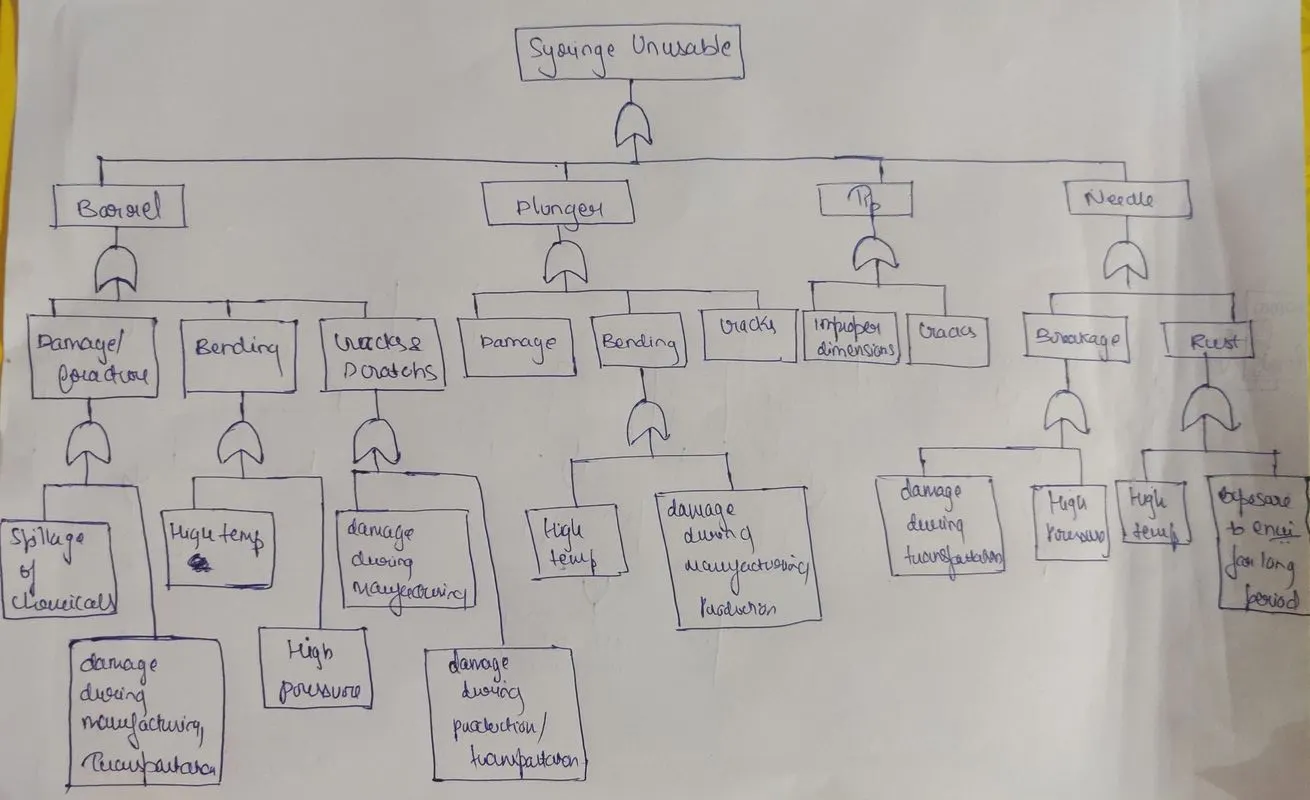
(B)- FAULT TREE ANALYSIS(FTA)
TASK 6
- Is an engineering methodology that focuses on reducing time-to-market and total production costs by prioritizing both the ease of manufacture for the product’s parts and the simplified assembly of those parts into the final product – all during the early design phases of the product lifecycle.
- Before becoming the singular philosophy it's known as today, DFMA used to be considered as two distinct methodologies: Design for Manufacturing (DFM) and Design for Assembly (DFA). DFM is concerned with selecting cost-effective raw materials and attempting to minimize the complexity of manufacturing operations during the product design phase (which would be the least disruptive and expensive time to address those issues) in order to reduce the overall manufacturing time and costs of product components. Similarly, DFA is concerned with reducing the product's assembly time, costs, and complexities by minimizing the number of individual parts, assembly steps, and potential for variability in build quality.
- PLANNING:-Consult with manufacturing experts on your design. Lowering manufacturing costs is never easier than at the design stage.
- MATERIALS:-Use manufacturing-compliant materials if possible, which determines manufacturing processes and means, materials management, and quality control.
- PROCESSES:-Know the manufacturing process to reduce costs. For example, 3D printing may enable one monolithic part design instead of manufacturing multiple components.
- STANDARDS:-Use standard parts or components. This will reduce the cost of new designs while improving inventory management and time-to-market.
Areas of design improvements:
- Utilizing materials such as metals and plastics that have undergone a minimum of processing from their normal state. This should minimize waste, increase production speed, and reduce costs.
- A new design of safety syringe is introduced in order to produce a safety syringe which allows a single-handed operation and similar to the operation of a normal syringes.
- The introduction of new PTFE-filled material, custom-blended for pharmaceutical processing applications, offers manufacturers a very durable, low-friction, chemically inert material option. PTFE-filled material is also designed for high performance in five additional areas important for pharmaceutical processing — wear resistance, heat transfer, mechanical strength, extrusion resistance and thermal conductivity.
- Today, a one-piece product is available that incorporates seals, bearings and pistons in a single housing. This gives pharmaceutical manufacturers a more streamlined solution for installation repeatability. By reducing the number of moving parts, the one-piece product also offers significant reduction in washdown and maintenance time.
- Using the latest 3-D modeling technology supported by CAD/CAM on CNC machinery, custom-molded PTFE and plastic parts can be designed and produced in a matter of days. The engineer’s ability to design the parts using the proper materials and knowledge of tolerances is critical for successful parts to be made. Before these parts are put into use in a processing facility, test rigs are used to simulate real-world functionality and ensure product performance. This approach provides yet another means to conserve time and cut costs.
Environment & sustainability
| LIFE CYCLE | ENVIRONMENTAL IMPACTS |
| Materials |
|
| Production |
|
| Distribution |
|
| Use |
|
| Recovery |
|
- Select low-impact materials that will promote longevity in the product. Avoid coupling materials that cannot be recycled. Preference materials that can be recycled in the country the product is intended for. Use design techniques such as honeycombing to reduce the amount of material used.
- product packaging, brand identity, and website design, These areas are responsible for some of the highest outputs of waste and an increased carbon footprint.
- Design for the Environment (DFE) is a design approach to reduce the overall human health and environmental impact of a product, process or service, where impacts are considered across its life cycle. Different software tools have been developed to assist designers in finding optimized products or processes/services.
- The size, shape, color, printing style, and paper stock choices made by a designer will ultimately determine the size of the ecological footprint. By making informed decisions, designers can reduce their environmental impact, resulting in less greenhouse gas emissions and more efficient use of natural resources.
- utilizing materials such as metals and plastics that have undergone a minimum of processing from their normal state. This should minimize waste, increase production speed, and reduce costs.
TASK 7
(1)&(2)- DSM & PERT CHART:-PDF ATTACHED
(3) How to accelerate the project
- Collect the machineries and raw materials as quickly as possible
- Try producing syringes in large quantity per day
- Ship the product faster by arranging more transportation facilities.
- Advertise in as many ways as possible for quick recognition
- Make sure packing is proper and fast, so we dont have to recheck/repack which consumes lot a time.
TASK 8
1-PATENT RESEARCH
a-Disposable aspirating safety syringe
Disposable aspirating safety syringe:-A disposable aspirating syringe for dental medicine having the ability to accept single use or disposable drug cartridges. The syringe offers a retractable needle and a break-away plunger to facilitate disposal and increase safety.
Disposable self-destructible syringes which render themselves unreusable:-This invention refers to disposable syringe containers used for injection which destroy themselves and render themselves unreusable, characterized principally in that they are made of a material which can be cut with the normal injecting movement of the piston in the syringe, thus destroying them.
Single use, self destructing disposable syringe:-A disposable hypodermic syringe which is self-destructing upon a single use has an elongate, cylindrical barrel with an adapter means on one end for attachment of a needle and an open other end. A plunger and piston carried thereby are reciprocable in the barrel. The improvement comprises releasable, interengaged flange means on the piston and plunger for holding the piston and plunger assembled together during initial retraction of the plunger and piston in the barrel but which is operative to disengage the mutually engaged flange means upon forward movement of the plunger in the barrel, whereby subsequent retraction of the plunger results in separation of the piston and plunger, rendering the syringe inoperative for subsequent reuse.
3-CLAIMS
- The invention discloses a kind of syringe intelligence automatic packaging machine, including screening area of sorting, Material Staging Area, syringe feed zone, packaging bag film feeding area, conveyer belt, horizontal sealing area and electric control system, the sequence screening area, Material Staging Area and syringe feed zone are sequentially connected, the packaging bag film feeding area and syringe feed zone are arranged on the front and rear side of the entrance point of the conveyer belt correspondingly, the horizontal sealing area is arranged on the port of export of the conveyer belt, the sequence screening area, Material Staging Area, syringe feed zone, packaging bag film feeding area, conveyer belt and horizontal sealing area are connected with the electric control system respectively.
- The syringe feed zone includes rotary shafts and syringe enters bag mechanism, and the syringe, which enters bag mechanism, to be included elevating mechanism, pusher and move forward and backward mechanism.
- The syringe intelligence automatic packaging machine of the present invention, accomplished it is complete it is intelligentized automatically control, convenient operation;Further increase production efficiency;Make the product produced relatively sanitary and safe.
2-Can the product be one of the IoT devices?
YES:-To build an IOT based syringe infusion pump that can be monitored as well as controlled via doctors remotely over the internet. This syringe pump allows the doctor to set, modify the flow, stop the infusion of pump over the internet as per patient response. Also the system sets record of all the commands provided by doctor in a safety log for data inspection if needed.
This IOT syringe pump provides the following advantages:
- Precision delivery of medication
- Ability to remotely start stop infusion
- Ability to remotely modify parameters as per patient response
- Doctors can remotely handle patient infusions at multiple hospitals
- Automatic record keeping of all logs
- Easy to Use Device
The system makes use of an Arduino to handle the entire processing system. We here use an LCD display to display settings and other parameters. The machine consists of a syringe mounting to hold the syringe in place as well as press the plunder gradually as per set requirements.
The device uses a motorized ball screw based arrangement to drive the plunger pusher. The device allows for setting device parameters through device keypad as well as through the internet. When the device internet control option is active the respective doctors can see the device activated on their online portal.
The device settings include adjustment the direction flow, the flow rate, the syringe brand and size, total dosage to be delivered and so on. Once settings are fed by user offline or over IOT the machine calculates the push rate of plunger. Based on this the motor operates with accuracy to ensure the delivery of fluid gradually at set flow rate till it delivers the desired amount of fluid and stops automatically with led alert and online alert to signal the successful delivery of set dosage.
3-Is there any other product development trend that you can think of?
A syringe is nothing but a simple reciprocating pump containing of a plunger i.e., it is actually a piston in modern syringes that fits tightly within a cylindrical tube called a barrel. Its most common use is to administer injections into the body. These syringes come in both a disposable all-in-one unit with the needle attached or with the plunger and tip separate. These are made of plastic material & have been successfully used in medical & pharmaceutical practice. Its importance is based mainly on the advantages such as it offers regarding cost and hygienic applications and due to this its use is constantly increasing. Disposable syringes are being used by doctors for injecting medicines through arterial or intramuscular ways for the treatment of diseases & also by research & development personnel. These disposable syringes are fast replacing the age-old glass syringes due to their availability in sterilized condition, ready to use, and cost effectiveness. Some of the major trends of the global disposable syringes market are:
SoloShot and SoloShot FX syringes
SoloShot is a plastic disposable syringe which is equipped with an internal metal clip. The AD syringe company provides this SoloShot FX syringe is a single-use, disposable, with a metal clip that locks the plunger after a single use. This syringe is packaged with a separable needle in a sterile paper package. The detachable needle cannot be attached to any other type of syringes. The SoloShot FX syringe has two primary benefits over most standard syringes: it is designed to prevent re-use and it pollutes less when burned, since it does not contain a black rubber piston seal. These auto-disable syringes have become widely accepted by the international healthcare community. Most recently, with products such as the BD SoloShot mini syringe for immunizations as well as the BD Emerald PRO syringe used for curative injections, & BD SoloShot syringes are used in mass vaccination campaigns.
K1 syringes
The K1 Auto disposable syringe is a syringe designed to be used one time only and for use by developing countries, as these poorer countries are often cash-strapped & reuse their syringes either to save money or out of ignorance. Apple K1 syringe product from AD Syringe Company is a unique product manufactured and sold in an innovative way. This K1 is a genuine Auto Disable (AD) syringe with a proven track record in both immunization and curative injection practices. Its design is WHO (Performance Quality and Safety) obedient and is recommended by UNICEF. Existing manufacturing lines have been converted to produce K1s under license by following a simple patented mould conversion. The cost of converting production is substantially below as per other alternative ADS syringe. It has user friendly design and packed in Medical grade breathable printed poly paper on one side and transparent poly film on the other side, the only WHO recommended packaging style. This K1 is a flexible product with an established market. K1 licensees sell directly to more than 40 countries and currently it is manufactured in 14 plants all across the developing world.
Kojak Selinge Auto-Disable Syringes
Kojak Selinge auto disable syringe is result of collaboration between STAR Syringes of U.K & HMD. HMD Company has accepted the challenge of providing solution to the matter of unsafe injection practices that arising because of use of reused syringes. So, the company is providing this product by presenting for the first time in India KOJAK SELINGE i.e. non reusable syringes which ensure against any possible risk of reusage, as its plunger component breaks off just in case of a trial to reuse the syringe. This collaboration is definitely reflecting HMD’s endeavour to mass-produce ‘value for money’ products. This product is safe to use because once its surface is pushed towards the end it cannot be reused; pulling again automatically causes it to break. HMD ships over 100 million Kojak auto disable syringes to Covax facility on November 30th, 2020.