Project 2
Design RMxprt model for the BLDC motor and induction motor by taking the same power rating and stator and rotor material for both the motors(for other design data use the Q11 and Q12 challenges)
RMxprt model for the BLDC motor with same power rating (1500w)
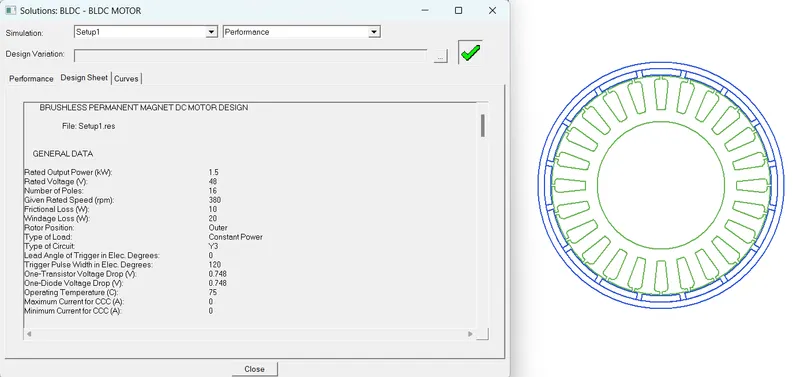
BLDC STATOR MATERIAL - DW315_50
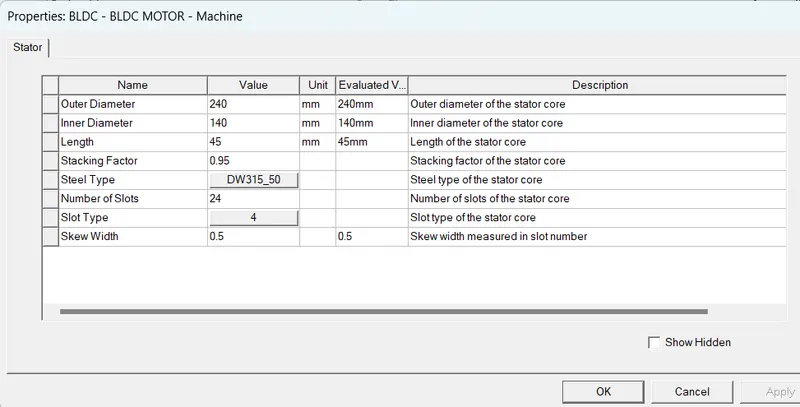
BLDC ROTOR MATERIAL - DW315_50
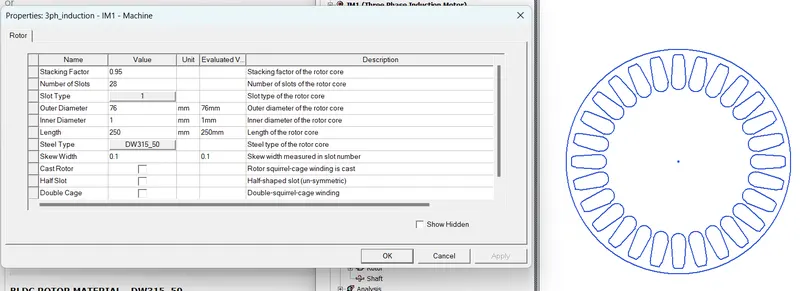
induction motor by taking the same power rating
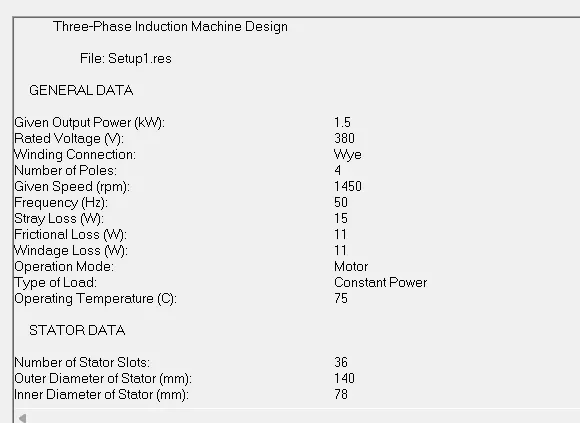
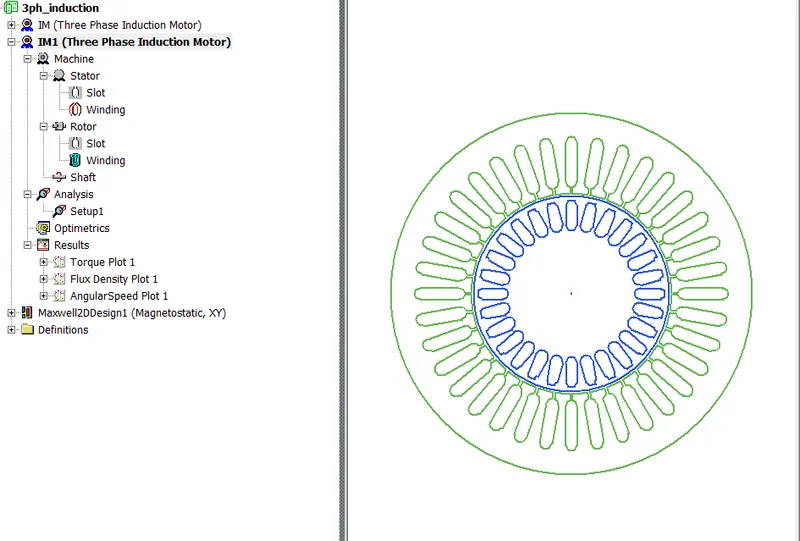
stator and rotor material for both the motors(for other design data use the Q11 and Q12 challenges)
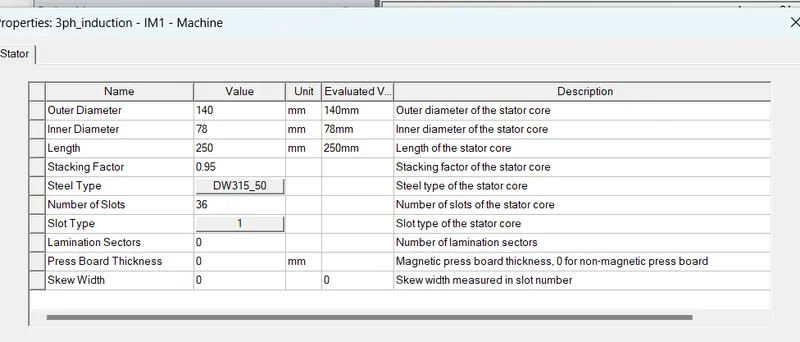
INDUCTION MOTOR STATOR MATERIAL DW315_50
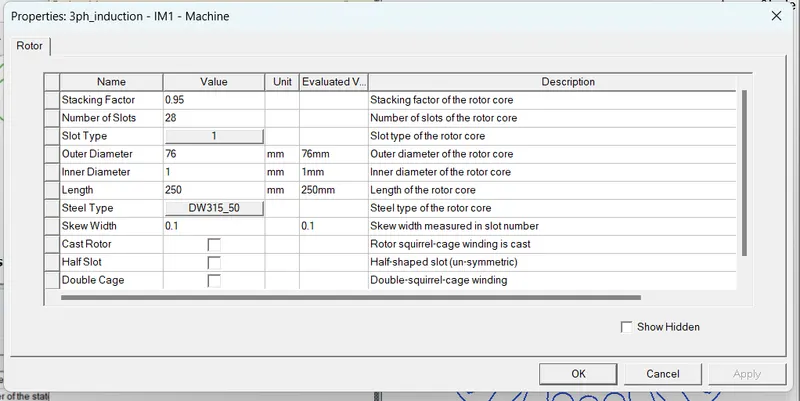
INDUCTION MOTOR ROTOR MATERIAL-DW315_50
- compare the results for both the motor
MATLAB MODEL INDUCTION MOTOR PHASE A CURRENT
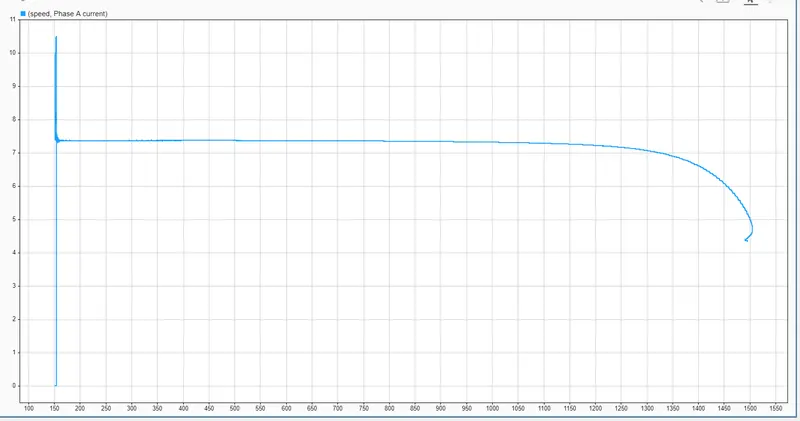
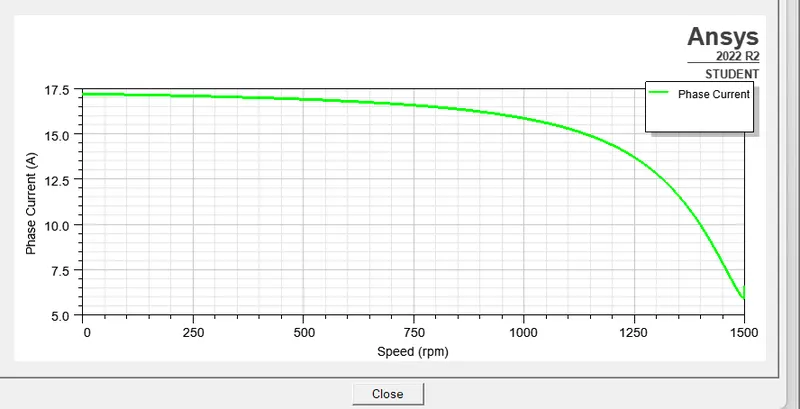
RMXPRT MODEL INDUCTION MOTOR PHASE A CURRENT
- prepare a detailed report on it
Based on geometric dimensions, the model was developed in the 2D ANSYS Maxwell program by which the Rmxprt process at the motor start-up was calculated. Another model was created based on the induction motor mathematical description in the MATLAB/Simulink program.
Oscillations in the torque waveforms are due to
not entirely perfect symmetry of windings.
We have
compared results of waveforms from models.
The results are not identical: the Simulink
model works with constant parameters, whilst
the ANSYS Maxwell 2D and 3D programmes
calculate the magnetic field using the final
elements method. The ANSYS Maxwell takes
into account nonlinearity of the magnetic
material, losses in the iron, as well as the
influence of winding slots
- by using the datasheet in ANSYS RMxprt, design MATLAB model of induction motor and compare the toque-speed curve for both Ansys and MATLAB model
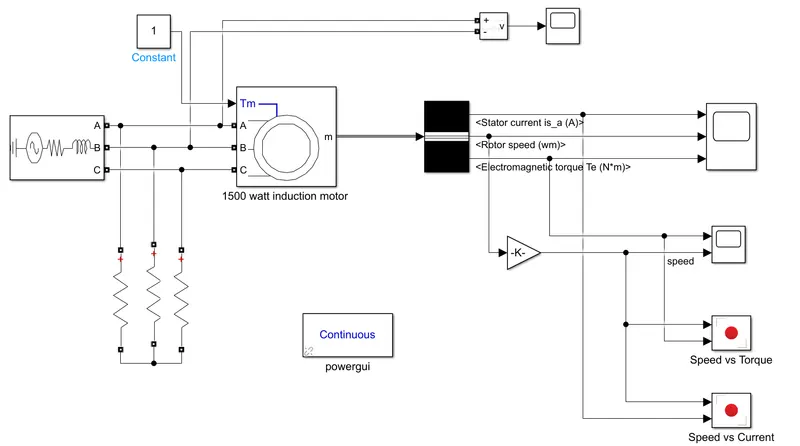
MATLAB model of induction motor
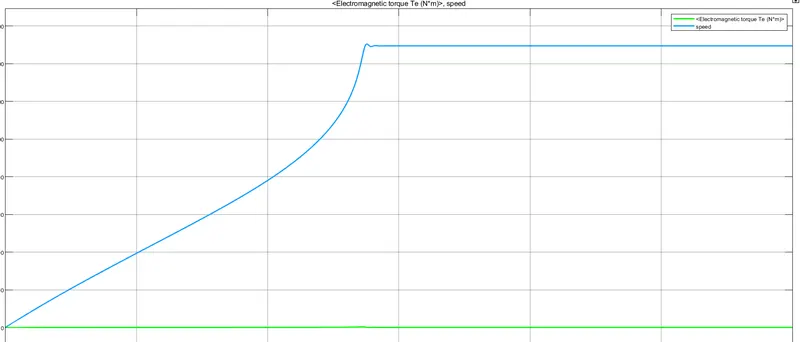
MATLAB RESULT
speed plot
toque-speed curve(matlab)
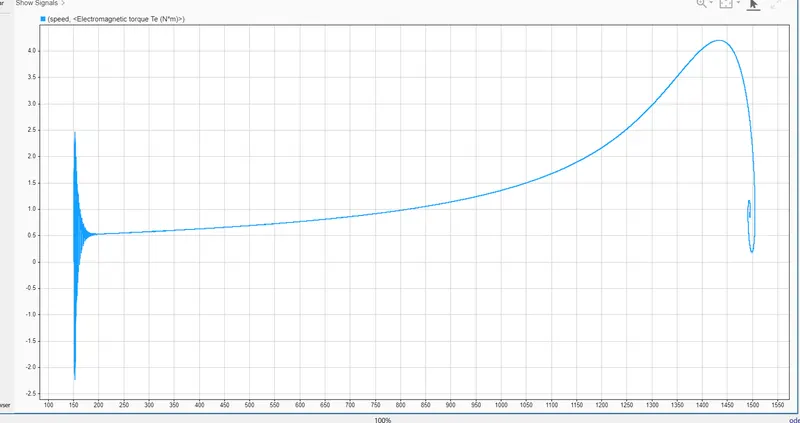
toque-speed curve(Ansys)
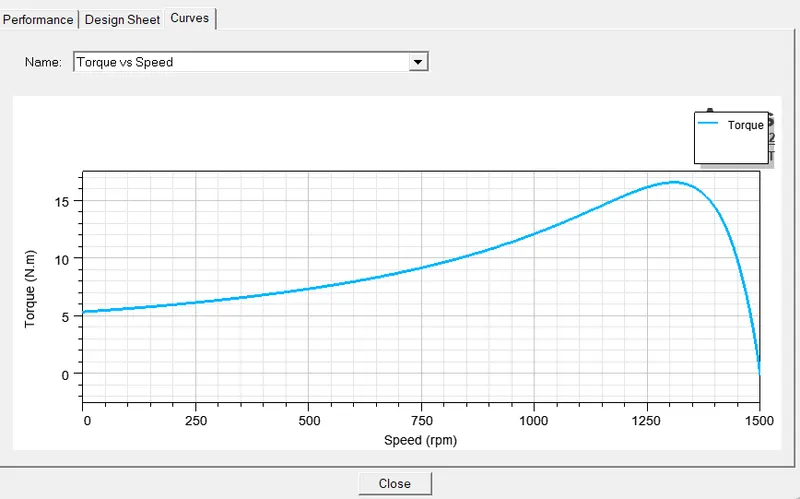
in both result rmxprt and matlab model torque vs speed plot nature almost similar in matlab model have starting time at low speed some ossilation in torque due to same parctical friction inartia