Project 2
PROJECT 2- TAIL LAMP DESIGN USING CATIA V5
OBJECTIVES-
- To design a complete tail lamp model using the given Class A surface data, with Hot plate welding section.
- To specify all important parameters for making and assemling the parts.
- To make asembly, and child part drawings for manufacturing.
INTRODUCTION:
The lighting system of a motor vehicle consists of lighting and signalling devices mounted or integrated at the front, rear, sides, and in some cases the top of a motor vehicle. They illuminate the roadway ahead for the driver and increase the vehicle's visibility, allowing other drivers and pedestrians to see its presence, position, size, and direction of travel, and its driver's intentions. Emergency vehicles usually have distinctive lighting equipment to warn drivers and indicate priority of movement in traffic. Tail lamp is one of the most important regulatory feature in an automotive. Almost every aspects that considered when making a taillamp is governed by laws and regulations of the specific country/region the vehicle is used.
In this project, i'm focusing on 3 major type of signalling lamps that are incorporated into common automotive taillight system.
TAIL/STOP FUNCTION LAMP(RED COLOUR)-
for the rear of a vehicle is provided by rear position lamps (also called tail lamps or tail lights). These are required to produce only red light and to be wired such that they are lit whenever the front position lamps are lit, including when the headlamps are on. Rear position lamps may be combined with the vehicle's stop lamps or separate from them. In combined-function installations, the lamps produce brighter red light for the stop lamp function and dimmer red light for the rear position lamp function. Regulations worldwide stipulate minimum intensity ratios between the bright (stop) and dim (rear position) modes, so that a vehicle displaying rear position lamps will not be mistakenly interpreted as showing stop lamps, and vice versa
REVERSE FUNCTION LAMP(WHITE COLOUR)-
To warn adjacent vehicle operators and pedestrians of a vehicle's rearward motion, and to provide illumination to the rear when backing up each vehicle must be equipped with one or two rear-mounted, rear-facing reversing(or "backup")lamps. These are required to produce white light by US and international UN Regulations. However, some countries have at various times permitted amber reversing lights.
TURN FUNCTION LAMP(Amber colour)-
Turn signalling lamps are utilized for produing left or right turn signals. Direction-indicator lamps or turn signals, informally known as "directional signals", "directionals", "blinkers", or "indicators", are blinking lamps mounted near the left and right front and rear corners of a vehicle, and sometimes on the sides or on the side mirrors of a vehicle, activated by the driver on one side of the vehicle at a time to advertise intent to turn or change lanes towards that side. Currently, most countries outside the United States and Canada require that all front, side and rear turn signals produce amber light.
DESIGN METHODOLOGY
INPUT CLASS A DATA-
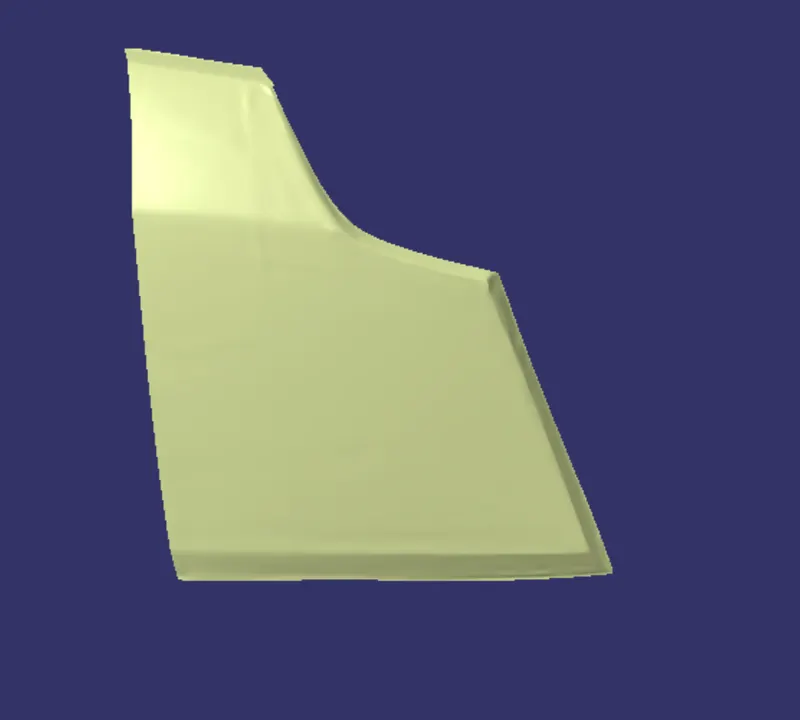
DRAFT ANALYSIS RESULT-
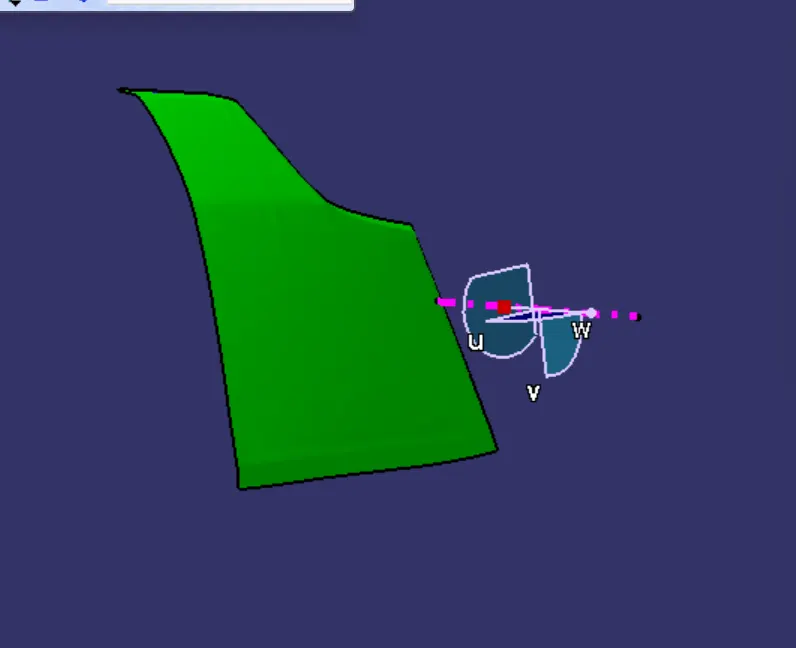
THICKENED CLASS A SOLID MODEL:
lens thickness- 2.5 mm

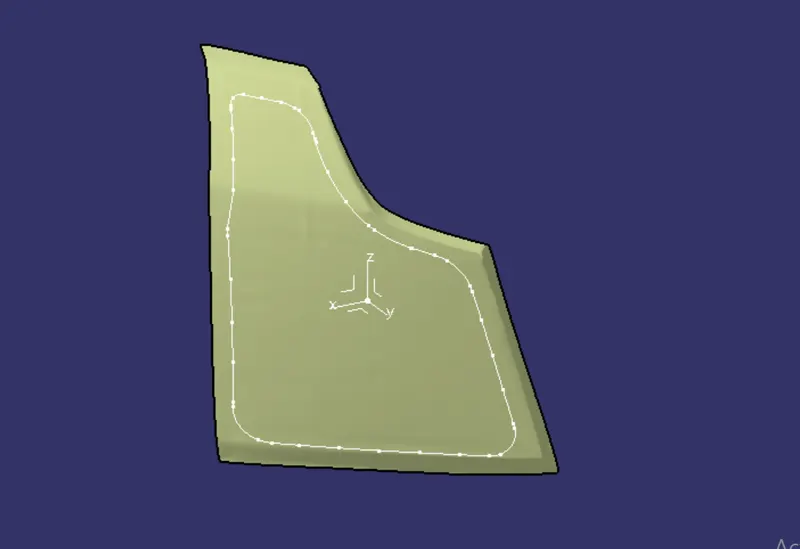
MAKING OF LENS WELDING TRACK-
Assuming the track is at minimum 10mm distance inward from the edges.
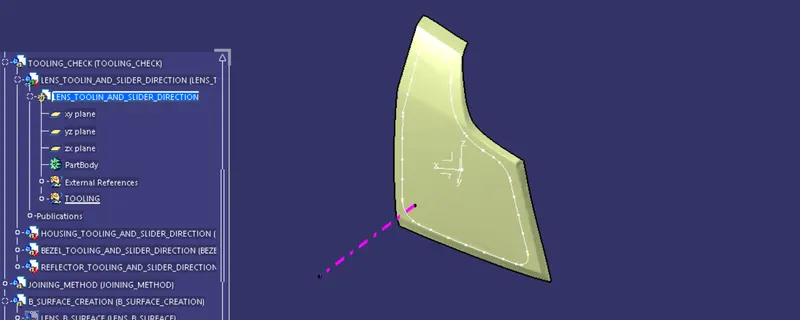
TOOLING DIRECTION-
track surface making using sweep command-
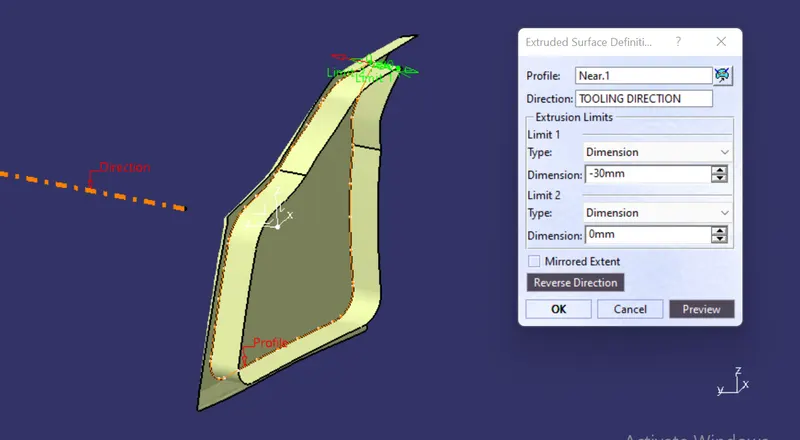
After thickening and joining-
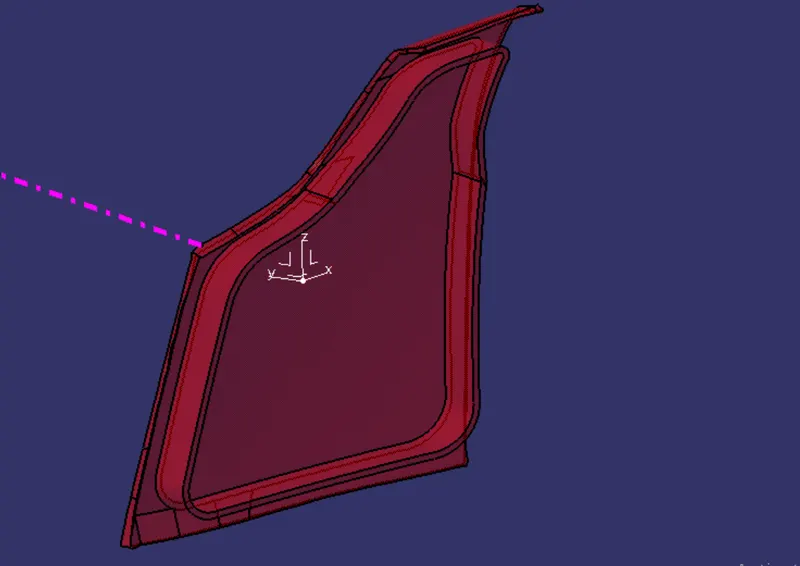
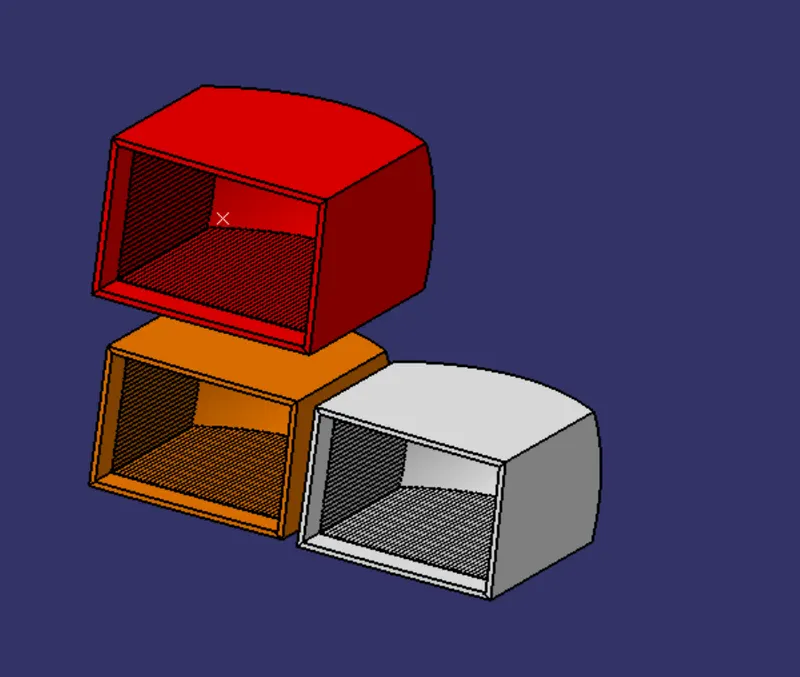
REFLECTORS-
Thickness- 2mm
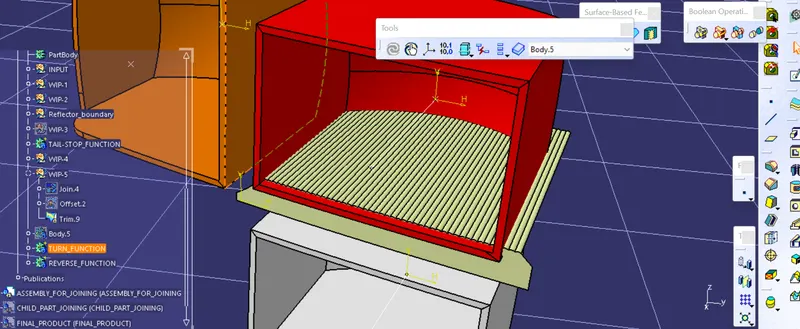
Defining parabola-
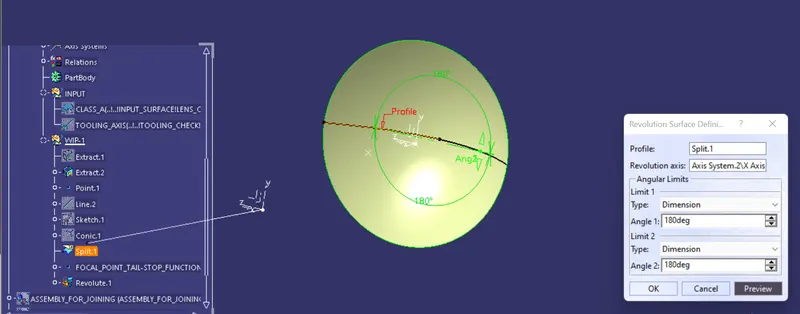
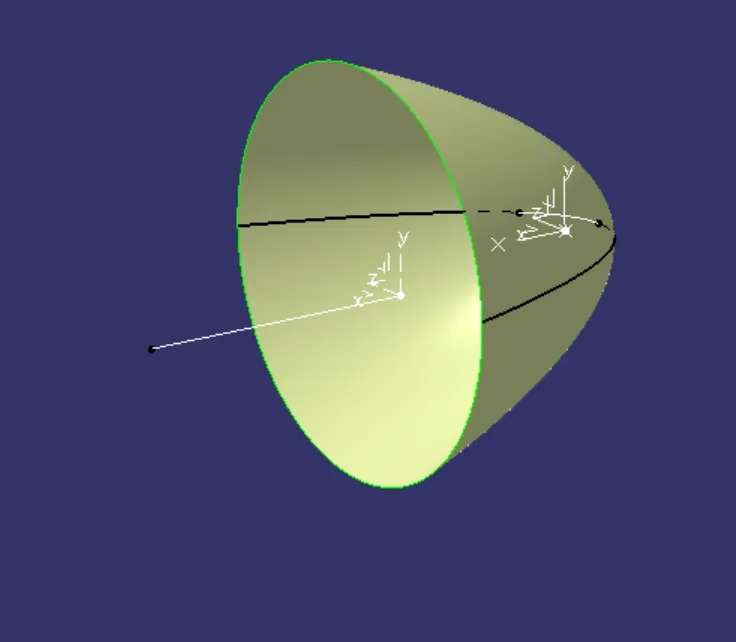
After splitting and thickening-
Flutes making-
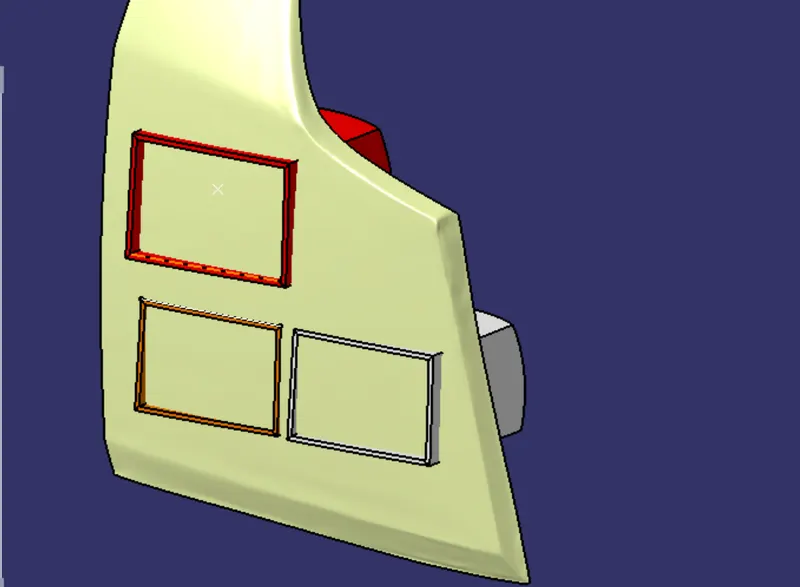
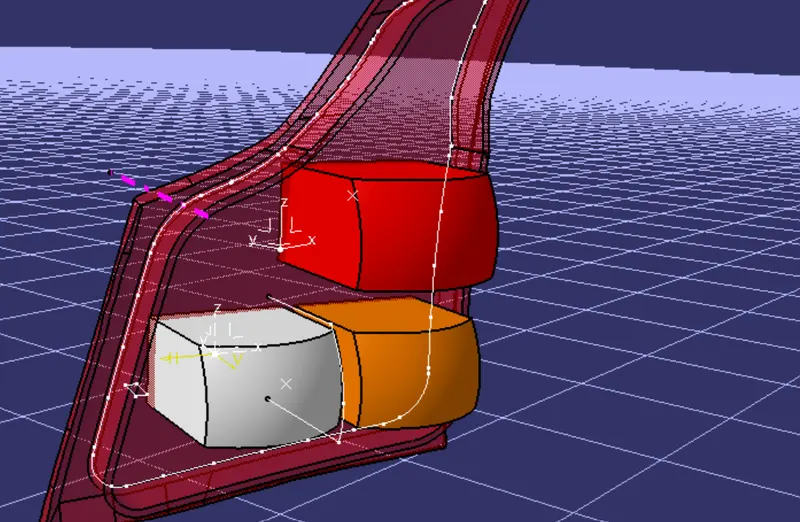
Positioning Reflectors-
HOUSING MAKING-
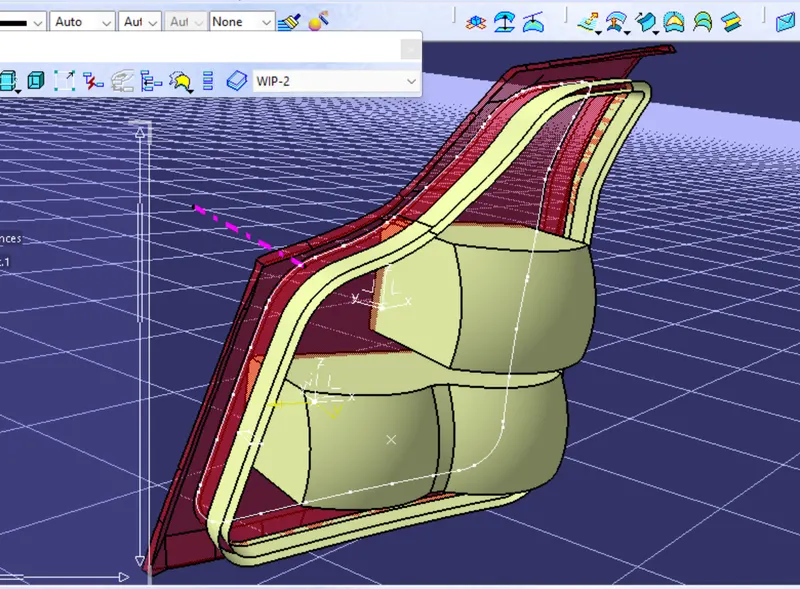
- profile of welding track is swept along the lens welding track path.
- Reexamine the track and currected required areas manually.
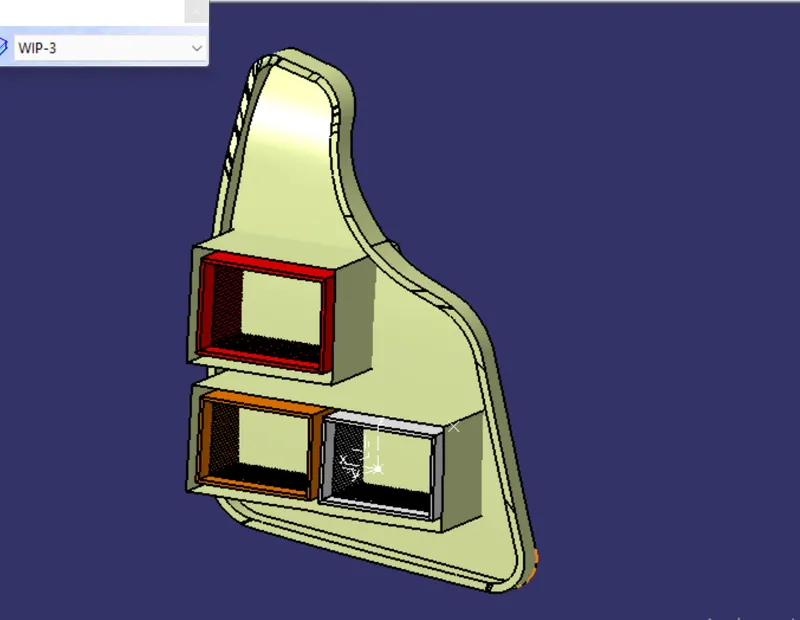
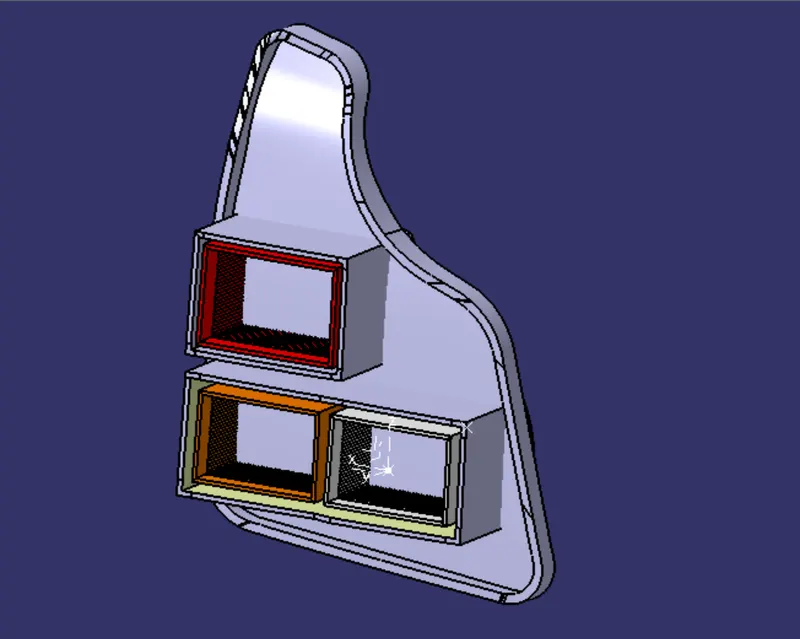
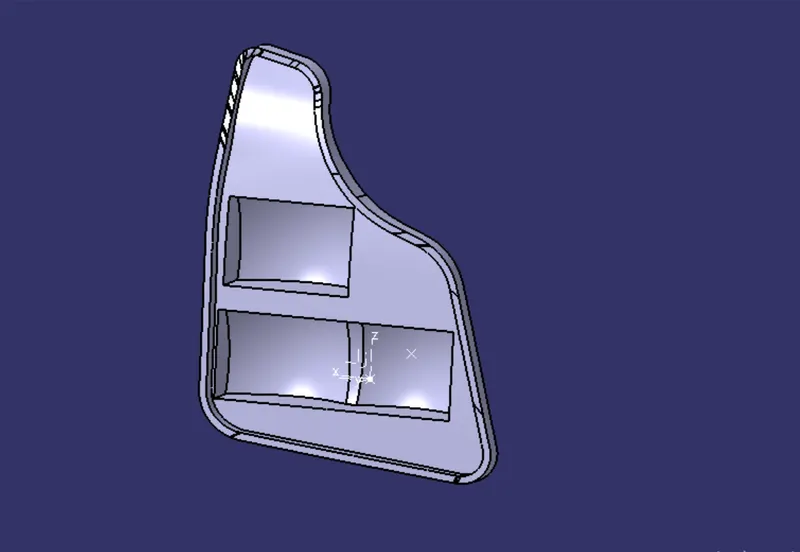
- for making reflector housing, the surfaces from reflectors are extracted and offseted.
- these surfaces are combined with back panel to make the entire housing.
- Housing thickness- 2.5 mm
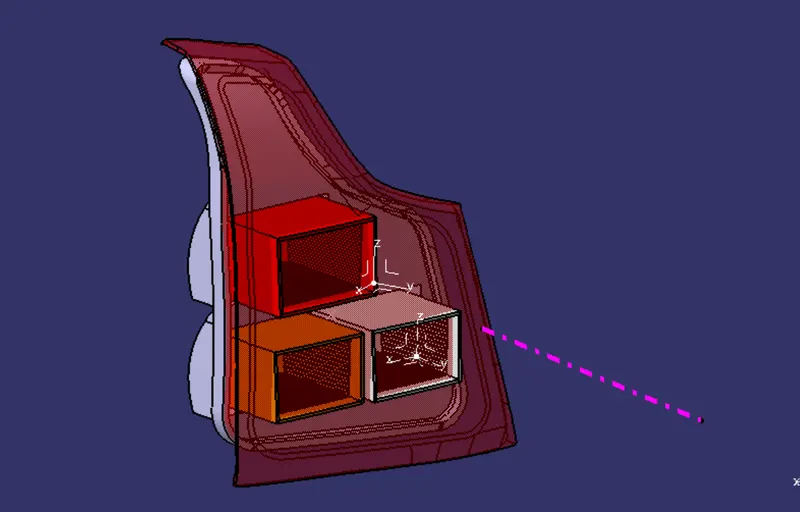
MOUNTING STANDARD FEATURES-
- Bulb seating features
- bulbs
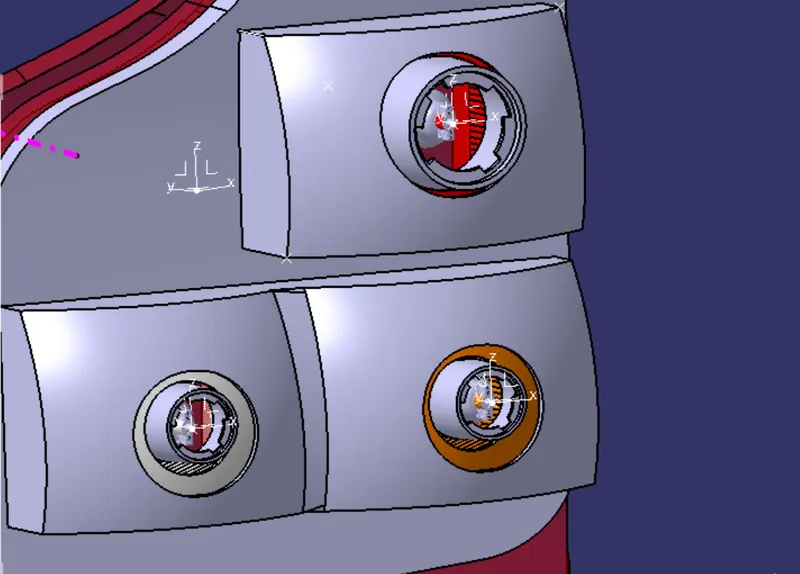
VENT CAPS-
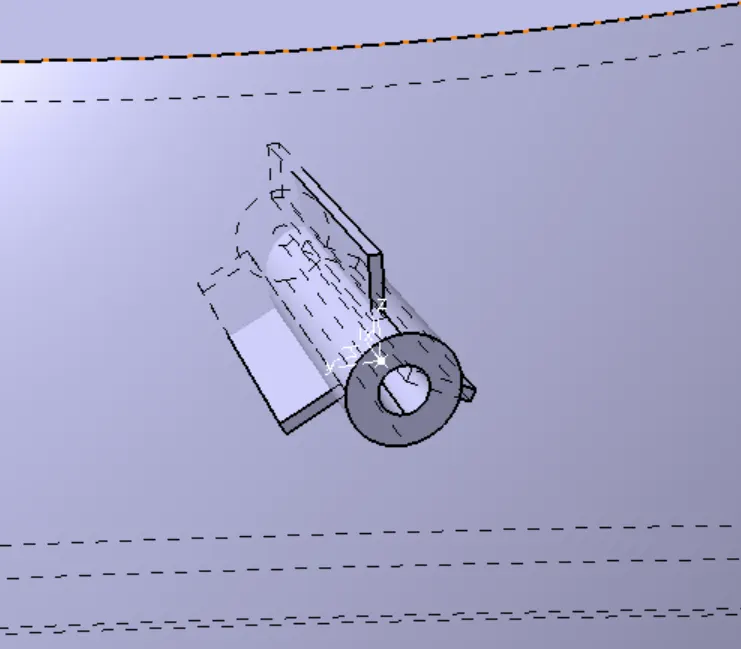
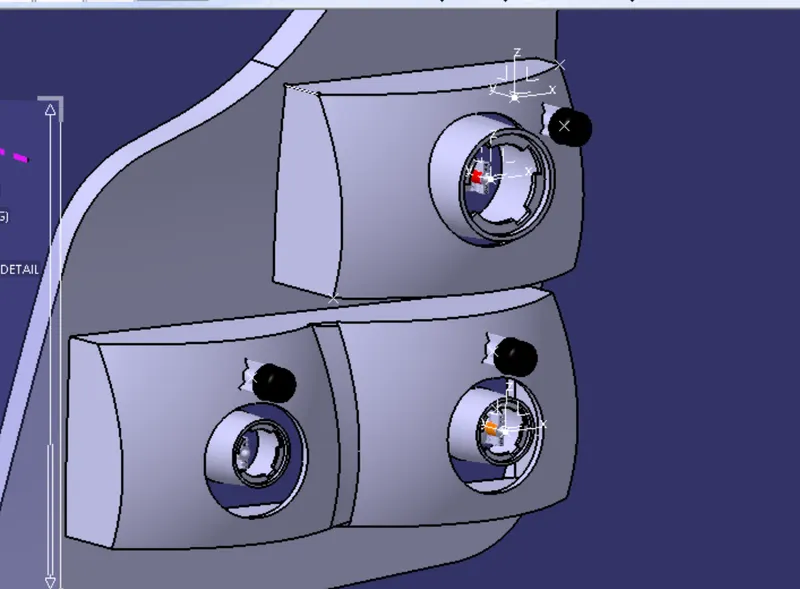
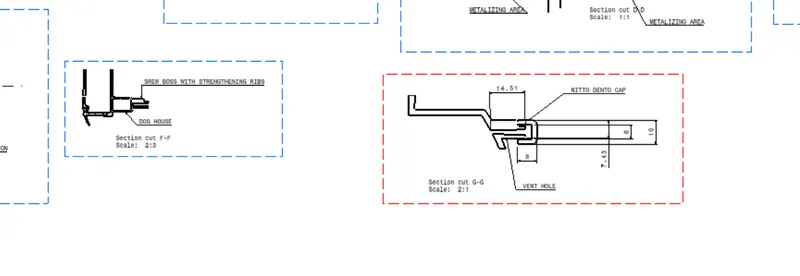
Vent holes are essential for reflectors for the application of preventing fogging inside the glass. the holes will be capped using standard 'nitto dento' caps.
Sketch is made for a revolving geometry that creates the provision for hole.
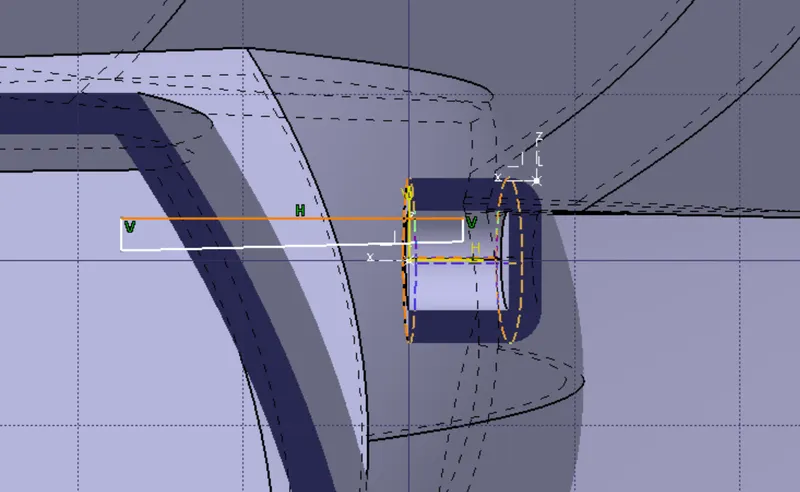
Extra ribs must be provided for strengthening the extrusion and to provide a seating for the cap.
MOUNTING FEATURES-
Dog houses with screw boss and strengthening ribs
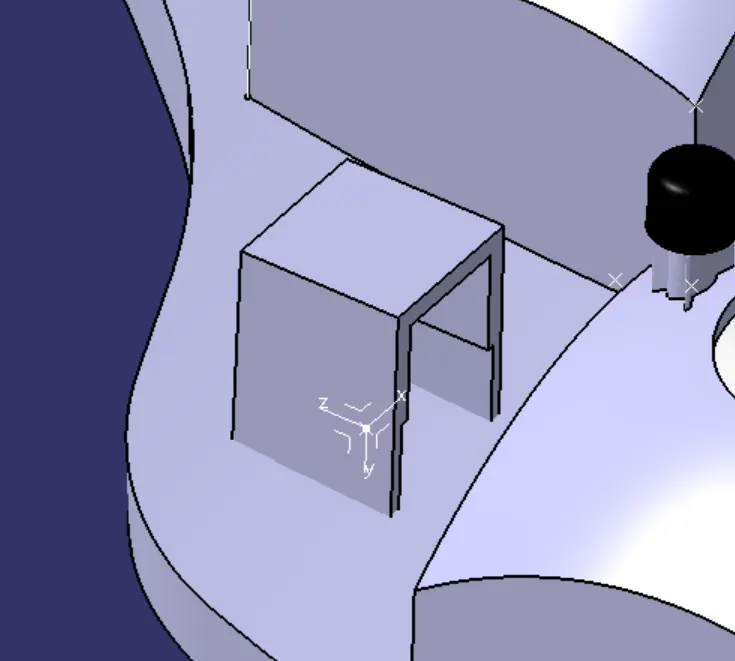
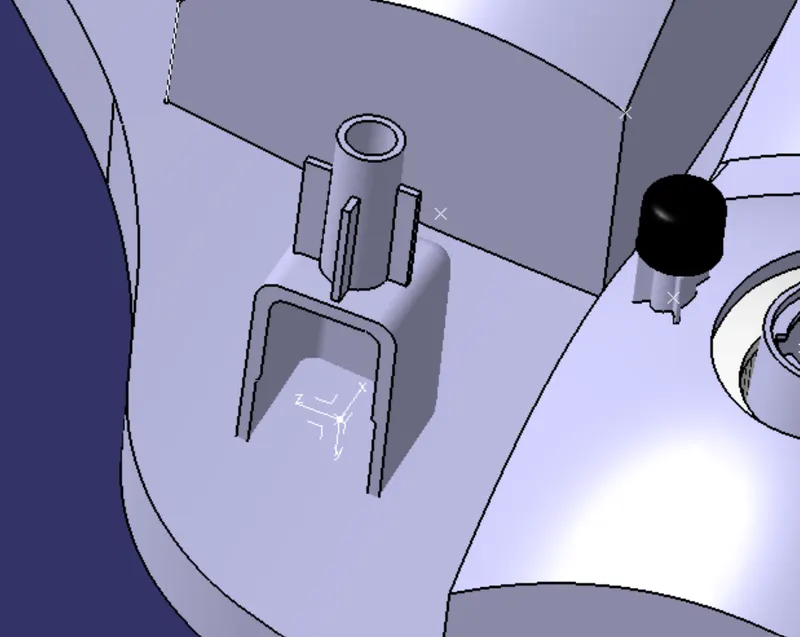
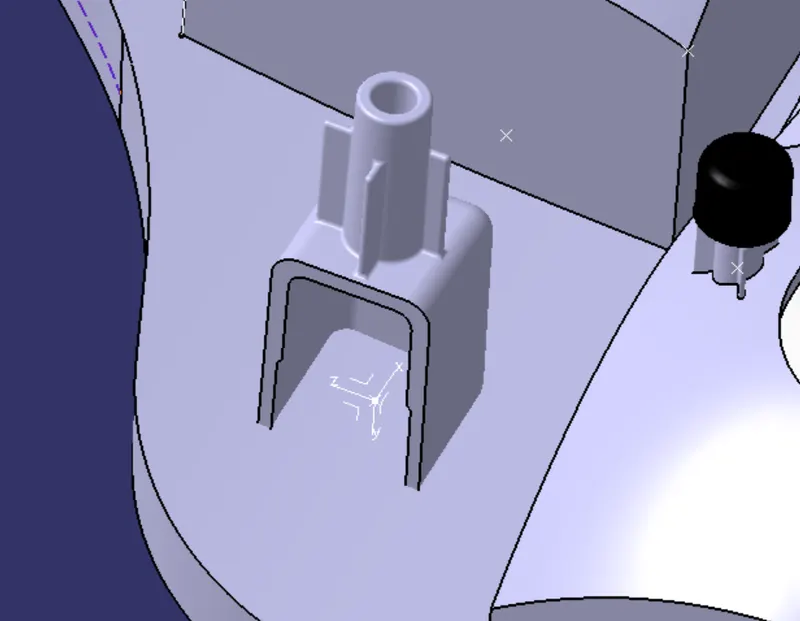
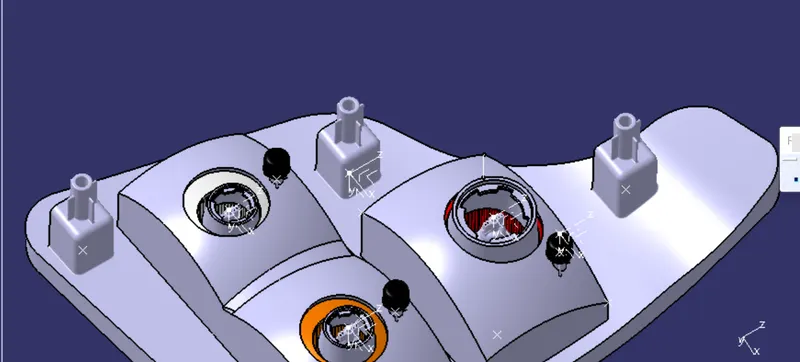
Reflector mounting points and stud mounting features-
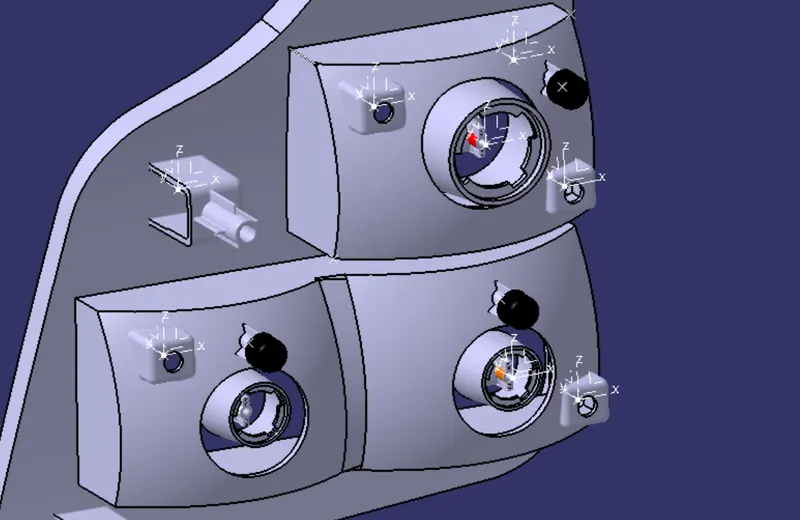
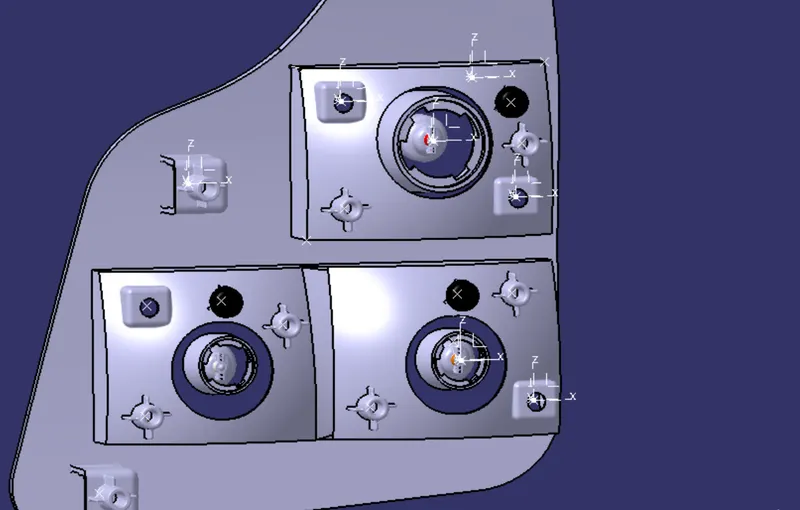
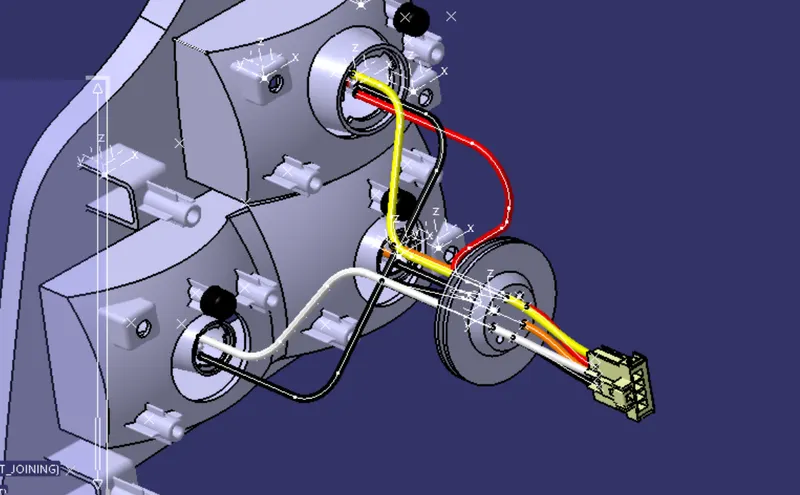
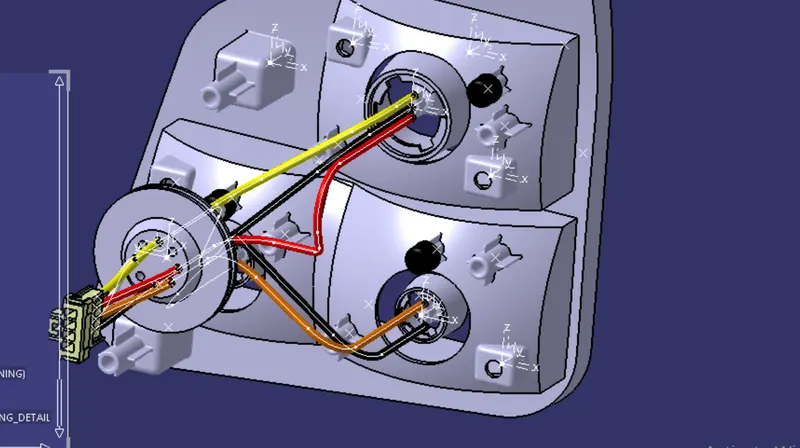
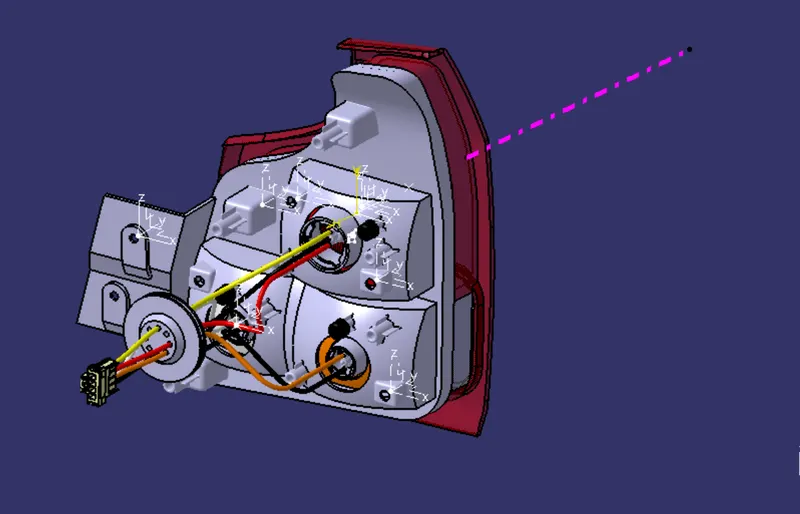
WIRING HARNESS-
Connector with grommet and routed wires-
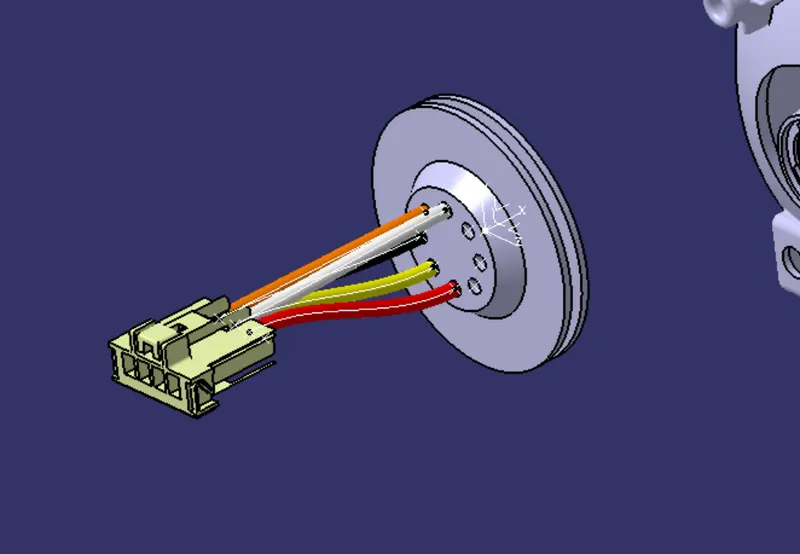
Wire routing-
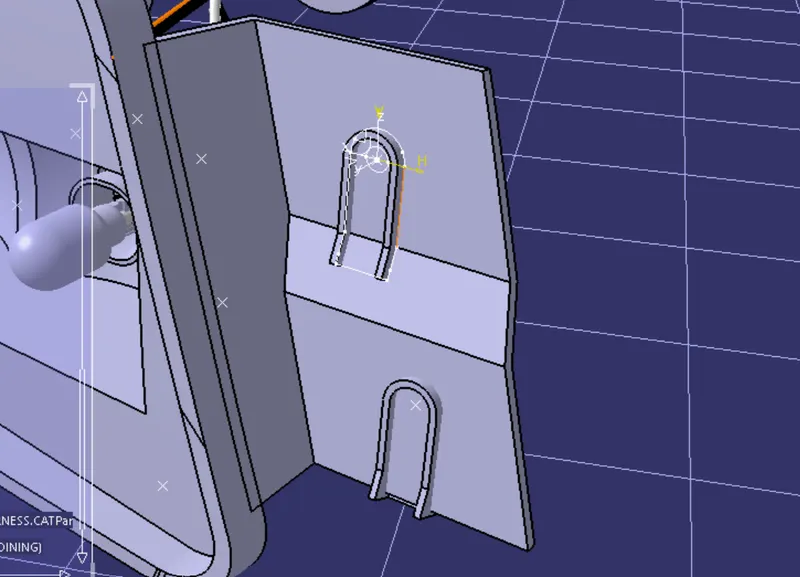
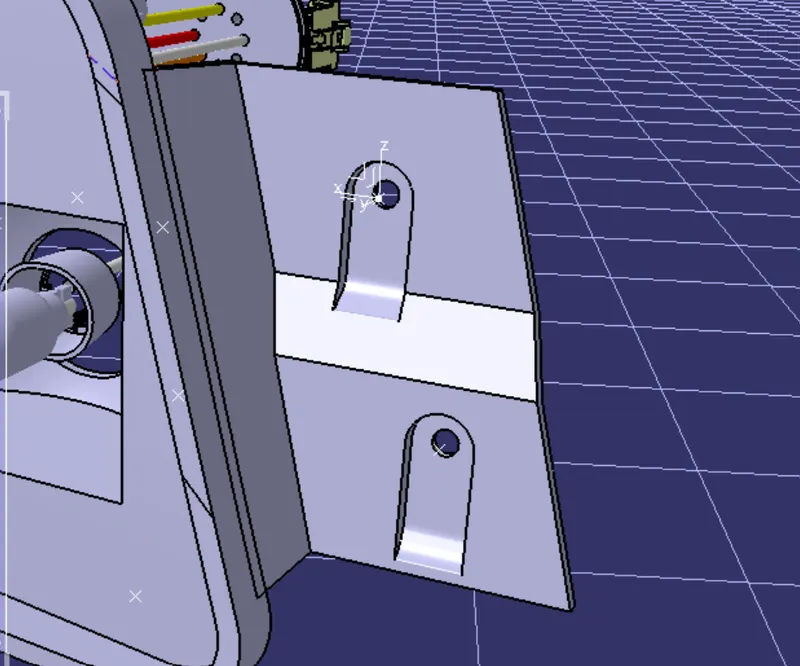
POSITIVE MOUNTING POSITIONS OF HOUSING-
Mounting specification- M5 screws X2
DESIGNING CLEAR LENS AND IT'S JOINING SECTION-
Splitting surface-
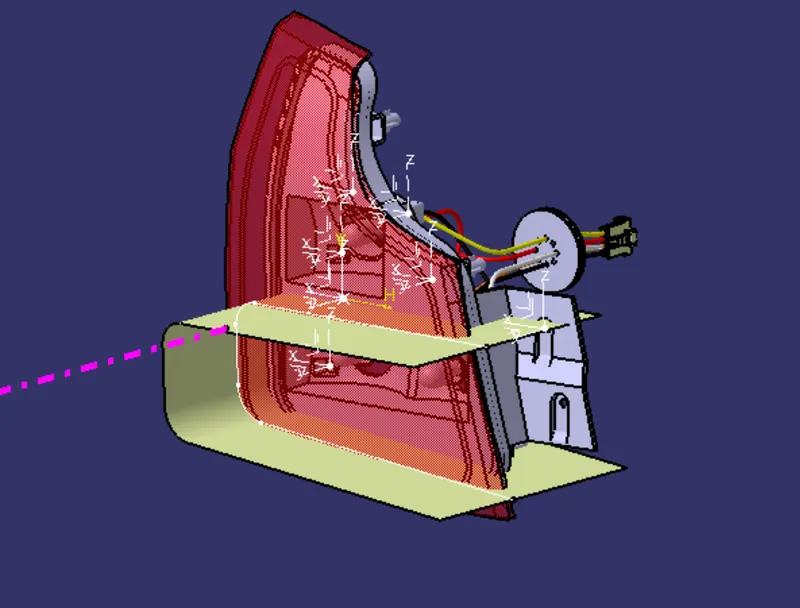
after splitting
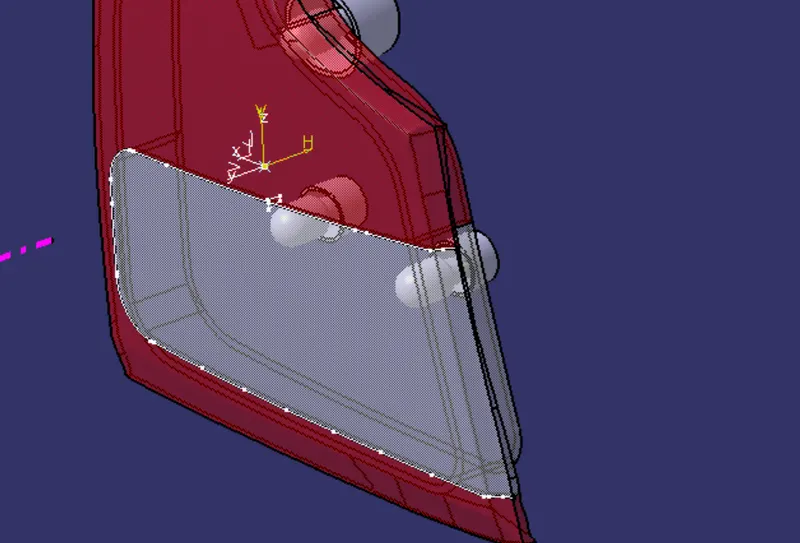
joining section definition-
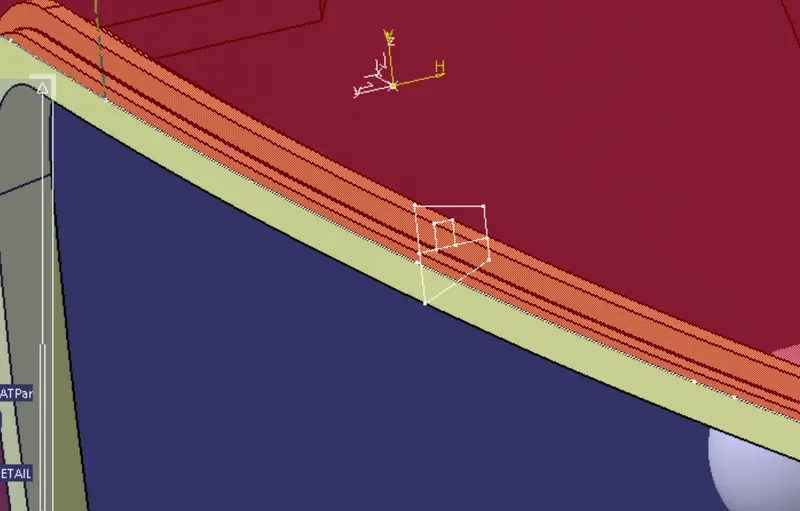
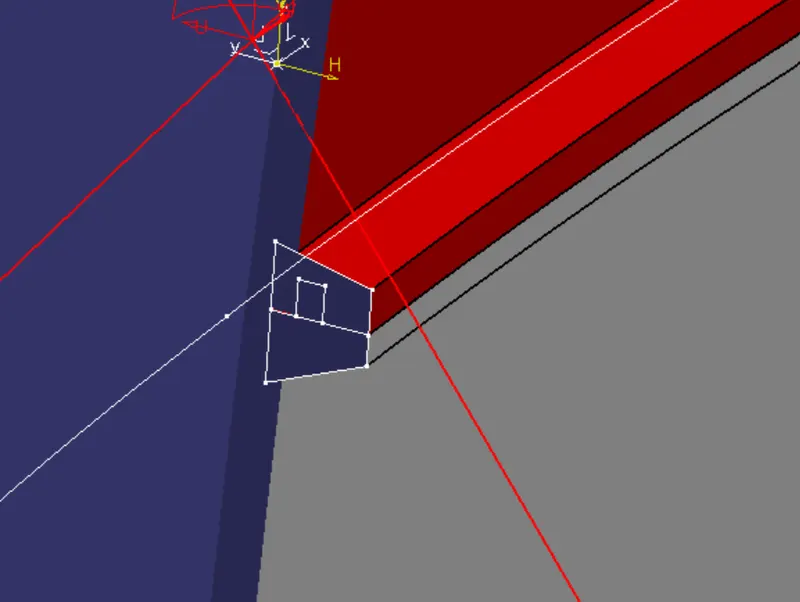
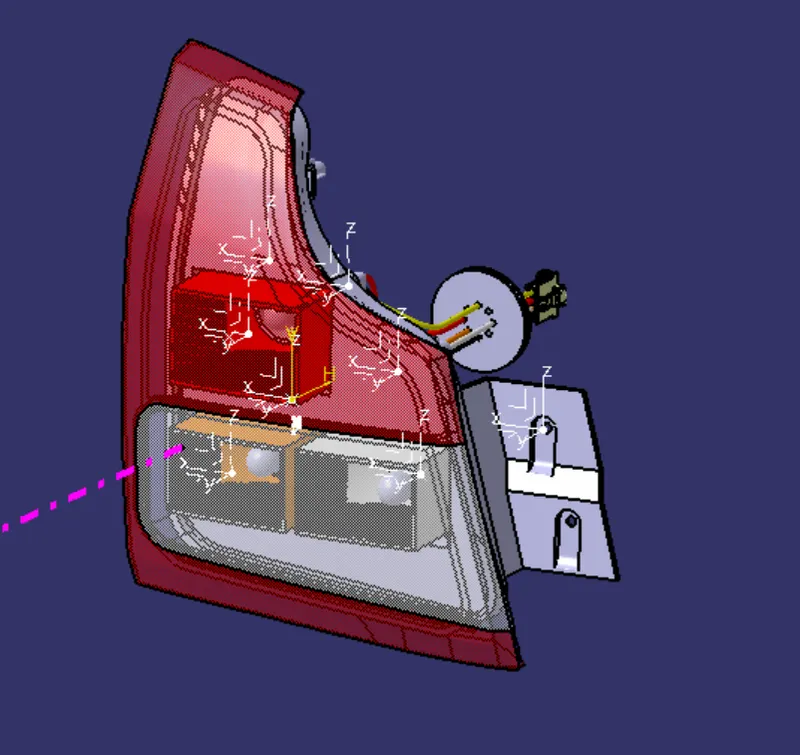
FINISHED DESIGN-
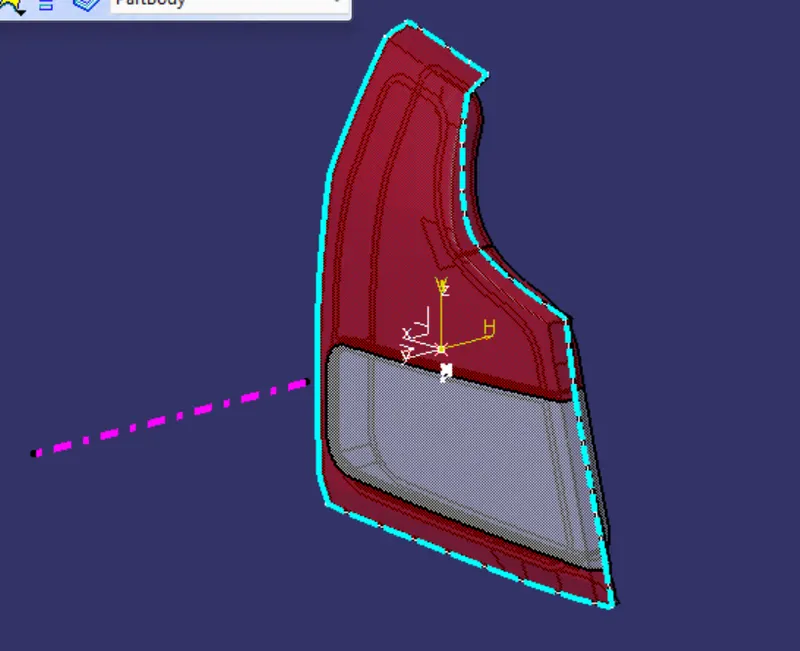
LENS PARTING LINE-
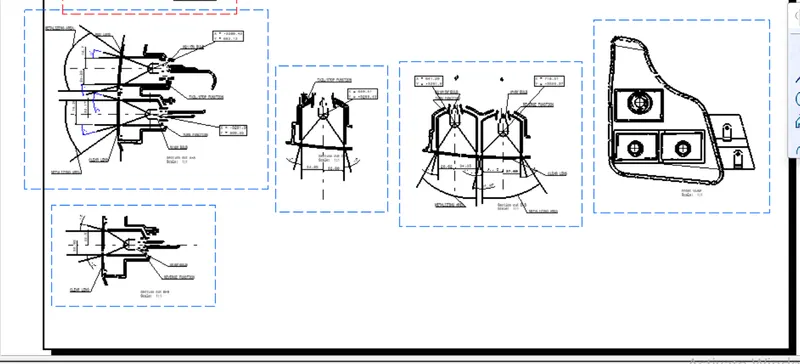
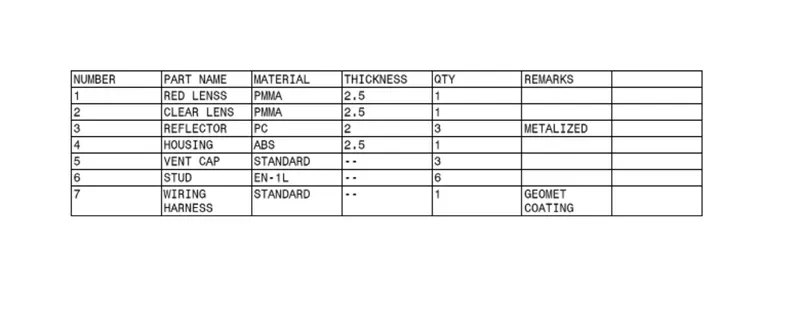
ASSEMBLY DRAWINGS-
Sheet specification- A0 ISO
Scale: 2:3 (1:1.5)
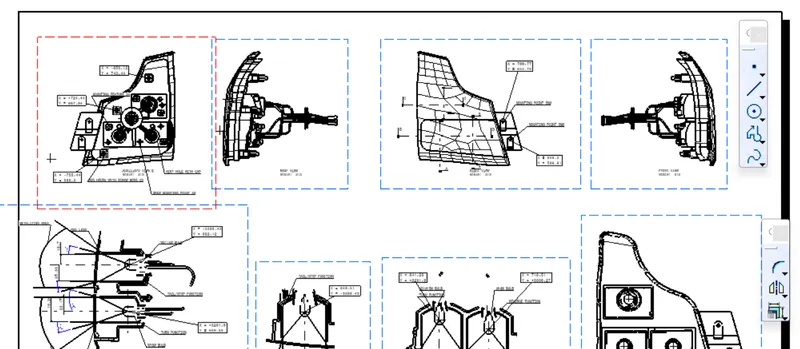
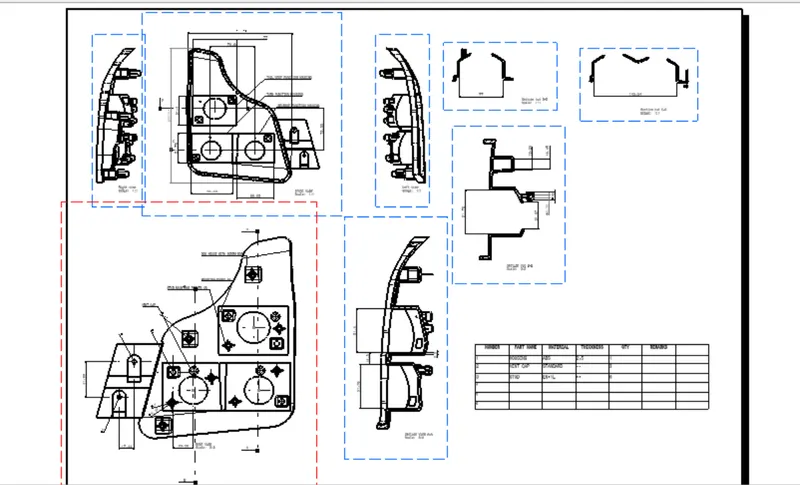
HOUSING CHILD PART DRAWING-
CONCLUSION-
Designed the required tail lamp model according to regulations and finished the design including wiring harness specifications. Made important manufacturing drawings with necessary parameters and relations.