Project 2
Aim:
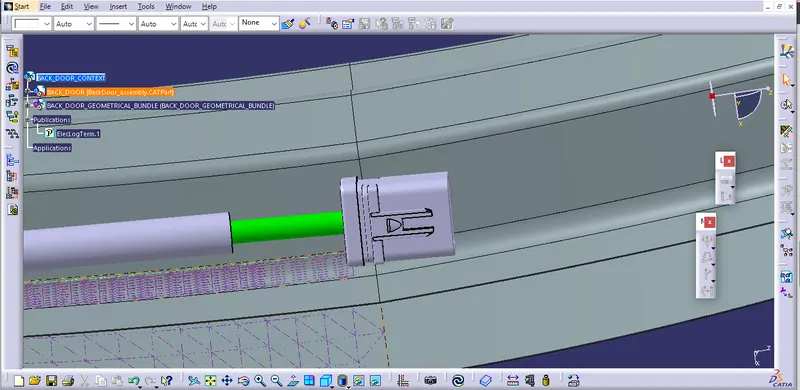
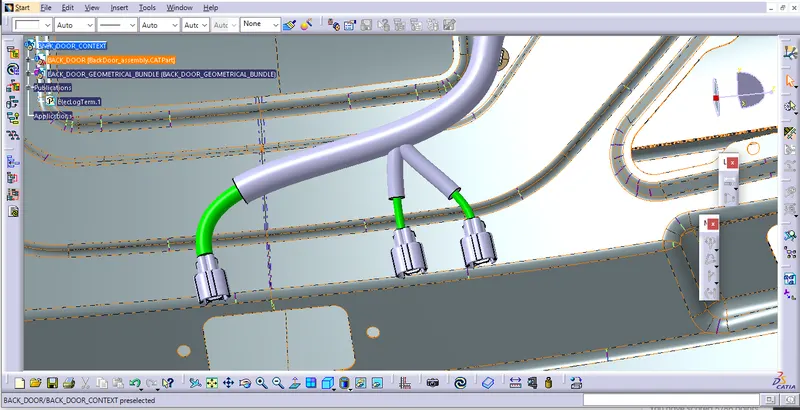
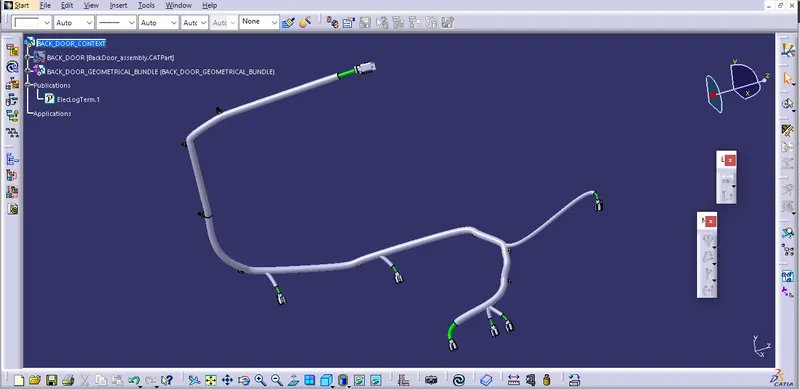
Route the harness on Given car body and Prepare flatten view drawing in CATIA V5. Application of all Packaging rules, Industry best practices studied in this course shall be demonstrated in design. Apply Protection coverings as required.
Design Considerations:
1.Routing shall provide enough slack for each branch to avoid additional stress on wire and terminal crimping joints but ensure that extra slack does not cause wiring harness foul with surrounding parts and impact desired clearance requirements.
2.Distance between two branch points should be minimum 50mm.
3.Distance between clip and branch point should be minimum 25mm.
4.Distance between clip and branch point should be at least minimum 25mm.
5.Harness should be routed in such a way that it is easy to assemble on a vehicle.
6. Harness should be kept away from sharp environments like sheet metal brackets, panel edges, corners inorder to avoid mechanical defect called chaffing.
7. Avoid harness routing and clipping in blind zone of operator during harness installation to ease the installation process.
8. Ensure that routing meets the clearance requirements with the different surrounding parts according to the design/routing rules of harness.
9. Enough clamps should be provided to ensure the positive clearance with surrounding and safety of wiring harness.
10.Use of plastic guided channels are recommended to meet the clearances in critical areas if it is difficult to achieve by use of clamps.
11. Give some extra lenth to repair the routing if some damage happened on the wire. This extra lentgth will help to ensure the repairing easy. No need to add splice and no need to replace damaged harness.
Flattening view:
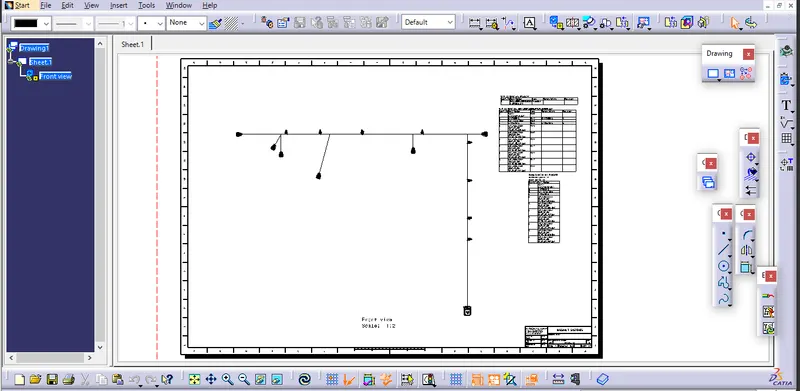
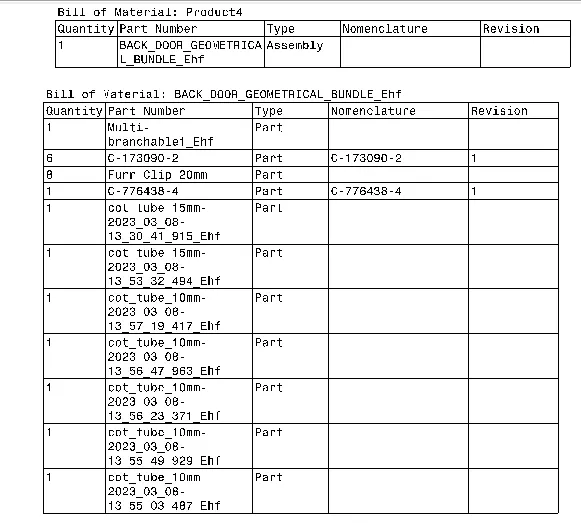
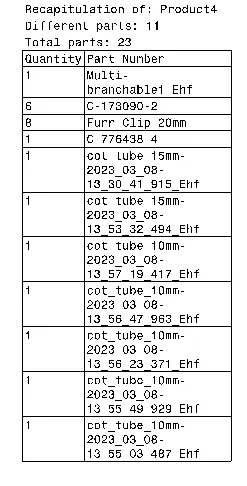
Bill of material:
In bill of material we will have the number of component, Part number,Part name and revision to be required for installing the whole harness on the component.
Conclusion:
Thus the Back door harness routing is done according to the design rules and pakaging rules and flattening view drawing is created in Catia.