Project-1: Powertrain for aircraft in runways
Part A:
1. Search and list out the total weight of various types of aircrafts.
Solution:
- Types of aircrafts in the world:
| 1. Amphibious | 7. Gyroplanes | 13. Tiltrotors |
| 2. Helicopters | 8. Parachutes | 14. Turboprops |
| 3. Multi engine piston | 9. Single engine piston | 15. Light sport |
| 4. Biplanes | 10. Tricycle gear | 16. Floatplanes |
| 5. Balloons | 11. Business jets | 17. Fighter jets |
| 6. Gliders | 12. Taildraggers | 18. Cargoplanes |
Total weight of various types of aircrafts
| Sr no. | Name of Aircraft | OEW (Kg) | MTOW (Kg) |
| 1 | Cessna 172 | 657.7 | 1111.3 |
| 2 | Citation Jet M2 | 3170.6 | 4853.4 |
| 3 | Boeing 767-300 | 88450.5 | 181436.94 |
| 4 | Boeing 787-800 | 119975.182 | 227930.166 |
| 5 | Airbus A320 | 37194.57 | 77110.702 |
| 6 | Airbus A330 | 124511.1 | 229971.3 |
| 7 | Boeing 777-300 | 160571.6 | 299370.96 |
- OEW: Operating empty weight (without passangers, luggage and fuel )
- MTOW: Maximum take off weight to safely take off plane considering its structural limits.
- An average medium sized commercial aircraft weighs around 41000Kg when it is empty, and it weighs around 78000Kg after considering luggage and passanger in loaded condition or its mximum take-off weight.
2. Is there any difference between ground speed and air speed?
Solution:
Ground speed
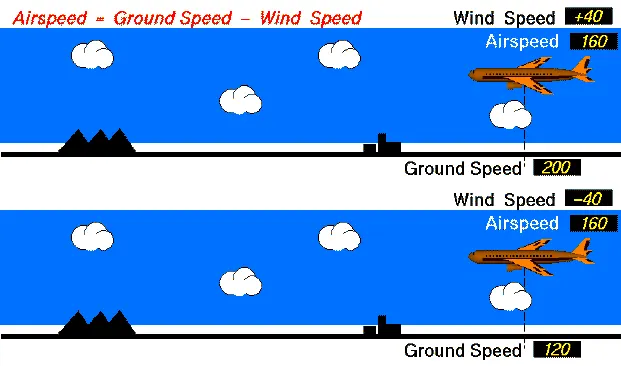
- Speed of aircraft relative to the surface of earth is known as Ground speed. It is the horizontal speed of an aircraft
- It is the vector sum of true aircraft's true air speed, wind speed and wind direction.
Air speed
- Air speed is the speed relative to the air it is flying in. Airspeed indicator indicates speed of aircraft's relative to air mass.
- It is the vector difference between gtound and wind speed.
Below shown gif shows the relation of Ground and air speed relative to wind.
3. Why is it not recommended to use aircraft engine power to move it on the ground at Airport?
Solution:
An aircraft can use its own power to move on the ground but due to few reasons it is not recommended.
- High amount of thrust produced may damage terminal building or near by equipments.
- Possibility of sand and debris getting sucked into the engine.
- If the wheels of aircraft lose control then it may also result into the accident.
- Cost of fuel is very high.
Thus taxiing or pushback is the method of driving aircraft on the ground.
4. How an aircraft is pushed to runway when its ready to take off?
Solution:
- Pushback tugs are used to move the aircraft and it will park the aircraft closer to its departure way.
- These pushback tugs are used at front wheel of an aircraft which also helps to move aircraft in reverse direction.
- Below is shown image of pushback tractor.
- Once aircraft is on its way, pilot starts the engine one by one to advance the thrust level one by one.
- When aircraft starts moving overcoming wheel friction it wont need much thurst.
5. Learn about take off power, tyre design, rolling resistance, tyre pressure, brake forces when landing.
Solution:
Take off power: It is the power required to fly an aircraft from the ground. There are 4 types of forces which are considered while taking off any aircraft those are Thrust, Drag, Weight and Lift. Take off power = Total force*velocity.
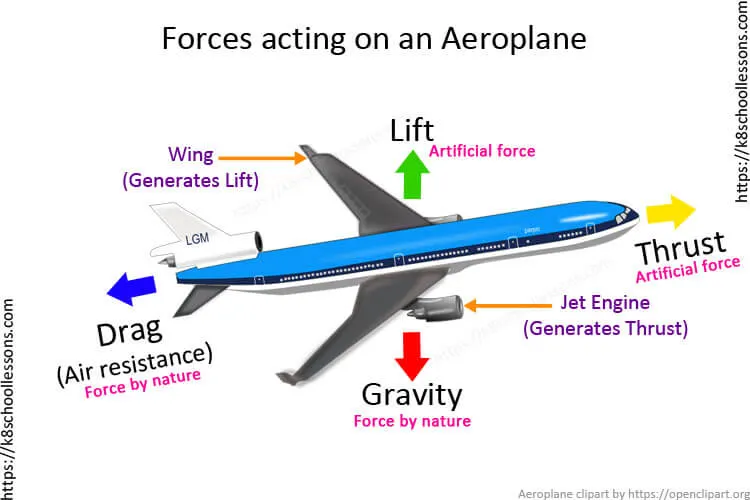
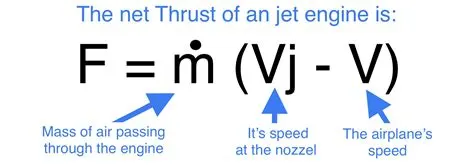
Thrust: This is the force which helps the aircraft to move in the direction of motion which is created by propeller. Air is pulled in and then oushed out in opposite direction.
Weight: It is the force caused by gravity which is F_weight = m*g
Lift: It is the force which helps an airplane to hold in the air. The wings of aircraft creates most of this force
Drag: It is the force acting in opposite to the direction of motion. This force is caused by friction and differences in air pressure.
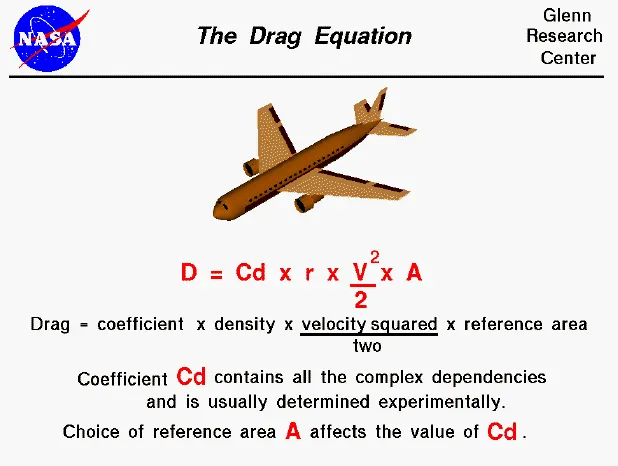
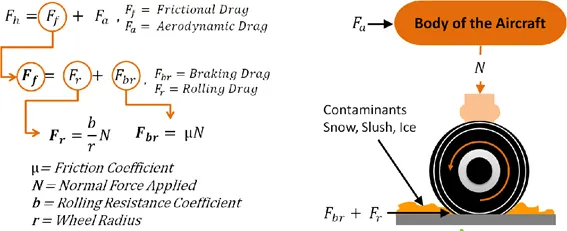
Rolling resistance: It is the frictional force created between wheels of aircraft and runway.
Tyre design: From design point of view Tires are classified according to their dimensions, configuration ( tubed or tubeless )and strength (ply rating). For different applications of aircraft suitable tires are designed and used for better safety and smooth control.
- Ply rating provides the strength number to the tyre. Earlier number of plies used in tyres are proportional to the strength of tyre.
- Tubed tyres are not much used nowadays mostly all aircrafts are using tubeless tyres which prevents air leak and less susceptible to tyre creep.
- From dimension wise tyres as further classified as shown below:
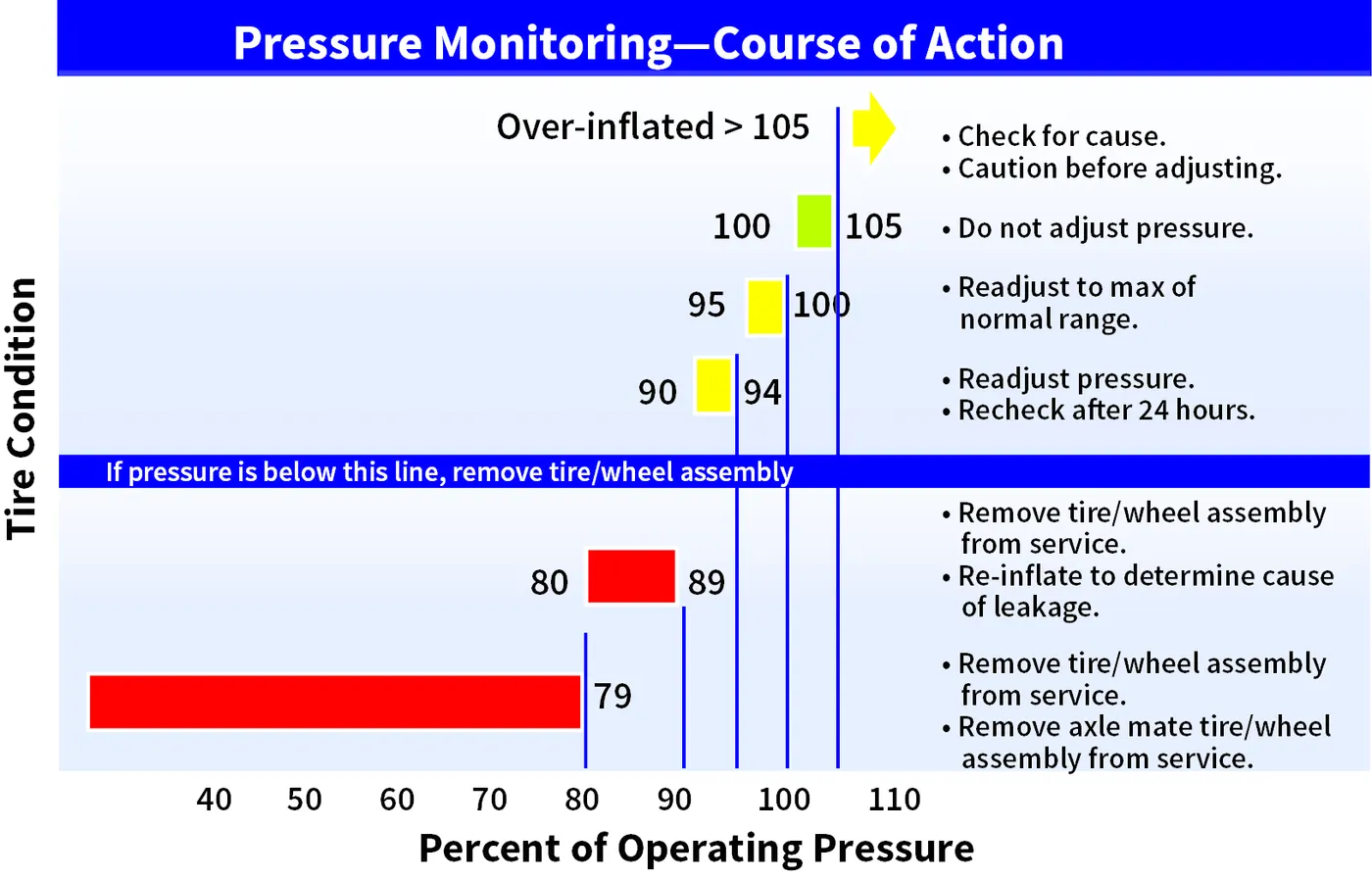
Tyre pressure:
Aircraft tyres operate at such high pressure, speed, load and different temperature so it is must to take care of tyres regularly as it serves critical while landing or take off.
Pressure maitained in the tyre is the foremost thing to check which can avoid to happen any accident. To make sure to get most value and contribute to the safe operation of aircraft following actions should be taken:
- Perform daily pressure checks with a calibrated gauge.
- Target the highest pressure recommended in the AMM or POH (105 percent of operating pressure).
- Compensate for ambient temperature changes.
Braking force:
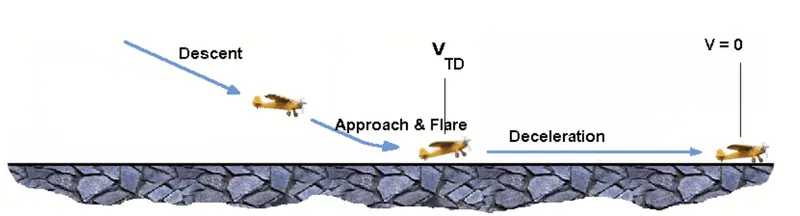
- To stop a huge and heavy aircraft landing with almost a 160-180mph speed it requires a lot of braking force. Aim of braking is to minimise the distance keeping safety in mind.
- Electric or hydraulic brakes are used to stop the aircraft. Hydraulic brakes put on weight of the aircraft.
- VTD: It is touch down velocity, the velocity of an aircraft having it with which it has landed on ground it should be stalling speed of aircraft.
- To acheive stall speed drag and decceleration of aircraft is increased which is obtained by braking and reverse thrust.
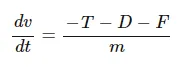
- Brake force = Mass*decceleration
- T = Thrust of propulsion
- D = Aerodynamic drag of aircraft
- F = Rolling resistance friction due to contact of wheels or skids on the ground
- m = Mass
Below is shown image of an aircraft landing
6.
A. With necessary assumptions, calculate the force and power required to push / pull an aircraft by a towing vehicle.
Solution:
- The force required to move an aircraft on absolute flat surface with no wind and at constant speed is equals to rolling resistance of aircraft and towing vehicle and also the drag force which will be acting in oppsite direction of motion.
- The rolling resistance for the aircraft and towing vehicle can be calculated as:
- Frr1 = Crr*m1*ag
- Frr2 = Crr*m2*ag
- Thus total Frr = Frr1+Frr2 = Crr*m*ag (m = m1+m2)
Frr = Rolling resistance force, C = coefficient of rolling resistance, m = mass in Kg, ag = acceleration of gravity in m/s.
- Drag force acting on the tow will be:
- Fd = 0.5*Cd*A*v²*ρ
Fd = Drag force, Cd = coefficient of drag, v = velocity of towing vehicle m/s, ρ = density of medium Kg/m3, A = reference ara in m2
Assuming the values for all parmters
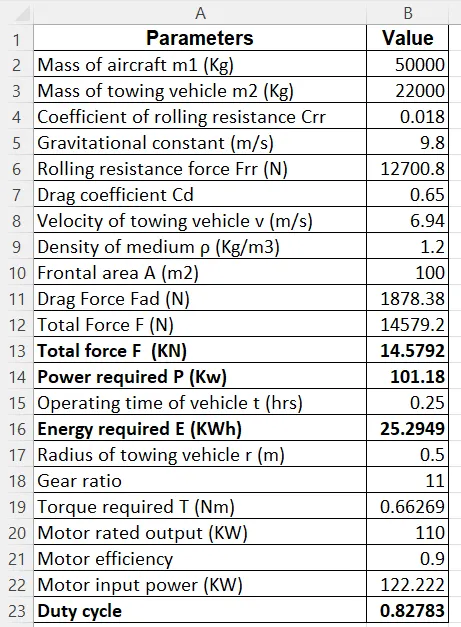
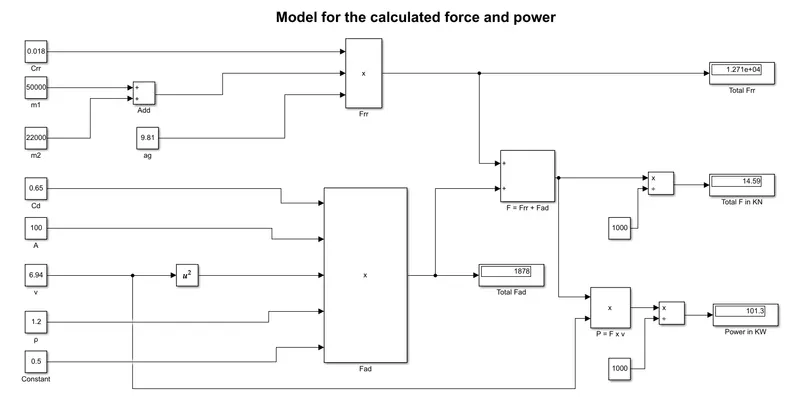
Crr = 0.018, ag = 9.81m/s2, m1 = 50000 kg, m2 = 22000 Kg, Cd =0.65, A = 100 m2, v = 6.94m/s, ρ = 1.2kg/m3
- Pulling force = Frr + Fd
- = Crr*m*ag + 0.5*Cd*A*v²*ρ
- = 12713.76 + 1878
- = 14591.76 N
Total force(F) = 14.59 KN
Power required for towing = F*v = 14.59*6.94
Power (P) = 101.3 KW
B. Develop the model for the calculated force and power using Simulink.
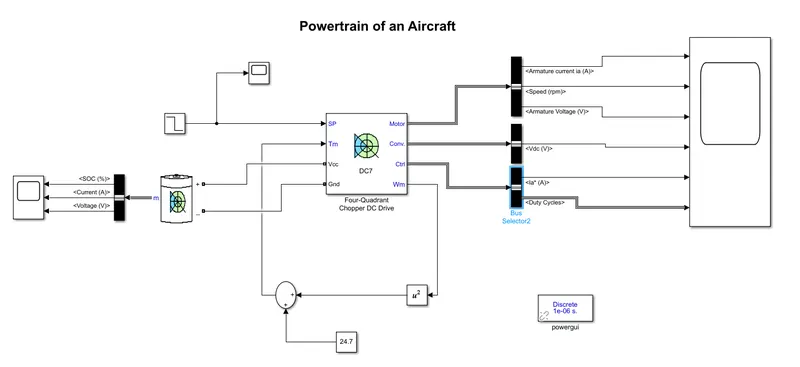
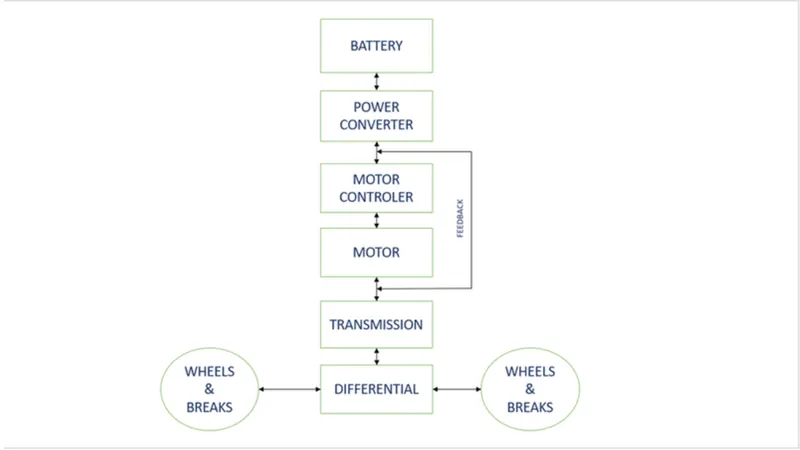
7. A. Design an electric powertrain with type of motor, it’s power rating, and energy requirement to fulfill aircraft towing application in Simulink. Estimate the duty cycle range to control the aircraft speed from zero to highest. Make all required assumptions. Prepare a table of assumed parameters. Draw a block diagram of powertrain.
Solution:
To calculate duty cycle few more practical assumptions need to be consider:
- Towing tractor tyre radius = 0.5m
- Towing tractor gear ratio = 11
- Operational time for towing = 0.25hr (15 min)
Torque = Force*(radius/gear ratio)
Torque = 14.59*(0.5/11) = 663.18 N-m
Energy = Power*Time
Energy = 101.3*.25 = 25.325 KWh
- From the above results we have selected motor of rating 110KW (150 HP) motor of wound type 300V, 1750 RPM, consideringefficiency = 90%
- Thus, Input power of motor = Output power/ Efficiency
- Input power of motor = 110/0.9 = 122.22 Kw
- Duty cycle = Output power/Input power
- Duty cycle = 101.3/122.22
- Duty cycle = 82.88%
Thus range of duty cycle to control aircraft speed is from 0 - 82.88%
Simulink model:
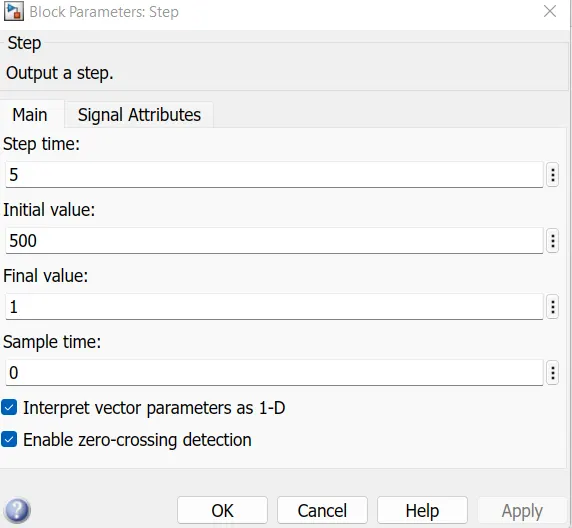
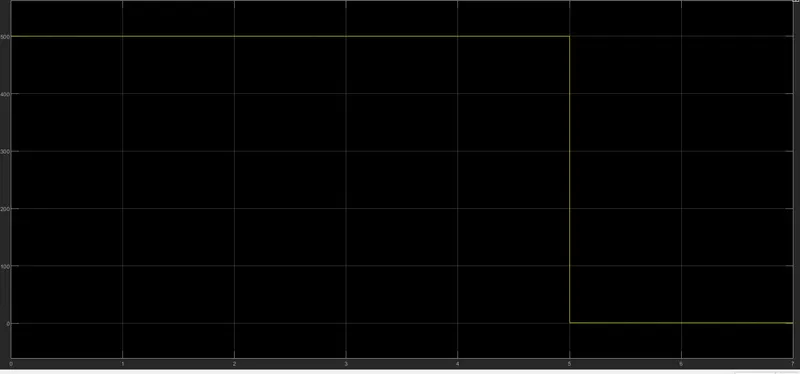
Input:
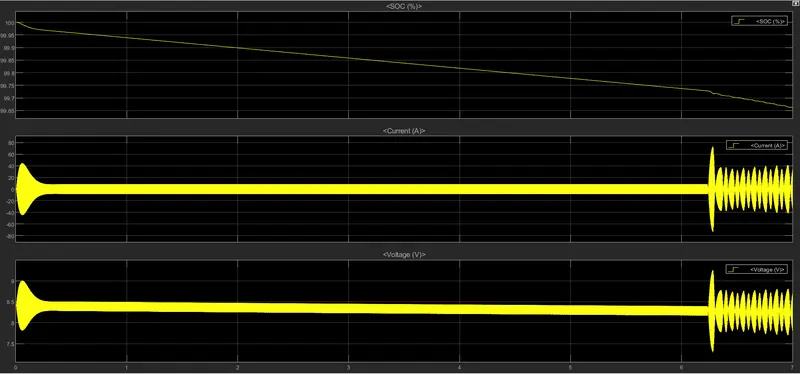
Battery:
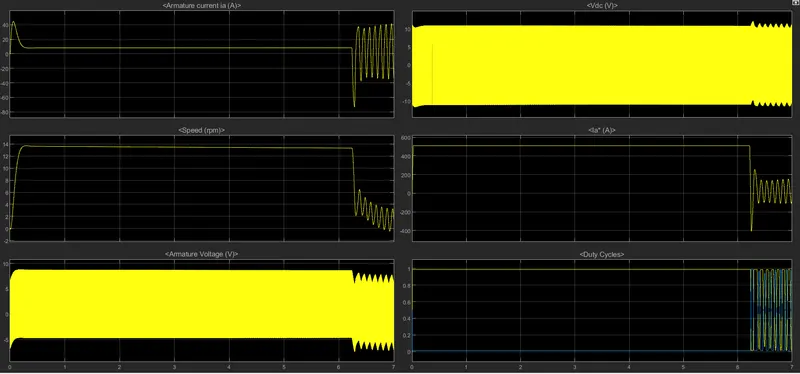
Output:
Block diagram:
B. Also, Design the parameters in excel sheet.
Solution: