Week-3 Challenge: ADVISOR Tool
1. For EV_defaults_in file, if cargo mass is 500 kg with all other default conditions, can the vehicle travel for 45 km with FTP drive cycle? Conclude your observations.
Solution:
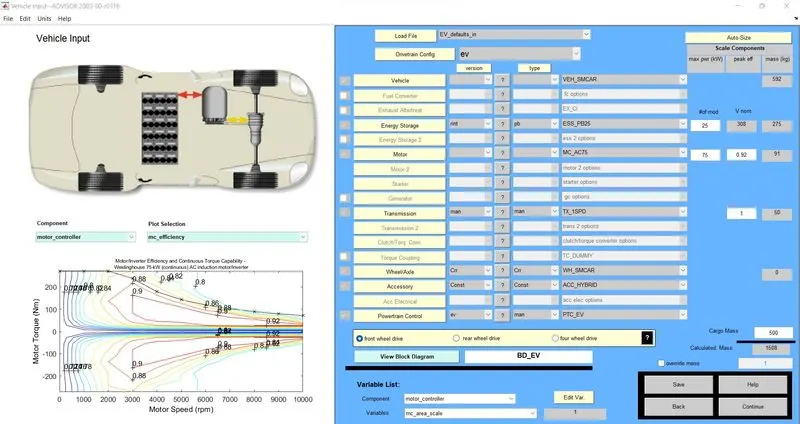
- EV_defaults_in file is loaded and changing its cargo mass to 500 kg. Thus total calculated mass is 1508 Kg.
- Without changing any other parameters, Continue block is selected at bottom right side and new GUI will appear which is shown below.
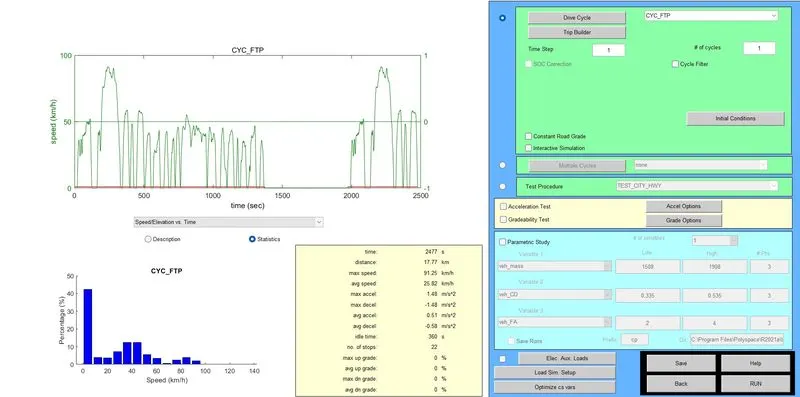
- In this GUI window, drive cycle is chnged to CYC_FTP
- No. of cycles selected = 1
- Left side cycle will be shown and its data at below.
- To view the result click on RUN at bottom right side and simulation will run and new window will appear which is shown below.
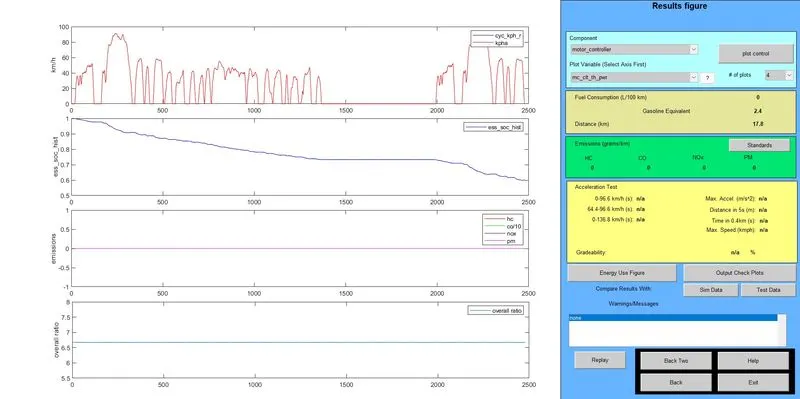
- In this result we can check Distance covered is 17.8Km at right side in yellow coloured block.
- State of charge (SOC) is shown at left side second graph.
- Results showing graph is declining which means battery is consumed as distance is increasing.
- Graph stopped at value 0.6 value this suggests vehicle has consumed 40% of battery voltage to reach at distance of 17.8Km.
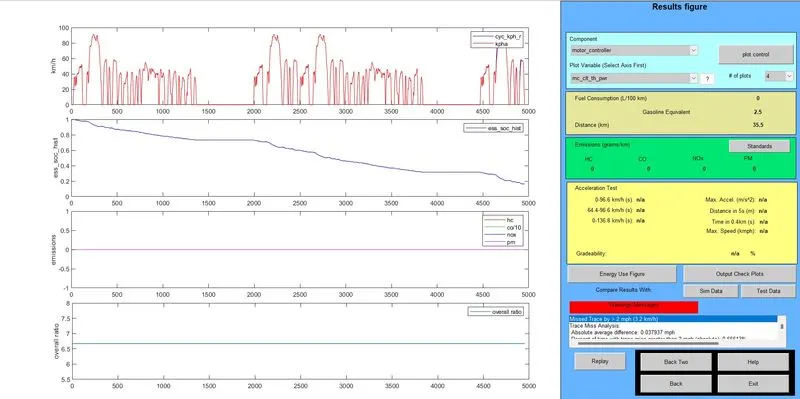
When no. of cycles = 2.
Result:
Total distance travelled by vehicle is 35.5Km and SOC is below 0.2 which means more than 80% of battery is consumed.
When no. of cycles = 3
Result:
Total distance travelled by vehicle is 41.4Km this shows before completing 3rd cycle battery is fully drained.
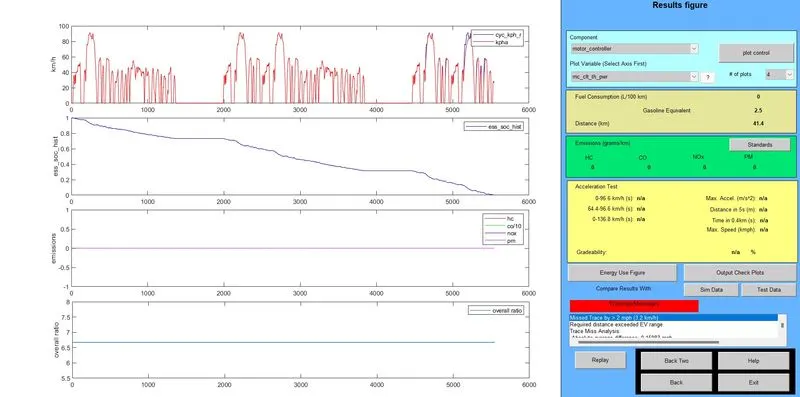
2. In the above case, try changing the battery capacity and repeat the simulation.
Solution:
- Above simulation was made to run having 25 number of batteries. Keeping the same model as EV_defaults_in and drive cycle data as CYC_FTP ; will change the number of batteries and check the result for vehicle.
- Total 4 results are shown below having total no. of batteries as 26, 28, 30 and 32 respectively. Having cargo mass = 500 Kg fixed.
| No. of cycles | Distance travelled(Km) | No. of batteries | Total weight of vehicle(Kg) |
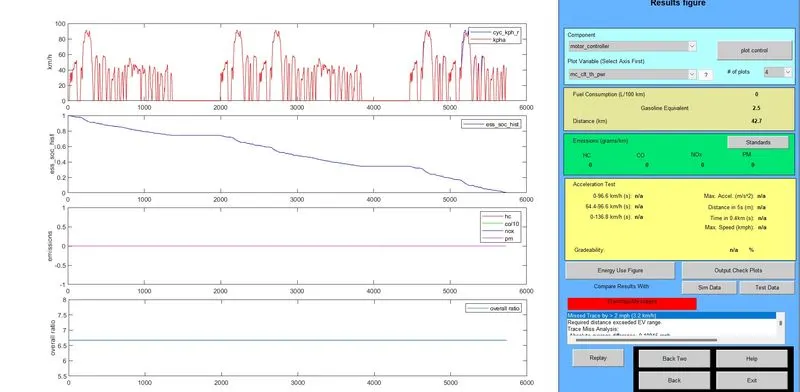
| 3 | 42.7 | 26 | 1519 |
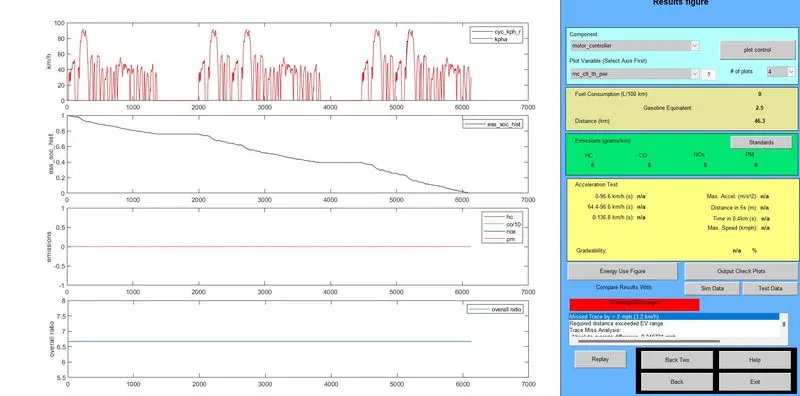
| 3 | 46.3 | 28 | 1541 |
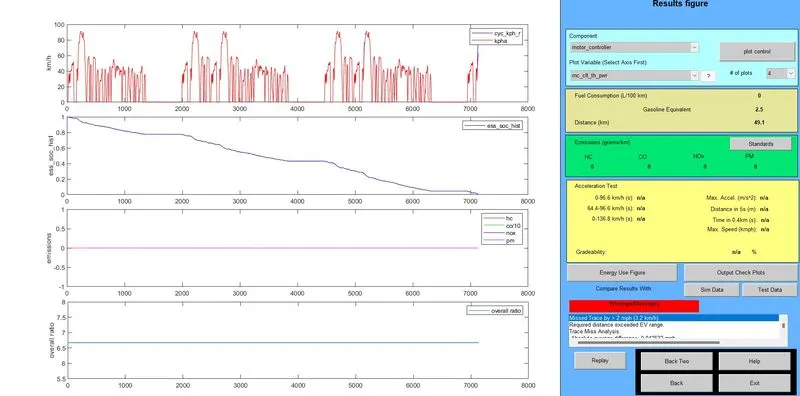
| 3 | 49.1 | 30 | 1563 |
| 3 | 52.5 | 32 | 1585 |
Results:
- No. of batteries = 26
- Dist. Travelled = 42.7Km
- No. of batteries = 28
- Dist. Travelled = 46.3Km
- No. of batteries = 30
- Dist. Travelled = 49.1Km
- No. of batteries = 32
- Dist. Travelled = 52.5Km
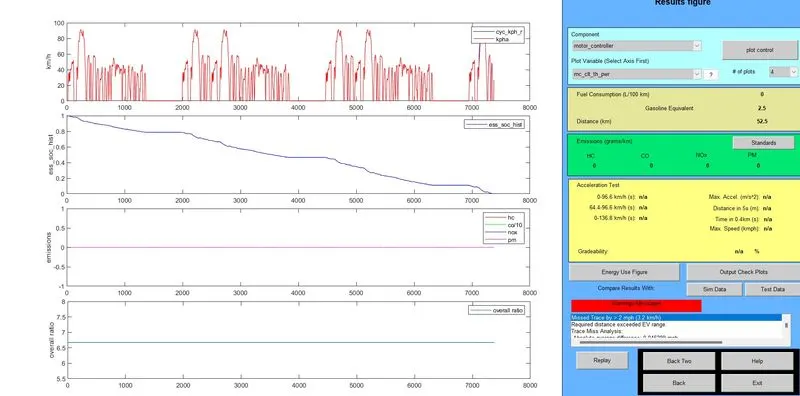
CONCLUSION: We can conclude as no. of batteries are increased distance travelled by the vehicle is increased and total mass of vehicle is also increased.
3. Perform gradeability test with PRIUS_Jpn_defaults_in file. Compare your results in table and conclude.
Solution:
PRIUS_Jpn_defaults_in file is loaded which has total weight of 1368Kg. Without changing any parameters GUI is continued and new GUI will open which is shown below.
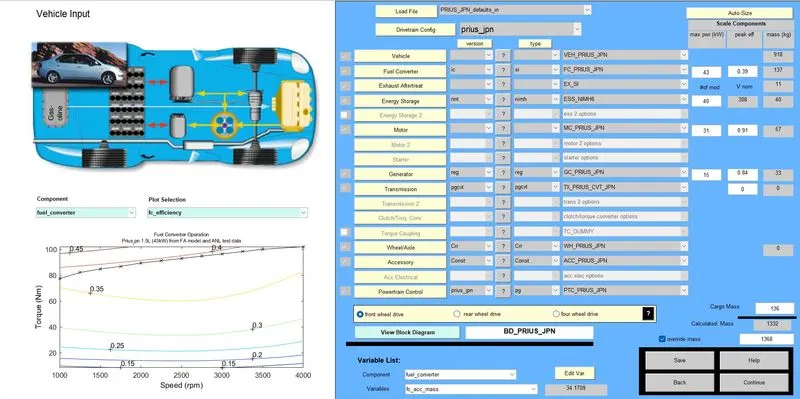
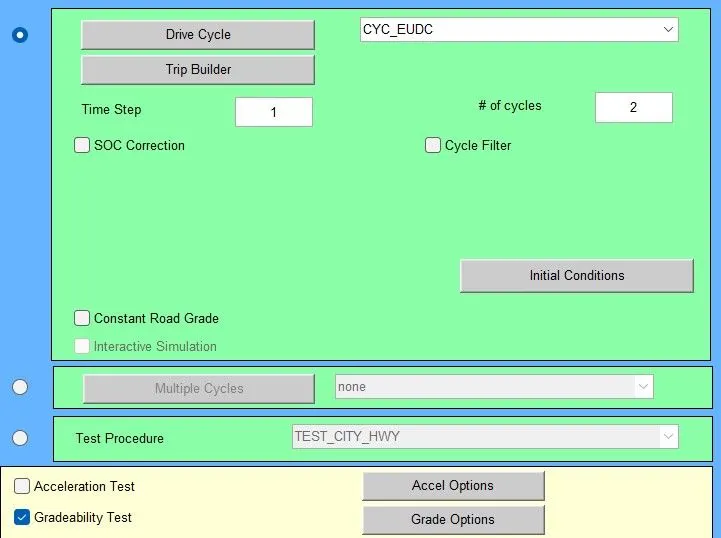
- In drive cycle data CYC_EUDC cycle is selected with no. of cycles = 2
- Gradibility test has to be perform for that box is ticked and grade options is selected.
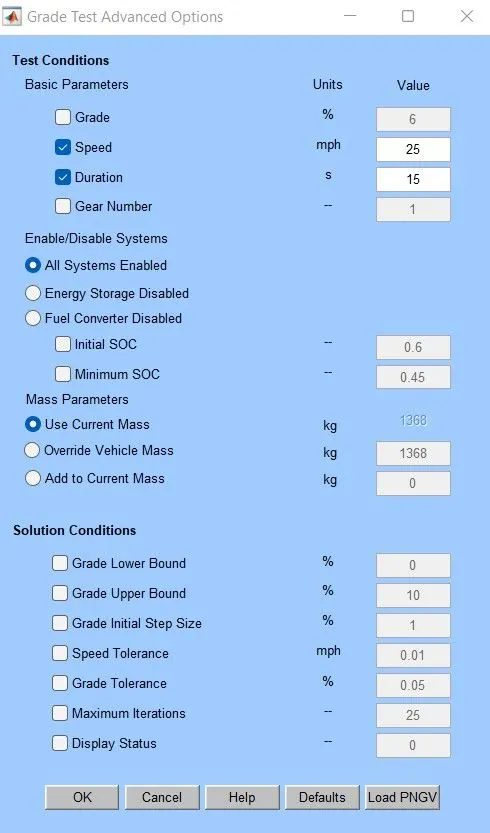
- New box will pop up which is shown below in which Speed and Duration is set as per wish and also checking All systems enabled. OK is selected after making desired changes and simulation is RUN
- Following results are shown below by changing speed and duration value to comment on its gradeability.
- Table is shown below for the following values
| Sr no. | Speed (mph) | Duration (s) | Gradeability (%) |
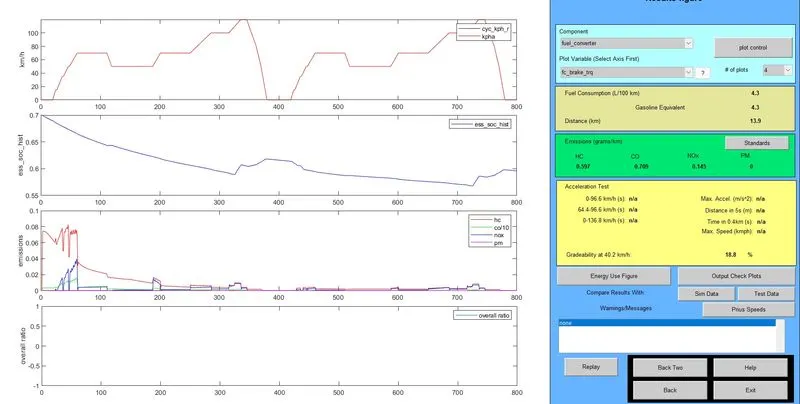
| 1 | 25 | 15 | 18.8 |
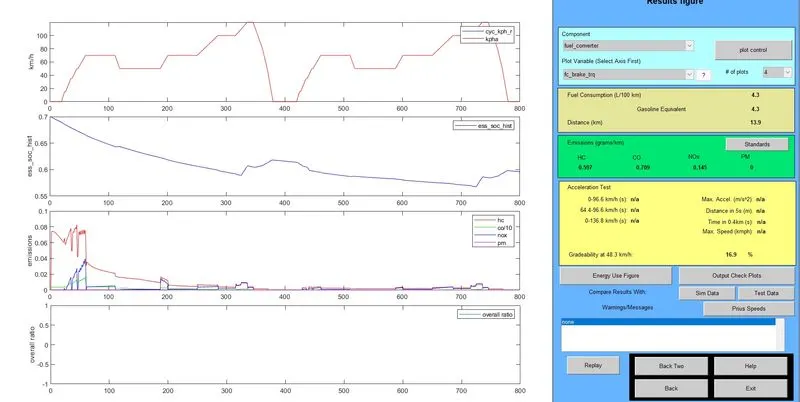
| 2 | 30 | 15 | 16.9 |
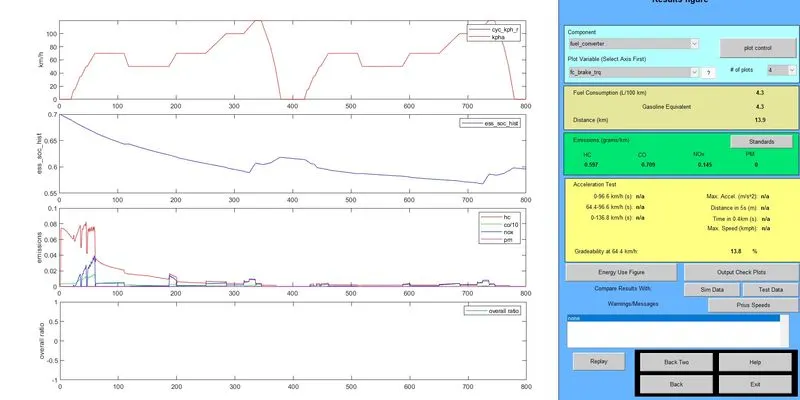
| 3 | 40 | 15 | 13.8 |
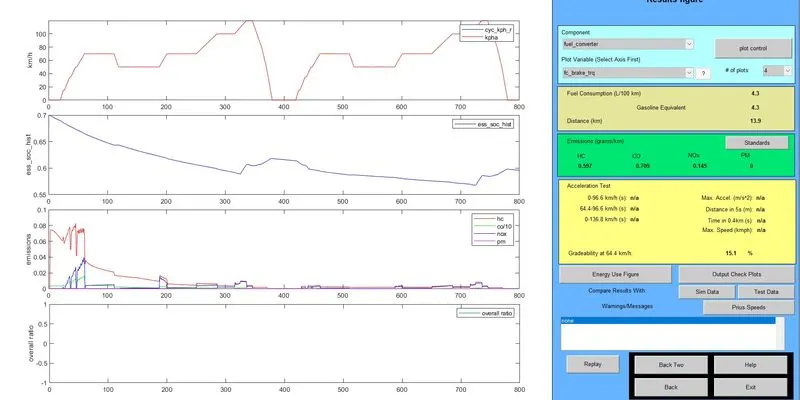
| 4 | 40 | 25 | 15.1 |
| 5 | 30 | 25 | 18.2 |
| 6 | 25 | 25 | 20.2 |
Results:
- Speed = 25mph
- Duration = 15s
- Gradeability = 18.8%
- Speed = 30mph
- Duration = 15s
- Gradeability = 16.9%
- Speed = 40mph
- Duration = 15s
- Gradeability = 13.8%
- Speed = 40mph
- Duration = 25s
- Gradeability = 15.1%
- Speed = 30mph
- Duration = 25s
- Gradeability = 18.2%
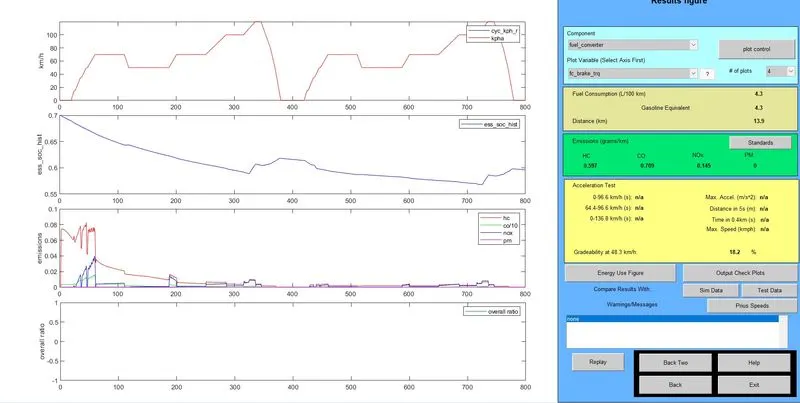
- Speed = 25mph
- Duration = 25s
- Gradeability = 20.2%
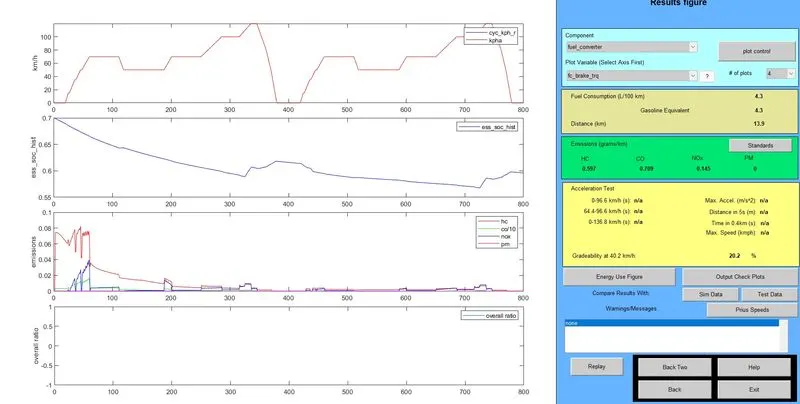
CONCLUSION: From this we can conclude that increase in speed decreases the gradeability value.