Project-1: Powertrain for aircraft in runways
Aim: To answer all the questions related to Powertrain for aircraft in runways.
Objective:
Part A:
1. Search and list out the total weight of various types of aircraft.
2. Is there any difference between ground speed and airspeed?
3. Why is it not recommended to use aircraft engine power to move it on the ground at the Airport?
4. How an aircraft is pushed to the runway when it's ready to take off?
5. Learn about take-off power, tyre design, rolling resistance, tyre pressure, brake forces when landing.
Part B:
6. A. With necessary assumptions, calculate the force and power required to push/pull an aircraft by a towing vehicle.
B. Develop the model for the calculated force and power using Simulink.
7. A. Design an electric powertrain with the type of motor, its power rating, and energy requirement to fulfill aircraft towing application in Simulink. Estimate the duty cycle range to control the aircraft speed from zero to highest. Make all required assumptions. Prepare a table of assumed parameters. Draw a block diagram of the powertrain.
(Hint: DC7 Block)
B. Also, Design the parameters in an excel sheet.
Introduction:
Aircraft:
An aircraft is a vehicle or machine that can fly by gaining support from the air. It counters the force of gravity by using either static lift or by using the dynamic lift of an airfoil, or in a few cases the downward thrust from jet engines. Common examples of aircraft include airplanes, helicopters, airships (including blimps), gliders, paramotors, and hot air balloons.
The human activity that surrounds aircraft is called aviation. The science of aviation, including designing and building aircraft, is called aeronautics. Crewed aircraft are flown by an onboard pilot, but unmanned aerial vehicles may be remotely controlled or self-controlled by onboard computers. Aircraft may be classified by different criteria, such as lift type, aircraft propulsion, usage, and others.
Types of aircraft:
1. Turboprop Aircraft
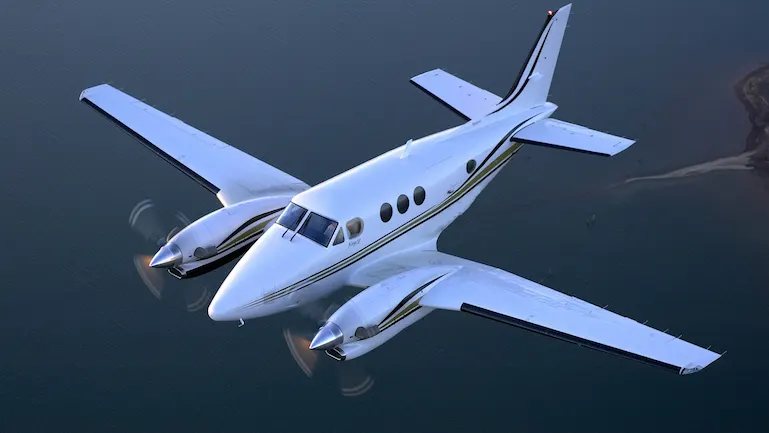
2. Piston Aircraft
3. Jets
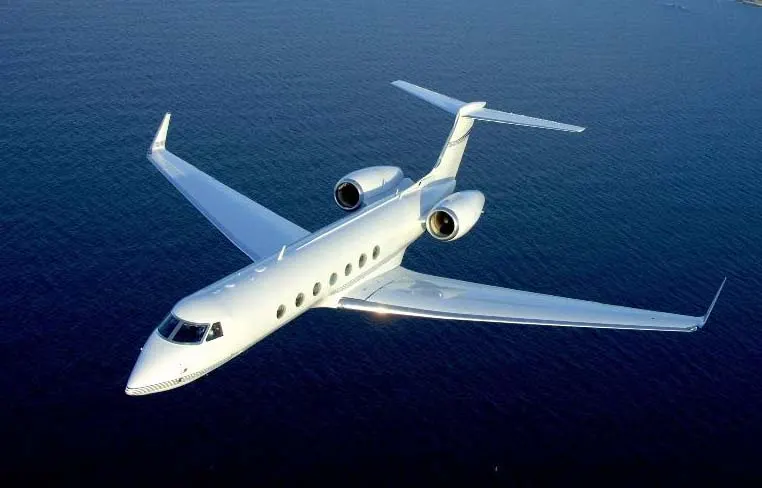
4. Narrow-body aircraft
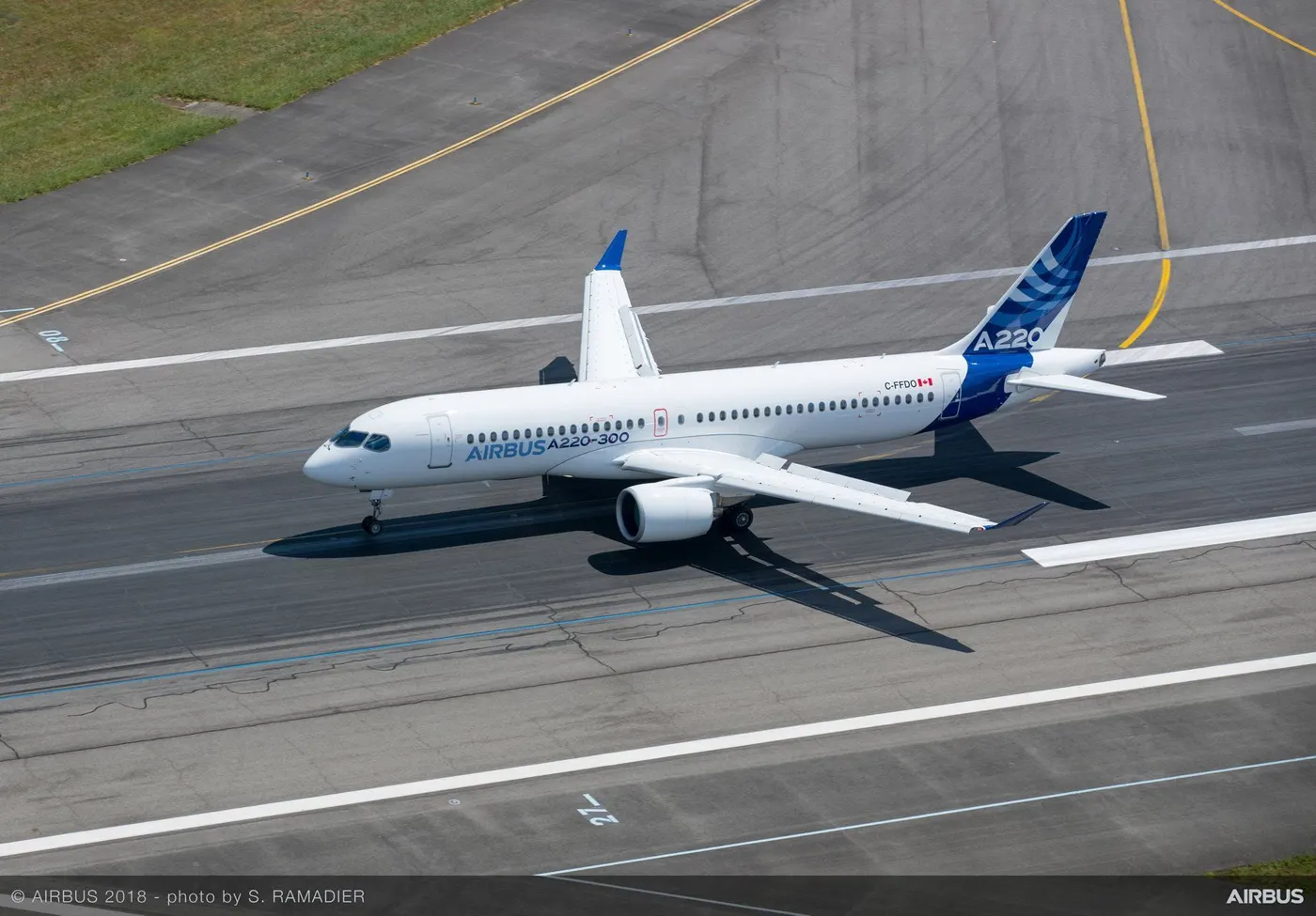
5. Wide Body Airlines
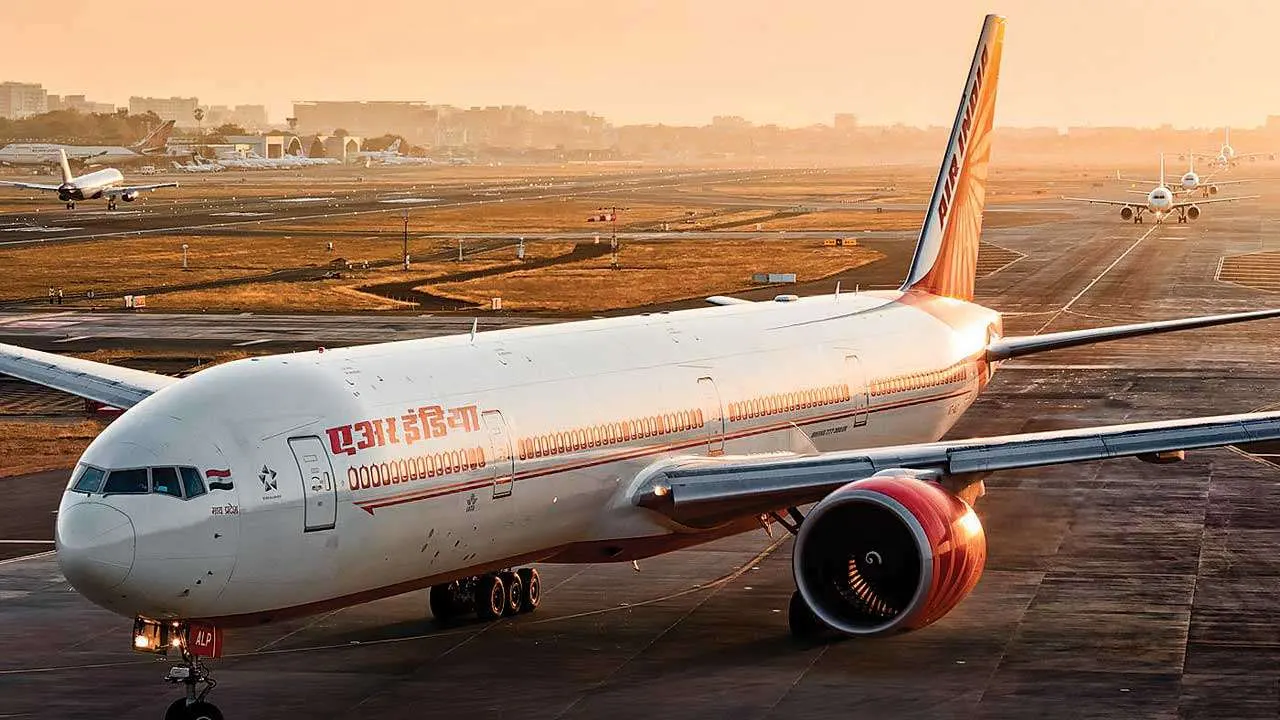
6. Airbus
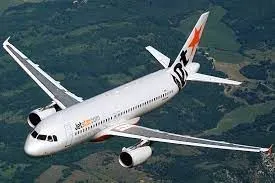
7. Military aircraft
Part A
Q.1. Search and list out the total weight of various types of aircraft.
Ans.:
List of Types of the weight of aircraft:
1. Maximum Ramp Weight (Taxi Weight):
- The maximum design taxi weight (also known as the maximum design ramp weight (MDRW)) is the maximum weight certificated for aircraft manoeuvring on the ground (taxiing or towing) as limited by aircraft strength and airworthiness requirements.
- It includes the weight of the taxi and run-up fuel for the engines and the auxiliary power unit (APU).
- It is greater than the maximum takeoff weight due to the fuel that will be burned during the taxi and run-up operations.
2. Maximum Take-off Weight (MTOW):
Is the maximum certificated design weight when the brakes are released for takeoff and are the greatest weight for which compliance with the relevant structural and engineering requirements has been demonstrated by the manufacturer.
3. Minimum Flight Weight (MFW):
Minimum certificated weight for flight as limited by aircraft strength and airworthiness requirements.
4. Maximum Landing Weight (MLW):
- The maximum certificated design weight at which the aircraft meets the appropriate landing certification requirements. It generally depends on the landing gear strength or the landing impact loads on certain parts of the wing structure.
- The MDLW must not exceed the MDTOW.
- The maximum landing weight is typically designed for 10 feet per second (600 feet per minute) sink rate at touch down with no structural damage.
5. Payload:
This one is simple. Think of payload as what's "paying" for the flight: passengers, bags, and cargo. It's how much weight you can carry besides basic empty weight and fuel.
6. Basic Empty Weight:
Standard Empty Weight plus optional equipment. This is the starting point of weight and balance calculations.
7. Standard Empty Weight:
The weight of an empty airplane including unusable fuel, full operating fluids (hydraulic fluids), and full engine oil.
- MTOW = Maximum take-off weight, MLW = Maximum landing weight, TOR = Take-off run, LR = Landing run
| Type | MTOW [kg] | MLW [tonnes] | TOR [m] | LR [m] |
|---|---|---|---|---|
| Antonov An-225 | 640,000 | 591.7 | 3500 | |
| Scaled Composites Model 351 Stratolaunch | 589,670 | 3660 | ||
| Airbus A380-800 | 575,000 | 394 | 3100 | 1930 |
| Boeing 747-8F | 447,700 | 346.091 | 3100 | 1800 |
| Boeing 747-8 | 443,613 | 306.175 | 3100 | |
| Boeing 747-400ER | 412,770 | 295.742 | 3090 | |
| Antonov An-124-100M | 405,060 | 330 | 2520 | 900 |
| Boeing 747-400 | 396,900 | 295.742 | 3018 | 2179 |
| Lockheed C-5 Galaxy | 381,000 | 288.417 | 2530 | 1494 |
| Boeing 747-200 | 377,840 | 285.700 | 3338 | 2109 |
| Boeing 747-300 | 377,840 | 260.320 | 3222 | 1905 |
| Airbus A340-500 | 371,950 | 240 | 3050 | 2010 |
| Airbus A340-600 | 367,400 | 256 | 3100 | 2100 |
| Airbus A330-900 | 352,000 | 251.5 | 3100 | |
| Boeing 777-300ER | 351,800 | 251.29 | 3100 | |
| Boeing 777F | 347,800 | 260.816 | 2830 | |
| Boeing 777-200LR | 347,450 | 223.168 | 3000 | |
| Boeing 747-100 | 340,200 | 265.300 | ||
| Airbus A350-1000 | 308,000 | 233.5 | ||
| Boeing 777-300 | 299,370 | 237.683 | 3380 | |
| Boeing 777-200ER | 297,550 | 213.00 | 3380 | 1550 |
| Airbus A340-300 | 276,700 | 190 | 3000 | 1926 |
| McDonnell Douglas MD-11 | 273,300 | 185 | 2990 | 1890 |
| Airbus A350-900 | 270,000 | 175 | 2670 | 1860 |
Q.2. Is there any difference between ground speed and airspeed?
Ans.:
Ground speed:
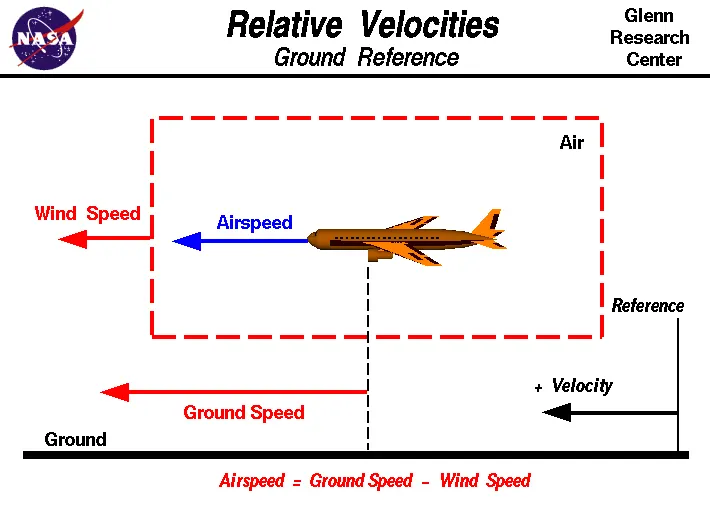
For a reference point picked on the ground, the aircraft moves relative to the reference point at the ground speed. Ground speed is also a vector quantity so a comparison of the ground speed to the wind speed must be done according to rules for vector comparisons.
It is the horizontal speed of an aircraft relative to the Earth’s surface. It is vital for accurate navigation to the destination that the pilot has an estimate of the ground speed that will be achieved during a flight.
Ground speed can be determined by the vector sum of the aircraft's true airspeed and the current wind speed and direction; a headwind subtracts from the ground speed, while a tailwind adds to it. Winds at other angles to the heading will have components of either headwind or tailwind as well as a crosswind component.
Ground speed is quite different from airspeed. When an aircraft is airborne the ground speed does not determine when the aircraft will stall, and it doesn't influence the aircraft's performance such as rate of climb.
Airspeed:
The important quantity in the generation of lift is the relative velocity between the object and the air, which is called the airspeed. Airspeed cannot be directly measured from a ground position but must be computed from the ground speed and the wind speed. Airspeed is the vector difference between the ground speed and the wind speed.
- Airspeed = Ground Speed - Wind Speed
On a perfectly still day, the airspeed is equal to the ground speed. But if the wind is blowing in the same direction that the aircraft is moving, the airspeed will be less than the ground speed.
In aviation, airspeed is the speed of an aircraft relative to the air. Among the common conventions for qualifying airspeed are:
- Indicated airspeed ("IAS"), what is read on an airspeed gauge connected to a Pitot-static system;
- Calibrated airspeed ("CAS"), indicated airspeed adjusted for pitot system position and installation error;
- Equivalent airspeed ("EAS"), calibrated airspeed adjusted for compressibility effects;
- True airspeed ("TAS"), equivalent airspeed adjusted for air density and is also the speed of the aircraft through the air in which it is flying.
Calibrated airspeed is typically within a few knots of indicated airspeed, while equivalent airspeed decreases slightly from CAS as aircraft altitude increases or at high speeds.
With EAS constant, true airspeed increases as aircraft altitude increases. This is because air density decreases with higher altitude.
Difference between ground speed and airspeed:
Ground speed determines how fast an aircraft will get to its destination but the airspeed determines whether there is enough airflow around an aircraft to make it fly.
Q.3. How an aircraft is pushed to the runway when it's ready to take off?
Ans.:
- The movement of an aircraft on the ground under its power is called Taxiing. But to move the aircraft from hanger to the runway, the term used is the taxiways.
- Although many aircraft are capable of moving in backward using reverse thrust, as a result, the jet blast or prop wash might cause damage to the terminal building or equipment.
- High engine thrust during maintenance activity can cause considerable damage to airplanes and other elements in the airport environment. An example of this problem occurred after an airplane arrived at its final destination with a log entry indicating the flight crew had experienced anomalous engine operation.
- The air intake of a jet engine is powerful enough to suck in a human body. Even at a distance, the jet engine suction is strong enough to devour loose debris e.g., rags, bolts, paper, stones, catering foils, plastic cups, and bags. All these will damage the jet engine.
- When taxiing, aircraft travel slowly. This ensures that they can be stopped quickly and do not risk wheel damage on larger aircraft if they accidentally turn off the paved surface. Taxi speeds are typically 30 to 35 km/h (16 to 19 kn).
-
Rotor downwash limits helicopter hover-taxiing near parked light aircraft. The use of engine thrust near terminals is restricted due to the possibility of jet blast damage.
Q.4. How an aircraft is pushed to the runway when it's ready to take off?
In aviation, pushback is an airport procedure during which an aircraft is pushed backward away from its parking position, usually at an airport gate by an external power.
These are steps to ready the aircraft for take-off:
- The pilot parks the aircraft in exactly the right place. Usually with the help of an automatic system, but occasionally guided by a marshaller waving two paddles or wands. Dozens of handling personnel are already standing by to perform a whole range of tasks simultaneously.
- As soon as the aircraft is stationary and the engines are switched off, the priority is to disembark the passengers as quickly as possible. The apron handler places chocks in front of the wheels and connects the ground power. Meanwhile, the passenger bridge manoeuvres up to the door, and a belt loader rolls up to the cargo hold. Luggage is unloaded and transferred to the terminal on baggage carts.
- Refueling begins, usually from a hydrant at the stand. A hose is attached to this from a special vehicle called a dispenser, with the other side connected to the fuel tank in the wing.
- Now it is time to service the aircraft. The caterer loads new meals and takes away the food waste and used cutlery and crockery. Other activities include draining the lavatories, replacing the headrest covers, removing rubbish, and distributing fresh blankets and in-flight magazines.
- A specialist team – or sometimes the crew themselves – cleans the cabin so that the new passengers board a pristine aircraft.
- Meanwhile, specialists from the airline conduct a technical check to make sure that the engines, wings, control surfaces, landing gear, instruments, doors, and other equipment are in full working order.
- The aircraft is now ready for baggage to be loaded for the next flight. This is a quick process, on average taking only 10-15 minutes. A little later the passengers start boarding. As soon as they are all in their seats, the door is closed and the pilot informs air traffic control that the flight is ready for departure.
- The apron handler removes the chocks. A so-called pushback truck reverses the aircraft into taxiing position, pushing it with a towbar attached to the nose-wheel strut. Or, in the most modern versions, by actually lifting the wheel. That speeds up coupling and decoupling.
- The aircraft taxis to the runway to depart at the agreed time.
- The pilot waits for permission to take off from air traffic control. This is possible once the departure route is clear. As soon as the go-ahead is received, the plane takes to the air at full power.
Q.5. Learn about take-off power, tyre design, rolling resistance, tyre pressure, brake forces when landing.
Ans.:
Take-off power:
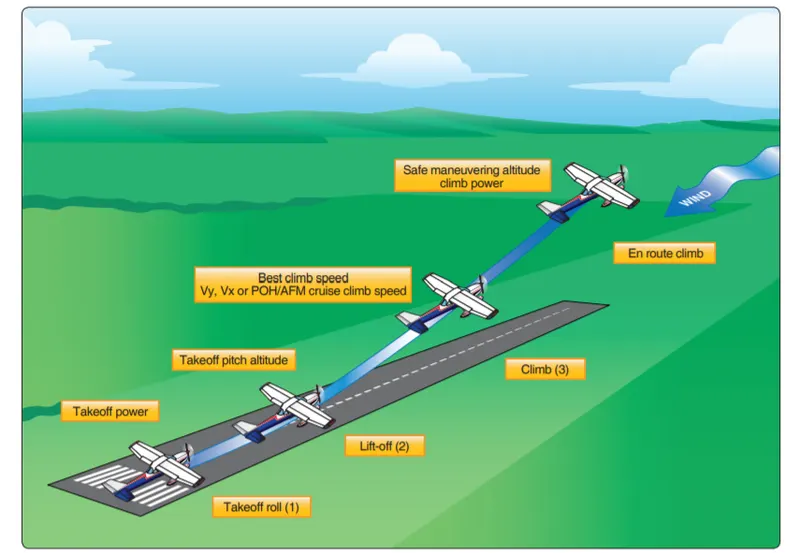
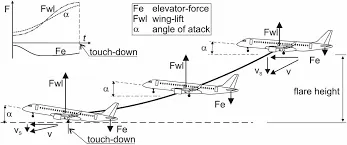
Take-off is the phase of flight in which an aerospace vehicle leaves the ground and becomes airborne. For aircraft traveling vertically, this is known as liftoff. For aircraft that take off horizontally, this usually involves starting with a transition from moving along the ground on a runway.
The nose is raised to a nominal 5°–15° nose-up pitch attitude to increase lift from the wings and effect liftoff. For most aircraft, attempting a takeoff without a pitch-up would require cruise speeds while still on the runway.
Take-off performance can be predicted using a simple measure of the acceleration of the aircraft along the runway based on force equilibrium.
The forces involved will be,
T – Thrust of propulsion system pushing aircraft along the runway.
D – Aerodynamic Drag of vehicle resisting the aircraft motion.
F – Rolling resistance friction due to the contact of wheels or skids on the ground.
During the take-off run, the imbalance in these forces will produce an acceleration along the runway.
dVdt=T−D−Fm">dVdt=T−D−FmdVdt=T−D−Fm
where dV/dt is the acceleration along the runway and m is the mass of the vehicle.
Rotation Velocity, VR
Thrust:
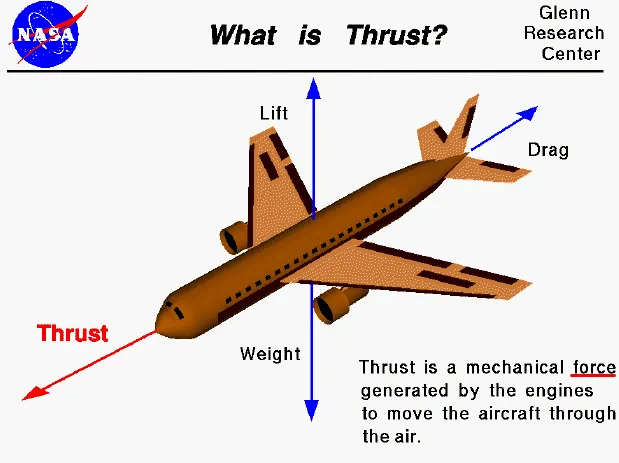
Thrust is the force that moves an aircraft through the air. Thrust is generated by the engines of the airplane. What is thrust?
Thrust is a mechanical force. It is generated most often through the reaction of accelerating a mass of gas. The engine does work on the gas and as the gas is accelerated to the rear, the engine is accelerated in the opposite direction. The acceleration of the engine mass produces a force on the aircraft. How the aircraft responds depends on the balance of forces on the airplane.
Tyre Design:
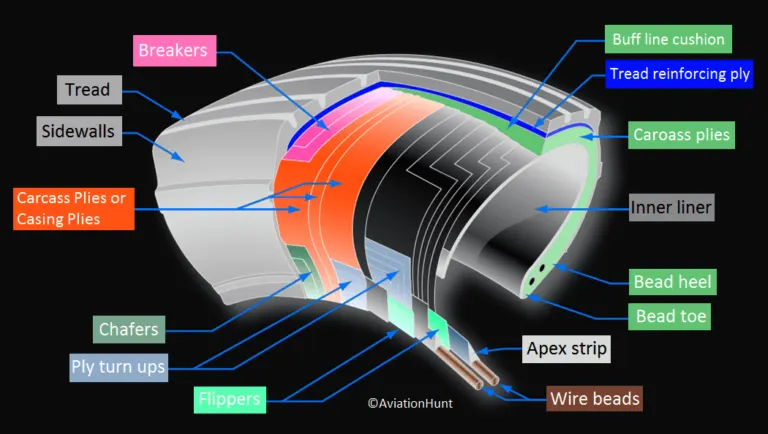
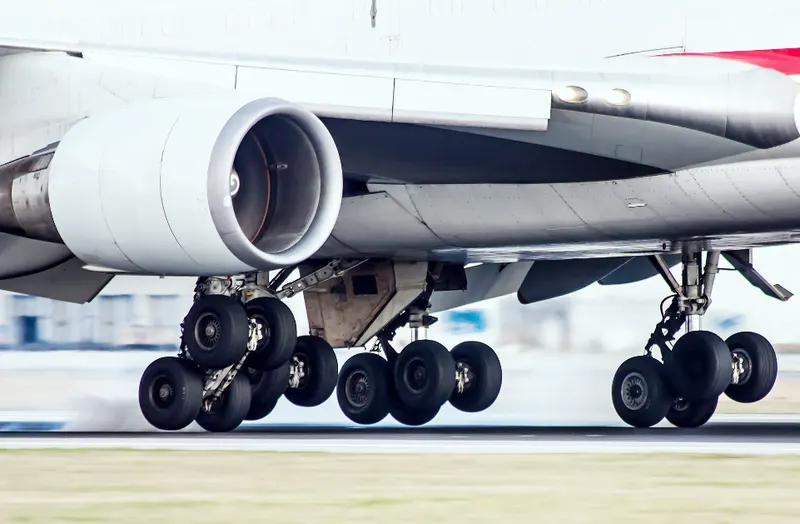
An aircraft tire or tyre is designed to withstand extremely heavy loads for short durations. The number of tires required for aircraft increases with the weight of the aircraft, as the weight of the airplane needs to be distributed more evenly. Aircraft tire tread patterns are designed to facilitate stability in high crosswind conditions, to channel water away to prevent hydroplaning, and for braking effect.
Aircraft tires also include fusible plugs (which are assembled on the inside of the wheels), designed to melt at a certain temperature. Tires often overheat if maximum braking is applied during an aborted takeoff or an emergency landing. The fuses provide a safer failure mode that prevents tire explosions by deflating in a controlled manner, thus minimizing damage to aircraft and objects in the surrounding environment.
Design and construction of an aircraft tire:
Carcass plies are used to form the tire. They are sometimes called casing plies. An aircraft tyre is constructed for the purpose it serves.
- They support the weight of an aircraft while it is on the ground.
- It also provides the necessary traction for the braking and stopping of an airplane.
- Tyre also helps to absorb the shock of landing and provides cushioning for the roughness of takeoff, roll-out, and taxi operations.
Unlike an automobile or truck tire, it does not have to carry a load for a long period of continuous operation. However, an aircraft tire absorbs the high impact loads of landing, and also it’s operating at high speeds for a short time when required.
Rolling Resistance:
Rolling resistance sometimes called rolling friction or rolling drag is the force resisting the motion when a body rolls on a surface. It is mainly caused by non-elastic effects; that is, not all the energy needed for deformation of the wheel, roadbed, etc., is recovered when the pressure is removed. Two forms of this are hysteresis losses and permanent (plastic) deformation of the object or the surface. Note that the slippage between the wheel and the surface also results in energy dissipation. Although some researchers have included this term in rolling resistance, some suggest that this dissipation term should be treated separately from rolling resistance because it is due to the applied torque to the wheel and the resultant slip between the wheel and ground, which is called slip loss or slip resistance.
Tyre Pressure:
Aircraft tires generally operate at high pressures, up to 200 psi (14 bar; 1,400 kPa) for airliners, and even higher for business jets. The main landing gear on the Concorde was typically inflated to 232 psi (16.0 bar), whilst its tail bumper gear tires were as high as 294 psi (20.3 bar).
Aircraft tires are usually inflated with nitrogen to minimize expansion and contraction from extreme changes in ambient temperature and pressure experienced during flight. Dry nitrogen expands at the same rate as other dry atmospheric gases (normal air is about 80% nitrogen), but common compressed air sources may contain moisture, which increases the expansion rate with temperature.
Landing Brake Forces:
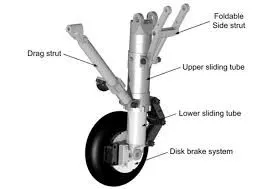
On other aircraft types, the brake units are powered by the hydraulics system. An electrical signal is sent from the flight deck to hydraulic actuators near the main landing gear. Here, hydraulic fluid at 3,000 pounds per square inch is used to force the brake unit against the wheel, thus slowing it down.
Part B
Q.6.(A) With necessary assumptions, calculate the force and power required to push/pull an aircraft by a towing vehicle.
Ans.:
Let us assume and aircraft of Antonov An-225 Mirya,
Mass of aircraft,`m underset(1)()=285000 kg`
Mass of the Towing vehicle, `m underset(2)()=60000kg`
Coefficient of rolling resistance for dry concrete road,`muunderset(rr)()=0.03`
Frontal Area of the aircraft, `A = 355 m^2`
Drag coefficient of an aircraft, `Cunderset(d)()=0.6`
Drag coefficient of a Towing Vehicle,`Cunderset(d)()=0.15`
The density of air, `rho=1.225(kg)/m^3`
Gravitational force, `g = 9.81`
Speed of an aircraft, `v=20times5/18=5.556 m/sec.`
Rolling Resistance Force:
For the Aircraft:
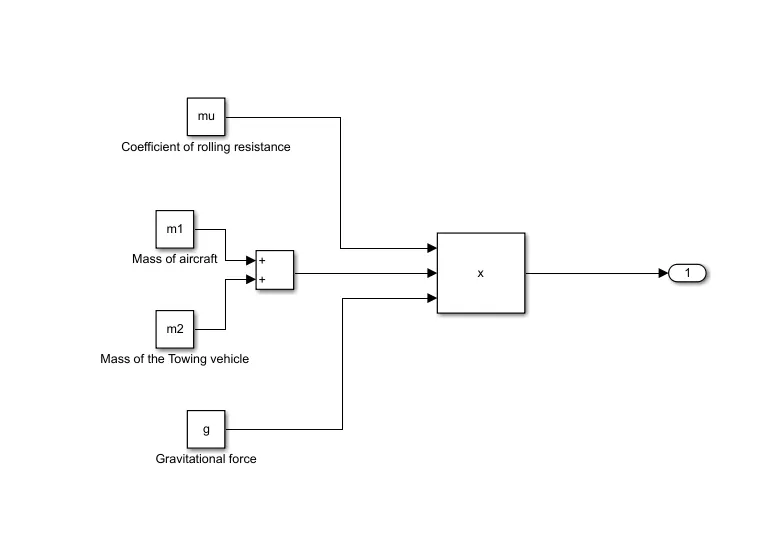
`Funderset(rr)()=muunderset(rr)()times mtimesg`
`Funderset(rr)()=0.03times285000times9.81`
`Funderset(rr)()=83,875.5N`
For the Towing Vehicle:
`Funderset(rr)()=muunderset(rr)()times mtimesg`
`Funderset(rr)()=0.03times60000times9.81`
`Funderset(rr)()=17,658N`
We need to add the mass of the Aircraft as the Towing Vehicle is pushing/ pulling the aircraft as well therefore, the total rolling resistance force will be:
Total Rolling Resistance Force:
`Frr=Funderset(rr)()(aircraft)+Funderset(rr)()(vehicl e)`
`Funderset(rr)()=83875.5+17658`
`Funderset(rr)()=101,533N`
Aerodynamic Drag Force:
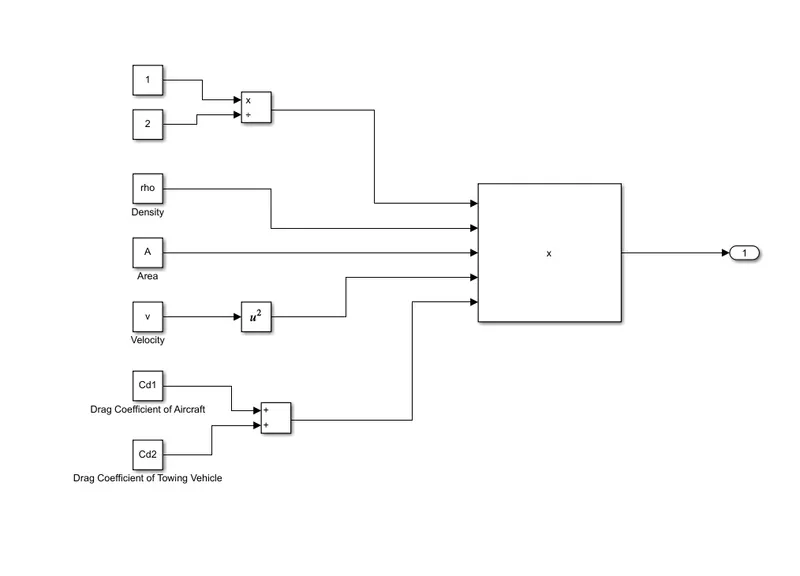
`Funderset(ad)()=1/2×rho×A×v^2×(Cunderset(d)()(Aircraft)+Cunderset(d)()(vehicl e))`
`Funderset(ad)()=1/2×1.225×335×(5.556)^2×(0.6+0.15)`
`Funderset(ad)()=4750.47N`
Total Force of the Towing Vehicle,
`F=Funderset(ad)()+Funderset(rr)()(vehicl e)+Funderset(rr)()(aircraft)`
`F=4750.47+17658+83875.5`
`F=106283.97N`
Power Required,
`P=Ftimesv`
`P=106283.97times5.556`
`P=590.513KW`
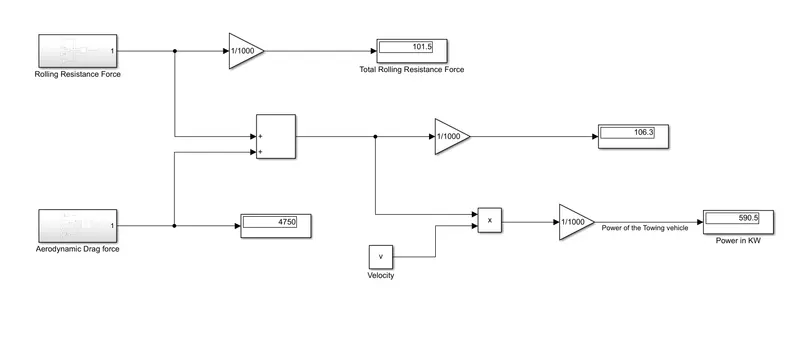
The Force and Power of the Towing vehicle carrying the Aircraft are 106.283 KN and 590.513 KW respectively.
B. Develop the model for the calculated force and power using Simulink.
Ans.:
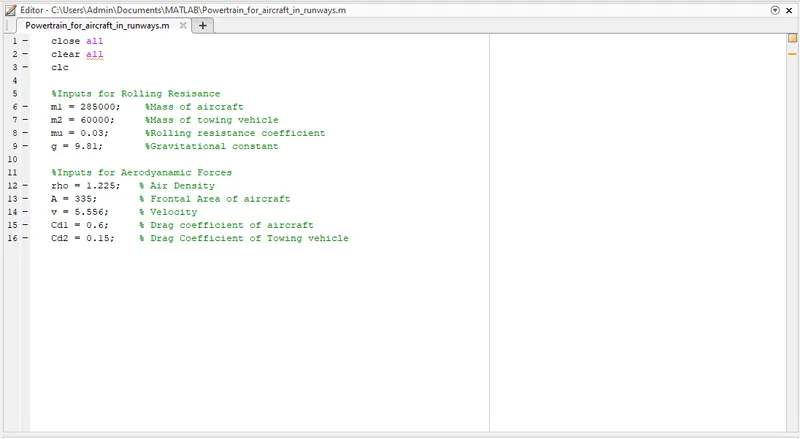
Inputs are given in the command window for the Simulink model.
Rolling Resistance Force
Aerodynamics Force
Entire Model for the calculated force and power.
Design an electric powertrain with a type of motor, its power rating, and energy requirement to fulfill aircraft towing application in Simulink. Estimate the duty cycle range to control the aircraft speed from zero to highest. Make all required assumptions. Prepare a table of assumed parameters. Draw a block diagram of the powertrain.
We can use the above parameters and can use the Electric Powertrains.
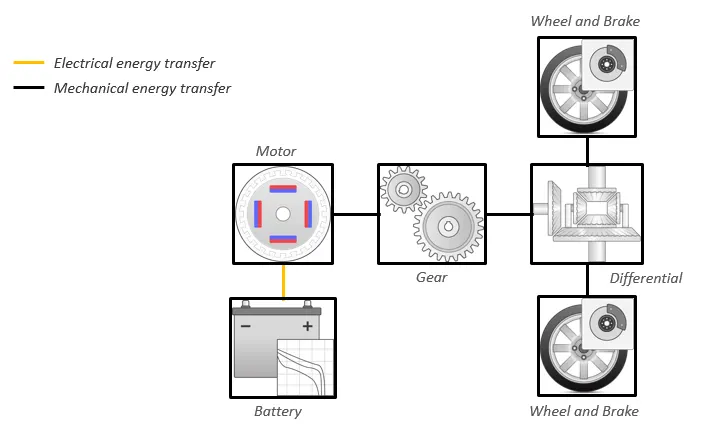
An airplane pushback vehicle is required to move airplanes away from airport terminals and tow them across the airfield for routine maintenance. The pushback vehicle must be able to generate a large towing force but it also has a high speed to travel quickly between pushback operations.
Let the Wheel Radius be 0.5m
Maximum torque on wheels
T=Wheel Radius×ForceT=Wheel Radius×Force
T=0.5×92157.57T=0.5×92157.57
T=46078.785N−mT=46078.785N-m
Let us assume the Induction motor with the given parameters
Input power in terms of Mechanical power be 560KW
Duty Cycle=OutputPowerInputPower=512560=0.91428≅91.428%Duty Cycle=OutputPowerInputPower=512560=0.91428≅91.428%
The heavy-duty factor for an aircraft is designed for operating in extreme local conditions.
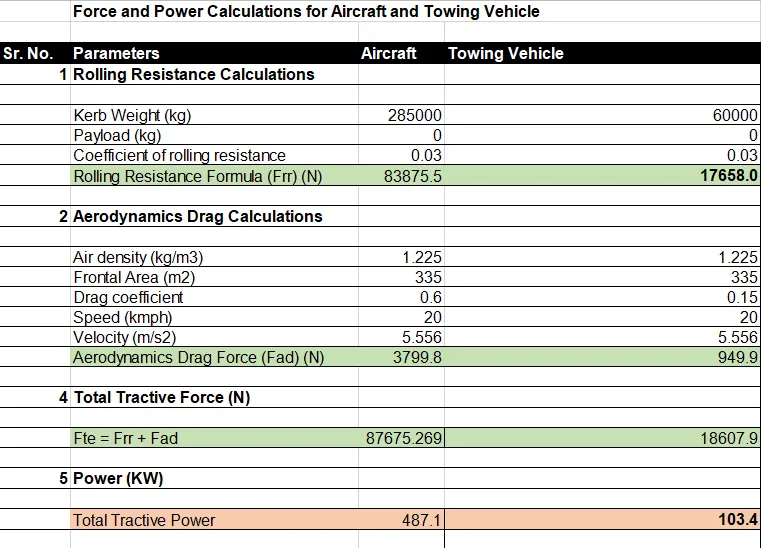
B. Design the parameters in an excel sheet
- Use the above calculations in an excel sheet and calculate the Aircraft and Towing Vehicle Power and Force.
References:
https://en.wikipedia.org/wiki/Taxiing