Project-1: Powertrain for aircraft in runways
Project-1: Powertrain for aircraft in runways
1.the total weight of various types of aircraft
- The aircraft gross weight is the total aircraft weight at any moment during the flight or ground operation
- An aircraft's gross weight will decrease during a flight due to fuel and oil consumption.
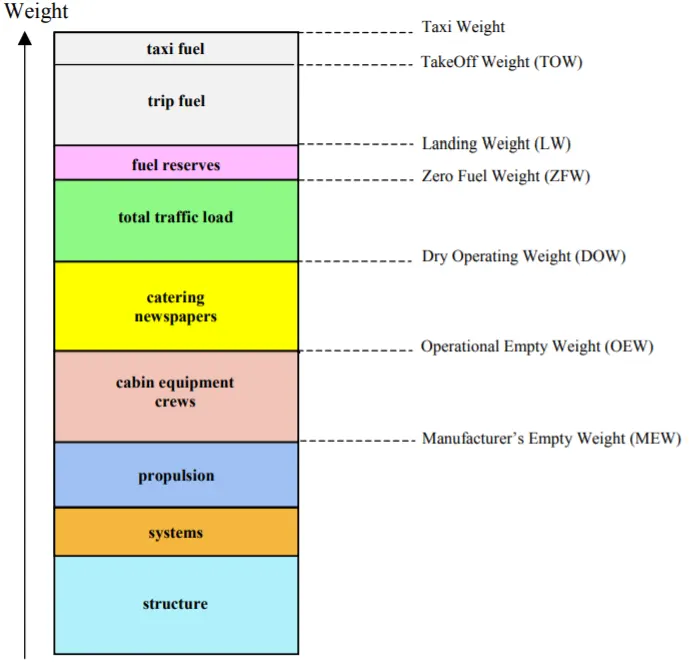
MANUFACTURER EMPTY WEIGHT:
The weight of the structure of the power plant, furnishings, systems, and other items of equipment that are
considered an integral part of the aircraft.
OPERATION EMPTY WEIGHT:
The manufacturer's weight is empty plus the operator’s items.
EX: the flight and cabin crew and their baggage unusable fuel, engine oil, emergency equipment, toilet chemicals and fluids, galley structure, catering equipment, seats, documents
DRY OPERATION WEIGHT:
The total weight of an aircraft ready for the specific type of operation excluding all usable fuel and Load.
like catering, newspapers, and pantry types of equipment
ZERO FUEL WEIGHT:
The weight is obtained by the addition of the total traffic load and the dry operating weight.
EX: Cargo load passenger bags and passengers
ZFW = DOW + traffic load
LANDING WEIGHT:
The weight at landing at the destination airport. It is equal to the Zero Fuel Weight plus the fuel reserves.
LW = DOW + traffic load + fuel reserves
TAKE OF WEIGHT:
The weight at takeoff at the departure airport. It is equal to the landing weight at the destination plus the trip fuel
TOW = DOW + traffic load + fuel reserves + trip fuel
TAXI WEIGHT or RAMP WEIGHT:
The maximum ramp weight is the maximum weight authorized for maneuvering an aircraft on the ground as limited by aircraft strength and airworthiness requirements. It includes the weight of the taxi and run-up fuel for the engines and the auxiliary power unit
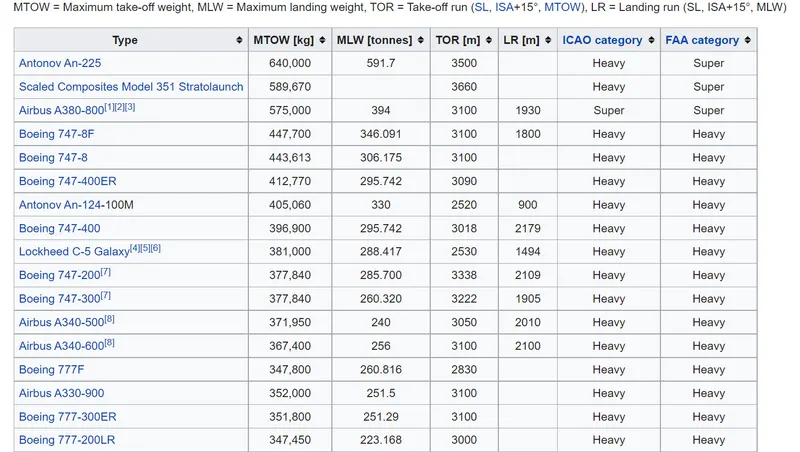
list out the total weight of various types of aircraft:
2. differences between ground speed and air speed?
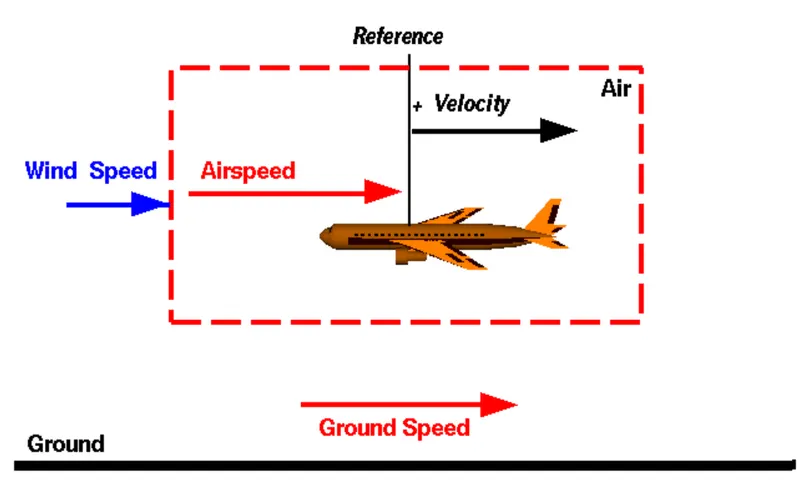
- Ground speed is the horizontal speed of an aircraft relative to the Earth’s surface. It is vital for accurate navigation to the destination that the pilot has an estimate of the ground speed that will be achieved during a flight.
- An aircraft diving vertically would have a ground speed of zero
- Airspeed is the speed of an aircraft relative to the air.
wind speed = Airspeed - ground speed
3. Why is it not recommended to use aircraft engine power to move it on the ground at the Airport?
- We are assuming passenger commuter aircraft and large airliners. Aircraft move using their own engine power all the time on the airport apron and taxiways under their own power to go towards runways and after landing taxi to their assigned gate.
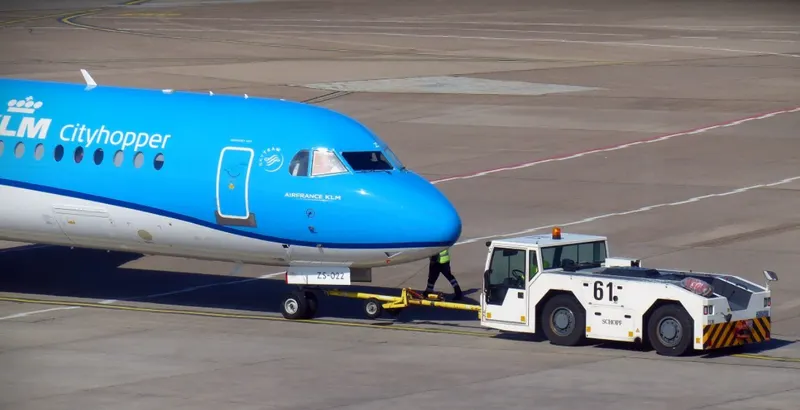
- The only time they use external assistance is to pushback from the gate. Large turbofan aircraft need help to reverse via a pushback tractor. The engines are turned on after the pushback is complete and the aircraft can move forward under It’s own power.
- Engine power is used all the time to move aircraft on the ground. I think you mean in the ramp area. if, so, again, engine power is used all the time in the ramp. They do get pushed back because only aircraft with engines on the tail can power-back due to FOD(foreign object debris). Sometimes, if it’s a tight area, a tug will be used.
4.How an aircraft is pushed to runway when its ready to take off?
Airplanes have engines, and they can use them to move forward along the ground. So they push themselves to the runway.
Tha most of the time, a small vehicle is needed to push the airplane backwards away from the terminal building, because even if a plane can reverse it’s thrust, it’s not always safe to hit the buildings with a jet blast. So the little trucks push the jets back away from the buildings, but after that, the plane can apply a small amount of engine power to roll forward.
5.
TAKE OF POWER
- The amount of power that an engine is allowed to produce for a limited period of time for
take off.
-
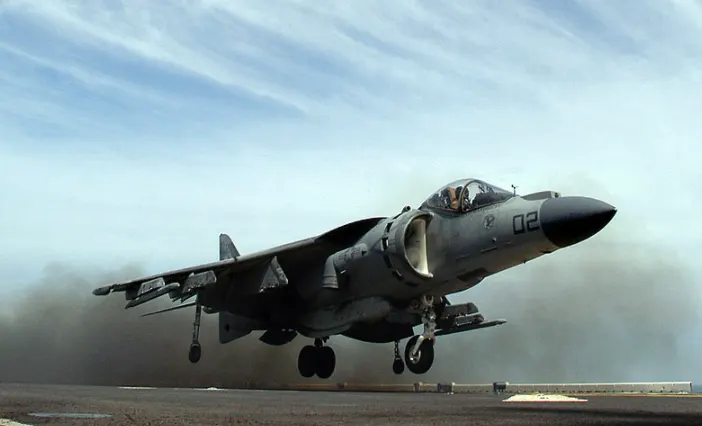
- When take off the plane full power is used
- The speeds needed for takeoff are relative to the motion of the air
- the heavier the weight, the greater the speed needed
- A headwind will reduce the ground speed needed for takeoff, as there is a greater flow of air over the wings
- Some aircraft are specifically designed for take-off or landing, which they achieve by becoming airborne at very low speeds.
- The force involved will be
- T - thrust propulsion system pushing aircraft along the runway
- D- the aerodynamic drag of vehicle resisting aircraft motion
- R- Rolling resistance force friction due to the contact of wheels
- During take-off
`(dv)/(dt)=(T-D-F)/m`
dv/dt -Acceleration along the runway
m- a mass of the vehicle
TYRE DESIGN:
- Many aviation technicians are not aware of the critical design factors of aircraft tires in use today.
- Tires are one of the most important components of aircraft for safety.
- they help to absorb the shock of landing and provide cushioning.
- An aircraft tyre is constructed for the purpose it serves.
- They support the weight of an aircraft while it is on the ground
- It also provides the necessary traction for the braking and stopping of an airplane.
- Tubeless tyres are more advantageous over tube-type.
- There is no longer the use of tube-type tyre in recent aviation. Nowadays all airliners are using tubeless tyres.
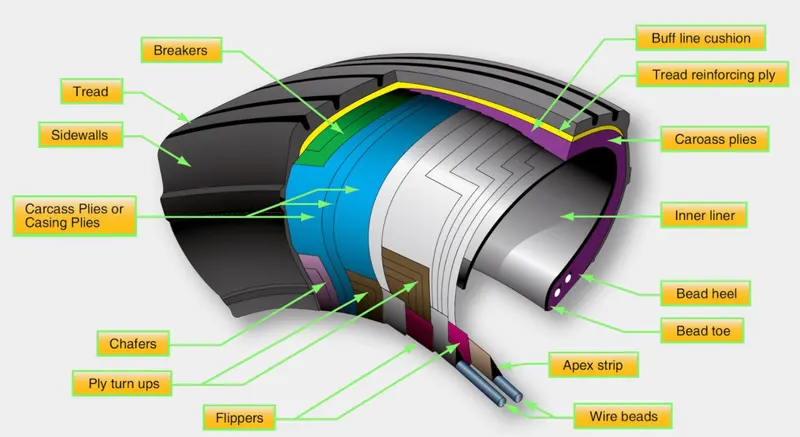
BED:
- The tire bead is an important part of an aircraft tire. Tire beads are strong
- They are typically made from high-strength carbon steel wire bundles encased in rubber.
- Layers of fabric and rubber called flippers are placed around the beads to improve tire durability.
-
the tire bead especially during dynamic operations.
CARCASS PILES:
- the tire strength and form the carcass body of the tire.
- On bias tires, these single or multiple layers of nylon and rubbers are called tread reinforcing plies.
- These additional plies stabilize and strengthen the crown area of the tire.
- They reduce thread distortion under load and increase the stability of the tire at high speeds.
SIDE WELL:
- The tread is the crown area of the tire designed to come in contact with the ground.
- It is a rubber compound formulated to resist wear, abrasion, cutting, and cracking.
- Most modern aircraft tire tread is formed with circumferential grooves that create tire ribs.
- This tread has typical circumferential ribs in the center of the tire with a diamond-patterned cross tread at the edge of the tire.
BRAKEFORCE WHEN LOADING:
- Airplanes rely on a braking system to safely land on runways
- When landing, however, they must reduce their speed. for instance, has a landing speed of about 160 to 170 mph.
- And upon touching the runway, airplanes must quickly brake until they come to a complete stop
- Many airplanes use wing spoilers to assist with braking when landing.
- Pilots can raise the spoilers to decelerate the airplane as it approaches the runway.
- In addition to wing spoilers, airplanes use disc brakes. Airplane disc brakes are similar to the braking system in automobiles.
- Disc brakes are designed to remain static at all times.
- the airplane’s a braking system because they are designed to apply pressure to the airplane’s wheels.
- Disc brakes will squeeze the wheels, this reduces the speed of the airplane
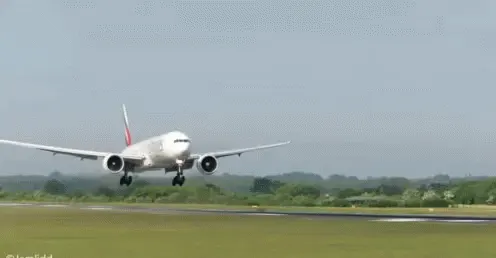
- many jet airplanes use reverse thrust to assist with braking during landings
- When landing, however, pilots may use the reverse thrust feature. Reverse thrust changes the direction of the engines’ thrust
- This reversal of thrust provides deceleration that allows airplanes to slow down more quickly when landing.
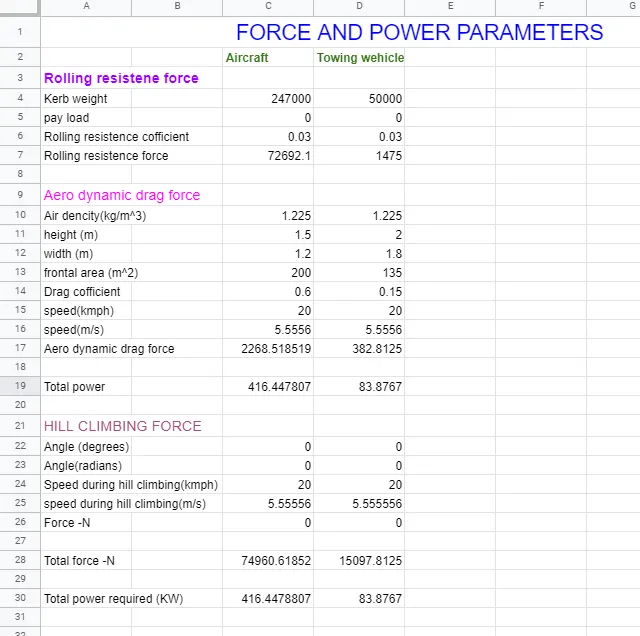
6. A. With necessary assumptions, calculate the force and power required to push/pull an aircraft by a towing vehicle.
The forces acting on aircraft during push and pull by a towing vehicle are
- Rolling resistance force
- Air drag force
Let our assumptions:
Mass of the aircraft(`M_1`) = 247000KG
Mass of the towing vehicle (`M_2`) = 50000KG
Cofficient of rolling resistance ground friction = 0.03
frontal area A = 35`M^2`
Drag coefficient = 0.6
drag coefficient of towing aircraft = 0.15
Dencity of air = 1.225 kg m^3
gravity g = 9.81ms^2
speed of the air craft = 20 kmph = 20*(5/18)=5.556m/s
Rolling resistance force
for air craft
`F_(rr)` = `rr*m*g`
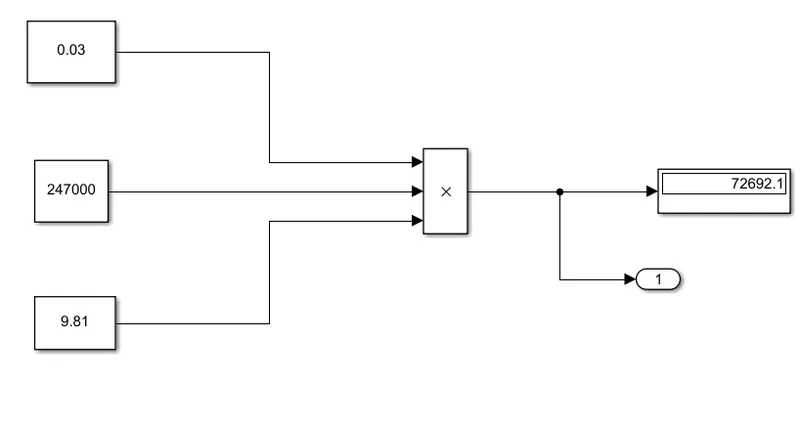
`F_(rr)` = 0.03*247000*9.81
`F_(rr)`= 72692.1N
For towing wehicle
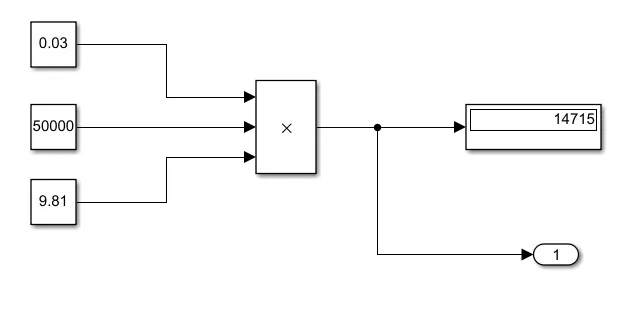
`F_(rr)` = 0.03*50000*9.81
`F_(rr)` = 14715N
Total rolling resistance force
`F_(rr)` =72692.1N +14715N
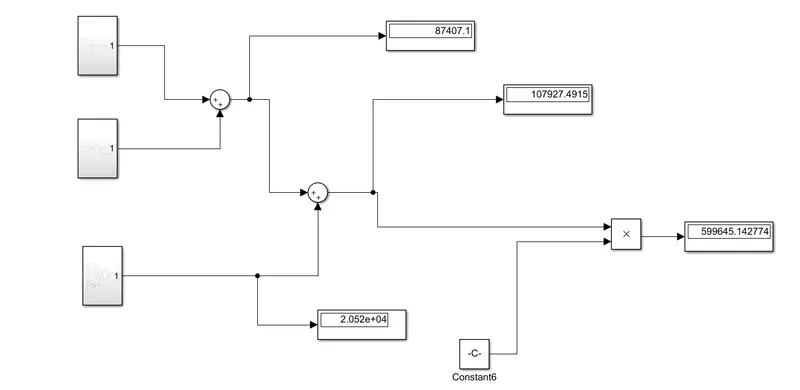
`F_(rr)` =87407.1N
AERODYNAMIC DRAG FORCE
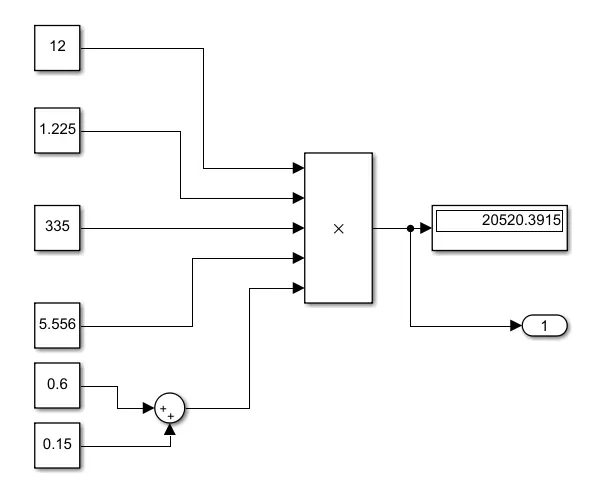
`F_(ad)`= 12*rho*A*V^2*C_d(aircraft)*C_d(towing)`
`F_(ad)` = 12*1.225*(335*5.556)^2*(0.6+0.15)
`F_(ad)`= 4750.47N
THE TOTAL FORCE OF THE VEHICLE
F= `F_(rr)`+F_(ad)`
F =87407.1N+ 4750.47N
F = 92157.57N
TOTAL POWER
P =F*V
P = 92157.57N*5.556
P = 512.027KW
B. Develop the model for the calculated force and power using Simulink.
7. A. Design an electric powertrain with the type of motor, its power rating, and energy requirement to fulfill aircraft towing application in Simulink. Estimate the duty cycle range to control the aircraft speed from zero to highest. Make all required assumptions. Prepare a table of assumed parameters. Draw a block diagram of the powertrain.
(Hint: DC7 Block)
Airplane push-back vehicle required to move the airplane to the terminal the push back vehicle generates a large towing force.
Wheel radius = 0.5m
Maximum Torque on wheels
T= wheel radius*force = 0.5*92157.57
T = 46078.785N/M
Let us assume the induction motor
Total power
P = 512.027KW
Energy = POWER(kw) *Time(hr)
operation of the towing truck 20 minutes take per one cycle.
20 minutes = 033 hours
ENERGY = 512.027*0.33
= 168.96891KWH
B. Also, Design the parameters in an excel sheet.