Project 1 Mechanical design of battery pack
AIM
Prepare a detailed battery pack drawing along with its enclosure. State your assumptions.
ABSTRACT
In this Project, we'll figure out all the numbers needed to construct an EV battery pack. For our battery pack, we're going to use Cell: ANR26650M1-B. All electrical factors, including temperature, Depth of Discharge, Operation Current, Energy Density, Work Cycles, Battery Capacity, State of Charge (SOC), State of Health (SOH), and Ampere-Hour (Ah) Capacity, will be taken into account when determining parameters. Additionally, we compute every geometrical factor, including size, weight, volume, area, etc. Finally, we take into consideration a few different battery pack container models.
INTRODUCTION
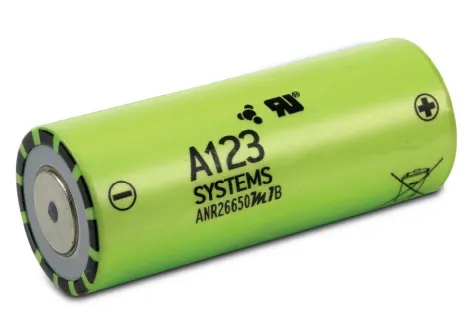
In a lighter, more compact packaging, the high-performance Nanophosphate lithium iron phosphate (LiFePO4) battery technology from A123 offers great power and energy density along with exceptional safety performance and wide life cycling. Our cells' low capacity loss and impedance development over time, combined with their high usable energy throughout a wide state of charge (SOC) range, enable our systems to satisfy end-of-life power and energy demands with a minimum amount of pack oversizing. The groundbreaking 26650 cylindrical cell from A123 Systems has been upgraded with a higher power and energy density as well as a lower impedance in the form of the ANR26650M1-B. This adaptable lithium ion cell is appropriate for many different system designs and applications. The ANR26650 cell has a good price-performance ratio with performance that has been demonstrated in even the most extreme circumstances.
OBJECTIVES
1) Data collection from the Nanophosphate High Power Lithium-Ion Cell : ANR26650M1-B.
2) Understanding the characteristics of Cell:ANR26650M1-B.
3) Performing a complete electrical analysis on an 18 kWh battery pack.
4) Calculating the battery pack's physical size.
5) Take into account the ideal container for the Battery Pack's measurements that we computed.
METHODOLOGY
1) To construct the battery pack for any electric vehicle, we must first determine the ratio of power to motor power, and then, based on that, we must model the battery pack to determine the required amount of power, which is 18kWh.
2) We must figure out how many cells are in series and parallel for the 18kWh battery pack.
3) The correct geometry and topology consideration for manufacturing batteries must be calculated after the series and parallel combination calculations.
4) After assembly, the battery pack needs to be properly enclosed to protect it from thermal damage and other physical harm.
5) Understanding the research gap in the development of battery model
6) study the future scope of developed battery model.
RESEARCH STUDY
Consider a world devoid of batteries. Our access to all those portable devices would be severely constrained! Our ability to carry our laptops and smartphones beyond the range of their wires would be limited, rendering the new running app you just bought for your phone largely useless.
We do, fortunately, have batteries. The Baghdad battery was a technology employed by the Parthian civilisation in Mesopotamia about 150 BC. It was constructed of copper and iron electrodes and vinegar or citric acid. Archaeologists think these were mostly utilised for religious rituals and were not actually batteries.The Italian physicist Alessandro Volta is credited with creating the battery as we know it. Volta assembled the first battery to convince fellow Italian scientist Luigi Galvani of his thesis. Galvani demonstrated in 1780 that frogs on iron or brass hooks will quiver when their legs were touched with a probe made of a different metal. He referred to it as "animal electricity" and thought that the frogs' internal electrical currents were to blame.
Volta was first astonished by Galvani's discoveries, but he later came to believe that the frogs' tissues were only a conduit for the electric current, which originated in the two dissimilar metals—the hooks from which the frogs were hanging and the probe. He conducted experiments using stacks of layers of silver and zinc interspersed with layers of cloth or paper drenched in saltwater and discovered that a wire attached to both ends of the pile did, in fact, conduct an electric current.Volta discovered that the voltage could be raised by adding more metals to the pile. In 1800, he wrote a letter outlining his findings to Joseph Banks, the Royal Society of London's president at the time. It was a significant event—Napoleon was pleasantly surprised! and the "volt" (a unit of electric potential) was called in his honour as a result of his invention's long-lasting impact.
Lithium ions in batteries travel from the negative electrode to the positive electrode via an electrolyte during discharge and back again during charging. The positive electrode of lithium-ion batteries is made of an intercalated lithium compound, while the negative electrode is commonly made of graphite. With the exception of LFP cells, the batteries have no memory effect, a high energy density, and a low self-discharge rate.
G.N. Lewis started pioneering work on the lithium battery in 1912, but it wasn't until the early 1970s that the first non-rechargeable lithium batteries hit the market. Of all the metals, lithium is the lightest, has the highest electrochemical potential, and has the highest energy density per unit weight.
THEORY
A battery is a component that transforms chemical energy into electricity. An electrochemical cell is the system that supports a battery. This process is known as electrochemistry. One or more electrochemical cells, such as those in Volta's initial pile, can make up a battery. Two electrodes are placed one on top of the other in an electrochemical cell.A form of energy created by the movement of electrons is electricity. One electrode in an electrochemical cell undergoes a chemical reaction to produce electrons (more on electrodes below!). and after that, they move to the opposite electrode, where they are consumed. We must examine the parts of the cell and their assembly in greater detail in order to fully comprehend this.
- An apparatus that stores chemical energy and transforms it into electrical energy is a battery.
- Electrons move from one substance (electrode) to another through an external circuit during chemical reactions in batteries.An electric current can be created by the flow of electrons and employed to perform tasks.
- Charged ions also move through an electrolyte solution that is in contact with both electrodes in order to balance the flow of electrons.
- Different electrodes and electrolytes cause various chemical reactions that have an impact on the battery's operation, capacity for storing energy, and voltage.
ELECTRODES
You need a place for the electrons to come from and a place for them to go in order to create an electron flow. These are the electrodes of the cell. The anode (or negative electrode) is one electrode from which the electrons flow, and the cathode is another electrode (the positive electrode). Typically, these are various kinds of metals or other chemical compounds.
Electrons from the zinc, which served as Volta's anode in his pile, travelled through the wire (when it was connected) to the silver, which served as the battery's cathode. To create the overall pile and increase the voltage, he placed many of these cells together.
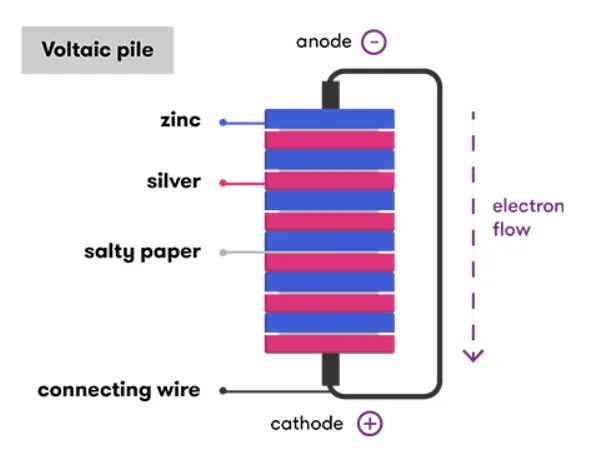
We need to comprehend a few chemical processes that are occurring. Electrons are created at the anode when the electrode reacts with the electrolyte. At the anode, these electrons gather. Another chemical process takes place concurrently at the cathode, allowing that electrode to receive electrons.A reduction-oxidation reaction, more generally known as a redox reaction, is the formal name for a chemical reaction involving the exchange of electrons. If the complete reaction is divided into two half-reactions, one half-reaction takes place at the anode and the other at the cathode in an electrochemical cell. The cathode experiences reduction, which is an electron gain; because of this, we refer to the cathode as being reduced throughout the reaction.
ELECTROCHEMICAL CELL
Because the stronger conducting material can accept electrons from the weaker one, any two conducting materials that react at different standard potentials can create an electrochemical cell. However, a material that generates a reaction with a substantially lower (more negative) standard potential than the material you select for your cathode would be the perfect option for an anode. The result is that electrons are drawn toward the cathode from the anode (with the anode not trying to resist very much), and when we give them an easy way to get there—a conducting wire—we can use their energy to power our torch, phone, or other device with electricity.The force that electrons will use to move between the two electrodes is roughly equivalent to the difference in standard potential between the electrodes. The voltage of the cell is determined by what is referred to as the cell's overall electrochemical potential. The electrochemical potential and voltage increase in proportion to the difference.
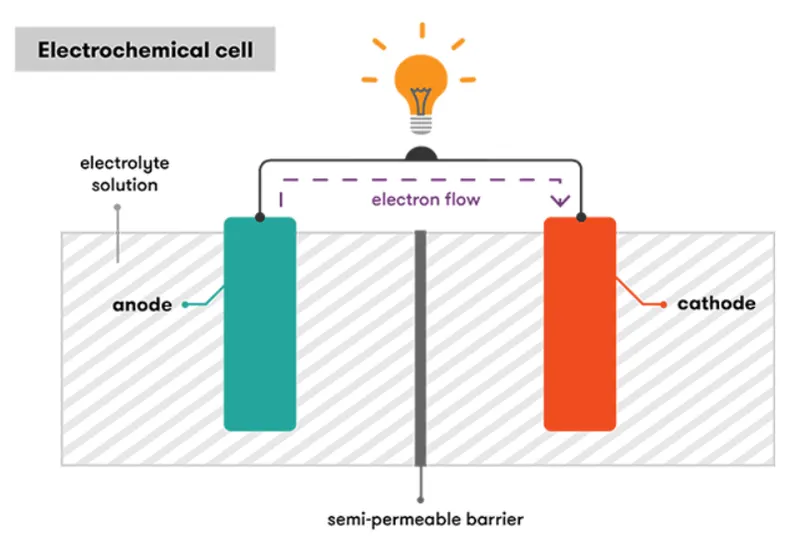
There are two ways to raise a battery's voltage. We may use alternative electrode materials, ones that will increase the electrochemical potential of the cell. Or, we may arrange the cells in a stack. The voltage of the battery is additively affected by how the cells are put together (in series). In essence, the force at which the electrons move through the battery can be thought of as the sum of the forces as they move from the anode of the first cell all the way through the battery's number of cells to the cathode of the last cell.
ELECTROLYTE
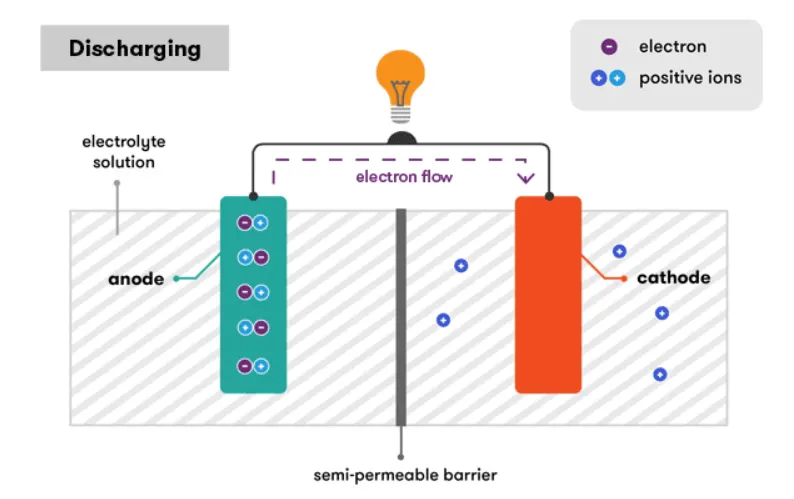
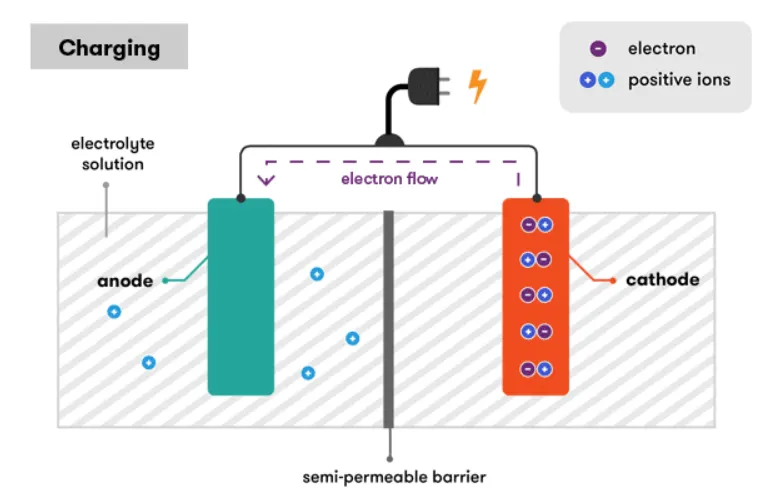
An electrolyte can be a liquid, gel, or solid material, but it must allow charged ions to pass through it. Since electrons contain a negative charge, we must find a technique to counteract the movement of those negative electrons across our circuit. Positive ions that balance charges can move via a medium that is provided by the electrolyte. To maintain a neutral charge balance on the electrode, an equal number of positively charged ions are created as electrons are produced by the chemical reaction at the anode. These are discharged into the electrolyte rather than going down the external wire (that is exclusively for electrons!).Therefore, the electrolyte offers the road for the transfer of positively charged ions to counteract the flow of negatively charged electrons, while the external wire provides the pathway for the flow of negatively charged electrons. The flow of positively charged ions is just as crucial to the external circuit we employ to power our electronics as the flow of electrons. They play a crucial charge balancing function that keeps the entire reaction going.
RECHARGING OF BATTERY
Some popular batteries are only intended for one usage (known as primary or disposable batteries). The electrons only travel in one direction from the anode to the cathode. Either the buildup of reaction products on the electrodes prevents the reaction from continuing, or their electrodes get depleted as they release their positive or negative ions into the electrolyte, and it is finished. The battery is eventually disposed of (or, ideally, recycled; however, that is a whole different Nova topic). But. The cool thing about that flow of ions and electrons is that it may also go backwards, returning our battery to its starting point and giving it a brand-new lease on life. This happens in some sorts of batteries with the right electrode materials. Rechargeable batteries have improved the usability and lifespans of electrical gadgets in much the same way that batteries improved our ability to operate a variety of devices.
SELF DISCHARGE AND MEMORY EFFECT
The nearly irreversible discharge and recharge reactions are another factor in the so-called "memory effect." Some rechargeable battery types "remember" where they were in previous discharge cycles when you recharge them without fully draining them first, and they don't recharge correctly. It occurs in some cells as a result of the metal and electrolyte's reaction to generate a salt (and the way that salt then dissolves again and metal is replaced on the electrodes when you recharge it). In the actual world, we don't receive the lovely, homogeneous, tiny salt crystals we want coating a flawless metal surface on our cells. Some battery types have a greater memory effect than others because some crystals grow in very complicated ways, and some metals also deposit in surprisingly complex ways after recharge. The battery's initial charge state, temperature, charge voltage, and charging current all play a major role in the flaws.
CYLINDRICAL CELL
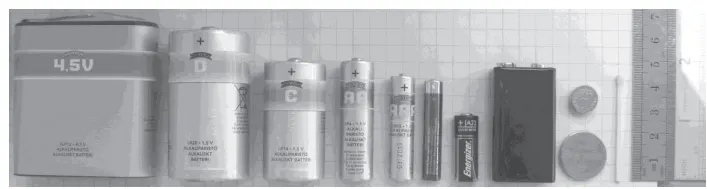
Early forms of mass-produced batteries included cylindrical packaging, which is still extremely common today. The cylinder's mechanical stability, which naturally withstands internal pressures without deforming, is its main asset. The large F-cell, originally used in lanterns, was a pioneering standard that was adopted in 1896. As form factors shrank, new standards were developed using letters counting upwards: : D, C, AA, and AAA are still very common today for all kinds of consumertype applications.The majority of secondary batteries in those types of packaging employ the chemistries nickel-cadmium (NiCd) and nickel-metal-hydride (NiMH). One electrochemical cell can be found in them.
PRISMATIC CELL
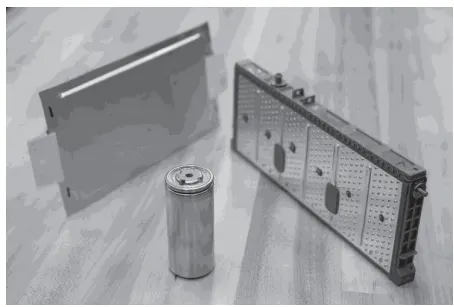
Manufacturers of Li-ion batteries adopted various formats as requirements resulting from product designs changed, in contrast to the largely standardised packaging of, for instance, consumer and starter batteries. For instance, this is clear when it comes to mobile phones, digital cameras, video cameras, or tablet computers. The majority of those batteries have a prismatic form, which resembles a box.
POUCH CELL
Pouch cells don't have a hard container anymore, so they take a somewhat basic approach to packing. They are sometimes known as "coffee bag cells" despite the fact that they just have flexible foil to close them. Anodes, separators, and cathodes are also stacked rather than wrapped. With this strategy, packaging density is maximised while weight is reduced, boosting the cell's energy density. Only Li-ion chemistries are employed for this kind of packing. In this design, a polymer electrolyte that simultaneously serves as a separator is occasionally utilised in place of a liquid electrolyte.Typically, pouch cells contain several electrochemical cells.

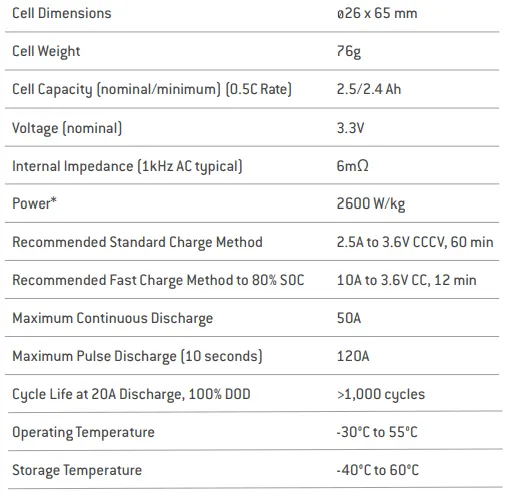
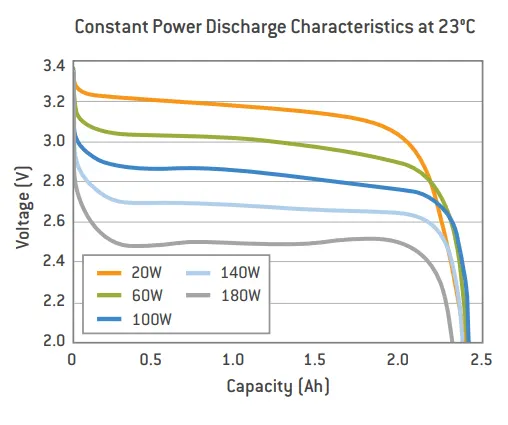
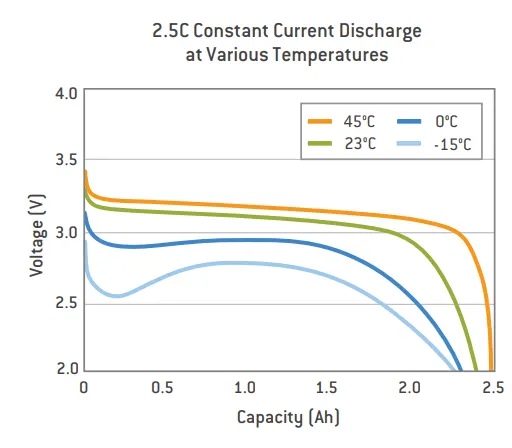
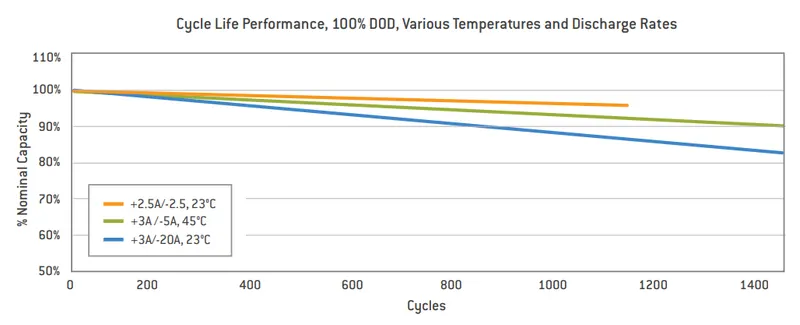
ANR26650M1-B TECHNICAL DATA AND CHARACTERISTICS
BATTERY PACK DESIGN
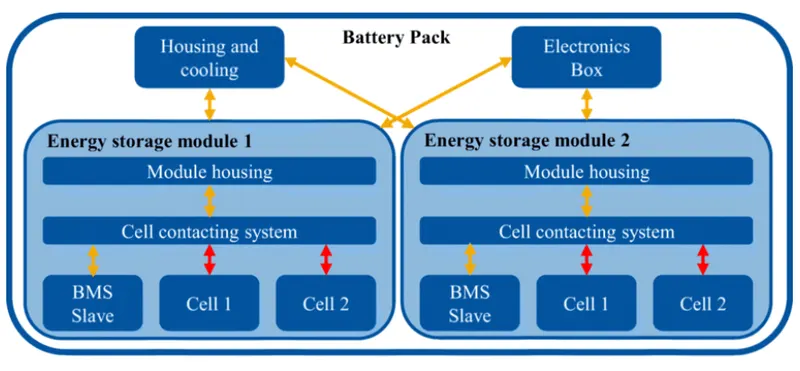
Electrodes (anode and cathode), separators, terminals, electrolytes, and a container or enclosure are the five main parts of a battery cell. There are various types of cells used in automotive applications. A battery module is a collection of individual battery cells that functions as a single mechanical and electrical unit. A battery pack is created by electrically connecting the modules.
BATTERY PACK ARCHITECTURE
CELL CALCULATIONS
First we should have to find out the cell energy requied,
We have,
Cell Energy= Nominal voltage* Nominal cell capacity
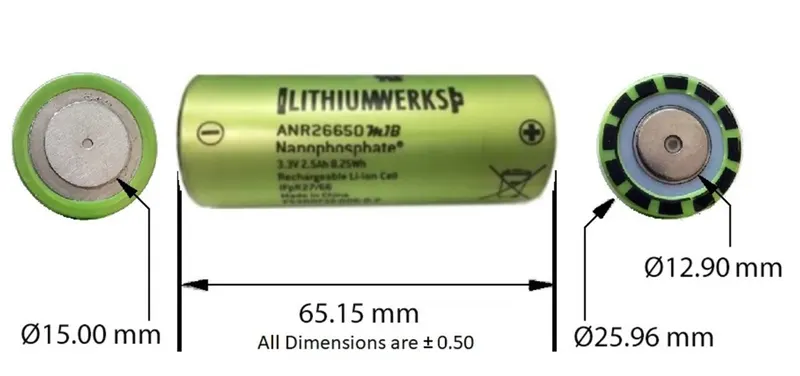
=3.3*2.5
=8.25 Wh
So, Each cell has the energy of 8.25 Wh.
We should find out the volume of cell,
Cell volume= π*r*r*h
=3.14* 0.013*0.013*0.065
=0.00003449 m^3
Cell energy Density = Cell energy/ Cell volume
=8.25/0.00003449
=2,39,179.6572 Wh/m3
Single Cell Energy Density is 2,39,179.6572 Wh/m3
Battery Pack Assumtions:
There are 50 cell are in series and 40 cells are in parallel, and as above maintioned we are going to use Cell: ANR26650M1-B this cells.
BATTERY PACK CALCULATIONS
Now we calculated parallel and series combinations so we can now calculate total no of cells required
Total no of cells= Series cells * parallel cells
=50*44
=2000.
Total no of cells required are 2000.
So from series and parallel combination, we can calculate the voltage of battery pack and the current of the battery pack.
Voltage= no of cell in series* nominal voltage.
= 50*3.3
= 165V
The total value of voltage is 165V.
Current=No of parallel cells * cell capacity
= 40*2.5
=100Ah.
The total value of Current is 100Ah
So now we can calculate the how much mount of energy this combination have by product of voltage and current, and check the it will satisfied or not our requirement
Energy= Voltage * Current
= 165 * 100
= 16500WAh
The total value of Energy is 16500WAh.
So our calculation are satisfied requirement what we need.
now we have total no of cells and volume of single cell so we can calculate the total volume required for battery pack
Total volume = no of cells * Volume of single cell
= 2000 * 0.0000344929
=0.06898 m^3
Total volume required for battery pack is 0.07588438 m3
We also have single cell weight from that we can calculate the total weight of battery pack without other mechanical and electrical connections.
Weight = No of cells * weight of single cell.
= 2000 * 0.06898
= 137.97 Kg
Weight of battery pack is 137.97 kg
Energy density= volume * battery pack energy
= 0.06898 * 16500
= 1138.17 kWh/m^3
Energy density is 1138.17 kWh/m^3
Result obtained:
- Package = 50S / 40P
- Capacity = 100 Ah
- Voltage = 165 V
- Weight = 137.97kg (Only Cells)
- No of Cells = 2000
- Power = 16500Wh or 16.5 kWh
- Energy density = 1138.17 KWh/m^3
BATTERY PACK CONSTRUCTION
- During discharging, a battery's electrochemical cells (also known as battery cells) transform chemical energy into electrical energy and electrical energy back into chemical energy (during charging).
- The chemistry of a battery is determined by the kind of components it contains and the chemical processes that take place during charging and discharging cycles.
- Electrodes (anode and cathode), separators, terminals, electrolyte, and a case or enclosure are the five main parts of a battery cell. A battery module is a collection of individual battery cells that functions as a single mechanical and electrical unit.
- A battery pack is created by electrically connecting the modules.
- We will only discuss lithium-ion cells, while hybrid and electric car propulsion systems utilise a variety of battery (chemical) types. The primary factor is that Li-ion batteries outperform other varieties in terms of specific energy [Wh/kg] and specific power [W/kg].
The battery pack is put together in three steps.
1) Holding the batteries and supplying the space between them.
2) Joining the strips with the batteries (Series or Parallel)
3) designing and fabricating the battery enclosure housing with the BMS and thermal management system
1)Holding and spacing:

- To create a large battery module, all of the cells must now be connected.
- Therefore, it is crucial that these holders offer the necessary space between the batteries and hold them securely.
- The end cap of the cell features a vent that should not be blocked by any mechanical means.
- blocking the vent in the cell and then enough torturing it to increase the pressure inside.
- The vent must be able to open in the event of a defect, and there must be a minimum of 1mm between each cell.
- The contact plate can be placed between the cells with the help of holders.
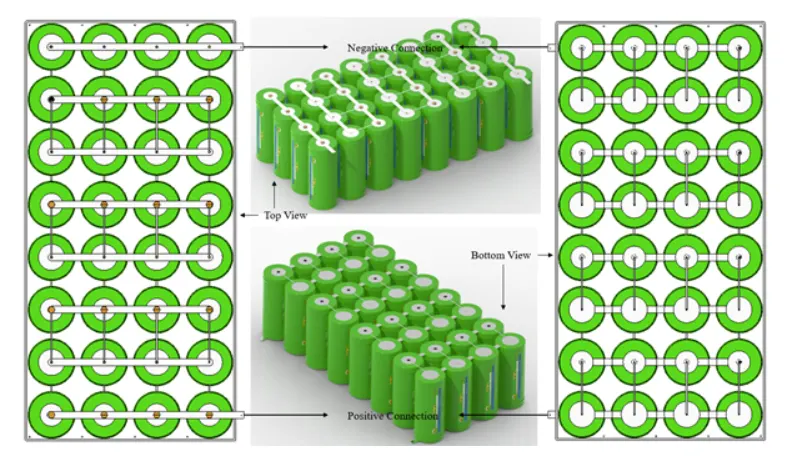
2) Connecting the cells:
- To achieve the required results, the cells must be connected correctly in series or parallel after being placed in the holders.
- Typically, the connection between the cells is made using a nickel strip.
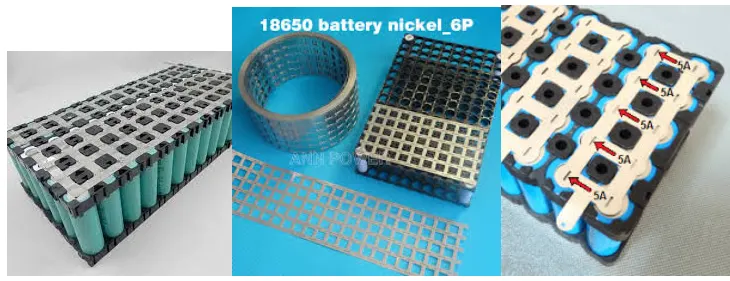
- Battery construction typically makes use of nickel strip.
- This is because it works well for soldering and spot welding and has a good corrosion resistance over time.
- It is well-suited for various corrosive conditions and exhibits exceptional resistance to them.
- If pure nickel is added to battery packs, it will never corrode.
- The transfer of current between batteries won't be impacted.
- The material you need is pure nickel strips, but many vendors substitute nickel-plated steel strips instead, which are less effective and have higher resistance, making them unsuitable for the majority of battery installations. Through the busbars, nickel strip of absolute purity. The advantages are almost endless!

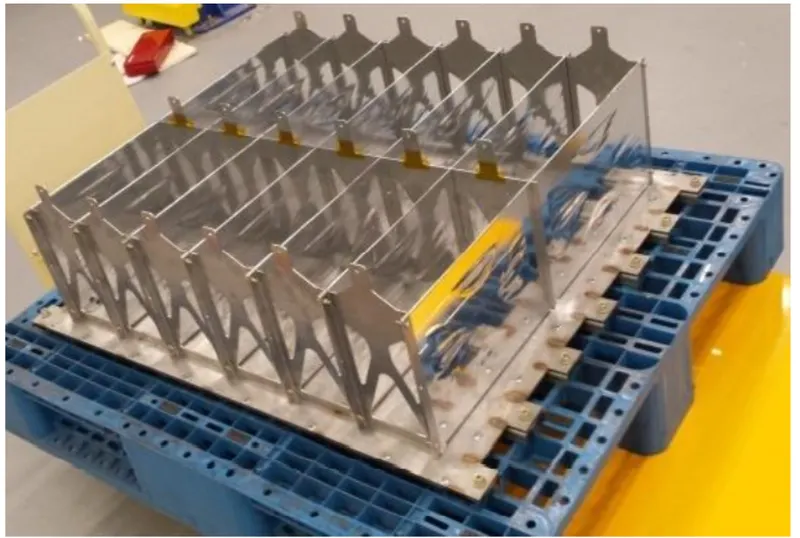
3)Battery enclosure and thermal managment of battery and BMS:
- The battery's final layer of defence is the enclosure.
- Therefore, the battery enclosure needs to be both exceedingly sturdy and lightweight.
- Because batteries have a tendency to catch fire in the event of an accident if they leak during a collision, the battery module is enclosed in a highly sturdy enclosure for safety.
- To achieve the best possible range, the weight should be lower.
- When necessary to obtain the most performance out of the batteries, a temperature management system is installed in this metal container to cool and heat the batteries.
- To construct a full battery pack, numerous versions are connected in parallel and series.
FEATURES OF CELL HOLDER

- The holder's edge has slots that may be joined to create a battery pack in a variety of sizes and forms.
- Application: Complex Radiating Battery Pack Design. A secure and stable build, ideal for an e-bike!
- very easy to operate
- Very adaptable, it is simple to put together any style of battery packs.
- during a high-rate discharge, radiating
- strengthens and reliably constructs your battery pack.
Battery Module and Pack Assembly
The construction of battery modules and packs has the following difficulties: One battery system requires the assembly of over 500 separate components. 300 screw connections, for instance, and 200 to 300 welding sites need to be configured. Tubing and cover plate assembly is only possible manually. Safety at work is a particular concern since voltages rise as more cells are put together. Most process steps can be automated, but it must first be carefully evaluated to see if it is worthwhile.
Automation investment is also influenced by local specialities. Since the demands for automated production are still evolving, at least for high-power applications, battery manufacture is still in this stage.
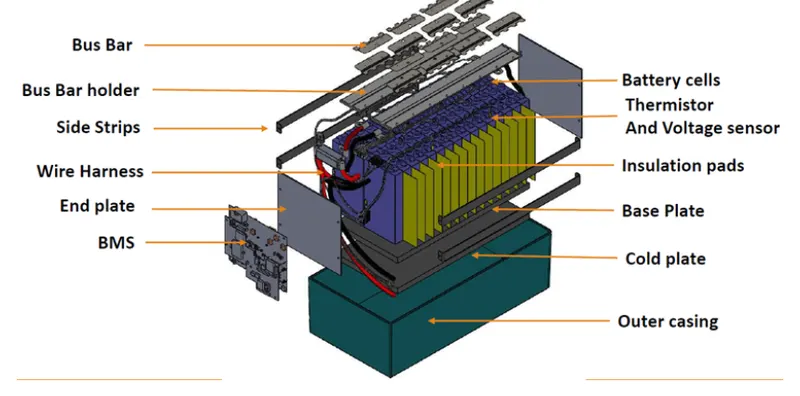
- It makes it possible to construct batteries with higher voltage or capacity using cells with lower voltage or capacity.
- It contains a cell or a bank of cells along with the connected interconnections in one handy package.
- It fits any required circuits or monitoring equipment for electronic protection into the pack.
- It can fit extra wiring for things like solar panels, heaters, cooling ducting, and indication lights.
- It meshes and fits into the product's cavity that the battery is meant to power, giving both mechanical and electrical interactions.
- It might offer distinctive mechanical and electrical connections to guarantee compatibility between the battery and the intended product as well as between the battery and the charger.
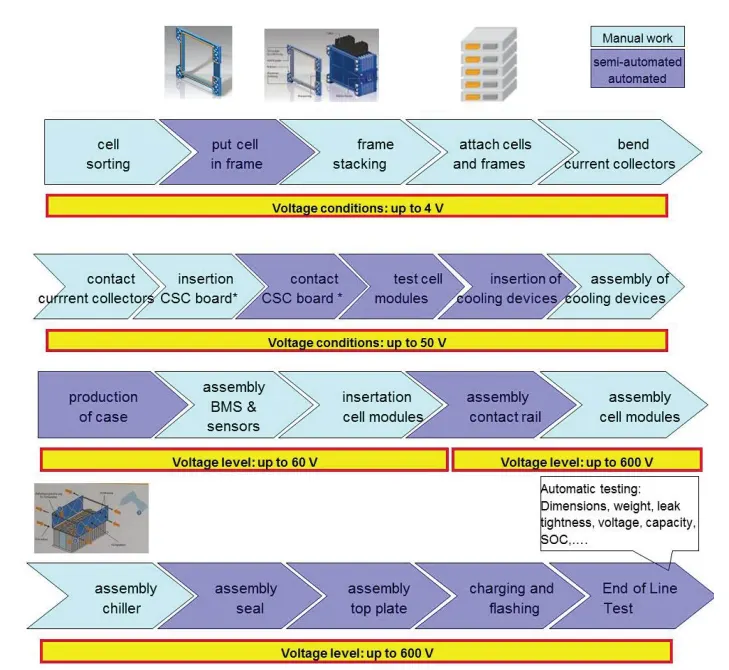
Despite being very desirable for cost-effective production, as mentioned above, many production steps still call for manual handling. The need for precision, a lack of measurement technology, and a financial concern all play a role in this. In addition to the mechanical automation, the information technology side of things is still lacking in automation, from data mining to Manufacturing Execution Systems (MES). Connecting individual machines to highly automated turnkey lines must be a goal for the entire industry and presents a significant opportunity for producers of production equipment in the medium term.
Assembly of the battery pack
Component of the battery pack
- 2000 cells
- Nickel strip
- PVC heat sink film
- spot welder
- Connected
- Cell holder
- Solder
STEP 1:
The square cell holder must first be assembled by starting to snap pieces together. The cell terminal block is an option, however it requires more room than a hexagonal block.

STEP 2:
putting the cells in the matrix holder. Place the second holder there after placing all the cells in the first one.
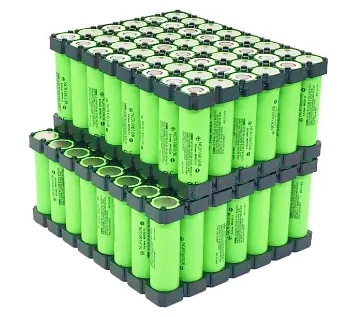
STEP 3:
Now, using the spot welding technique, we will join the cells together with nickel strips. The positive terminal of the cells will be connected to the negative terminal to create the series connection. The same terminal will be connected to create the parallel connection.

STEP 4:
Connecting the heat sink to the battery pack
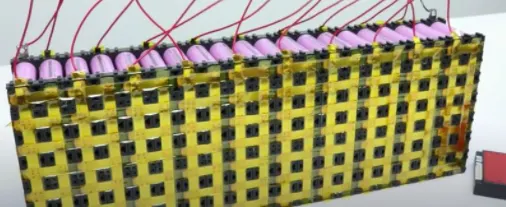
STEP 5:
Soldering the battery wire.The battery pack's interior structure is now put together, and all of the terminals are connected in accordance with the connections.

STEP 6:
Implementation of BMS to the battery module.

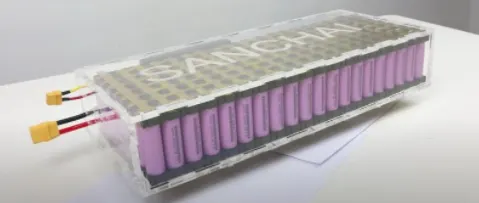
The below figure represent the final battery model.
- Cells are heated or cooled.
- Control of the primary contactor and precharge measurements of voltage and current Estimating SOC
- Estimation of the State of Health (SOH) balance of cells gas detection in vents.
- finding HV leaks in the chassis of the car.
- Battery isolation for switch-off, maintenance, and emergencies the emergency cutoff the exchange of messages with the vehicle-level controller.
- reporting battery condition, power needs, and any alarms interacting with the charger providing the battery with the best charging algorithms Logbook or history feature
APPLICATIONS OF ANR26650M1-B CELL
- Uninterruptible Power Supplies
- Frequency regulation
- Aviation/Aerospace
- Medical devices
- Engine Starting
- Energy storage
- Industrial equipment
- Electrified mobility devices
- Telecom & 5G Battery back-up
- Portable high power devices
- Stationary battery backup systems
- Grid stabilization energy storage systems
- Commercial truck and bus hybrid electric vehicles (HEVs)
BENEFITS OF ANR26650M1-B CELL
- Cycle Life at 1C/1C, 100% DOD, > 4000 cycles
- Safety: Excellent abuse tolerance and environmentally friendly
- Life: Excellent calendar life, 10X cycle life vs. conventional lithium ion
CONCLUSIONS
A study has been created for the design calculation of the battery pack that was performed and calculated. The steps required to make the battery pack have been outlined.
REFERENCES
https://sklc-projects-2021.s3.amazonaws.com/projects/2021/53263/59106.txt
https://www.batteryspace.com/prod-specs/6610.pdf