Project 1 Mechanical design of battery pack
Project 1
Mechanical design of Battery Pack
Question :
Battery pack capacity: 18 kWh
Cell: ANR26650M1-B
Prepare a detailed battery pack drawing along with its enclosure. State your assumptions.
Aim :
Understand working of battery pack and steps to prepare a detailed battery pack drawing along with its enclosure.
Objective :
Prepare a detailed battery pack drawing along with its enclosure.
What is Battery Pack? :
Battery pack means the single mechanical assembly comprising battery cells and retaining frames or trays and possibly components for battery management.
A battery pack is a set of any number of (preferably) identical battery or individual battery cell. They may be configured in a series, parallel or a mixture of both to deliver the desired voltage, capacity, or power density. The term battery pack is often used in reference to cordless tools, C toy Car and BEV.
Components of battery packs include the individual batteries or cells, and the interconnection which provide electrical conductivity between them. Rechargeable battery packs often contain a temperature sensor, which the battery charger uses to detect the end of charging. Interconnects are also found in batteries as they are the part which connects each cell, though batteries are most often only arranged in series strings. When a pack contains groups of cells in parallel there are differing wiring configurations which take into consideration the electrical balance of the circuit. Battery Regulators are sometimes used to keep the voltage of each individual cell below its maximum value during charging so as to allow the weaker batteries to become fully charged, bringing the whole pack back into balance. Active balancing can also be performed by battery balancer devices which can shuttle energy from strong cells to weaker ones in real time for better balance. A well-balanced pack lasts longer and delivers better performance.
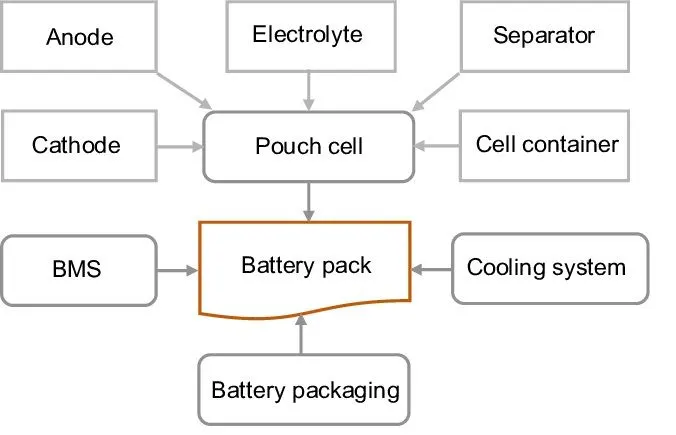
Fig. 1: Components of Battery Pack
Difference between Cell and Battery pack :
The manufacturing of battery cells compared to battery packs or modules are two very different industrial processes. Battery cell production is primarily a chemical process, while module and pack production is a mechanical assembly process.
Batteries are sometimes called Cells, Modules or Packs.
Battery cells are containers that chemically store energy. They come in many shapes and forms but the three most common ones are prismatic, pouch and cylindrical.
The battery cells are arranged in modules to achieve serviceable units. The cells are connected in series and in parallel, into battery packs, to achieve the desired voltage and energy capacity. An electric car for example requires 400-800 volts and one single battery cell typically features 3-4 volts.
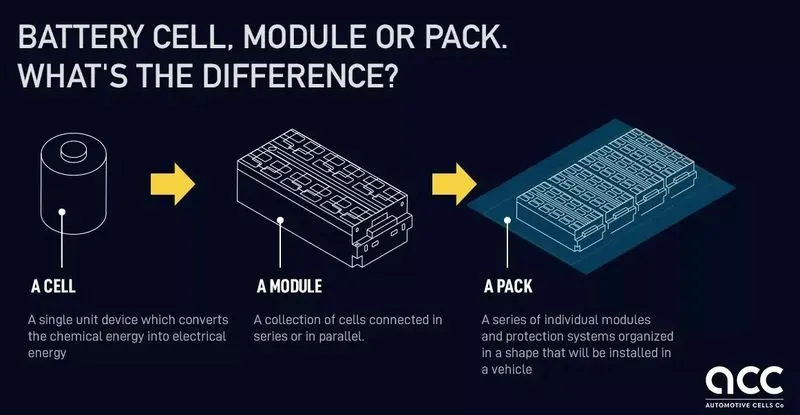
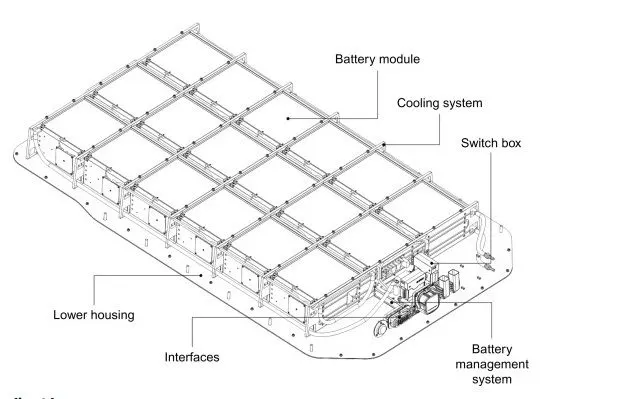
Finally, the battery pack is the complete enclosure that delivers power to the electric vehicle. The pack usually contains battery cells and/or modules, software (BMS - battery management system) and often a cooling and heating system, depending on where and how the battery pack is to be used.
Battery Pack Design :
The purpose of a battery pack is to provide a convenient integrated power source for portable applications. The advantages of using custom designs are:
- It enables higher voltage or higher capacity batteries to be built up from low voltage, low-capacity cells.
- It houses a cell or a bank of cells together with the associated interconnections in a single convenient pack.
- It accommodates any necessary monitoring and electronic protection devices or circuits within the pack.
- It can accommodate additional circuitry such as indicator lights, heaters, cooling ducts and solar panels.
- It matches and meshes with the cavity in the product which the battery is intended to power providing both electrical and mechanical interfaces.
- It can provide unique electrical and mechanical interfaces to ensure compatibility both of the battery with the intended product and the charger with the battery.
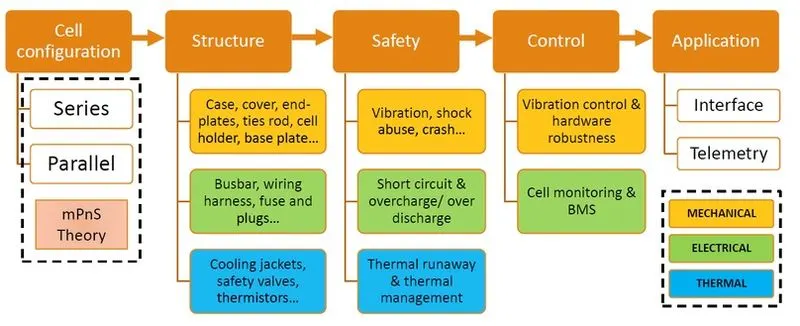
Fig. 3: Steps Involved in Battery Pack Design
Cell Configuration :
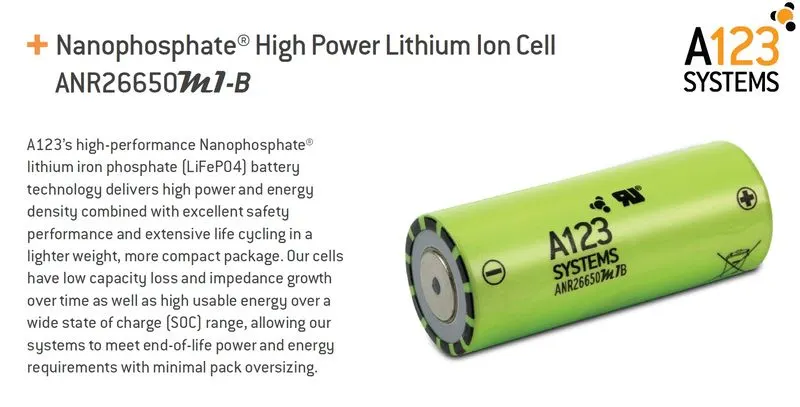
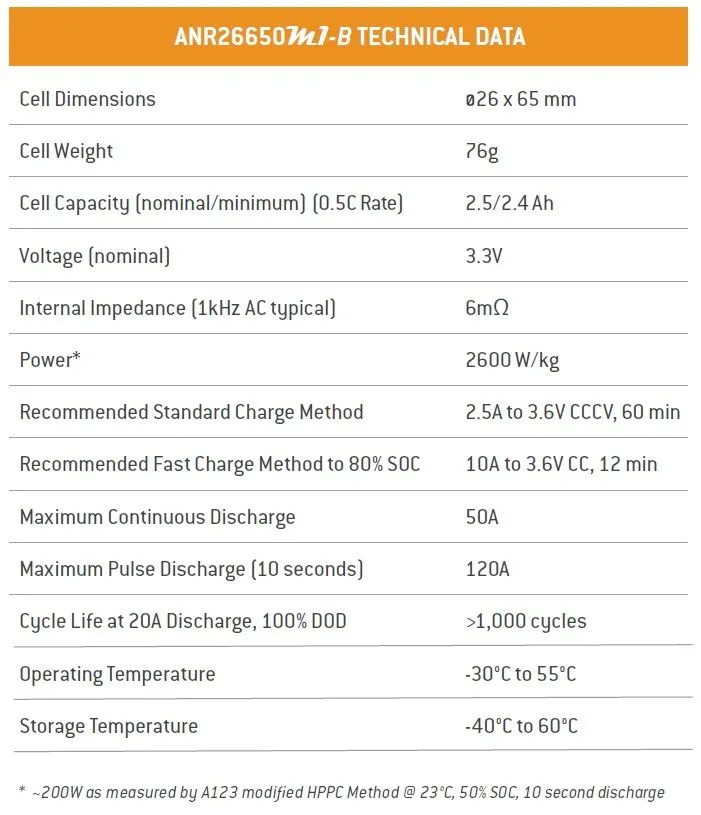
Cell: ANR26650M1-B
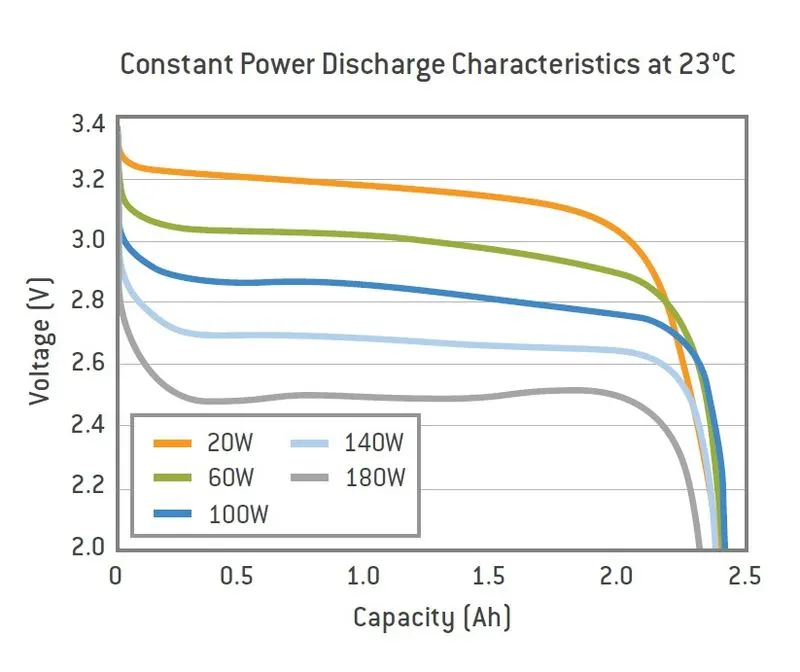
- The following are the constant power discharge characteristics of the cell at 23°C temperature. These characteristics are drawn for different power ratings of the cell. If we observe the plot, as the power of the cell increases the voltage and its discharging characteristics are decreasing.
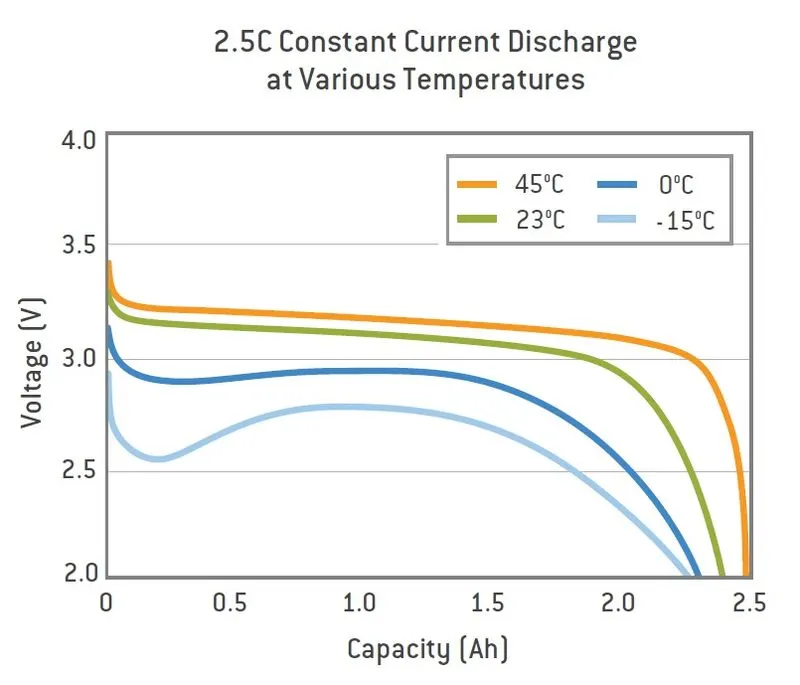
- The following figure shows the 2.5C rate Constant current discharge characteristics at different temperatures, If we observe the plot it can be said that the cell characteristics vary with respect to the temperature changes. So we have to operate the cells within their nominal temperature zone.
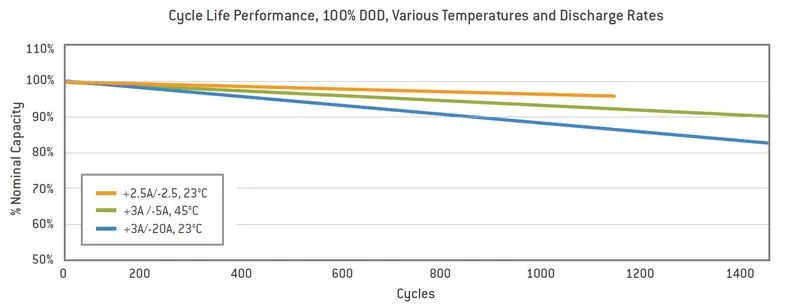
The following figure shows the cycle life performance, 100% DOD (Depth Of Discharge), various temperatures, and discharge rates of the cell.
Cell Connection :
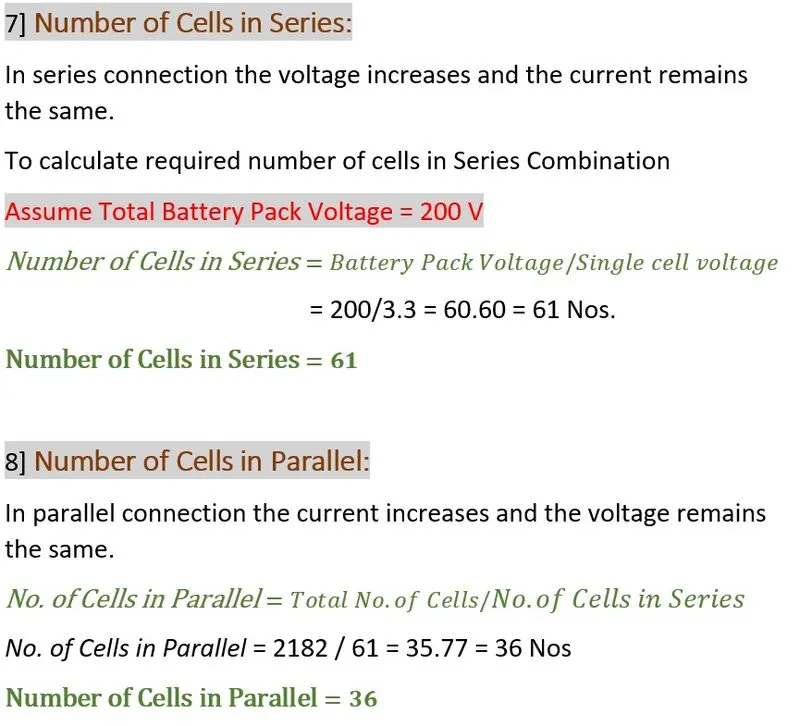
The voltage level of the battery determines the maximum electrical power which can be delivered continuously. As power is the product of voltage and current. The higher the current, the bigger the diameter of the high voltage wire and the higher the thermal losses. For this reason, the current should be limited to a maximum, and the nominal power obtained by having a higher voltage. For our modeling of the pack, considering the nominal voltage of 264V. All high voltage battery packs are made up of battery cells arranged in strings and modules. A battery cell can be regarded as the smallest division of the voltage.
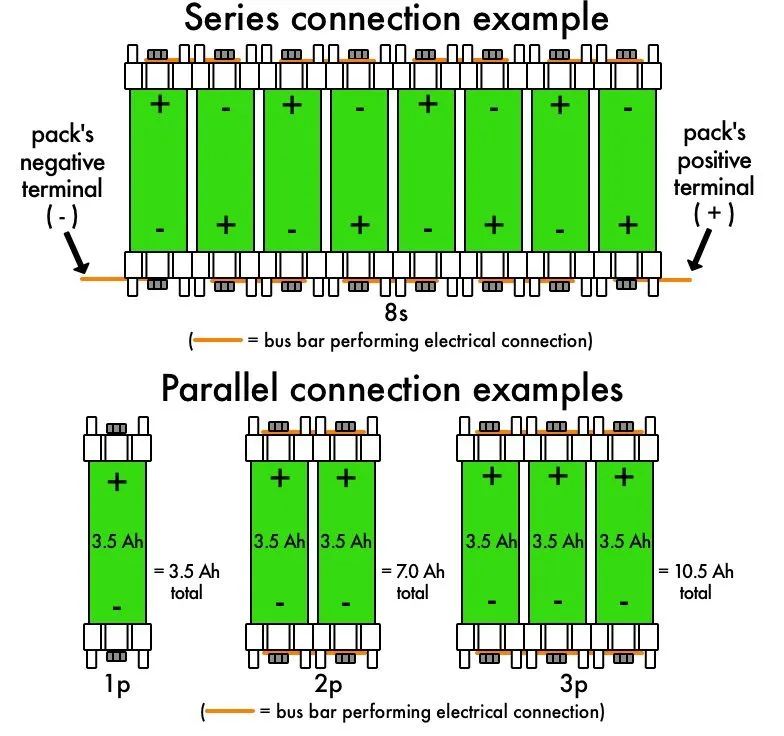
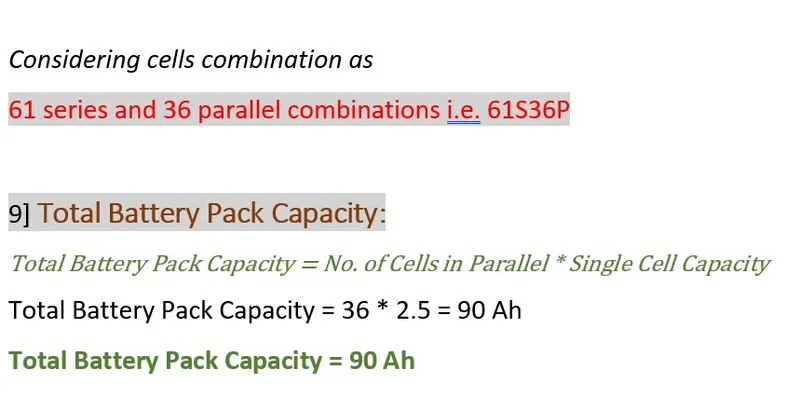
Individual battery cells may be grouped in parallel and/or series as modules. Further, battery modules can be connected in parallel and/or series to create a battery pack. Depending on the battery parameters there may be several levels of modularity. The total battery pack voltage is determined by the number of cells connected in series. The current capacity of the battery pack is determined by the number of cells connected in parallel. The following figures give information on series and parallel connections.
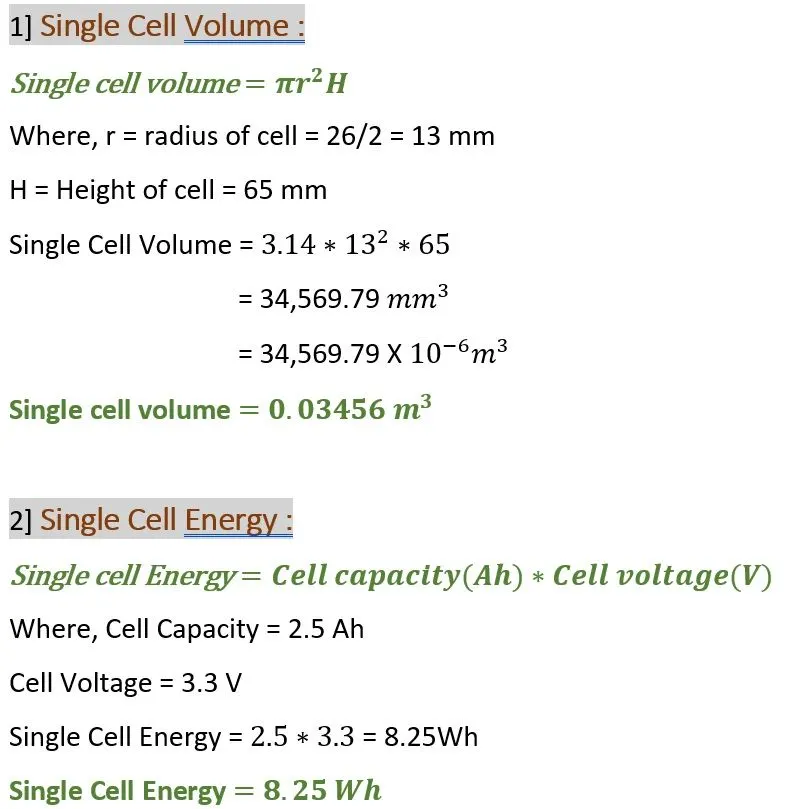
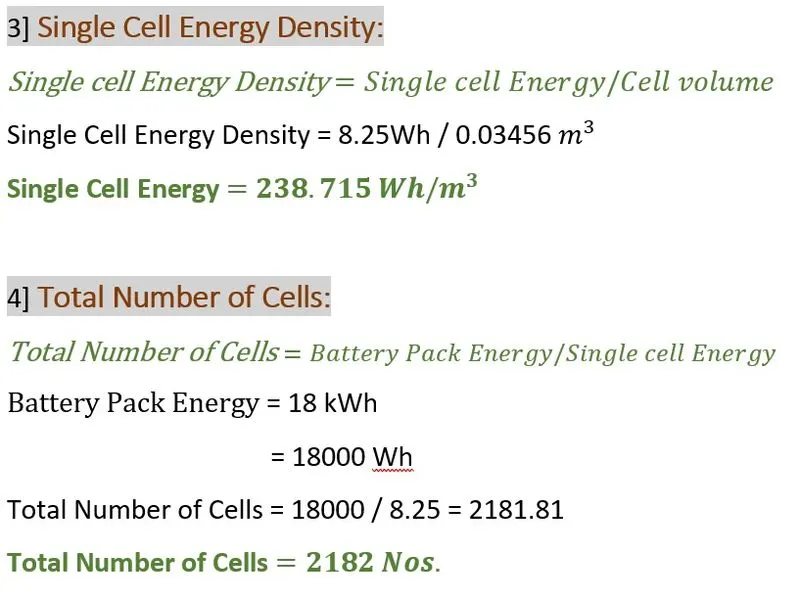
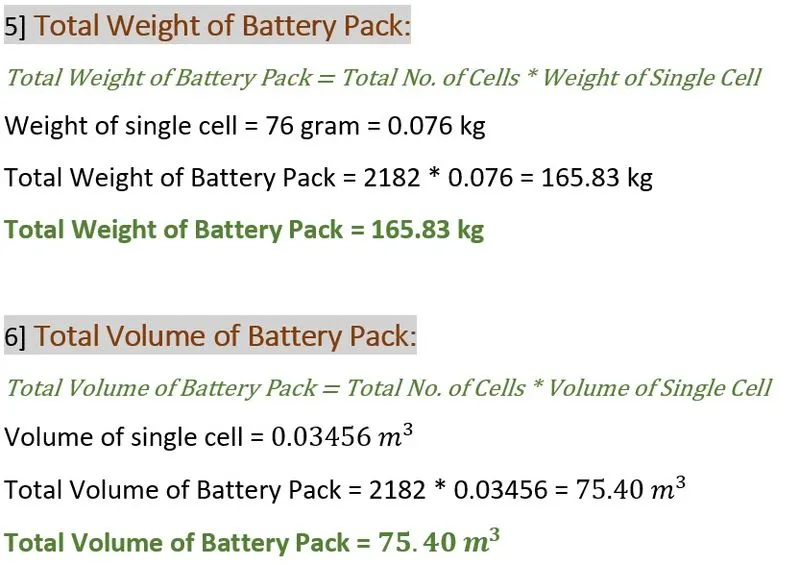
Calculations for Battery Pack using single Cell :
Using values of single cells, we will calculate values for total cells of battery pack.
Assembly of Battery Pack :
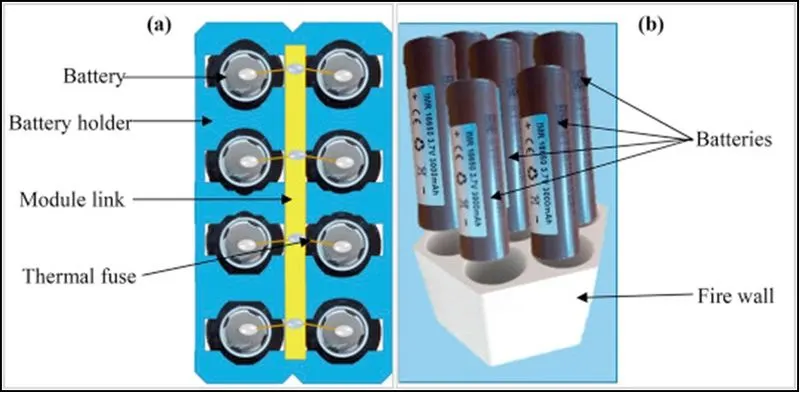
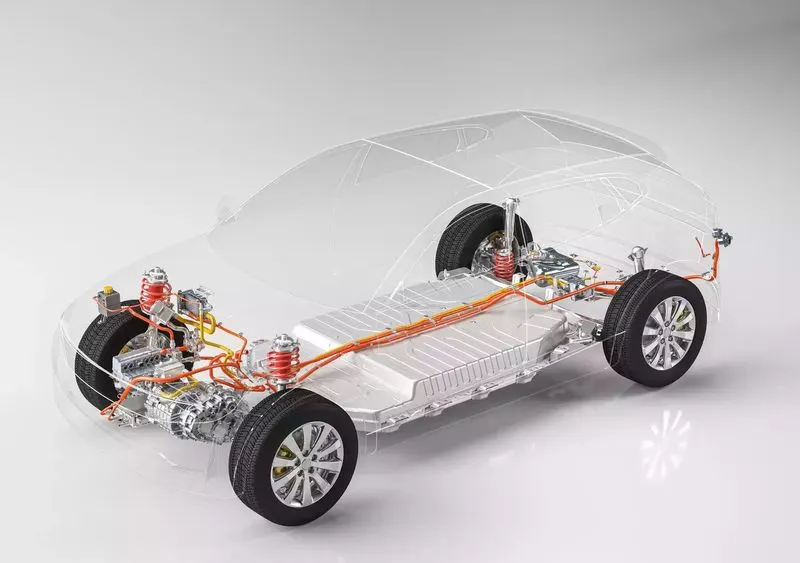
Lithium-ion battery pack composed of battery modules provide power for the electric vehicles. To ensure that lithium-ion batteries in battery modules are protected carefully, a battery holder was designed to provide support and protection for each lithium-ion battery. When the vehicles are at working, the battery pack will be affected by harsh environments, such as shocks due to road bumps and changes due to the road surface conditions.
Components of Battery Pack :
The lithium-ion batteries in electric vehicles (EVs) present very different material demands at the cell- and pack-level compared with the internal-combustion engine (ICE) vehicles they replace. Whilst ICE drivetrains heavily rely on aluminium and steel alloys, Li-ion batteries utilise a great deal of materials such as nickel, cobalt, lithium, copper, insulation, thermal interface materials and much more at a cell- and pack-level. The markets for these materials will see a rapid increase in demand that would not have been present without the take-off of electric vehicle markets.
- Interconnects
- Housings
- Thermal management
- Thermal interface materials
- Inter-cell pads and insulation
- Fire-retardant papers/blankets/coatings
Battery Holder :
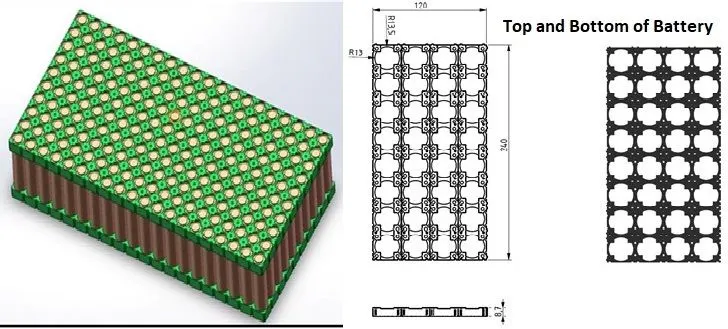
The main function of a battery holder is to keep cells fixed in place safely and securely also it is used to keep cells in a proper arrangement so that there will be a decrease in mechanical vibration, and have a better thermal runway in between the gaps of the cell. Most of the cell holder is made up of polypropylene or nylon bodies rated for 80–100 °C.
Interconnections using Nickel Strips :
The pure nickel will never get rust after it is applied to battery packs. It won’t affect the current transfer between batteries.
Pure nickel strip is the premier material for battery connections in critical applications.
Nickel strip is generally used in battery building due to its efficiency of usage in spot welding and soldering as well as its high corrosion resistance over time. It has good properties and excellent resistance to many corrosive environments.
Powder metallurgy strip process produces high purity nickel strips which are uniquely suited for battery applications. Very low impurity levels are achievable and dispersed phase alloying approaches can be utilized to advantage. Tight control over low level alloying additions is also an inherent advantage, using wrought powder metallurgy technology process enables us to produce high conductivity materials used in collectors and connector tabs for many battery chemistries. high purity 99.98% nickel strip offers major advantages in rechargeable battery production, those are
- Consistent Chemistry Control.
- Short Lead-times.
- Highest degree of electrical conductivity.
- Lowest electrical resistivity available in pure nickel strip.
- Homogeneity, micro cleanliness, and close composition control to enhance weldability.
- Low levels of surface oxides to reduce die wear and provide excellent solderability.
- Excellent formability.
Housing of Battery Pack :
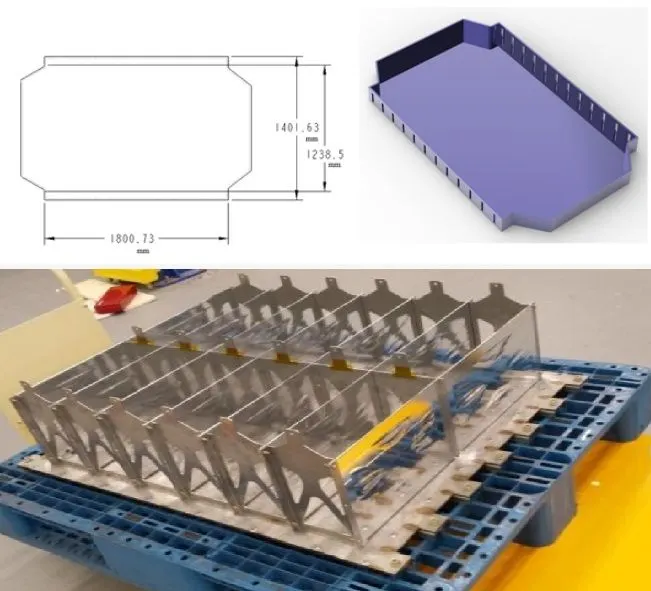
The lower case is a part that is fitted in an electric vehicle for the assembly of the battery pack. A lower case is also made up of aluminium and it has a top cover and bottom cover to battery pack from dust and environmental pollution.
The design of the lower case is shown
Thermal Management :
Thermal management is a major issue in high power designs, particularly for automotive applications.
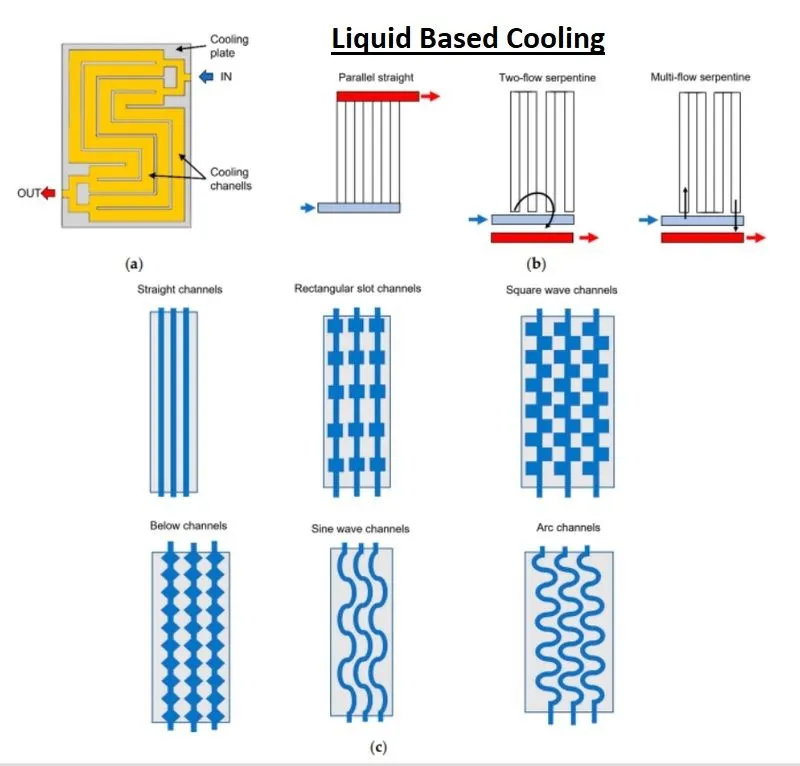
The major concerns with Lithium-ion batteries failures are temperature rise and temperature non-uniformity during adverse operating conditions like fast charging/discharging and extreme ambient conditions (extreme hot/cold weather). These problems lead to safety issues like thermal runaway of the battery pack. To negate these issues and to ensure better performance of the battery pack, battery thermal management system (BTMS) is adopted in EVs. The prominent BTMSs are air-based BTMS, liquid-based BTMS and phase change based BTMS. This paper collates various thermal management issues and numerous cooling methods developed to mitigate these problems and throws light on some of the research gaps on recovery and utilization of low-grade heat generated in the battery pack.
As part of the battery system, it may be necessary to provide air or water cooling ducts, pumps or fans and heat exchangers for high temperature working or heaters for operating in low temperature environments. The layout of the cells should be conducive to managing heat flows within the pack.
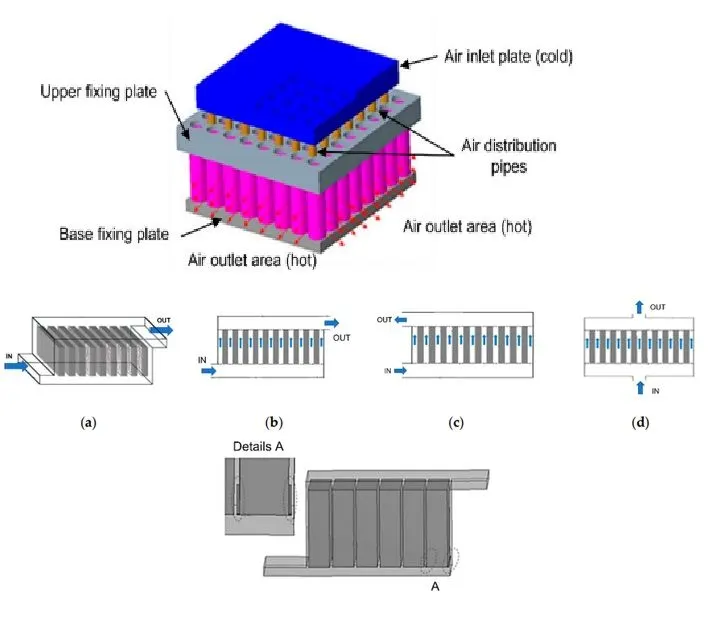
Air Based Cooling
Battery Management System:
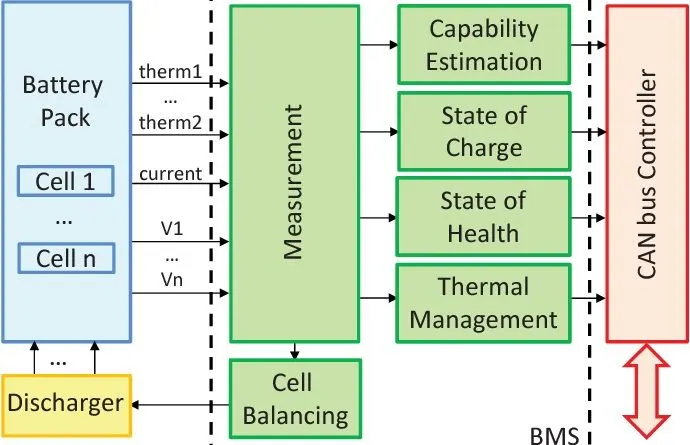
Battery management system (BMS) is technology dedicated to the oversight of a battery pack, which is an assembly of battery cells, electrically organized in a row x column matrix configuration to enable delivery of targeted range of voltage and current for a duration of time against expected load scenarios. The oversight that a BMS provides usually includes:
- Monitoring the battery
- Providing battery protection
- Estimating the battery’s operational state
- Continually optimizing battery performance
- Reporting operational status to external devices
Finale Look of Battery Pack
Conclusion :
Mechanical Design of battery pack is done for 18kWh capacity and assuming battery pack voltage 200V by using total 2182 cells with 61S36P combination.
References :
- https://lithiumwerksbatteries.com/lithiumwerks-anr26650m1-b-3-3-volt-2-5ah-lithium-iron-phosphate-lifepo4-battery/
- https://www.batteryspace.com/prod-specs/6610.pdf
- https://www.globalspec.com/learnmore/electrical_electronic_components/batteries/battery_packs
- https://www.acc-emotion.com/stories/battery-cell-module-or-pack-whats-difference-infographics