Project 1 Mechanical design of battery pack
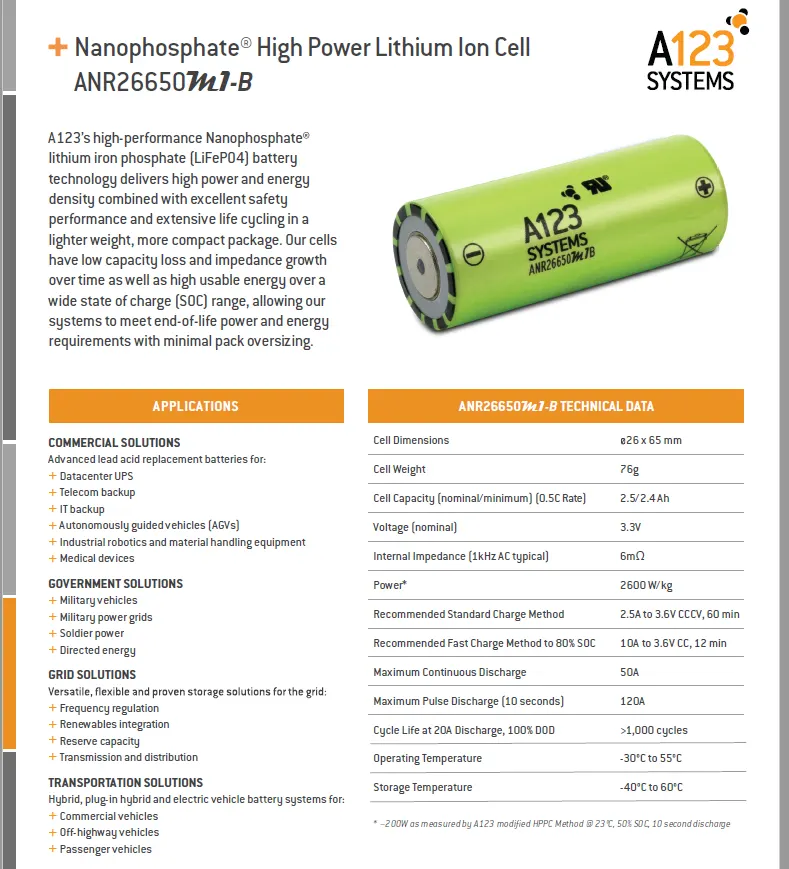
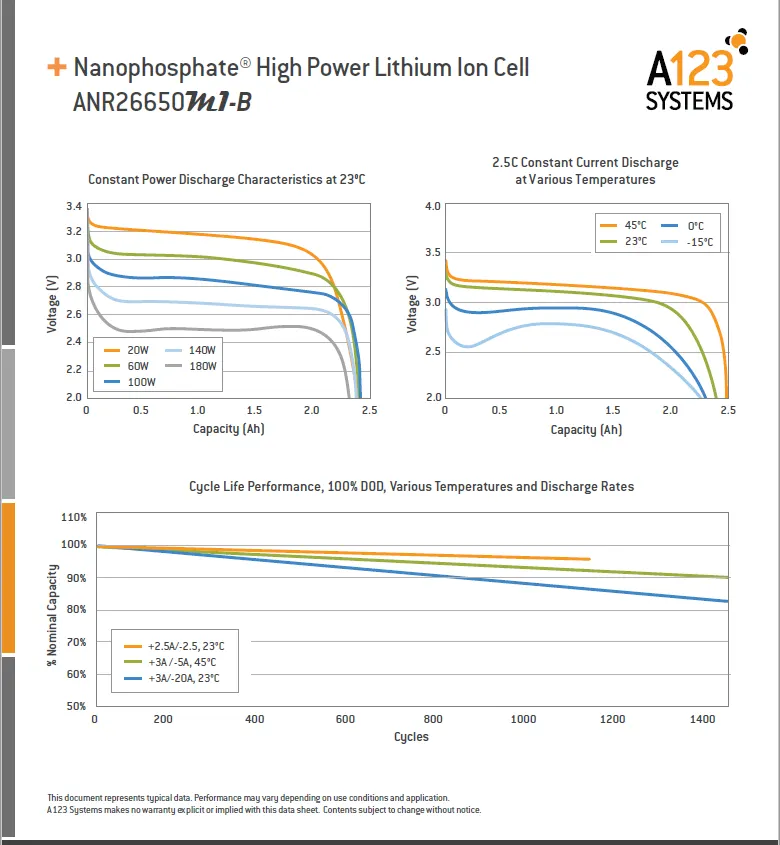
Volume of cell =3.14*r^2*h
=3.14*0.013^2*0.065
=0.000034429m^2
Volume of the cell is 0.000034429m^2
Single cell energy = Cell capacity*Cell voltage
= 2.5*3.3
= 8.25
Single cell energy is 8.25Wh
Volumetric energy = Single cell energy/Volume of each cell
= 8.25/0.000034429
= 239623.573Wh/m^3
Assuming that there are 54 cells in series and 46 in parallel so the total number of cell will be = 54*46
Total number of cells = 2484 cells
Voltage of battery pack = Nominal voltage * cell in series
= 3.3*54
= 178.2 V
Voltage of battery pack is 178.2 V
Current for battery pack = Cell capacity * cell in parallel
= 2.5*46
= 115Ah
Current for battery pack is 115
Energy = voltage*current
= 178.2*115
= 20493WAh
Total enegy of battery pack = 20493WAh
Total volume of the battery pack = No of cell * volume of cell
= 2484 *0.000034429
= 0.085521636 m^3
Total volume reqired for battery pack 0.085521636 m^3
Weight of battery pack = No of cells * weight of single cell
= 2484*0.076
= 188.784kg
Total Weight of battery pack 188.784kg
Energy density = volume* battery pack energy
= 0.085521636*20493
= 1752.59489hWh/m^3
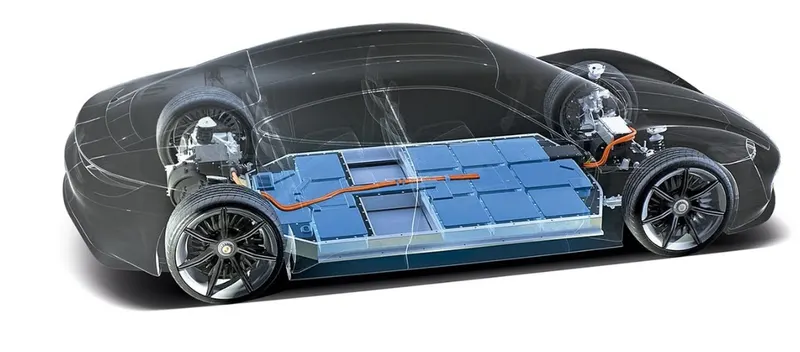
BATTERY PACK
A battery pack is a set of any number of identical batteries or individual battery cells. They may be configured in a series, parallel, or a mixture of both to deliver the desired voltage, capacity, or power density. The term battery pack is often used in reference to cordless tools, radio-controlled hobby toys, and battery electric vehicle.Components of battery packs include the individual batteries or cells, and the interconnects which provide electrical conductivity between them. Rechargeable battery packs often contain a temperature sensor, which the battery charger uses to detect the end of charging.Interconnects are also found in batteries as they are the part that connects each cell, though batteries are most often only arranged in series strings. When a pack contains groups of cells in parallel there are different wiring configurations that take into consideration the electrical balance of the circuit.
The three cell format used in electric cars -
1.Cylindrical cell
2.Prismatic cell
3.Pouch cell
Cyndrical cell
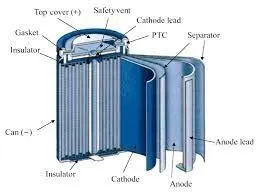
Cylindrical cells are the least expensive format to manufacture because they are already self-contained in a casing that offers good mechanical resistance. The technology is not only cost-efficient, but it is also mature, making it a format easy to manufacture.Because of their shape, cylindrical cells have limitations in terms of power. For this reason, EVs with smaller batteries such as hybrid vehicles use pouch or prismatic cells to deliver more power during accelerations.
Prismatic cell
Prismatic cells can be 20 to 100 times larger than cylindrical cells. They can typically deliver more power and store more energy for the same volume because less material is used for the casing. The casing’s shape and thickness also allow better heat management than cylindrical cells.
Pouch cell
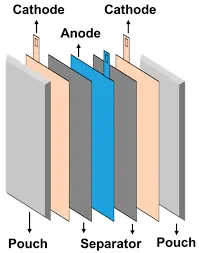
Pouch cells are made to deliver more power than other cell types. They are also very efficient when it comes to space usage. Their soft plastic casing, however, means they have the lowest mechanical resistance of all cell types. For this reason, an additional structure needs to be added during pouch cell assembly to protect them from mechanical damage.
Battery holding and spacing
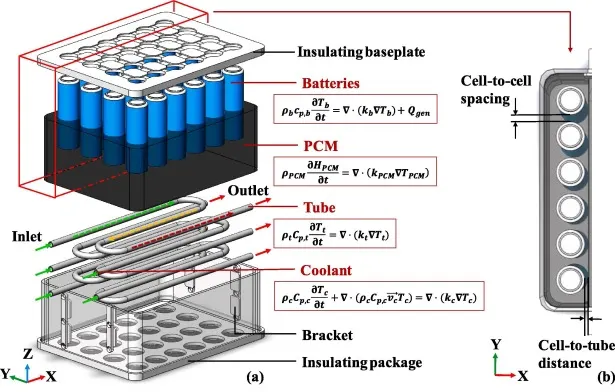
The primary function of a battery holder is to keep cells fixed in place safely and securely while conveying power from the batteries to the device in question. External connections on battery holders are most often made by contacts either with pins, surface mount feet, soldered lugs or via a set of wire leads.
Different types of connection in batterypack
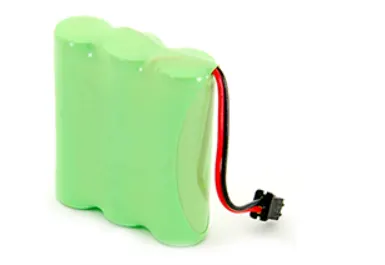
- Linear or F type
Note that the straps will both come off the top when there are an even number of cells, and one off the top, the other off the bottom when there is an odd number of cells

- Multi row cell
There are two ways to start packing them. One could be called the cubic, and the other face centered cubic, or nested.Cubic packing is in neat rows. The size of such a pack is nD x mD x H, where n is the number of cells in a row, m is the number of rows, D is the cell diameter, and H is the cell height.

- Nested cell type
Nested configurations follow the same connection principles using the same nickel tab material to achieve the design. This type of configuration is typically supported with outer shrink wrap to give the cells additional support. The exposed ends of the cells are typically protected with fish paper.Some nested deigns are even potted to support the cells and protect the completed battery for overall integrity.Either method is acceptable and should be considered for best handling practices and protection for the battery during transit.

Nickle strips for connection
Nickel strip is generally used in battery building. Its due to its efficiency of usage in spot welding and soldering as well its high corrosion resistance over time. It has good properties and excellent resistance to many corrosive environments. The pure nickel will never get rust after it applied to battery packs. It won’t affect the current transfer between batteries.

Battery enclosure
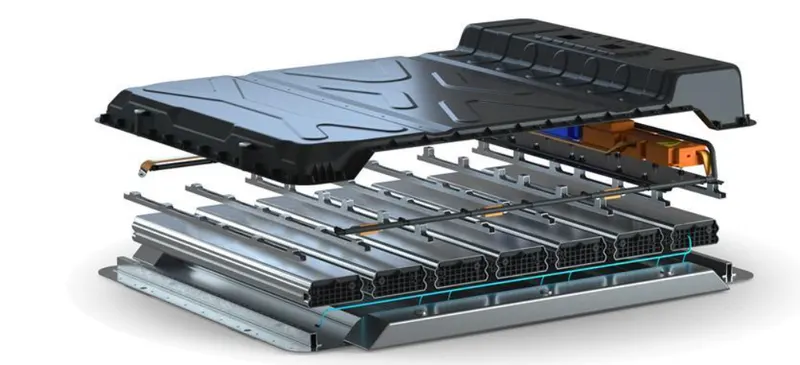
The lightweighting of electric vehicle structures is a key element in helping to extend the endurance ranges necessary to accelerate their increasing adoption. A specific target for weight reduction is the compartment used to house the batteries.The requirement to both support the weight of the batteries and protect them has so far tended to make these enclosures heavy elements in their own right. Now, though, several research initiatives are looking to mitigate that situation through the use of new lighter weight material applications.
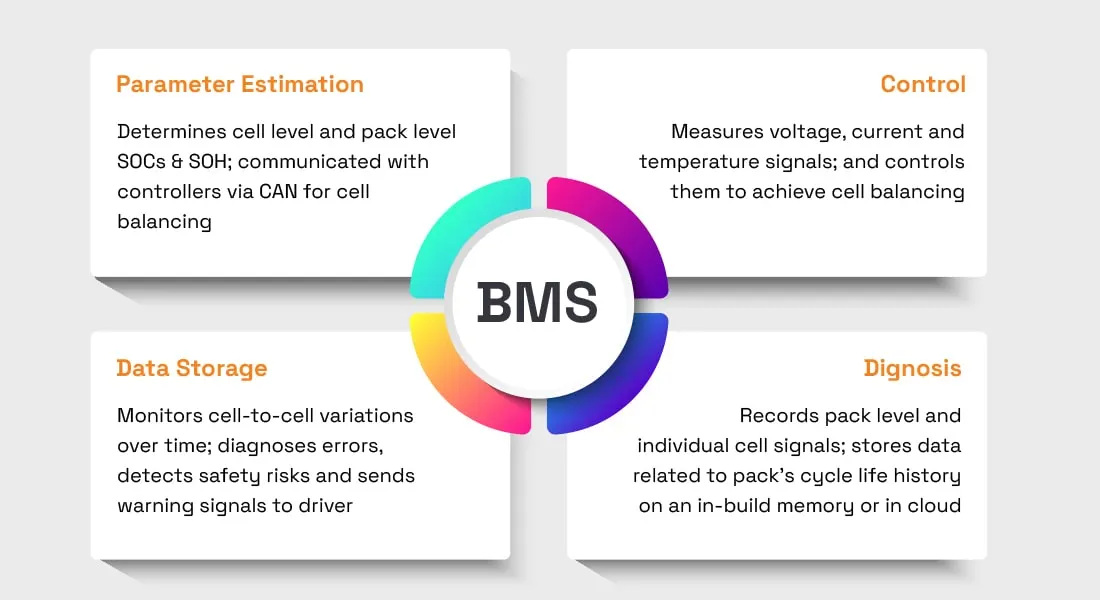
BMS(Battery Management System)
Battery management system is technology dedicated to the oversight of a battery pack, which is an assembly of battery cells, electrically organized in a row x column matrix configuration to enable delivery of targeted range of voltage and current for a duration of time against expected load scenarios. The oversight that a BMS provides usually includes:
- Monitoring the battery
- Providing battery protection
- Estimating the battery’s operational state
- Continually optimizing battery performance
- Reporting operational status to external devices