Project 1 Mechanical design of battery pack
** This project was implemented as per the guidelines from the 13th batch live session**
AIM:
For a Battery pack capacity: of 18 kWh
Cell: ANR26650M1-B
Prepare a detailed battery pack drawing along with its enclosure.
INTRODUCTION:
BATTERY PACK:
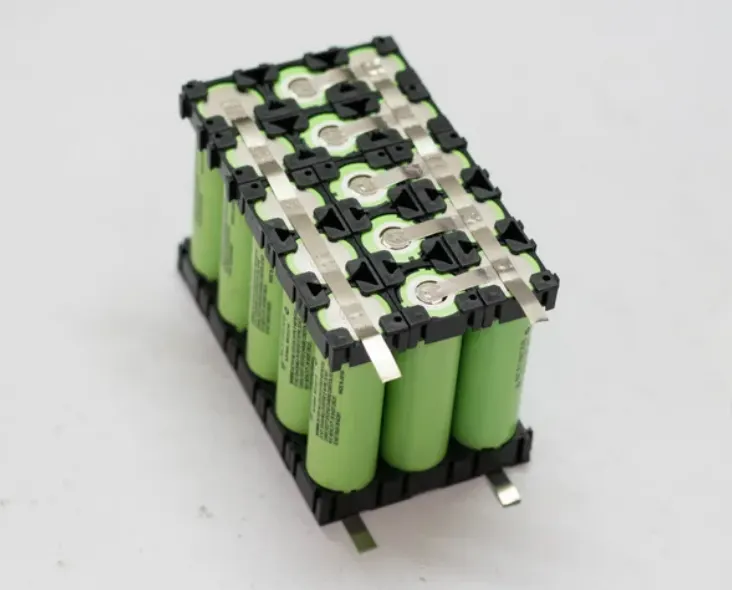
A battery pack is a set of any number of (preferably) identical batteries or individual battery cells. They may be configured in a series, parallel, or a mixture of both to deliver the desired voltage, capacity, or power density. The term battery pack is often used for cordless tools, radio-controlled hobby toys, and battery electric vehicles.
Components of battery packs include the individual batteries or cells, and the interconnects which provide electrical conductivity between them. Rechargeable battery packs often contain a temperature sensor, which the battery charger uses to detect the end of charging.
Interconnects are also found in batteries as they are the part that connects each cell, though batteries are most often only arranged in series strings. When a pack contains groups of cells in parallel different wiring configurations take into consideration the electrical balance of the circuit.
Battery regulators are sometimes used to keep the voltage of each cell below its maximum value during charging to allow the weaker batteries to become fully charged, bringing the whole pack back into balance. Active balancing can also be performed by battery balancer devices which can shuttle energy from strong cells to weaker ones in real-time for better balance.
A well-balanced pack lasts longer and delivers better performance.
Lithium-ion cells are capable of delivering very high power. Lithium-ion cells are used in aerospace, automotive electric vehicle, mobile devices, medical devices, and other electronic devices which is based on these cells. The battery pack is installed on the lower floor of the electric vehicle so that weight may distribute equally and also the center of gravity also maintain properly. The high voltage battery pack is one of the most important components of any electric vehicle.
The traction battery of an electric vehicle must achieve the following thing Provide maximum traction motor torque Vehicle range in sense of kilometer To achieve the proper life cycle of battery The battery pack of an electric vehicle is generally having a series or parallel combination.
Large battery packs have multiple cell modules, in which many numbers of cells are kept together to build a large battery pack. A series connection is used to compound the voltage whereas the parallel connection is for compound current capacity. A battery cell consists of five major components that are electrodes - anode and cathode, separators, terminals, electrolytes, and enclosure.
Mechanical Design of Battery Pack:
Safety and reliability are two major things for large battery packs.
While mechanical designing of large battery pack we should follow some technical criteria so, that the battery may not fail.
Mechanical vibration should decrease Controlling high impact force Better thermal runway for cooling, Serviceability, and recyclability
For the design of an 18 kWh battery pack here, We use a base model of ANR26650MIB Lithium-ion Cell.
Link:
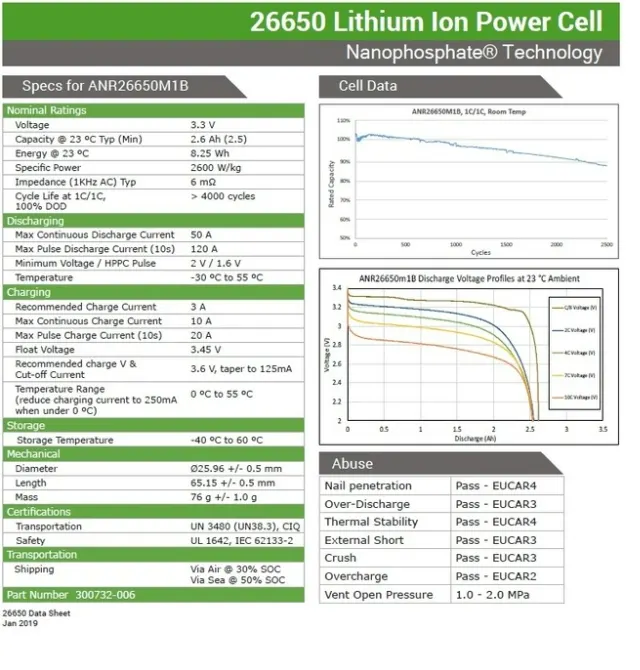
ANR26650MIB cell is consist of lithium iron phosphate chemistry (LiFePO4) and it is best for use in a wide range of temperatures and conditions. The ANR26650MIB Lithium lon cell may achieve the following features Stable chemistry Faster charging Consistent output Excellent cycle life Superior cost performance.
The provided battery cell type is ANR26650M1-B and its datasheet is used to get all the required information about it.
After that, we will figure out how many cells we require to achieve the said 18 kWh configuration of their connection. In the end, a detailed battery drawing along with its enclosure is given to understand its working of it more deeply.
Calculation as Per Assumptions:
18kWh Battery Pack The mathematical calculation for designing an 18kWh battery pack, basically 18kWh is the energy required to achieve the vehicle its proper range. It is depending upon the voltage (V) parameter and ampere-hour or capacity (Ah). Here We used to design a high voltage battery pack for an electric vehicle to achieve its range of up to 200 km. For this calculation, We assumed 200 V nominal voltage for series connection
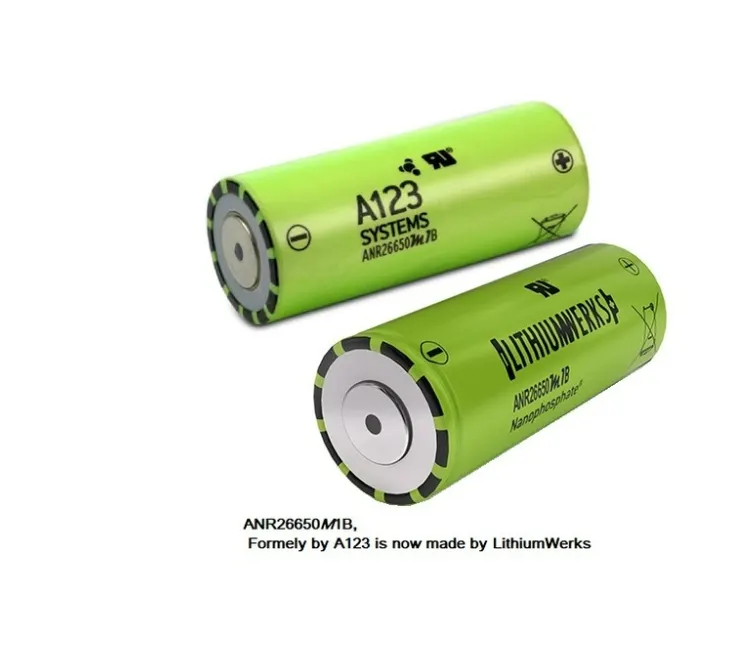
General required value depending upon a single cell
Diameter = 25.96 +/-0.5 mm = 26.mm= 0.026 m
Length = 65.15 +/-0.5 mm = 65 mm = 0.065 m
Mass = 76 g = 0.076 kg
Single-cell Voltage = 3.3V
Capacity = 2.6 Ah
max Continuous Charge Current (C rate) = 10 A
Max Pulse Charge Current (C-rate) = 20A
Mathematical Battery calculation –
Single Cell Calculation
= πr2h
= 3.14 * 0.01322 * 0.065
= 0.03451m
r= radius of cell
h = height of cell
The value of the volume of the cell is used to find out the total volume of the battery pack.
single Cell Energy (wh)-
= Cell Capacity (ah) x Cell Voltage (V)
= 2.6 x 3.3
= 8.58 Wh
The value of a single cell is used to calculate the total energy of the battery pack.
Single CelI Energy Density
Volumetric energy (Wh/m^3) = Single Cell Energy / Volume of each cell
= 8.58 Wh/0.03451 m3 = 248.62 Wh/m3
Gravimetric energy (Wh/kg) = Single Cell Energy/Single Cell Mass
= 8.58 Wh/0.076 kg
=112. 89 Wh/kg
Calculation of High Voltage Battery Pack
For the design and calculation of the battery pack here, we assume a vehicle to achieve 200 km in an 18 kWh battery pack. So,
Vehicle Range 200 KM (assumed)
Battery Pack capacity = 18 kWh or 18000 Wh
Now, We will calculate per km average energy 18000/200
= 90 Wh/km
Let's assume the Nominal voltage for series connection = 200 V this depends upon the motor power, We can decide the value according to the motor.
Several cells connected in series = Nominal voltage of series connection/ Nominal voltage of a single cell
= 200 V/ 3.3 V = 61
61 Cells will be connected in a series connection to provide a proper voltage.
Maximum Current of the battery pack (Ah)-
Battery Pack Capacity/ Nominal voltage of series connection = 18000 Wh/ 200v = 90Ah
Several cells connected in parallel
= Maximum Current of battery pack/ Nominal Current of single cell
= 90/2.6 = 35
35 cells will be connected in parallel to provide a proper capacity power.
A total number of cells for the battery pack
No. of cells connected in parallel x No. of cells connected in series = 61 x 35 =2135
2135 Cels will be used to make a complete battery pack.
After the total no of cell calculation, We have to calculate the exact Powe getting from the battery pack
= Total No. of cells connected in battery pack x Nominal Voltage of a single cell x Nominal Current of single-cell
= 2135 x 3.3 x 2.6 = 18.3183 kWh
Safety of margin should be there so to design an 18 kWh battery we have to have at least 18.3183 kWh for uninterrupted operations.
Mass of battery pack - = Total no. of cells for batter pack x Mass of single-cell = 2135 x 0.076 kg
Mass of battery pack
= Total no. of cells for batter pack x Mass of single-cell
= 2135 x 0.076 kg = 162.26 kg
It is the total weight of cells connected in parallel or series.
The total volume of the battery pack = Total no. of cells for batter pack x Volume of single-cell
2135x 0.03451 = 73.678 m3
This is the volume of 2135 cells that are used to design the battery pack system.
The above calculation is to find the total number of cells for a full battery pack for an Electric vehicle, also the battery pack weight, current, capacity, and voltage.
General Steps to Design a practical Battery Pack:
Step:1
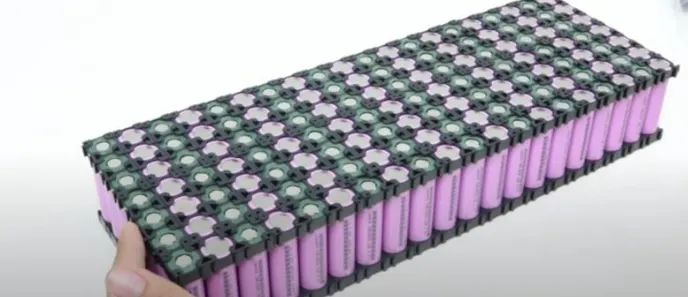
Design of cell holder (Bottom and Top):
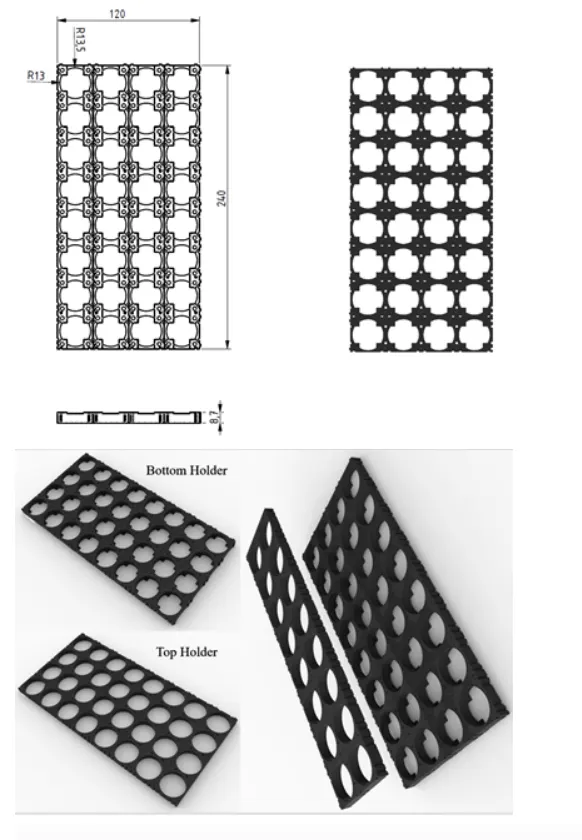
The main function of a battery holder is to keep cells fixed in place safely and securely also it is used to keep cells in a proper arrangement so that there will be a decrease in mechanical vibration and a better thermal runway in between the gaps of the cell. Most of the cell holder is made up of polypropylene or nylon bodies rated for 80-100 °C
step 2-
Inserting cells inside the holder (Bottom and TOP)
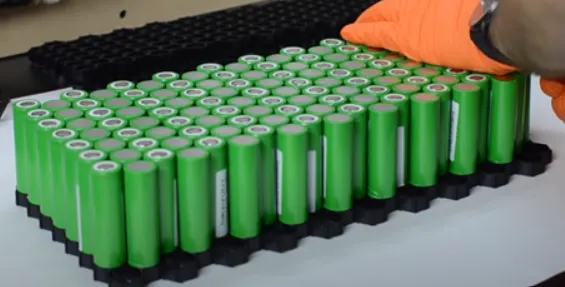
insert the cells inside these connectors with positive and negative poles kept alternatively in adjacent rows.
Step :3
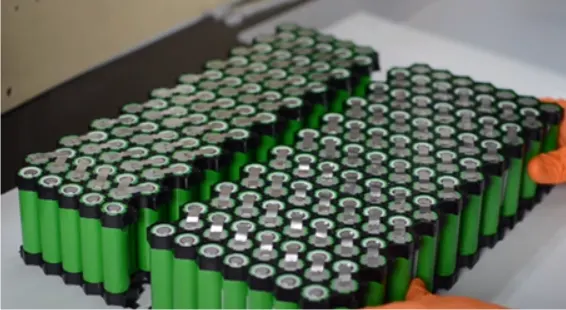
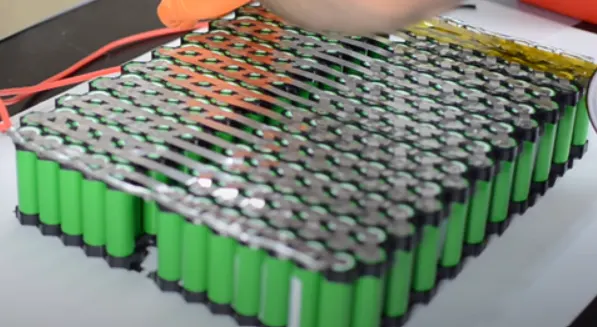
Spot welding:
Step:4
Install the Battery management system (BMS) for the battery pack
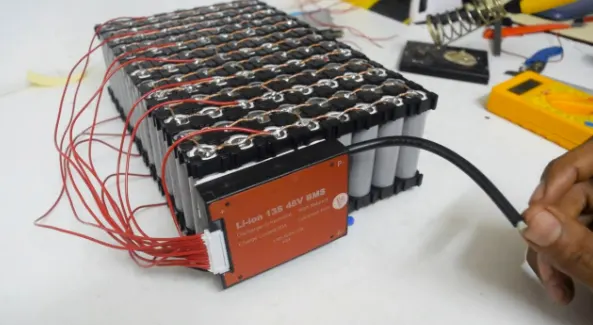
STEP:5
Implementing a cooling system for a battery pack:
Lithium-ion cell performance depends on both the temperature and the operating voltage. Lithium-Ion cells work well when cells operate within limited voltage and temperature. Otherwise, the damage will occur to the cells and will be irreversible.
In over-voltage situations the charging voltage exceeds the bearable cell voltage, resulting in excessive current flows and at the same time, it causes two problems.
At excessive currents the Lithium-ions are deposited more rapidly than intercalation to the anode layers, Lithium ions are then deposited on the surface of the anode as metallic Lithium. This is Lithium plating.
It gives rise to the reduction in the free Lithium ions and an irreversible capacity loss. There are two types of metallic lithium plating, namely homogeneous lithium plating and heterogeneous lithium plating, but the lithium plating is dendritic in form. Eventually, it can result in a short circuit between the electrodes.
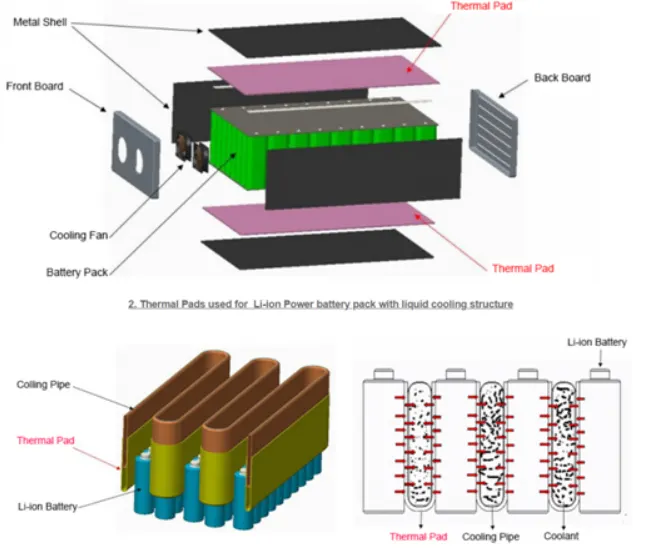
- Cooling:
Due to inefficiency, battery cells will not only generate electricity but also heat. This heat should be moved from the battery pack when the battery temperature reaches the optimum temperature or even in advance. Thus, a cooling function is required in BTMS.
- Heating
In cold climates, battery pack temperature probably falls below the lower temperature limit. Hence, a heating function, such as a PTC heater, is required to assist the battery pack to reach the proper temperature range in a shorter time.
- Insulation
In extreme cold or hot weather, the temperature difference between the inside and outside of the battery pack is much larger than that in mild weather. Battery temperature will thus fall (cold) or rise (hot) sooner out of the proper temperature range. To prevent this, good insulation can slow down the falling or rise of battery temperature, especially when the vehicle is parked outdoors.
- Ventilation
Ventilation is required to exhaust the hazardous gases within the battery pack. In some systems, such as air systems, this function is combined with cooling and heating functions
Enclosure for battery packs:
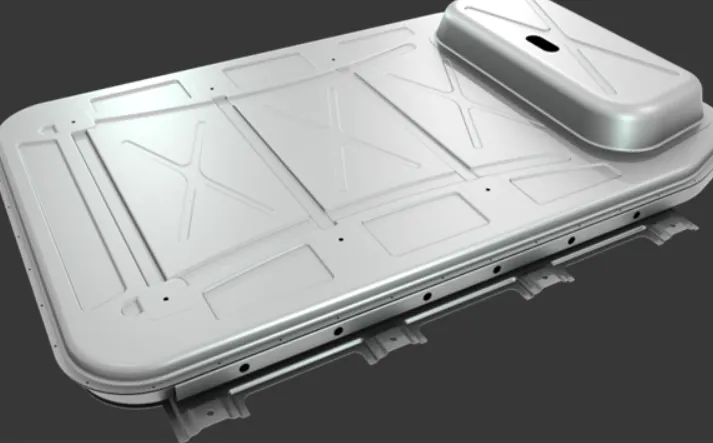
There are different types of enclosures available for the battery pack.
A few are explained below. The main features required for EV battery enclosures are
* Lightweight
* Shock and Vibration-proof
* Fire protection
* Prevent Electromagnetic radiation
* Low-cost Aluminium sheet battery enclosure.
Aluminum's inherent properties -
corrosion resistance and recyclability make the metal attractive in electric vehicle manufacturing.
The enclosure regulates thermal conductivity by helping to cool and heat the battery cells.
Using aluminum to enclose a lithium-ion battery pack in an EV can reduce weight by about 50 percent
Weight savings translates into a longer driving range, a major challenge for the competitiveness of electric vehicles.
The lightweight aluminum translates into a lower cost per weight at mass-production volumes.
Result:
The detailed technical specification of the 2135 cells Battery Pack is as follows
Cells connection in Package - 61S/ 35P
Capacity 91 Ah
Voltage 201.3 V
Weight 162.26 kg (Only cells)
Volume 73.678m3 (only Cells)
No. of Cells 2135
Power - 18318.3 Wh or 18.3183 kWh