Project 1 - LED Desktop Lamp
PROJECT 1:- Design a compelling LED desktop lamp for the Mass Market.
LED DESKTOP LAMP
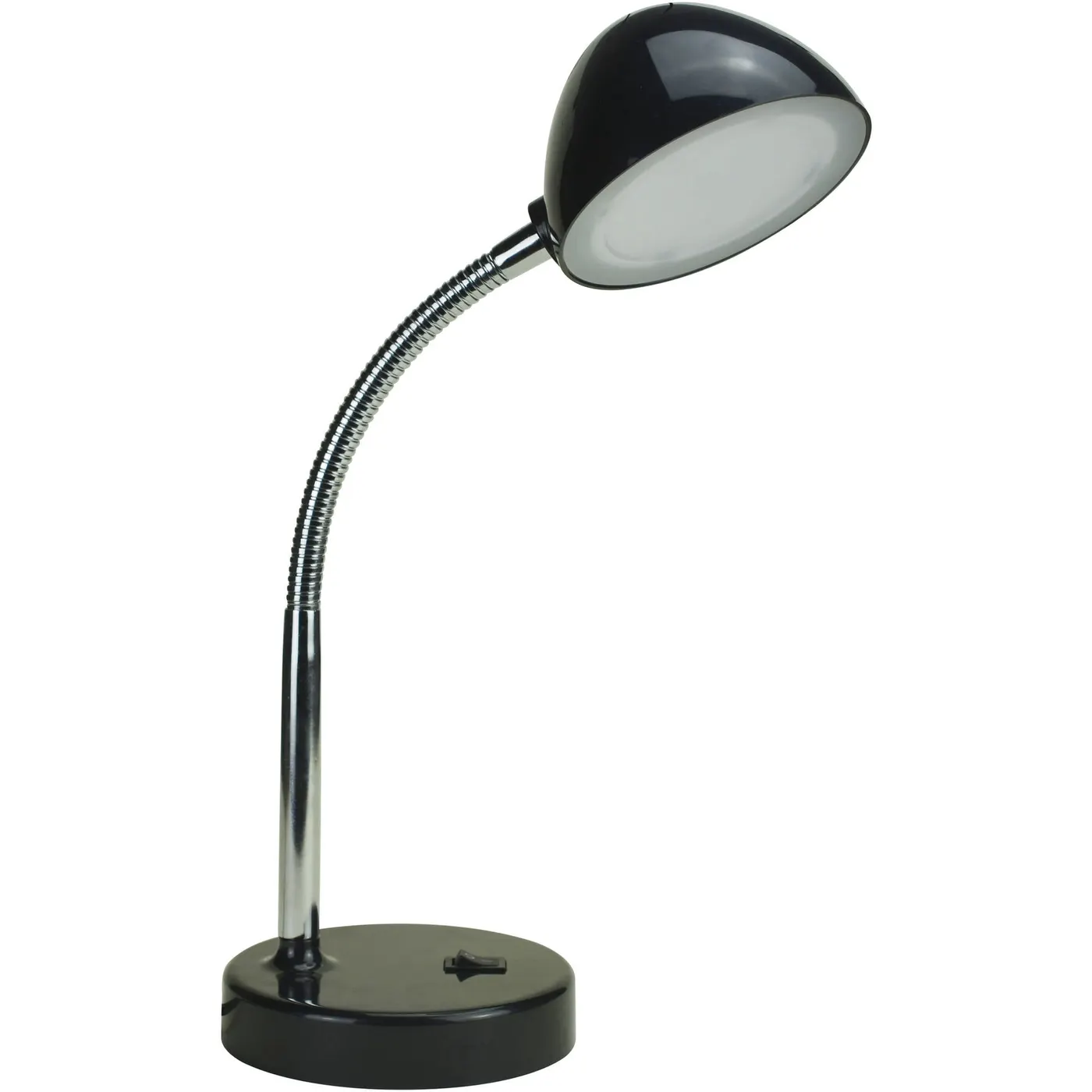
- LED stands for the light-emitting diode. LED lighting products produce light up to 90% more efficiently than incandescent light bulbs.
- An electrical current passes through a microchip, which illuminates the tiny light sources we call LEDs and the result is visible light. To prevent performance issues, the heat LEDs produce is absorbed into a heat sink.
- LED table lamp is a little light introduced with LED lighting apparatuses normally put on table to give adequate light to perusing, considering and other related tasks.
- Driven lighting innovation furnishes a ultra white light with that expends less power supply. Wide scope of LED table light is accessible relying on, shape, size, control utilization, style, shading and completes that promptly mixes and improves room stylistic layout.
- LED desk lamps are durable, power-saving, and have better lighting quality than traditional incandescent lamps. Many of the best-LED desk lamps have tweakable light settings, meaning you can set custom brightness levels and warmth intensity suitable for the task at hand.
TASK 1
MARKET ANALYSIS
- The global LED desl lamp market is expected to grow at a CAGR of 6.8% during the forecast period of 2021-2030.
- The growth can be attributed to factors such as rapid urbanization and growing demand for energy efficiency in buildings coupled with increasing awareness about environmental impacts on climate change.
- An LED desk lamp is a light fixture that looks like an ordinary desk lamp with the addition of LED bulbs. It has many benefits as it consumes much less power than conventional lamps and since LEDs don't get hot, so they are safer to use around children and pets.
- LED Desk Lamps are increasingly being used for decorative as well as reading purpose across the world. LED Desk Lamps demand is growing at a rapid pace on the account of increasing government support and initiative to make people shift from traditional lamps to most energy efficient LED Desk Lamps.
- Traditional desk lamps have been substituted by LED Desk Lamps, which offers several benefits such as lower energy consumption, durability, lower price and higher efficiency. This in turn resulted into increasing popularity of LED Desk Lamp among end-user.
- Global LED Desk Lamps market was valued at over 4,500 million in 2020 and expected to generate cumulative growth opportunity valued at over USD 71 billion during the forecast period. Global LED Desk Lamp industry is expected to post lucrative CAGR of over 18.5%.
Types:- Market Segmentation/Classification

Drivers and Restraints
- Developing interest of lightweight, practical, sturdy lighting installations to give more splendid light is driving interest of LED lights for family and office reason.
- Rising selection modernizing lighting framework to improve home stylistic layout is energizing the market development.
- Likewise, rising R&D exercises by producers to give sleeker, low power devouring lights with extra highlights is probably going to raise the market request high in the accompanying timespan.
- Nonetheless, generally mind-boggling expense of LED lights over customary lights may upset the market development.
Growth Factors of the LED Desk Lamp Market:
- The LED desk lamp market is driven by rapid urbanization and increasing demand for energy efficiency in buildings coupled with the growing awareness about environmental impacts on climate change.
- Therefore, in the current scenario, with LED desk lamps being a popular solution for indoor lighting solutions owing to their advantages such as energy efficiency and safety; however, factors that can hamper its growth include high prices of LED desk lamps.
- Another major restraint on the global market is the lack of awareness about the benefits offered by LEDs.
- Dataintelo published a new report titled “LED Desk Lamp Market research report which is segmented by Types (Wired, Wireless), By Applications (Home, Commercial, Others), By Players/Companies Philips, OSRAM, Cree, Panasonic, Toshiba, MaxLite, Brightech, Tomons, PHIVE, Lumiy, BenQ, Newhouse Lighting, Koncept Inc, Sunllipe, Etekcity”.
Interesting Facts of LED Desk Lamp
- LED Desk Lamps consumption Asia Pacific is highest among all regions with over 35% share in 2020
- Government initiatives around the world is major factor driving led lamps market
- LED desk lamps are most energy efficient with better work life
- LED desk lamps are cost effective as against traditional lamps
- LED desk lamps price below USD 25 are most commonly used
- Reading Lamps held over 30% share in 2020
- Commercial end-users dominate the global LED desk lamps market with over 60% share in 2020
Key players
- Philips
- OSRAM
- Cree
- Panasonic
- Toshiba
- MaxLite
- Brightech
- Tomons
- PHIVE
- Lumiy
- BenQ
- Newhouse Lighting
- Koncept Inc
- Sunllipe
- Etekcity
Key Benefits for Industry Participants & Stakeholders:
- Industry drivers, restraints, and opportunities covered in the study
- Neutral perspective on the market performance
- Recent industry trends and developments
- Competitive landscape & strategies of key players
- Potential & niche segments and regions exhibiting promising growth covered
- Historical, current, and projected market size, in terms of value
- In-depth analysis of the LED Desk Lamp Market
- Table lamps are available in different types of materials.
- From traditional glass and ceramic to contemporary acrylic, wood, or metal, you can choose a lamp that suits your room's aesthetic design. Faux shagreen, selenite, and alabaster are also among the popular choices.
TASK 2
REQUIREMENTS
a-Customer requirements
- LED lights of an outstanding operational lifetime.
- An LED Desk lamp built with plastic or aluminum.
- LED lights designed for efficiency and consumes less energy.
- LED lights do not emit UV or infrared for safe and better environment.
- LED lights with very less heat production.
- Led desk lamps with in a wide range of styles, colors, and designs.
- Wireless, movable, light weight.
- Controllable brightness.
- Flexible and adjustable necks.
b-Functional requirements
- The plug is either plugged into the electrical outlet or not. The user changes the state.
- The ON button and the OFF button can be in a depressed or normal state. The user changes the state by pressing and releasing with his or her finger.
- The fluorescent tube has several states. The tube is in an inactive state when no electricity is applied and, therefore, no light is produced. The tube is in an ionizing state when the two end elements have a current through each end. If the gas inside the tube is ionized, a sustaining voltage applied across the ends of the tube will place the tube in the operational or third state. In the third state, the gas glows and gives off light. Pressing the ON button must affect the state transitions from the inactive state to the ionized state to sustaining state. Pressing the OFF button must place the tube in an inactive state. Pressing the ON while the tube is in the sustaining state should cause no harm to the lamp or the individual. The electronics component changes the state of the tube under the control of the states of the ON and OFF buttons.
- The state of the support is a variable range of heights. The user changes the state by adjusting the support.
- The state of the base should allow the lamp to be stable for the entire range of the adjustment of the support. That is, the lamp should not be unstable and easily knocked over.
- Your perfect desk lamp has to be between 85 to 100 CRI ratings.
- On the other hand, color temperate is referred to as the standard measure of light appearance which is often called cool or warm. To get the perfect color temperature, your LED lamp needs to in between 2700k to 4500k.
- Product Features :-LED retrofit bulb as a replacement for 40W standard incandescent lamps, dimmable, energy savings up to 75%.
- Wattage 10W
- Voltage 220-240V
- Operating Frequency 50-60Hz
- Light Color Warm white - 3000K
- CRI >80
- Luminous Flux 480 lumens
- Luminous Efficiency 48 lumens/Watt
- Lifetime 35,000 hrs = 16 years*
TASK 3
CONCEPT GENERATION
a-Concept generation of an LED desktop lamp
- Have you ever sat at your desk for hours with just an overhead fluorescent light on? Or natural light from the window pouring across your desk? Only to discover that your eyes get irritated and become itchy.They also burn a bit with an increased sensitivity to light. You can feel the strain on your eyes and you develop a slight headache.Almost everyone has the same reaction to this situation. You poorly attempt to relieve this feeling of discomfort by rubbing your eyes with the palms of your hands. Then you proceed to rub the back of your head where that slightly annoying headache is emerging.
- Well, we dove head first into finding a solution to this irritating fact of extreme eye discomfort while working from a desk in poor lighting situations.We discovered that you can fix this problem with one simple solution. Just by simply adding a quality desk lamp to your work or study area.
- A desk lamp is designed to illuminate your work area to help reduce eye strain and the symptoms that go with it. Not to mention that a good desk lamp can increase mood and production.
- So, based on the customer requirements mentioned above( TASK 2) we can develop a LED desktop lamp that can satisfy the customers needs.
b-Concept of operation
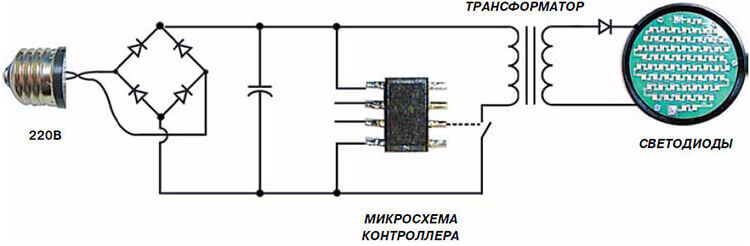
The principle of operation of a light bulb on LEDs is presented as a series of transformations that ensure the glow of the emitters included in its composition. When supplying voltage to the base, it first goes to the driver, the purpose of which is precisely to bring the high voltage to a form acceptable for LED lamps.
To briefly describe this method of energy supply, it is enough to refer to the following scheme:
In simple words:-
- First, an alternating voltage is applied to diode bridge where it is partially straightened.
- The following electrolytic capacitance is designed to smooth out pulsations.
- After that, a fully rectified voltage is supplied to the controller that controls the operation of the LED lamp.
- From the electronic module, it goes directly to the LEDs through an isolation pulse transformer.
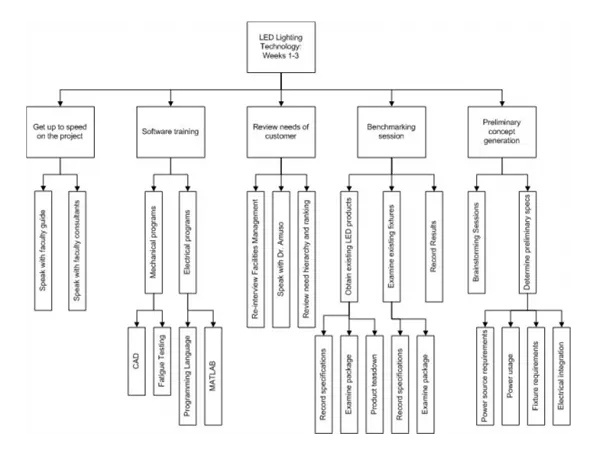
c-Work breakdown structure (WBS)
d-Product architecture selection and reasoning
- An integral architecture is best, as it does not consume much space, dont have to spend time in assembling the products, compact etc.
- Proper task lighting is a very important and often overlooked aspect of any room or work environment. Task lighting is localized lighting that provides the correct amount of light exactly where it's needed to suit the task at hand. It's a beam of light that is directed on the surface and therefore would highlight the area you are working on. Examples of specific task lighting applications include reading, writing, working, using a computer, doing craftwork, cooking, putting on makeup or shaving, etc.
- if you are using your desk lamp in a space that is used for other activities, such as watching TV, you might want a light with a dimmer on it and possibly a more focused, controlled beam of light. A lamp with a 30-degree beam spread will direct light onto the surface you wish to highlight but won't send any stray light out to affect other activities in the room. LED desk lights tend to have the most controlled beams of light, as LEDs are directional light sources.
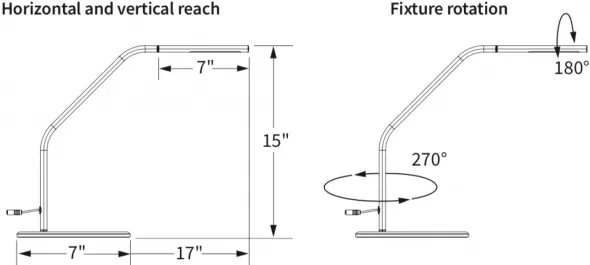
- If you have a large desk you will need to use a desk light that has a longer arm to reach across it.
- The older you get the more light you need—a person over 50 needs twice the amount of light as a 25-year-old. At the same time, older eyes are much more sensitive to glare, so it becomes more important than ever to get a quality desk lamp with a controlled beam of the light
- line of lamps for the aging eye, with over 100 FC of light output and a matte glass diffuser and reflector reduces glare and light scatter.
- Making the support/tube handle more flexible and stretchable so that customers can adjust its height, position, angle according to their convenience.
- Can adjust brightness,operated with battery, convenient to switch places, low cost affordable, strong, light weight and easy to use.
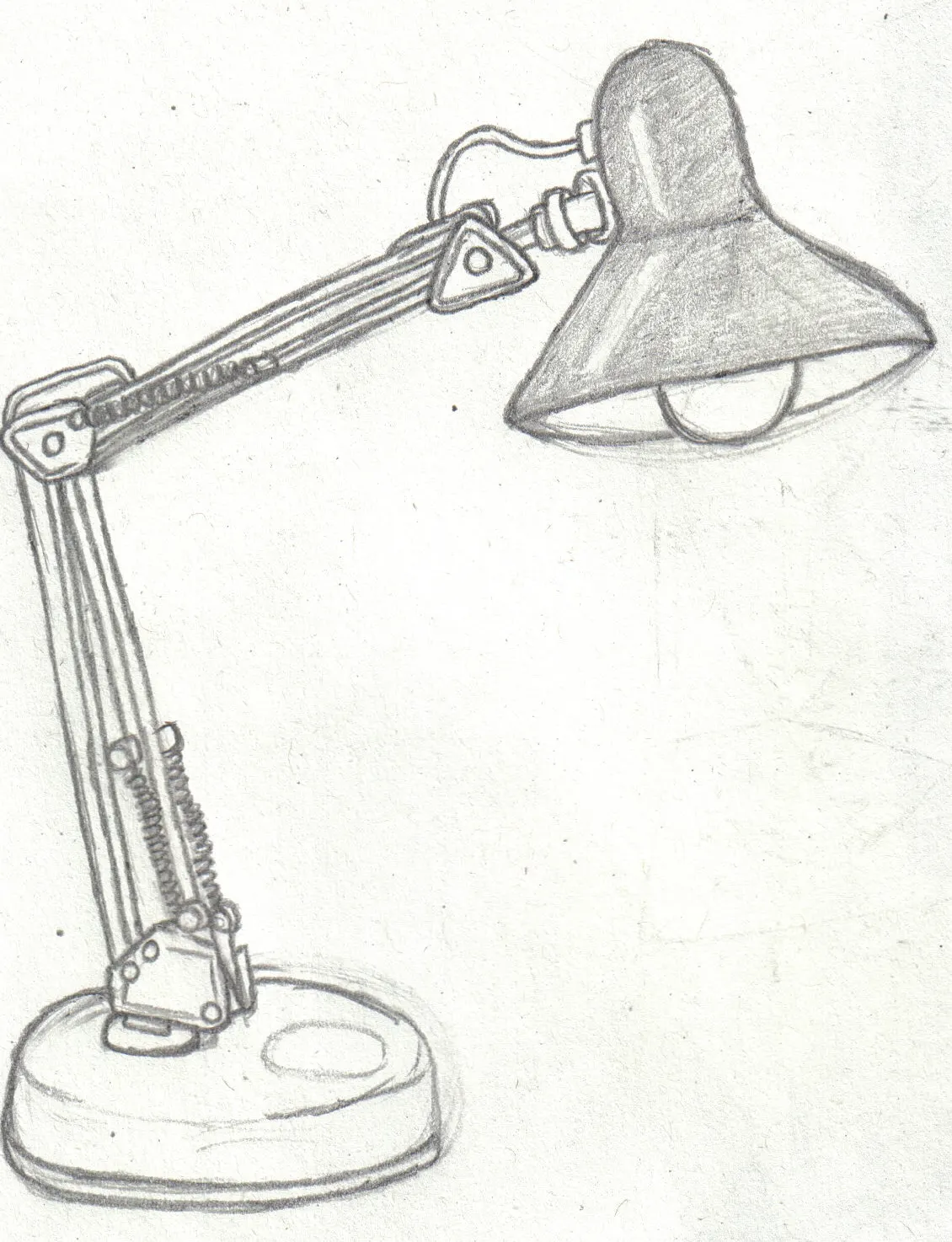
e-Architecture schematic diagram
f-Interface control documents
- Mechanical interface
The mechanical interface includes a connector and an optical mount. The connector is in contact with the glass bulb. The connector may be a separate component attached to the glass bulb, or may be a continuous part of the glass bulb, such that the connector is itself made of glass. The optical mount is configured to receive the connector. In so receiving, the optical mount operatively couples with the connector so as to secure the glass bulb in a position. The optical mount is also configured to attach to a lamp housing. A solid state light source retrofit lamp may thus be formed of a lamp housing including a solid state light source light engine and its required components, a glass bulb, and a mechanical interface for the glass bulb.
- Electrical interface
An electric lamp is a conventional light emitting component used in different circuits, mainly for lighting and indicating purposes. The construction of lamp is quite simple, it has one filament surrounding which, a transparent glass made spherical cover is provided. The filament of the lamp is mainly made of tungsten as it has high melting point temperature. A lamp emits light energy as the thin small tungsten filament of lamp glows without being melted, while current flows through it.
- Human-machine interface
Operators play an important part in the human-machine dialogue.They must use the information they have to perform actions that make the machines and installations run properly without endangering safety and availability. It is therefore crucial that the interfaces and dialogue functions are designed to ensure that operations can be performed reliably in all circumstance. Here, the customer needs to ON/OFF the lamp and use it with proper care.
TASK 4
DEVELOPMENT PLAN
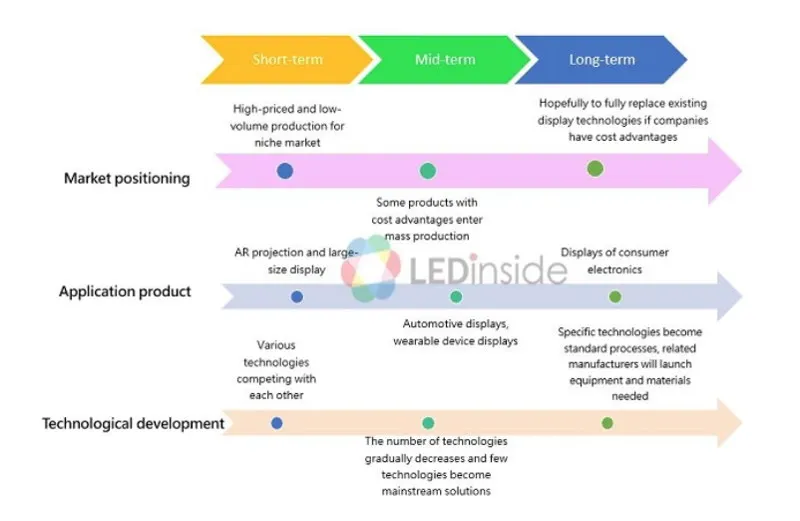
a-Product development roadmap
b-Mission Statement
Product Description:-
-
A desktop lamp with a adjustable brightness, movable, wireless, Portable and versatile, it can be used for night-time reading or whilst working at your desk and promises long-lasting durability thanks to its aluminium construction. The handy adjustment angle also allows you to meet your unique illumination requirements.
Benefits Statement:-
- Wireless, movable, light weight.
- Controllable brightness.
- Flexible and adjustable necks.
- LED lights of an outstanding operational lifetime.
- An LED Desk lamp built with plastic or aluminum.
- LED lights designed for efficiency and consumes less energy.
- Led desk lamps with in a wide range of styles, colors, and designs.
Business Objectives:-
- A desk lamp is designed to illuminate your work area to help reduce eye strain and the symptoms that go with it. Not to mention that a good desk lamp can increase mood and production.
Core Market :-
- Based on region, the market is segmented into North America, Europe, Asia Pacific, Latin America and Middle East & Africa (MEA). North America region is further bifurcated into countries such as U.S., and Canada. The Europe region is further categorized into U.K., France, Germany, Italy, Spain, Russia, and Rest of Europe. Asia Pacific is further segmented into China, Japan, South Korea, India, Australia, South East Asia, and Rest of Asia Pacific. Latin America region is further segmented into Brazil, Mexico, and Rest of Latin America, and the MEA region is further divided into GCC, Turkey, South Africa, and Rest of MEA.
Stakeholders:-
- defines customers, shareholders, in-vestors, employees, suppliers, government agencies, research institutes and communities that directly and indirectly affect its business operations as its stakeholders.
- Generally we require mechanical and electrical engineers.
- No. of staffs depends on the volume of production.
Budget requirements:
- To develop a LED desktop lamp, requires lot many parts and cost of these parts depends on the company that we buy from.
- the cost of the staff, depends on the volume of production, high production means requires many staff members.
- It also includes fixed cost like land, machines etc.
d-Product Schedule
- The initial stage of the product development process begins by generating new product ideas. This is the product innovation stage, where you brainstorm product concepts based on customer needs, concept testing, and market research.
- It’s a good idea to consider the following factors when initiating a new product concept:
- Target market: Your target market is the consumer profile you’re building your product for. These are your potential customers. This is important to identify in the beginning so you can build your product concept around your target market from the start.
- Existing products: When you have a new product concept, it’s a good idea to evaluate your existing product portfolio. Are there existing products that solve a similar problem? Or does a competitor offer a product that doesn’t allow for market share? And if yes, is your new concept different enough to be viable? Answering these questions can ensure the success of your new concept.
- Functionality: While you don’t need a detailed report of the product functionality just yet, you should have a general idea of what functions it will serve. Consider the look and feel of your product and why someone would be interested in purchasing it.
- SWOT analysis: Analyzing your product strengths, weaknesses, opportunities, and threats early in the process can help you build the best version of your new concept. This will ensure your product is different from competitors and solves a market gap.
- SCAMPER method: To refine your idea, use brainstorming methods like SCAMPER, which involves substituting, combining, adapting, modifying, putting to another use, eliminating, or rearranging your product concept.
- To validate a product concept, consider documenting ideas in the form of a business case. This will allow all team members to have a clear understanding of the initial product features and the objectives of the new product launch.
- Once you’ve completed the business case and discussed your target market and product functionality, it’s time to define the product. This is also referred to as scoping or concept development, and focuses on refining the product strategy.
- During this stage, it’s important to define specifics including:
- Business analysis: A business analysis consists of mapping out distribution strategy, ecommerce strategy, and a more in-depth competitor analysis. The purpose of this step is to begin building a clearly defined product roadmap.
- Value proposition: The value proposition is what problem the product is solving. Consider how it differs from other products in the market. This value can be useful for market research and for developing your marketing strategy.
- Success metrics: It’s essential to clarify success metrics early so you can evaluate and measure success once the product is launched. Are there key metrics you want to look out for? These could be basic KPIs like average order value, or something more specific like custom set goals relevant to your organization.
- Marketing strategy: Once you’ve identified your value proposition and success metrics, begin brainstorming a marketing strategy that fits your needs. Consider which channels you want to promote your product on—such as social media or a blog post. While this strategy may need to be revised depending on the finished product, it’s a good idea to think about this when defining your product to begin planning ahead of time.
- Once these ideas have been defined, it’s time to begin building your minimum viable product (MVP) with initial prototyping.
- During the prototyping stage, your team will intensively research and document the product by creating a more detailed business plan and constructing the product.
- These early-stage prototypes might be as simple as a drawing or a more complex computer render of the initial design. These prototypes help you identify areas of risk before you create the product.
- During the prototyping phase, you will work on specifics like:
- Feasibility analysis: The next step in the process is to evaluate your product strategy based on feasibility. Determine if the workload and estimated timeline are possible to achieve. If not, adjust your dates accordingly and request help from additional stakeholders.
- Market risk research: It’s important to analyze any potential risks associated with the production of your product before it’s physically created. This will prevent the product launch from being derailed later on. It will also ensure you communicate risks to the team by documenting them in a risk register.
- Development strategy: Next, you can begin working through your development plan. In other words, know how you’ll be assigning tasks and the timeline of these tasks. One way you can plan tasks and estimate timeline is by using the critical path method.
- MVP: The final outcome of the prototyping stage is a minimum viable product. Think of your MVP as a product that has the features necessary to go to launch with and nothing above what’s necessary for it to function. For example, an MVP bike would include a frame, wheels, and a seat, but wouldn’t contain a basket or bell. Creating an MVP can help your team execute the product launch quicker than building all the desired features, which can drag launch timelines out. Desired features can be added down the road when bandwidth is available.
- Now it’s time to begin designing the product for market launch.
- During the initial design phase, project stakeholders work together to produce a mockup of the product based on the MVP prototype. The design should be created with the target audience in mind and complement the key functions of your product.
- A successful product design may take several iterations to get just right, and may involve communicating with distributors in order to source necessary materials.
- To produce the initial design, you will:
- Source materials: Sourcing materials plays an important role in designing the initial mockup. This may entail working with various vendors and ordering materials or creating your own. Since materials can come from various places, you should document material use in a shared space to reference later if needed.
- Connect with stakeholders: It’s important to keep tight communication during the design phase to verify your initial design is on the right track. Share weekly or daily progress reports to share updates and get approvals as needed.
- Receive initial feedback: When the design is complete, ask senior management and project stakeholders for initial feedback. You can then revise the product design as needed until the final design is ready to be developed and implemented.
- Once the design is approved and ready to be handed off, move onto the validation phase for final testing before launching the product.
- To go live with a new product, you first need to validate and test it. This ensures that every part of the product—from development to marketing—is working effectively before it’s released to the public.
- To ensure the quality of your product, complete the following:
- Concept development and testing: You may have successfully designed your prototype, but you’ll still need to work through any issues that arise while developing the concept. This could involve software development or the physical production of the initial prototype. Test functionality by enlisting the help of team members and beta testers to quality assure the development.
- Front-end testing: During this stage, test the front-end functionality for risks with development code or consumer-facing errors. This includes checking the ecommerce functionality and ensuring it’s stable for launch.
- Test marketing: Before you begin producing your final product, test your marketing plan for functionality and errors. This is also a time to ensure that all campaigns are set up correctly and ready to launch.
- Once your initial testing is complete, you’re ready to begin producing the final product concept and launch it to your customer base.
- Now it’s time to commercialize your concept, which involves launching your product and implementing it on your website.
- By now, you’ve finalized the design and quality tested your development and marketing strategy. You should feel confident in your final iteration and be ready to produce your final product.
- In this stage you should be working on:
- Product development: This is the physical creation of your product that will be released to your customers. This may require production or additional development for software concepts. Give your team the final prototype and MVP iterations to produce the product to the correct specifications.
- Ecommerce implementation: Once the product has been developed and you’re ready to launch, your development team will transition your e-commerce materials to a live state. This may require additional testing to ensure your live product is functioning as it was intended during the previous front-end testing phase.
TASK 5
INDUSTRIAL DESIGN
Simplicity
- This simple but effective LED desk lamp uses touch-sensitive technology so you can change the colour of the light or the brightness with just one touch.
-
Portable and versatile, it can be used for night-time reading or whilst working at your desk and promises long-lasting durability due to its aluminium construction. The handy adjustment angle also allows you to meet your unique illumination requirements.
Immediate intuition
- Wireless, portable, touch sensitive, adjustable
Approachable innovation
- the innovative design in study light with no buttons to speak of. You can easily control the study lamp with light touches.
-
360-Degree adjustable neck: fold and twist the neck of the led lamp in any direction you like to adjust the lamp to the perfect position.
-
Brightness levels: long touch for increasing and decreasing the led light brightness.
Aesthetics
- Led desk lamps with in a wide range of styles, colors, and designs.
Ergonomics
- Ergonomic lighting can help to improve productivity, functionality, and well-being in the office or home environment. Proper ergonomic lighting is essential to providing appropriate visibility for your workers throughout the day.
- Is there sufficient lighting to accomplish the task without straining your eyes?
- Are there unwanted dark spots and shadows being cast that can be eliminated?
- Is there excessive glare, especially on your computer screen?
- Is there enough contrast between your task and the background?
- Is the color temperature appropriate based on your mood or task.
Drawings
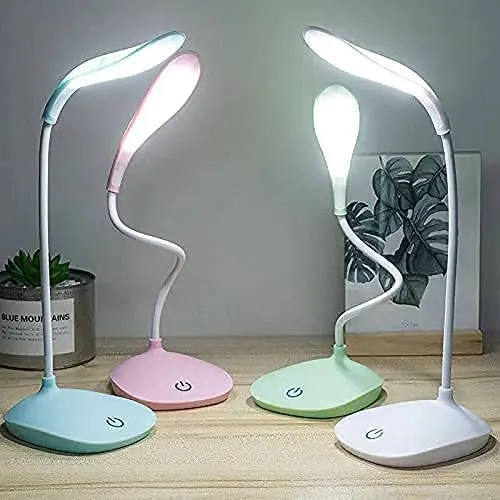
★360-Degree adjustable neck: fold and twist the neck of the led lamp in any direction you like to adjust the lamp to the perfect position.
★Brightness levels: long touch for increasing and decreasing the led light brightness.You can easily control the study lamp with light touches.
★Non-flicking natural light: scientifically designed desk led panel lamp reflects the light sideways and provides a glare less, uniform, and more natural light source.
★Portable design with its small and compact design, it can be crried anywhere you like.
★It is so soft to protect your eyes. Touch sensor switch, 3-level brightness adjustment, gooseneck 360-degree adjustment.
★Rechargeable Desk Reading Lamp is using long-lasting, high-efficiency energy saving LED bulbs Strong and light brightness.
★Eco-friendly with non-toxic silicon material, it is suitable for kids, adults, and senior.
★Energy saving and long lasting battery: last 4 hours in brightest and 8 hours in dimmest.
★Portable design with its small and compact design, it can be carried anywhere you like.