Project 1 - Design and Development of Crutch ( Medical Technology)
PRODUCT 1- DESIGN AND DEVELOPMENT OF CRUTCH (MEDICAL TECHNOLOGY)
AXILLA CRUTCH
- A crutch is a mobility aid that transfers weight from the legs to the upper body. It is often used by people who cannot use their legs to support their weight, for reasons ranging from short-term injuries to lifelong disabilities.
- Medical crutches are used by individuals who cannot use their legs to support their weight due to some form of disability. There are various types of crutches such as forearm, leg, underarm, platform, and others which help transfer weight from the lower part of the body to the upper part.
- These are used normally in cases of arthritis, fracture, walking impairment, developmental disabilities, balancing problems obesity among others. The crutches provide more self-confidence and self-dependence to persons facing difficulties in moving.
- The high prevalence of osteoporosis & arthritis and the rise in awareness & adoption of crutches are expected to drive market growth during the forecast period. In addition, factors like technological advancements in medical crutches, an increasing number of initiatives & funding by international organizations and governments, and an increase in the number of post-surgery rehabilitation programs are expected to boost the market growth.
- Moreover, the rise in the geriatric population and the increase in the number of hip, knee and joint replacement surgeries are the other factors that drive the growth of the market.
TASK 1
MARKET ANALYSIS
a-Market size
- Canes And Crutches Market size was valued at USD 873.29 Million in 2020 and is projected to reach USD 1.15 Billion by 2028, growing at a CAGR of 3.59% from 2021 to 2028.
- The rise in the geriatric population, musculoskeletal disorders, and the growing prevalence of osteoporosis, ankylosing spondylitis, and arthritis is expected to fuel the growth of the Global Canes And Crutches Market.
- In addition, a surge in the proportion of admissions to rehabilitation centers due to rising instances of substance abuse and alcohol addiction is likely to accelerate the use of canes and crutches, as patients tend to lose their balance during these programs.
- The Global Canes And Crutches Market report provides a holistic evaluation of the market. The report offers a comprehensive analysis of key segments, trends, drivers, restraints, competitive landscape, and factors that are playing a substantial role in the market.
b-Key players in the market
- Drive DeVilbiss Healthcare (Medical Depot Inc.),
- Cardinal Health Inc.,
- Medline Industries Inc.,
- GF Health Products Inc.,
- NOVA Medical Products,
- Invacare Corporation,
- Ergoactives.
c-Key Market Trends
- Medical crutches are used by individuals who cannot use their legs to support their weight due to some form of disability. There are various types of crutches such as forearm, leg, underarm, platform, and others which help transfer weight from the lower part of the body to the upper part. These are used normally in cases of arthritis, fracture, walking impairment, developmental disabilities, balancing problems obesity among others. The crutches provide more self-confidence and self-dependence to persons facing difficulties in moving.
- The high prevalence of osteoporosis & arthritis and the rise in awareness & adoption of crutches are expected to drive market growth during the forecast period. In addition, factors like technological advancements in medical crutches, an increasing number of initiatives & funding by international organizations and governments, and an increase in the number of post-surgery rehabilitation programs are expected to boost the market growth. Moreover, the rise in the geriatric population and the increase in the number of hip, knee and joint replacement surgeries are the other factors that drive the growth of the market.
- Based on the product, underarm crutch is anticipated to account for the highest market share due to the increase in the number of surgeries combined with the rise in prevalence of the long-term disability disorders are the major factors that boost the growth of the market. In addition, the rise in the geriatric population, surge in cases of accidents, and increase in demand for underarm crutches across the globe are the other factors that drive the growth of the market.
- The North America region is expected to witness the largest market share and growth over the forecast period. The factors such as the advanced healthcare infrastructure, the presence of favorable government policies, and the highly aging population are some factors contributing to its large share. According to CDC, nearly 61 million adults in the U.S. live with a disability. In addition, acquisitions, investments, and product launch strategies adopted by players are expected to drive market growth.
- The industry is marked by the presence of numerous small and large industry players. The medical crutches market is highly competitive in the regions such as North America and Europe.
d-State of art of products
1-Elbow crutches
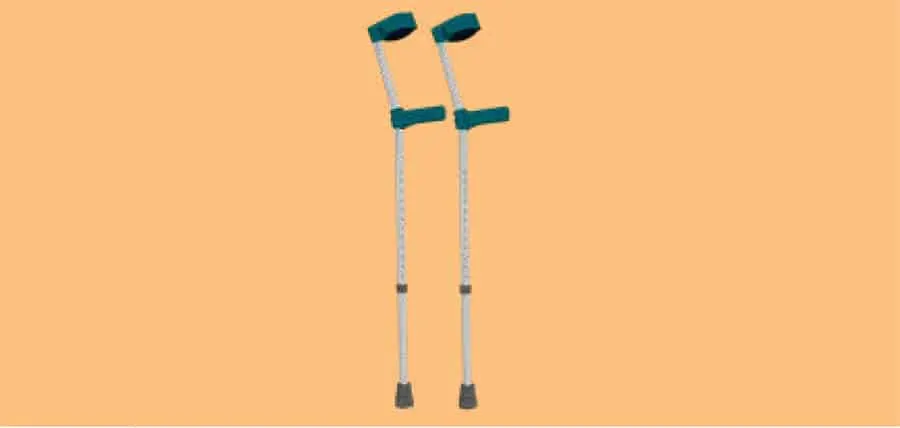
- Elbow crutches are designed for short- or long-term use. Children or adults use elbow crutches if they need support to balance or bear weight through their legs.
2-Axilla crutches
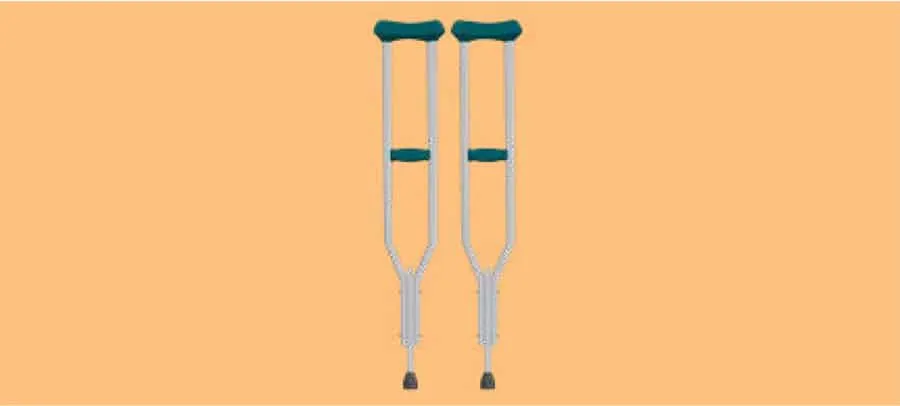
Designed for short-term use only, axilla crutches are aimed at children or adults who need support to balance or bear weight through their legs.
3-Forearm crutches
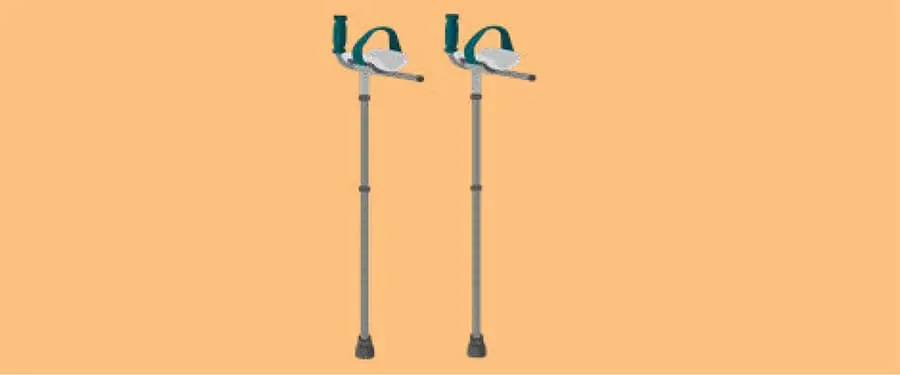
Children or adults can use forearm crutches for short- or long-term use. They are designed for individuals who need support to balance or bear weight through their legs and are unable to use standard handgrip due to hand or arm impairment.
TASK 2
| REQUIREMENTS(customer, functional,performance, design) | PRODUCT SPECIFICATIONS |
|
1-That they are easily adjustable, strong and durable |
|
|
2-Should have a low deformation risk |
|
|
3-Be made from a lightweight material |
|
|
4-The tips of the crutch should be durable. |
|
|
5-Parts must be replaceable and made from materials that withstand the environment of use |
|
| 6-Crutches should be appropriate for local terrain and conditions such as sand, rocky terrain, rain, ice and snow. |
|
| 7-Manufacturers should provide tips for different environmental conditions, height adjustment mechanisms, and individual components as spare parts with each crutch. |
|
| 8-manufacturers should supply optional accessories. |
|
| 9-crutches should come with underarm supports and handgrips |
|
| 10-shaft should be height-adjustable and fitted with a tip |
|
| 11-These crutches should feature a height adjustment mechanism. |
|
| 12-As with elbow crutches, axilla crutches should also come in three to four different sizes to suit paediatric and adult users, as well as have a plus-size range for individuals over 120kg |
|
| 13-Each crutch should come completely assembled with an appropriate tip for the environment, with tips securely fitted and made from durable rubber. |
|
| 14-Suppliers should give overall length,height-adjustment range(s),maximum user weight,unit weight. |
|
TASK 3
a-Concept generation based on customer feedback
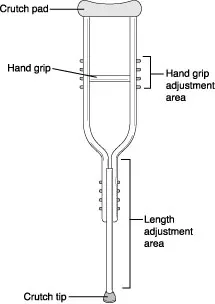
Axillary crutches or underarm crutches are used to support a patient when one leg is almost entirely non weight bearing. This is the most popular and well known type of crutch that is used by the general public. Before using them, its important to adjust the crutches to the appropriate height to prevent nerve damage and provide proper support and comfort for the person using it. So, here are few ideas we can go with to build the product according to the customer feedback.
- Weight capacity- Can support upto 120 Kgs.
- Crutch height- Simple push button allowing height adjustment and having a facility of double height adjsutment with an extended length of about 136 centimeters.
- Hand grips- Handgrips having cushion to make it easy, comfortable and convenient for the person using it.
- Crutch made up of light weight aluminium.
- Suction rubber tip for better grip on any surface.
- An integrated product fitted with durable, non slip and replaceable rubber tip.
- Crutch with additional padded handgrip covers and cuff protectors.
- Crutch with an easy and understandable user manual along with tips to increase its lifespan.
- Gives the best support, strain free and comfort on any terrain.
- Crutchs with a wide range of sizes, styles, colors, and designs.
b-Concept of operation for the product
- Tools: Similar to other ops roles, manage the prodct tech stack, establish internal best practices, and ensure team members are using tools effectively.
- Data: collect, organize, and analyze quantitative and qualitative product data and enable the entire organization to make the most of their insights. Data can include everything from product usage data,Net promoter score(NPS), and product stickiness to customer feedback, feature requests, and support tickets.
- Experimentation: To help eliminate friction within the product experimentation process, we need to track, sequence, and implement all experiments, and create processes to drive efficiency.
- Strategy: foster cross-departmental collaboration around the product, and use their product insights to identify areas for improvement and inform business decisions.
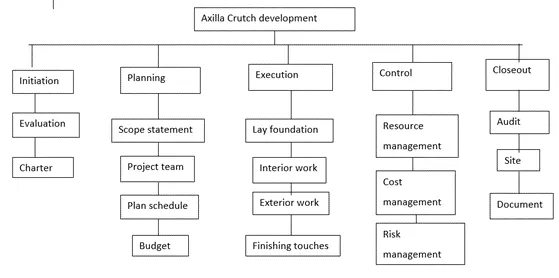
c-Work breakdown structure (WBS)
d-Product architecture
Modular architecture
- Modular architecure will suit better for these products as they are used continuously, which sometimes results in damage of the product. So modular architecture will help in replacing the parts whenever needed.
- We can use different cushion fabric, color and replace the existing parts in modular structure.
- can replace any damaged part immediately
- Easy to manufacture
- Easy to operate and handle
- Understandable
TASK 4
PRODUCT DEVELOPMENT PLAN
a-Product Roadmap
| Q4 '22 | Q1'23 | Q2'23 | Q3'23 | Q4'23 |
|
|
|
|
|
b-Mission Statement
Product Description:-
-
A convenient folding system to allow crutches to be easily stored. Crutches for kids, adult, and tall users. Height adjusts easily for those 4'11" - 6'4" (41" - 58") . Comes with sporty red crutch pads and grips. 2 crutches included.Our folding arm crutches weigh just 4.5 lbs, are made of durable aluminum, and are height adjustable via a push button.
Benefits Statement:-
- "STAY ON TOP OF YOUR HEALTH" "A FOLDABLE , TRAVEL EASILY, LIGHTWEIGHT ALUMINUM AND COMFORTABLE CRUTCHES"
Business Objectives:-
- The main objective is to convert people's disability into a powerful ability.
Core Market :-
- North America,Europe,Asia-Pacific.
Stakeholders:-
- defines customers, shareholders, in-vestors, employees, suppliers, government agencies, research institutes and communities that directly and indirectly affect its business operations as its stakeholders.
- Generally we require mechanical and electrical engineers.
- No. of staffs depends on the volume of production.
Budget requirements:
- To develop a Axilla crutch, requires lot many parts and cost of these parts depends on the company that we buy from.
- the cost of the staff, depends on the volume of production, high production means requires many staff members.
- It also includes fixed cost like land, machines etc.
d-Product Schedule
- The initial stage of the product development process begins by generating new product ideas. This is the product innovation stage, where you brainstorm product concepts based on customer needs, concept testing, and market research.
- It’s a good idea to consider the following factors when initiating a new product concept:
- Target market: Your target market is the consumer profile you’re building your product for. These are your potential customers. This is important to identify in the beginning so you can build your product concept around your target market from the start.
- Existing products: When you have a new product concept, it’s a good idea to evaluate your existing product portfolio. Are there existing products that solve a similar problem? Or does a competitor offer a product that doesn’t allow for market share? And if yes, is your new concept different enough to be viable? Answering these questions can ensure the success of your new concept.
- Functionality: While you don’t need a detailed report of the product functionality just yet, you should have a general idea of what functions it will serve. Consider the look and feel of your product and why someone would be interested in purchasing it.
- SWOT analysis: Analyzing your product strengths, weaknesses, opportunities, and threats early in the process can help you build the best version of your new concept. This will ensure your product is different from competitors and solves a market gap.
- SCAMPER method: To refine your idea, use brainstorming methods like SCAMPER, which involves substituting, combining, adapting, modifying, putting to another use, eliminating, or rearranging your product concept.
- To validate a product concept, consider documenting ideas in the form of a business case. This will allow all team members to have a clear understanding of the initial product features and the objectives of the new product launch.
- Once you’ve completed the business case and discussed your target market and product functionality, it’s time to define the product. This is also referred to as scoping or concept development, and focuses on refining the product strategy.
- During this stage, it’s important to define specifics including:
- Business analysis: A business analysis consists of mapping out distribution strategy, ecommerce strategy, and a more in-depth competitor analysis. The purpose of this step is to begin building a clearly defined product roadmap.
- Value proposition: The value proposition is what problem the product is solving. Consider how it differs from other products in the market. This value can be useful for market research and for developing your marketing strategy.
- Success metrics: It’s essential to clarify success metrics early so you can evaluate and measure success once the product is launched. Are there key metrics you want to look out for? These could be basic KPIs like average order value, or something more specific like custom set goals relevant to your organization.
- Marketing strategy: Once you’ve identified your value proposition and success metrics, begin brainstorming a marketing strategy that fits your needs. Consider which channels you want to promote your product on—such as social media or a blog post. While this strategy may need to be revised depending on the finished product, it’s a good idea to think about this when defining your product to begin planning ahead of time.
- Once these ideas have been defined, it’s time to begin building your minimum viable product (MVP) with initial prototyping.
- During the prototyping stage, your team will intensively research and document the product by creating a more detailed business plan and constructing the product.
- These early-stage prototypes might be as simple as a drawing or a more complex computer render of the initial design. These prototypes help you identify areas of risk before you create the product.
- During the prototyping phase, you will work on specifics like:
- Feasibility analysis: The next step in the process is to evaluate your product strategy based on feasibility. Determine if the workload and estimated timeline are possible to achieve. If not, adjust your dates accordingly and request help from additional stakeholders.
- Market risk research: It’s important to analyze any potential risks associated with the production of your product before it’s physically created. This will prevent the product launch from being derailed later on. It will also ensure you communicate risks to the team by documenting them in a risk register.
- Development strategy: Next, you can begin working through your development plan. In other words, know how you’ll be assigning tasks and the timeline of these tasks. One way you can plan tasks and estimate timeline is by using the critical path method.
- MVP: The final outcome of the prototyping stage is a minimum viable product. Think of your MVP as a product that has the features necessary to go to launch with and nothing above what’s necessary for it to function. For example, an MVP bike would include a frame, wheels, and a seat, but wouldn’t contain a basket or bell. Creating an MVP can help your team execute the product launch quicker than building all the desired features, which can drag launch timelines out. Desired features can be added down the road when bandwidth is available.
- Now it’s time to begin designing the product for market launch.
- During the initial design phase, project stakeholders work together to produce a mockup of the product based on the MVP prototype. The design should be created with the target audience in mind and complement the key functions of your product.
- A successful product design may take several iterations to get just right, and may involve communicating with distributors in order to source necessary materials.
- To produce the initial design, you will:
- Source materials: Sourcing materials plays an important role in designing the initial mockup. This may entail working with various vendors and ordering materials or creating your own. Since materials can come from various places, you should document material use in a shared space to reference later if needed.
- Connect with stakeholders: It’s important to keep tight communication during the design phase to verify your initial design is on the right track. Share weekly or daily progress reports to share updates and get approvals as needed.
- Receive initial feedback: When the design is complete, ask senior management and project stakeholders for initial feedback. You can then revise the product design as needed until the final design is ready to be developed and implemented.
- Once the design is approved and ready to be handed off, move onto the validation phase for final testing before launching the product.
- To go live with a new product, you first need to validate and test it. This ensures that every part of the product—from development to marketing—is working effectively before it’s released to the public.
- To ensure the quality of your product, complete the following:
- Concept development and testing: You may have successfully designed your prototype, but you’ll still need to work through any issues that arise while developing the concept. This could involve software development or the physical production of the initial prototype. Test functionality by enlisting the help of team members and beta testers to quality assure the development.
- Front-end testing: During this stage, test the front-end functionality for risks with development code or consumer-facing errors. This includes checking the ecommerce functionality and ensuring it’s stable for launch.
- Test marketing: Before you begin producing your final product, test your marketing plan for functionality and errors. This is also a time to ensure that all campaigns are set up correctly and ready to launch.
- Once your initial testing is complete, you’re ready to begin producing the final product concept and launch it to your customer base.
- Now it’s time to commercialize your concept, which involves launching your product and implementing it on your website.
- By now, you’ve finalized the design and quality tested your development and marketing strategy. You should feel confident in your final iteration and be ready to produce your final product.
- In this stage you should be working on:
- Product development: This is the physical creation of your product that will be released to your customers. This may require production or additional development for software concepts. Give your team the final prototype and MVP iterations to produce the product to the correct specifications.
- Ecommerce implementation: Once the product has been developed and you’re ready to launch, your development team will transition your e-commerce materials to a live state. This may require additional testing to ensure your live product is functioning as it was intended during the previous front-end testing phase.
TASK 5
a-INDUSTRIAL DESIGN
Simplicity
- The product is foldable, so it helps u to travel easily and store whenever it is not in use.
- Its light in weight, so it does not give much stress/strain while walking.
- Its structure provides you comfort and easy to handle.
Immediate intuition
- FOLDABLE , TRAVEL EASILY, LIGHTWEIGHT ALUMINUM AND COMFORTABLE
Aesthetics
- Crutchs with in a wide range of styles, colors, and designs.
Ergonomics
- Crutches allow users to achieve good balance, while keeping their backs straight when they are fitted, and using them properly.
- This helps to minimize back pain, promote good posture, and improve upper body gait (and even lower leg walking gait if a user is able to use one leg).
b- SKETCH- PDF ATTACHED