Project 1 : CFD Meshing for Tesla Cyber Truck
Aim
Perform a detailed topological cleanup on the given Tesla Cybertruck Model and construct a surface mesh over it using suitable target lengths and quality criteria. Further, construct a wind tunnel domain around the model for volume meshing.
Learning Outcomes
- Perform detailed topological cleanup on half body of the truck.
- Generate surface mesh on the truck with target sizings and quality criteria.
- Fix all the off elements on the mesh using mesh reconstruction and reshape.
- Conduct geometry and surface mesh checks to verify the final model before volume meshing.
Procedure
The given Tesla Cybertruck was opened using ANSAv23 shown below.
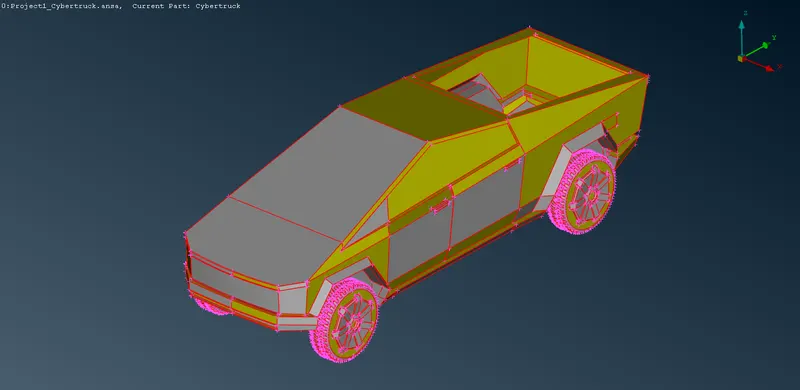
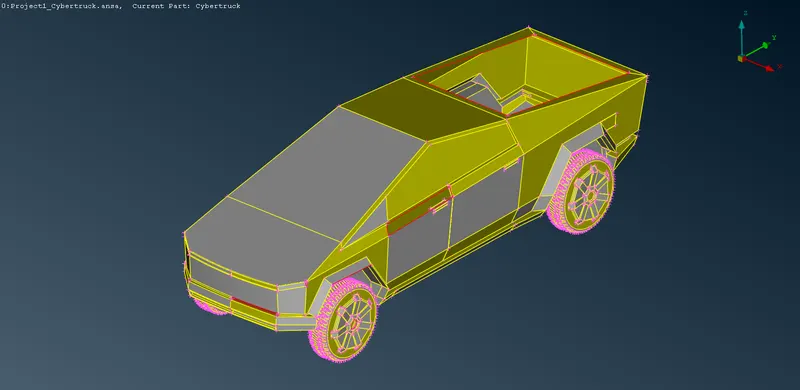
The model shown above consisted of a lot of single CONS and hence the topo tool was used on the model to connect the single CONS together as seen below.
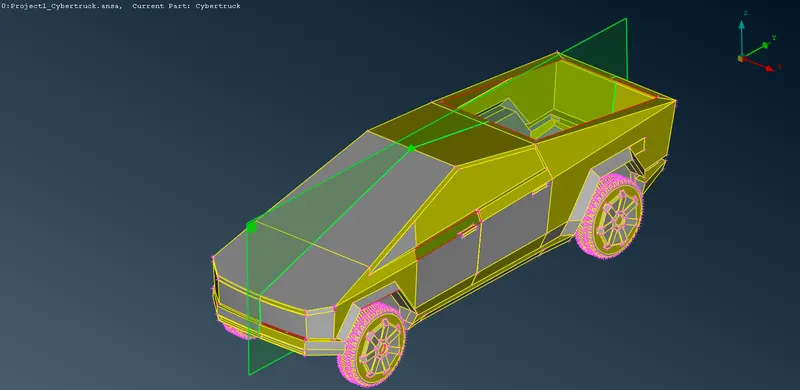
Due to the symmetric nature of the Cybertruck, the half body was decided to be used and to do so a plane cut was performed as shown below.
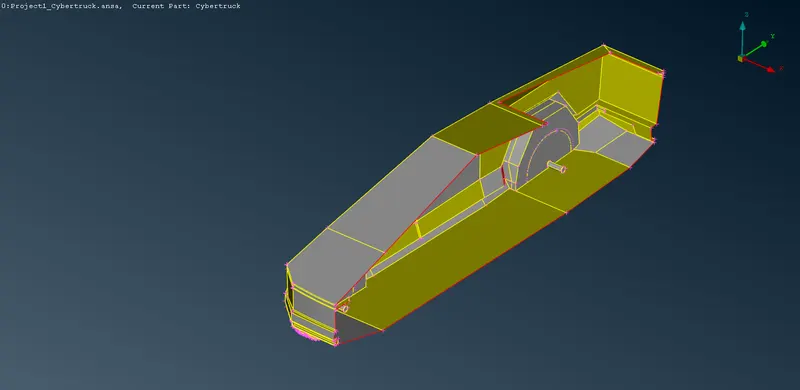
With the half body of the model, the topological cleanup was performed on the various geometric errors as shown below.
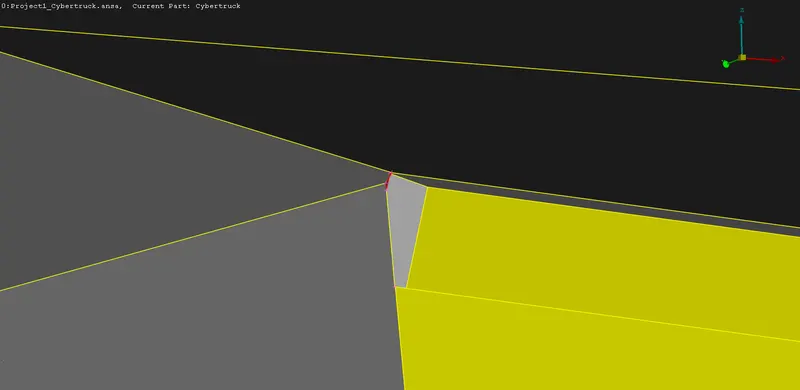
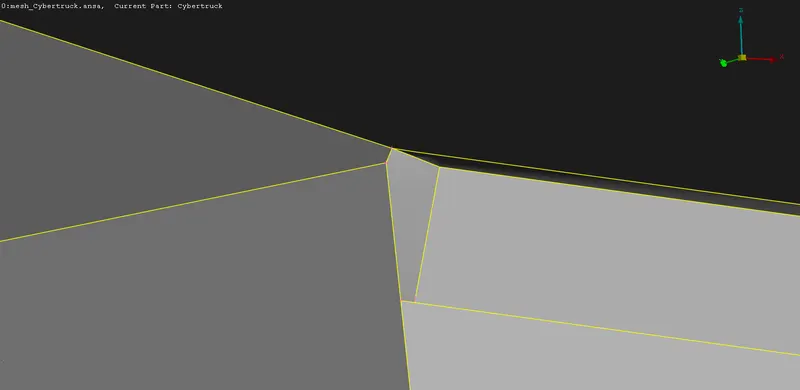
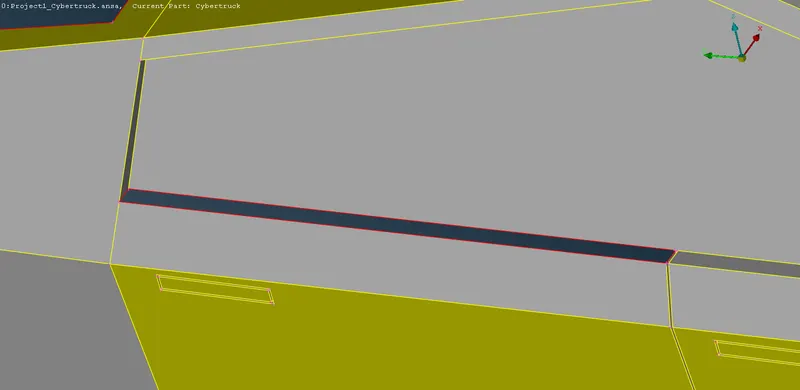
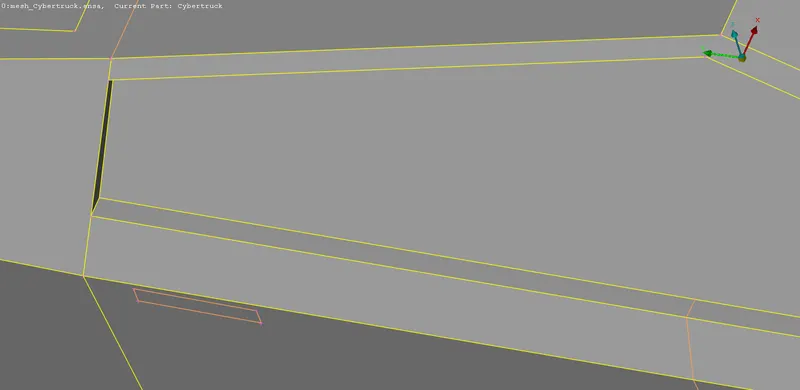
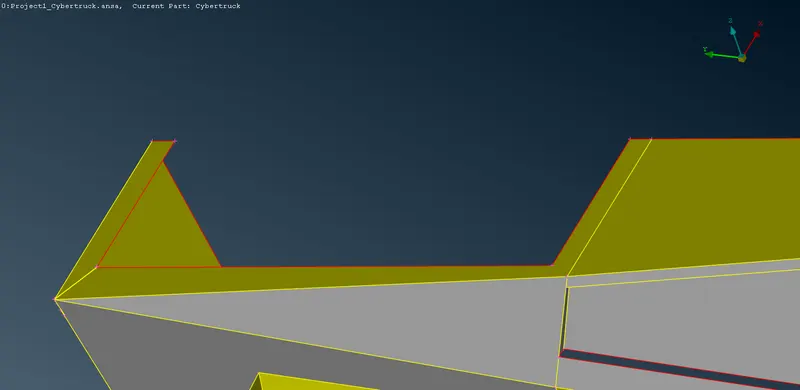
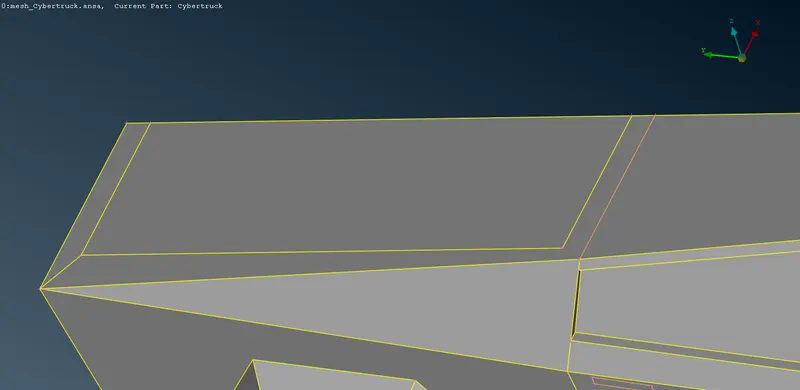
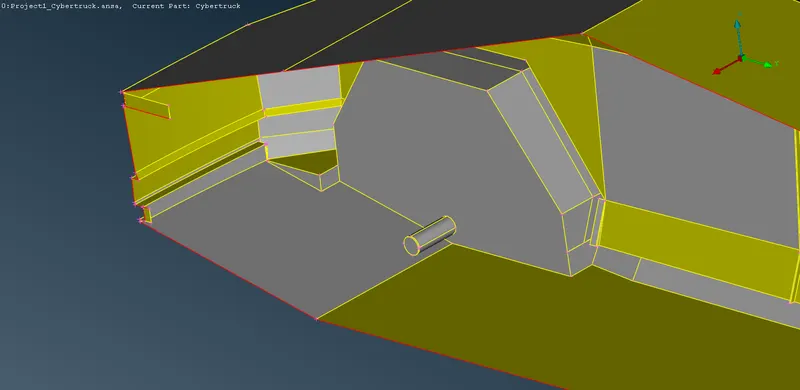
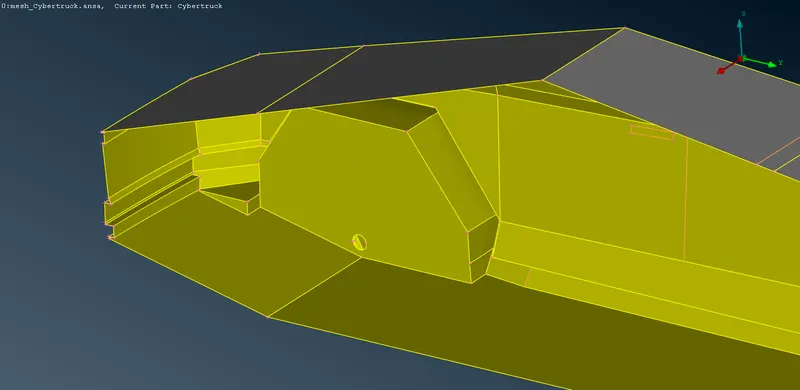
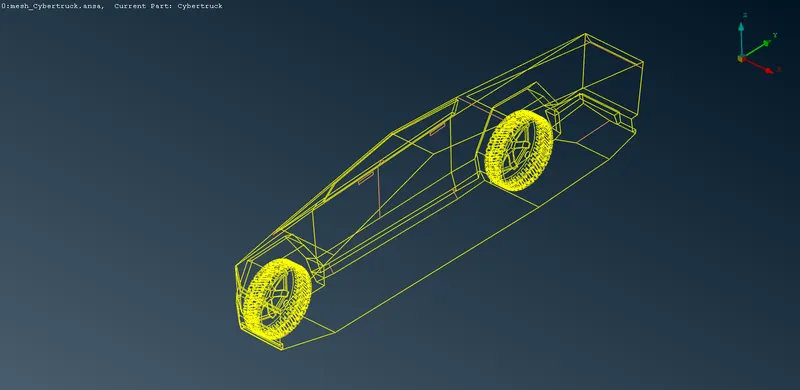
The final half-body model post topological cleanup can be seen in the image below.
With the topological cleanup complete, the surface mesh on the model was then generated using the sizings and quality criteria shown below.
| Component | Element sizing [mm] | Min Length - QC [mm] | Max Length - QC [mm] | Skewness - QC |
| Rims and Tyres | 5 | 3 | 7 | 0.5 |
| Windows | 13 | 7 | 15 | 0.5 |
| Body | 13 | 5 | 15 | 0.5 |
The surface mesh was generated on the various components based on the table above. The OFF elements were corrected by using mesh reconstruction and reshape. The images below show the surface mesh on the various components and off elements based on the quality criteria.
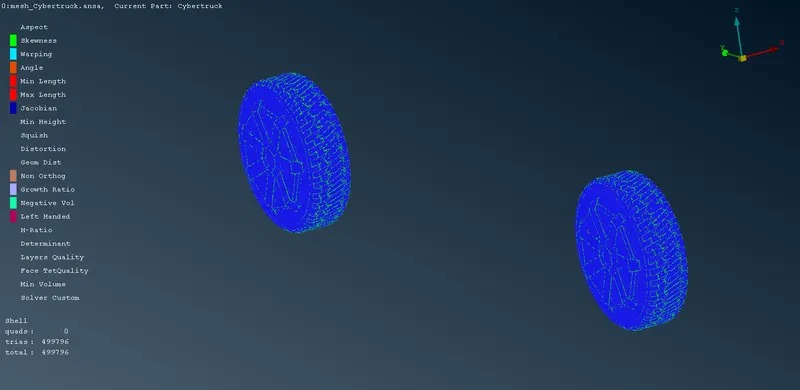
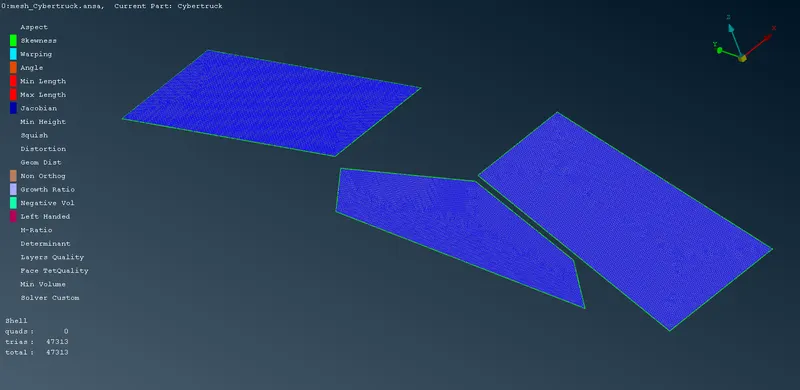
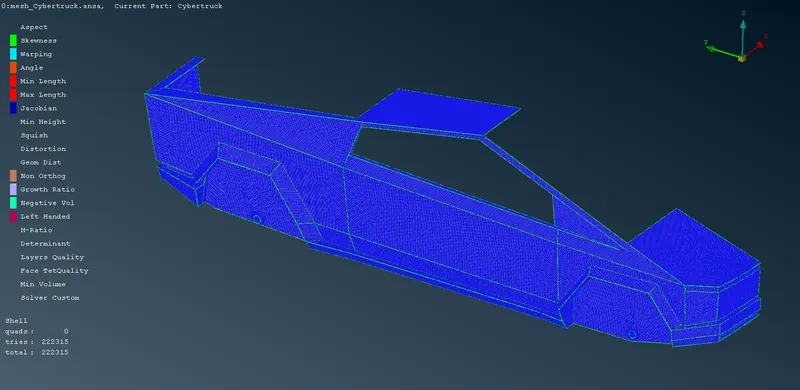
With the surface mesh complete with no OFF elements, the symmetry tool was used to create the full body as shown below.
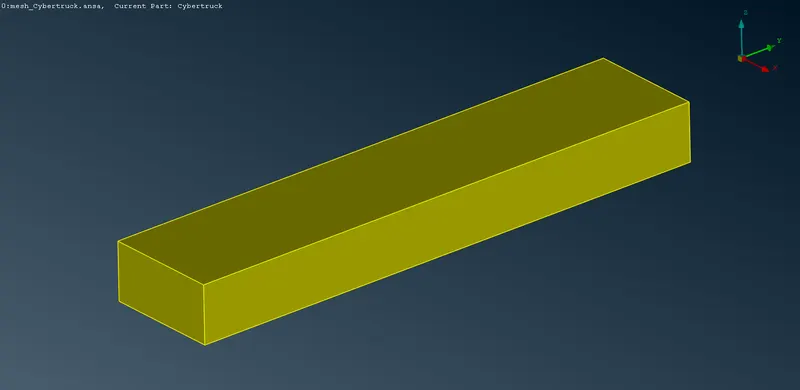
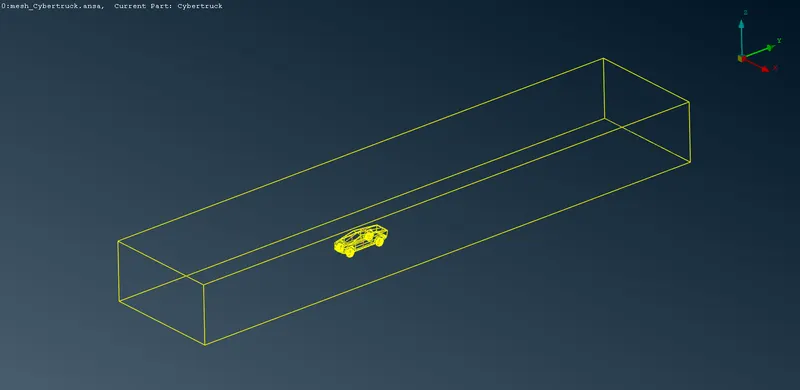
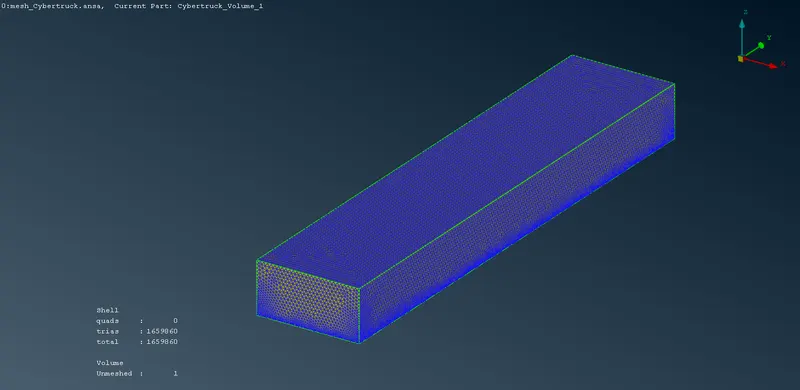
The wind tunnel domain was generated around the model with 4 truck lengths in front and 6 truck lengths behind the truck. 1 truck length distance were provided between the wind tunnel walls and the sides and top of the truck. The resulting wind tunnel domain and the truck can be seen below.
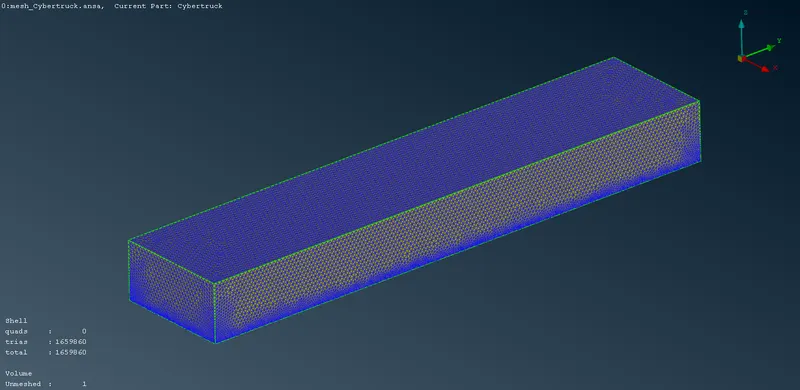
A surface mesh was generated on the walls of the wind tunnel with sizings of 150mm on the floor, 500mm on the top and 150 to 500mm on the sides walls as shown below.
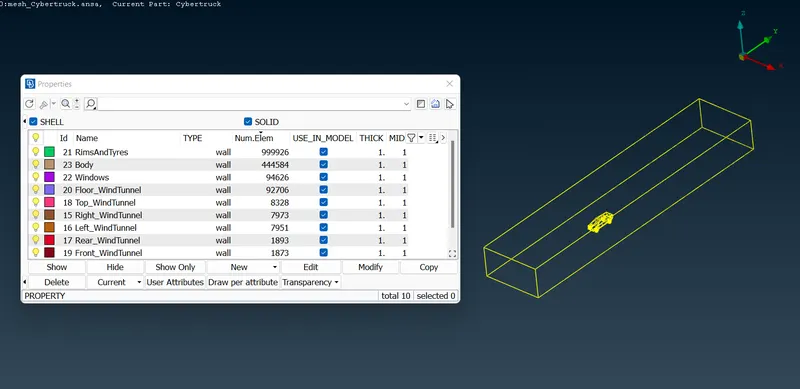
PIDs were assigned on the truck and domain for the various components as shown below.
Final geometric checks were conducted to ensure the surface mesh was watertight for the volume meshing and the results can be seen below.
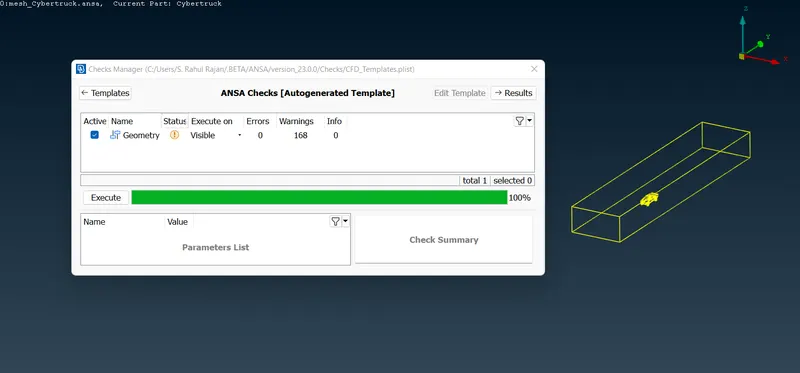
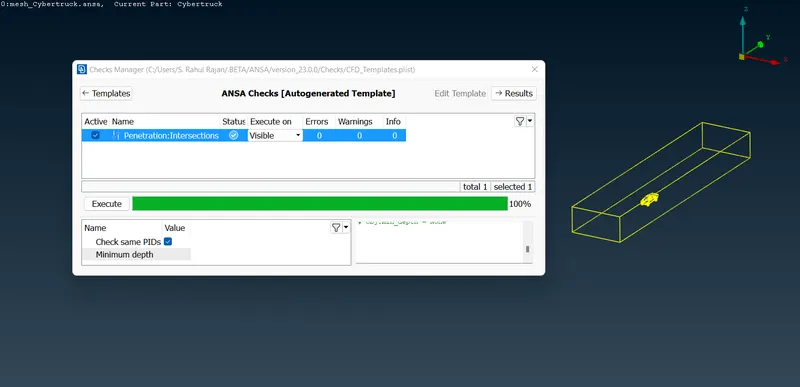
The geometric checks show warnings of convex/concave CONS which were ignored for the volume meshing as surface meshing was already performed on those surfaces.
The volume for the fluid domain was then defined as shown in the image below.
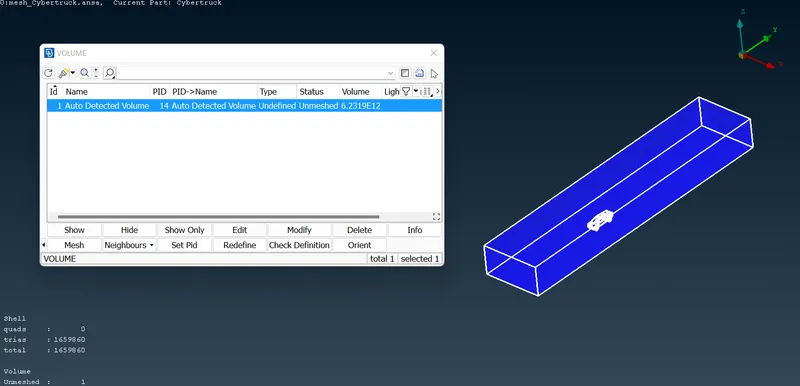
Generation of the volume mesh was skipped for the current study due to the lack of computational resources.
Results
The final surface mesh on the domain and body shown below consists of a total of 1659860 triangular cells.
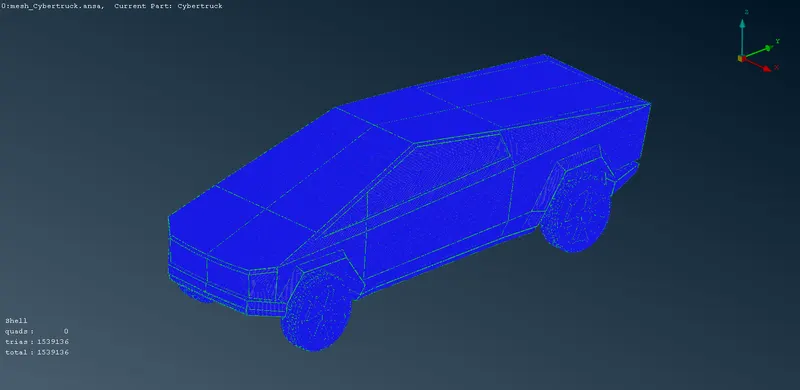
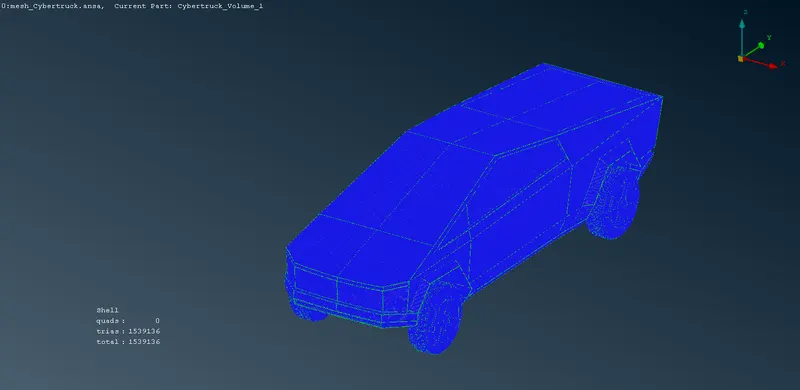
A total of 1539136 triangular cells were generated on the Teslacyber truck as shown below.
The images below show the surface mesh on the various regions of the truck.
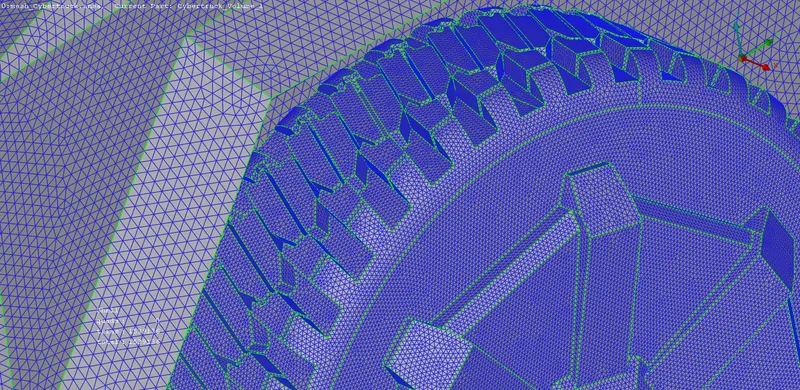
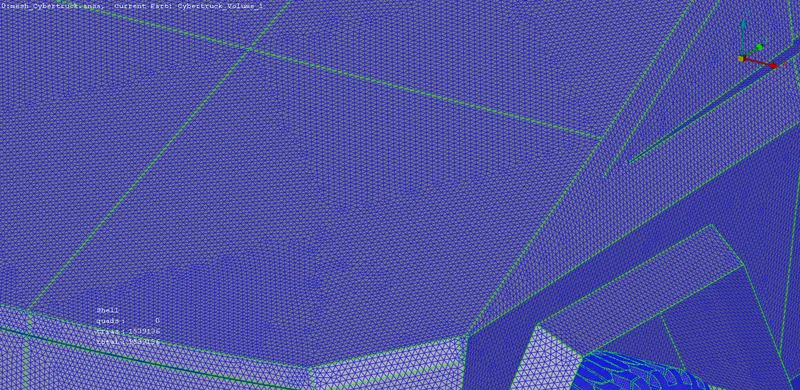
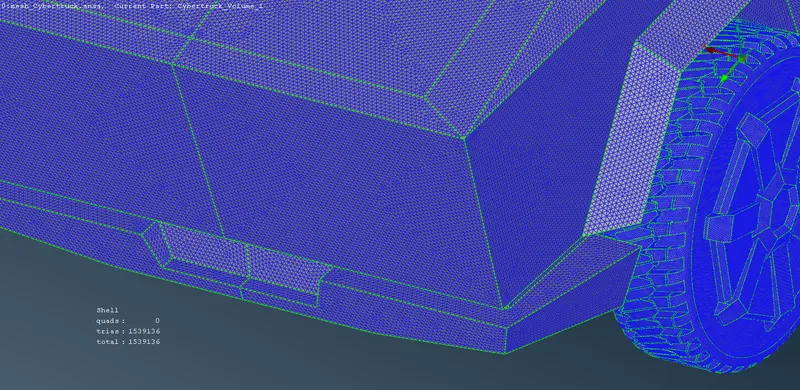
From the images above, it can be seen that the surface mesh was able to capture all the details of the Tesla Cybertruck well. Since the model contains majorly straight lines and very few curved surfaces, the large element sizings used were able to adequately capture the model. With all the checks and visual inspections complete, the model is now ready for volumetric meshing.
Drive Link to the ANSA File:
https://drive.google.com/file/d/1TQVFXsyPeLhrC4MXpBkSkE9b6OWVeR0r/view?usp=sharing
Conclusion
A topological cleanup was performed on the given Tesla Cybertruck model where multiple surfaces were reconstructed to create a water-tight geometry. PIDS were assigned to the various components of the truck to aid ease of meshing and simulation. A surface mesh was then generated on the car using the specified element sizings and quality criteria. A wind tunnel domain was then created around the truck and meshed with appropriate sizings. Finally, geometry and surface mesh checks were conducted to verify the final geometry and mesh. The resulting surface mesh contained no OFF elements and was deemed ready for volume meshing and simulation.