Project - Double Acting Actuator model using Simscape Multibody and Simscape components
Aim: Develop a double-acting actuator model using Simscape Multibody and Simscape components. The mechanical system of the cylinder needs to be built using Simscape Multibody library components/blocks, and the hydraulic system needs to be modeled using Simscape library physical components.
Objective:
- The mechanical system of the cylinder needs to be built using Simscape Multibody library components/blocks.
- The hydraulic system needs to be modeled using Simscape library physical components.
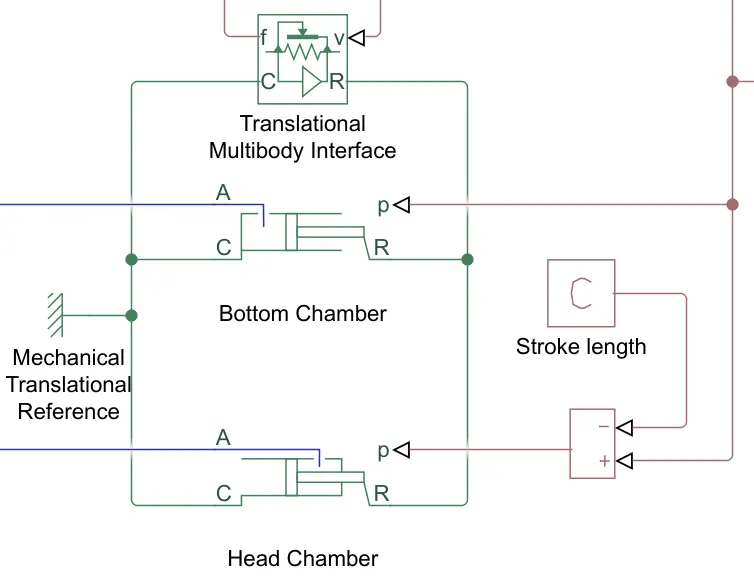
- Using The Translational Multibody Interface block connects the Translational Mechanical Converter (IL) blocks to the Prismatic Joint block.
Solution:
Double-acting hydraulic cylinders have a Cylindrical housing and one piston. When hydraulic oil is supplied to its cap end port, hydraulic pressure force will be applied over the piston and the end cylinder will be extended. During the extension of the piston hydraulic oil at the rod, the end side will be pushed out and directed towards the reservoir.
For the returning stroke, the hydraulic direction is reversed with the help of the direction control valve. During the returning stroke hydraulic oil is supplied to the rod end side and hence piston is retracted. During the retracting of the piston cap end, oil is directed toward the reservoir. hence the double-acting hydraulic actuator operated in both the directions
The schematics show the cylinder in three configurations: half-retracted, fully retracted, and fully extended.
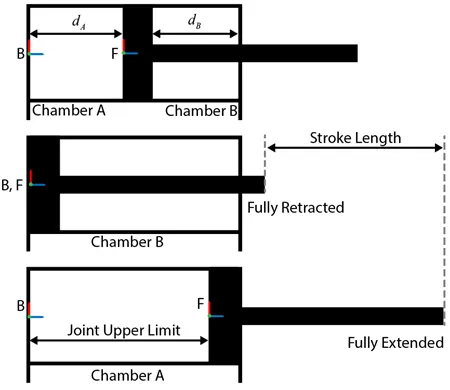
Building the mechanical system of the cylinder using Simscape Multibody library components/blocks.
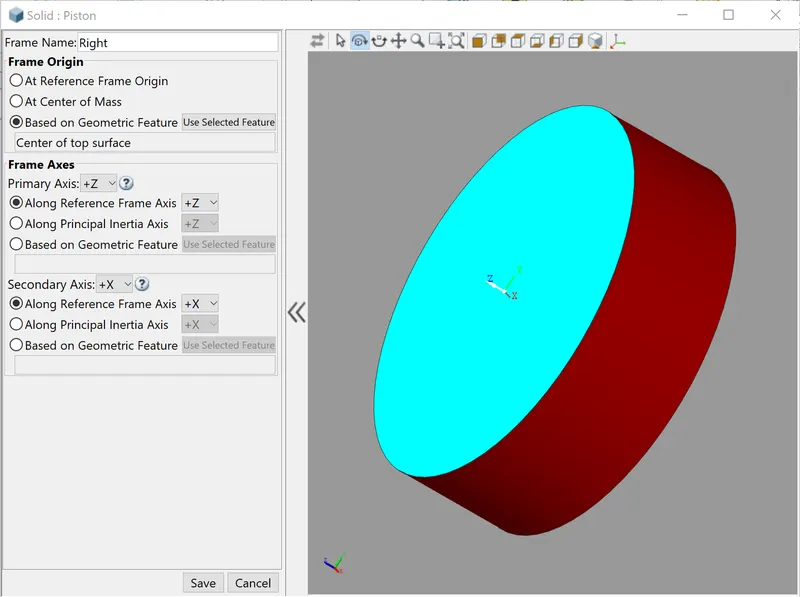
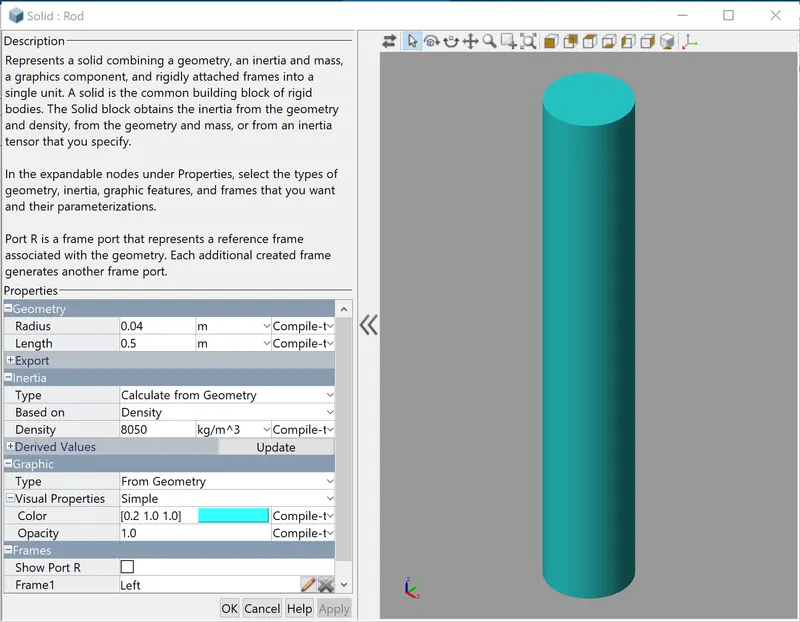
- To model the cylinder and piston, you can use the Revolved Solid (Simscape Multibody) and Cylindrical Solid (Simscape Multibody) blocks.
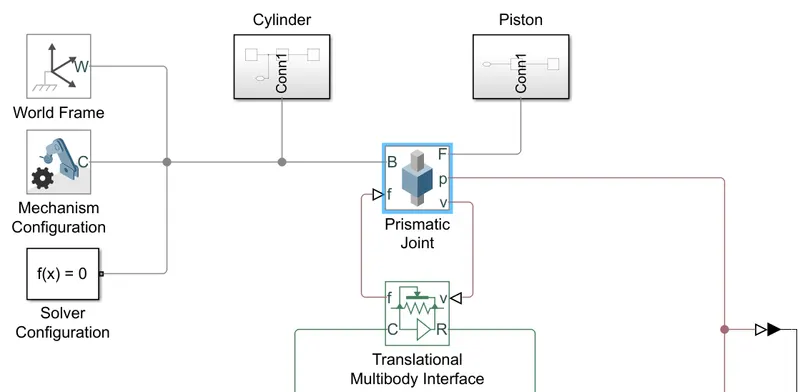
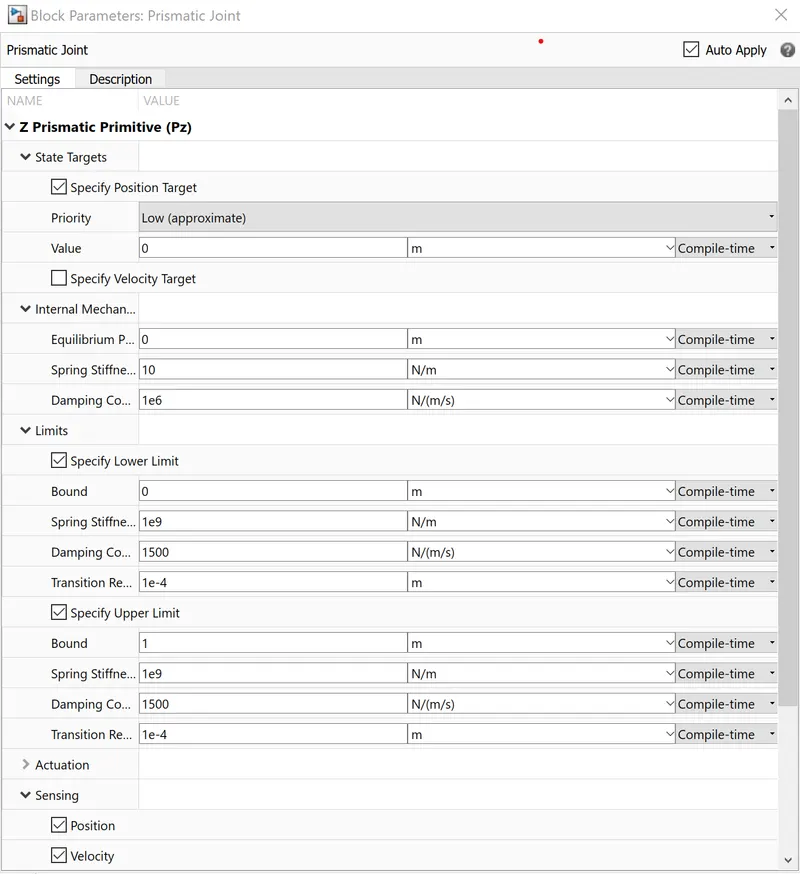
- To provide the translational degree of freedom for the piston, use a Prismatic Joint (Simscape Multibody) block.
Building Cylinder:
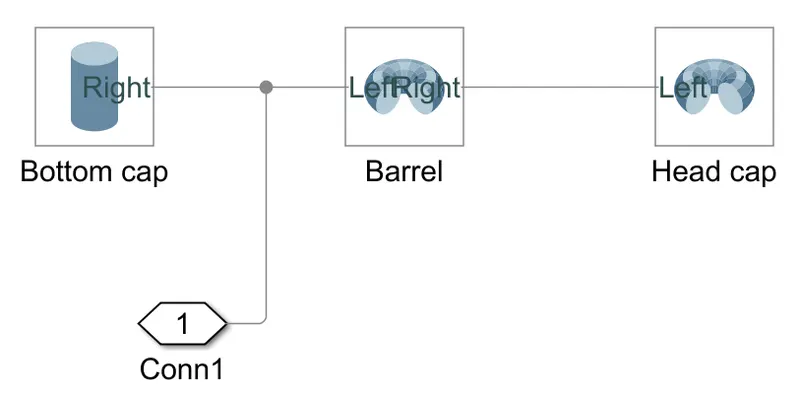
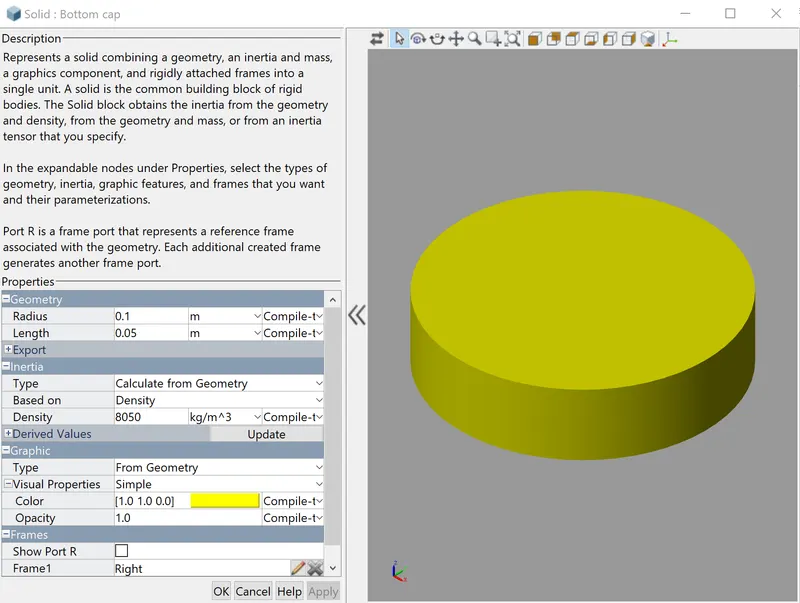
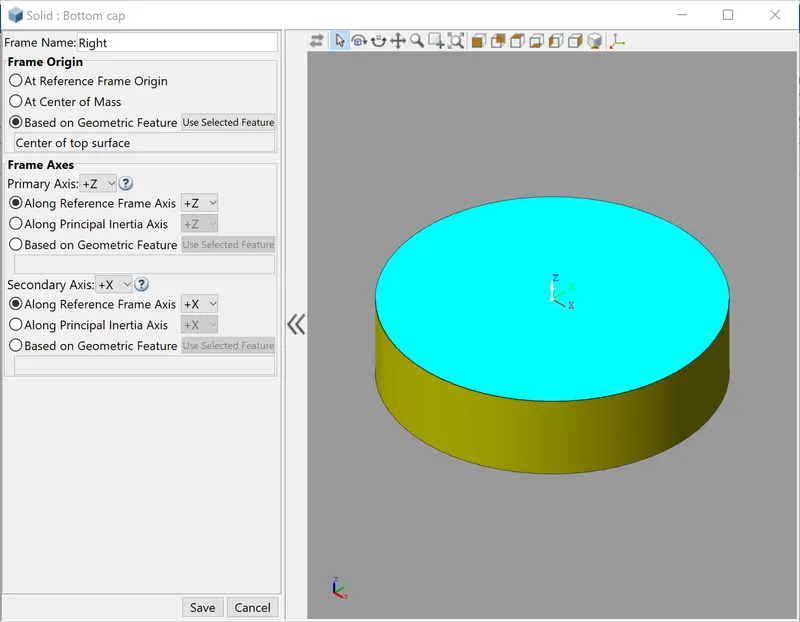
Bottom Cap:
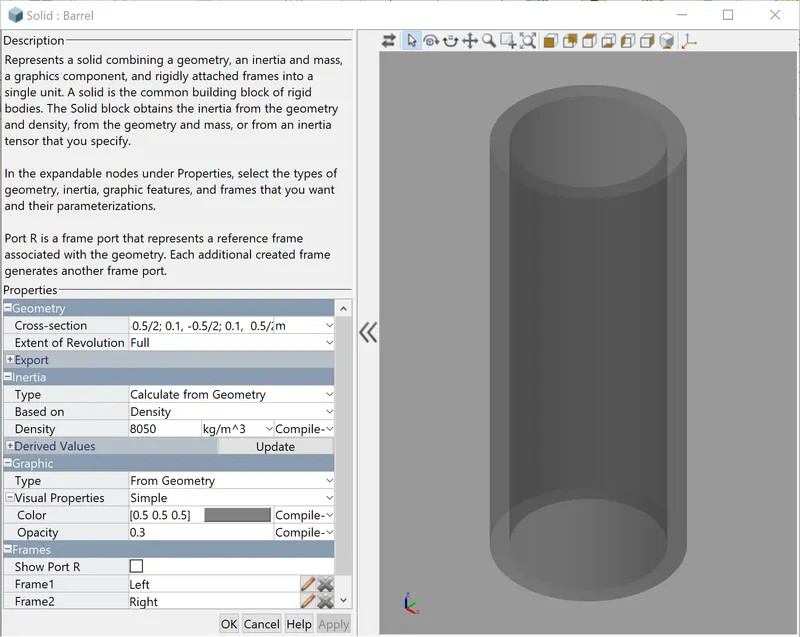
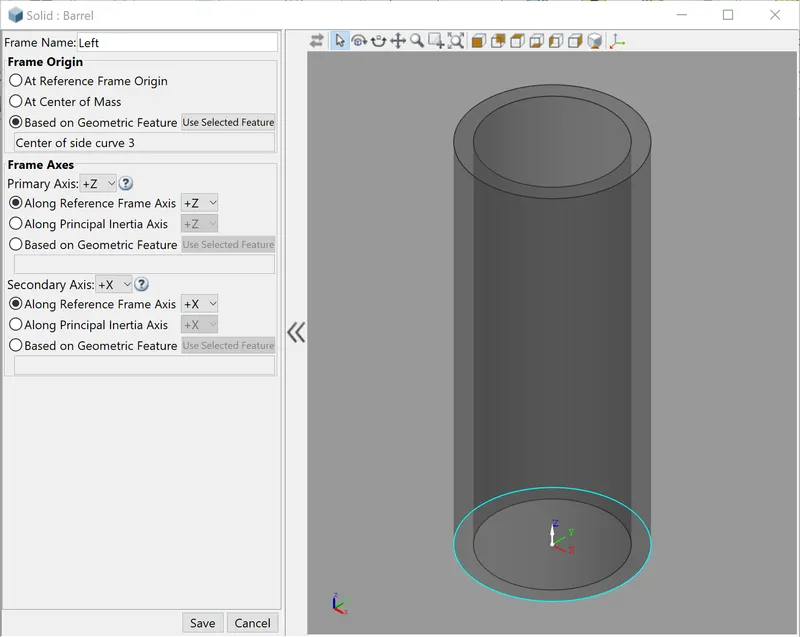
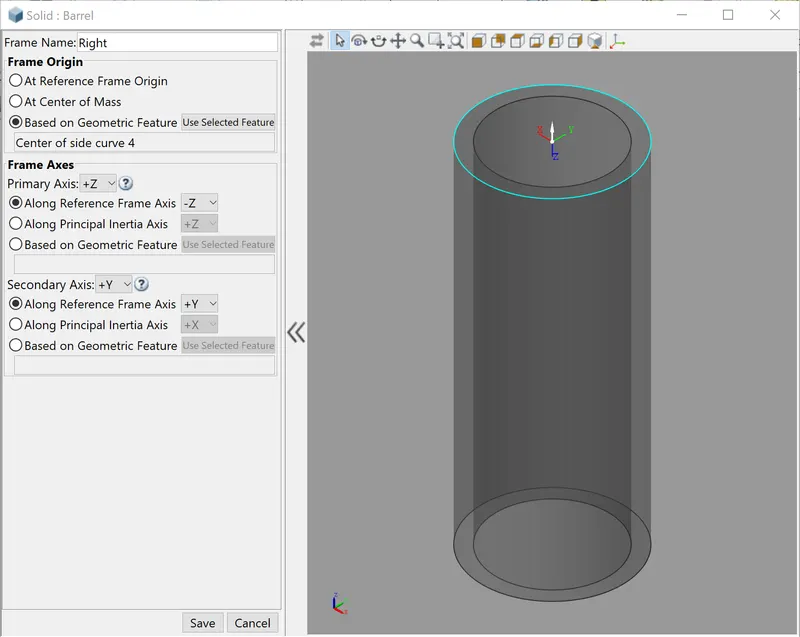
Barrel:
cross-section=[0.08, 0.5/2; 0.08, -0.5/2; 0.1, -0.5/2; 0.1, 0.5/2] m
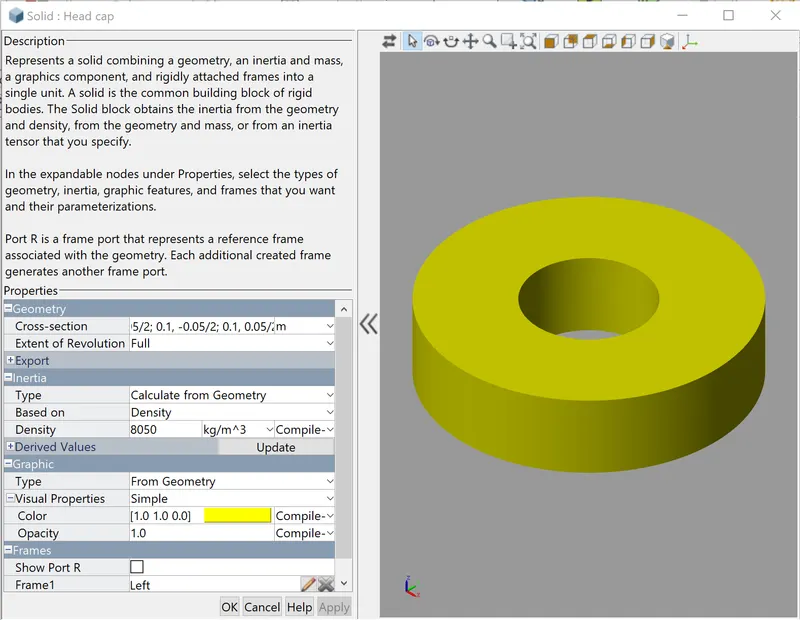
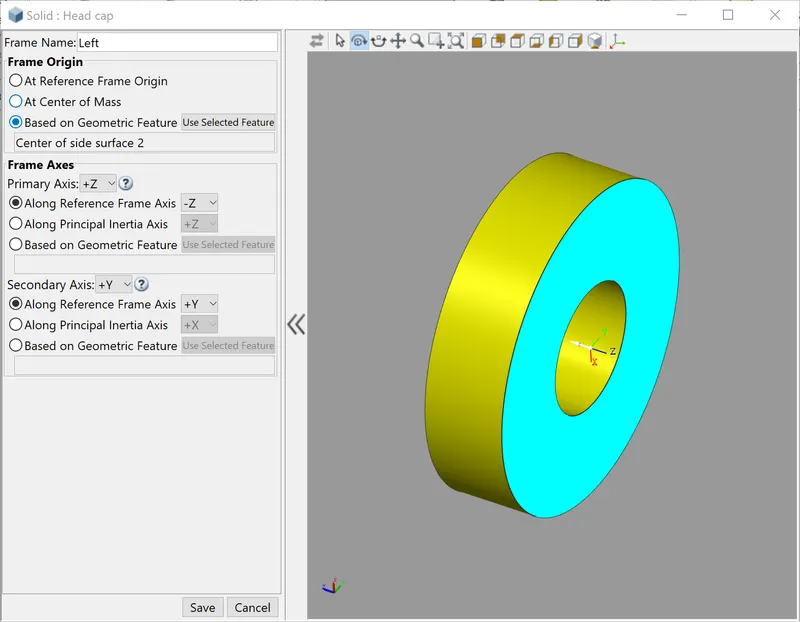
Head Cap:
cross-section=[0.04, 0.05/2; 0.04, -0.05/2; 0.1, -0.05/2; 0.1, 0.05/2] m
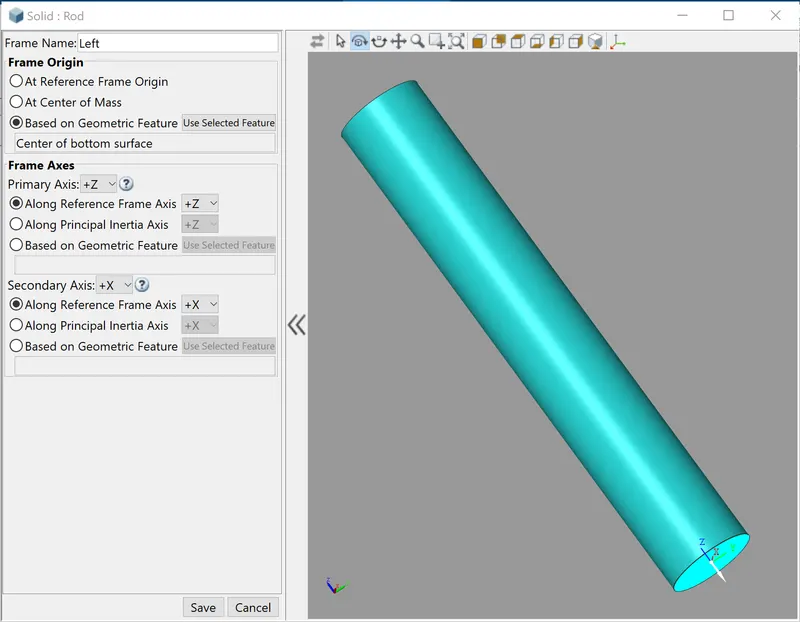
Building Piston:
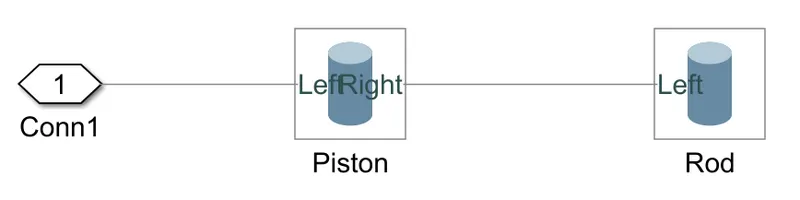
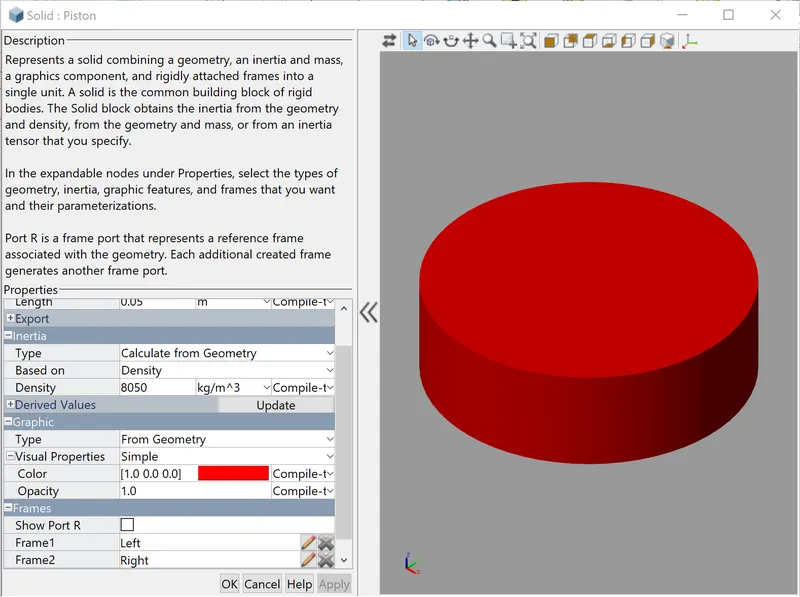
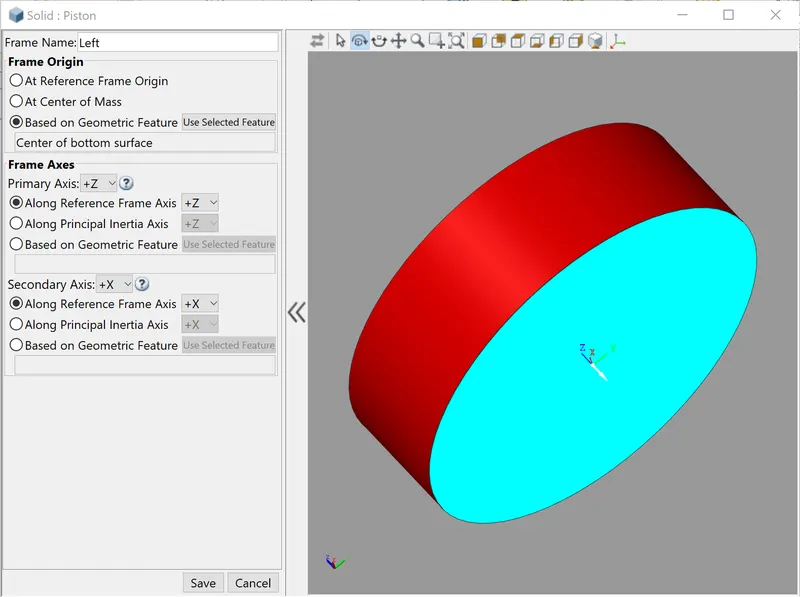
Piston:
Rod:
Prismatic Joint:
A prismatic joint is often called a slider — for example, a “crank-slider linkage.” This is a type of kinematic pair and an idealized way to describe how motions are constrained within machines.
Building the hydraulic system using Simscape library physical components.
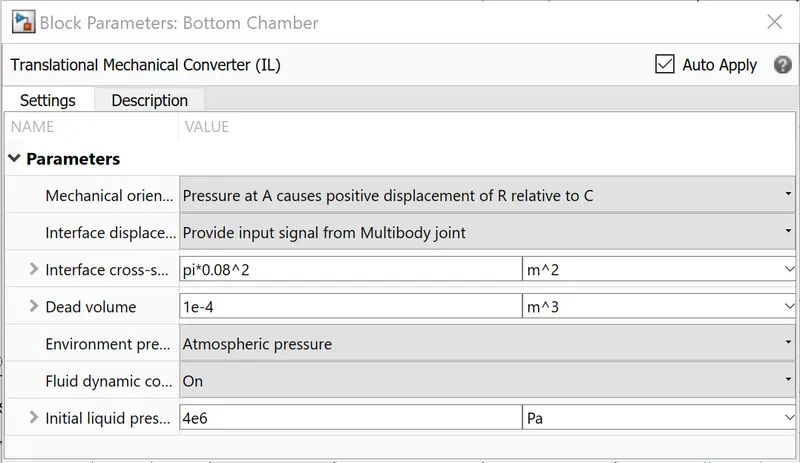
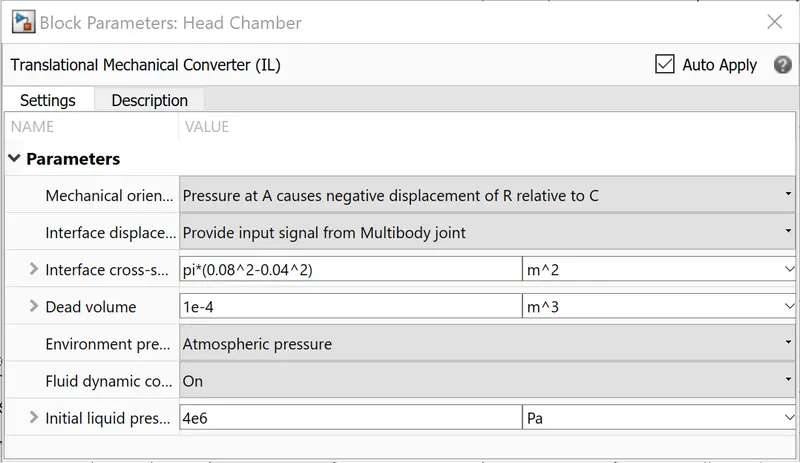
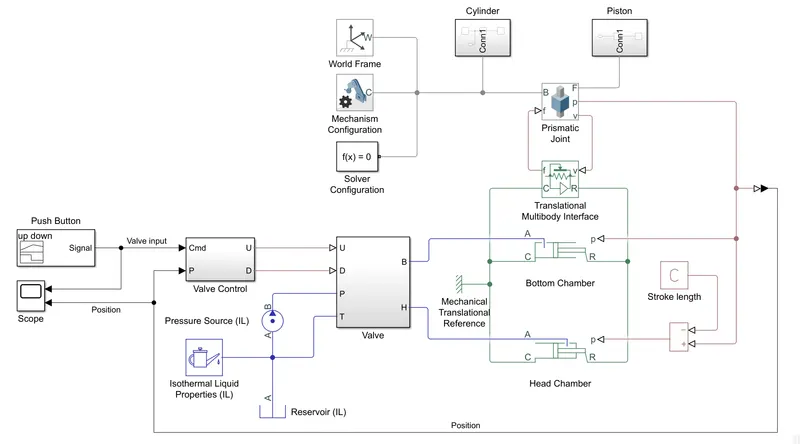
- Using two Translational Mechanical Converter (IL) blocks to model the chambers A and B of the cylinder.
- A Translational Multibody Interface block connects the Translational Mechanical Converter (IL) blocks to the Prismatic Joint block.
Bottom Chamber:
Head Chamber:
Stroke Length: 0.45 m
Hydraulic Circuit:
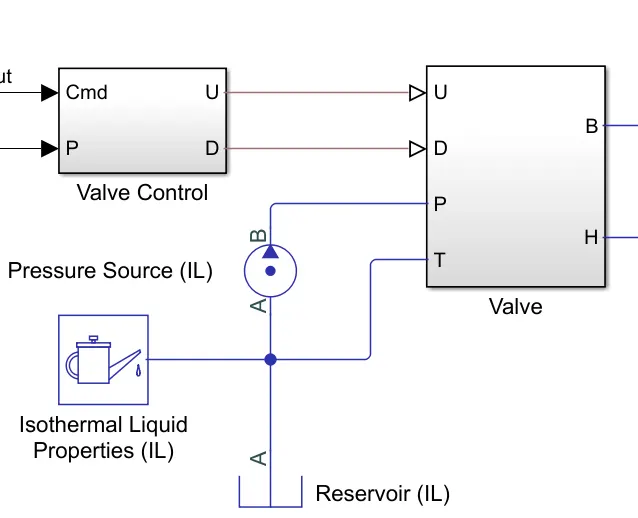
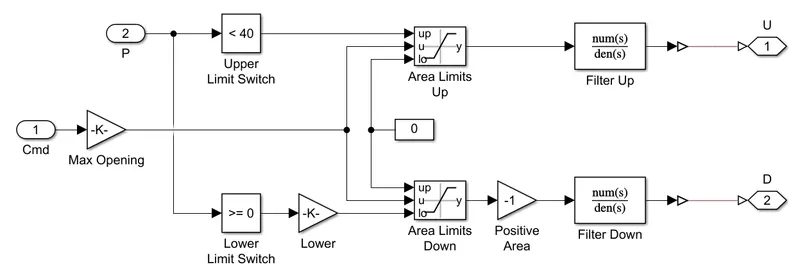
Valve Control:
- Here valve control unit is referred from Hydraulic Interface-Dump Trailer with Hydraulic Cylinder
- https://in.mathworks.com/help/sm/ug/hydraulic-interface-dump-trailer-with-hydraulic-cylinder.html
- Reference model sm_dump_trailer
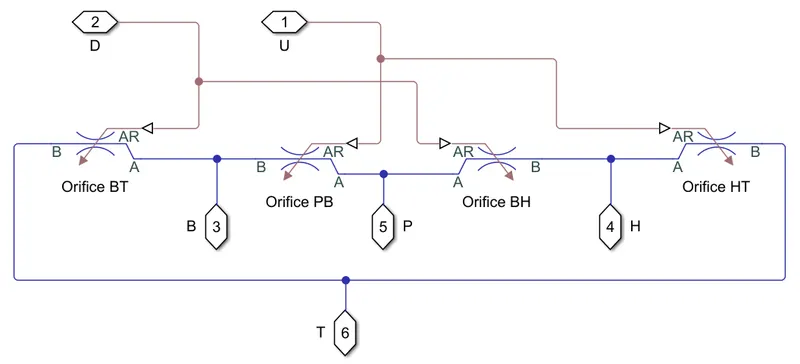
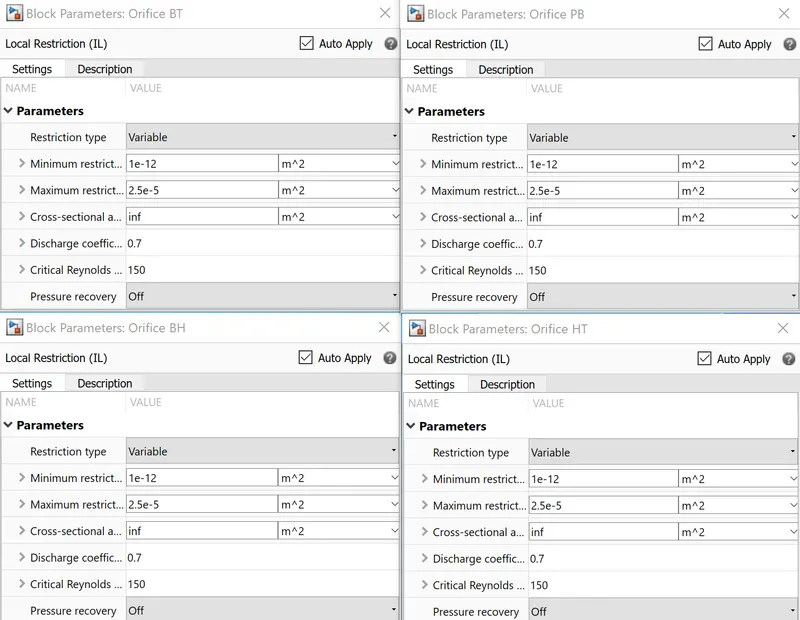
Valve:
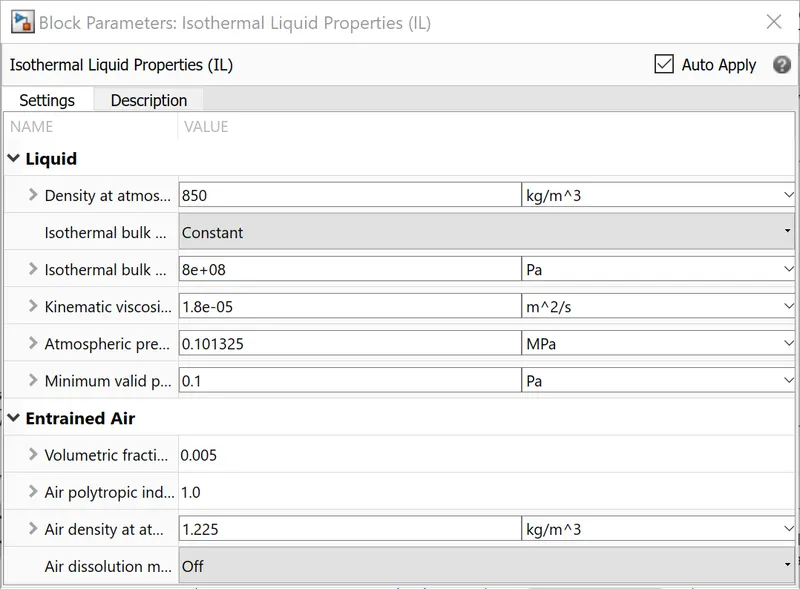
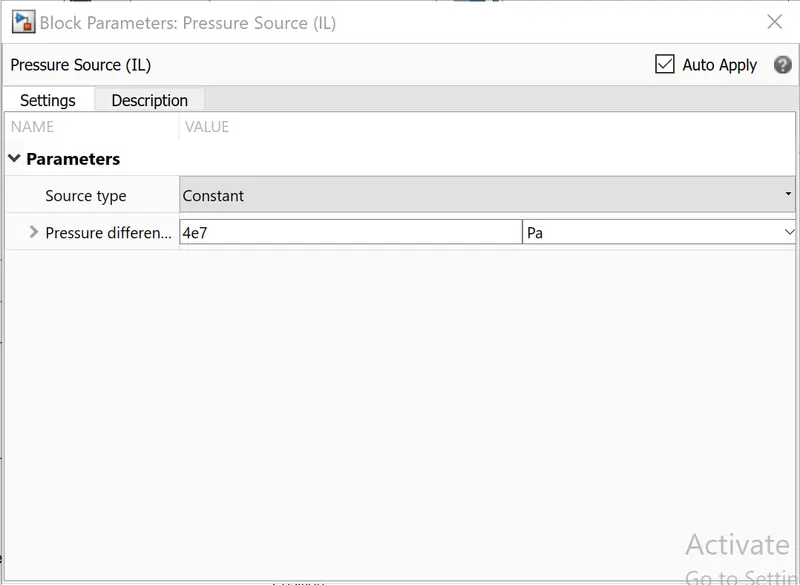
Isothermal Liquid Properties(IL) & Pressure Source(IL):
The overall model of a Double-Acting Actuator using Simscape Multibody and Simscape components.
- Simulation time(s)
- Start time: 0.0
- Stop time: 10.0
- Solver Selection
- Type: Variable step
- Solver: Auto
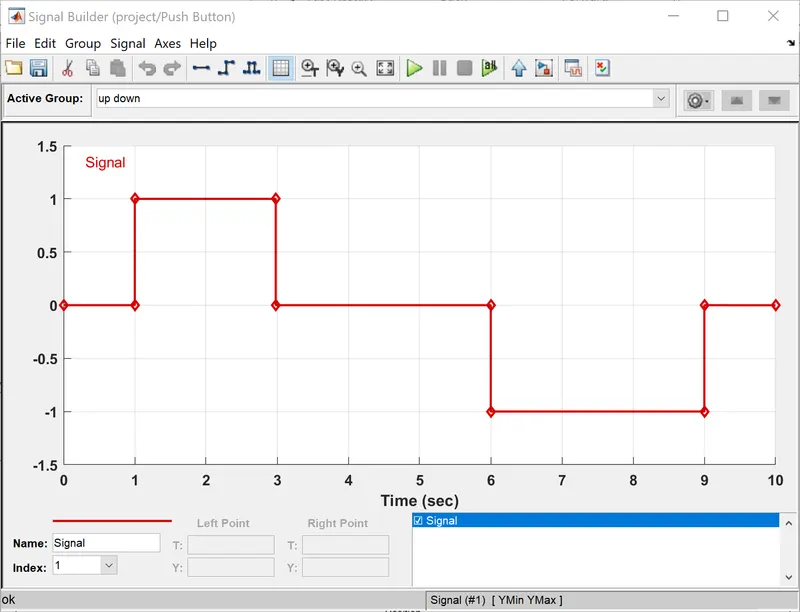
Valve Input:
Scope Result:
In the plot, the Valve input and Position signal are plotted with respect to the time(s).
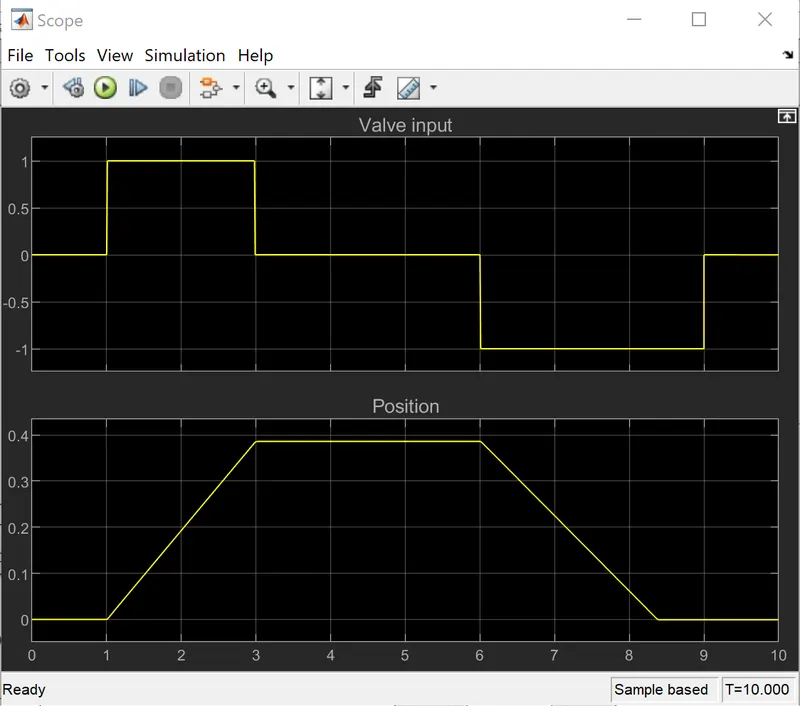
Accordingly, as the position signal changes piston is moved.
Mechanics Explorer Simulated Result:
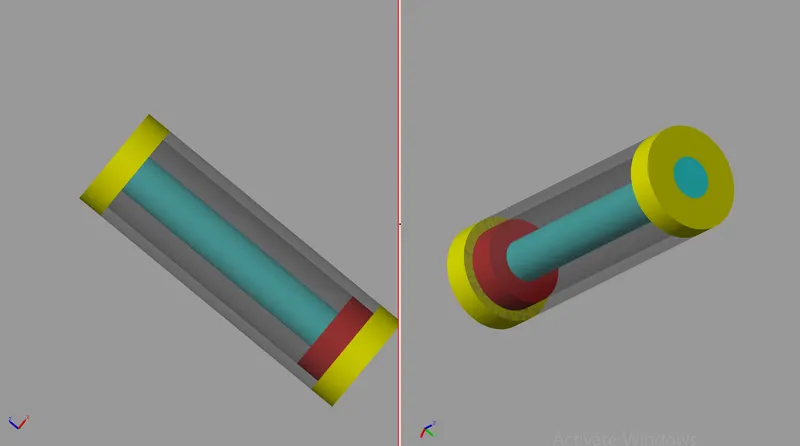
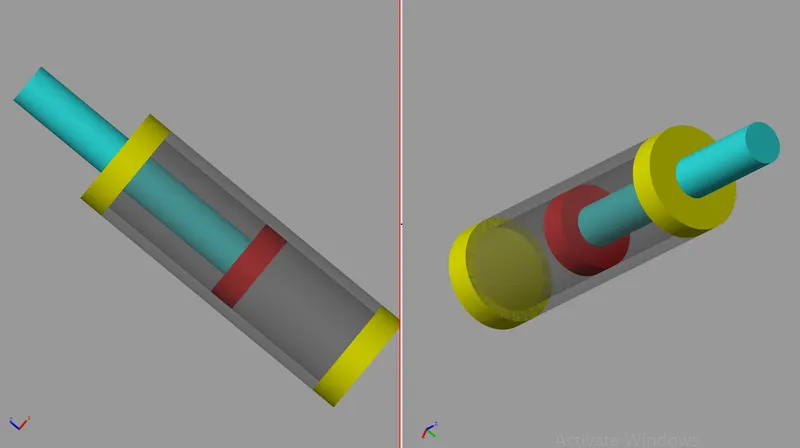
- Here, red colored solid is the piston which is connected to the blue-colored rod.
- Using the controller valve the fluid is passed through the hydraulic valve to the mechanical system due to which there is a change in the position of the piston.
Conclusion:
- Here the Mechanical system of the cylinder is built using Simscape Multibody library components/blocks and the Hydraulic system is modeled using Simscape library physical components.
- The Input signal to the valve is given from the Signal Builder block.
- Double-acting cylinder systems can be used in many applications. For example, a dump trailer can use a double-acting cylinder to actuate a scissor hoist mechanism that raises and lowers the dump bed.
- Under the mask of the Double-Acting Hydraulic Cylinder block in the scissor hoist are the mechanical and hydraulic subsystems, which are connected by a Translational Multibody Interface block.
- The Prismatic Joint block in the mechanical subsystem provides the position information to the two actuators in the hydraulic subsystem, the Head Chamber and Bottom Chamber, that have the opposite settings of the Mechanical orientation parameter.
- The Constant block C provides a position signal offset to the Head Chamber actuator because when the Bottom Chamber is at dead volume (where position p = 0), the Head Chamber is at a maximum stroke.