MBD Simulation on a Piston Assembly
MBD Simulation on a piston assembly
1. Aim
Model all the given parts to form the piston assembly followed by its motion analysis in three different conditions to get the linear displacement versus time plot.
2. Objective
- To carry out the motion study on the piston assembly based on the three different conditions of the wrist-pin.
| Sl. No. | Wrist pin offset | Crank speed (rpm) |
| 1 | 0 mm | 2000 |
| 2 | 10 mm positive | 2000 |
| 3 | 10 mm negative | 2000 |
- To obtain the linear displacement of the piston head on all three cases
- Superimpose the resulting three graphs in excel
3. Theory
The piston assembly consist of piston, connecting rod, end cap and crank. A piston is a cylindrical plunger that moves within a metal cylinder through the four strokes of the engine cycle: intake, compression, power and exhaust. While their motion is predicated on other engine parts and the mixture of air and fuel, the motion of a piston is central to the functioning of an engine. In an engine, its purpose is to transfer force from expanding gas in the cylinder to the crankshaft via a piston and Connecting rod.
In a reciprocating piston engine, the connecting rod connects the piston to the crank or crankshaft. The small end attaches to the piston pin, gudgeon pin or wrist pin & big end connects to the bearing journal on the crank throw, running on replaceable bearing shells accessible via the connecting rod bolts which hold the bearing "cap" onto the big end; typically there is a pinhole bored through the bearing and the big end of the con rod so that pressurized lubricating motor oil squirts out onto the thrust side of the cylinder wall to lubricate the travel of the pistons and piston rings.
4. Procedure
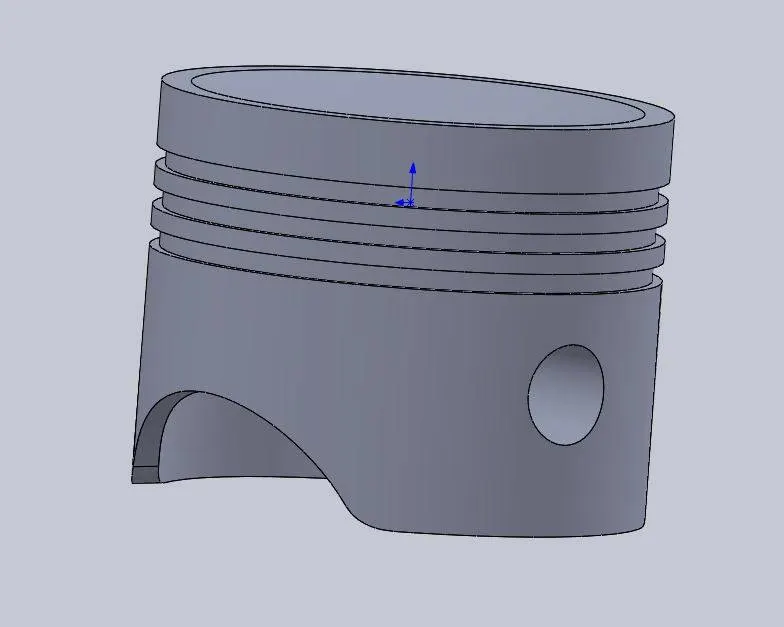
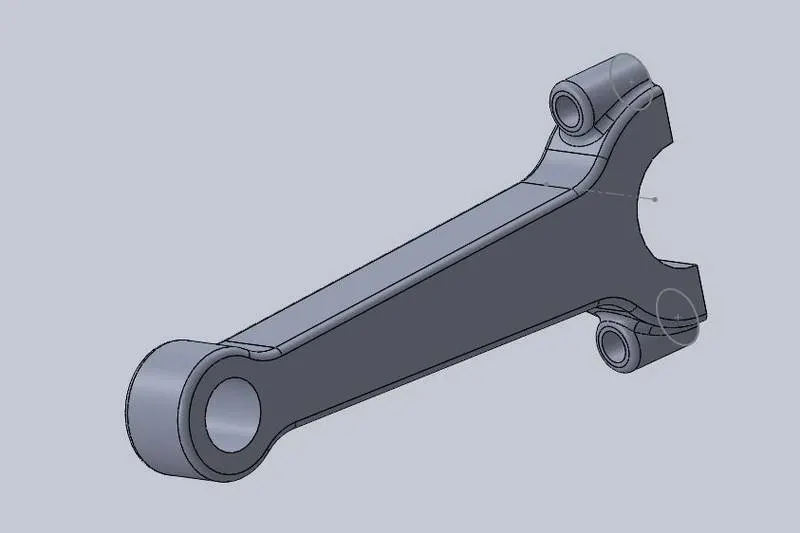
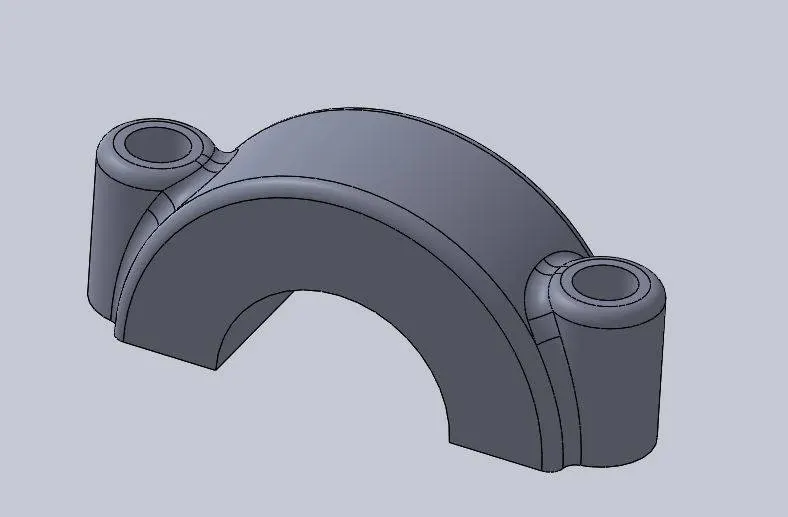
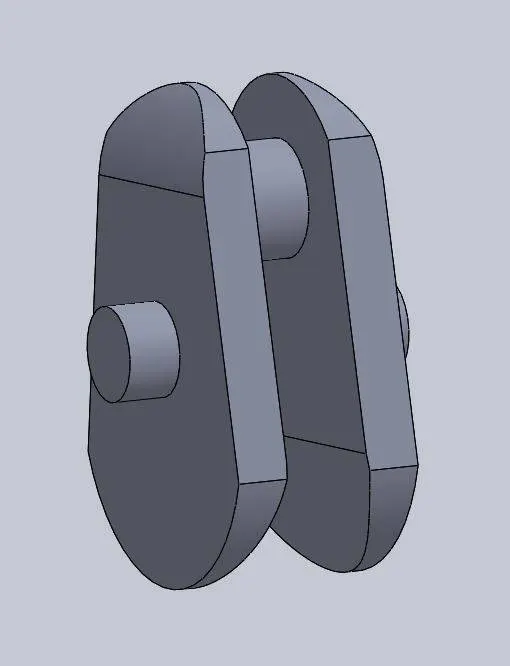
i) Initially model all the parts by following the given dimensions. The part are :
- Piston
- Connecting rod
- End cap
- Crank
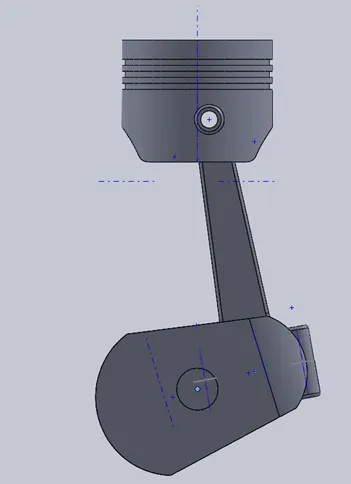
ii) Now assemble the parts by making the necessary constraints to obtain the 3D model as shown below:
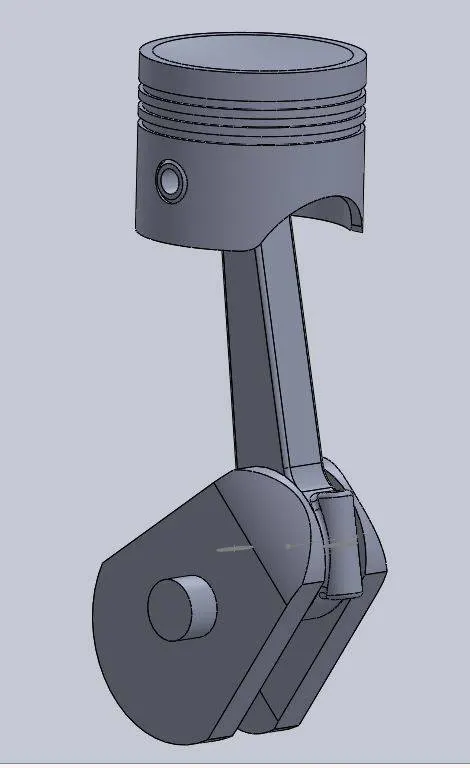
iii) Now carry out the motion study on the assembly on the following conditions:
a) CASE 1
When the wrist pin offset is 0 mm and the crank speed is 2000 rpm:
- Provide the input to the crank with 2000 rpm
- Change the fps to 12000 and with precise contact.
- Make all the necessary contacts and input the gravity
- Finally, the motion study is calculated and the linear displacement vs time graph is plotted and it is exported to excel.
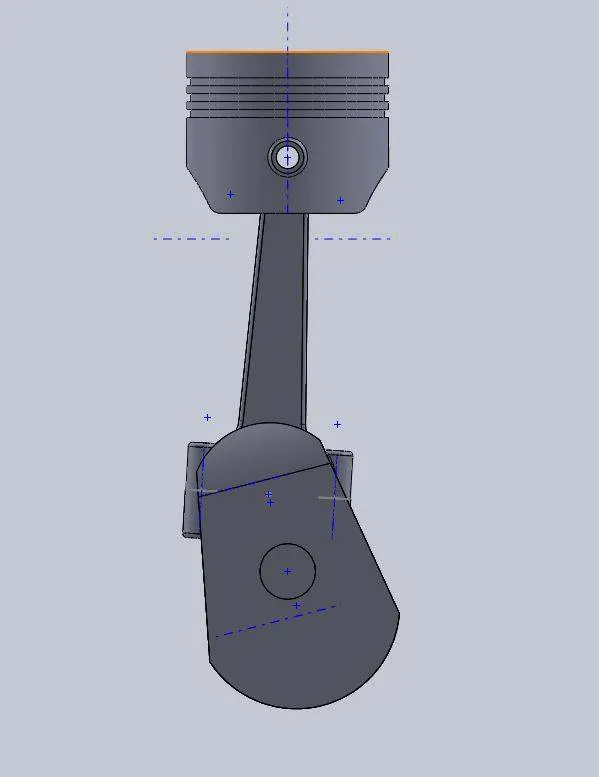
PLOT
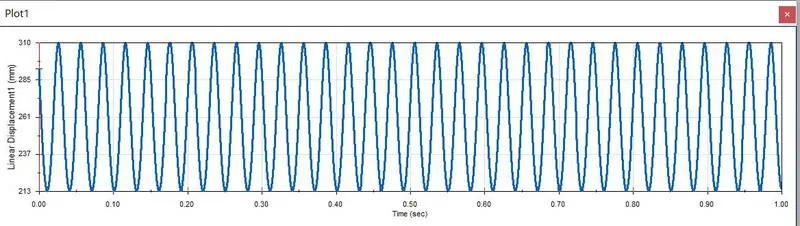
The plot is a sinusoidal curve with maximum displacement of 310 mm and minimum displacement of 213 mm.
b) CASE 2
When the wrist pin offset is 10 mm positive and the crank speed is 2000 rpm:
- Provide the input to the crank with 2000 rpm
- Change the fps to 12000 and with precise contact.
- Make all the necessary contacts and input the gravity
- Finally, the motion study is calculated and the linear displacement vs time graph is plotted and it is exported to excel.
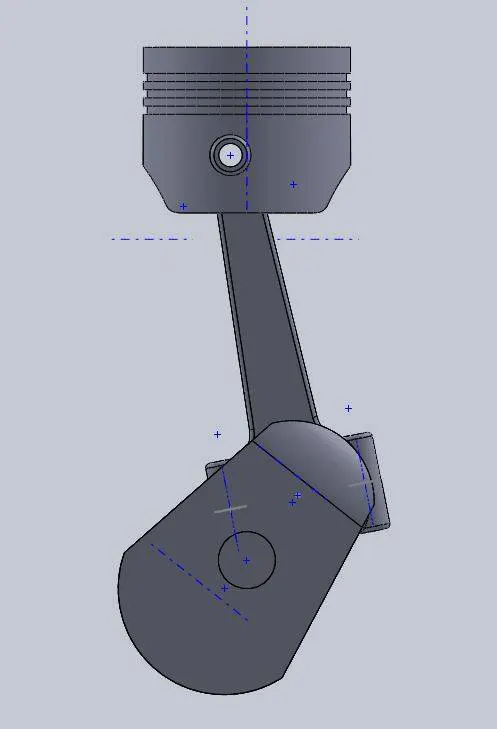
PLOT
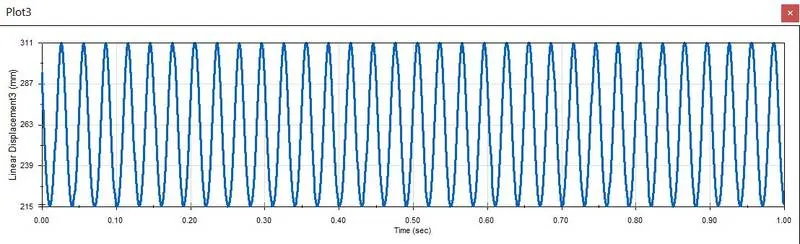
The linear displacement plot is a sinusoidal curve in which maximum displacement is 311 mm and minimum displacement is 215 mm.
c) CASE 3
When the wrist pin offset is 10 mm negative and the crank speed is 2000 rpm:
PLOT
The plot is sinusoidal with 311 being the maximum linear displacement and 215 being the minimum linear displacement.
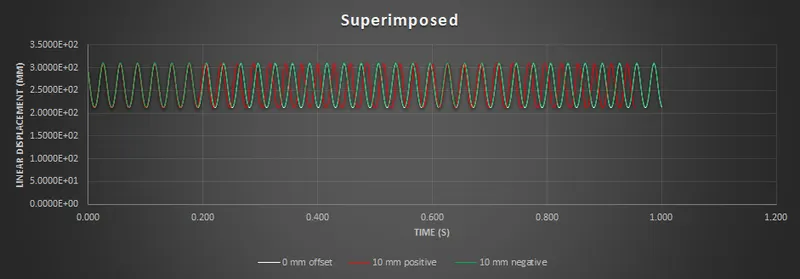
iv) Now superimpose all the linear displacement plots into excel.
RESULTS AND CONCLUSION
- From the superimposed graph, the frequency of the displacement of the piston with respect to the crank rotation at given time frame increase as the offset moves from negative to positive.
- With the offset, rod angularity is decreased during power stroke and side loading of the piston can be minimised.
- The maximum and minimum linear displacement in all three cases are almost same.