Hood design-Week 2
AIM:
Design Hood Outer Panel, Inner Panel and the necessary reinforcements.
INTRODUCTION:
We study how to design a hood inner panel and outer panel, positioning the strikers, hinges, and reinforcements using the CATIA-V5 tool.
Using these tools and all the design principles we design the Hood.
BIW:
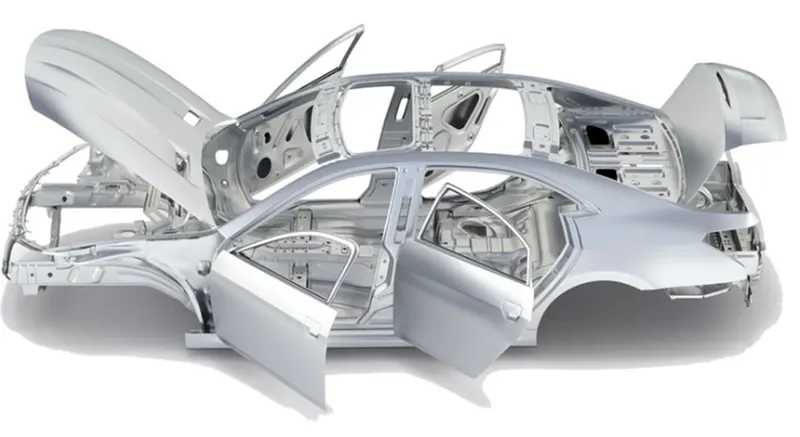
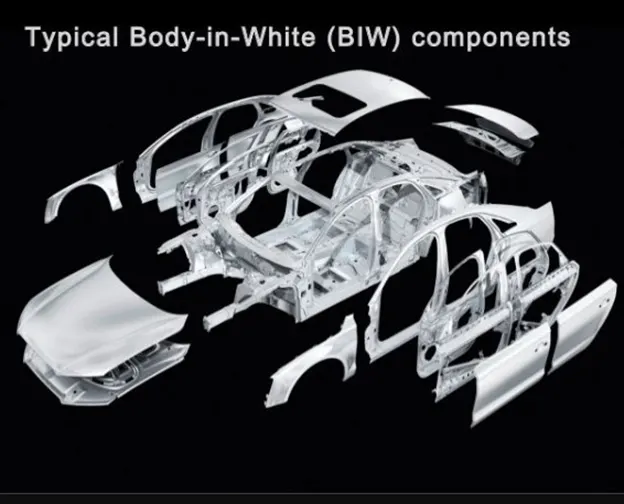
Body In White (BIW) refers to the stage in automotive design & manufacturing at which a car body sheet-metal components have been welded together. Body In White is defined as the stage prior to painting & before moving parts like doors, bonnets, tailgates and hatch back doors, as well as bumpers, the engine, chassis sub-assemblies, (or) trim (glass, seats, upholstery and electronics) have been assembled in the frame structure.
While aluminium has been able to conquer the drive train, heat exchanger the chassis, body & general equipment & fittings areas of lightweight vehicle build construction. The key issues have revolved around optimising the design to exploit the advantages of aluminium, at the same time, be cost-effective. The body In White accounts for about 27% of the weight of the entire average car.
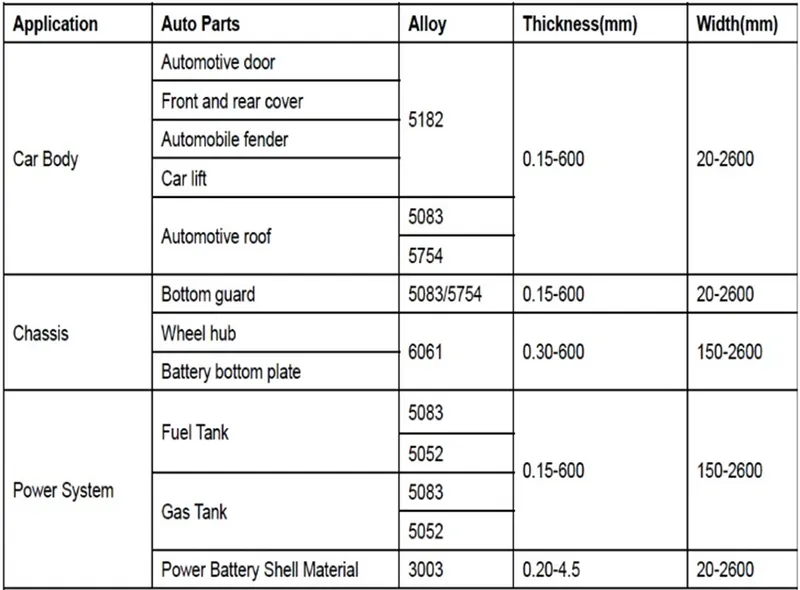
Specification of BIW:
Hood Design:
The hood (or) bonnet is the hinged cover over the engine of the vehicle. Hoods can open to allow access to the engine compartment (or) trunk on rear-engine and some mid engine vehicle for maintenance &repair.
A car hood/ bonnet is meant to protect the performance parts of your vehicle, including the engine. While also providing easy access for repairs & maintenance. It is possible for the hood to incur damage as well. One of the most common types of damage is to the hinge, which is the device that connects the hood to the) body of the vehicle. Over time, the hinge can become loose (or) may fall off completely. The hood is also prone to receiving scratches & dents. Although this might appear to be a minor problem, dents & scratches can lead to depreciation in the value of your vehicle. Scratches & dents can also lead to exposure to the elements that can result in rusts & corrosions. This can be a serious problem that can ultimately expose the engine in your car to snow, sunlight, and raining.
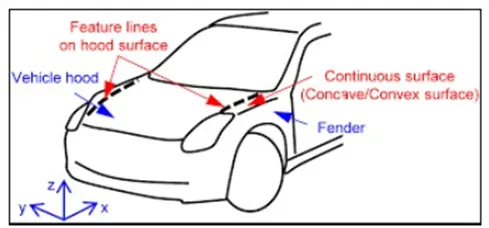
Components Of Hood
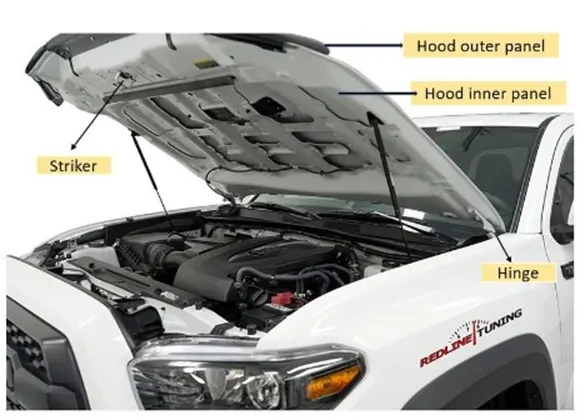
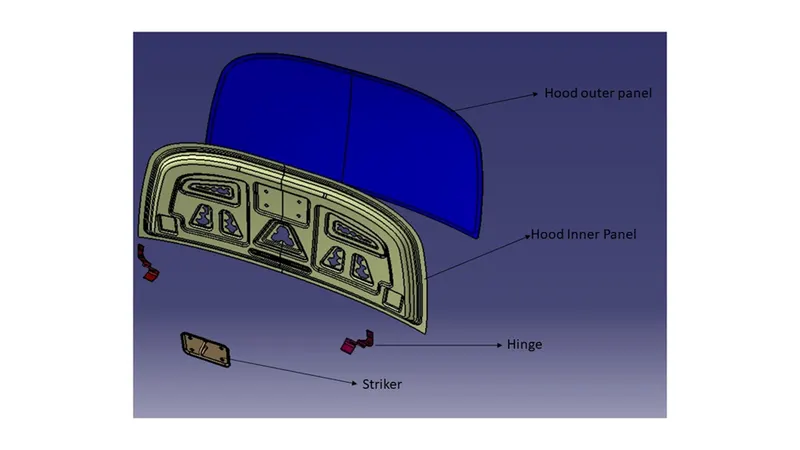
- Hood outer panel
- Hood inner panel
- Hinge and its reinforcement
- Striker and its reinforcement.
The inner panel provides the strength while the outer panel is the styling metal cover mounted on inner panel. Instead of any welding process, these two panels are connected by applying the master sealants between them & hemming operation is performed on the outer panel which holds the inner panel. The underside of hood is often covered with stiffening pads which arrest the sounds in between them.
While the hinges are used to for opening (or) closing the hood. Striker is used for lock the hood in closed condition. So mating these components with hood, it losses its strength locally. So, the hinge and striker reinforcements are used to improve the strength.
Considered Parameter for designing hood:
- Opening angle of the hood
- N CAP Crash Test
- Wrap Around Distance (WAD)
- Noise, Vibration, Harshness (NVH)
Opening angle of the hood:
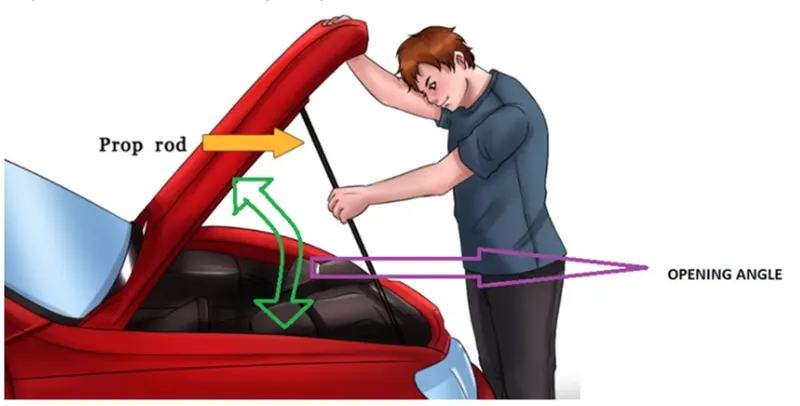
This is one of the important criteria in design the hood. The opening angle varies Depends on country. For example, the average height of the Indians is 5.8 feet whereas in Europe countries the average height will be 6” feet, based on these heights the opening angle may vary. The opening angle is considered important because when the opening angle is less there is a chance of head injury to the person opening the hood. The hood need supports to set an open angle according to the average height of people in different countries. There are two types of supports to hold the hood.
- Support Rod
- Gas Stay
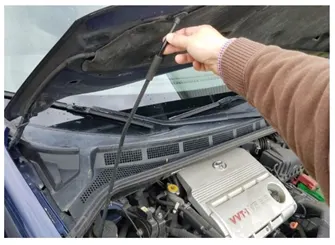
Support Rod:
Support rod is basically a long cylindrical steel rod used to lift the hood manually.It is very simple in design & cheap in cost. One end is connected at the side of engine compartment with outer mounting & other end is hooked to the inner mounting of hood during opening condition.
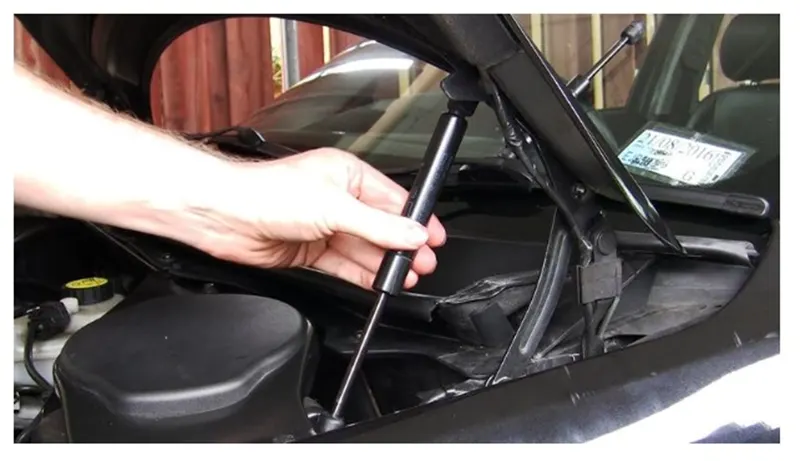
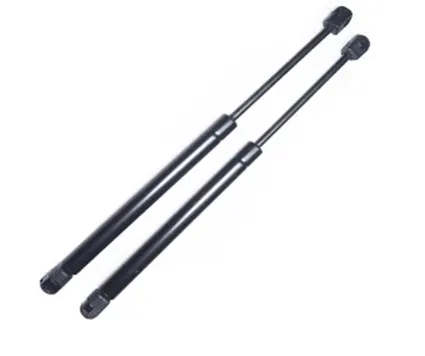
Gas Stay:
Gas stay is also as similar to support rod used to lift the hood. But, instead of manually it can lift the hood by using the gas Pressures. It can be typically designed where the hood (or) bonnet weight is more and unable to lift hood manually. The gas stay cost is more than the manual support rods.
N CAP Crash Test
Globally, various N CAPS are present that carry on the pedestrian safety tests on new vehicles & rate them accordingly.
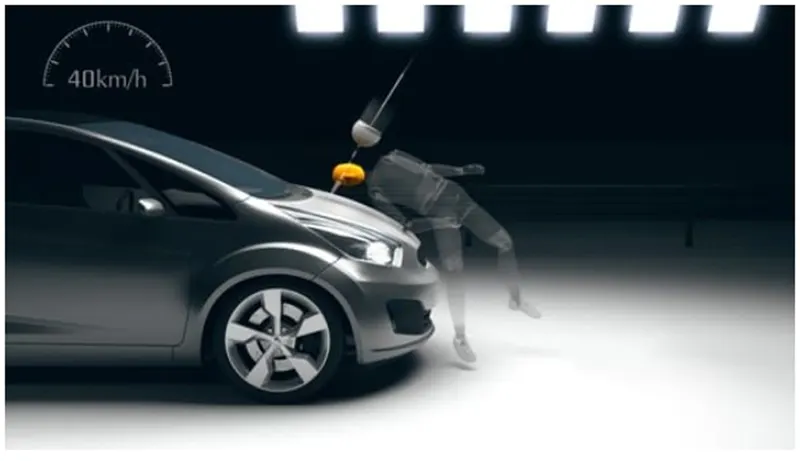
- Head Impact: -
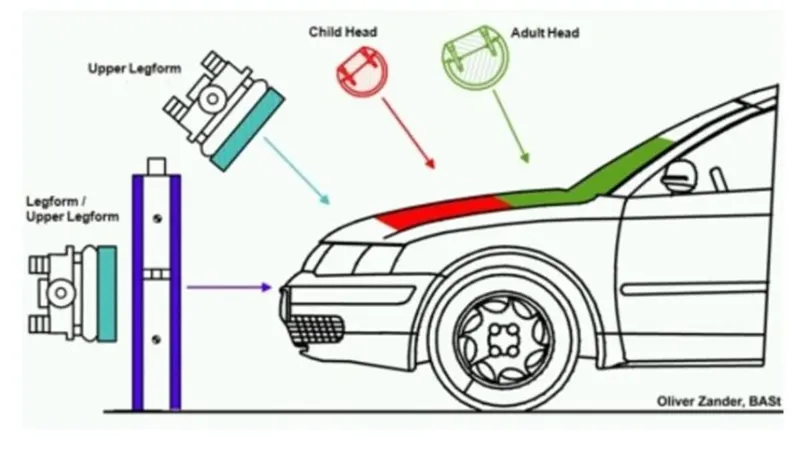
This test is carried out for a vehicle speed of 40 km per hour. To have an estimate of the potential head injury in the fateful event of a vehicle striking an adult (or) a child, a head form impactor is used in a series of impact tests, & the impact sites are then assessed for & rated accordingly. This test will give essential information about the
deformation clearance, energy absorbing structures, & deployable protection systems such as pop-up bonnets & external airbags in a new vehicle.
- Upper Leg Impact
The facility carries out the test at a vehicle speed of 40 km per hour. An adult upper leg form impactor is used in a series of impact tests & then the impact sites are assessed. The protection is then rated as good, marginal, weak, (or) poor. The test procedure allows to check the energy absorbing capacity of the structures of a vehicle & also check whether the geometry of the vehicle allows mitigation of injuries.
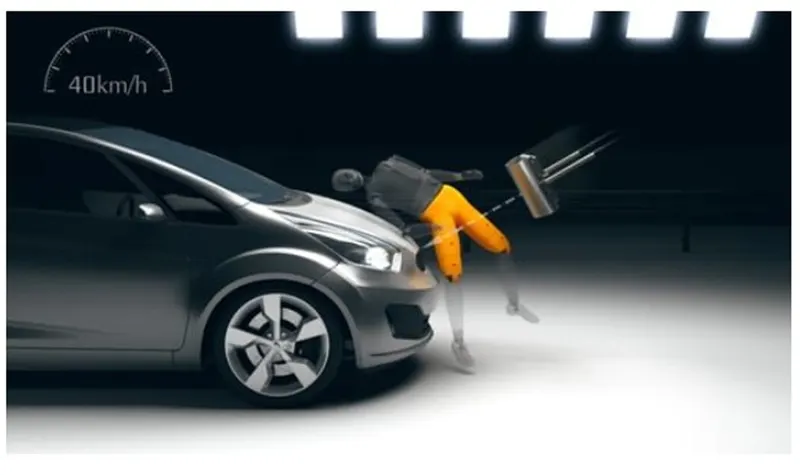
- Lower Leg impact
NCAP carries the test at the same speed standard as the above ones. It uses an adult leg impactor & series of tests are carried out. Impact sites are then assessed & the protection rating is offered.
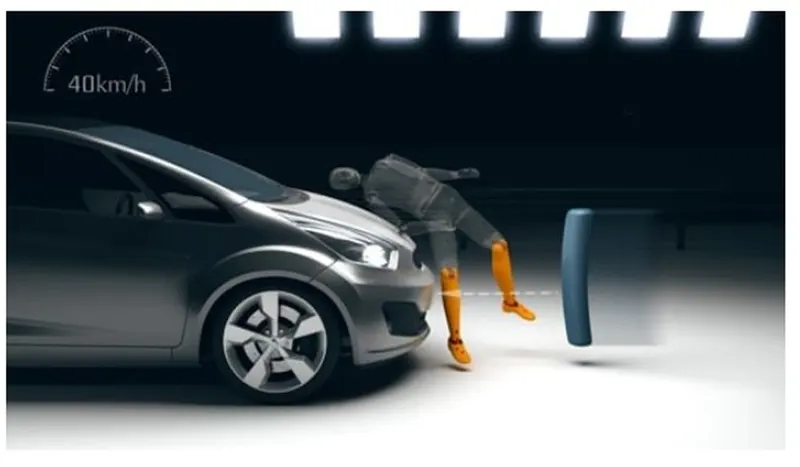
For this test, Euro NCAP uses a specially designed cyclist form that will replicate the actual cyclist on the road. Euro NCAP offers the highest rating .if the collision is completely avoided. The vehicle is also Awarded if, the speed is reduced as any reduction in speed of impact can significantly reduce the injury to the vulnerable user.
To measure the potential head & leg injuries in the front portion of the car illustration of crash mitigation tests are designed below:
Wrap Around Distance (WAD):
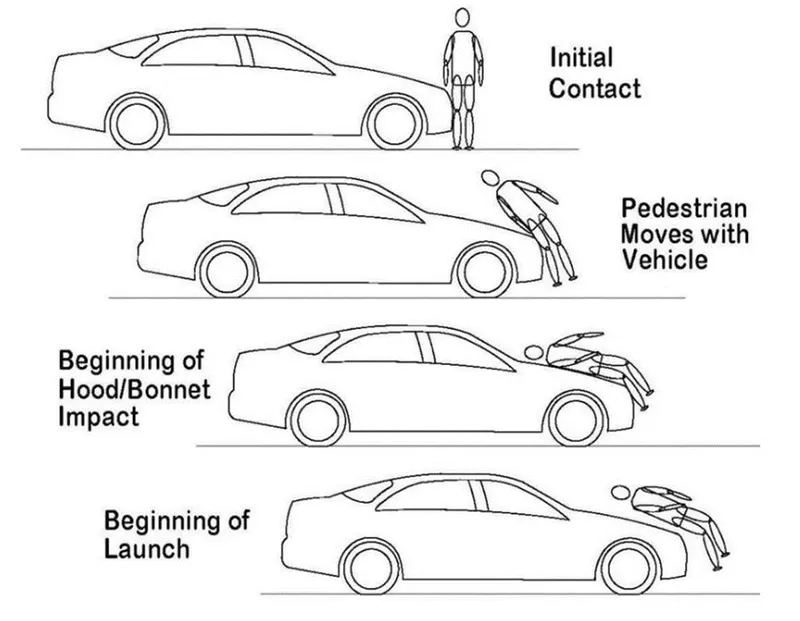
When a car crashes on the pedestrian, the whole human body wraps around the front shape of the Vehicle, & the head impacts on the bonnet (or) the windscreen. The distance at which the head impacts on the Vehicle from the ground is mentioned as Wrap Around Distance.
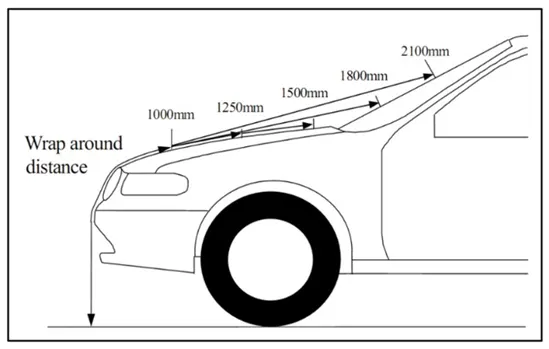
To be specific the Wrap Around Distance is a measurement of the distance from the ground to the head impact zone over the outer surface of the Vehicle. The wrap around distance is measured longitudinally in the canter of the vehicle from the ground.
The severity of the injury caused by the frontal crash depends on the type & shape of the car, the speed of the car, & the movement of the pedestrian relative to the vehicle. In addition to these parameters, the wrap around distance plays a major role in the safety measures of a pedestrian
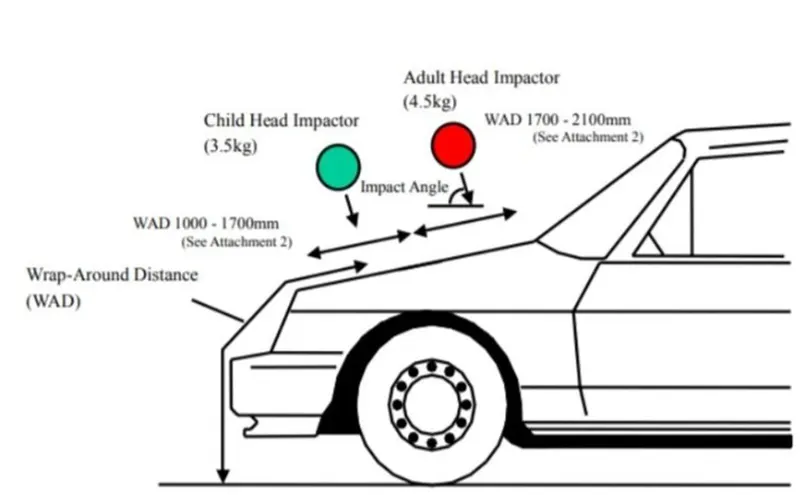
During the crash analysis, based on the Wrap Around Distance, two test areas will be created namely the Child head impact zone & the adult head impact zone. The child head impact zone is between 1000 - 1700 mm WAD & the adult head impact zone ranges between 1700 - 2100 mm WAD.
Noise, Vibration, Harshness (NVH):
Noise, Vibration and Harshness, & is basically a measure of how much unpleasant aural & tactile feedback the car delivers as you drive.
Design Hood Design Using CATIA-V5
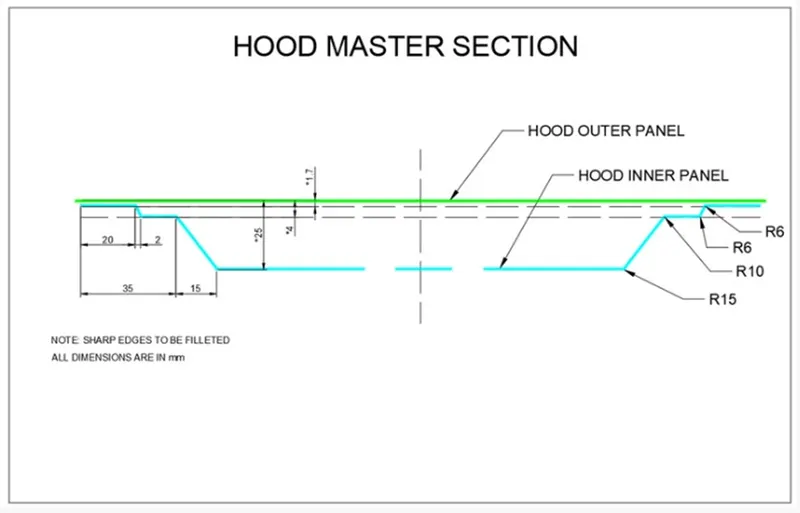
Hood Thickness Information
- Outer Panel Thickness = 0.75mm
- Inner Panel Thickness = 0.75mm
- Reinforcement Thickness = 1.5mm
Master sketch that should be used to design the outer and inner hood panel is shown below:
Tool used to design Hood > CATIA-V5R20
Commands using to design Hood:
- Offset
- Split
- Boundary
- Parallel curve
- Extrude
- Trim
- Edge Fillet
- Shape Fillet
- Projection
- Curve Smooth
- Sweep
- Multi-Sectional Surface
- Symmetry
- Sketch
- Join
- Profile Sketch
- Constrain
- Corner
- Quick Trim
Outer Hood Panel
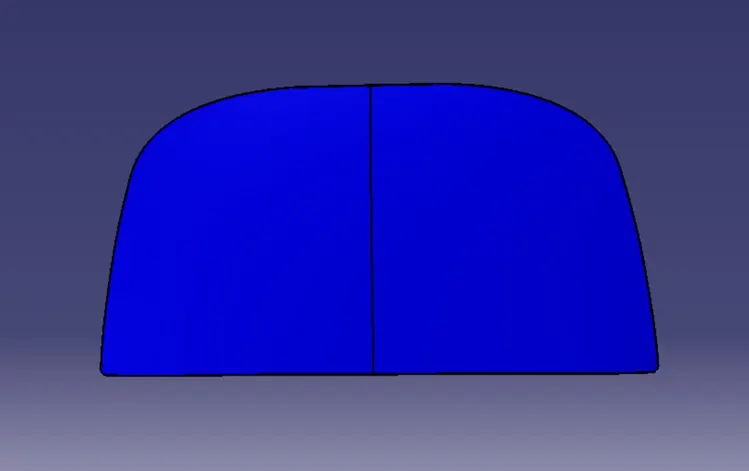
For designing the outer hood panel, the class-A surface was provided as input & then outer edges were extend to form a flange which was designed in a manner which represents the hemming being done to hold the inner panel with the outer panel from the outside
At the corners reliefs was also designed so that the hemming operation can be performed easily.
Hood Inner Panel
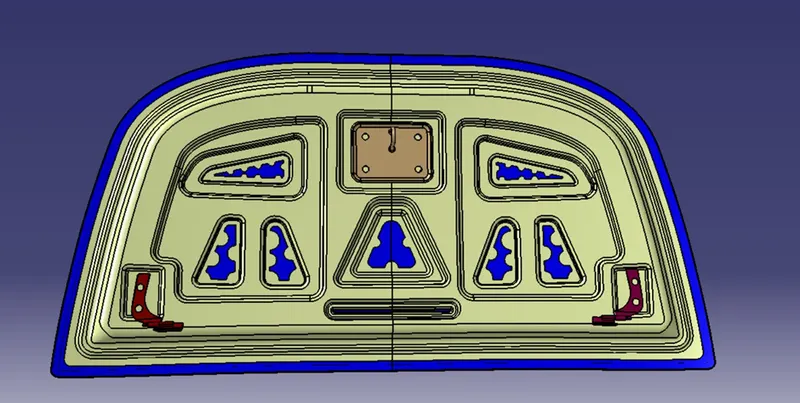
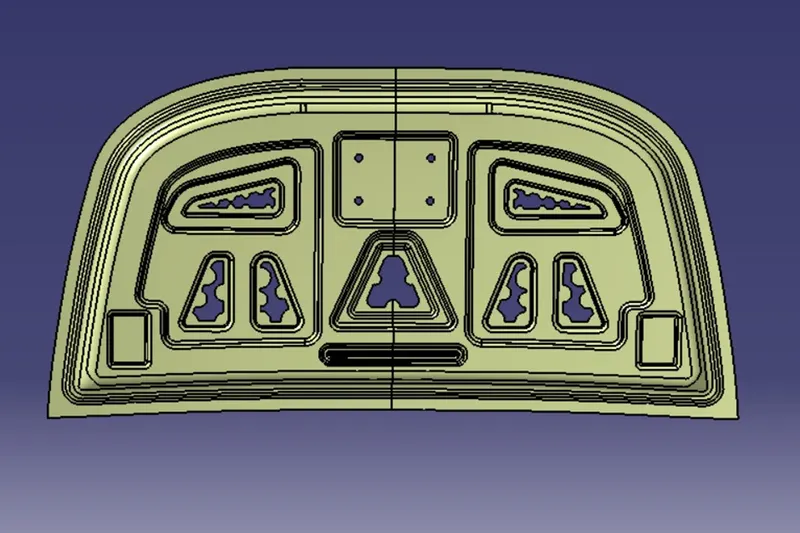
The inner panel of the hood acts as a reinforcement for the hood outer panel which provides strength to the outer panel.The hood inner panel thickness is 0.75 mm. In order to reduce cost and increase strength of the inner panel Embosses are made on the sheet-metal along with the cut-outs.
Emboss
Sheet metal embossing is a stamping process for producing raised (or) sunken designs (or) relief in sheet metal. This process can be made by means of matched male & female roller dies, (or) by passing sheet (or) a strip of metal between rolls of the desired pattern. It is often combined with foil stamping to create a shiny, 3D effect.
The metal sheet embossing operation is commonly accomplished with a combination of heat & pressure on the sheet metal, depending on what type of embossing is required. Theoretically, with any of these procedures, the metal thickness is changed in its composition.
Metal sheet is drawn through the Male & Female roller dies, producing a pattern (or) design on the metal sheet. Depending on the roller dies used, different patterns can be produced on the metal sheet. The pressure & a combination of heat actually "Irons" while raising the level of the image higher than the substrate to make it smooth. The term "Impressing" refers to an image lowered into the surface of a material, in distinction to an image raised out of the surface of a material.
In most of the pressure embossing operation machines, the upper roll blocks are stationary, while the bottom roll blocks are movable. The pressure with which the bottom roll is raised is referred to as the capacity of tonnage.
The above image shows the emboss that were designed on the inner panel.
The sheet was trimmed in the middle portions of the embosses to improve the strength of the hood inner panel.
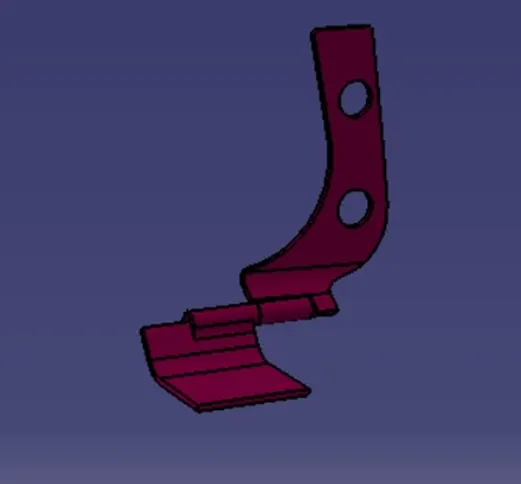
Hinge :
Hinge is used as a controlling element for opening & closing of the hood. It connects the hood & engine compartment of car. The hood's hinges serve one other purpose besides holding the hood safety. In case the hood latch should fail, the hinges are there to keep the hood attached to your Vehicle. Otherwise, if you were traveling at high speeds and the latch fails, the hood could break from the damaged hinges and cause disaster & injury. Actually, even if only one hood hinge fails, a strong slipstream can topple the hood & hammer it against the wind-shield.
• Allows hood to open & close without losing alignments.
• Holds hood down in case of a collisions.
• Provides a direct fit.
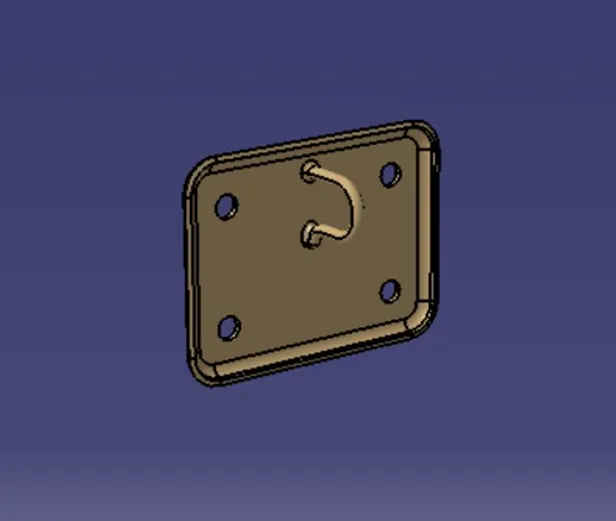
Striker:
which is placed over the hood & get attached to the hole provided in engine compartment area. Thus, it is used for locking purpose of hood with engine compartment.
Final Output Hood Design