Hood design-Week 2
A DEATILED REPORT OF HOOD DESIGN USING NX
OBJECTIVE: The main aim of this project is to design the total components of hood and assemble them to make a final hood design using NX cad.
INTRODUCTION: Siemens NX is a high end CAD/CAM/CAE software. Siemens NX software is a flexible and powerful integrated solution that helps you deliver better products faster and more efficiently. NX delivers the next generation of design, simulation, and manufacturing solutions that enable companies to realize the value of the digital twin.
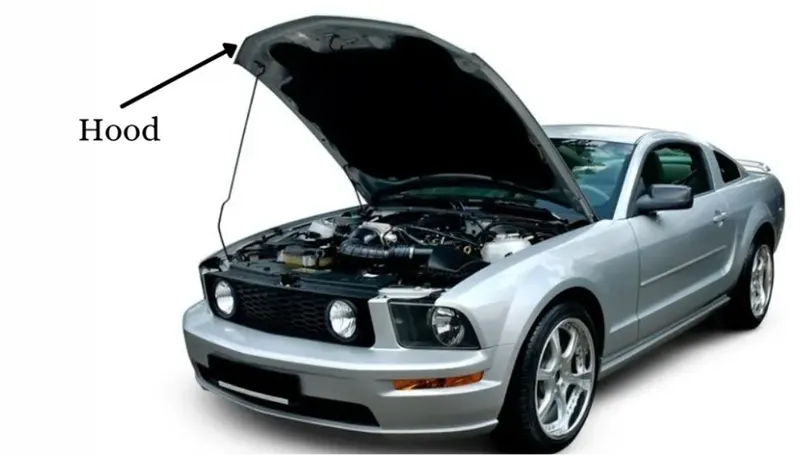
HOOD: The hood or a bonnet is the hinged cover over the engine of motor vehicles. Hood can open to allow access to the engine compartment, or trunk on rear engine and some mid engine vehicles for maintenance and repair. The car’s hood consists of an inner and outer panel. The inner panel provides strength while the outer panel is just a metal cover. The underside of the hood is often covered with a sound absorbing material.
GIVEN DATA:
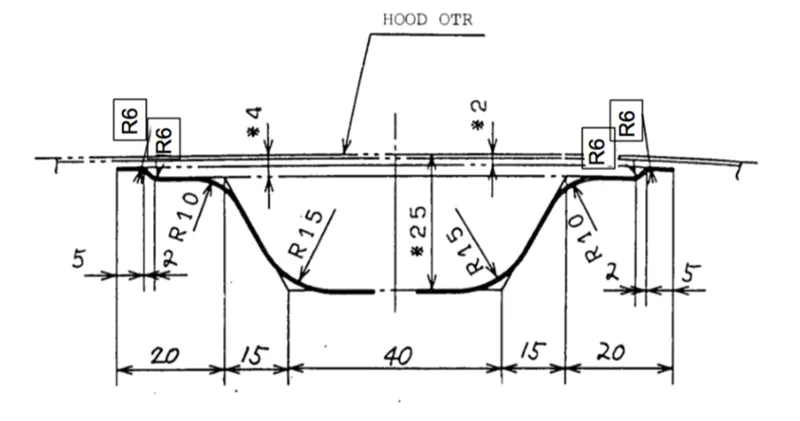
Inner hood has been designed by following the master data:
HOOD THICKNESS:
Outer panel thickness: 0.75 mm and Inner panel thickness: 0.75 mm
Reinforcement thickness: 1.5mm
DESIGN CONSIDERATIONS OF HOOD DESIGN:
Observation of adults, child’s, and lower impact on car hood body:
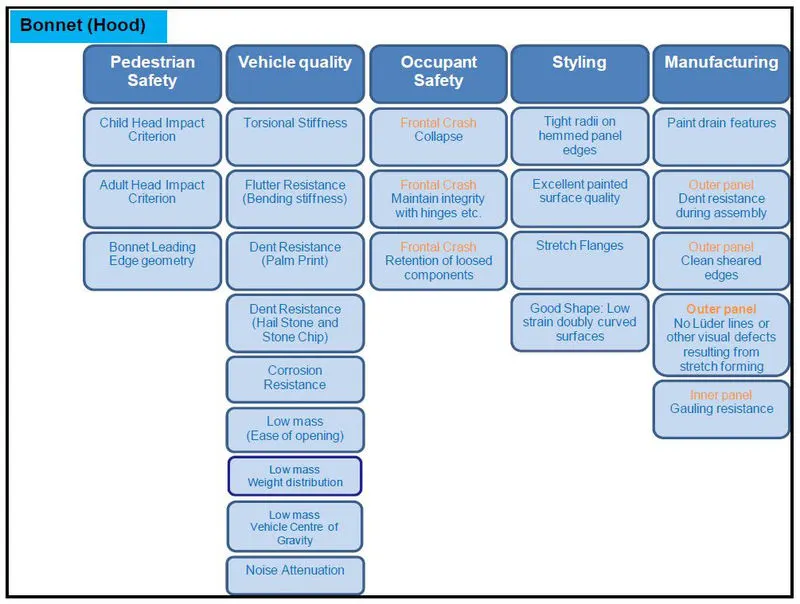
- 1st and most important safety requirement to be considered while designing the bonnet is the pedestrian safety from a frontal collision.
- The European new car assessment program(Euro NCAP) is a European car safety performance assessment program which has developed test specifications and rating systems for assessing pedestrian injuries during impacts with the front of vehicles such tests include a series of tests using impactors designed to mimic a collision at a speed of 40 km/h. they describe a situation in which a pedestrian is situated laterally and a car first hits one of his legs tests are conducted on the leg upper leg and most importantly the head, as head trauma is most commonly responsible for casualties.
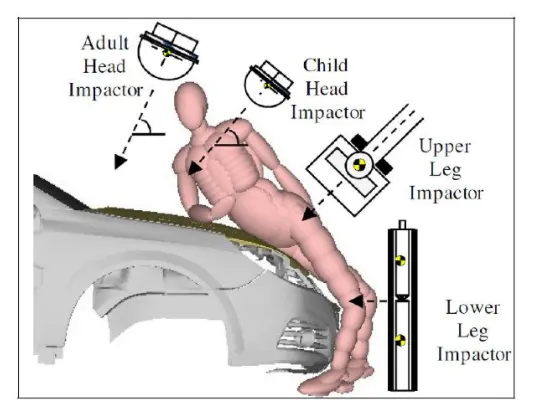
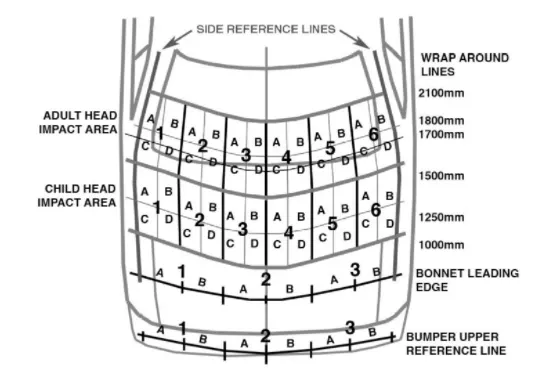
3.Thus to avoid severe injuries to the head the high impact area for adults and children is subjected to less thickness also no reinforcement should be provided in that area as during the head collision the hood will absorb the head impact energy leading to the collapse of the hood and thus protecting the severe head injury.
4.Another important criteria for the hood design is the protection of the occupants inside the car during the front collision. The design of the hood should be in such a way that during the collision the force should travel in the upward direction through the embosses and directed towards the body of the car. Thus protecting the occupants inside.
DESIGN:
INNER PANEL: Inner panel of hood is not visible to the customer and it provides strength and support to the outer panel and with its embossing shapes dissipates the force in different directions when the vehicle takes crashes to not to injure the men in the car.
In the design of inner panel the tools used are:
- OFFSET SURFACE: Offset surface is a tool used to offset the surface with the use defined offset value.
- TRIM SHEET: Trim sheet is used to trim the surface sheet with respective to plane or sketch.
- THROUGH CURVES: Through curves is the tool used to fill gap between two surfaces
- SEW: Sew is used to combine two bodies in to one body.
- EDGE BLEND: Edge blend is used to convert sharp edges to smooth edges in the form of fillet.
- PROJECT CURVE: Project curve is used to project the 2d sketches on to the face
- EMBOSS: Emboss is the most important tool used in the design of inner panel. Emboss is the tool used to create an embossing by modifying a body with faces made by projecting a section along a vector with options for end cap location and shape.
- MIRROR: Mirror is the tool used to copy the selected geometry to the other side by selecting the respective face or plane.
- HOLES: Holes are used to make a hole on the face or body using the 2d sketch
- THICKEN: Thicken is used to give thickness to the sheet by giving certain value.
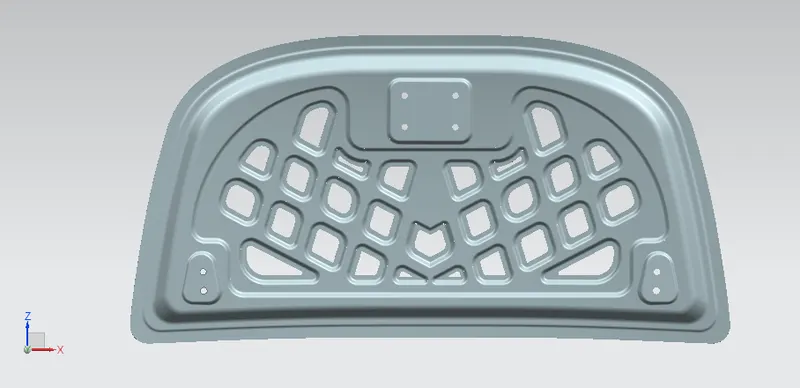
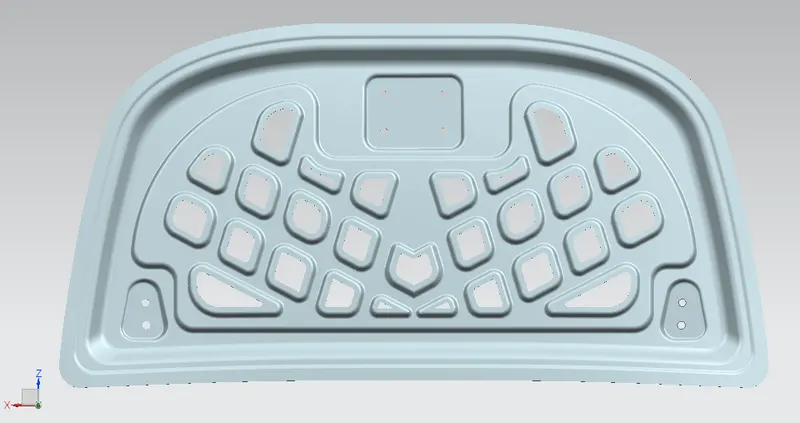
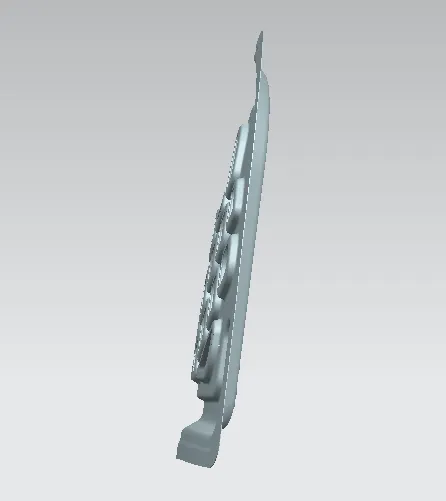
FLAT EMBOSS: we have to create embosses for hinge and striker and those should be flat emboss in order to mount the hinges properly so that it will work as reinforcement support properly for hinges. And similarly to hinge emboss we have to create latch emboss to improve the local strength of inner panel providing support structure for latch mounting.
ROLLING: The sheet metal rolling process consists of passing metal stock through one or more pairs of rolls to reduce the thickness and to make thickness uniform.
BENDING: Sheet metal bending is the plastic deformation of the work over an axis, creating a change in the part geometry. Similar to other metal forming process, bending changes the shape of the work piece, while the volume of material will remain the same.
PIERCING: Piercing is the process of cutting small, cylindrical holes in the sheet metal whilst removing very little quantity of material. This is done by using a bullet shaped punch during the punch and die operation.
DEEP DRAWING: Deep drawing is a sheet metal forming process in which a sheet metal blank is radially drawn into forming die by the mechanical action of punch. It is thus a shape transformation process with material retention. The process is considered deep drawing when the depth of drawn part exceeds its diameter. Embosses are projections made on sheet metal using deep drawing techniques. The operation is carried out the mostly for the purpose of stiffening flat surface and design in the inner panel the major function of embossing is to dissipate the force acting on the hood during the collision of car towards the hinges as early as possible . this helps to reduce the impact of force on the passenger sitting side.
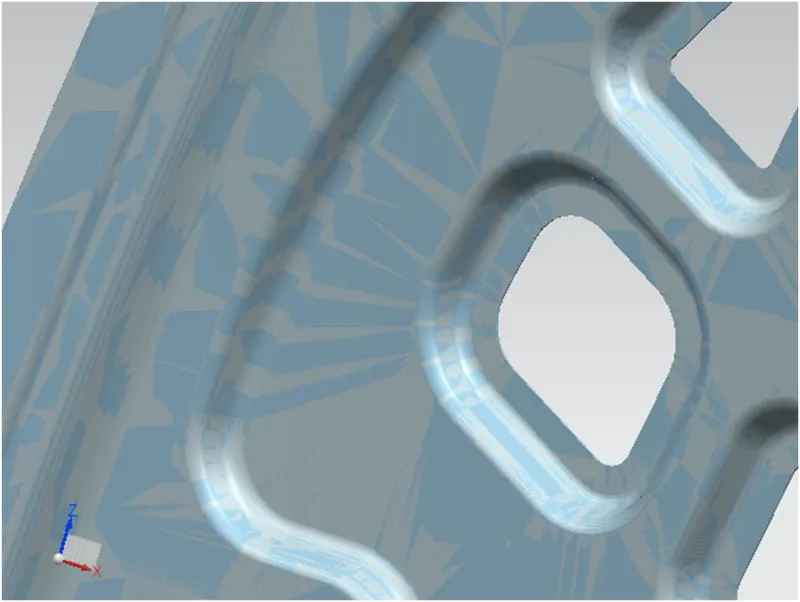
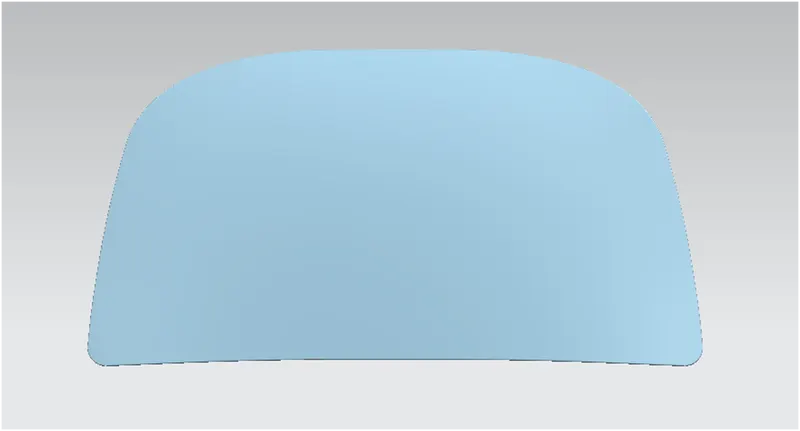
OUTER PANEL: Outer panel is nothing but a outside cover for engine and it’s a used to make a car looks good.
HEMMING:
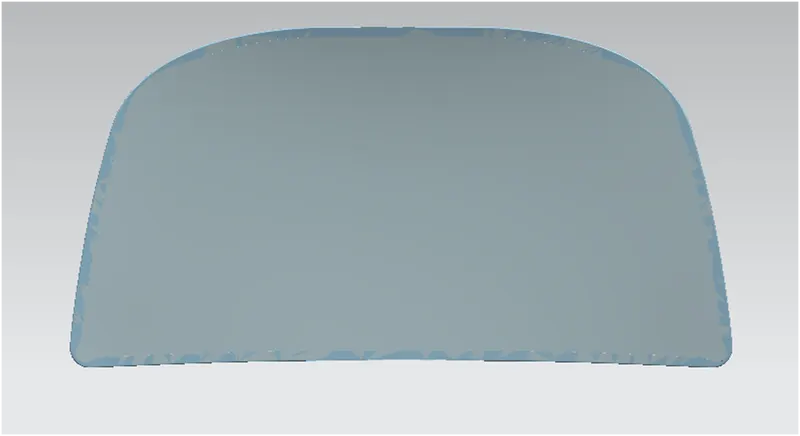
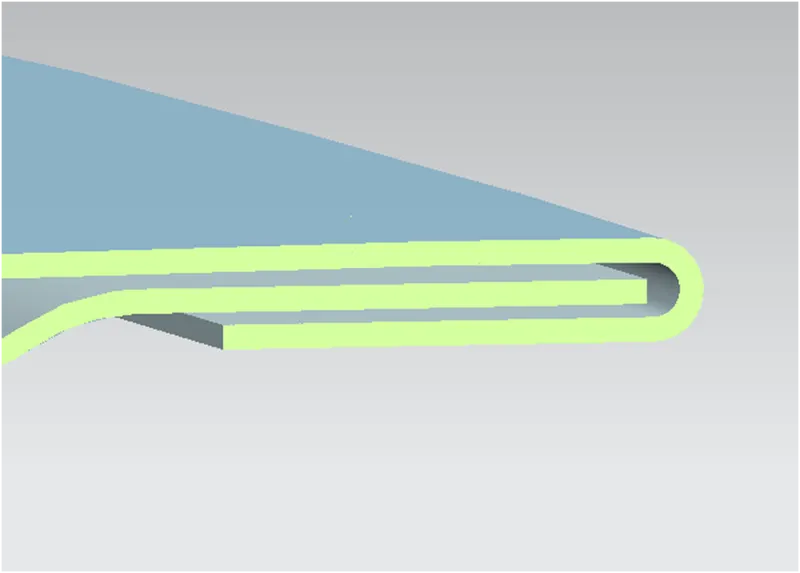
1.The outer panel and inner panel can’t join by any welding process if we did it will leave a spot on the outer panel and it will spoil the look of car so to join the inner and outer panel together we use the hemming process
2.It is the process of bending or folding the flange of the outer panel over the inner one.
3.The flange of the outer panel is bent over the inner panel in progressive steps by means of roller hemming head.
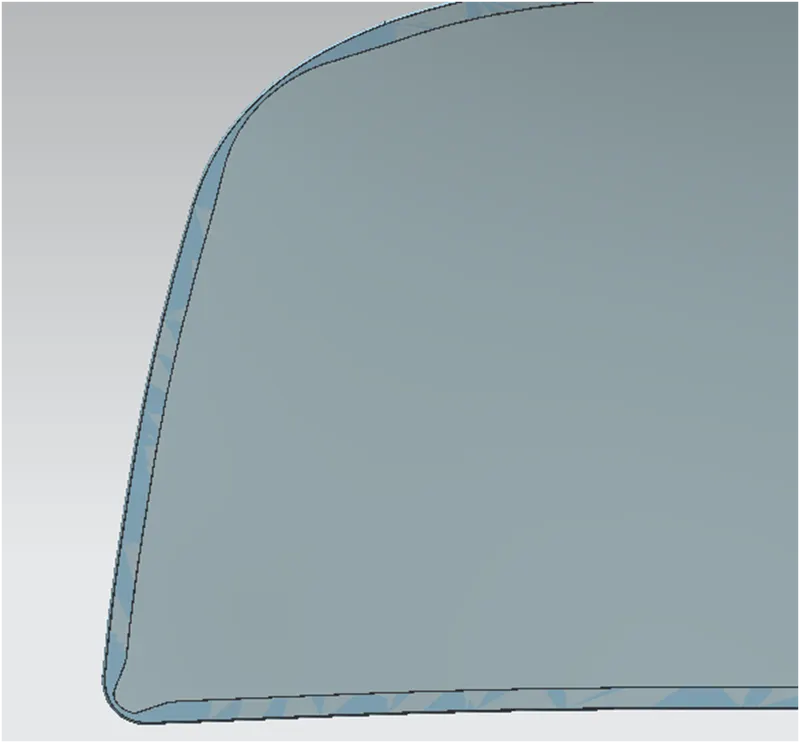
CORNER RELIEF: Corner relief is used to add relief to one or more corners of the sheet metal part and relief helps to control sheet metal behaviour and to prevent unwanted deformation during unbend operations.
MASTIC SEALANT: Mastic sealant or mastic points are areas where the inner hood panel is joined with the outer panel hem using a mastic glue. Mastic glue is a elastic component that behaves like a rubber . This mastic glue keeps the inner panel stuck to the outer panel .
REINFORCEMENTS:
Reinforcements are used to provide more strength to the assembly.
- Latch and striker
- Hinge
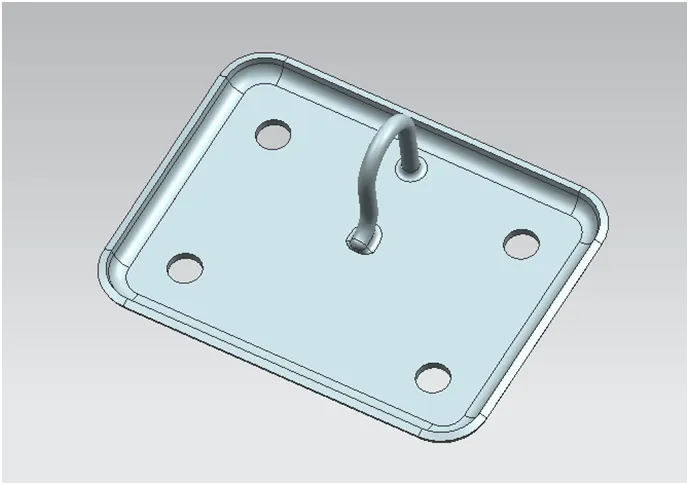
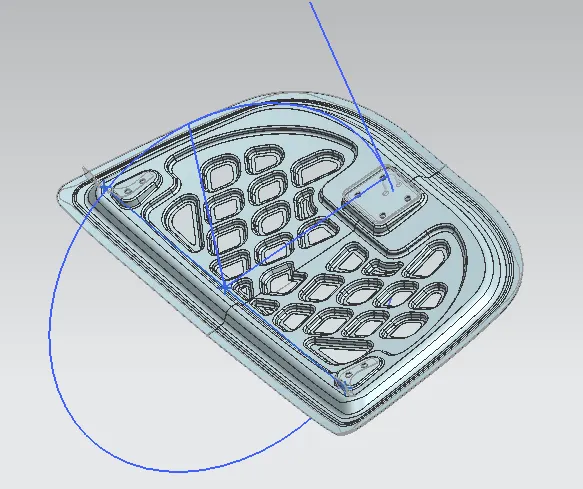
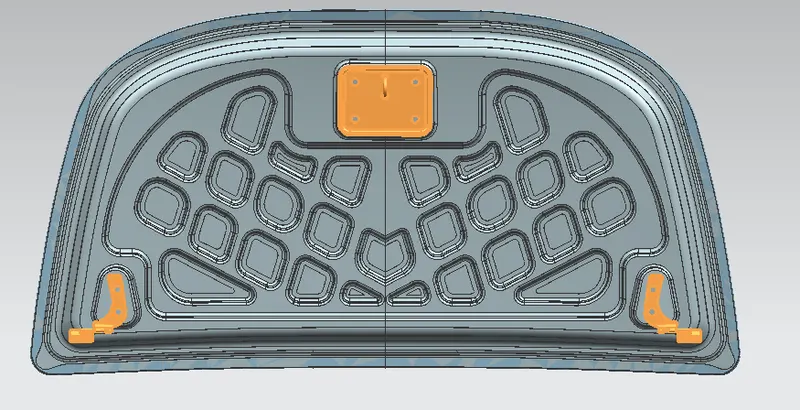
LATCH AND STRIKER: latch and striker are used for locking the hood with the car. It is usually placed on the space provided on the inner panel.
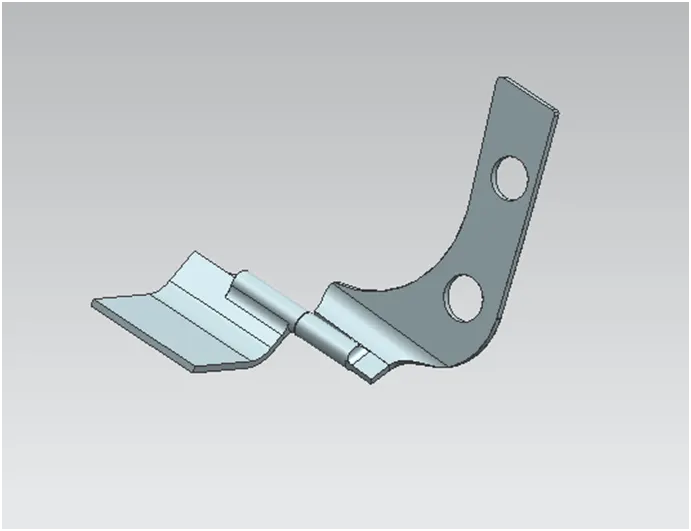
HINGE: Hinges are used to connect the hood and cowl panel of an Automobile. It enable the opening and closing operation of the hood. The hinge should be made strong enough to handle the weight of the hood and also to handle the force action on it during the collision.
POSITION OF HINGE AND STRIKER:
The hinges should be usually placed on both sides of the hood in such a way that the strike fits exactly into the holes provided.
To ensure this the following conditions are given:
- Both the hinges should be on the same axis
- The center of striker’s circular trajectory should be always perpendicular to the hinge axis.
FINAL HINGE ASSEMBLY:
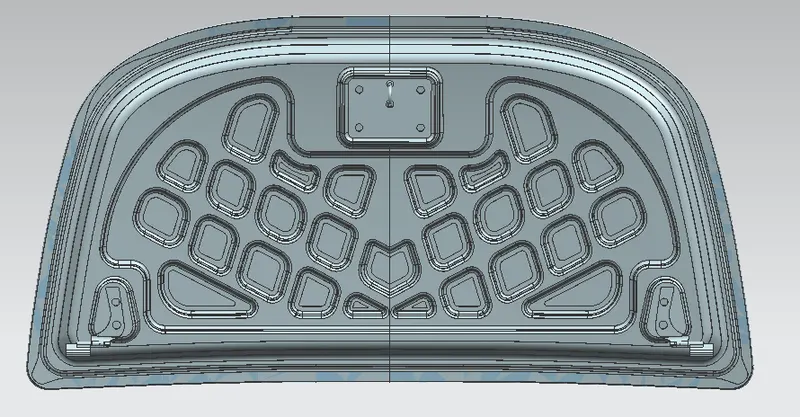
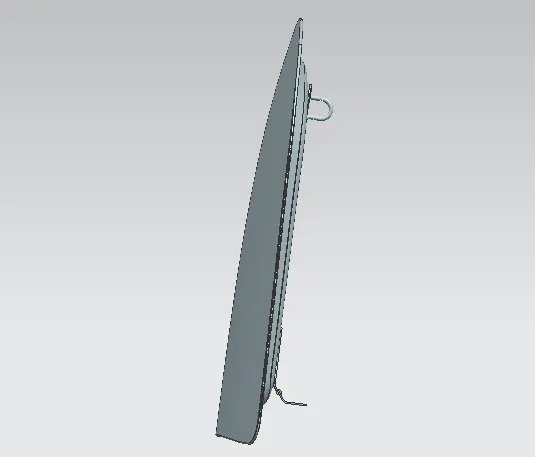
CONCLUSION: All the parts of hood are designed based on the required conditions and given dimensions.
FEATURE MANAGER TREE OF INNER PANEL:
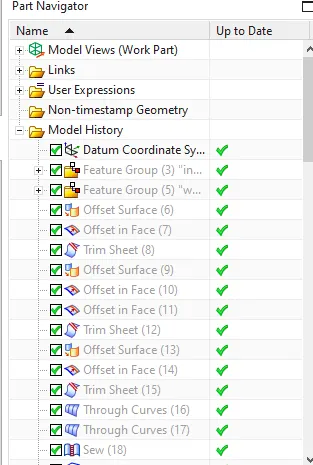
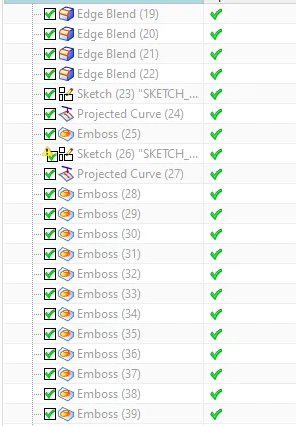
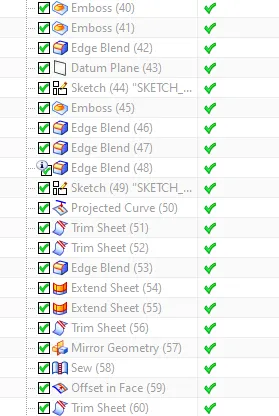
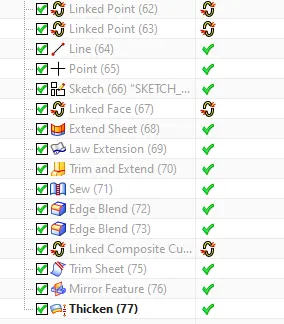
FEATURE MANAGER TREE OF OUTER PANEL:
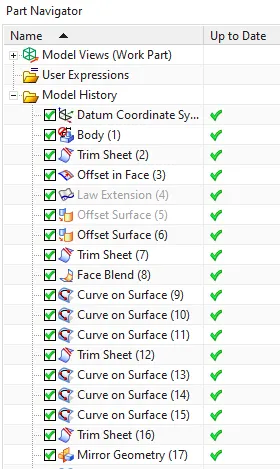

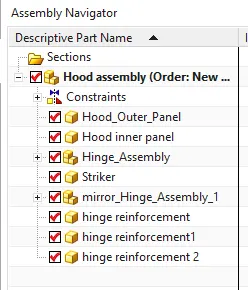
FEATURE MANAGER TREE OF HOOD ASSEMBLY: