Hood design-Week 2
HOOD DESIGN FOR THE GIVEN STYLING SURFACE IN SIEMENS NX CAD
INTRODUCTION:
- The hood (North American English) or bonnet (Commonwealth English) is the hinged cover over the engine of motor vehicles. Hoods can open to allow access to the engine compartment or trunk (boot in Commonwealth English) on rear-engine and some mid-engine vehicles) for maintenance and repair.
- A car hood is meant to protect the performance parts of your vehicle, including the engine, while also providing easy access for repairs and maintenance. It is possible for the hood to incur damage as well. One of the most common types of damage is to the hinge, which is the device that connects the hood to the body of the vehicle.
- The hood panel of the vehicle is formed by combining the outer panel and an inner panel along with other structures that provide overall rigidity and local reinforcements in order to ensure hood rigidity and durability, and most importantly the drivers, passengers, and the pedestrian's safety.
- The inner panel of the hood is provided with many local reinforcements (eg: mastic points, emboss) which improves its strength, rigidity, durability. Because of these reinforcements, the inner panel itself acts as a reinforcement for the outer panel of the hood. It reduces the vibration/flutter of the outer panel caused due to wind pressure, engine components, and other factors while the car is in motion.
- Hoods are typically made out of the same material as the rest of the bodywork. This may include steel, aluminum, fiberglass, or carbon fiber. However, some aftermarket companies produce replacements for steel hoods in fiberglass or carbon fiber to make the vehicle lighter.
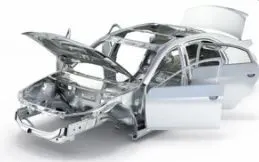
- A hood is one of the most important parts of the BIW (body in white) stage in which the car structural components are joined together before painting and incorporation of chassis, engine, sub-assemblies, or trim (glass, door locks/handles, seats, upholstery, electronics, etc).
TYPES OF HOOD:
There are two major types of hood
1. Inlaid hood
2. Wrap around hood
Inlaid Hood
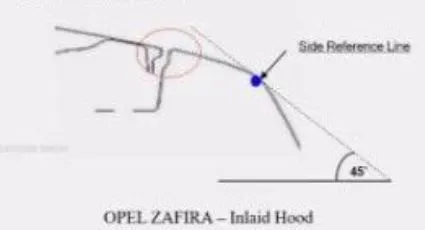
- When the side reference line touches or the endpoint of the car lies on the fender then it is known as Inlaid Hood. It is light in weight but has more geometrical discontinuity, border defects, and less stiffness.
- This type of hood has less head impact zone thus less pedestrian safety compared to a wrap-around hood.

Wrap-Around Hood
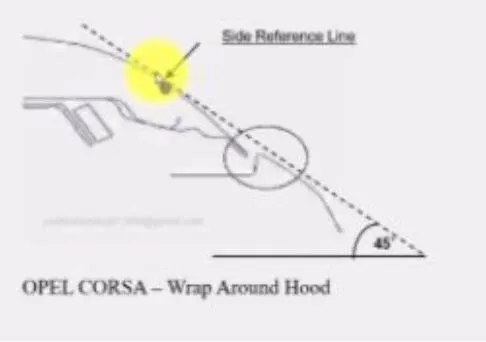
- When the side reference line touches or the endpoint of the car lies on the hood then it is known as Wrap-Around Hood. Covers the geometrical, border defects, and provides an adequate amount of strength to the hood.
- It has more head impact zone thus more pedestrian safety compared to Inlaid hood.

INPUTS REQUIRED FOR HOOD DESIGN:
Pedestrian safety, Occupant safety, Vehicle quality, Styling, Ability to manufacture, NVH, Gas stay mounting, Latch & striker point, Hinge axis, deformable brackets.
Pedestrian Safety
- As we know hood engineer is one of the critical engineers in the vehicle development process. The importance of pedestrian safety has increased drastically in the past decade. A hood engineer is supposed to design a hood by following all the pedestrian safety regulations.
- A vehicle designer focuses on understanding the car-pedestrian interactions which are: vehicle bumper hits the lower limbs of the pedestrian, leading edge of the car hits the upper thigh or pelvis, head and the upper torsi hits the top surface of the hood/windshield.
- Most of the critical lower limb injuries occur due to the severe impact between the lower limb and the bumper/leading edge of the hood. Also, severe pedestrian head injuries or deaths are caused due to hard impact between the head and the stiff hood/windshield.
- A hood or any other component is usually fabricated from sheet metal that has energy-absorbing properties and thus reduces the damage.
- To reduce head injuries sufficient amount of clearance (more than 90mm standard practice) is provided between the hood and the underlying engine components. This allows the pedestrian's head to have a controlled deceleration and a significantly reduced risk of death.
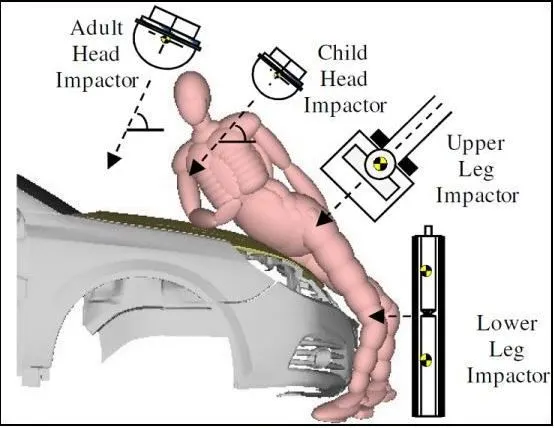
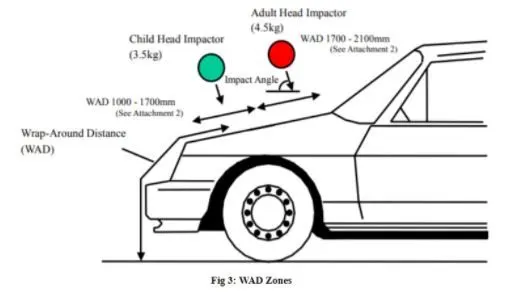
- Wrap around distance (WAD) means the trace of the points received on the front structure when one end of the flexible tape of required length is held at ground reference level and the other ends in contact with the front structure.
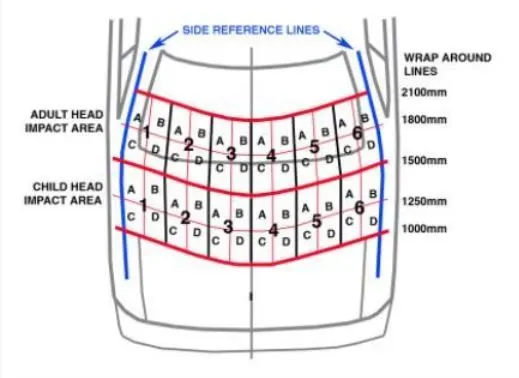
- When a pedestrian is hit by a car he/she tends to hit on the bonnet and this hitting zone is defined into two categories - Child head impact zone (1000WAD to 1500WAD) and adult head impact zone (1500WAD to 2100WAD).
- Impact point locations head impact zone is defined with the help of a side reference line.
- When the side reference line lies on the fender, the wrap-around distance will be more & the head-impact zone will be less, and vice-versa.
Occupant Safety
- The hood inner panel consists of embossed areas and pierced areas that are created in such a way that it diverges the forces away from the occupants in the car.
- The force should be damped properly to avoid the risk of injuries & deaths.
Manufacturability
- Blanking, piercing, hemming, embossing, etc are the sheet metal operations used to manufacture the sheet metal components of the vehicle.
- Mastic sealants are introduced to join the outer and the inner panel of the hood instead of using the spot welding process as it will give a bad remark from the aesthetic point of view.
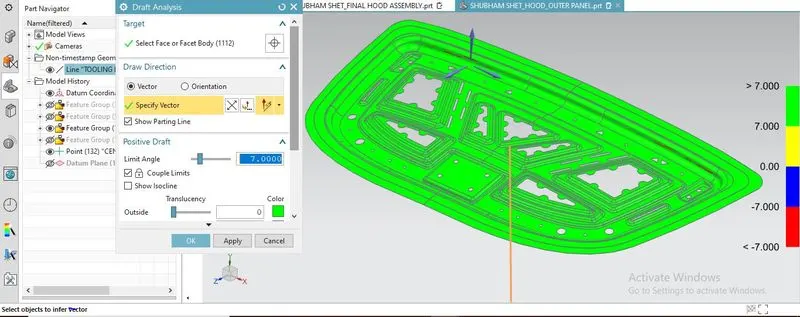
- Most importantly a minimum of 7-degree draft angle should be maintained w.r.t the tooling direction considering stamping operation.
- In blanking operation material is removed from the blank/primary metal strip through punching and the removed material is used as a workpiece for the further fabrication process.
- In the sheet metal embossing process certain areas are protruded/raised/sunken to a certain distance.
- In the hemming process, the edges are rolled onto itself that helps to reinforce the edges, removes burrs & sharp edges, and also improves the appearance and handling.
DESIGN METHODOLOGY:
Objective:
- Our objective is to design the inner panel and the outer panel of the hood by considering the design feasibility, safety regulation, manufacturability, and industrial standards for the vehicle development process.
Design Data:
- Outer Panel Thickness = 0.75mm (Styling surface provided)
- Inner Panel Thickness = 0.75mm
- Reinforcement Thickness = 1.5mm
- End relief
- Hemming dimensions
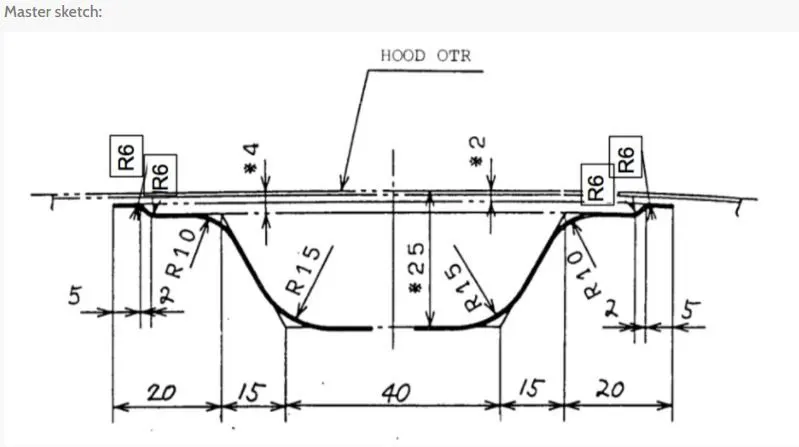
- Master section that consists of dimensional values for embossing, fillet radii, width, flange clearance, etc.
Design process:
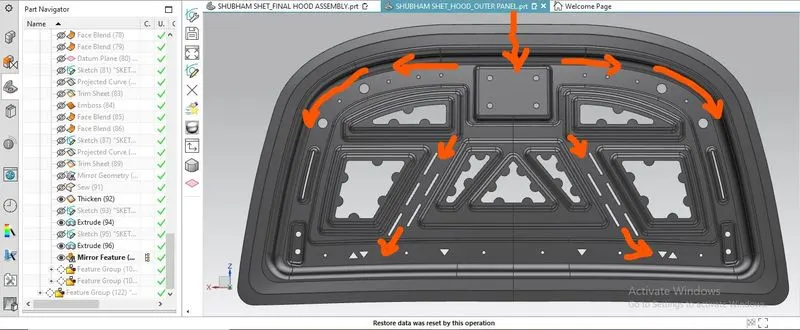
- The most important design consideration is the pedestrian & occupant's safety by providing the required amount of reinforcements, mastic points, embosses, cutouts that will diverge the impact forces towards the hinges i.e away from the passenger cabin.
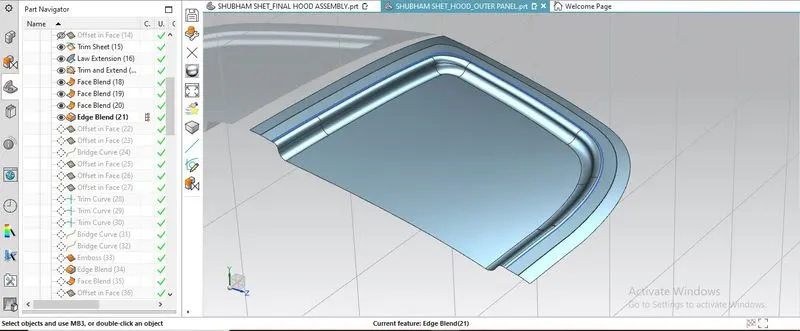
- As per the master section first, we created all the embossing by offsetting the surface of the outer panel at a distance of 2mm, 4mm, and 25mm respectively.
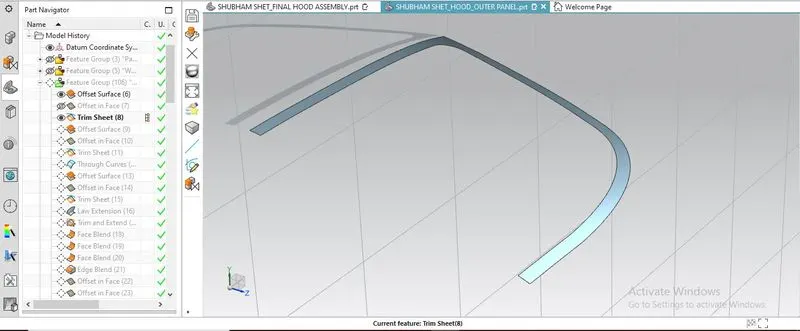
- Features like offset, through curves, face blend, trim sheet were used to get the required shape of the outer panel as shown in the master section.
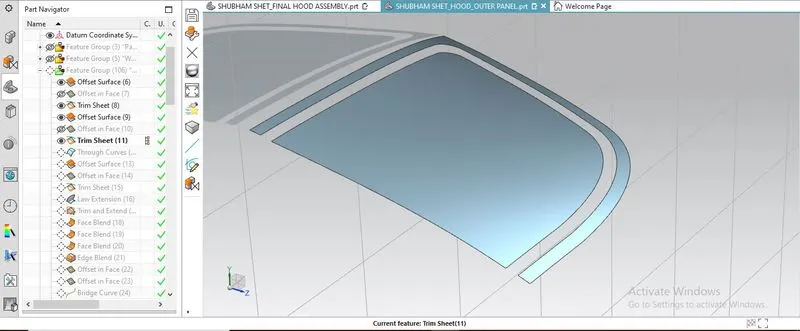
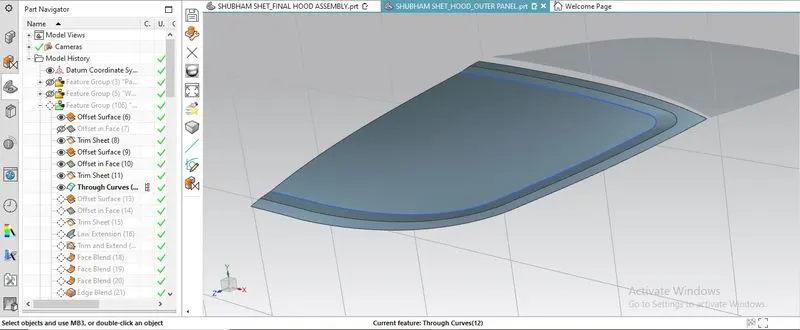
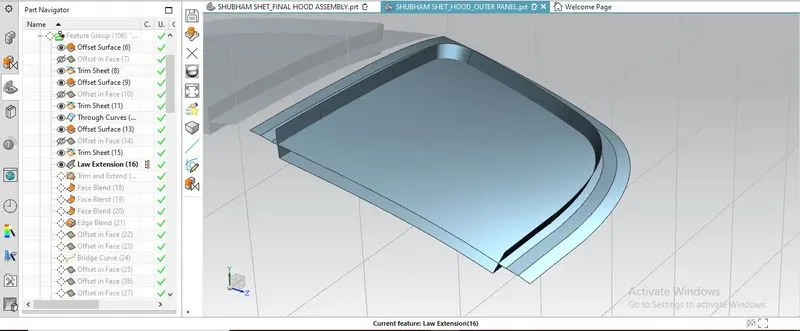
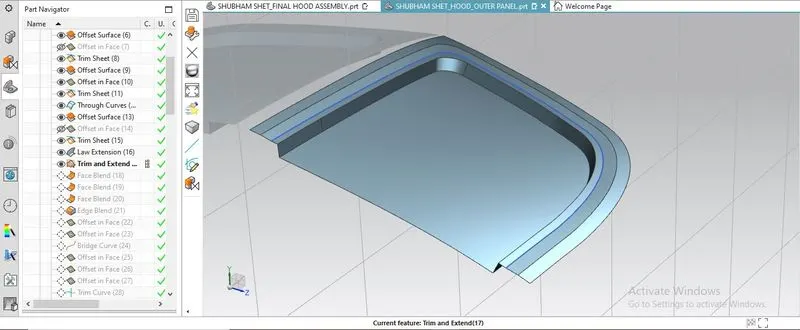
- Necessary cutouts are provided for sufficient deformation of the outer panel without any restriction caused by the inner panel in case of a pedestrian impact. A designer can develop the cutouts of any shape and size, but its feasibility & manufacturability will be analyzed by the CAE team. Providing these cutouts also leads to weight reduction.
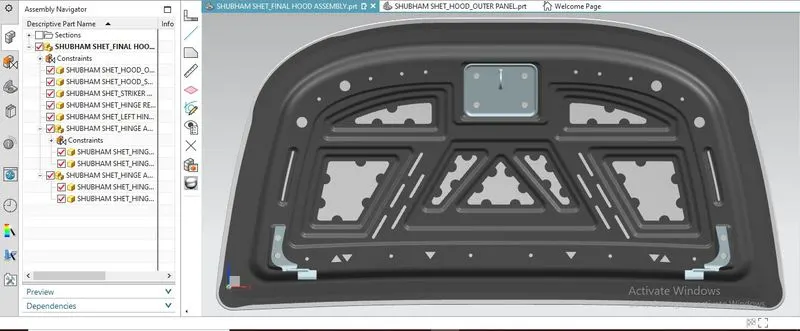
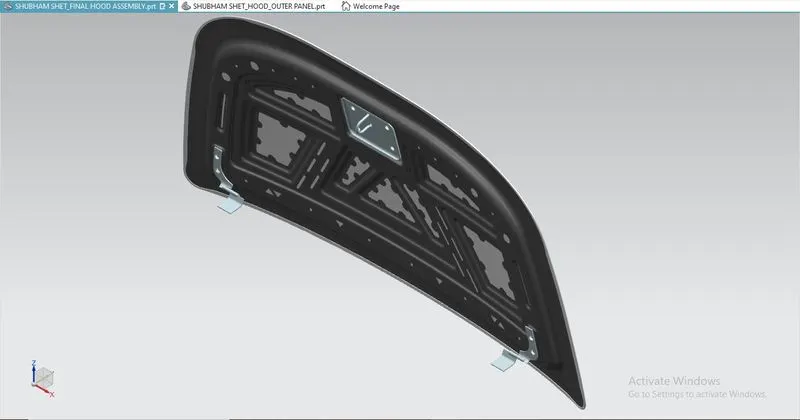
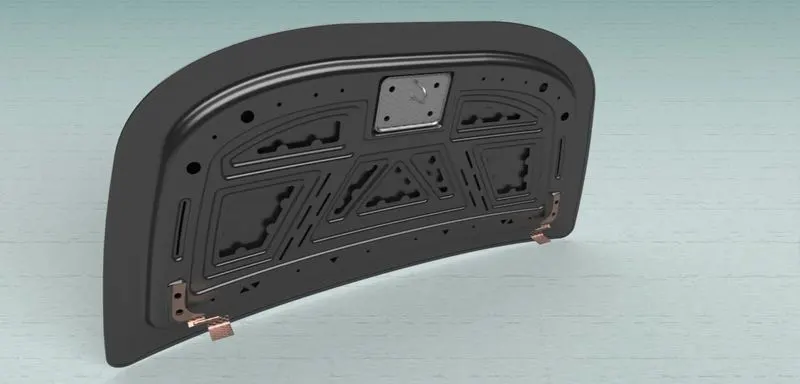
- Mastic sealant points are provided on the inner panel and each mastic provides strength in the contour of 80mm diameter. Various holes, slots are provided for fixtures, ED bath drain holes, supplying viper fluid, emboss & holes for fixing hinge and striker were also provided.
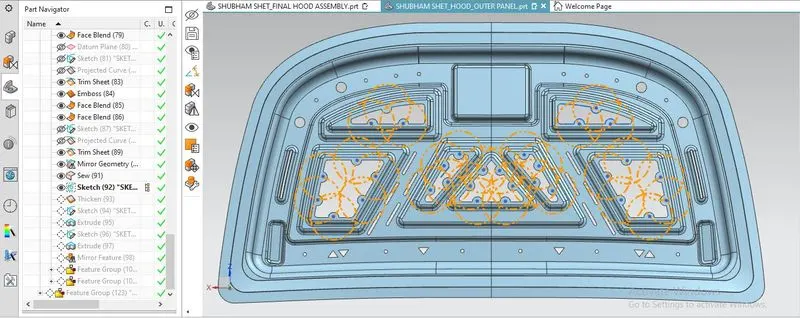
- Further, we have examined the geometry and successfully performed the draft analysis at a minimum angle of 7 degrees w.r.t the tooling direction(shown as an orange line in the figure).
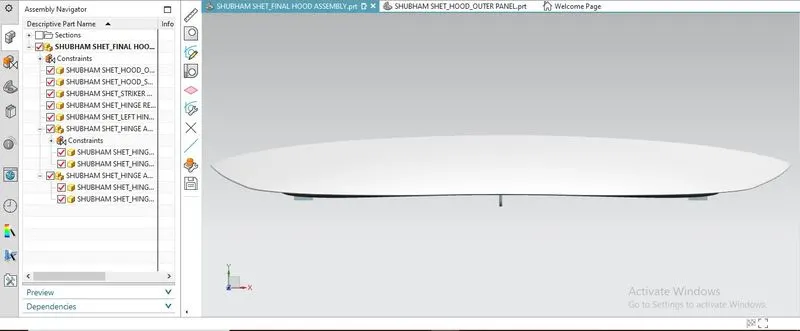
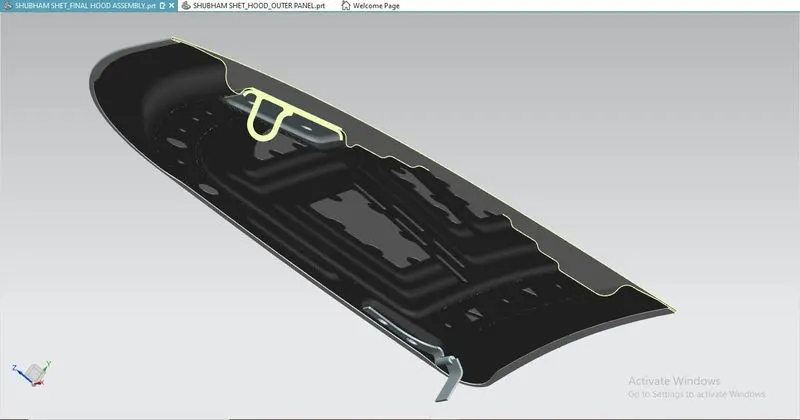
- After the analysis, hinge and striker reinforcement were created. Then with the help of the styling surface provided an outer panel of the hood was designed. The thickness of the outer and inner sheet metal panels of the hood is 0.75mm. Also, the reinforcements provided are 1.5mm in thickness.
- Mastic point areas created on the inner panel are the ones closer to the outer panel and it helps us to join the outer and inner panel. Apart from these areas, the clearance between these two panels should be 5mm.
- The Hemming process is used to join the outer & inner panels. A clearance of 0.2mm is provided between the bottom surface of the outer panel and the top surface of the inner panel for the application of structural adhesives. Corner reliefs are also provided.
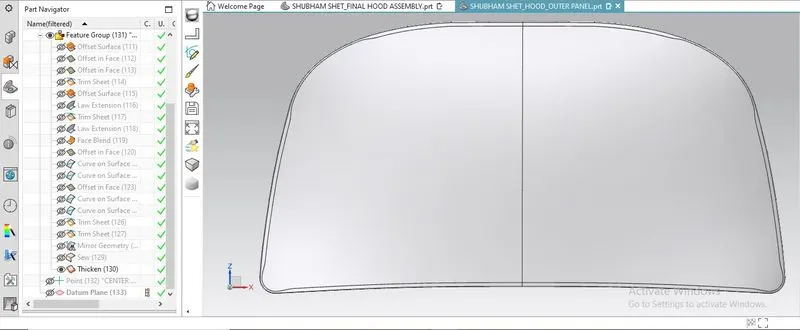
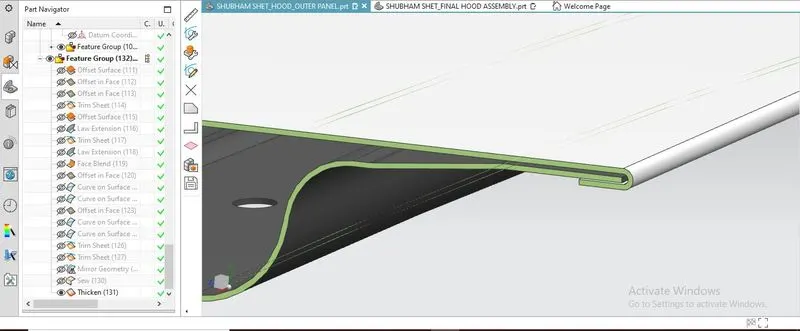
- For proper opening and closing of the hood, the striker must be placed in such a way that the tip of the hook must follow the trajectory with the mid-point of the hinge axis as the center.
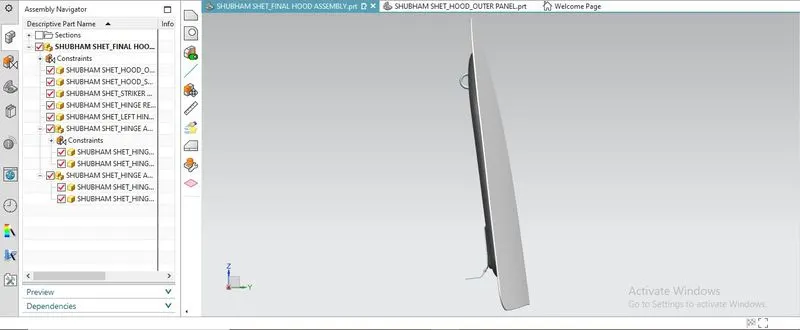
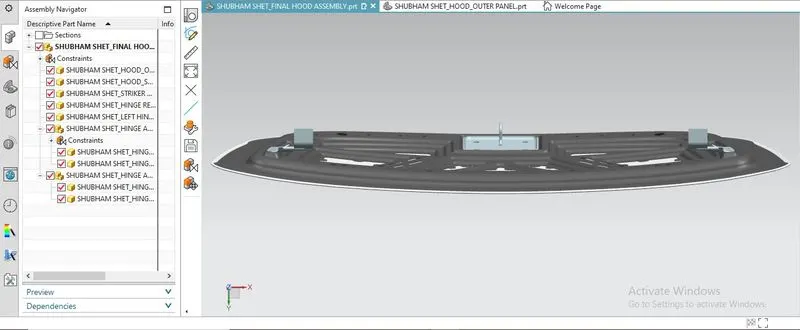
- Final HOOD assembly model:
CONCLUSION:
- Successfully designed the hood inner panel and outer panel by following all the major design considerations such as latch & striker point, hinge axis, pedestrian rating, EURO NCAP regulations, NVH, minimum clearance requirement, manufacturability, hinge & striker reinforcements/emboss, etc.
- Examined the geometry for any sort of geometric discontinuity, irregularities in blends, etc, and then checked the manufacturability of the hood inner panel using draft analysis. The results of this analysis show the presence of any negative draft in the deformed sheet metal body.
- Got to learn and implement various modeling, surface, curve tools in NX CAD and CATIA to design the hood.