Hood design-Week 2
HOOD DESIGN
The hood or bonnet is the hinged cover over the engine of motor vehicles. Hoods can open to allow access to the engine compartment, or trunk on rear-engine and some mid-engine vehicles for maintenance and repair.
It consists of outer and inner panel ,the inner panel provides the strength and outer panel functions as metal cover.
Design Consideration
Another important criterion for the hood design is the protection of the occupants inside the car during the front collision. The design of the hood should be in such a way that during the collision, the force should travel in the upward direction through the embosses and directed towards the body of the car.
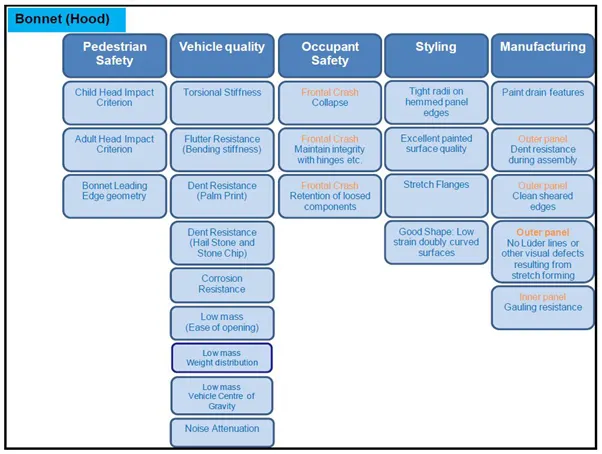
EXPLANATION
Pedestrian safety
This is the most important consideration while designing . The European New Car Assessment Programme (Euro NCAP) is a European voluntary car safety performance assessment programme (i.e. a New Car Assessment Program) based in Leuven (Belgium) formed in 1996.
India ranks no.1 in the no. of road accident so pedestrian safety comes first while designing.so here wrap-around distance (WAD)comes in while designing.
WAD (Wrap-Around Distance) is the geometrically traced distance from the contact point with the Ground Reference Plane, vertically below the front face of the bumper, to any point on the vehicle front structure.
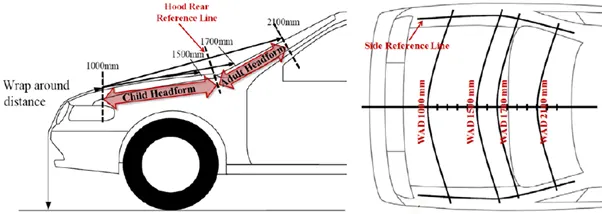
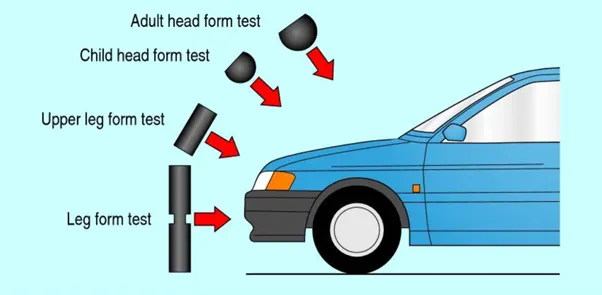
Procedure
Master Section Creation
It is created based on requirement receive from marketability team and it should be manufacturable.
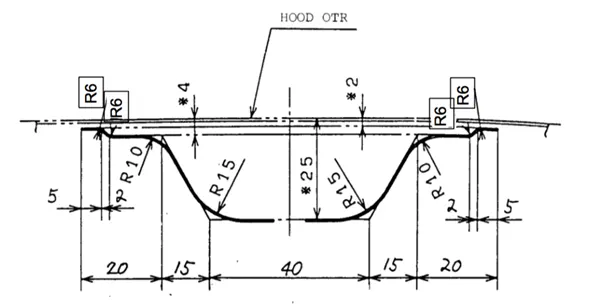
Design Parameter
Outer panel Thickness=0.75
Inner panel Thickness=0.75
Reinforcement Thickness=1.5
HOOD OUTER PANEL
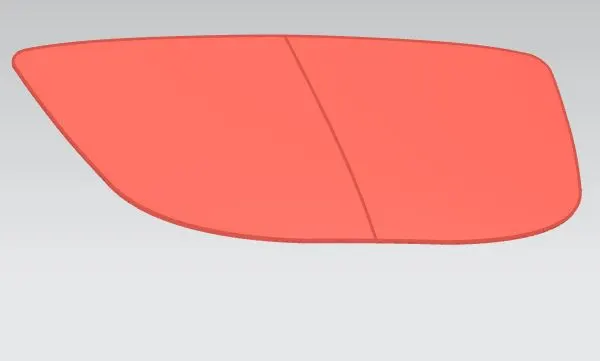
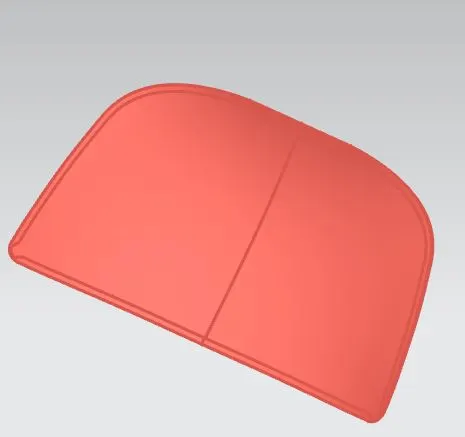
Outer panel are aesthetic element of car. The styling team provide the skin of outer panel. The outer panel is attached with inner panel by hemming. It is necessary to provide hemming flange and reliefs for the hemming operation.
Hemming
Hemming is the process in which the edge is rolled flush to itself, while a seam joins the edges of two materials. Hems are commonly used to reinforce an edge, hide burrs and rough edges, and improve appearance. We also provide mastic sealants between outer and inner panel to reduce vibration.
Hood Inner Panel
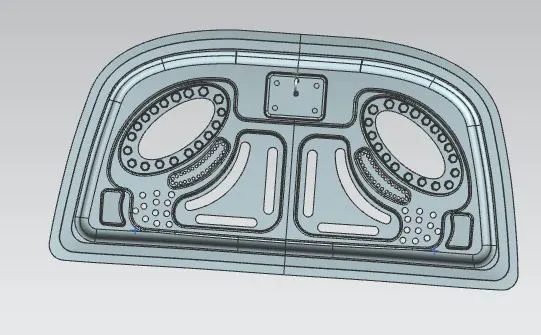
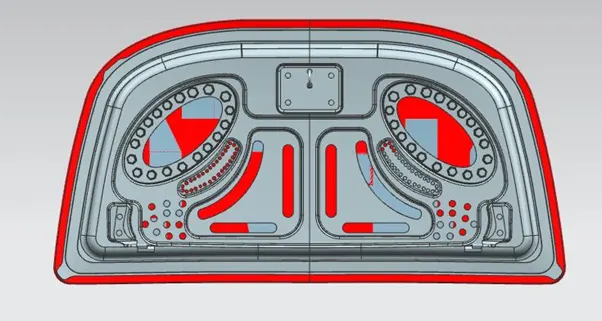
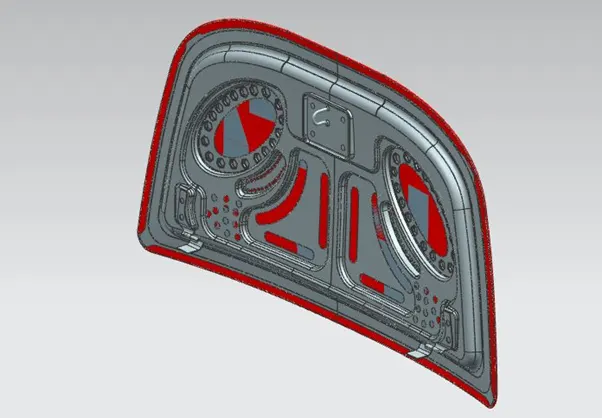
It gives strength and rigidity to outer panel. The geometry is created based on master section that was provided. After designing the initial stage operation, we will provide embosses and cut outs to strengthen the component. When a force impacts the hood front it travels upward direction ,the component is designed in such a way that divert the impact force away from passenger.
Latch and Hinge
After designing the hood inner panel we need to place latch and hinge.
Hinge
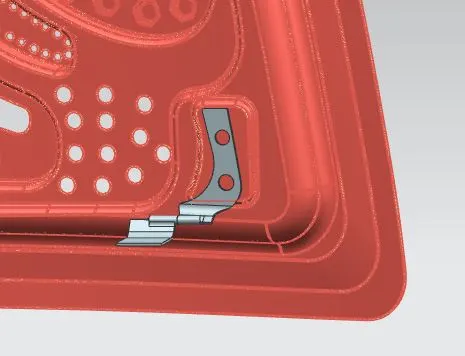
It fixes the hood with the fender of car. The latch trajectory should perpendicular to the hinge axis, so that the hood opens and closes properly.
Latch
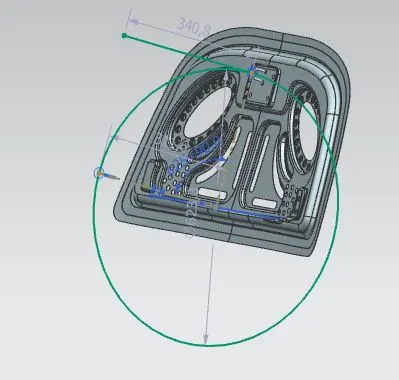
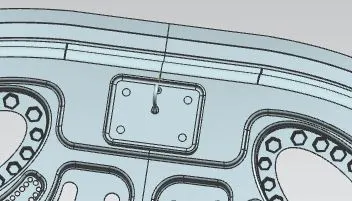
It is used for proper closing of hood ,so that it doesn’t open unexpectedly. For latch trajectory motion and perpendicularity we have draw a circle from the mid point of hinge axis and then draw a line tangent to circle. Now draw a line from mid point of striker and add co-linear relation to the tangent line.
MODEL VIEWS
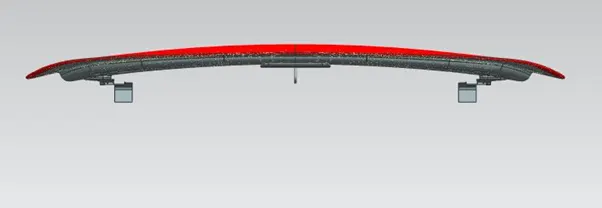
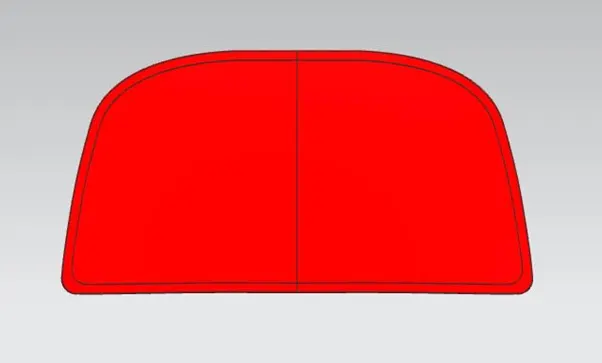
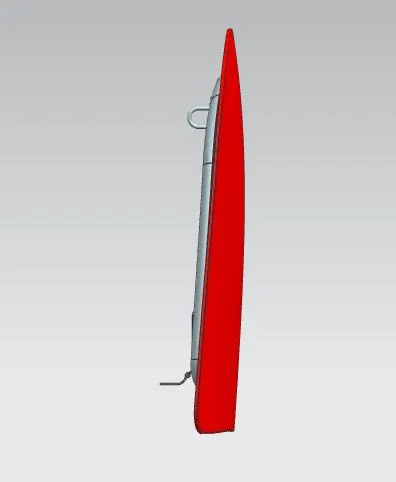
CONCLUSION
We have designed a hood that falls under the regulation of Euro NCAP standards and also the manufacturing standards.