Hood design-Week 2
HOOD DESIGN USING NX CAD
OBJECTIVE:
- In this project we are going to design the hood inner panel by using NX CAD and which helps to get familiar with the NX CAD features and tools and also we will learn what are the design parameters and the engineering skills required to make the hood.
INTRODUCTION:
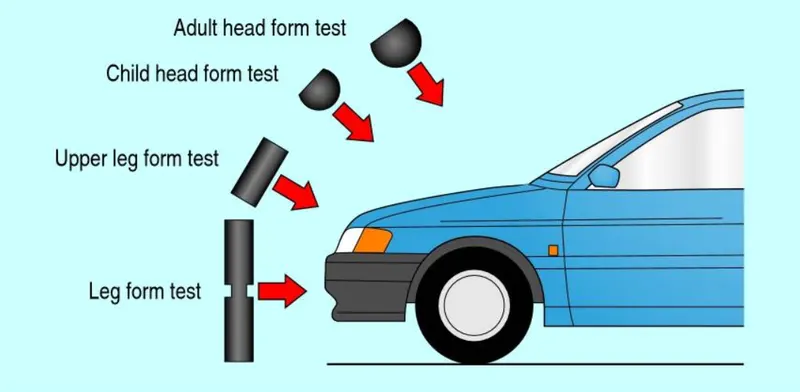
- Here we are going to understand and design the concept of front-mounted engine’s hood according to the standards.
- The hood or bonnet is the hinged cover over the engine of motor vehicles that allows access to the engine compartment, or trunk for maintenance and repair.
- On front-mounted engine cars, the hood may be hinged at either the front or the rear edge, or in earlier models, it may be split into two sections, one each side, each hinged along the centerline.
- A further variant combines the bonnet and wheel arches into one section and allows the entire front bodywork to tilt forwards around a pivot near the front of the vehicle.
PEDESTRIAN- VEHICLE COLLISION:
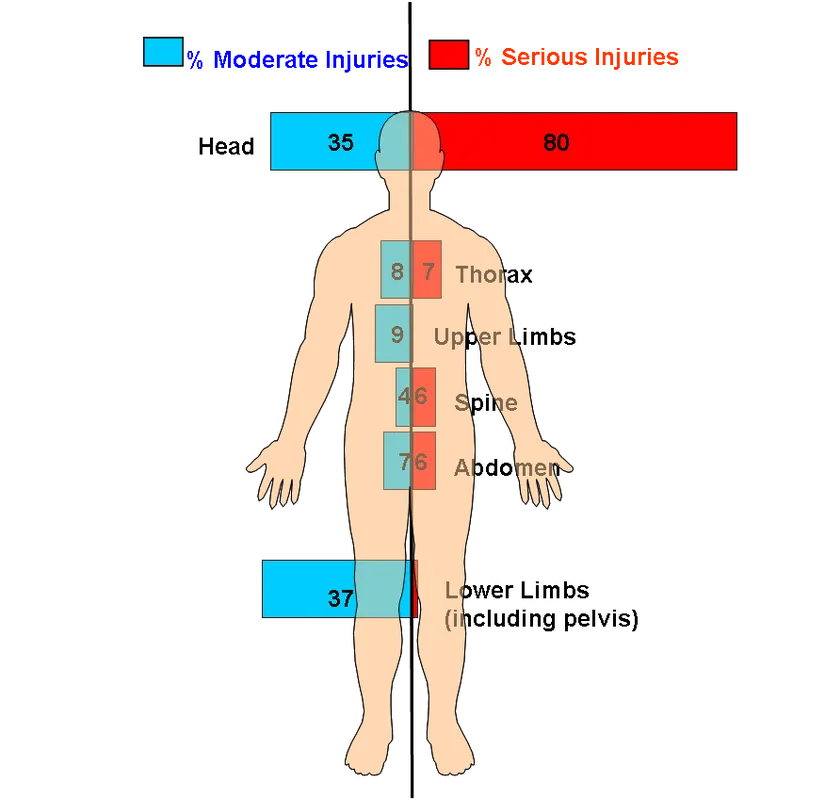
- Road safety continues to be a major developmental issue, a public health concern and a leading cause of death and injury across the world.
- At least one out of 10 people killed on roads across the world is from India, according to the World Health Organization.
- The cost of road accidents is borne not only by the victims and their family, but by the economy as a whole in terms of untimely deaths, injuries, disabilities and loss of potential income.
- It is indeed a matter of great concern that despite the continuing efforts of the Government in this regard and our commitments for halving fatalities we have not been able to register significant progress on this front.
- During the year 2023, a total number of 4,12,432 road accidents have been reported in the country, claiming 1,53,972 lives and causing injuries to 3,84,448 persons.
- Unfortunately, the worst affected age group in Road accidents is 18-45 years, which accounts for about 67 percent of total accidental deaths.
- Road transport remains the most favored mode of transport for both freight and passenger movement in India.
- The fast-growing population, exceptional rate of motorization coupled with the ever-growing urbanization has made people vulnerable to frequent road accidents resulting in fatalities, injuries/disabilities.
MASTIC AREA:
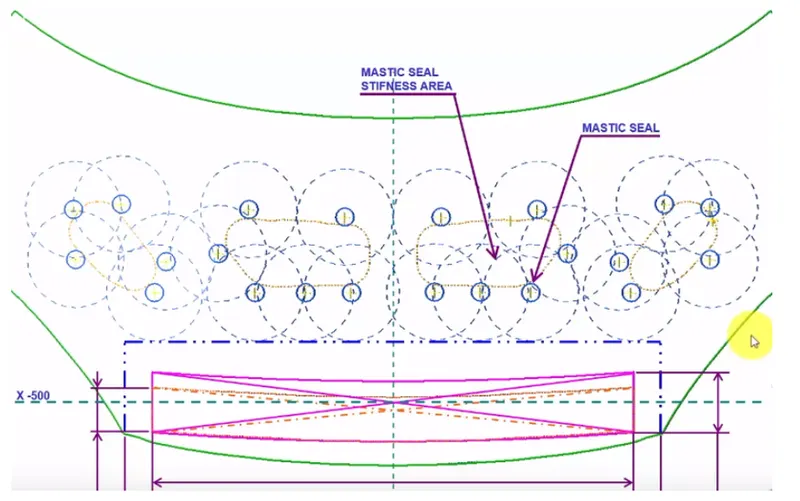
Mastic sealant is used between the inner and outer panel of the hood to reduce vibration and noise. Mastic sealant is a gel-like substance, which gets solidifies when heated.
DESCRIPTION:
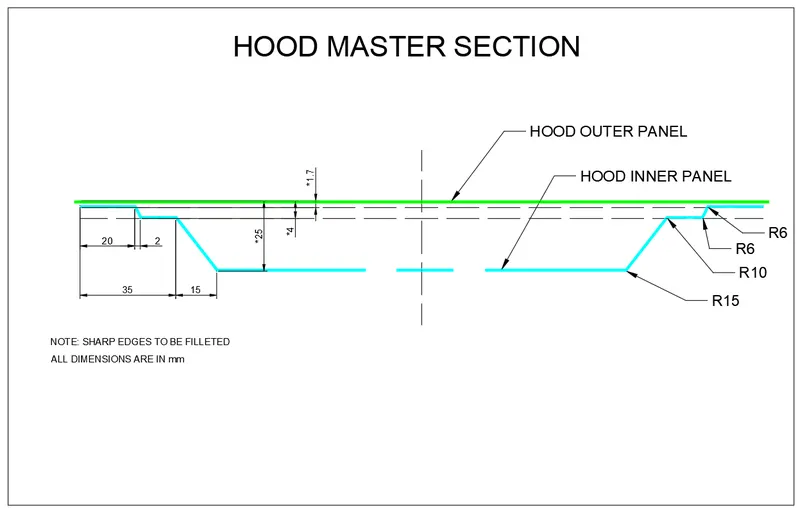
HOOD THICKNESS :
- Outer Panel Thickness = 0.75mm
- Inner Panel Thickness = 0.75mm
- Reinforcement Thickness = 1.5mm
FEATURES AND TOOLS USED FOR DESINING HOOD:
- Sketch
- Offset surface
- Offset curve in face
- Trim sheet
- Through curves
- Law extension
- Trim and extend
- Extend sheet
- Face blend
- Edge blend
- Emboss
- Mirror geometry
- Sew
- Thicken
Offset surface : creates a body by offsetting a set of faces
Offset curve in face: offsets curves along the faces on which they lie.
Trim sheet: trims off a portion of the sheet body.
Through curves: creates a body through multiple section where the shape to pass through each section.
Law extension: creates a law controlled extension from base sheet.
Trim and Extend: trims or extends a set of edges or faces to intersection with another set of edges or faces.
Extend sheet: extend a sheet body by a distance or to the intersection with another body.
Emboss: Sheet metal embossing is a stamping process for producing raised or sunken designs or relief in sheet metal. This process can be made by means of matched male and female roller dies, or by passing sheet or a strip of metal between rolls of the desired pattern. It is often combined with stamping to create a shiny, 3D effect.
The metal sheet embossing operation is commonly accomplished with a combination of heat and pressure on the sheet metal, depending on what type of embossing is required. Theoretically, with any of these procedures, the metal thickness is changed in its composition.
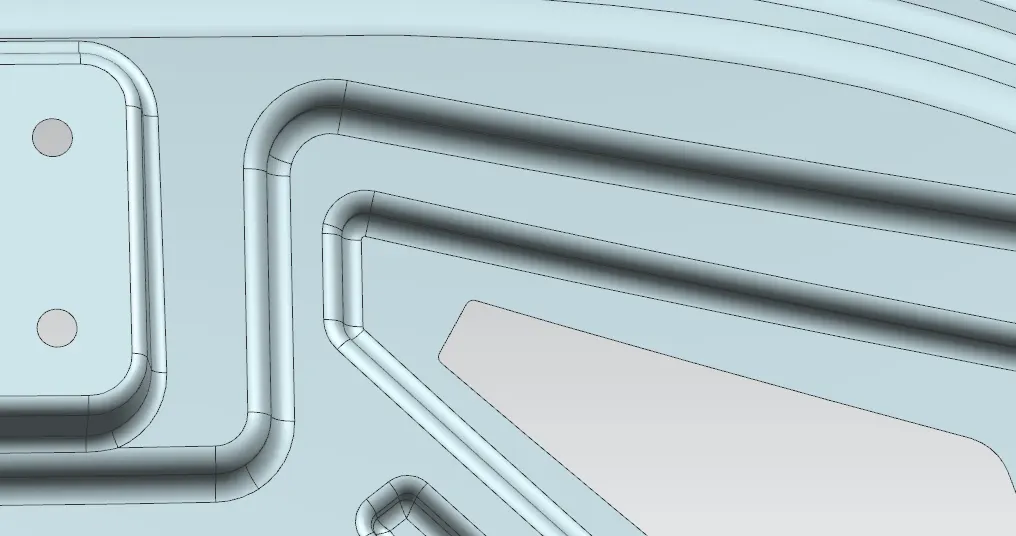
Face blend: add tangent blend faces between the selected sets of faces. The bend shape can be circular, conic or law controlled.
Edge blend: round sharp edges between faces. The radius can be constant or variable.
Mirror geomentry: copies geometries and mirror them across the planes.
Sew: combine sheet body by sewing the common edges together, or combine the solid bodies by sewing common faces.
Thicken: creates a solid body by adding thickness to a set of faces.
HEMMING IN A SHEET METAL:
- Hemming is a sheet metal forming process in which sheets are joined by bending it usually to 180°.
- Automotive body panels and automotive parts such as deck-lids, trunk-lids, doors, hoods and tailgates are formed by hemming process
- Hems are commonly used to reinforce an edge, hide burrs and rough edges, and improve appearance.
ASSEMBLY:
- Insert all the parts and add them with the proper geometric assemble constraints.
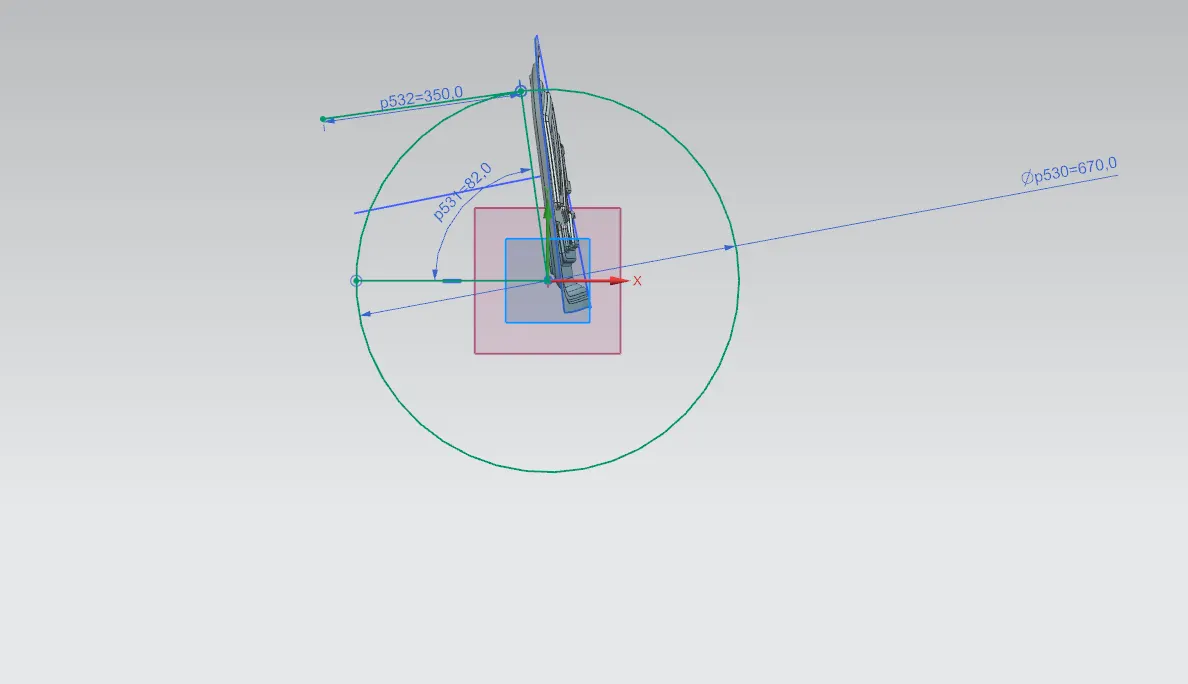
- Create a latch trajectory so that the hood can closes and opens in the particular axis.
- To create a axis select the points on the two hinges respectively and join the points by line option.
- Then with respect to the axis create a datum plane on the centre of the axis and draw a circle which represents the latch axis.
LATCH TRAJECTORY:
- It is a calculation done on the striker part were the hood opening and closing axis is drawn.
- For opening and closing the hood the latch should be in a proper axis so that it fix and locks into the latch lock, For creating the axis we use the latch trajectory.
REINFORCEMENT:
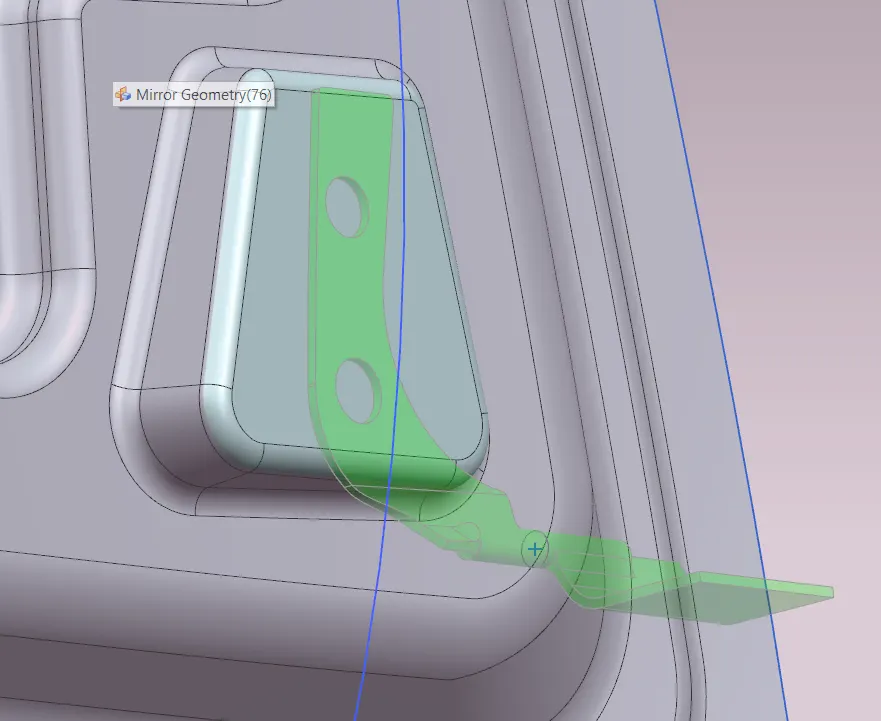
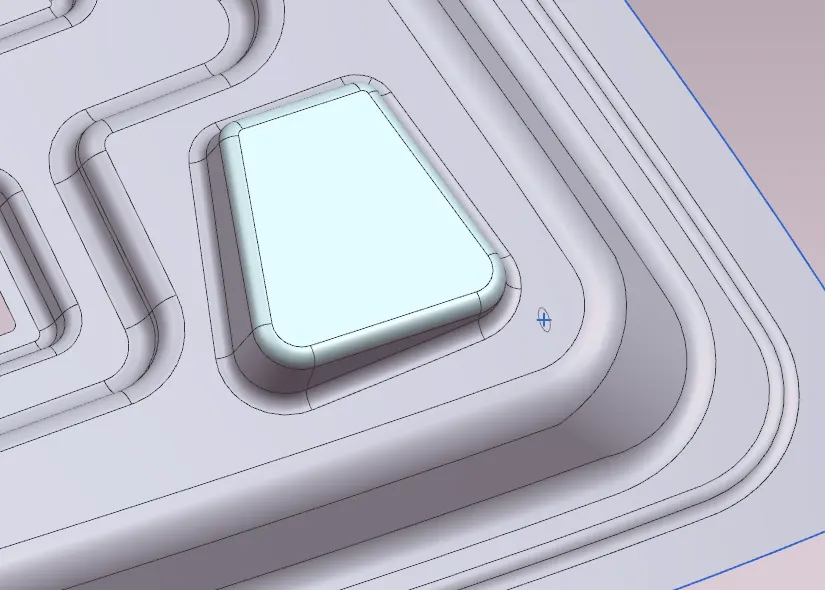
- When we give emboss we add some reinforcement which will compensate the lose strength.
- We added the stiff pad to it so that it gets the strength and also it has the mastic points.
VIEWS:
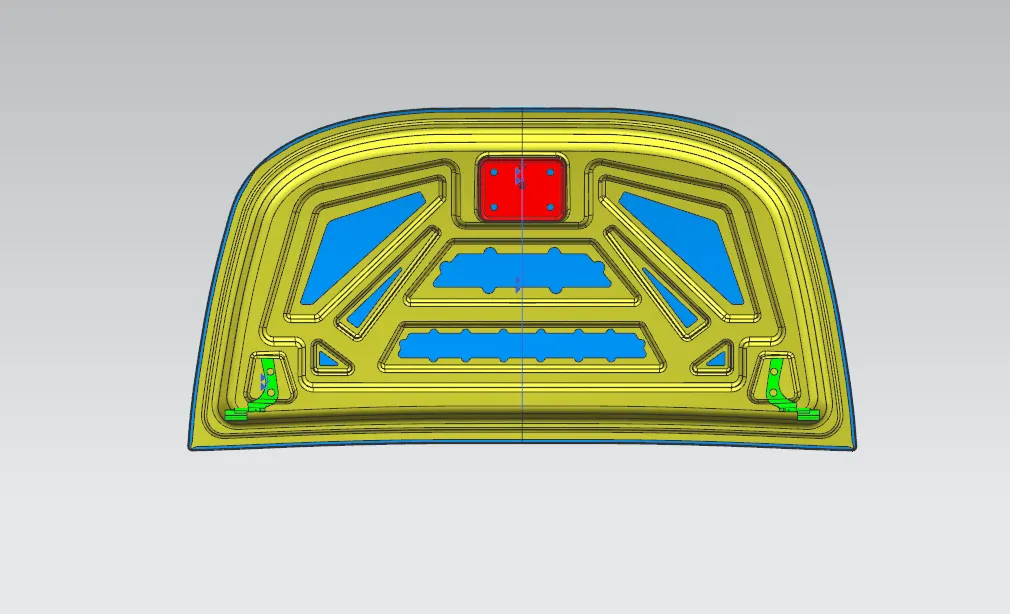
Front view:
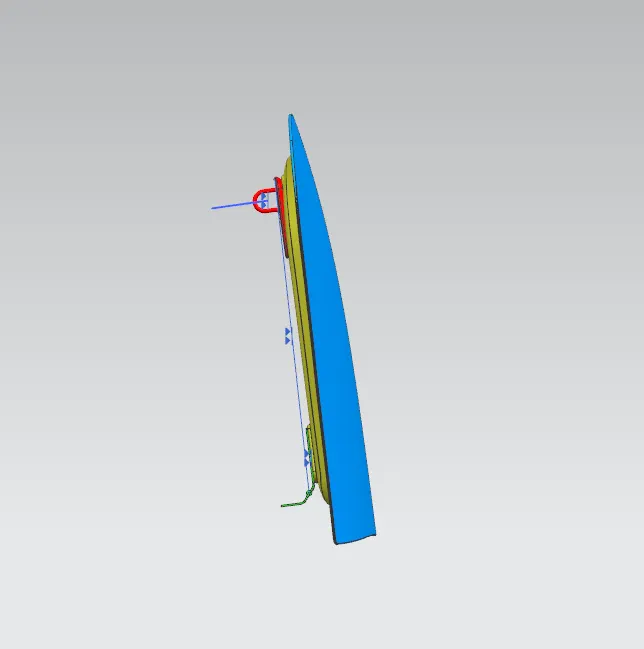
Side view:
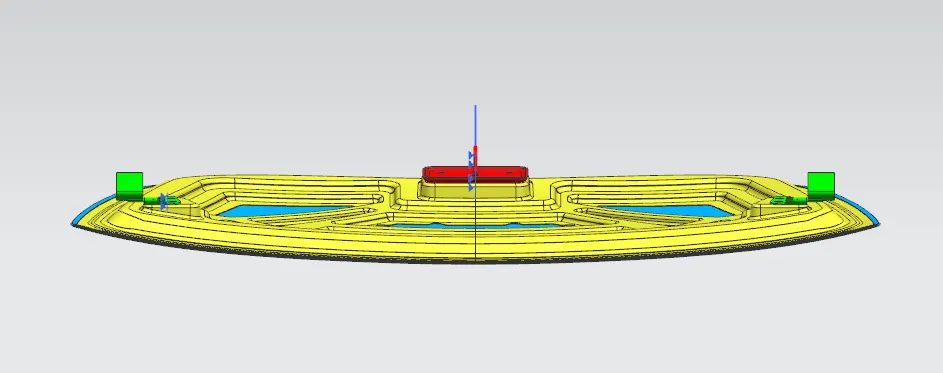
Bottom view:
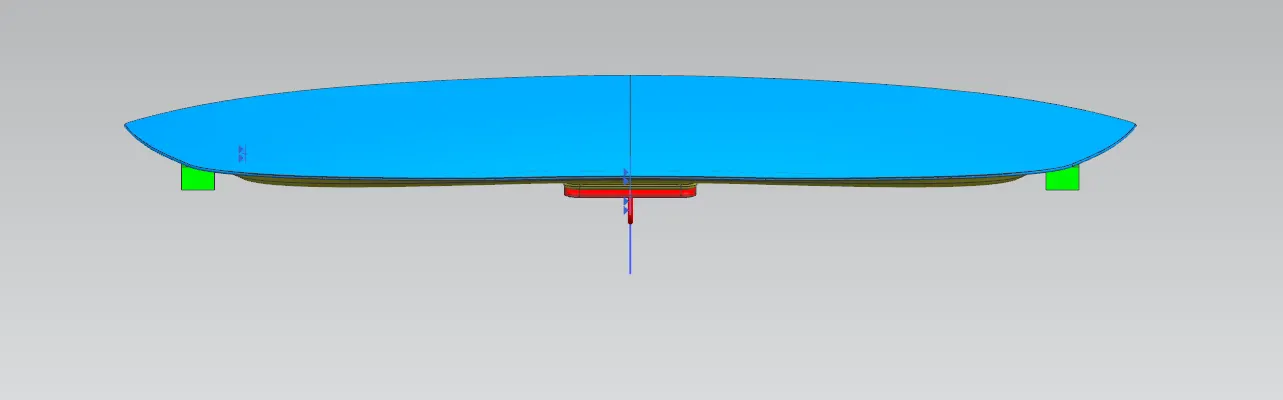
Top view:
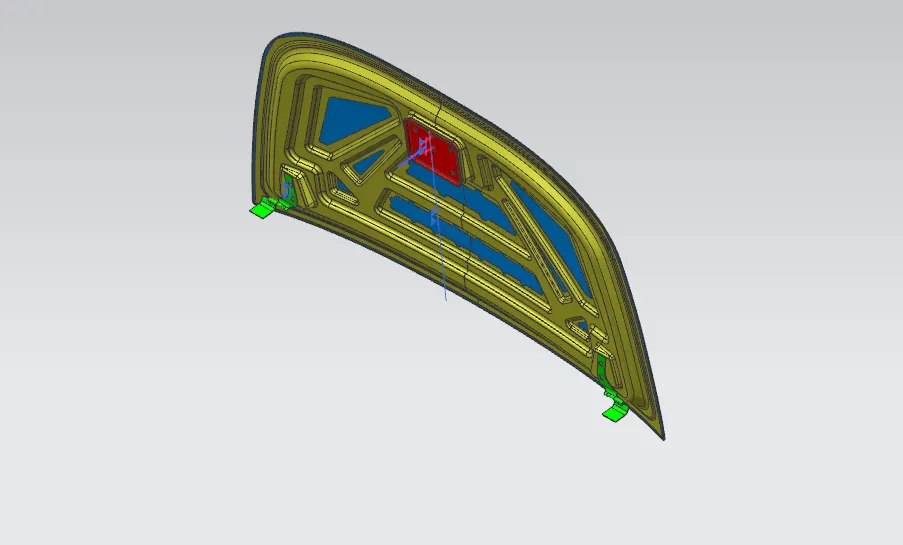
isometric view:
CUT SECTION VIEWS:
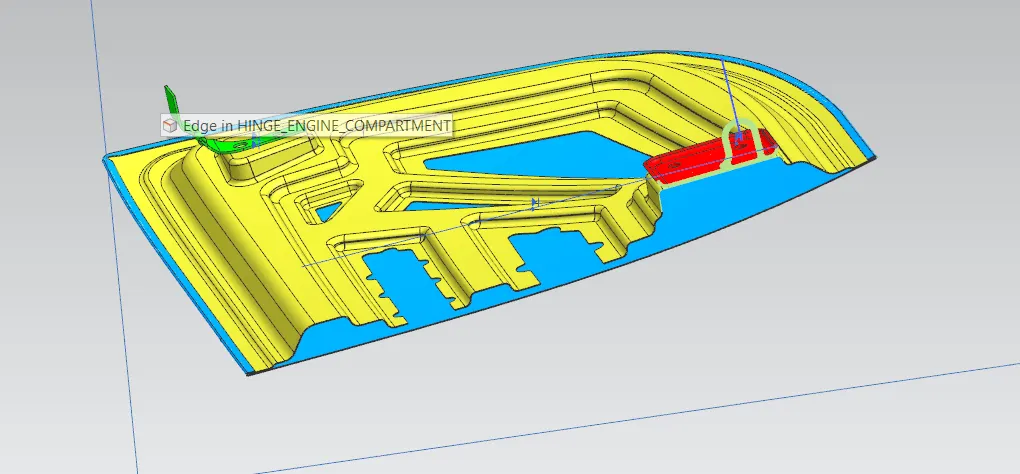
Along x axis:
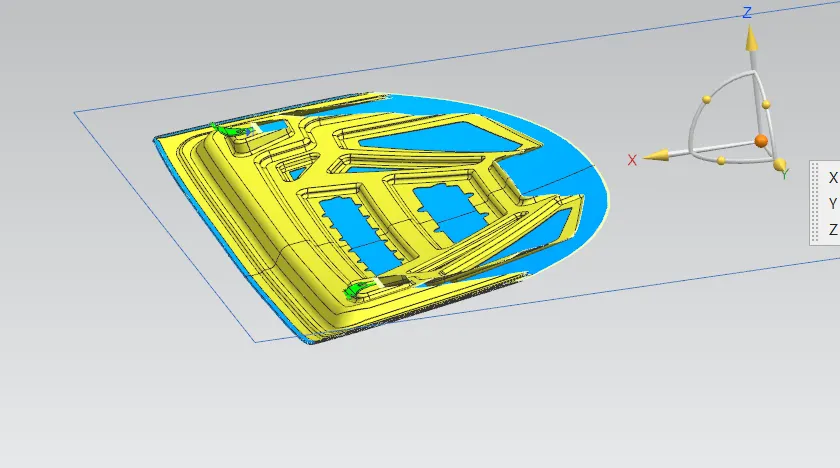
Along y aixs:
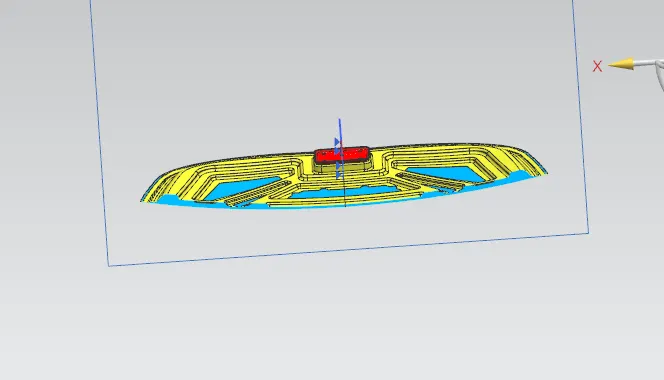
Along z axis:
CONCLUSION:
Thus,The automotive hood design has been designed and assembled using NX CAD.