Hood design-Week 2
AIM:- To design Hood Outer Panel, Inner Panel and the necessary reinforcements by following the Master Section mentioned with the Design parameters explained in the videos.
OBJECTIVE:- Creating a hood inner panel, outer panel, latch and hinge reinforcement using CATIA with the design parameters.
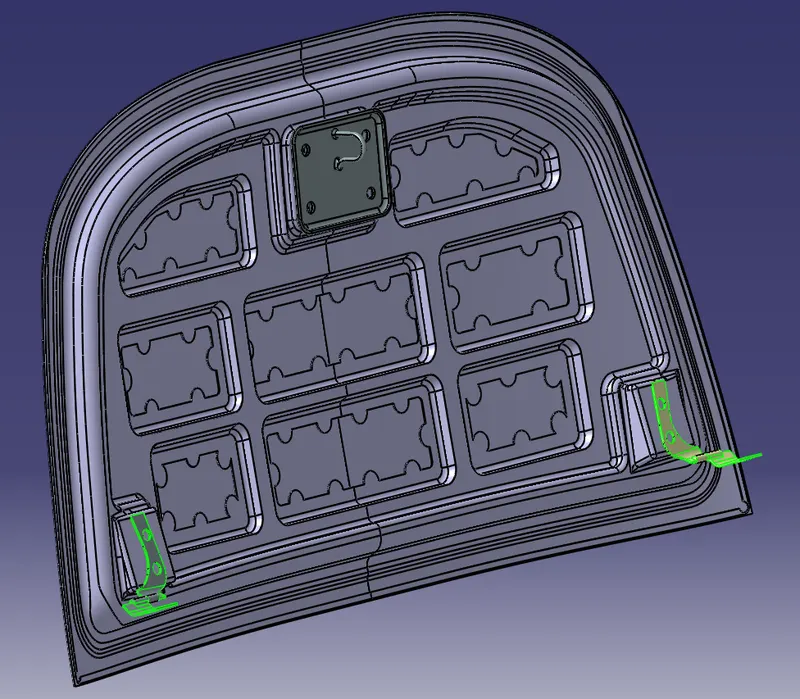
DESCRIPTION
Hood is the front part of the vehicle which covers the engine bay , it can me divided ,mainly into two part hood outer panel and hood inner panel, creating a hood design a design engineer has to consider objectives like opening angle of hood, pedestrian safety norms and NVH.
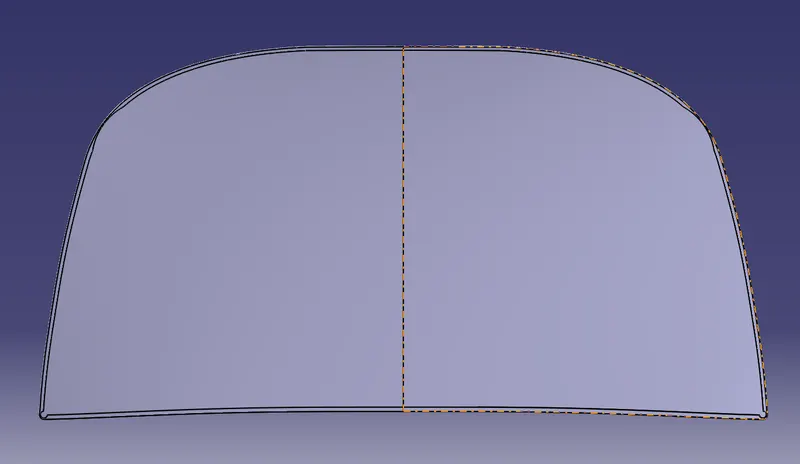
A hood is created by joining outer panel and inner panel with a process known as hemming, in hemming a roller like tool is used to wrap the outer panel inwards the boundary of inner panel.
PROCEDURE:-
The designing of the hood is based on the input of the class a surface of the hood outer panel, from the surface it is offset multiple times and with the help of parallel curve the desired surfaces are obtained then the surfaces are joined or trim together to get the final desired surface .
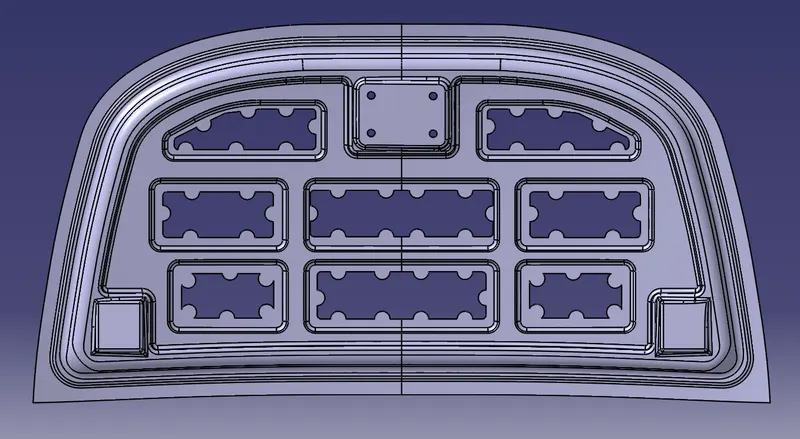
After the creation of the inner panel surface it is thickened for .75mm outward direction of the tooling direction for final output of the inner panel.
After creation of the inner panel the hinges are placed and fined tuned for the opening and closing of the hood, then with respect to the hinge axis the latch placement is started, the sticker angle should be perpendicular to the hinge axis for the mechanism to work properly.
Hood outer panel is created using the given class a surface and with the help of fillets hemming is translated in the surface.
Pedestrian safety norms are also an important factor to keep in mind during the designing of the hood, a design engineer should provides enough hollow emboss in the inner panel to reduce the impact of the pedestrian also keep in mind the integrity of the hood.
NVH should also be considered during the hood design as the engine ion running condition vibrates and produces noise vigorously so to minimize the noise and vibration of the hood is also important for the engineer as it adds up the success of the vehicle in the customers experience.
To Tick the hood along with hamming process mastic seals are used to reduce the NVH level and also bond the panels together.
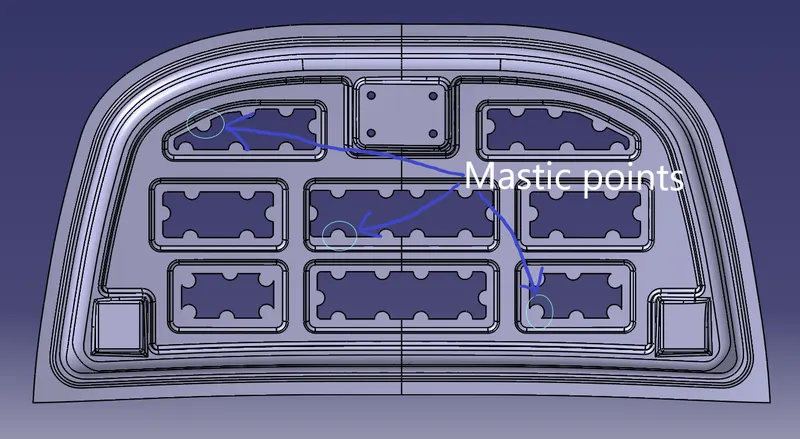
In the hood enough mastic points should be provided to ensure the quality of the hood is optimized .
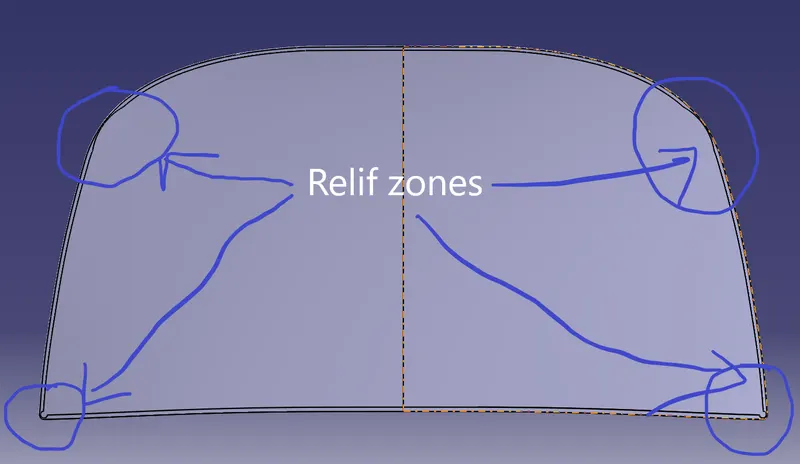
while hemming the panels relief zoner are created to reduce the stress during the process.
CONCLUSION:-
The hood panel is successfully created with respect to the design perimeters of panel thickness of .75mm and reinforcement of 1.5mm.