Hood design-Week 2
TITLE:- DESIGN FOR HOOD PANEL
INPUT: -
1. CAR OUTER PANEL CLASS A
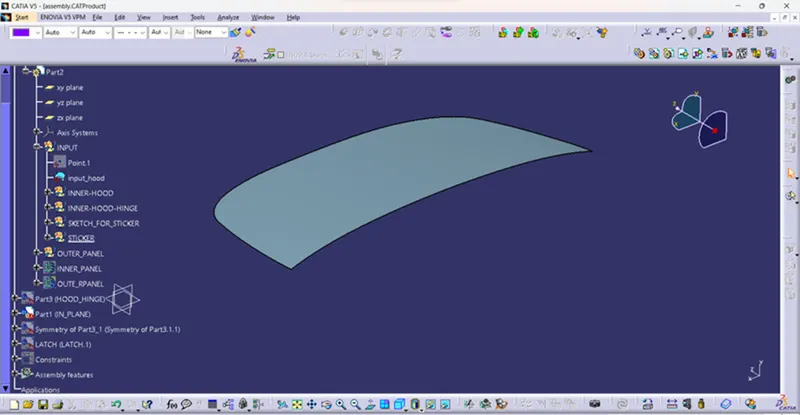
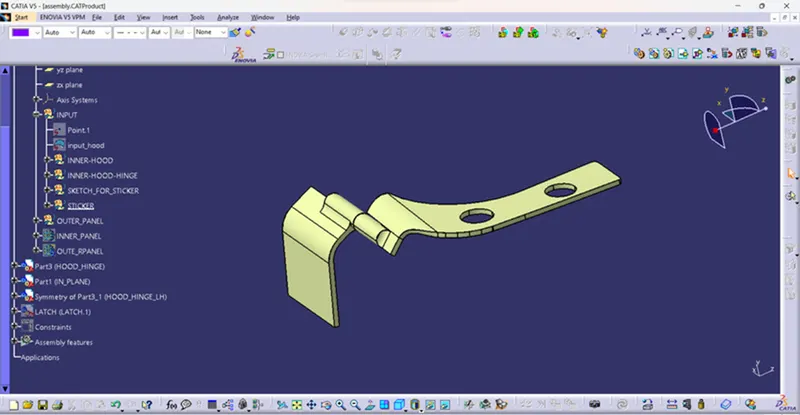
2. HINGE FOR HOOD
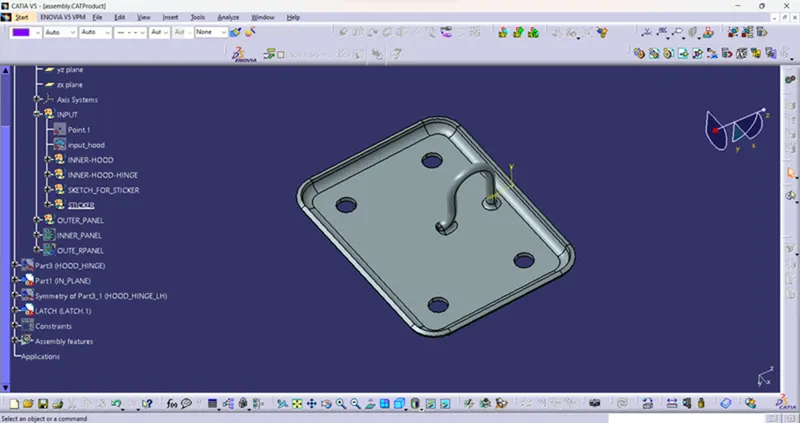
3. STICKER
4. DRAWING FOR INNER HOOD
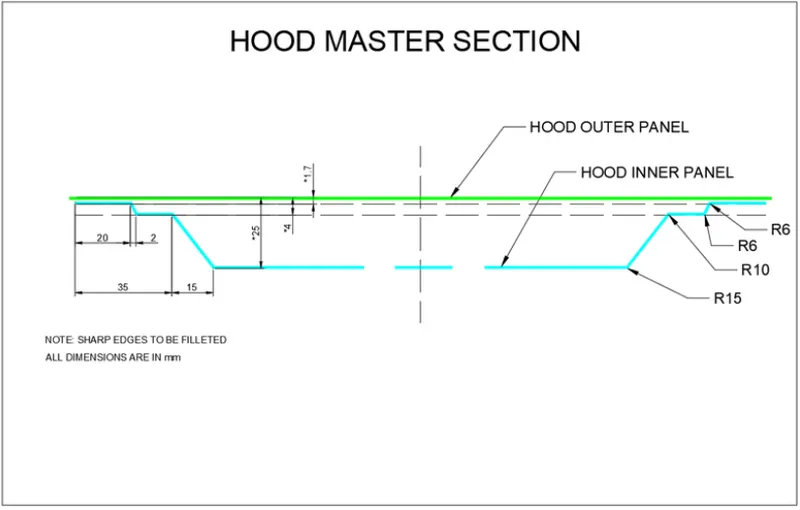
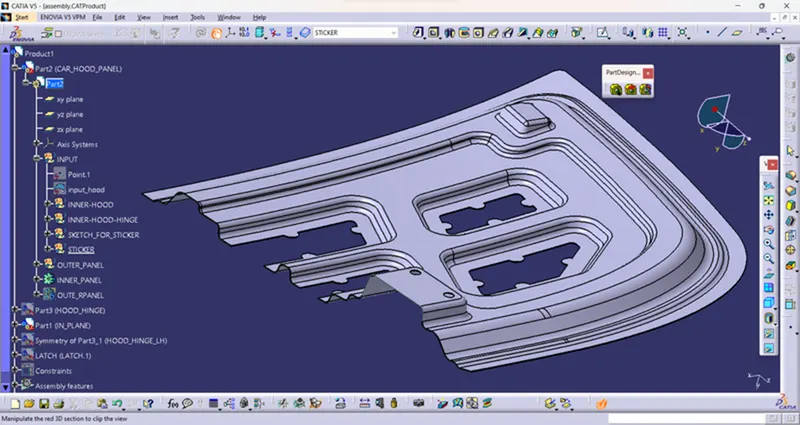
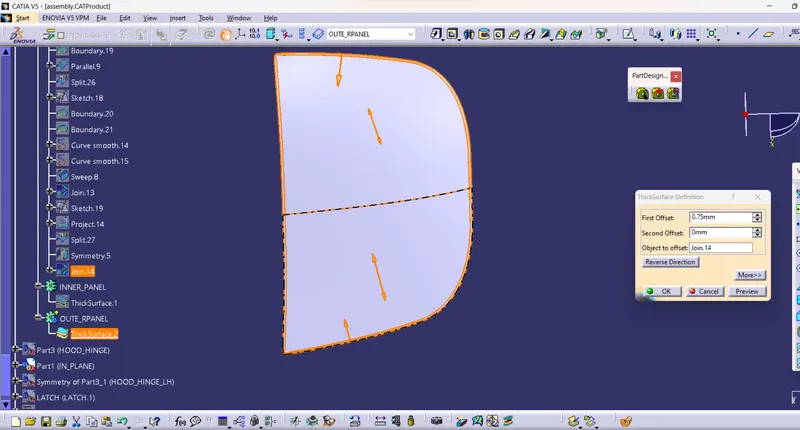
5. THICKNESS 0.75MM
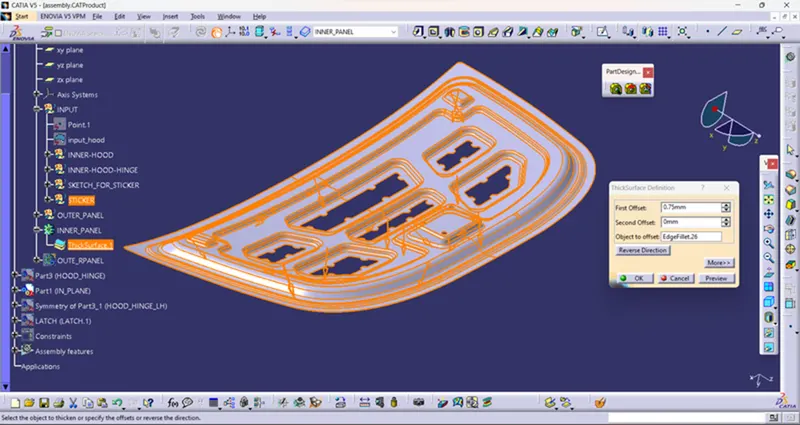
PROCEDURE:-
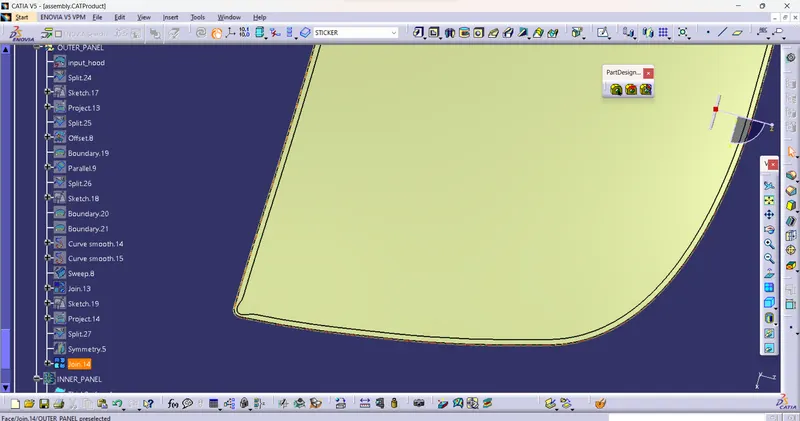
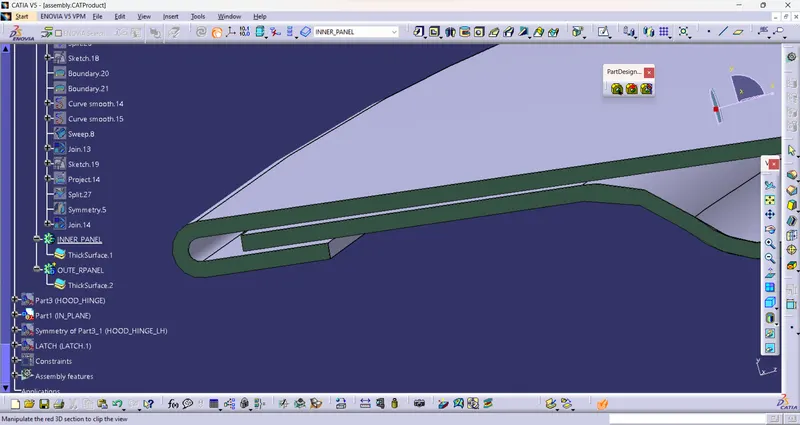
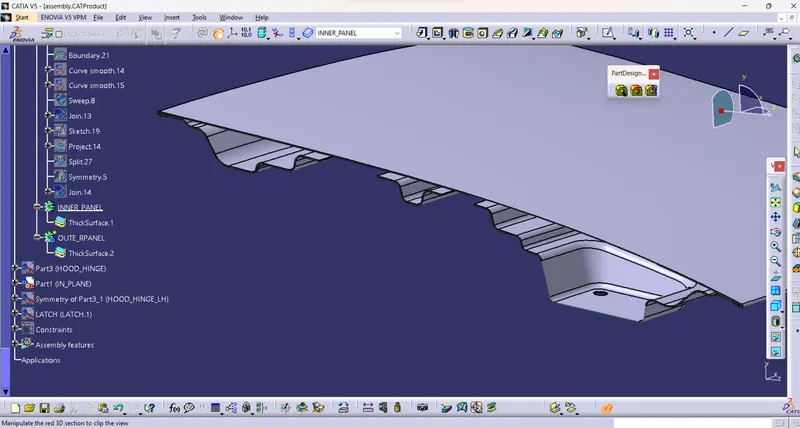
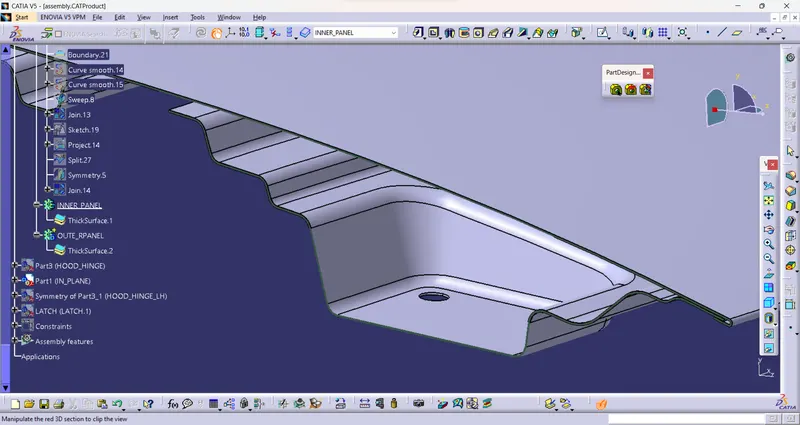
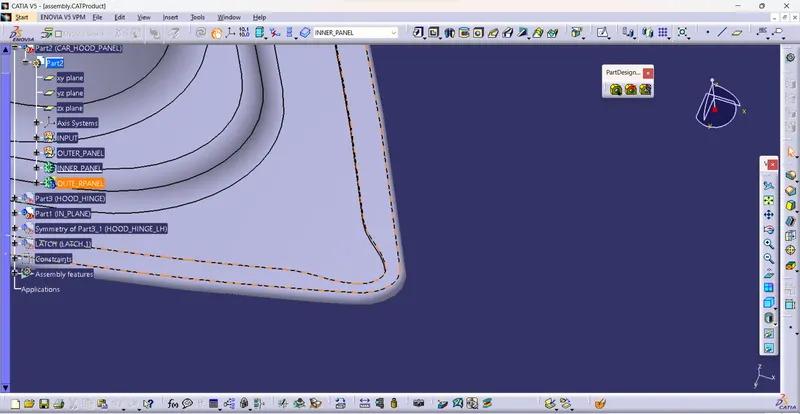
- DESIGN OF THE CAR INNER HOOD PANEL
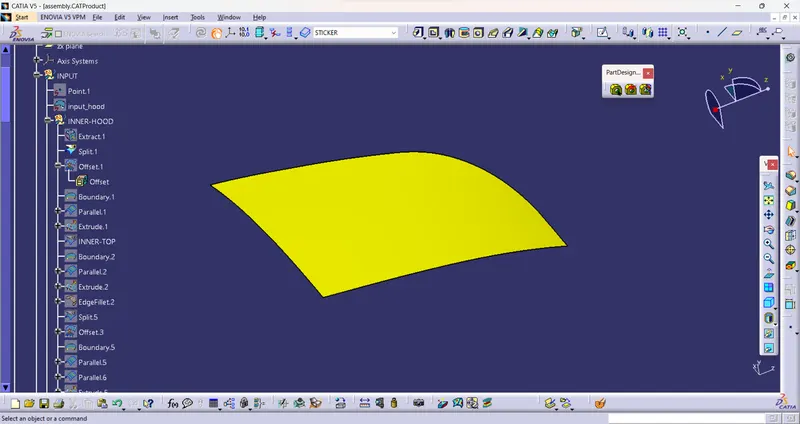
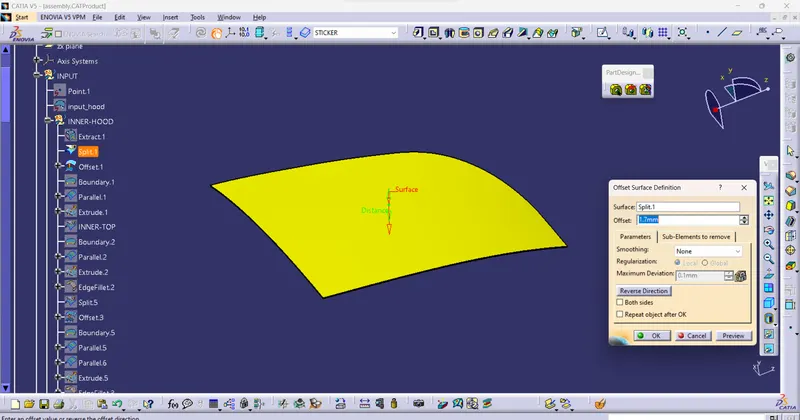
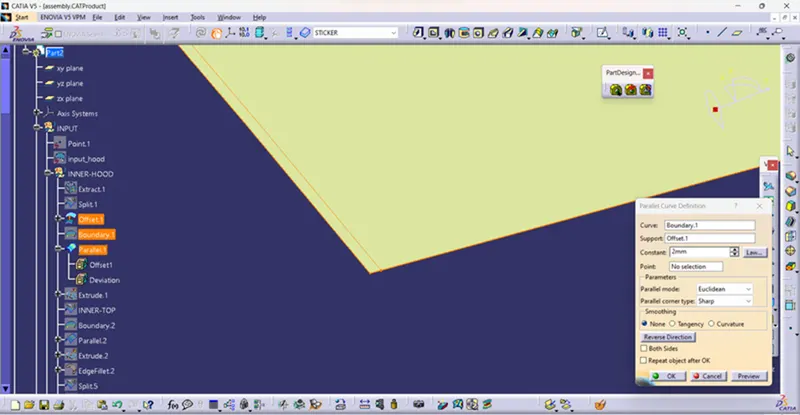
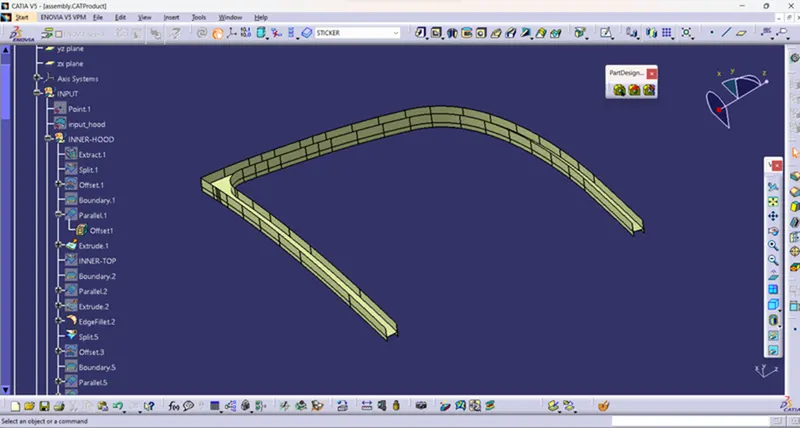
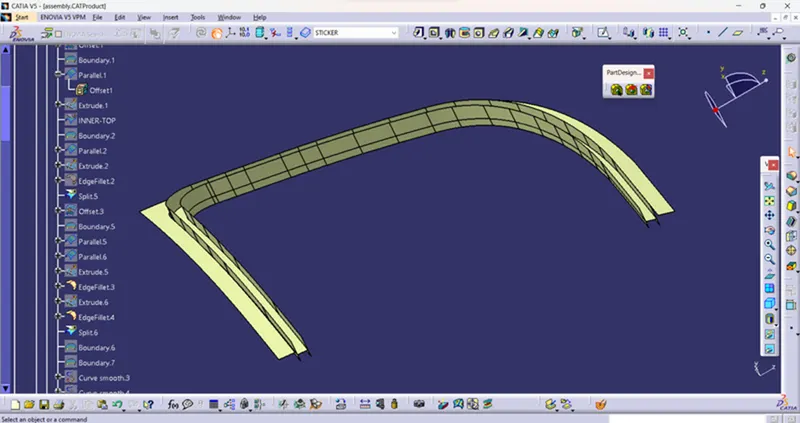
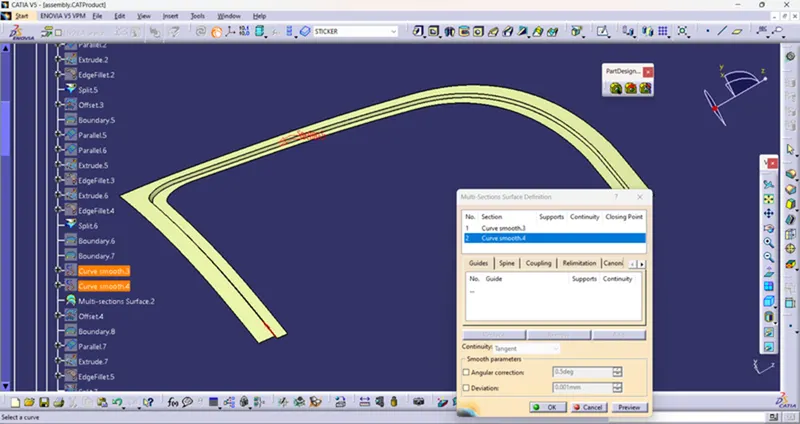
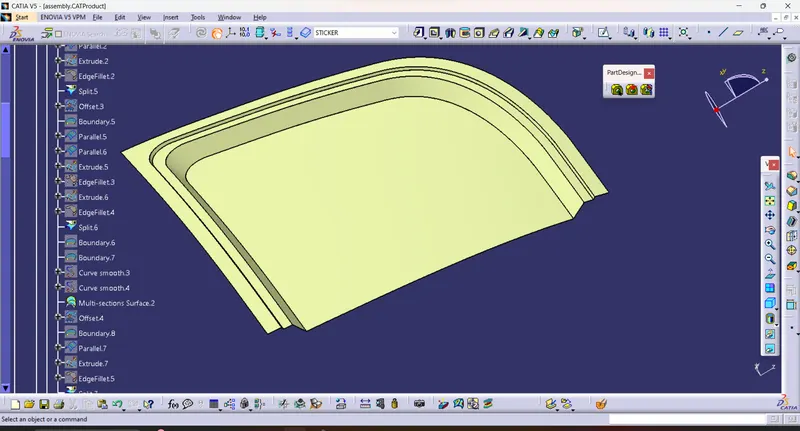
1.1 SKETCH AND INNER PANEL CREATION
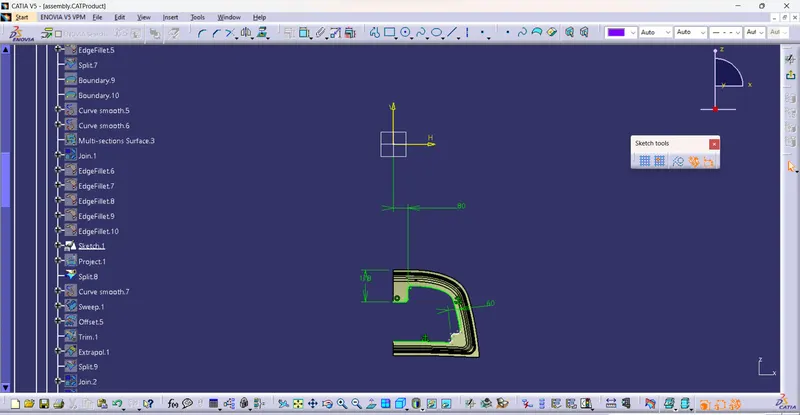
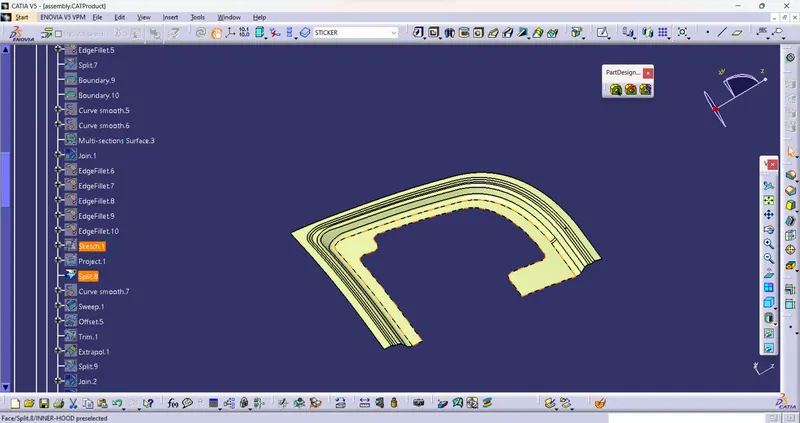
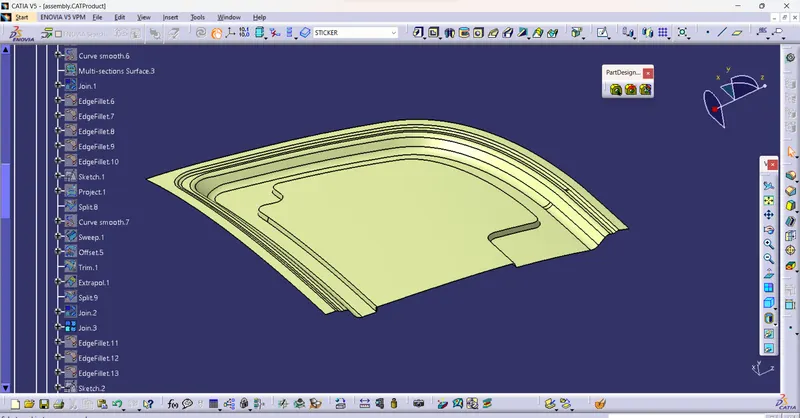
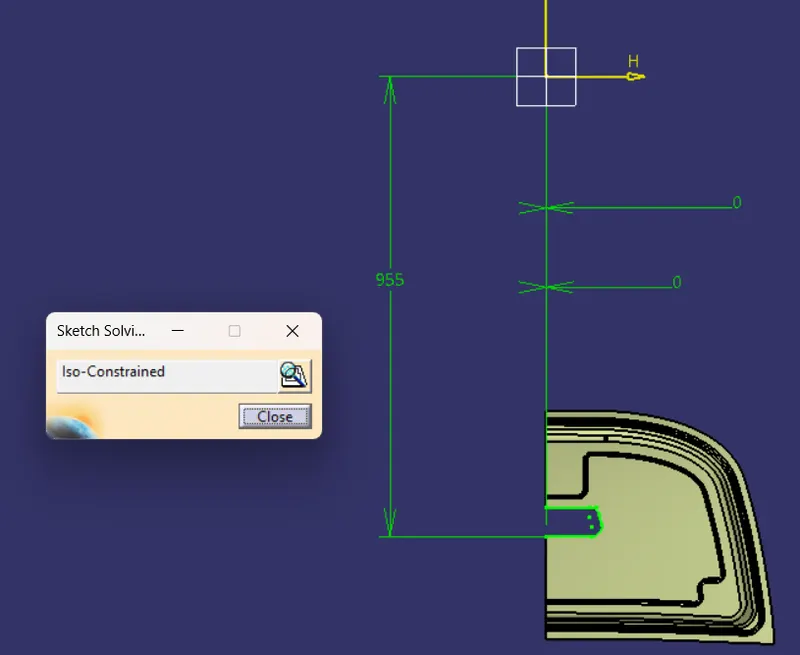
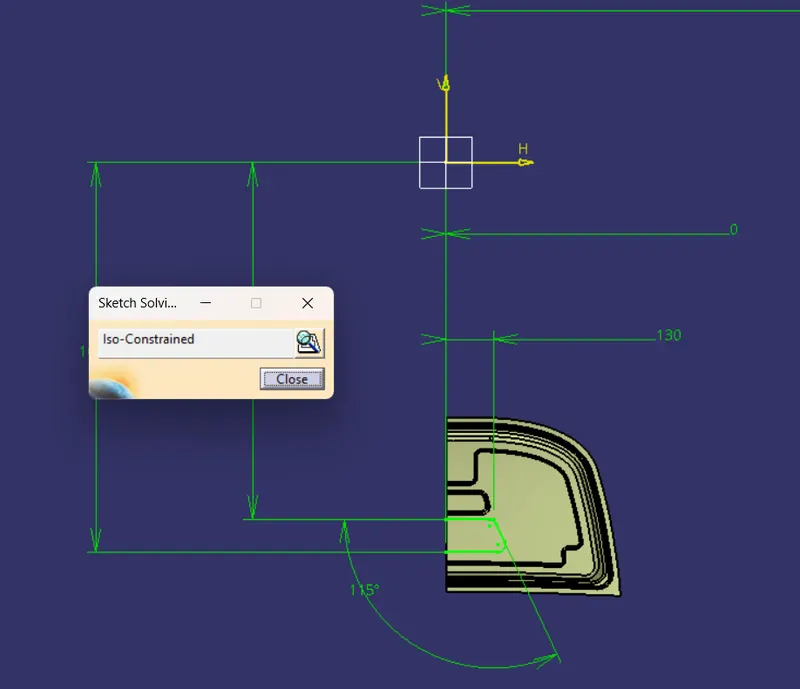
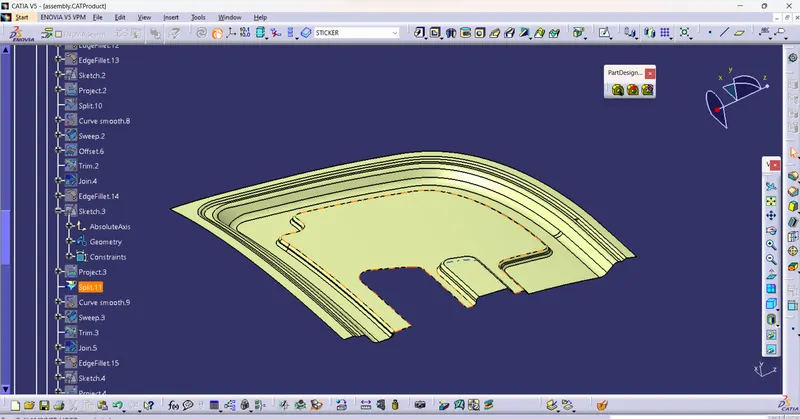
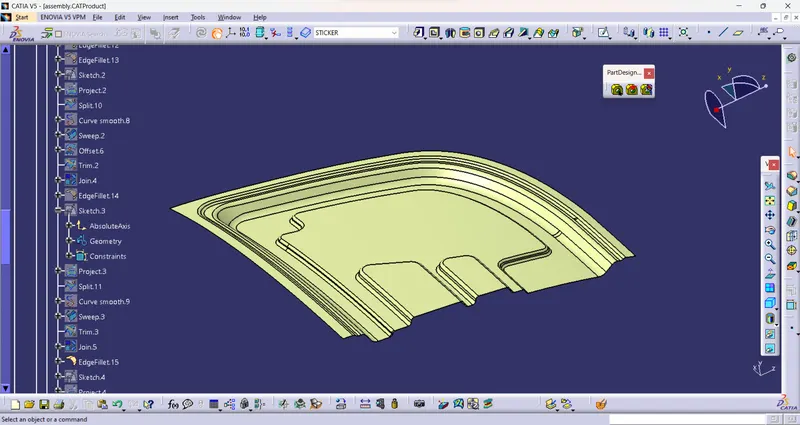
1.2 OUTER PANEL CREATION
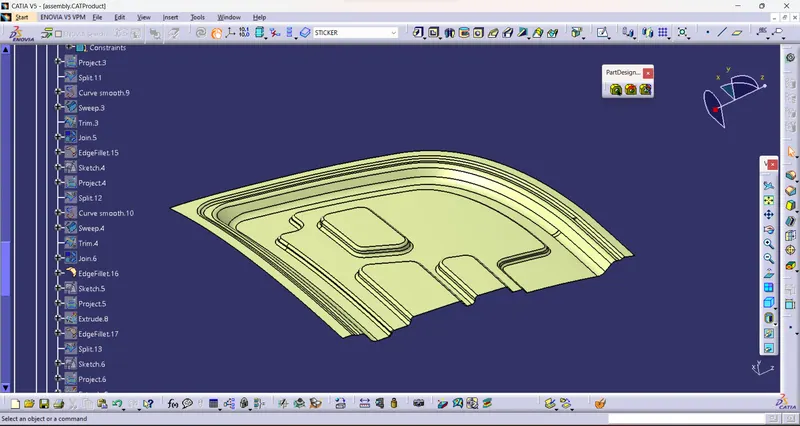
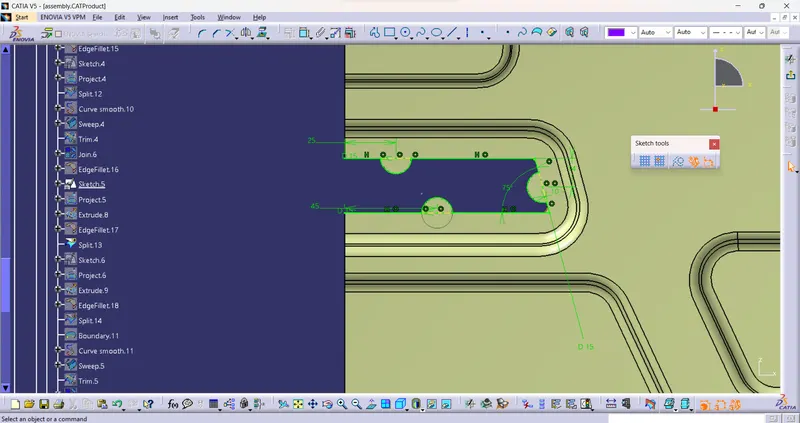
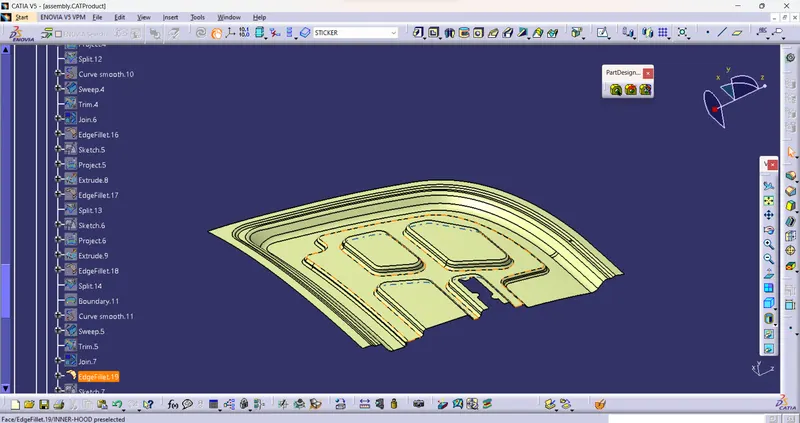
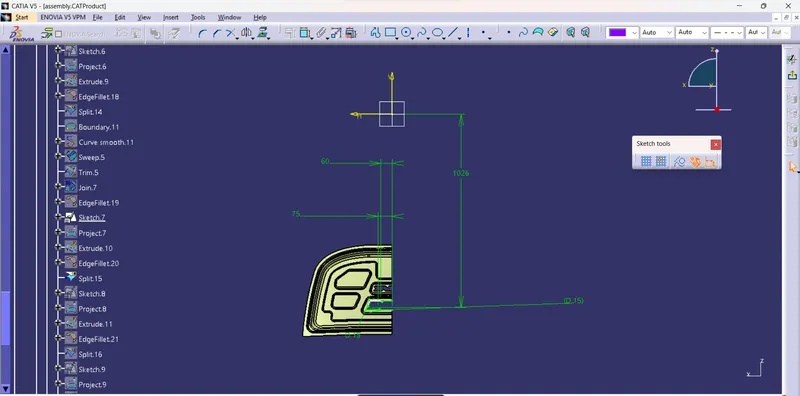
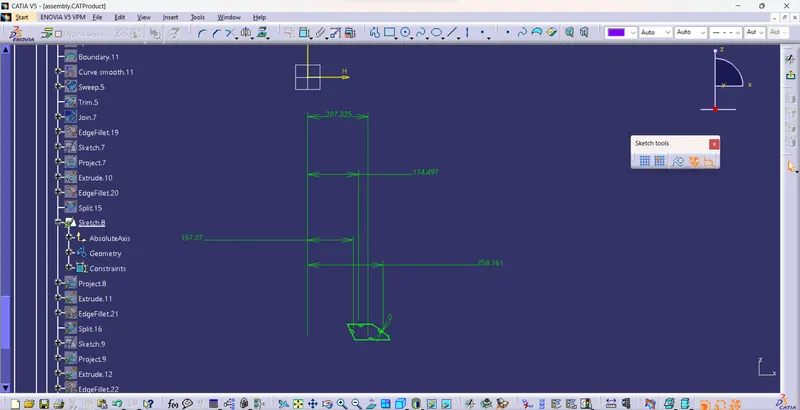
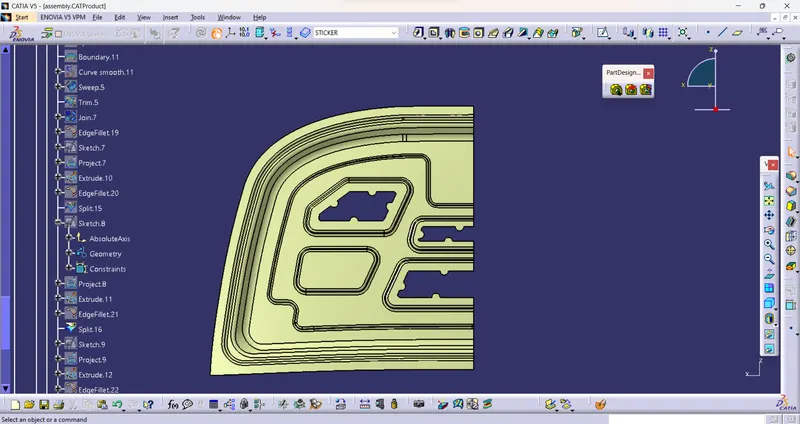

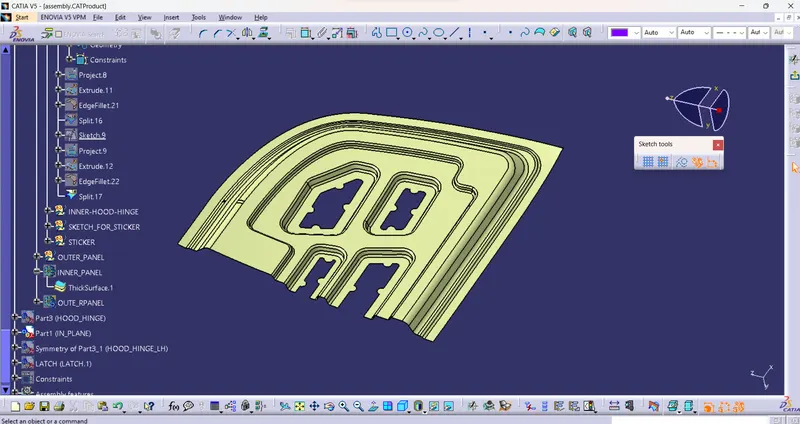
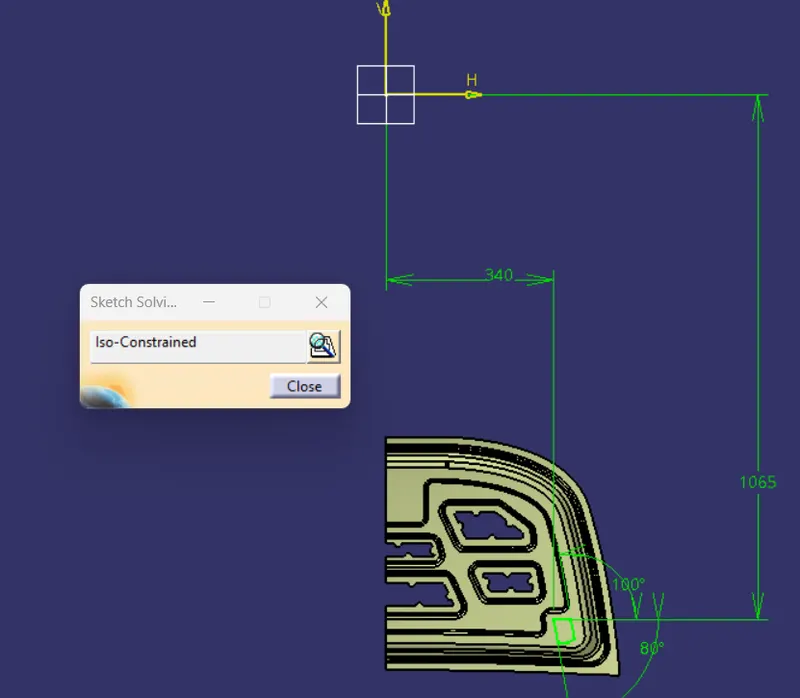
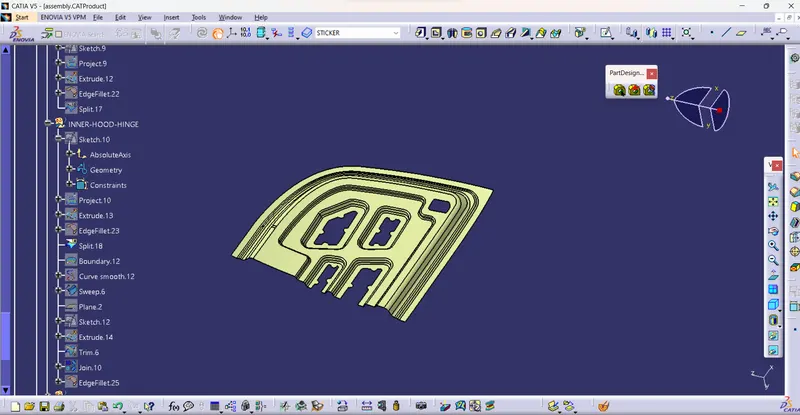
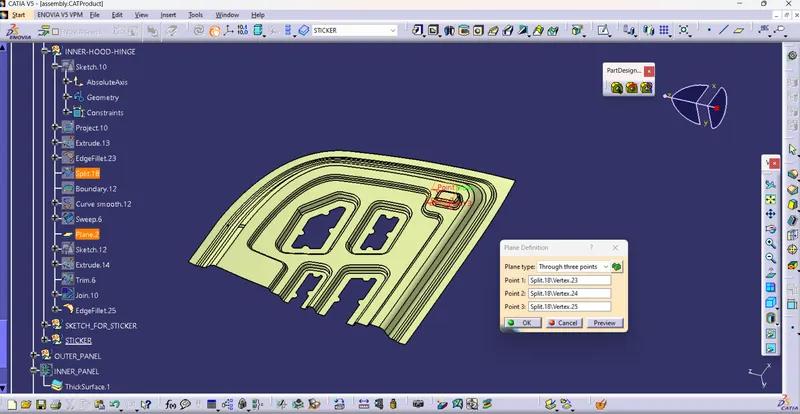
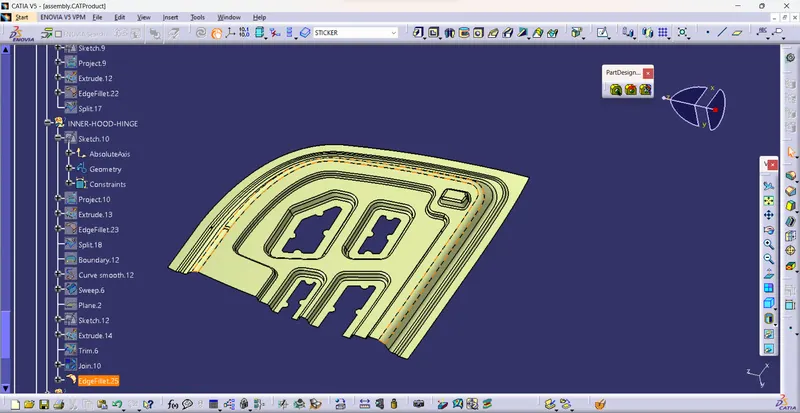
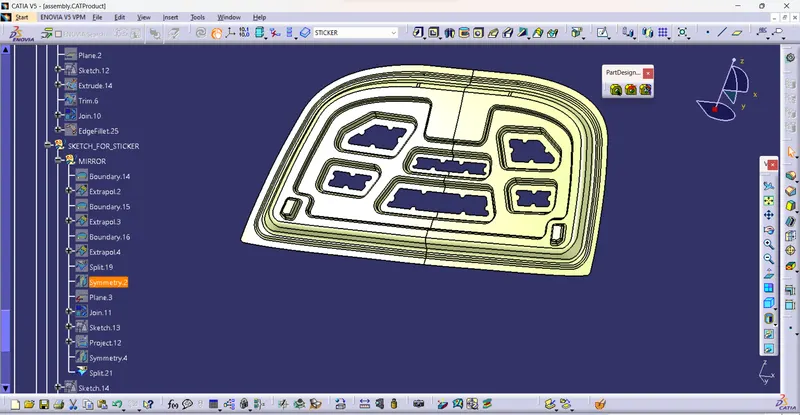
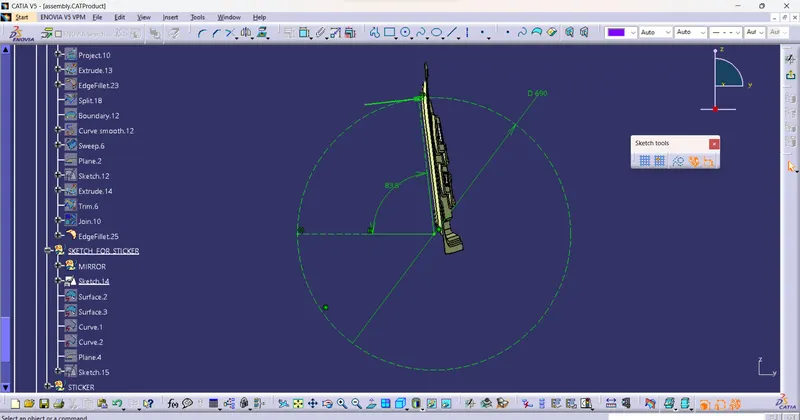
1.3 SUPPORT SKETCH FOR STICKER
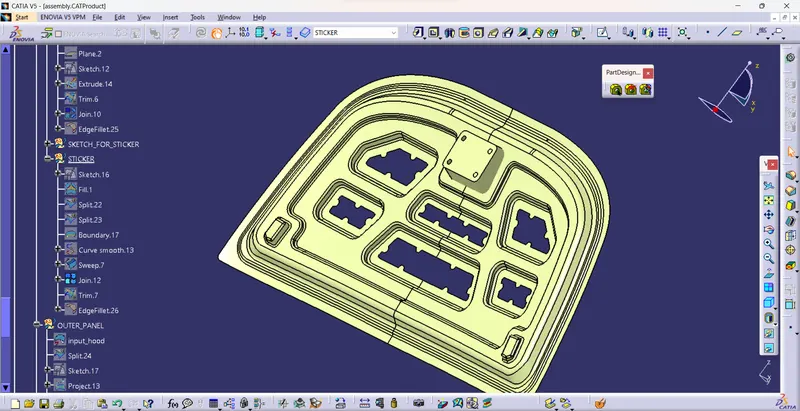
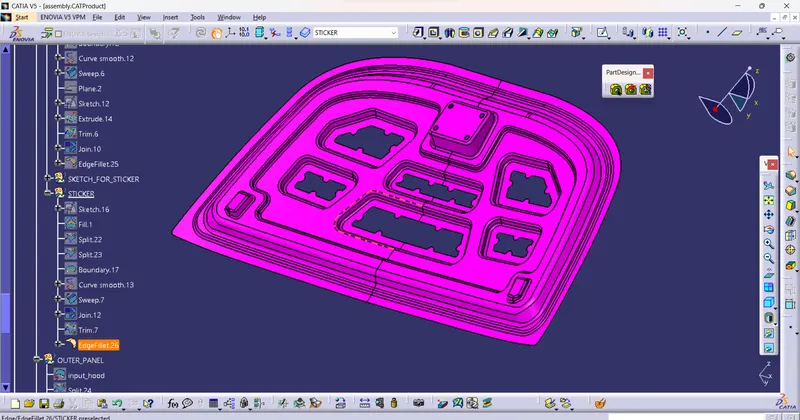
1.4 OUTER PANEL CREATION
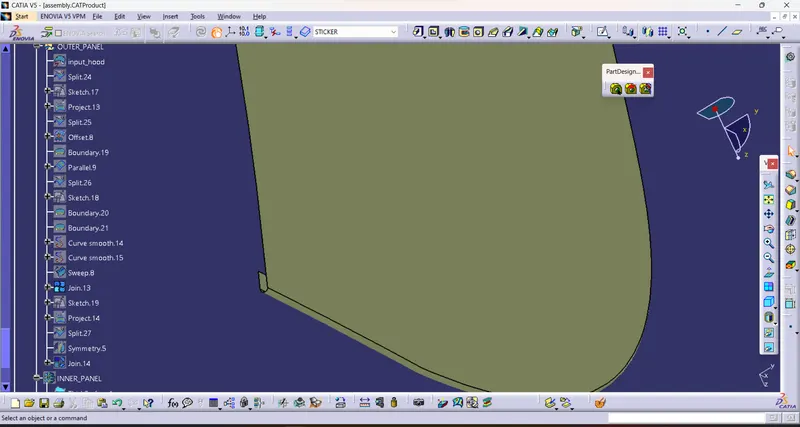
- ASSEMBLY OF HOOD
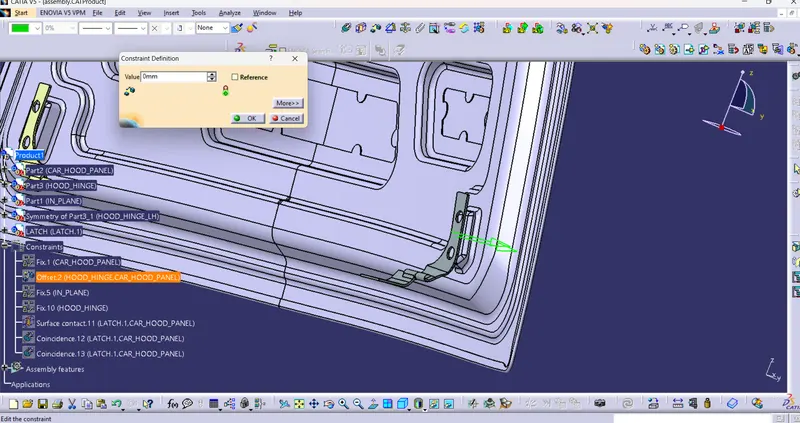
2.1 ASSEMBLY OF HINGE
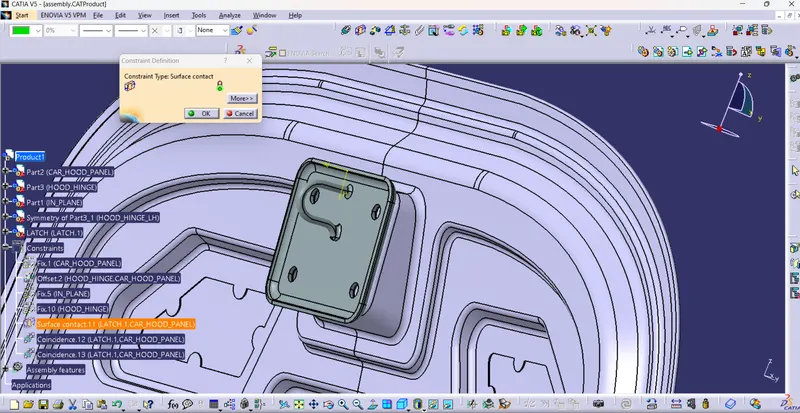
2.2 ASSEMBLY OF STICKER
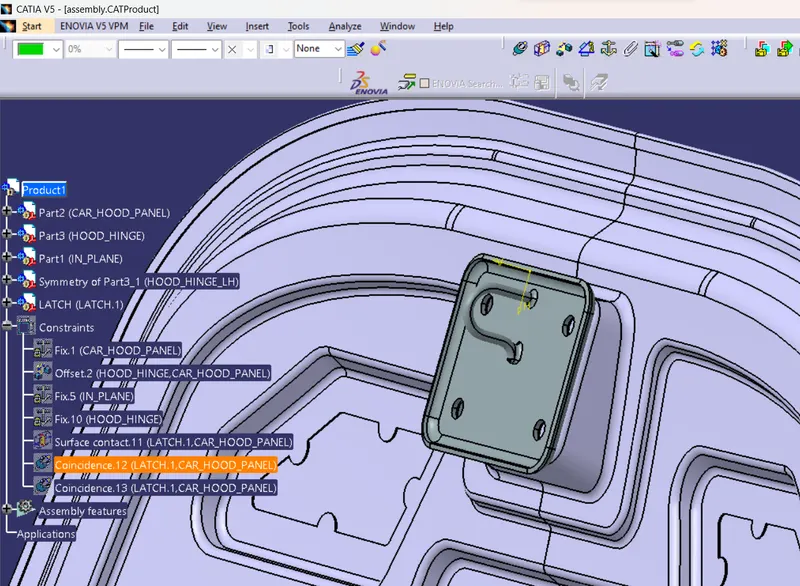
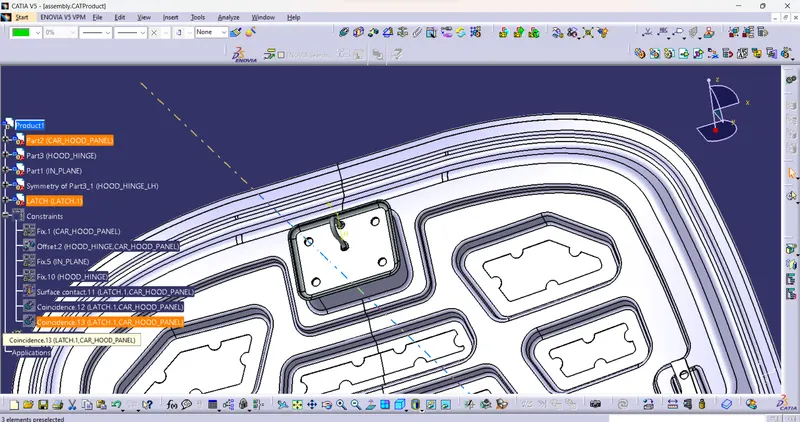
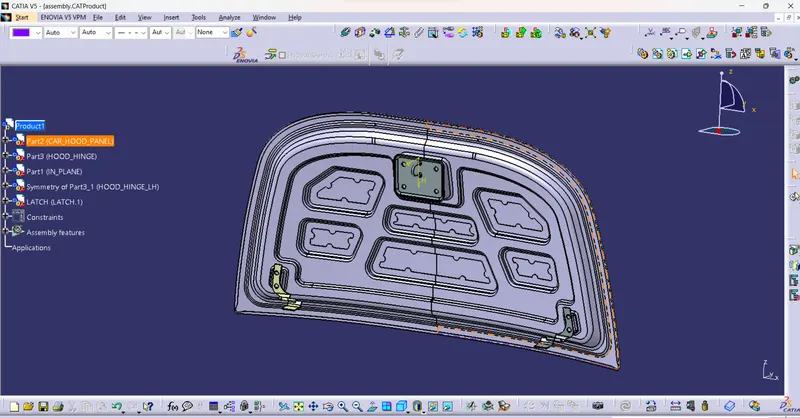
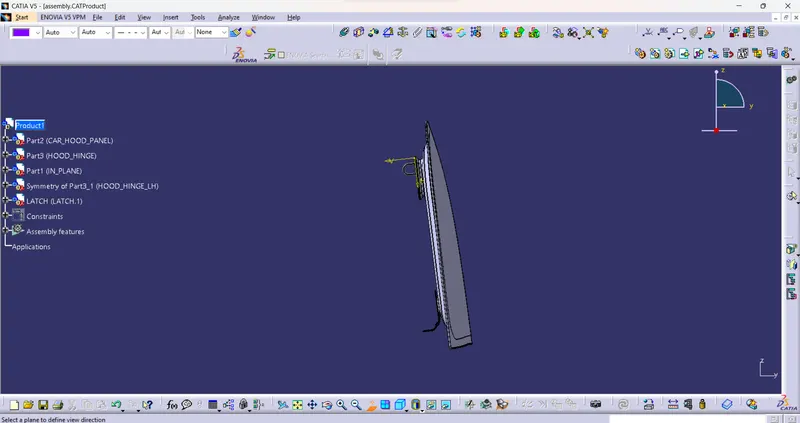
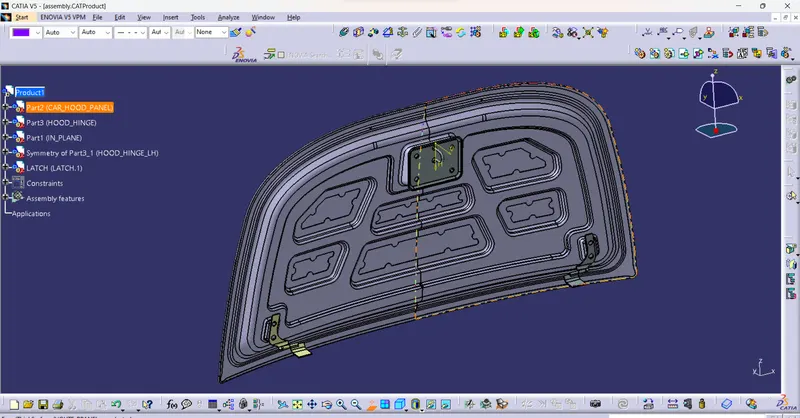
VIEW:-
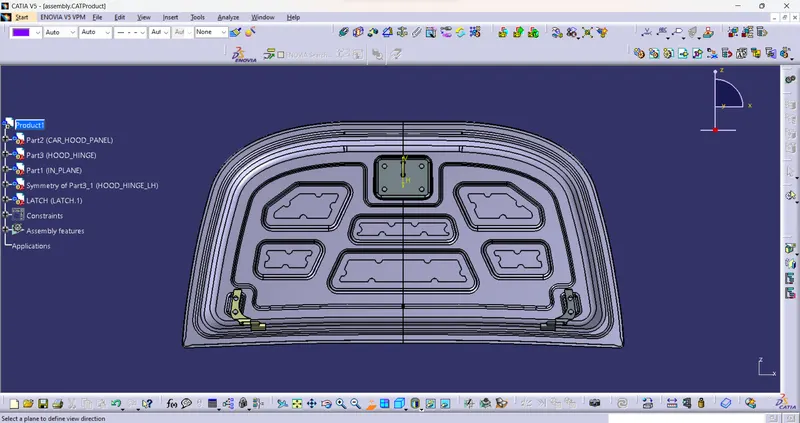
DESIGN ASPECTS FOR HOOD
-
Material Selection: Materials Like steel, aluminum, and carbon fiber composites. Each material has its own advantages and considerations, such as weight, strength, cost, and manufacturability.
-
Structural Integrity: Design To Prevent Passenger from Impact during a Collision. Ribs and Bracing Provided to Maintain Strength.
-
Aerodynamics: The design of the hood panel can significantly impact the car's aerodynamic performance.
-
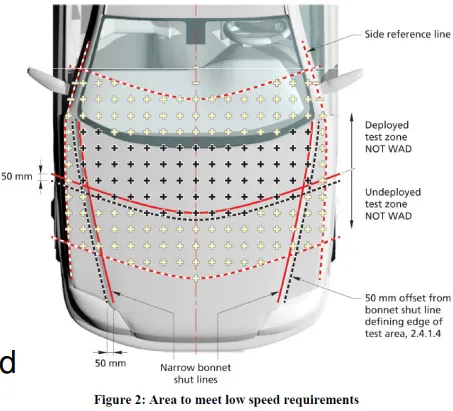
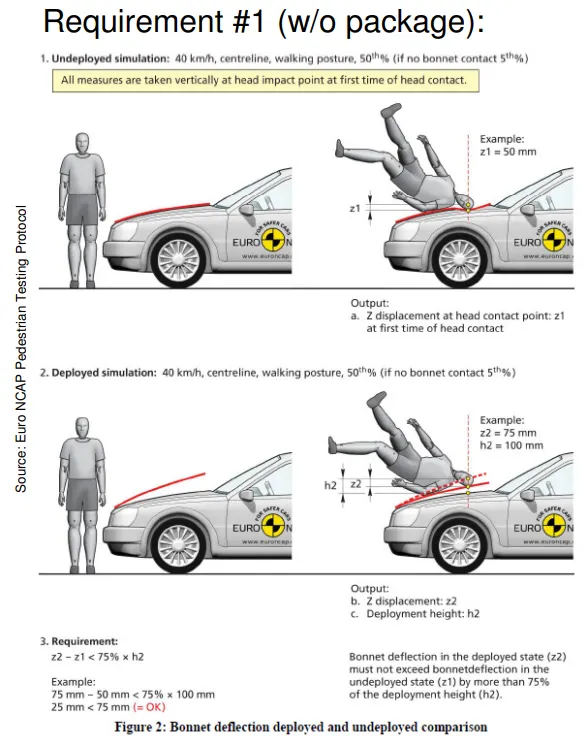
Pedestrian Safety: Hood panels also play a role in pedestrian safety. In the unfortunate event of a collision with a pedestrian, the design should incorporate energy-absorbing features, such as crumple zones, to mitigate the severity of impact and reduce the risk of injury.
-
-
Weight Optimization: The weight of the panel Should be Light which improves Fuel Usage.
-
Manufacturing and Assembly: Easy assembly and Manufacturing without any Special Operation and the Cost of Production should be less. and Time For Assembly Should be less. Multiple Components are involved in the Engine, all components should be Safely Installed, and the hood should fit perfectly.
-
Aesthetics and Brand Identity: There are multiple Utilitility Vehicles and various types of cars. We have to satisfy aesthetic Conditions For the Car as per its design.
-
Maintenance and Serviceability: Accessibility for routine maintenance tasks, such as checking fluid levels or replacing engine components, should be considered during the design process. Design features that allow easy access, such as hood struts or quick-release mechanisms, can simplify maintenance procedures.
-
Noise, Vibration, and Harshness (NVH): The hood panel should be designed to minimize noise and vibration transmission into the passenger compartment. Proper sealing, vibration-dampening measures, and insulation can help reduce noise and improve the overall driving experience.
-
Regulatory and Safety Standards: Compliance with applicable standards is essential. Ensure that the design meets requirements for crashworthiness, pedestrian safety, and other relevant regulations in the target market.
File attached :

Assembly- Involves all Assembled components inner panel, outer panel, hinges, striker