Hood design-Week 2
HOOD DESIGN
introduction
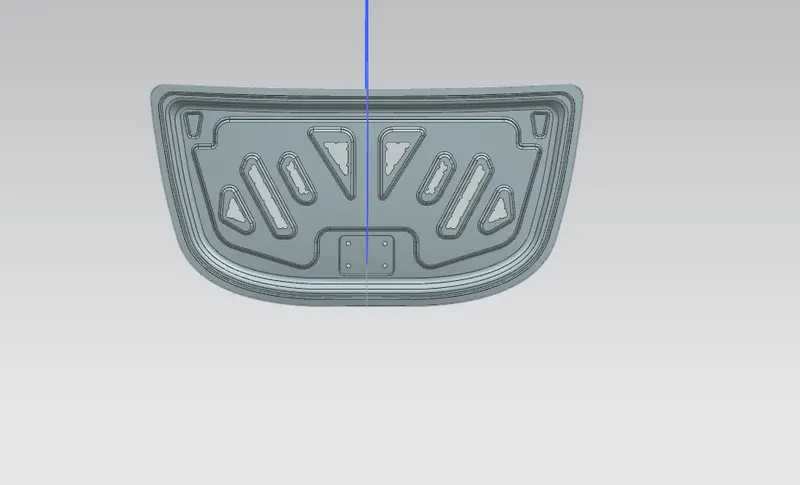
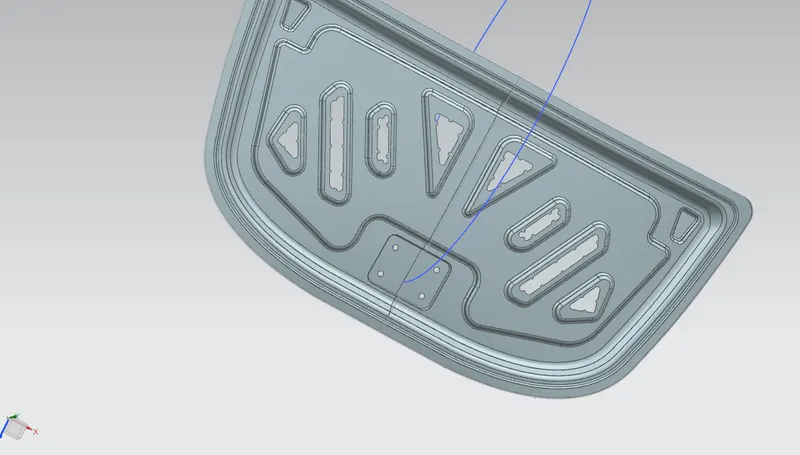
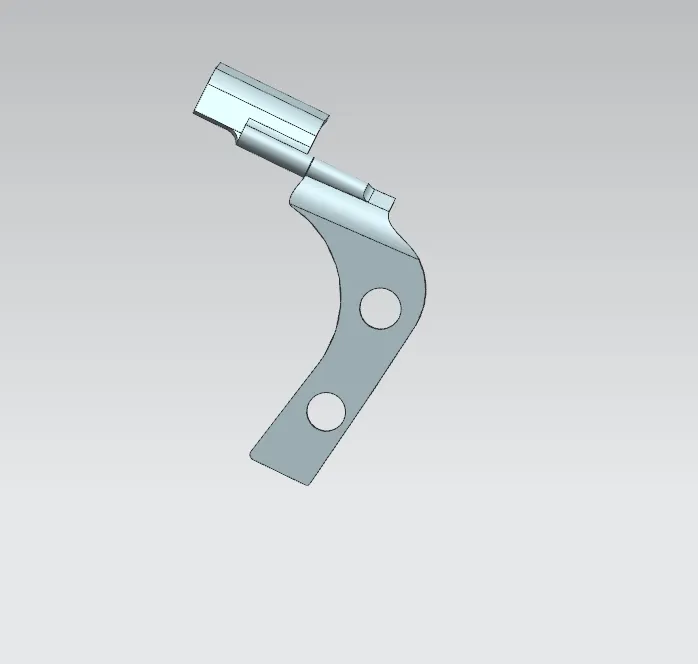
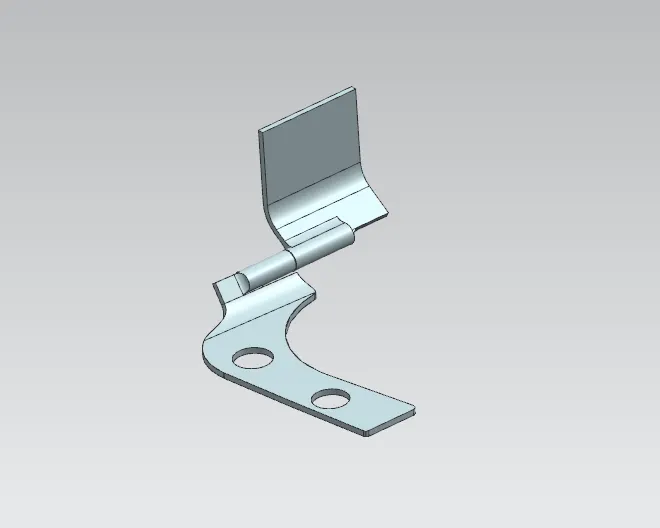
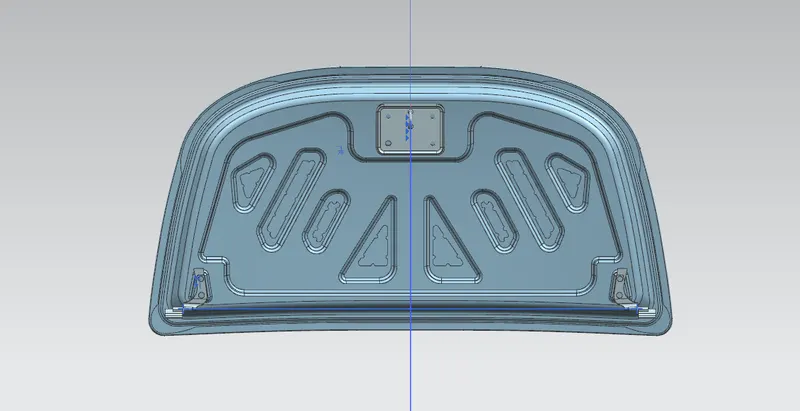
The hood or cap is the pivoted cover over the motor of engine vehicles that permits get to to the motor compartment for support and repair. Hoods are ordinarily made out of the same fabric as the rest of the body work. This may incorporate steel, aluminum, fiberglass or carbon fiber. In any case, a few aftermarket companies deliver substitutions for steel hoods in fiberglass or carbon fiber to form the vehicle lighter.Hood for the most part comprise of internal board, external board, pivot support , lock fortification etc. The external board acts as a defensive cover of the inward board. The hood is joined to the car body utilizing pivots. The hood discharge framework is common on most vehicles and as a rule comprises of an insides hood hook handle, hood discharge cable and hood hook gathering. The hood lock handle is ordinarily found underneath the directing wheel, close to the driver's situate or set into the entryway frame.Hood has an inward board and an external board. The external board acts as the cover for the internal board and internal board comprises of the embosses and mastic focuses that gives the quality. The hood is connected to the car body utilizing pivots and to bolster it within the open position either a back pole or a gas remain is utilized. The hood discharge framework is common on most vehicles and more often than not comprises of an insides hood lock handle, hood discharge cable and hood lock gathering.
HOOD OPENING ANGLE:

It is one of the major criteria in planning the hood of a car. The opening point of the hood is changing from put to put and from nation to nation. It is outlined based on the normal tallness of the individuals within the country.The back is to be outlined based on the stature and weight of the hood. A few of the plan thought for the hood such as ebb and flow of the pole and it is to be mounted inverse to the battery mountings.The inward board is planned in such a way that the drive delivered amid the collision is conveyed on the outward heading so that the harm to the traveler and the driver is to be decreased.
PEDESTRIAN SAFETY:
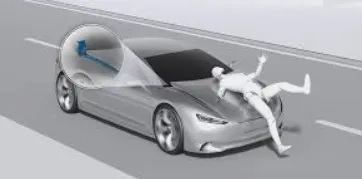
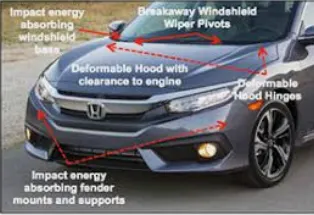
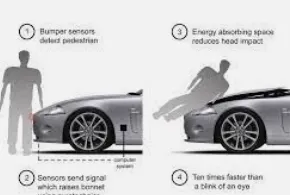
Person on foot security is one of the imperative criteria which must be taken into thought amid planning a hood. Based on the wrap around remove and person on foot head affect zone, hood is outlined so that amid a collision affect on the individual must be decreased. Around the affect zone the hood is made milder by expelling fabric. There are two primary zones within the hood that are considered whereas planning it. The Child head affect zone (1000mm to 1500mm) and the Grown-up head affect zone (1500mm to 2100mm) as appeared over. The wrap around remove is the remove from the ground level to the conclusion of the hood. The side reference line and the wrap around separate is related to each other.On the off chance thatthe side reference line is on the bumper, the wrap around remove will be more and affect zone will be less and bad habit versa. Person on foot security is to dodge serious wounds to the head, the tall affect range for grown-ups and children are subjected to less thickness. In expansion, no fortification ought to be given in that region as amid the head collision, the hood will retain the head affect vitality driving to break down of the hood and in this way securing serious head harm. To ensure the tenants interior the car amid the front collision, the plan of the hood ought to be in such a way that the constrain ought to travel within the upward course through the embosses and coordinated towards the body of the car amid the collision. In this way, securing the inhabitants interior the car. Mastic sealants and embosses makes a difference to meet the person on foot security benchmarks. The grown-up and child affect zone are taken into thought, and the misshapening zone considered with regard to the motor compartment and external sheet.
NVH-NOISE
Commotion, vibration, and brutality (NVH) is the think about and alteration of the clamor and vibration characteristics of vehicles, especially cars and trucks. Whereas clamor and vibration can be promptly measured, cruelty could be a subjective quality. Numerous issues are created as either vibration or noise, transmitted via a assortment of ways, and after that transmitted acoustically into the cabin.[1] These are classified as "structure-borne" clamor. Others are produced acoustically and proliferated by airborne ways. Structureborne clamor is constricted by segregation, whereas airborne clamor is decreased by assimilation or through the utilize of obstruction materials. Vibrations are detected at the directing wheel, the situate, armrests, or the floor and pedals. A few issues are detected outwardly - such as the vibration of the rear-view reflect or header rail on open-topped cars.
The car hood consists of the following parts:
- Outer Panel
- Inner panel
- Hinge
- Latch and Striker
- Outer Panel
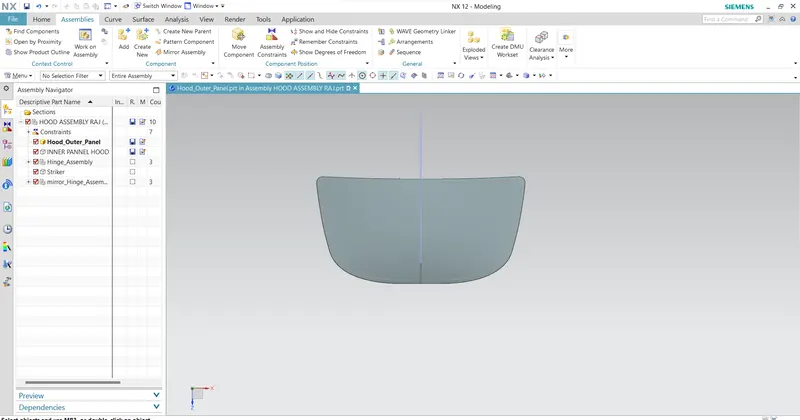
Inner panel
Hinge
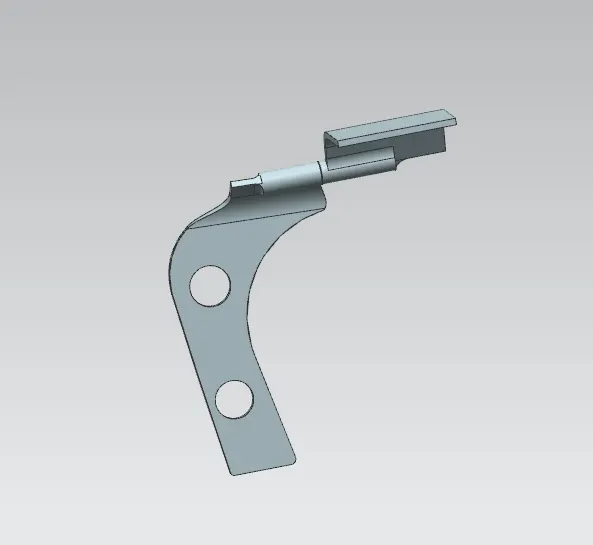
LATCH
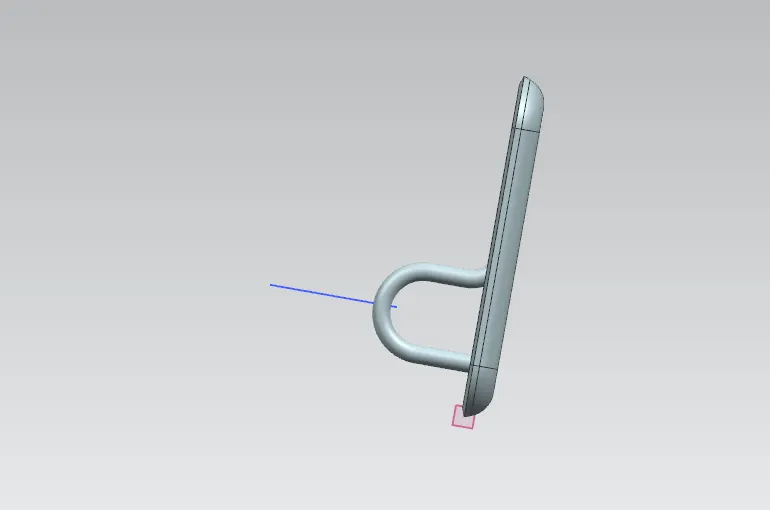
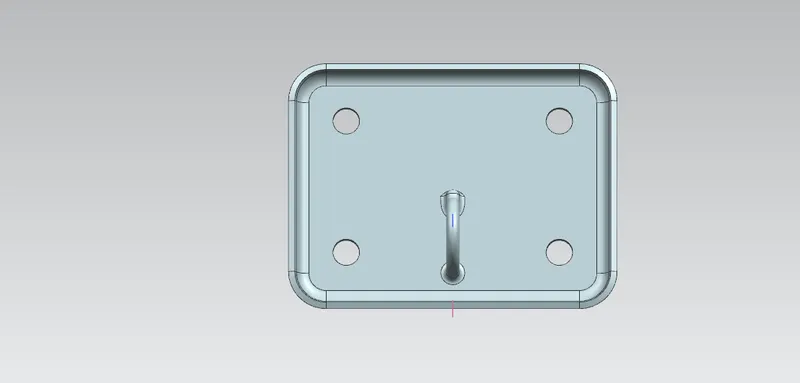
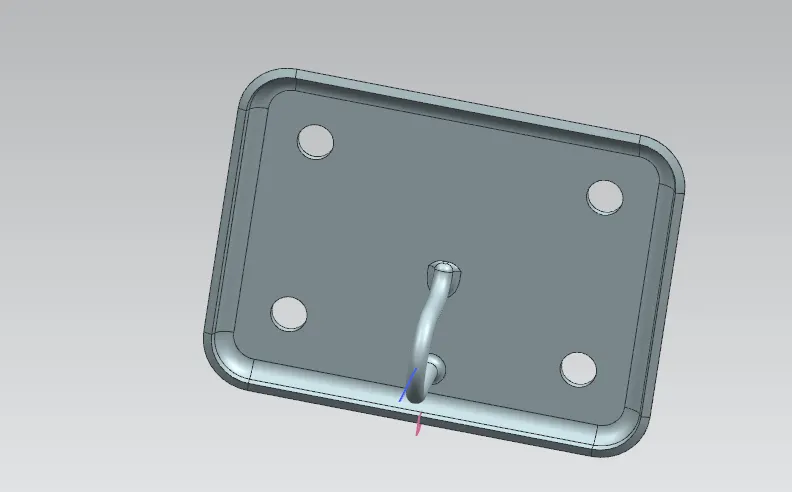
Mastic Points:
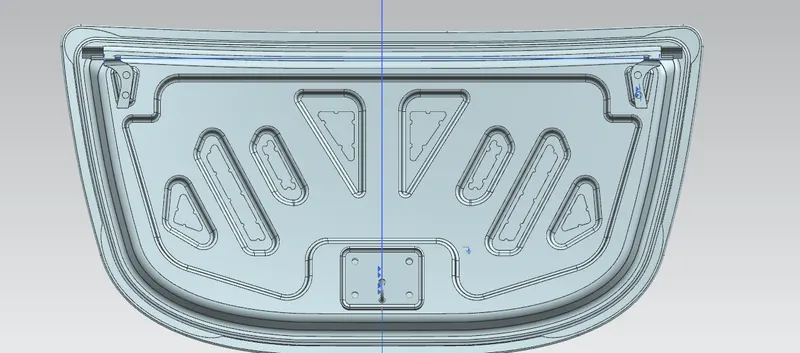
The Mastic sealant or the Mastic point is an flexible compound that carries on like a elastic. The mastic focuses are characterized on the hood internal board where the hood can effortlessly distort. They offer assistance the hood external board to come back to its unique shape after it gets twisted. The mastic has an impact region of 80mm.
Embosses:
Embosses is utilized for the reason of expanding the quality of the hood. By giving embosses within the hood the constrain amid collision can be redirected exterior, so that it can decrease the harm the person who are sitting within the car.
Hemming:
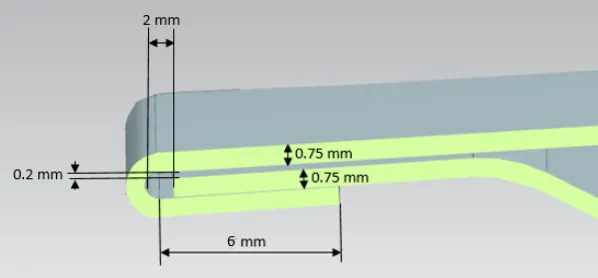
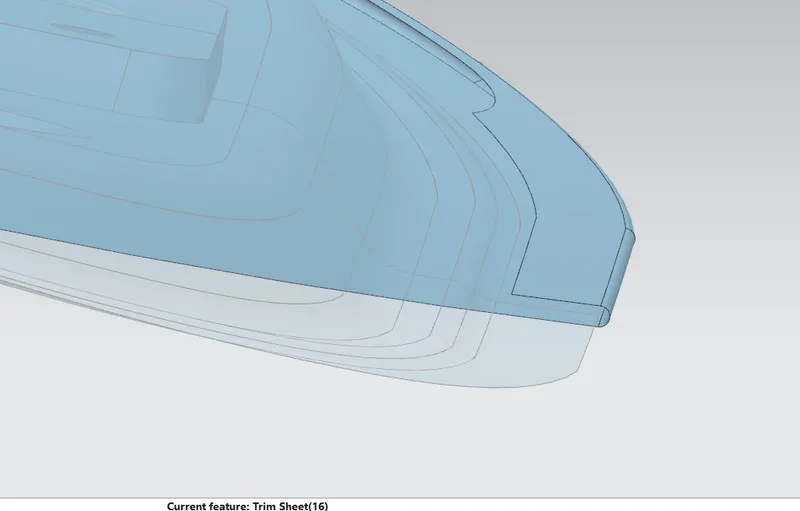
Fixing is the metalworking forms in which a Sheetmetal edge is rolled over onto itself. Trimming is the method in which the edge is rolled flush to itself, whereas a crease joins the edges of two materials. Trims are commonly utilized to fortify an edge, cover up burrs and unpleasant edges, and make strides appearance.
ASSEMBLY
CONCLUSION
By this challenge the design consideration and operation involved in creating the hood of the car is studied.