Fender Design Challenge
FENDER
OBJECTIVES-
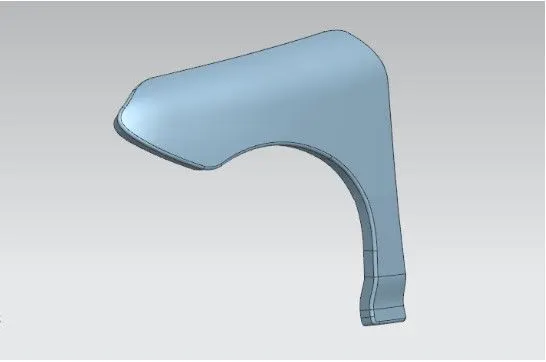
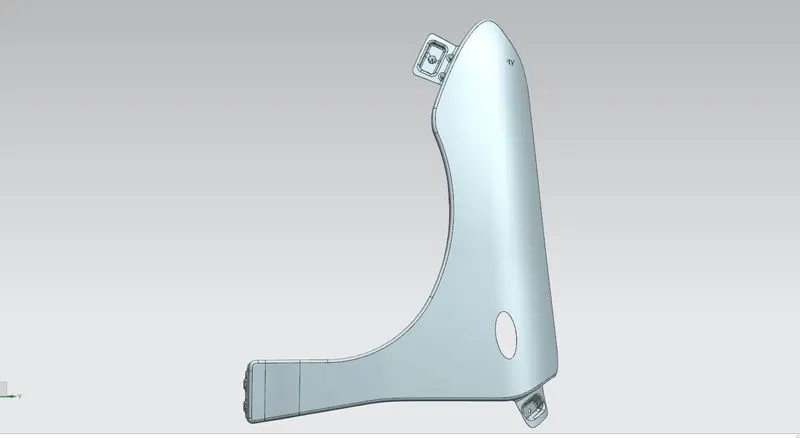
To design the car front fender with the help of using skin data (class A surface) shared by the styling team and make it ready for manufacturing with mounting flanges using NX CAD
CLASS A SURFACE-
INTRODUCTION:-
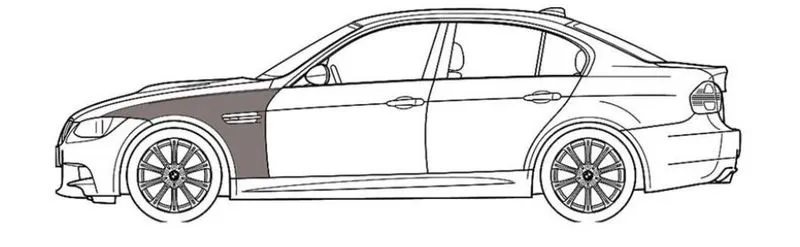
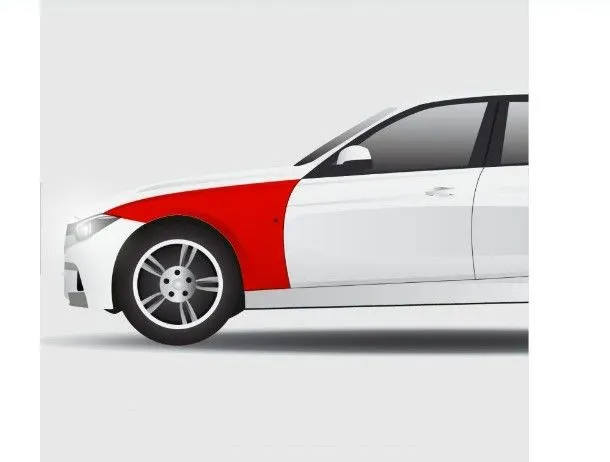
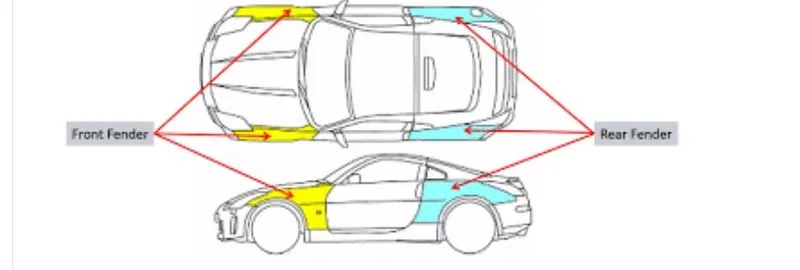
FENDER-Fender is the us english term for the part of an automobile that frames a wheel well .its primary purpose is to prevent sand, mud ,rocks,liquids and other road spray from being thrown into the air by the rotating tire.
when the vehicle is moving ,the tyres pick up syones and others and hurl them in all directions.fenders are basically present to prevent any injuries to pedestrians and contain the motion of these particals . most passenger automobiles have four fenders,one over each wheel .for vehicle with a narrow car body that expose the tire ,the fender is an exposed curve over the top of the tire .for wide body vehicles that cover the tyre , the fender forms the wheel well surrounding the tire and is not directly visible from the above the car body.
sticky ,materials ,such as mud ,may adhere to the smooth outer tire surface while smooth loose objects ,such as stones can become temporarily embedded in the tread grooves as the tire rolls over the ground .these materials can be ejected from the surface of the tire at high velocity as the tire imparts kinetic energy to the attached objects .for a vehicle moving forward the top of the tire is rotating upward and forward and can throw objects into the air at other vehicles or pedestrians in front of the vehicles.
Design of any products starts from an requirements .the design engineer sketches the product based on the requirement.then the 2D sketch with the proper dimensions is converted into the 3D model using the advanced CAD softwares .the another important thing in the design is that ,every product that is designed should be abe to manufactured .
so the role of the design engineer is to design the product that can be easily manufactured and with less cost effective this is the place where the design for manufacturing (DFM) and design for assembly (DFA) takes a role while developing any products . the process of development of design carries on the until the design satisfies the customer needs .here in the project the product that we are going to develop a car fender.
NEEDS OF FENDER-
- It is designed to provide resisntance against wind ,muds and roadside particals
- it is the sheet of metal covering of the car
- fender has the plastics part called buffles or fender liner which fits undrrside the fender to protect the metal from corrosion by stopping the flow of mud and water inside from different road conditions
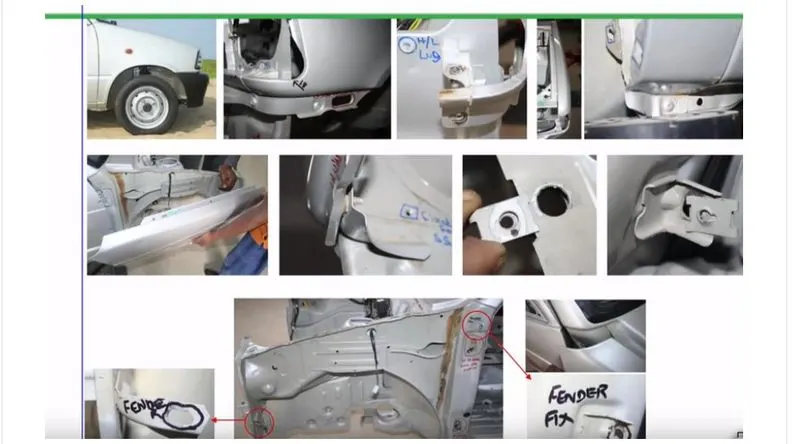
- There are 2 types of fenders
- full bumper type
- half bumper type
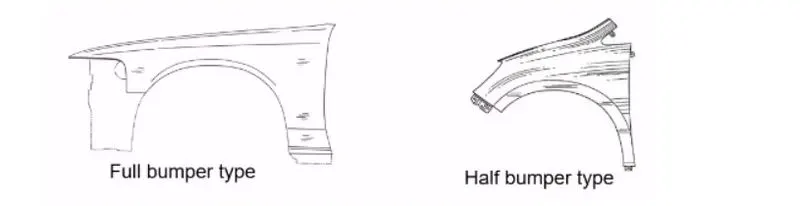
- Full bumper type-full bumper type is not used now a days become it requires large size of blank to produce the part and it occupies more space.
- Half bumper type-half bumper type is used because the waste of materials is less & can produce two fender at the same time by slightly increase the row sheet and to reduce the weight & cost mostly bumper fender has been produced.
- DESIGN
- MASTER SKETCH-
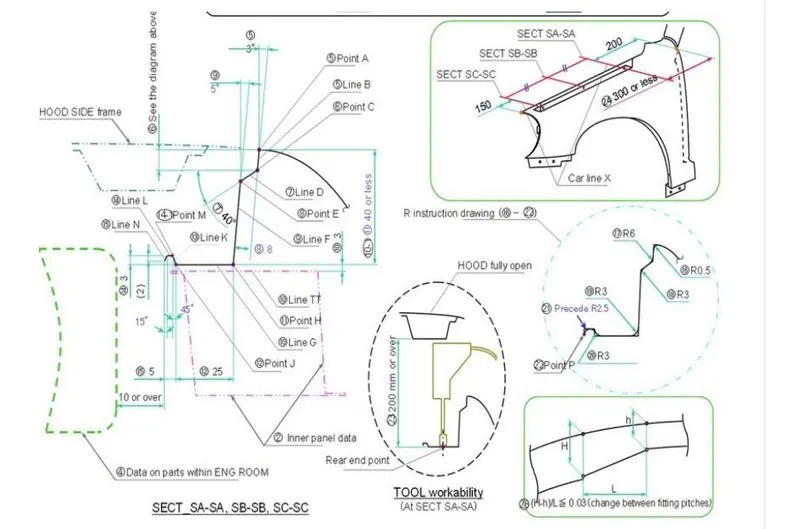
- GIVEN DATA-
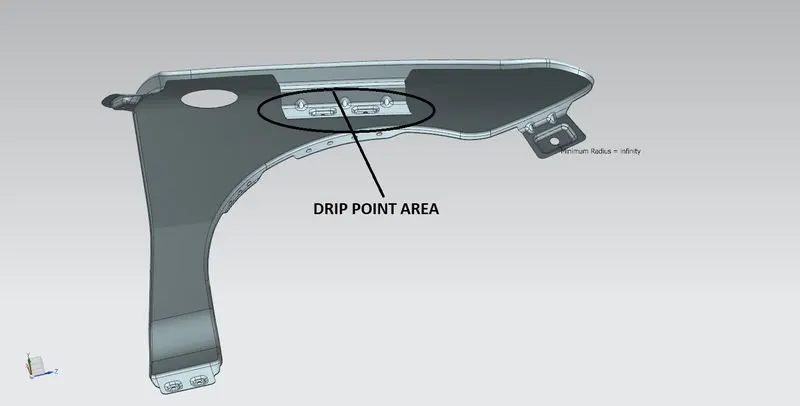
- The drip area should be made after leaving the space of 150mm from the front for headlight mountings and before 200mm from cowl area and 10mm distance left from the engine room
- The angle from the top of plange is 40 degree and 8 mm long is created to stop the view of engine campartment
- The radius values if drip area at different stages
- DESIGN FEATURES OF FENDER-
Design Considerations:
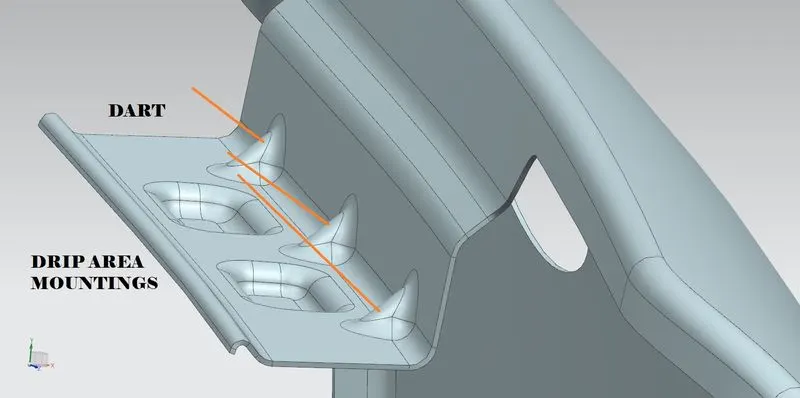
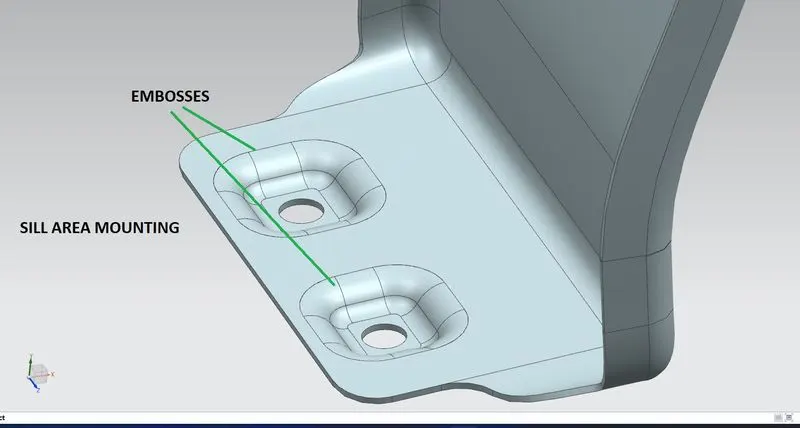
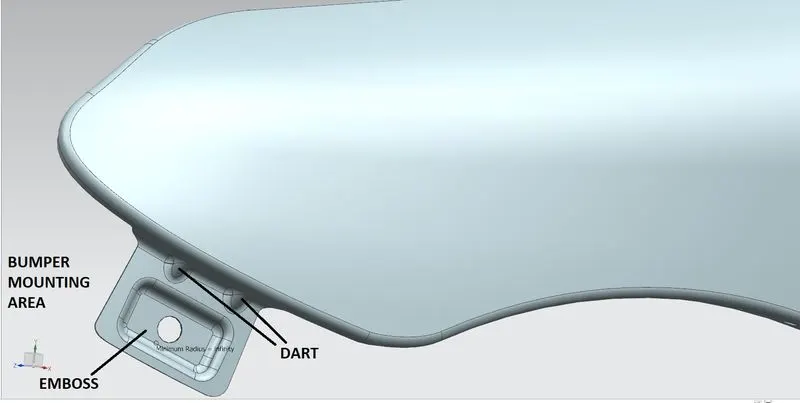
- Embosses are provided to increase the strength
- The corners flanges are smoothened to ease the productivity of the part
- Fillet of 2-3mm is provided to avoid sharp corners and edges.
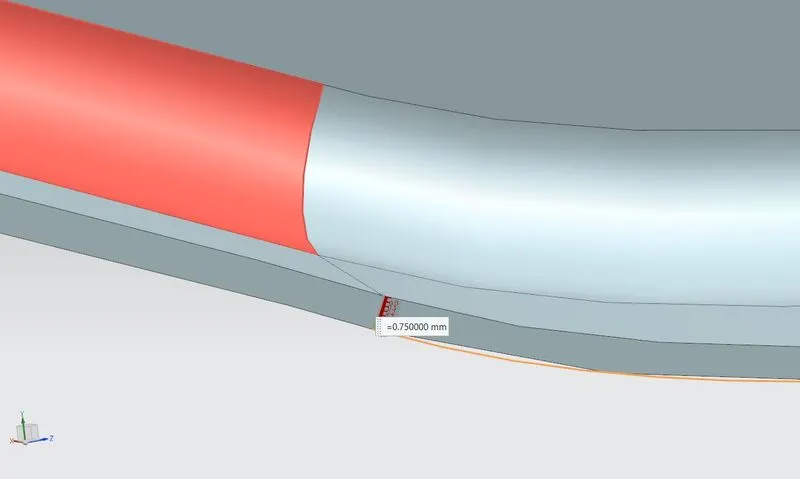
- Uniform wall thickness of 0.75 mm is maintained.
- The wheels that are outside the fender are more prone to Chipping than the wheels that are located inside the fender. Hence the wheels that are inside the fender are mostly preferred.
- Darts are provided on some areas to improve the stiffness of the mountings to avoid NVH issues.
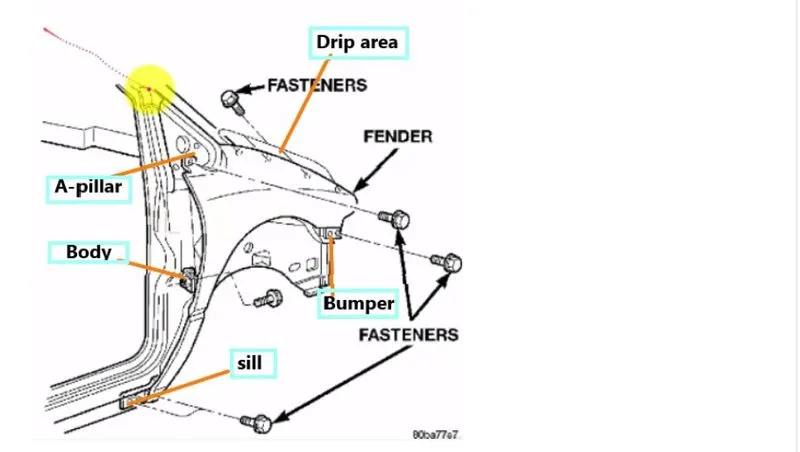
- Design of Bumper:-The main objective of this is to design the Drip Area, Body Mounting, Bumper Mounting, Sill Mounting and Splash cover / Wheel Well.
- MOUNTINGS-
- DRIP MOUNTING AREA
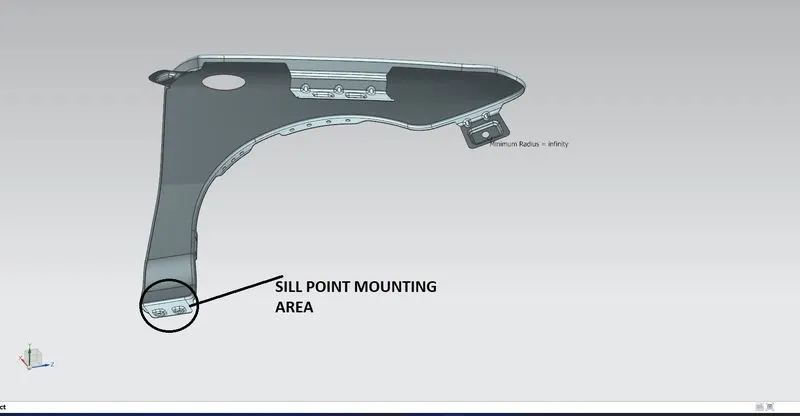
- SILL MOUNTING AREA
- A-PILLAR MOUNTING AREA
- BUMPER MOUNTING AREA
- BAFFLE OR LINEAR MOUNTING AREA
- DRIP MOUNTING AREA-
- It is the important mounting uni of the fender . it is connected with the engine compartment , therefore the lot of design constraints are to be followed while designing the fender
- While designing the drip area we have to initially leave 200-300 mm for cowl top
- For placing the headlamp we have to leave at least 150 mm at the front while designing the fender
- Cowl top part consists pf wiper motor and its instruments
- The embosess that are created on the drip mounting should be flat with respect to the curvature.
- A dart is provided at the edge of the drip mounting to increase the stiffness.
- The drip area would be recognizable from the opening between Hood and Fender.
- This mounting is attached to the engine compartment of the car.
- This is to avoid the springback during the manufacturing . the edge of the mounting should atleast 10mm away from any nearby component in the engine.
- SILL MOUNTING AREA-
- This is palced basically at the botom of the fender. The mounting part is created such that it firmly fits to the sill.
- The embosess that are created on the drip mounting should be flat with respect to the curvature.
- Sill area mounting is also an important mounting part .This mounting point is basically on the bottom of the fender . The mounting part should be created such that the fender is firmly attached to the sill to avoid NVH issues.
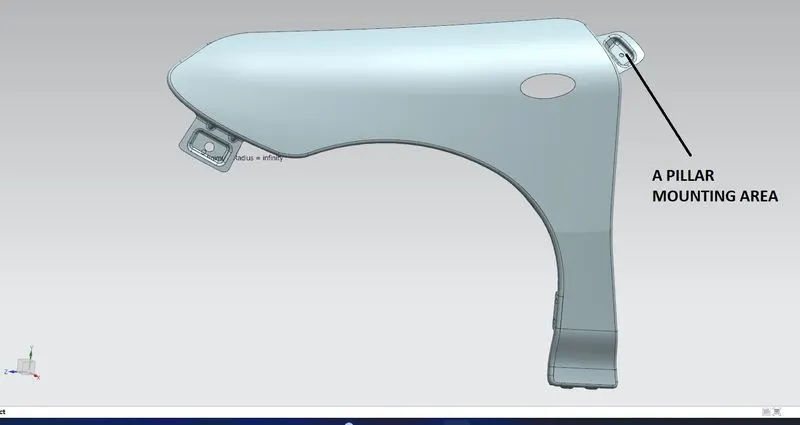
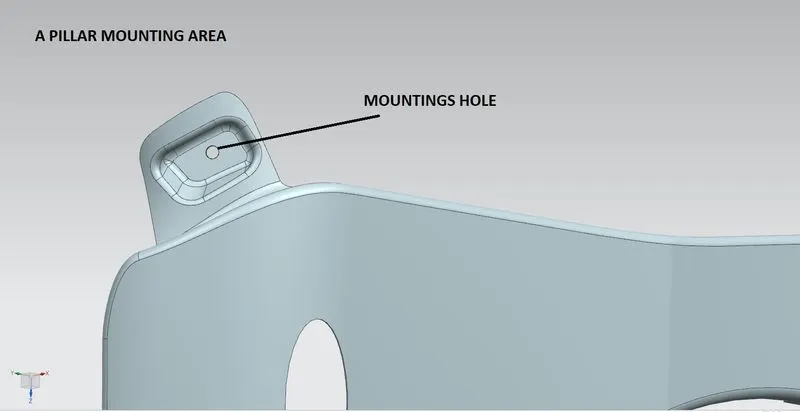
- A PILLAR MOUNTING AREA-
- A-pillar mounting is a vertical support on a vehicle. It holds the windshield set up and just downside to the A-pillar fender is mounted to hold the position.
- Fillets are provided for easy manufacturability
- A- pillar fender flange is created as per design standards with two bolting holes
- The A-pillar area mounting depends upon the A-pillar of the car .
- The A -pillar is the structural pillar that combines the body to the roof . this make the sides of the windshield rest . front fenders are fastened to the A -pillar to form a robust structure
- BUMPER MOUNTING AREA-
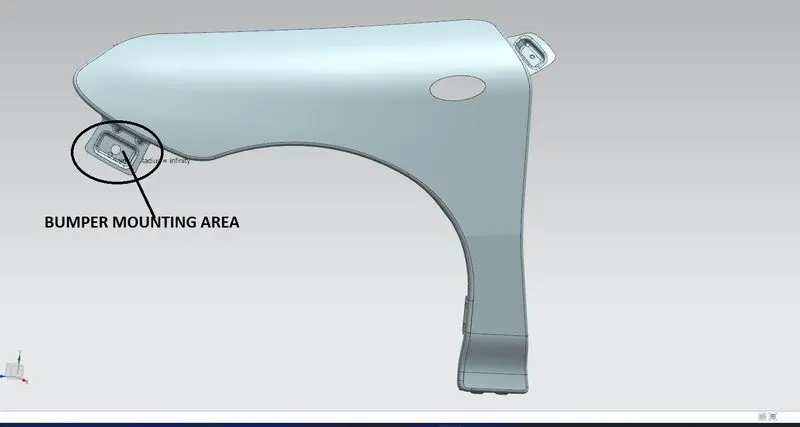
- Bumper mounting area is used to fix the plastic bumper to the fender with the help of the fasteners
- It is placed at the front side of the fender,the bumper mount area of fender, mounts on the chassis to hold the position.
- Since Bumpers are mounted over the fender it is called Bumper Mounting Area.
- BAFFLE OR LINEAR MOUNTING AREA-
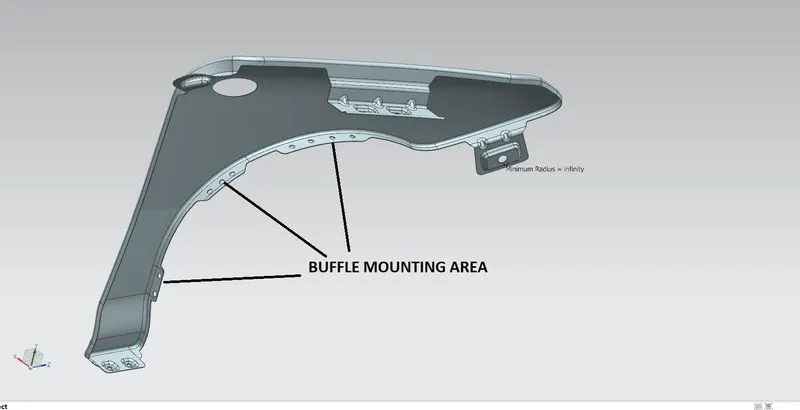
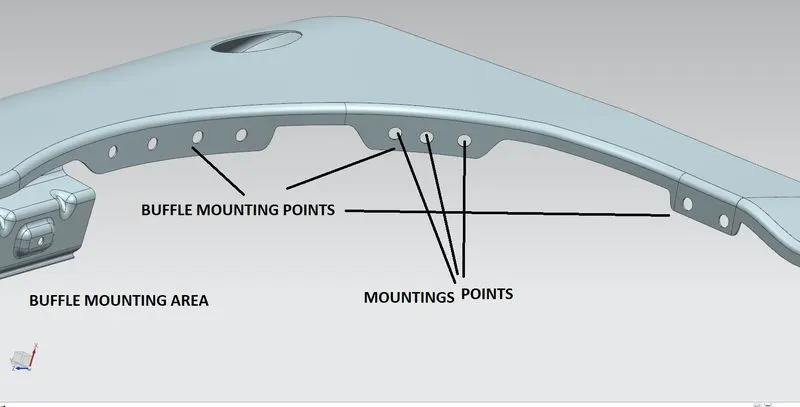
- Baffle mounting or mudguard are clip fit type of mounting on the inner side of the fender arch over the Tyre . it protects the car engine compartment and pedestrians from causing injuries from chip out debris on the road when the car is in motion . they are mounted on the fender using a special type of locking clips which are made up of plastics .
- Usually a baffle is mounted on the fender of the car . It is mounted on the wheel arch area .
- A plastic unit is placed which is called baffle/splash fender linear mounting is placed.
- These mountings are created for fixing the baffle/splash mountings
- For improvement of NVH in car , usually a baffle is mounted on the fender of the car . it is mounted on the wheel arch area .
- Embosses are not needed since it is a free end which is not main attachment to the body of the car.
DIFFERENT TYPES OF VIEW OF FENDER-
FRONT VIEW
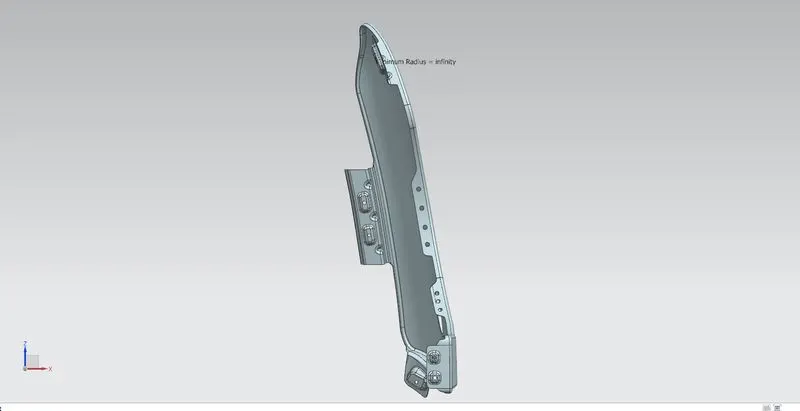
TOP VIEW
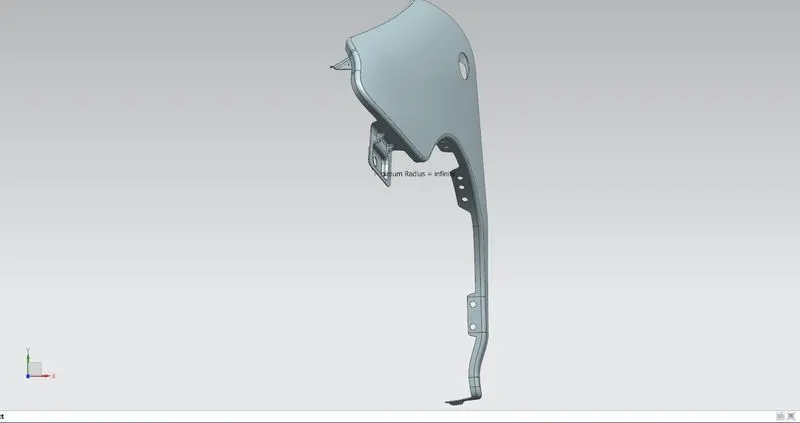
BOTTOM VIEW-
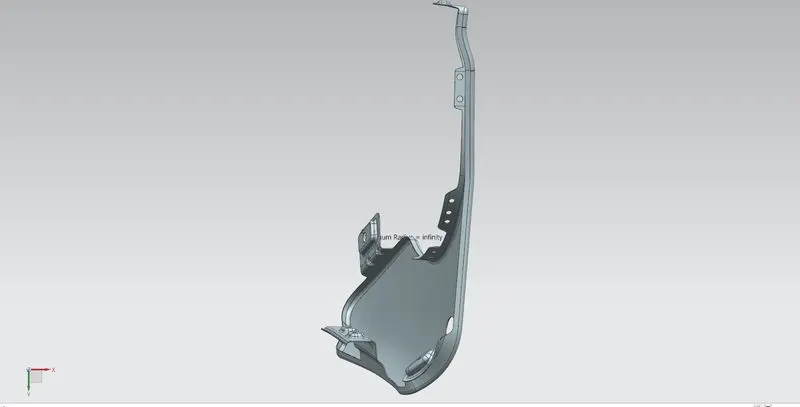
BACK VIEW-
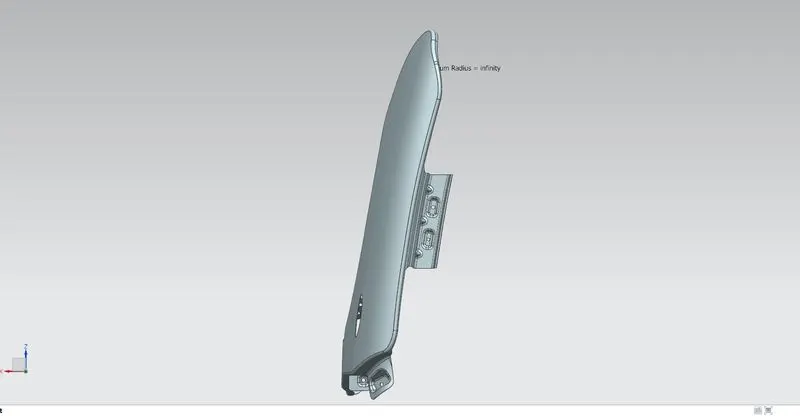
ISOMETRIC VIEW-
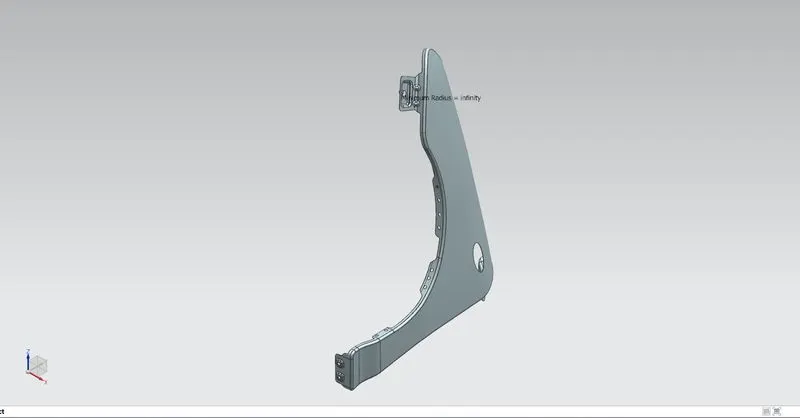
SIDE LEFT VIEW-
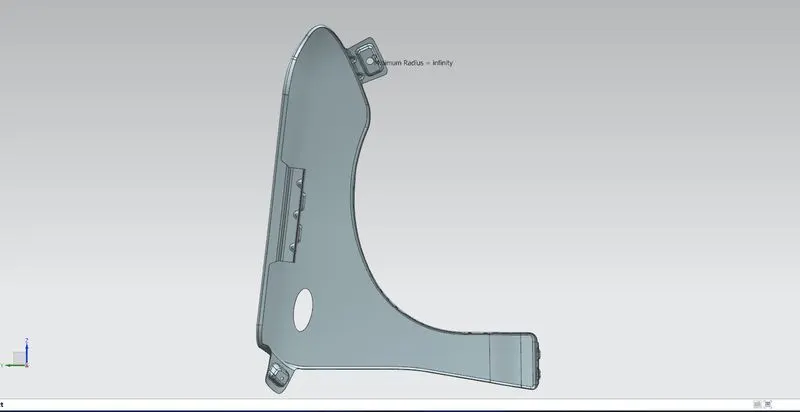
SIDE RIGHT VIEW-
- APPLYING OF THICKNESS TO THE SURFACE .--The thickness of 0.75 mm inward on the final sewed surface of the fender to the sheet metal parameters
- Commands used from NX CAD to model this fender are
- Offset in face
- Curve on surface
- Trim sheet
- Law extension
- Datum plane
- Intersection curves
- Face blend
- Bridge curve
- Sketch
- Projected curve
- Emboss
- Edge blend
- Sew
- Dart
- Thicken
Conclusion:
The fender of the automobile is checked for the wheel arch radius as per Europen regulations and designed the front half fender of a car using master section and by following the pedestrian's safety and in order to guard the engine compartment and beside the vehicle.