Hood design-Week 2
HOOD DESIGN
- Hood or bonnet is the hinged cover over the engine of motor vehicle .hoods can open to allow access to the engine compartment or trumck boot in on the rear origine and same mid engine vehicle for maintaince and repaire .The hood is an opening body and that cover the engine in a front engine vehicle .the hood is also considered as another type of door in a vehicle as it consists of an outer panel and inner pannel .The inner pannel provides strength while the outer panel functions as the metal cover.
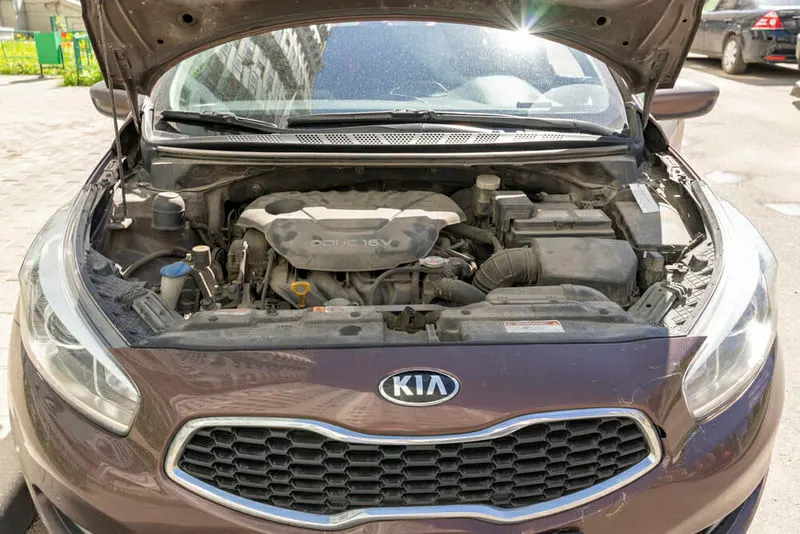

- OBJECTIVES- TO under stsand the design strategy and considerations that goes under desiging and developing an automotive hood tp achieve maximum safety for everyone in and around the vehicle
with this understanding an industry standerd hood pond is to be designed which can very well be manufactured and assemblyed .in other word the design has to follow the DFM and DFA standerd as well as software used siemens NX10. in this report the flow of informations will be as
- Understanding
- design considerations
- design
- draft analysise
- conclusion
- reference
- Pars of an hood-basically the hood has the in ner pannel ,outer pannel and reinforcement (it will provide the strength) and emboss latch and striker mechanism is used to open and closed the hood when ever is needed latch and hinge is needed .some reinforcement for strength
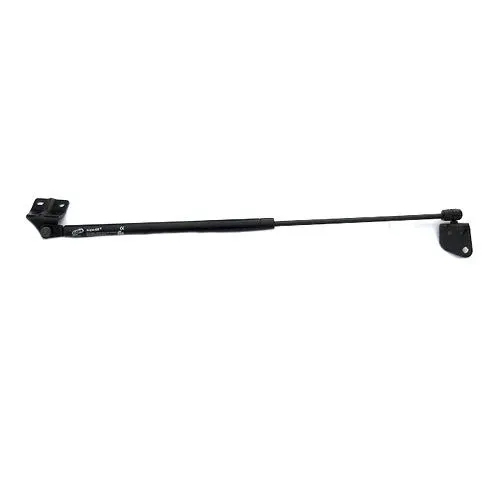
- TYPES OF HOOD SUPPORT
- Two type of support is there
- GAS STAY
- SUPPORT ROD
- GAS STAY-A gas spring is a type of spring that unlike a typical mechanical spring that relies an elastics deformation uses compresased gas contained with in an enclosed cylinder sealed by a sliding piston to pneumatically store potential energy and withstand external force applied parallel to the direction of the pistons shaft
- SUPPORT ROD-support is basically long cylinderical rod. it safety keeps an engine hood in an open state even if external forces are abruptly generated due to vibrations and wind this is widely used in many cars because this very easy and cheap ,in this type we have to lift the hood by own and place the support rod in the spaces provide either in the hood of engine compartment .This is mostly used for where car bonnet weight is small.

- AIM-To design the car hood and understand the mechanism behind the design of the hood ,then development and its safety features as per the design considerations
- the following task is performed
- Design outer panel with the hood
- devlop the inner pannel
- develop the all the necessary reinforcement
- mirror and positions the hinges and striker
- provide the mastic data
- provide the required emboss definitions
- develop of detailed report for mastic position and emboss .you have placed
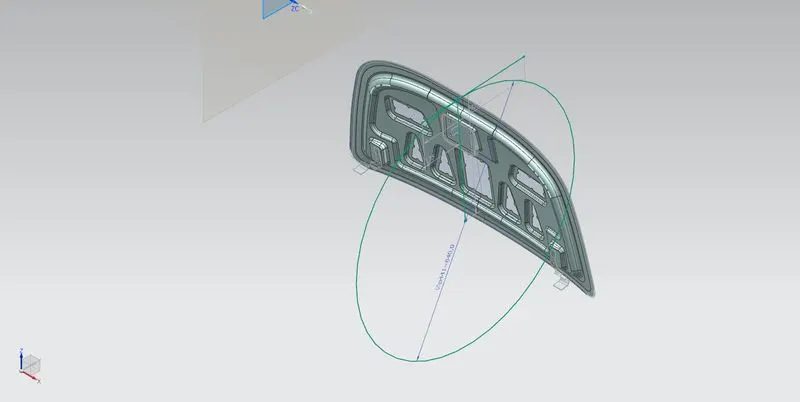
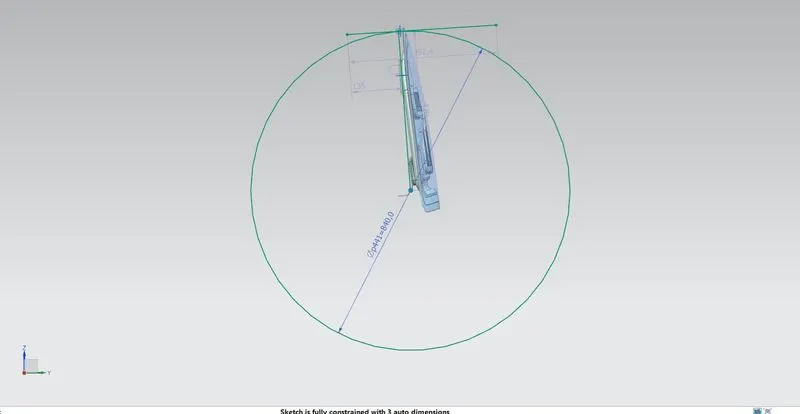
- MASTER SKETCH
DATA to be used
hood thickness information
- outer panel thickness-0.75
- inner pannel thickness-0.75
- reinforcement thickness-1.5
- This process involved designing hood as a sheet metal operation
- BLANKING
- HEMMING
- DEEP DRAWING
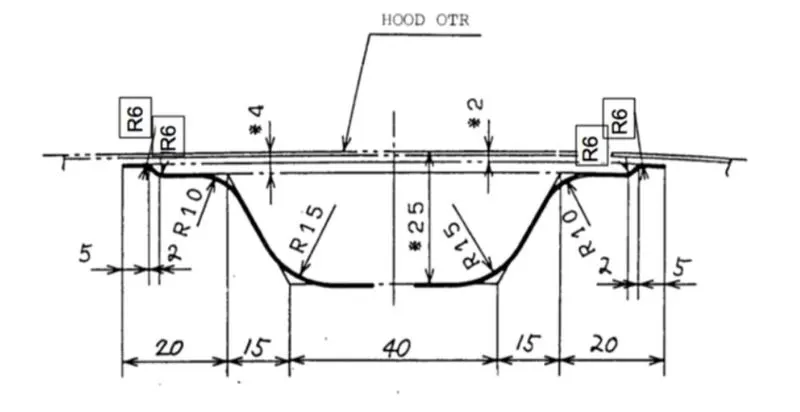
- EMBOSSING
- Design of hood
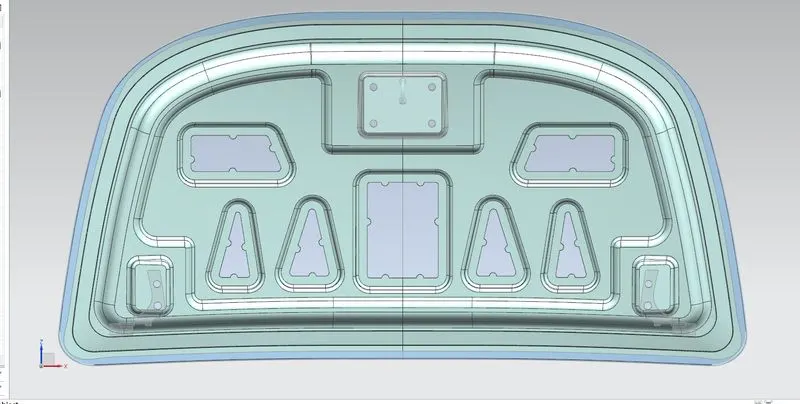
- INNER PANNEL DESIGN -The hood inner panel is required to have a high initial reaction force against the impact excrected on the hood to enhance the energy absorption capacity the hood is further required to minimised a reduction of a reaction force by deformation in a collision
- it is an object of the present invention to provide hood inner panel capable of reduction of a reaction force of the hood inner panel even if a level of deformation of a hood of a vehicle increase and ensuring a sufficient energy absorption capacity
- in the inner panel only we can research and implement the safety of pedistrians and as well as the drives in this panel only we can attach the reinforcement ,emboss,masticpoints etc
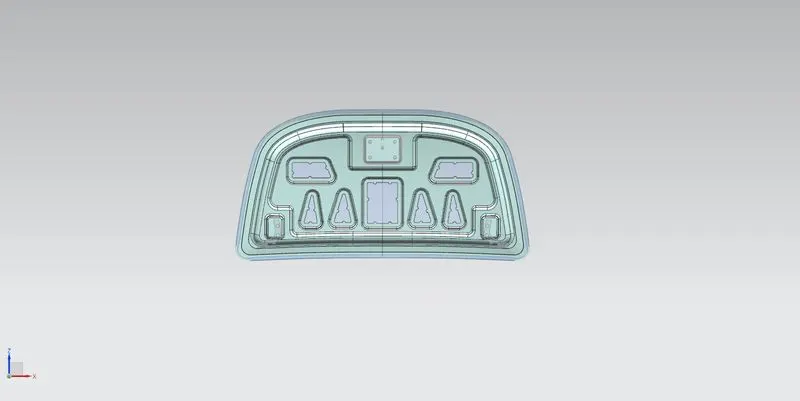
- EMBOSSING IN SHEET METALS-sheet metal embossing is a stamping process for producing raised or sunken designs or relief in sheet metal.this process can be made by means of matched made and female roller dies or by passing sheet or a strip of metal between rolls of the desired pattern
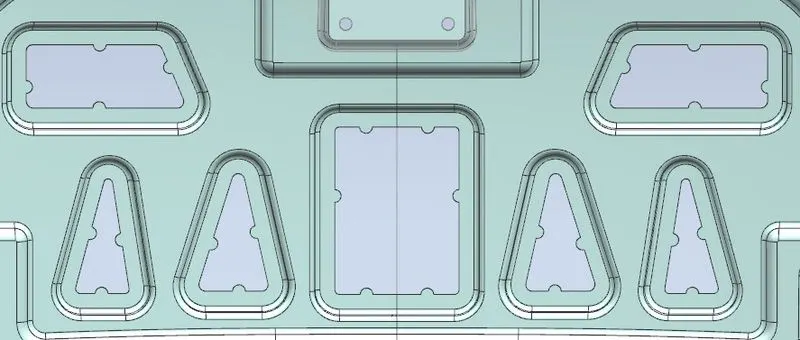
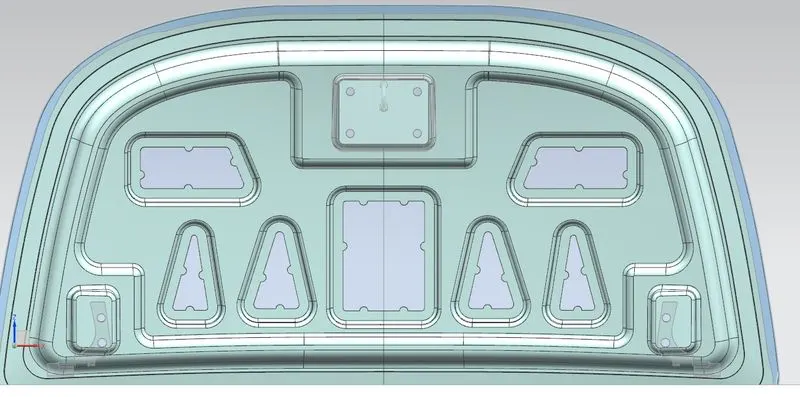
- the metal sheet embossing operations is commonly accomplished with a combination of heat and pressure on the sheet metal depending on what type of embossing is required ,theoratically with any of these procedures the metal thickness is changes in its composition
- A metal sheet is drawn through the male and female roller dies producing a patteren on design on the metal sheet depending on the roller dies used different patterns can be produced on the metal sheet the actually irons while raising the level of the image higher than the substrate tonmake it smooth the term impressing refers to an lowered into the surface of a metarial in distinctions to an imaGE raised out of the surface of a materiials
- DEEP DRAWING-deep drawing is a sheet metal forming process in which a sheet metal blank is radially drawn in to a forming die by the mechanical action of a punch the process is considered 'deep'drawing .when the depth of the drawn part exceeds its diameter this is achieved by redrawing the part through a series of dies.
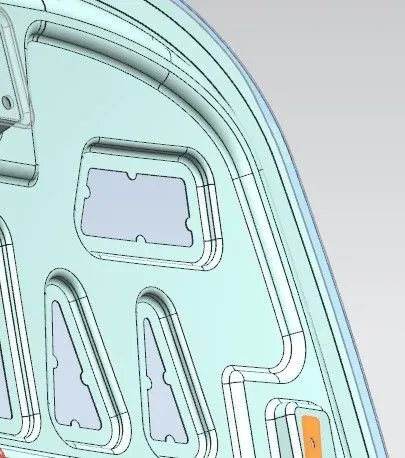
- DEEP drawing is a manufacturing process that is used extensively in the forming of sheet into a cup or box like strcture posts and pans for cooking containers sinks automobile parts such as pands and gas tanks are among a few of the item manufactured by sheet metaL DEEP DRAWING
- A DEEP DRAWING of sheet metal is per formed with a punch and die. the punch is a desired shape of the base of the part one drawn the die cavity matches of the punch and is a little wider to allow for its passage as well as clearance the sheet metal thickness is assumed to remain constant.however there are changes in the thickness in certain area dere to the forces involved.
- HEMMING IN SHEET METALS-the hemming is sheet metal forming process in which shell are joins by bending it usually 180 automotiveve body panels and automotive parts such as deck hide trunch lids doors hoods and taik gatec are formed by hamming processes.
- conventional die hemming is suitable for mass productions in die hemming the flange is folder over entire length with a hemming tool normally the actual hemming is a result of aforming operations in which the flange is formed with a hemming tool after the drawing and trimming operations have been completed.
- ROLL HEMMING carried out incrementally with a hemming roller.An industrial robot guides the hemming roller and forms the flange roll hemming operations can also be divided into serveral prehemming and final hemming process steps.
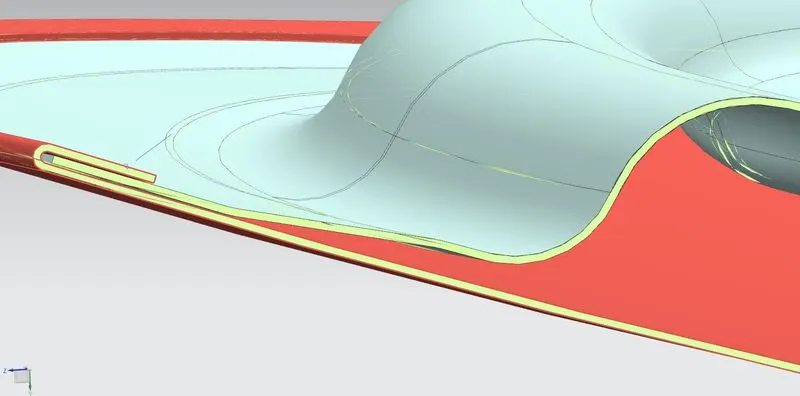
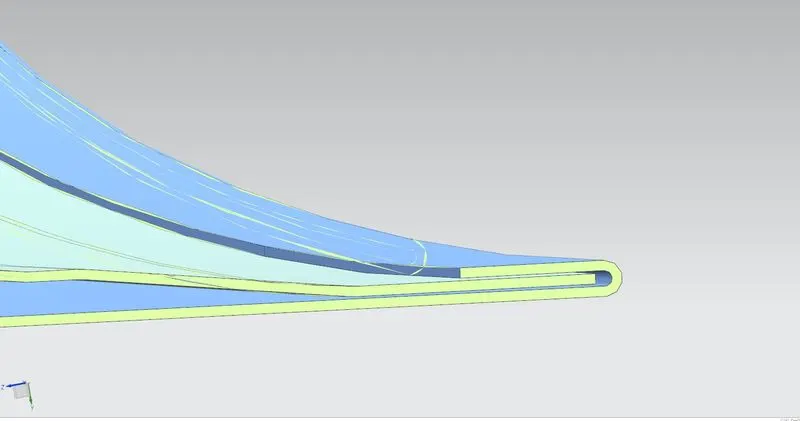
- while doing the hemming process a relief angle is formed as a product of hem when attaining at comes of the sheet metal.
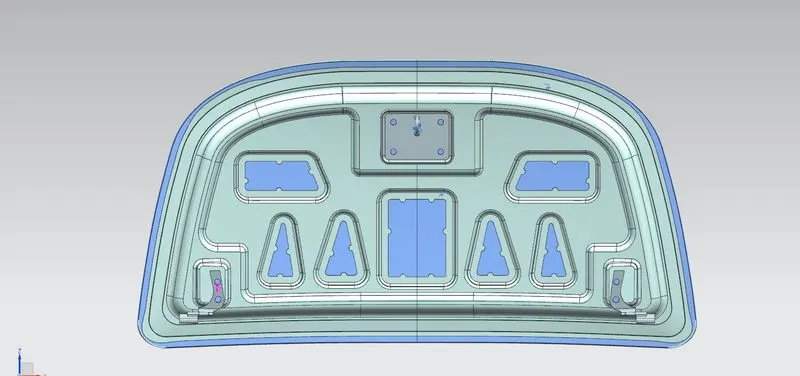
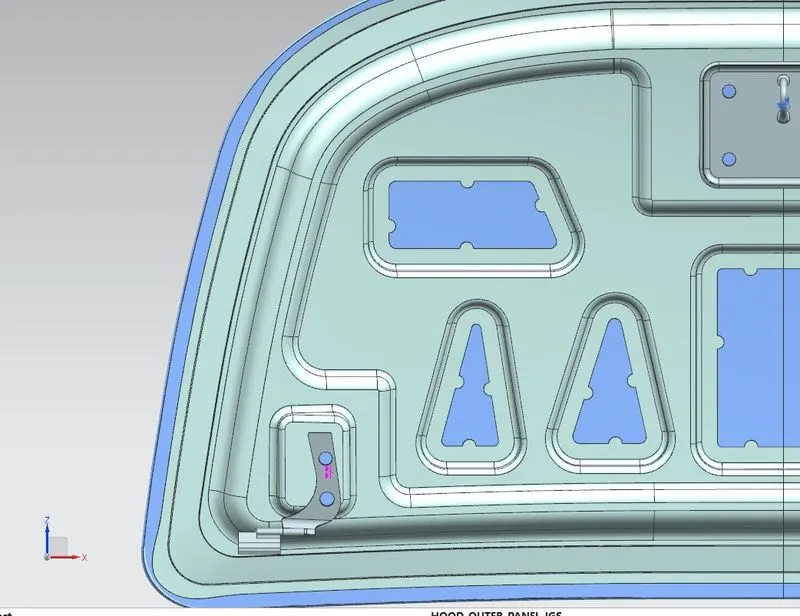
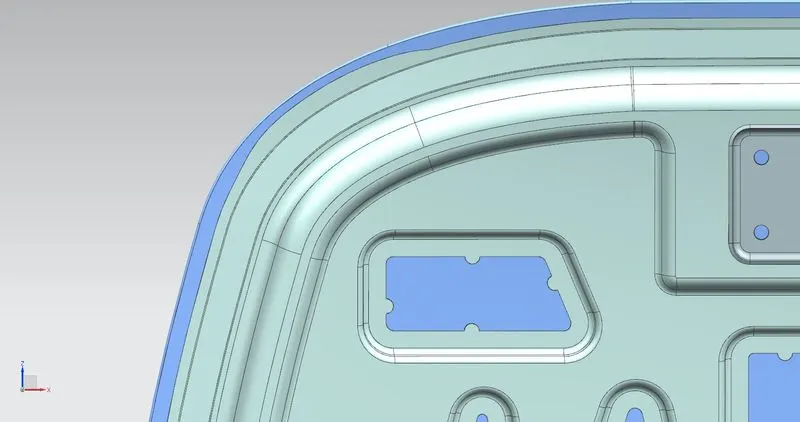
- MASTIC DATA-A mastic sealant data is used to fix or combine the inner panel .its influenced area is 80 mm dia.
- they can provide thermal and accoustical insulation and may be serve as fire barriers they can have electrical properties sealants can be used for simple smoothing or filling they are often called upon to perform several of there functions at once
- A sealant has three basic functions it filled a gap between two or more sustrates it forms a barriers through the physical properties of the sealant it self and by a adhesion to the substrate and it maintain sealing properties for the expected life time service conditon and environments the sealant performs this functions by the way of correct formulations to achieved specific application and performance properties.
- HOOD COMPONENT-
- LATCH- A hood latch is a very simple component its basically the fastener that keeps yours hood closed sheet this latch ensure that your hood is securely connected to your vehicle and it domot pop open unexpectally.
- when tension is applied to the cable form the hood release handle it pivots the secondary latch which pulls away forms a retaining seal located under the hood the secondary latch them release the hood a few inches befores latch takes over.
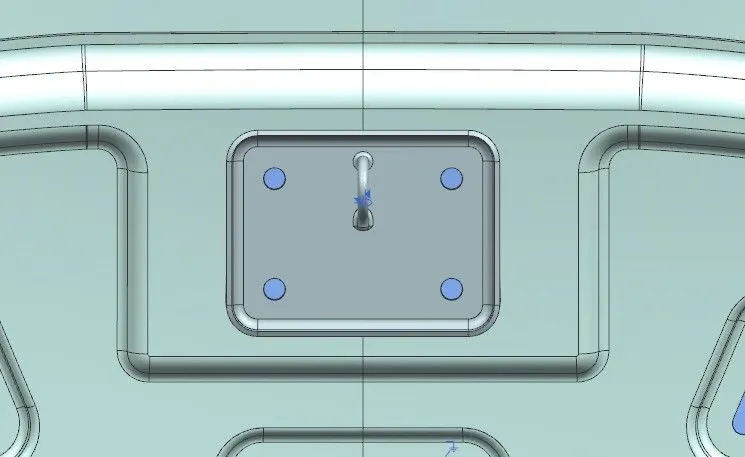
- HINGES-hinge is a component that fixes the hood to the fenders of the car the latch must be fixed perpendiculer to the hinge axies so that the hood opens or closed properly.
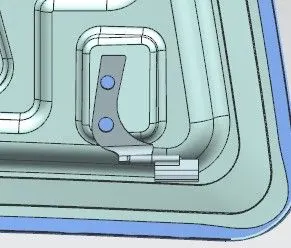
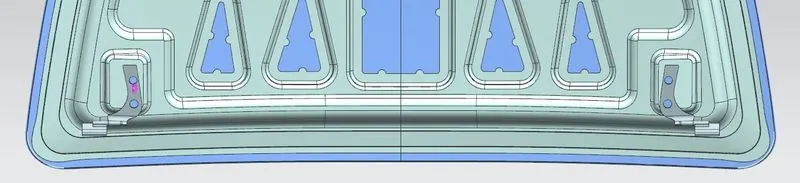
- LATCH TRAJECTORY MOTION- while opening or closing the hood the latch must be perfectly aligned to the fixing or striker point for that thev latches trajectory must be perpendicular to the hinge axis.
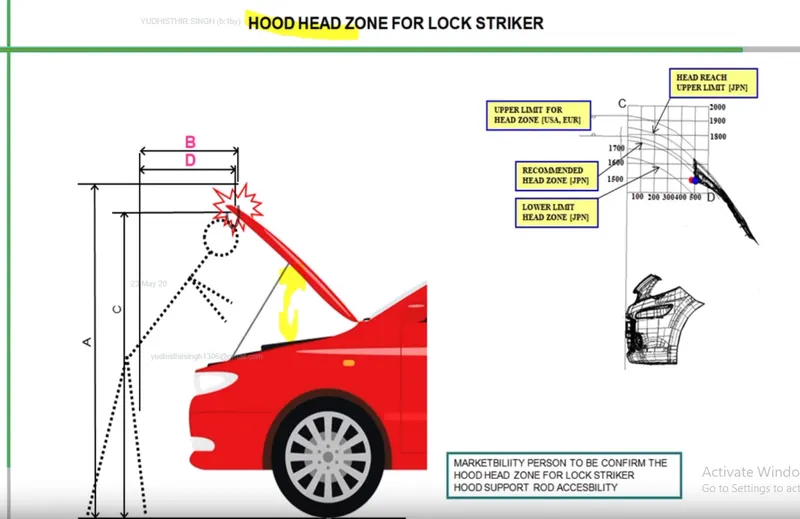
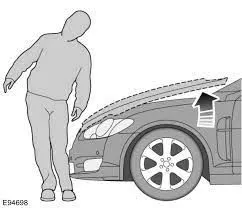
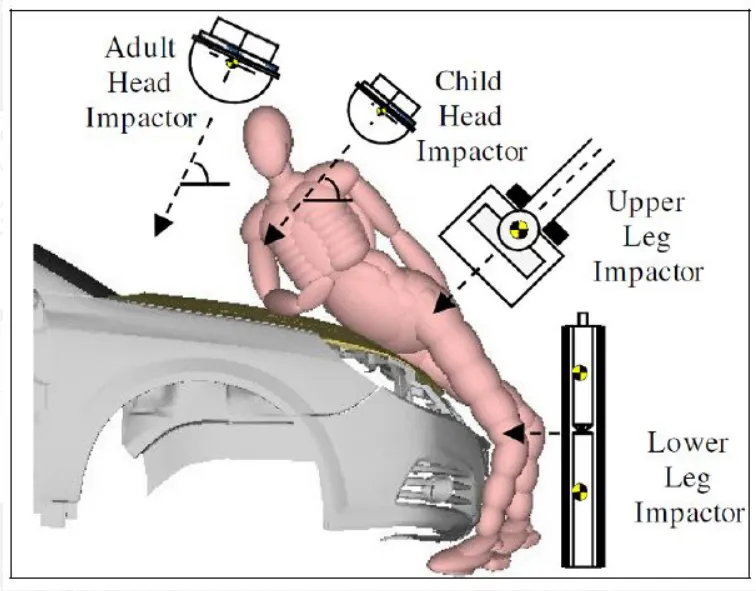
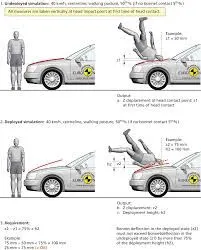
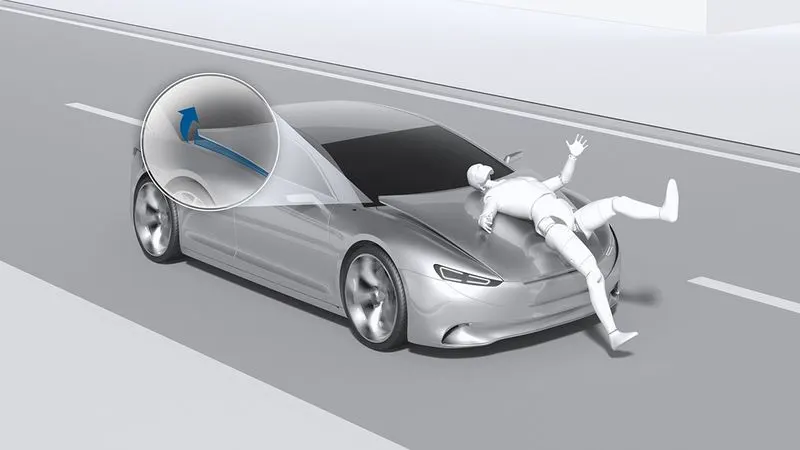
- PEDESTRIAN SAFETY-for pedestrian safety global (NCAP- NEW CAR ASSESSMENT PROGRAMME) has the principle which used in crash test alite a pedestrian.while the designing the hood we should consider those principles and allow our design to get qualified with good results from the NCAP ,which impact in the sales of the vehicles.
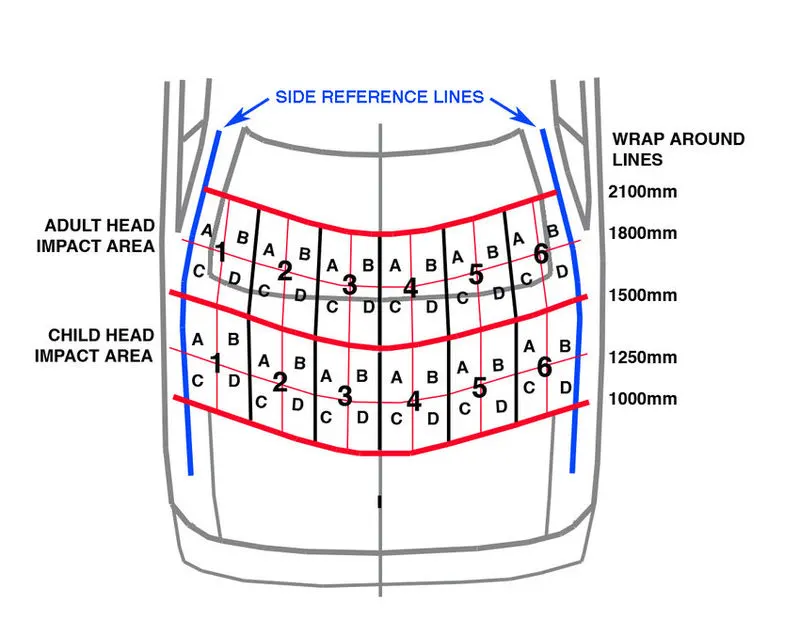
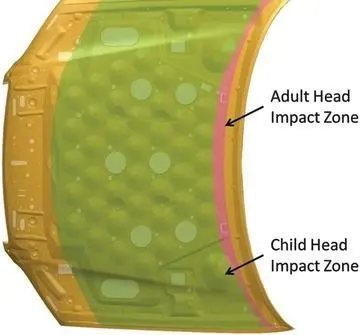
- PEDESTRIAN PROTECTION TEST PROCEDURES- in this test the hood is divided into the child impact zone and adult impact zone from the results the grade and rating will be to the vehicles we should consider both the child and adult head impact
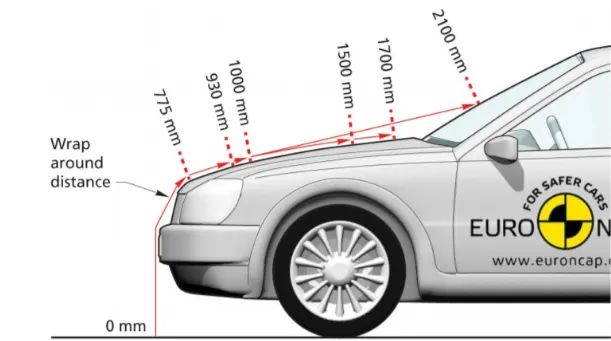
- wrap around distance it is the process of tracing the points on the front outer structure. it includes but not limited to the hood wings .wind screen scuttle and wipes arms wind screen from it is bounded by the geometric trace of the 1000mm.wrap around the line into front bonnet side reference lines and 2100mm wrap around the distance.
- SIDE REFERENCE LINE-it is destined as the geometric trace of the highest points of contact between a straight edge held parellel to the lateral plane of the car and inclined in wards by 45 is transversed down the side of the bonnet top and A PILLARS
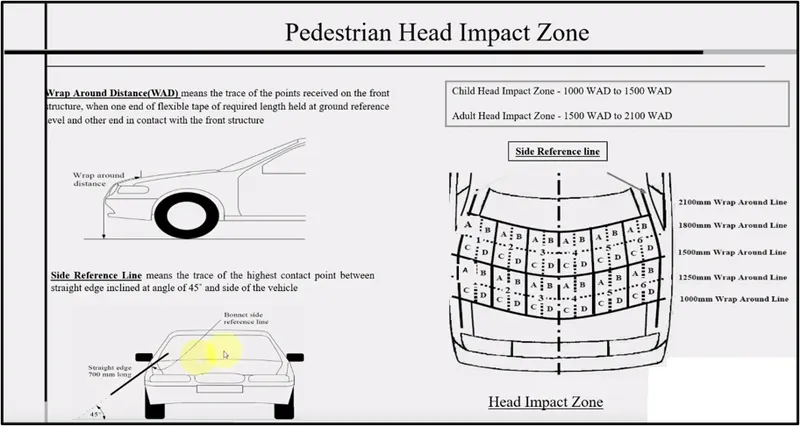
- The side reference line allows checking the impact trace by a pedestrian.
- If the side reference line falls on the fender the WAD will be greater and the impact zone will be less
- if the side reference line falls on the hood the WAD will be lesser and the impact will be high .AS per NCAP the child head impact zone lies between 1000WAD -1500WAD and the adults head impact zone lies in the between 1500WAD-2100WAD
- MATERIAL SELECTION -
- Steel for hinges
- hood is made out of steel or aluminum if the car body required less weight ratio carbon fibre or dry carbon is also used
- silicon polymer and silicon copper paste for mastic seal
- Reinforcement vinyle ester composite for latch.
- impact force distribution in hood design
- A hood design must be made in such a way that when a force is impacted in the front of the hood all the force must be directed outwards from the vehicles and the distribution of the force must be controlled along with hood.
- HOOD VIEW-
- front view-
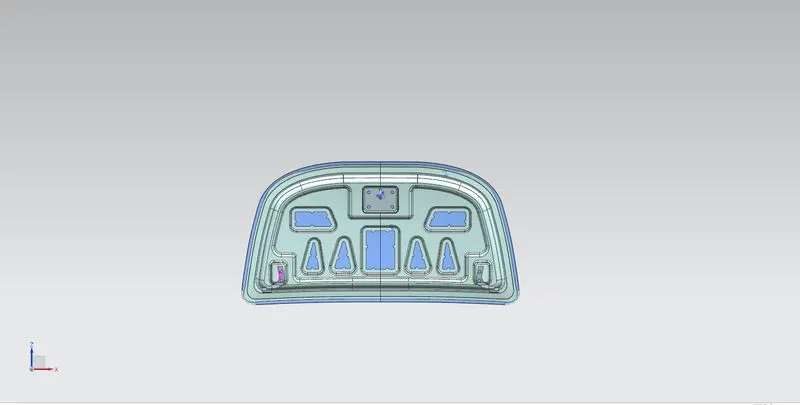
- ISOMETRIC VIEW-
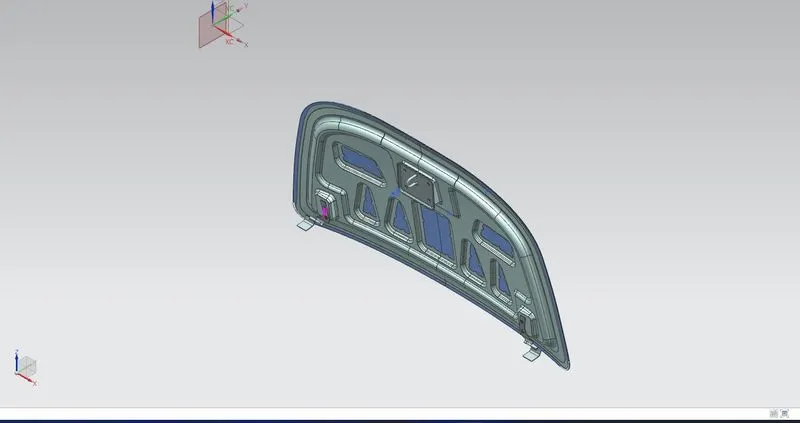
- SIDE VIEW-
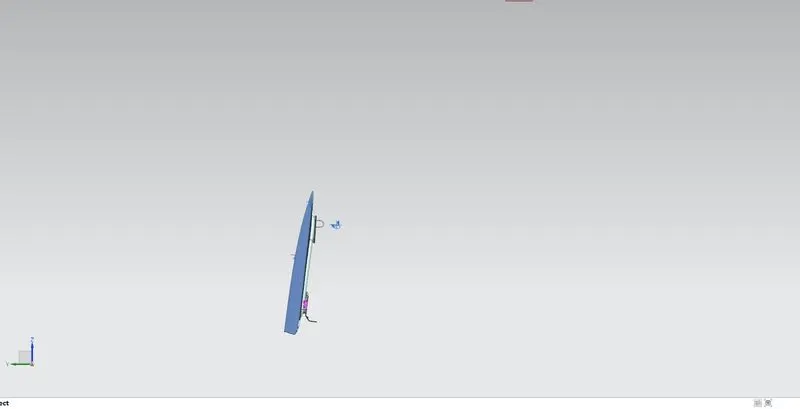
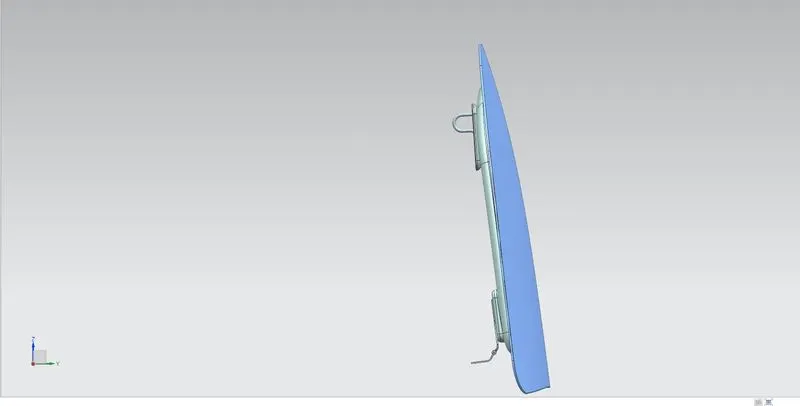
- BACKVIEW-
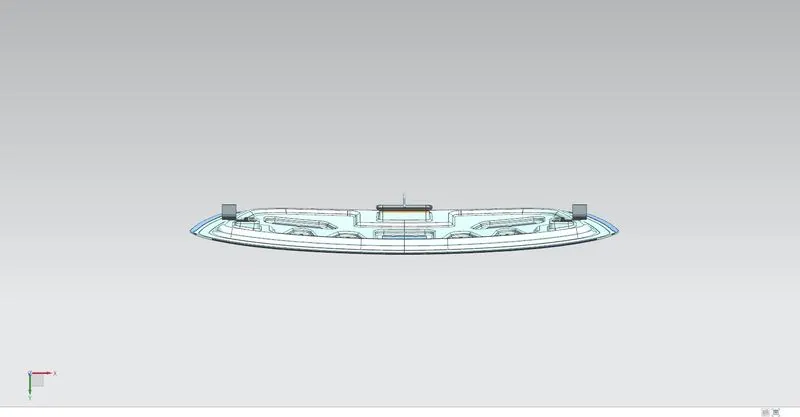
- TOP VIEW-
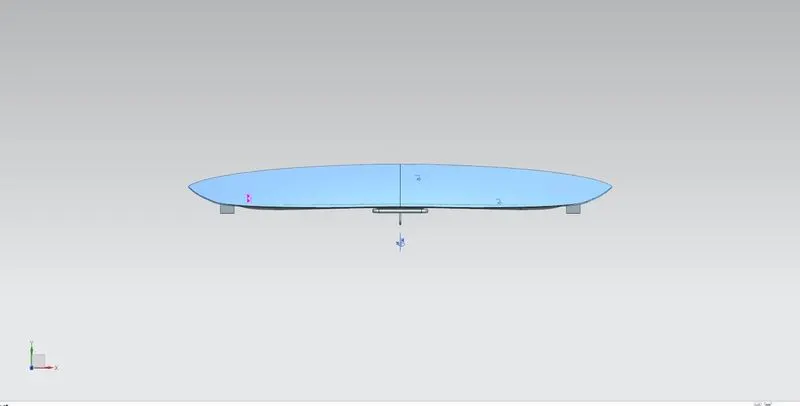
- REINFORCEMENTS -
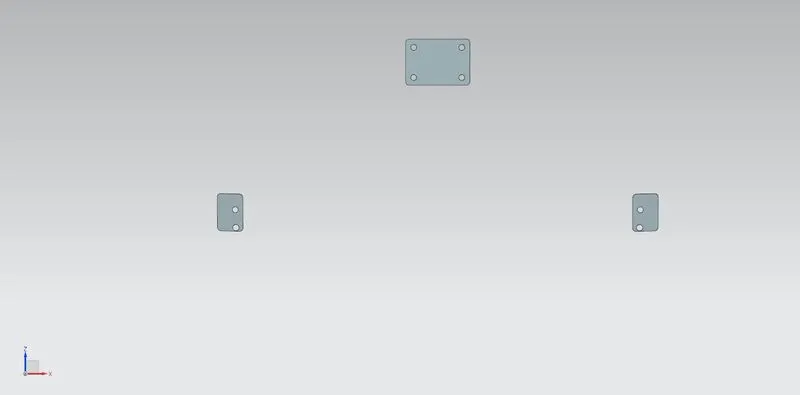
- CONCLUSION-with the completion of the design and analysis it for successful manufacturability we can conclude that this can be utilized for a vehicle also the design was executed under the EURONCAP safety standard and hence satisfies.hood safety both for occupants and pedestrians .