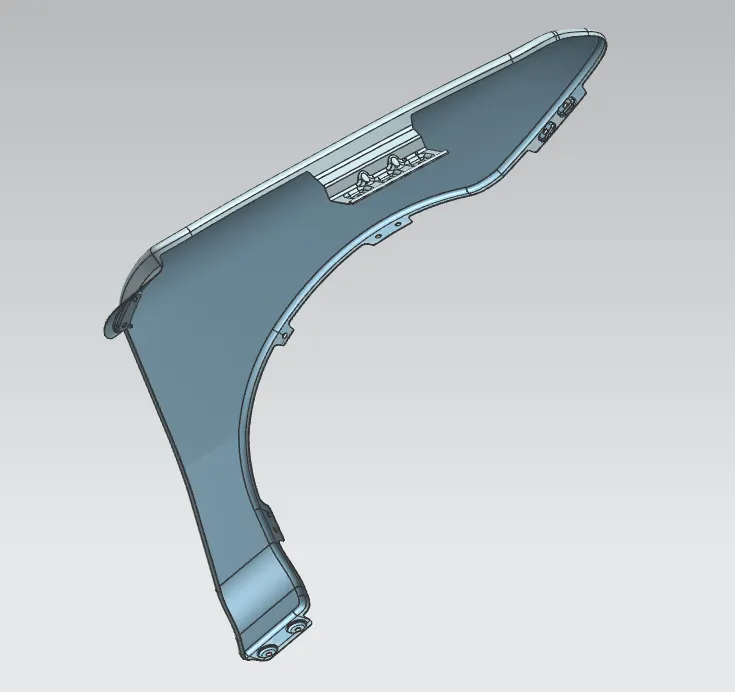
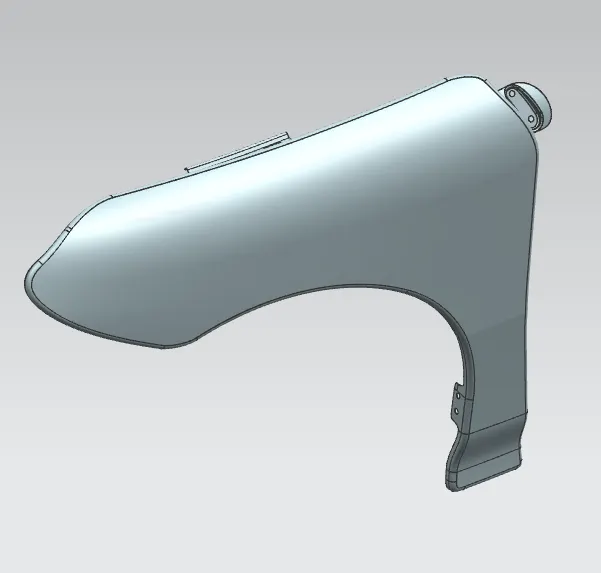
Fender Design Challenge
Fender
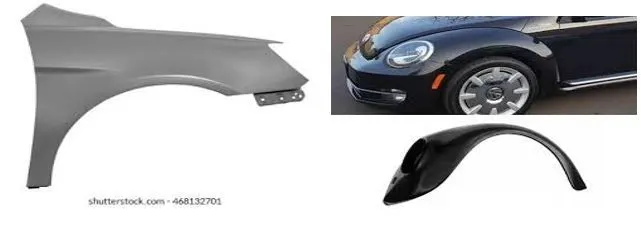
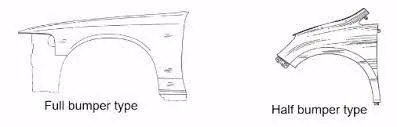
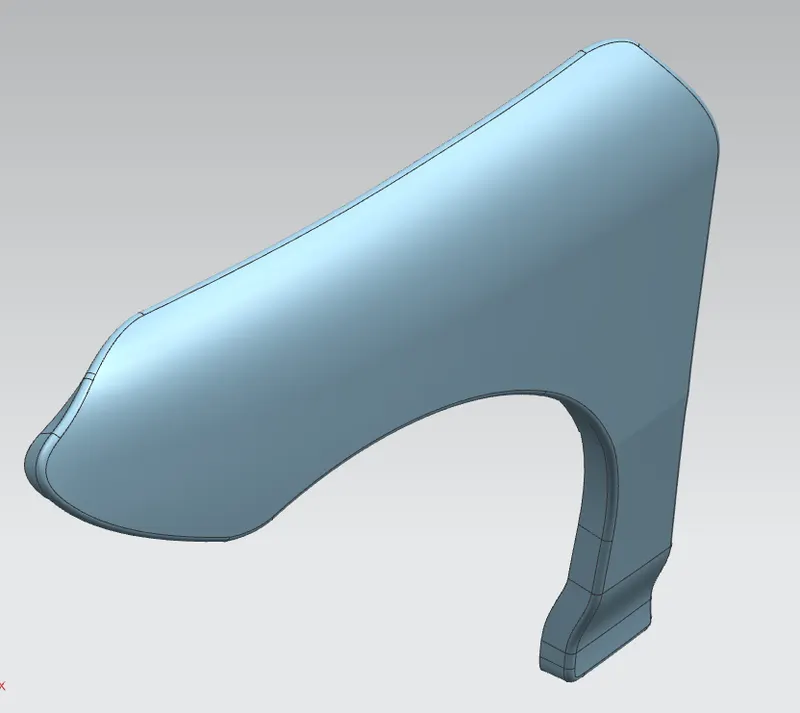
The vehicle fender is a frame for the wheel so that it can prevent chipping due to rock, sand, mud, and other obstacles thrown by the tire. There are two types of fenders, the full bumper type, and the half bumper type. Full bumper type fenders are more costly than half bumpers since half-type bumpers minimize the material used for the production, reducing wastage.
Design Considerations
Reduce Chipping
The primary purpose of the fenders is to protect the body from chipping due to flying objects thrown by the tire. For that, the fender has to be designed in such a way that it should be able to block any flying object thrown by the tire.
Manufacturing and Cost Reduction.
There are two types of fenders, full bumper type, and half bumper type. Full-type fenders are less popular than half-type fenders since half-type fenders can produce high-quality fenders since the material used is minimal as compared to the full-type fender.
NVH and Mounting Points
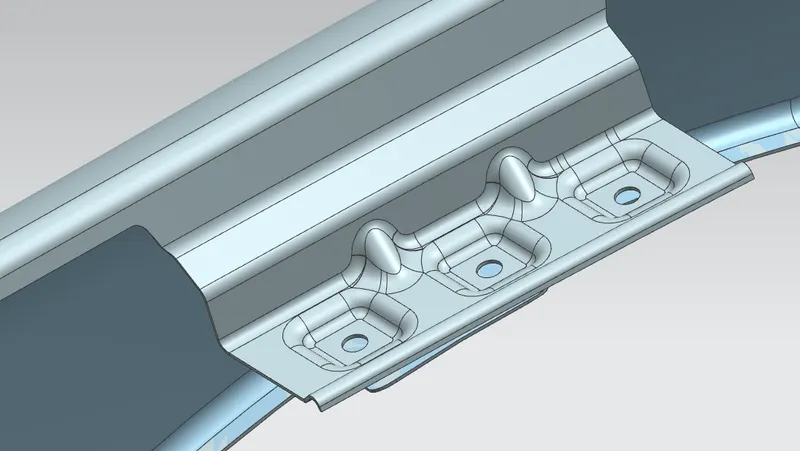
Usually, fenders have five mounting regions, the drip area, sill area, cower area, a-pillar area, and body. These mounting regions hold the fender rigidly. Most of the mounting points are provided by using fasteners that are on a projected surface from the main skin, which may affect the NVH value. The design should contain features that reduce noise and vibration.
Safety
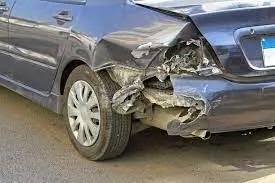
Fenders are visible body parts, and they cover the side front part of the engine compartment. Hence, the possibility of energy absorption has to be considered while designing the fender.
Design Appearance
The fender plays an important role in the side appearance of an automobile. The fender should have an attractive, smooth, and shiny surface.
Skin Data
Design Approach
Mounting points on fenders
Drip Area
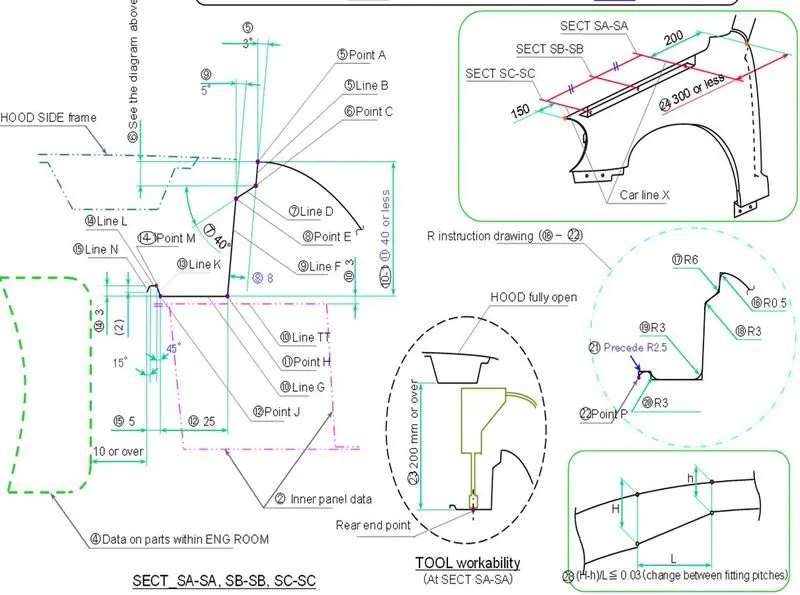
The drip area is the mounding region that connects the fender with the engine compartment. The area is mounded based on the master section provided to provide sufficient clearance for the other components of production techniques. For mounting in the drip area, fasteners are often used. Since it connects with the engine compartment, it should have a good NVH value to reduce the vibration and noise from the engine.
Master Sketch
In addition, the design contains ribs and some fillets for better NVH value, to make the product durable, and for an easy manufacturing process.
Sill Area
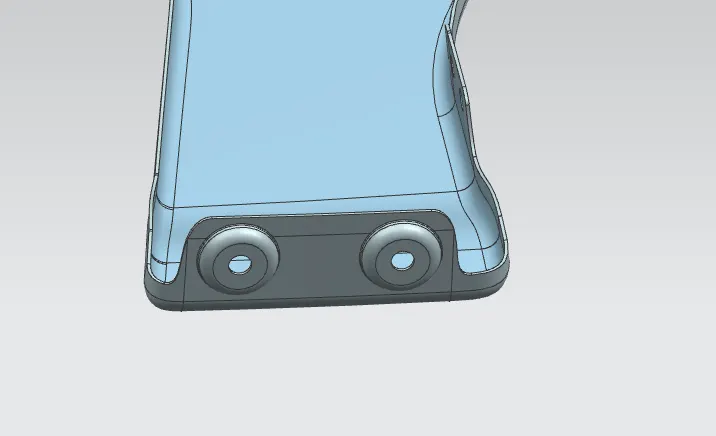
The sill area mounting is at the bottom portion of the region. It is also an important mounting region for the fender.
A-Pillar
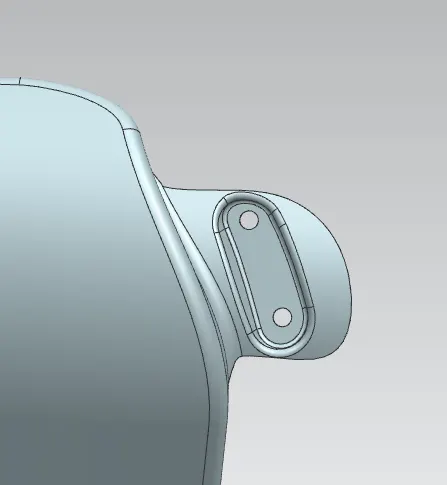
The A-Pillar region mounting is also an important mounting region for the fender since it connects with the A-Pillar.
Bumper Side Region
Baffle Area
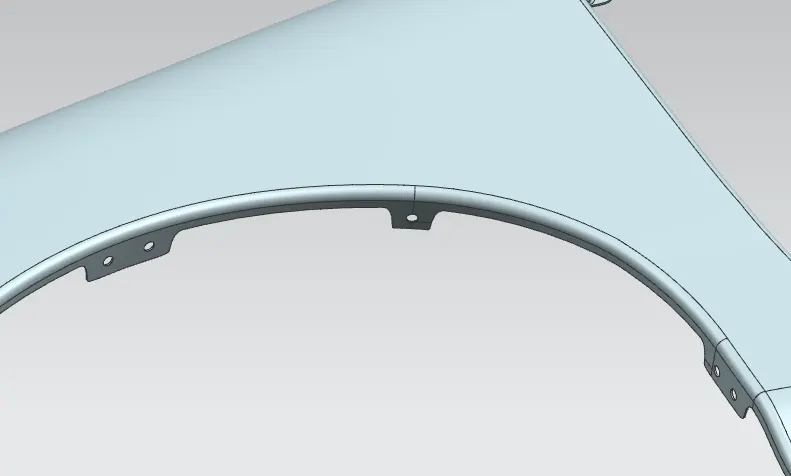
It is the region that is in contact with the wheel arch area.
Final Fender Design