Fender Design Challenge
FENDER DESIGN USING NX CAD
OBJECTIVE:
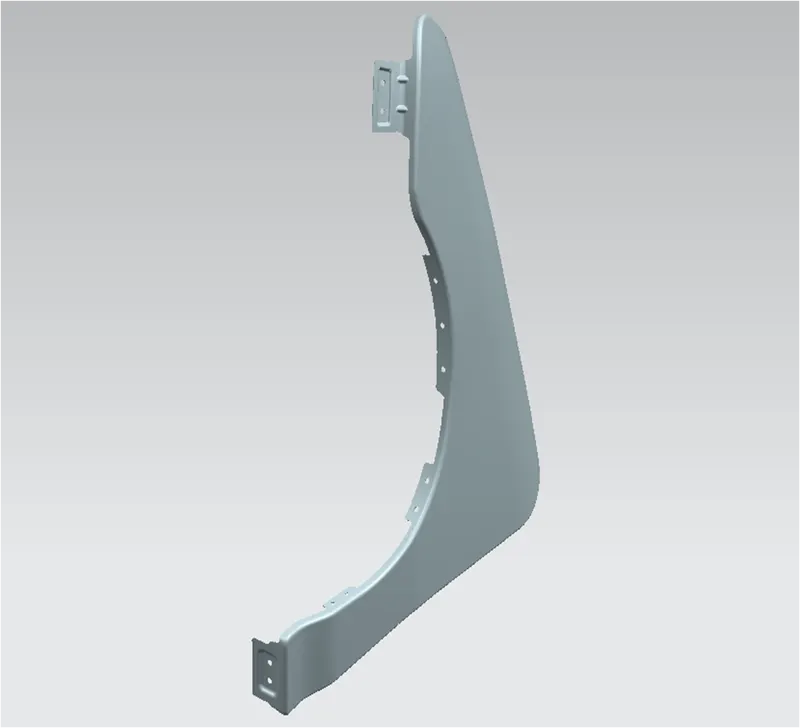
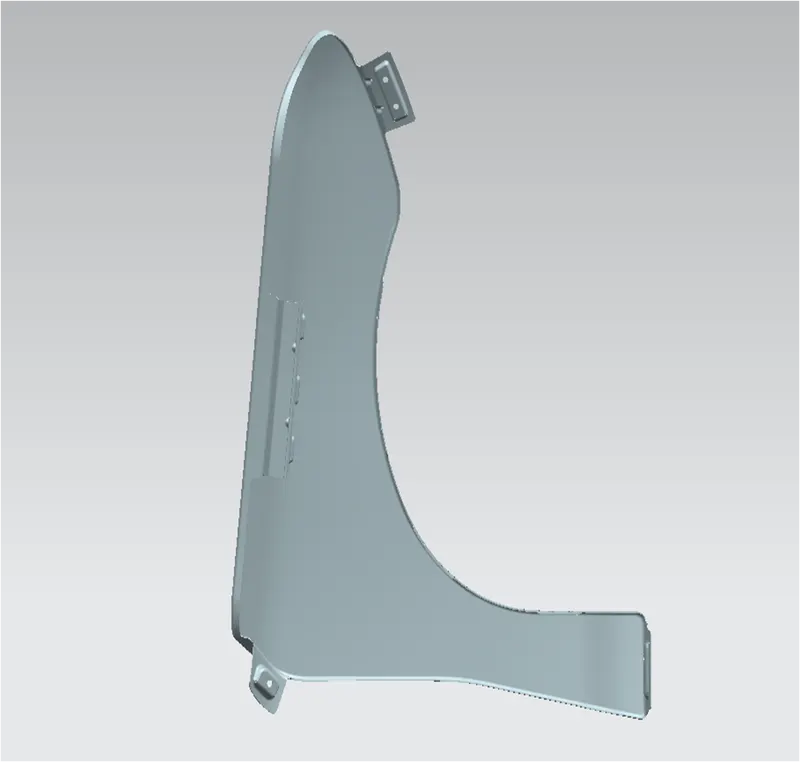
The main aim of this project is to design a fender and to know the main design requirements for drip, bumper, sill and pillar mounting areas.
INTRODUCTION:
FENDER: Fender is the part of a car that protects and frames its wheels and keeps mud from splashing it. Most modern vehicles have fenders on their front wheels. It is the part of a car, truck or motorcycle that surrounds the wheel sell. The primary function of a fender is to prevent dirt and debris from being thrown into the air by the tire. The fender is located over the wheels of the vehicle. As such, there are four fenders on a typical vehicle: front right, front left, rear right and rear left.
TYPES OF FENDERS:
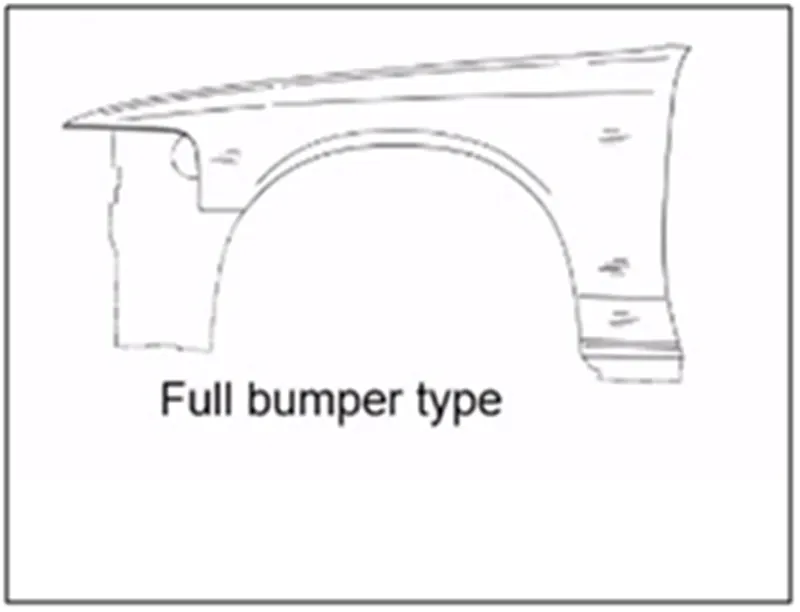
1.Full Bumper Type.
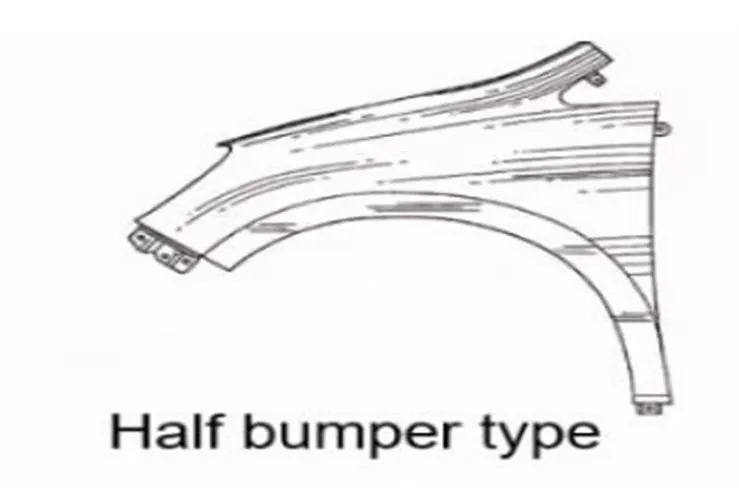
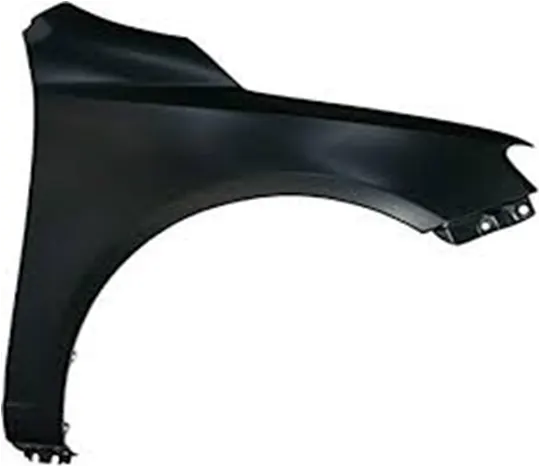
2.Half Bumper Type.
FULL BUMPER TYPE : Full bumper type fenders were used in old cars, it covers the full area until the front lighting but it has a lot of sheet metal material which is un necessary and increases the weight of the fender. These type fenders are no longer used in the automobiles.
HALF BUMPER TYPE : Half bumper types are used in present and future also because the blank size is less and the wastage or scrap is less comparing to full bumper type fenders.
FENDER USES:
1.Car fender limit the exposure of your cars body and engine to external elements that are harmful.
2.Fender flares are attached to ensure that both the body and engine have minimal contact with corrosive elements.
3.Car fenders provides safety to the driver and passengers at the time of accidents or collisions. They are manufactured in a way to provide bend during front and side collisions.
4.Car fenders are designed to avoid wind resistance and make your car more aerodynamic.
5.Car fender enhance the overall look of your cars.
AREAS TO BE CONSIDERED WHILE DESIGNING A FENDER:
1.Drip area
2.Bumper mounting area
3.Sill mounting area
4.Pillar mounting area
5.Baffle area
DESIGN CONSIDERATIONS:
1.Embosses are provided to increase strength.
2.The corners of the flanges are smoothened to ease the producibility of part.
3.Fillets of 2 to 3 mm are provided to avoid sharp edges or corners.
4.Cut outs are provided at certain regions in order to save material as possible.
5.Uniform wall thickness of 0.75mm is maintained.
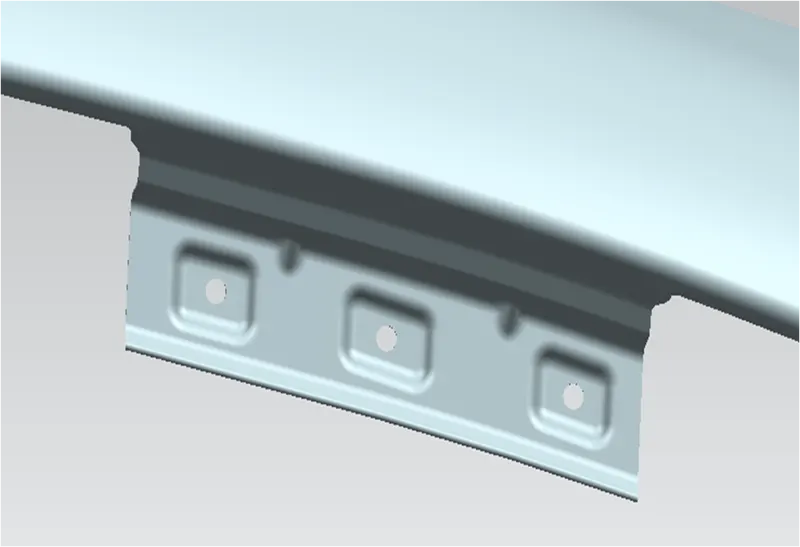
DRIP AREA:
The drip area is the connection of the fender with the engine compartment. It is attached to engine housing through fasteners. There should be some consideration followed to design the drip area , from back side of the fender there should be 200mm clearance for cowl mounting area and from the front there should be 150mm clearance for the head lamp housing unit.
Considerations for drip area are:
1.Embosses are provided to increase strength and the depth of emboss is 3.5mm and angle is 15degrees.
2.The depth of the drift should be between 40 to 60mm, if the depth exceeds from 60mm then forming is not feasible due to spring back and wrinkles.
BUMPER MOUNTING AREA:
This is the mounting where the fender connects with bumper. The bumper mounting region must be rigid in order to with stand the force acting upon it during collision. So the mounting space can be larger.
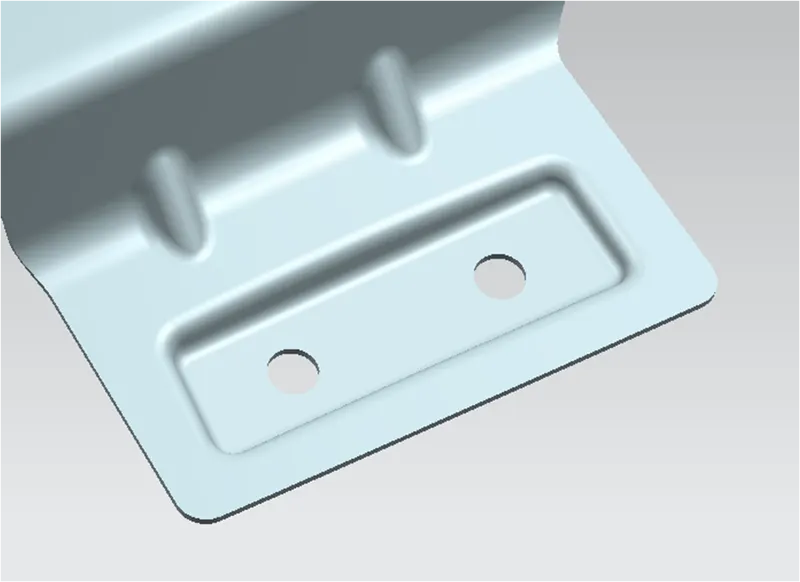
SILL MOUNT AREA:
Sill mount area is in the bottom of the fender. It is mostly get connected with the door region of the car. Here proper embossing and holes for the fasteners are provided. The ribs are provided to improve strength.
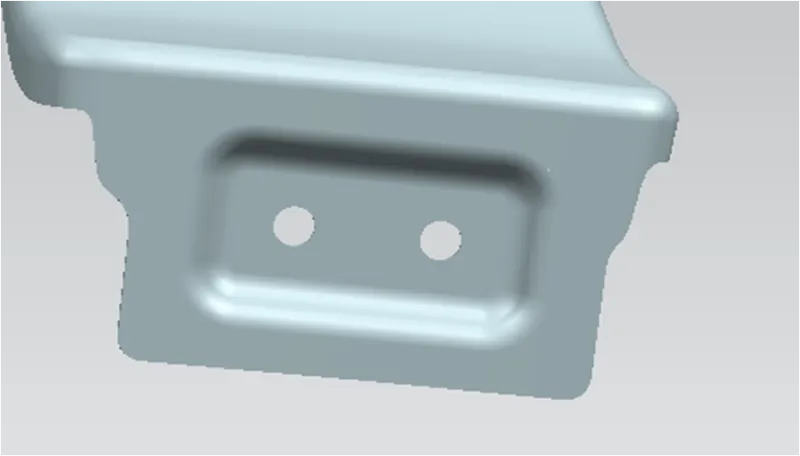
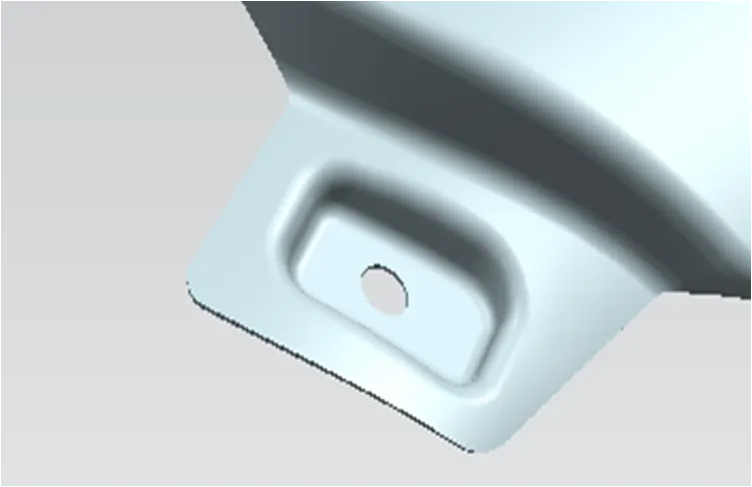
PILLAR MOUNTING AREA:
It is mounted on the A pillar by means of fasteners and these are covered by outer side view mirrors. Here the proper embossing are provided along with holes for fasteners.
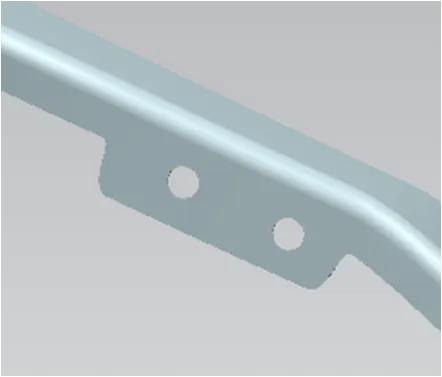
BAFFLE AREA:
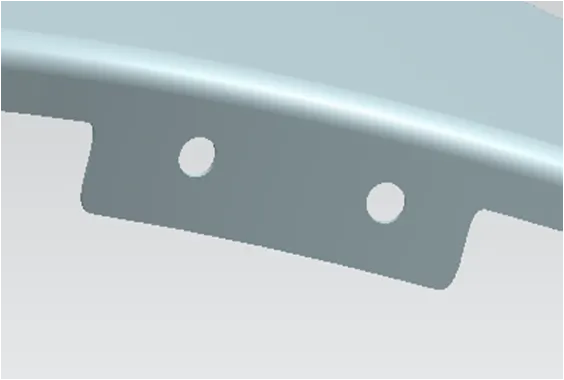
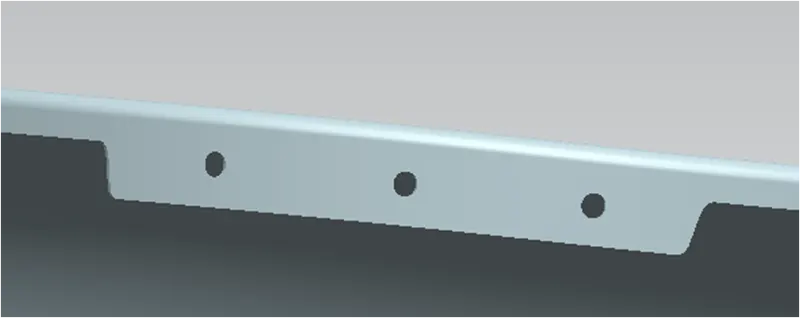
The holes are created at baffle area with 5mm diameter.
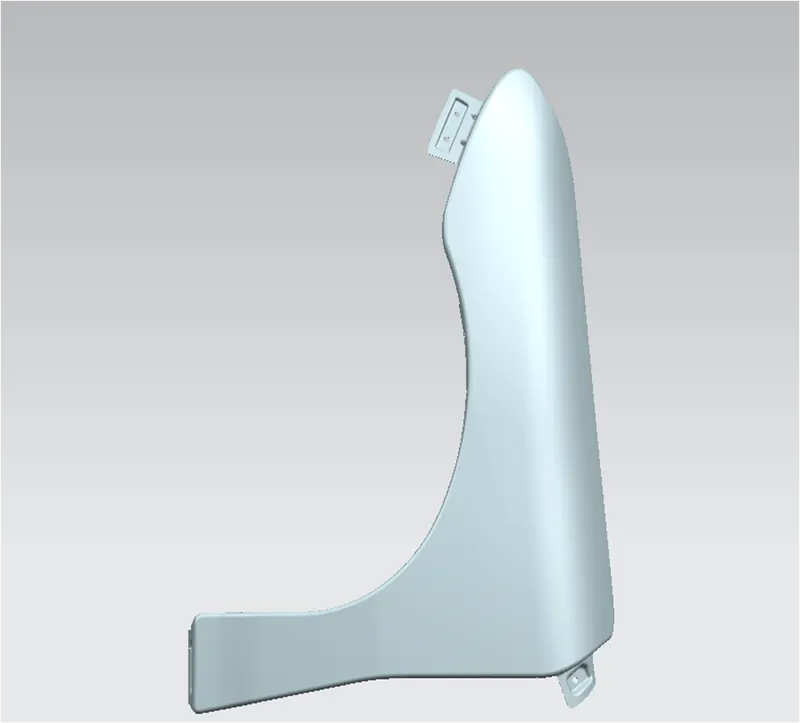
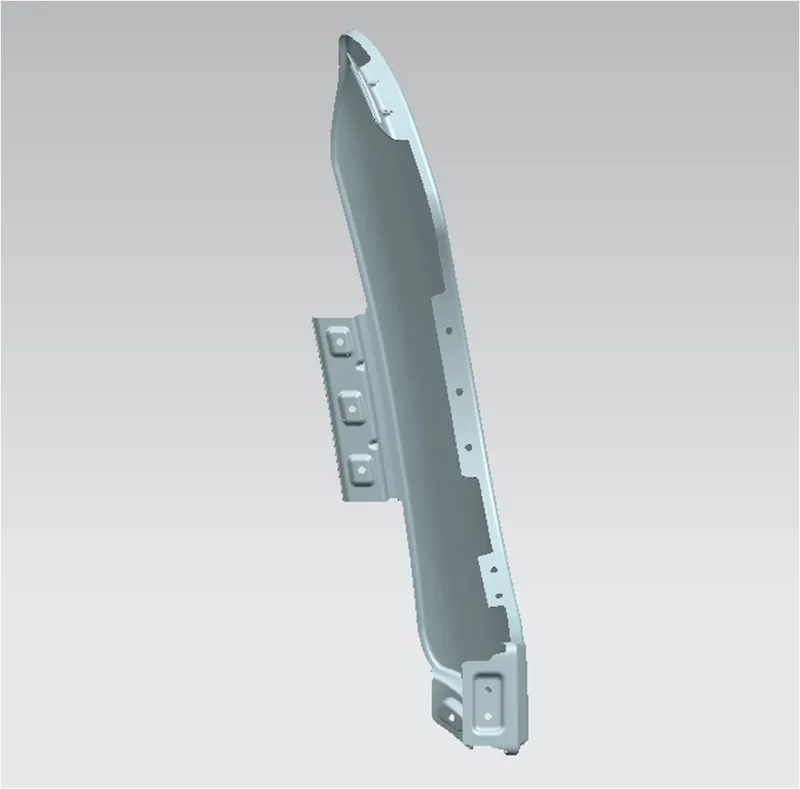
VIEWS:
CONCLUSION:
Thus we can conclude that the design of fender with the different design considerations were done.
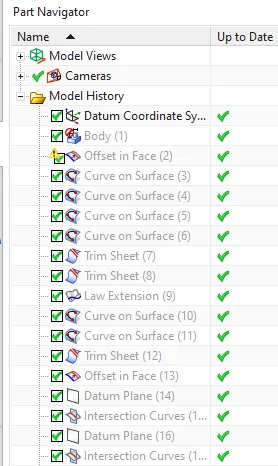
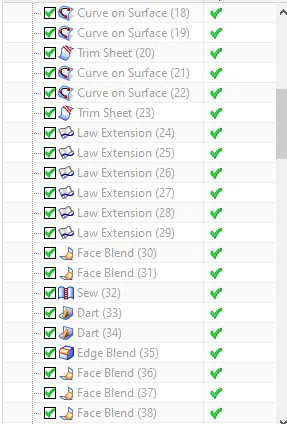
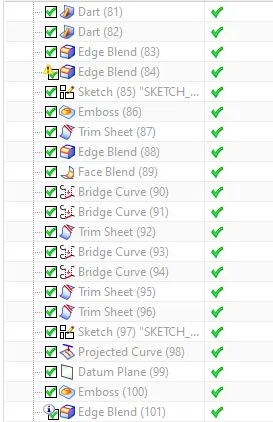
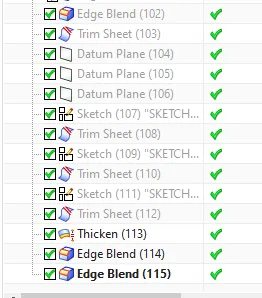
FEATURE MANAGER TREE: