Fender Design
AIM: To design Front Car Fender according to the Engineering standard including Mounting area such as Sill, Bumper, Baffle and A-Pillar.
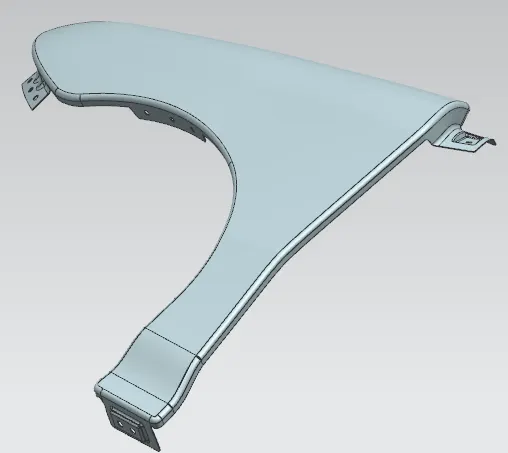
INTRODUCTION: Fender is the American English term for the part of an automobile that frames a wheel well protected.
Its primary purpose is to prevent sand, mud, rocks, liquids and other road spray from being thrown into the air by rotating tyre. Fenders are usually rigid and can be damaged by contact with the road surface.
Fenders are mainly located in 2 areas known as:-
- Front Fender
- Rear Fender
TYPES OF FENDER:
- Full Bumper Type:- These types of fenders were used in earlier models of vehicles. They contribute to the major increment of the steel weight by just covering the front headlights with respect to the bumper region. The problem associated with this kind of fender is there is a lot of wastage in the blank and every inch of a material is a cost to the industry.
- Half Bumper Type:- These fenders are mainly used for serving the purpose of cost-cutting and reducing enough proportions of the steel wait resulting in a reduction of the weight of the vehicle slightly. They can be economically manufactured, i.e by slightly increasing the blank size, we can produce two fenders at a time.
DESIGN FEATURES OF FENDER:
Mounting Areas are as follows:-
- Drip Area mounting
- Sill mounting
- Bumper mounting
- A-Pillar mounting
- Baffel mounting
Drip Area:
- It is the most important mounting unit of the fender. It is connected with the engine compartment, therefore a lot of design constraints are to be followed while designing the fender.
- While designing the drip area we have to initially leave 200-300 mm for the cowl top.
- For placing the headlamp, we have to leave atleast 150 mm at the front while designing the fender.
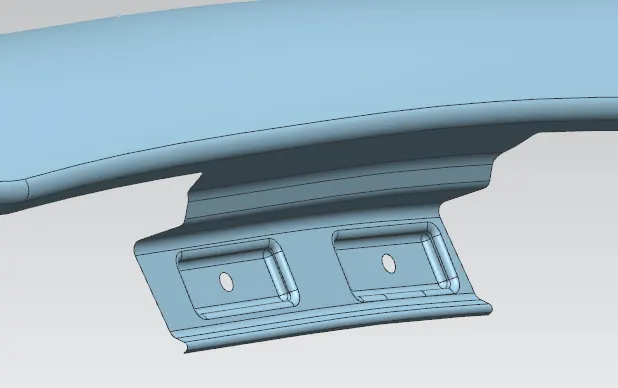
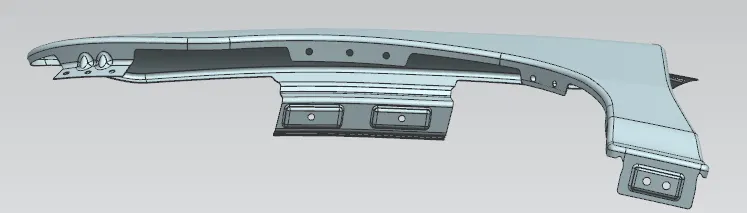
Sill: Sill plates sometimes we call it car footstep. It is used to protect the car door frame from unwanted scratches and dust. The bottom end of the fender is mounted on the sill for reinforcement of the fender panel. Thus, sill mounting area is designed with holes and emboss. Fastners are used to fix the fender.
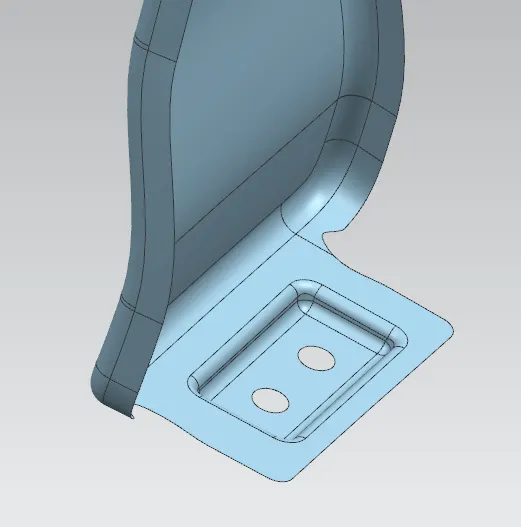
Bumper: The bumper mounting area is used to plastic bumper to the fender with the help of fastners.
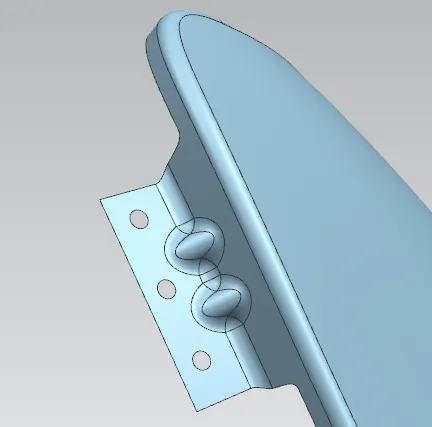
A-Pillar: The A-Pillar is the structural pillar that combines the body with the roof. Front fenders are fastened with A-Pillar for robust joint.
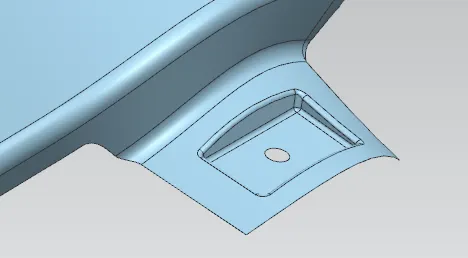
Baffle: Baffle mounting or Mudguard are clip fit types of mounting. It protects the car engine compartment. They are mounted on fender.
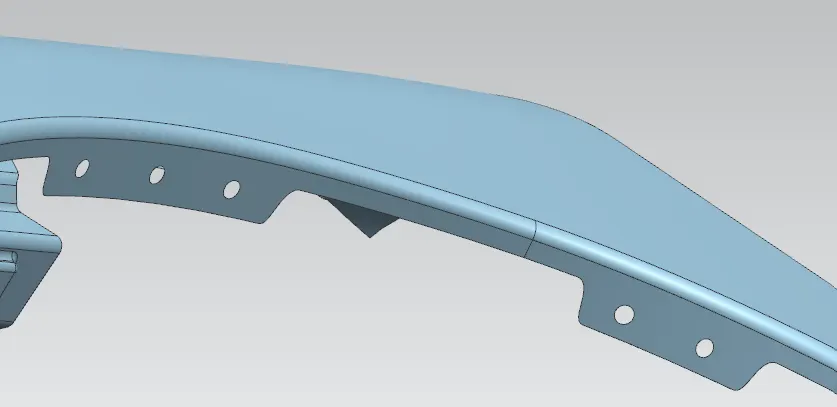
MASTER SECTION:
Thickness = 0.75mm.
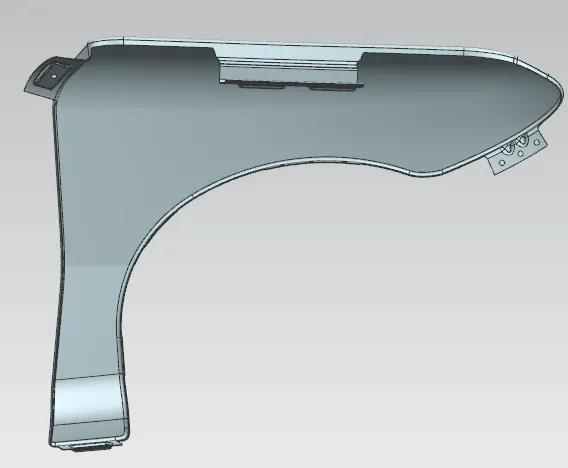
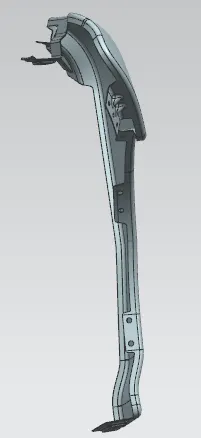
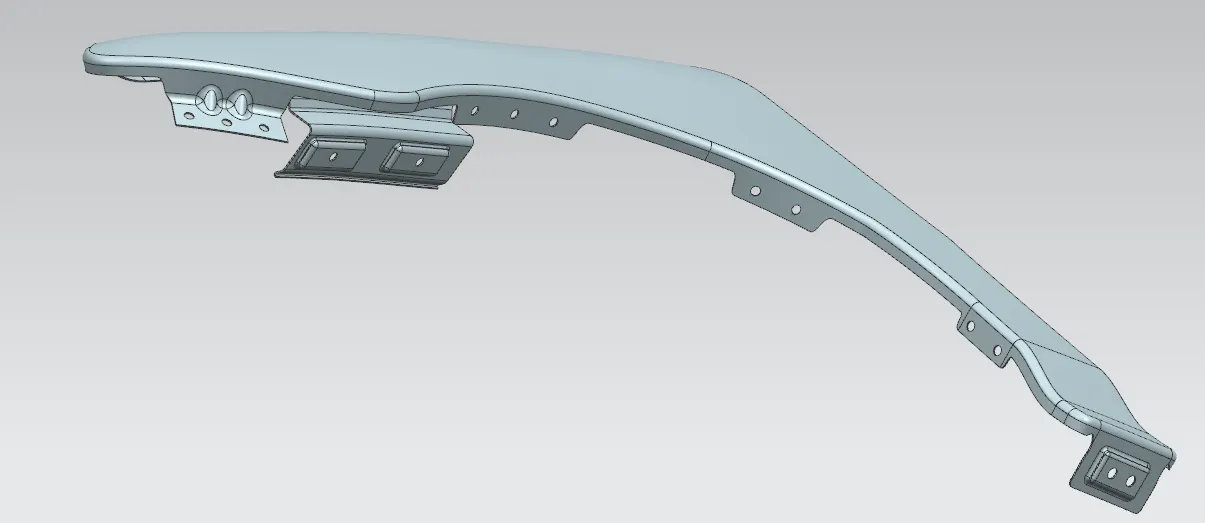
DIFFERENT VIEWS OF FENDER:
COMMANDS USED:
- Offset in face.
- Curve on surface
- Trim sheet
- Law extension
- Datum plane
- Sketch
- Bridge curve
- Projected curve
- Edge blend
- Emboss
- Sew
- Dart
- Thicken
CONCLUSION: Thus, all designs are designed as per Engineering standards which is provided in the master section.