Fender Design
Fender Design
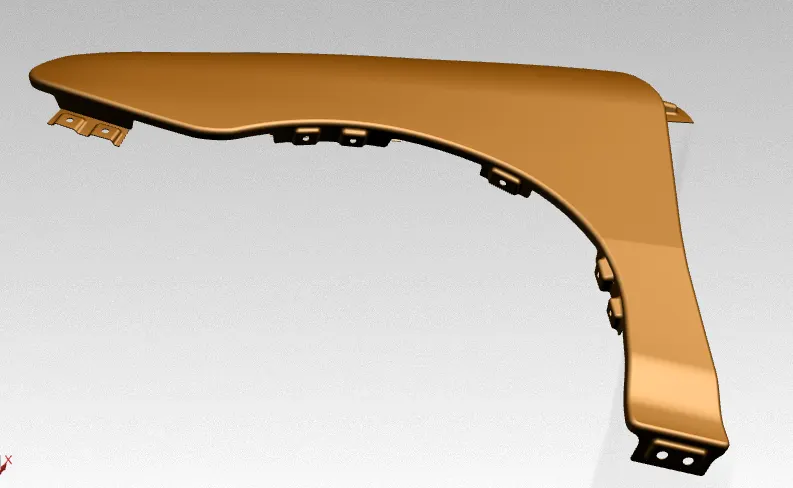
Fender is a closure component, closing the engine compartment from the left and right side of a car. During the motion of the automobile, the wheel picks up a sand, mud and small particles and throws it inside the car and fenders will be helpful in preventing them.
Two types are Fenders are designed, Full Bumper type and Half Bumper type. Half bumper type is preferred nowadays which uses lesser material comparatively.
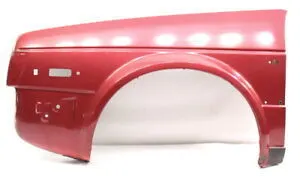
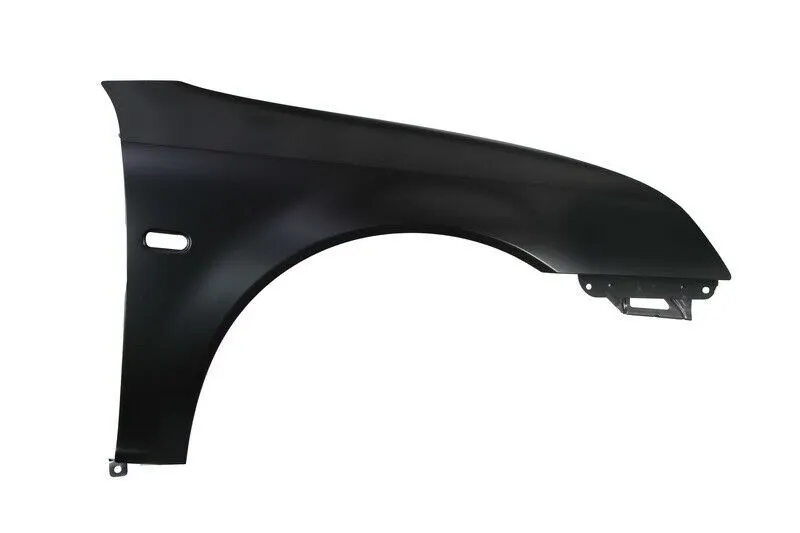
Full Bumper type Fender Half Bumper type Fender
Design Considerations
Wheel Arch
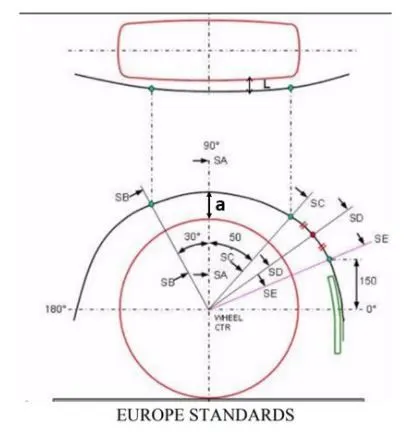
The European standard requires a clearance (L) of more than 10mm between the outer-most tyre face and the fender inner face at specific points. To find L, A vertical is drawn from the wheel centre extending to the edge of fender. A 30-degree line to the left of vertical line and a 50 degree line right of vertical is to be drawn. The intersection points so got should be more than 10mm.
Mountings
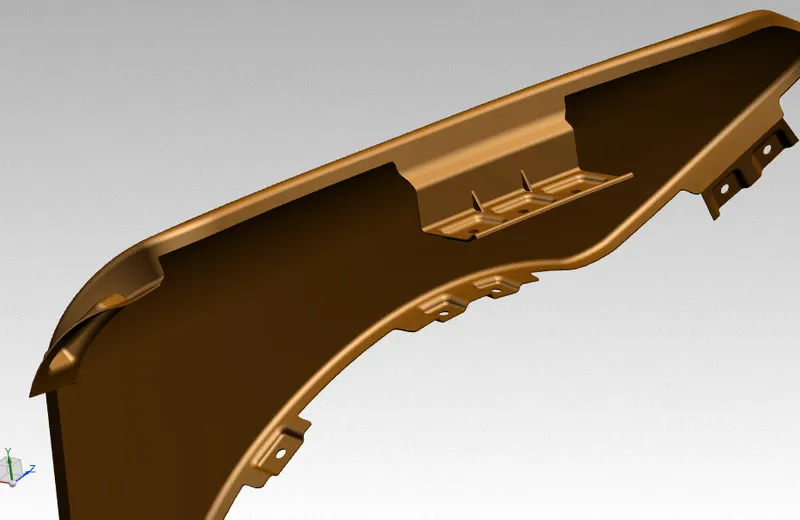
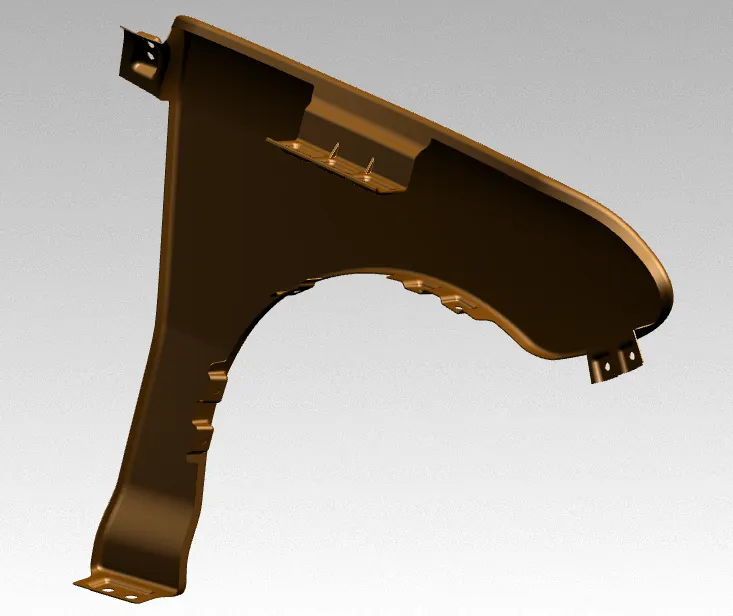
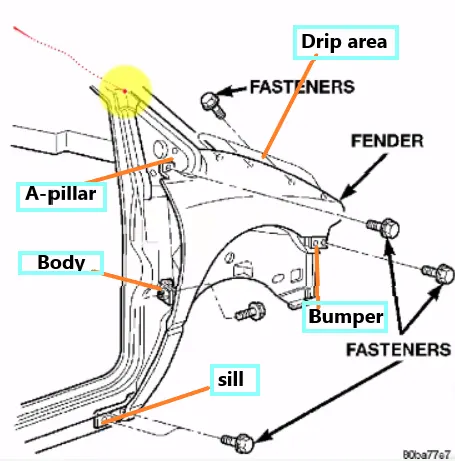
Areas to be considered while designing a fender: Drip mounting area, Bumper mounting area, Sill mounting area, A-pillar mounting area and Baffle mounting area.
- Drip area mounting: This mounting is attached to the engine compartment of the car. Fender drip area is mounted via weld-nuts to the engine compartment. 150mm distance is kept from front of fender where headlight is assembled and a distance 200mm or less can be kept on the A-pillar side where wiper motor assembly will be placed. The total length of drip area from the top of fender should be between 40mm and 60mm to avoid the spring-back during forming. Ribs or beads are provided to provide more rigidity.
- Embosses are provided on the mounting flanges to increase strength, corners of the flanges are smoothened for ease of the production. Uniform wall thickness of 0.75mm is maintained for fender.
Design of Fender
Inputs from the master section and Class A surface are taken and The fender B-side and mountings are designed.