Fender Design
Aim: To design a fender with the given master section.
FENDER:
- The main purpose of the fender is to prevent sand mud rocks liquids and road spray from being thrown into the air by the rotating tire.
- Prevent injuries for pedestrians from all the chips and rocks from tires.
- It also covers the engine compartment.
- Front fender is a separate component as the back fender is a part of the body side outer.
- Wheel wells tend to be much larger than the diameter of the tire because they do not move with the tire suspension and consequently must be large enough to allow the full range of tire motion on the suspension without touching the interior of the wheel well.
- More elaborate designs include fender skirts for enclosing the outside edge of the wheel well and stylized pontoon fenders for exposed fenders.
- We can use fasteners as there is no aesthetic surface to get exposed at the area of fastening. All the exposed areas are covered by other plastic components like ORVM, bumper, spoilers curs, or sill.
- The fender is a styling component so the fender is designed within the unit.
- In a 25% crash impact test at 40 mph on a car, fender plays a role to dissipate Impact outside the car
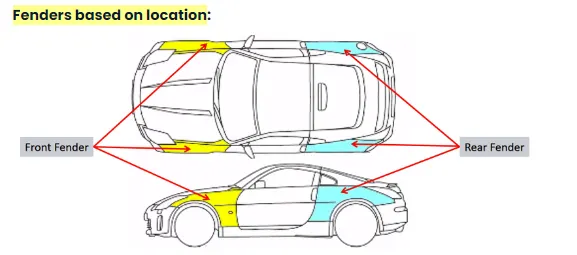
Types of fenders:
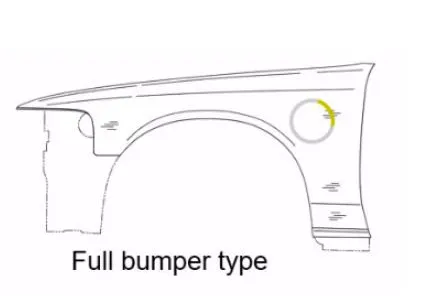
- There are two types of fenders full bumper type and half bumper type
- Full bumper type fender
- Half bumper type fender
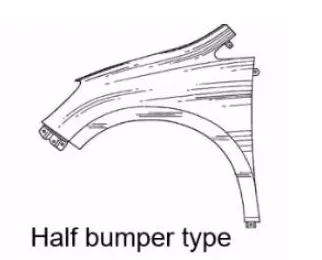
- Now we are using Half Bumper type fender
- Major reason for using half bumper type fender
- Then blank used for the full bumper type is really big and a lot of wastage is there but in the case of the half bumper type we have a high possibility to reduce the wastage by slightly increasing the blank size can produce 2 fenders this is called “scrap management”.
- Half bumper type fender also allows using plastic on the bumper which means we are reducing the steel usage which also increases the car performance as it reduces the weight of the vehicle.
Mountings:
- There are 5 mounting points in a fender
- Baffle, A-Pillar, Sill, Bumper, and DRIP.
-
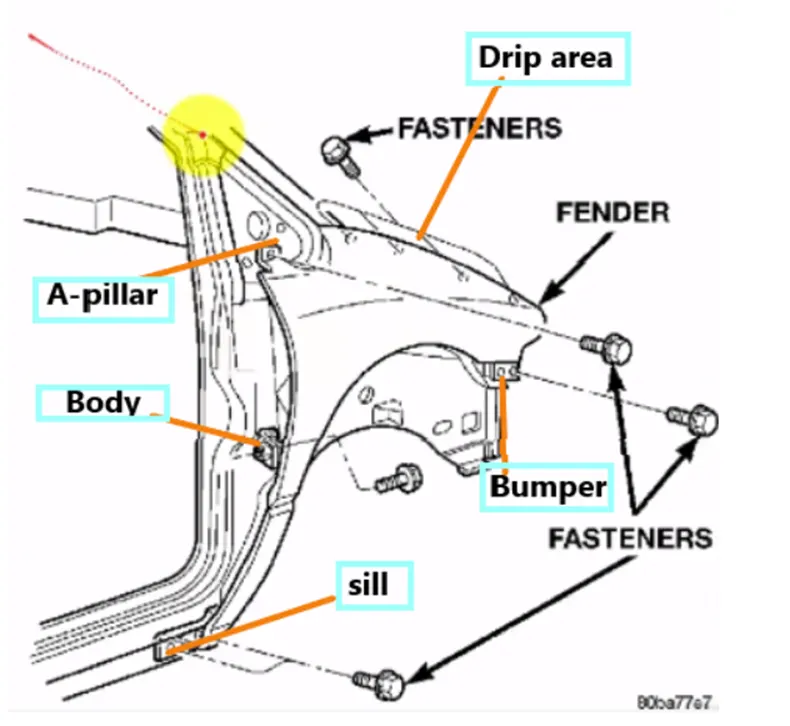
Design Considerations of the fender:
- Fender Design - Wheel Arch - In fender design the wheel arc area has different regulations for different countries it depends on the regulations which are designed by considering the Road conditions and populations of the country and a few other factors.
- Fender Drip Area:
- Drip area is the joining between the fender and engine compartment.
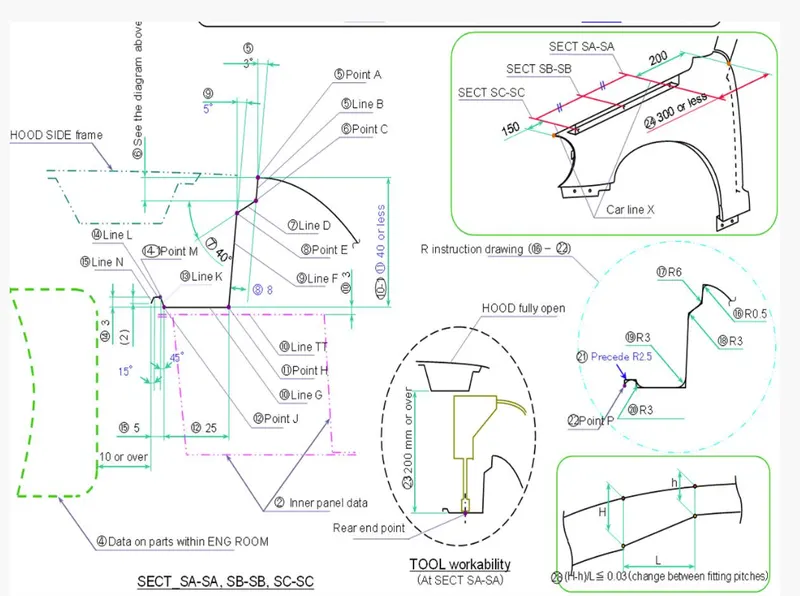
- While designing the drip area 200mm clearance is given for the cowl top and its mountings like the wiper motor.
- For the Headlamp at least 150mm is needed and again it depends on the length of the fender.
- To develop a fender, we need a master section class A surface.
- At first hood is assembled and the assembled hood is in open condition and then the fender is assembled through weld nuts.
- There should be a gap of 200mm or more when the hood is open for the tool workability to fix the weld nuts.
- The engine compartment shouldn’t be visible to the customer through the gap between the hood and fender that is why we create a 3deg bend in the fender drip area.
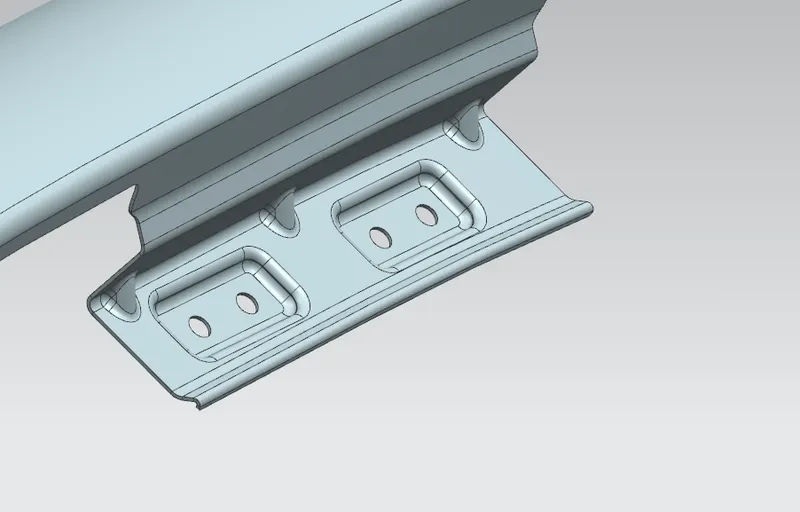
- Drats should be provided to the fenders Drip area to reduce the Spring back effect.
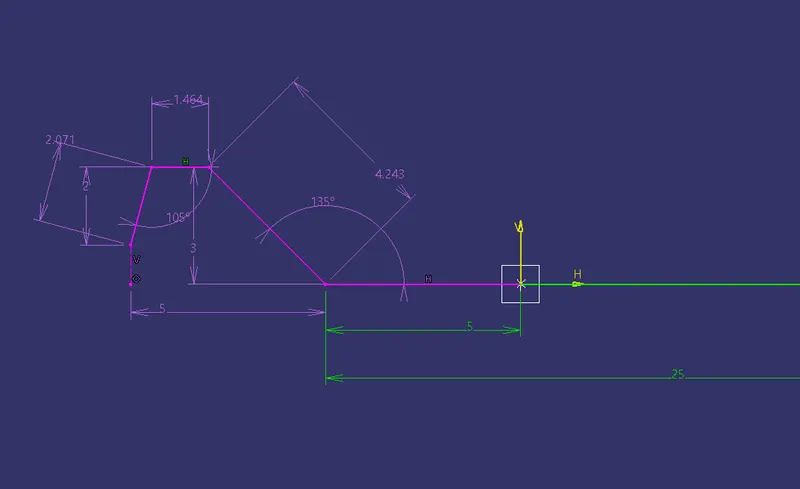
- Follows the master section for fender drip area design.
- A-Pillar Mount:
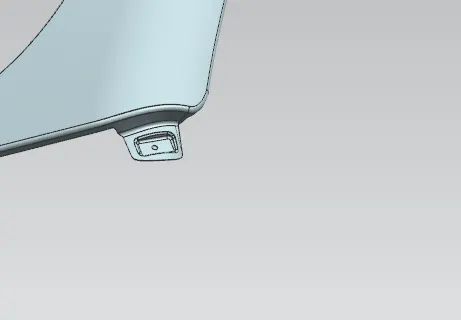
- Sill Mount:
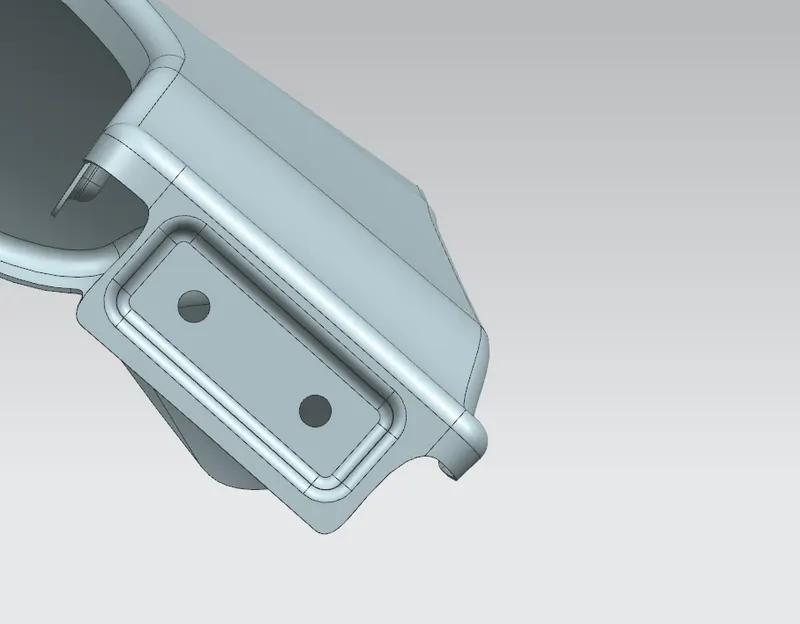
- Baffle mount:
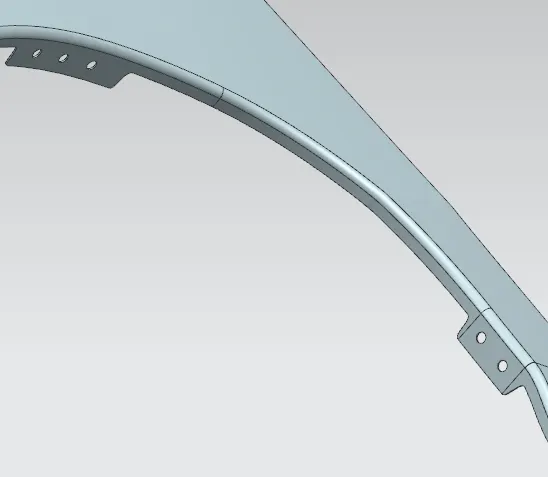
- Bumper mount:
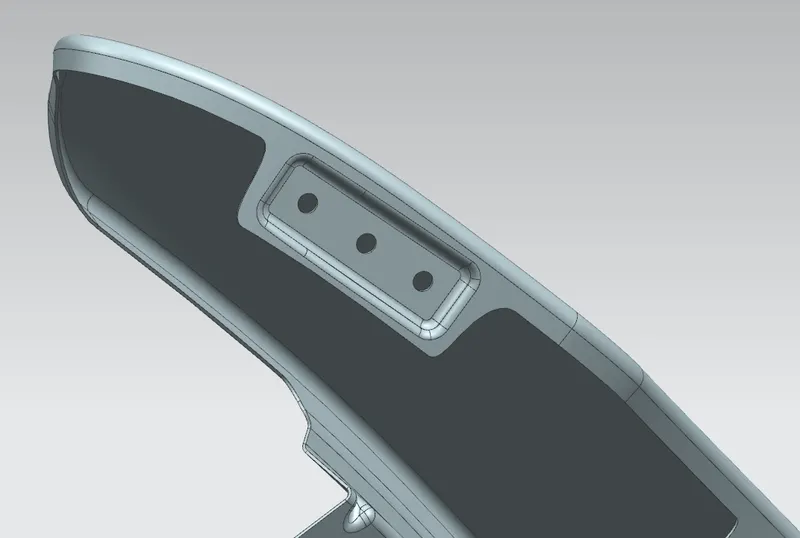
- Final Part:
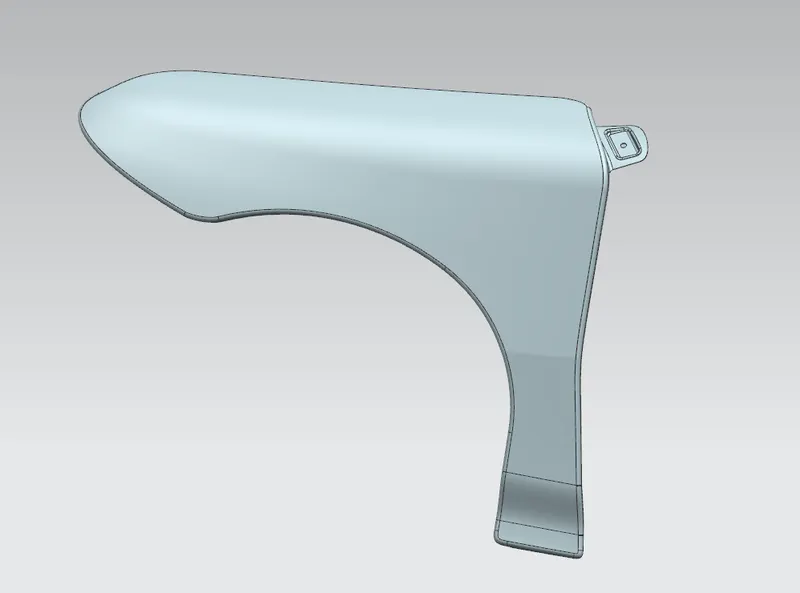
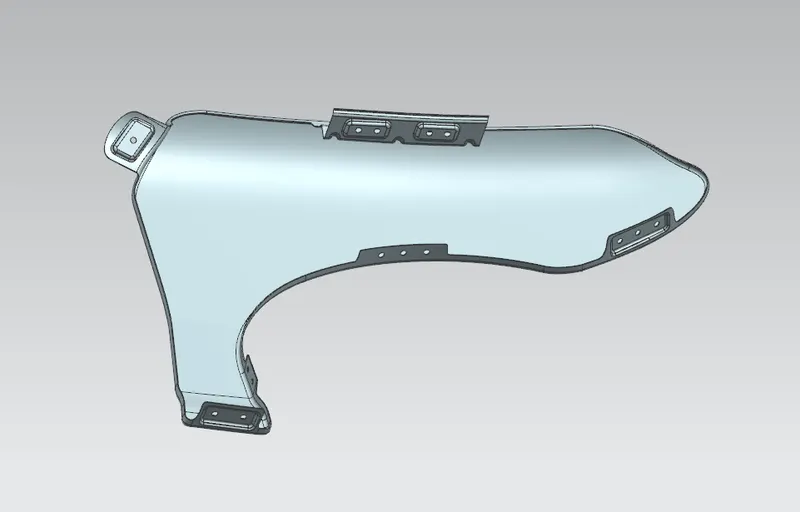
Conclusion:
- The Fender with all the required mounting is designed according to the given master section and design rules.