Design of backdoor
DESIGN OF BACK DOOR USING NX CAD
Automotive Back Door or Tail Gate
The tail gate or back door acts as a barrier between the luggage space or boot space and the street. It prevents the luggage from falling out of the car when the vehicle accelerates or hits a bumper or obstacles while vehicle is in motion (usually at higher speeds). Tailgates are firmly latched in place to bear a lot of weight pressed against it.

The above figure shows the liftgate or tailgate of an SUV
The back door thickness plays a major role in defining the luggage space, if the thickness is more, the space available is more and vice versa, but it is not feasible to go for minimum thickness for the cross section as it would result in less strength (no space for embosses) of the back door and also no space would be available for accomodation of the wiper motor components.
Backdoors are made of mainly aluminium and steel. The materials and the manufacturing processes play a crucial role in deciding the weight, cost and luggage space of the vehicle.
Aluminium Back door
The outer panel for back door is mainly manufactured using deep drawing process. The inner panel is manufactured using casting. the casting process for manufacturing of inner panel creates an added advantage for the vehicle. The draft angle for casting is 3 degrees and also it can produce components of varying thickness. the draft angle of 3 degrees provides more luggage space and better rear visibility for the driver. The inner panel made os aluminium is one single part and requires no assembly process.
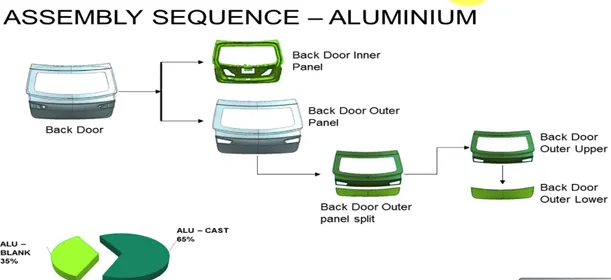
The above figure shows castedt aluminum back door inner panel with no additional components for assembly.
Steel Back door
The outer panel & inner panel for back door are manufactured using deep drawing process. The steel inner panel is manufactured by deep drawing process. The steel inner panel comprises of components that are to be assembled - reinforcements for hinges, gas stay, wiper motor and latch for strength purposes.The draft angle for deep drawing is 7 degrees and the thickness of the componenets manufactured is uniform. The draft angle of 7 degrees provides less luggage space and optimum rear visibility for the driver compared to aluminum back door.
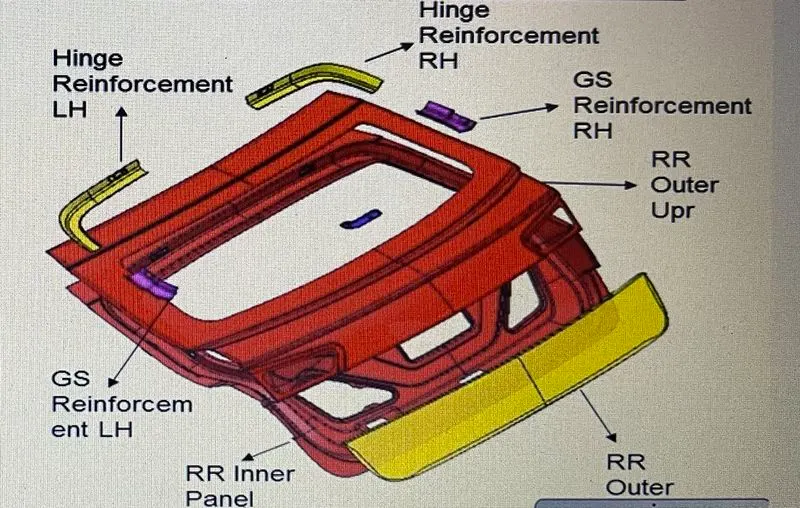
The above fig. shows steel backdoor inner panel with reinforcements of hinge, gasstay, wipermotor and latch.
Design methodology of Back Door using NX Cad
Given Class A surface
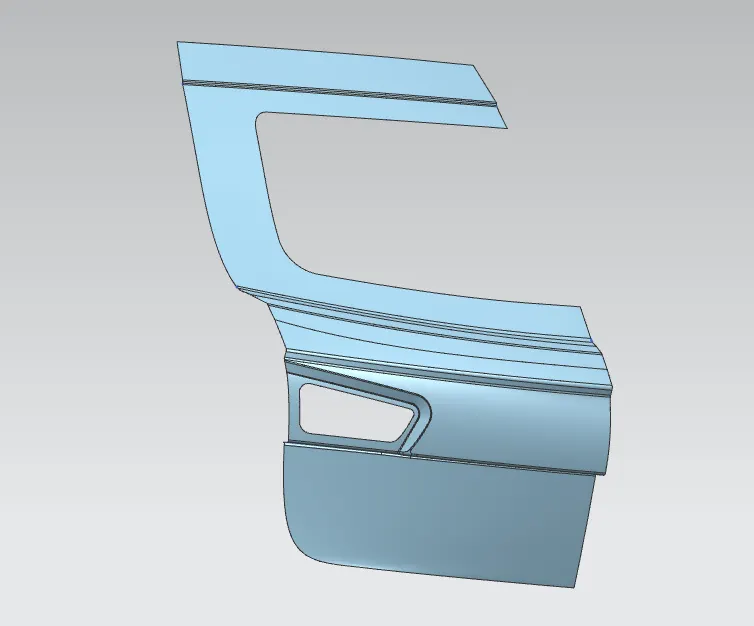
The given Class A surface is checked for gaps between surfaces and repaired using bridge curves and through curve mesh tools. The surfaces are sewed after removing the gaps between surfaces to form a single surface i.e, the Back door Outer Upper Panel and Back Door Outer Lower Panel.
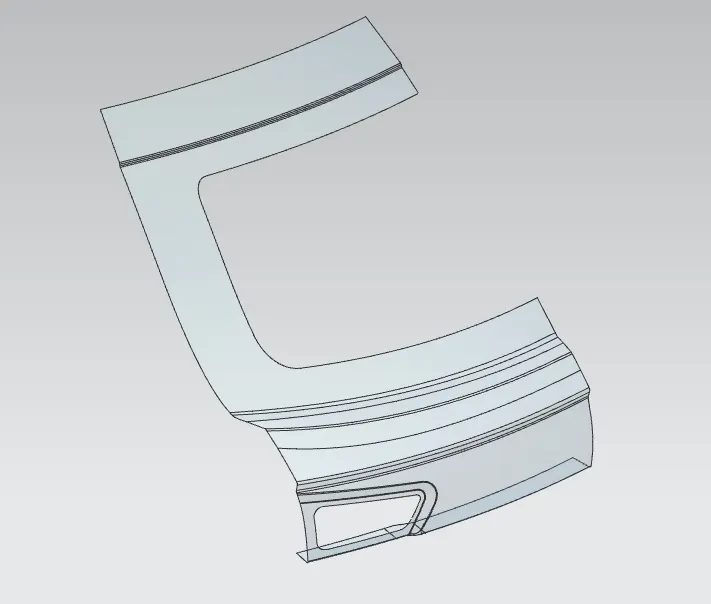
Back Door Outer Upper Panel
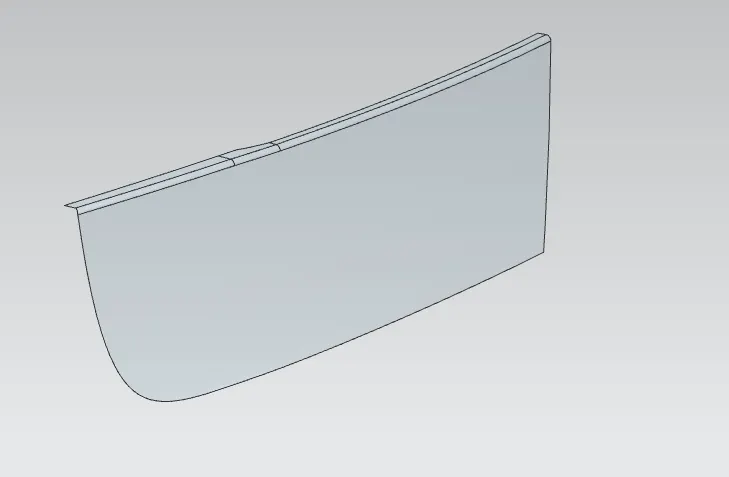
Back Door Outer Lower Panel
Tooling direction
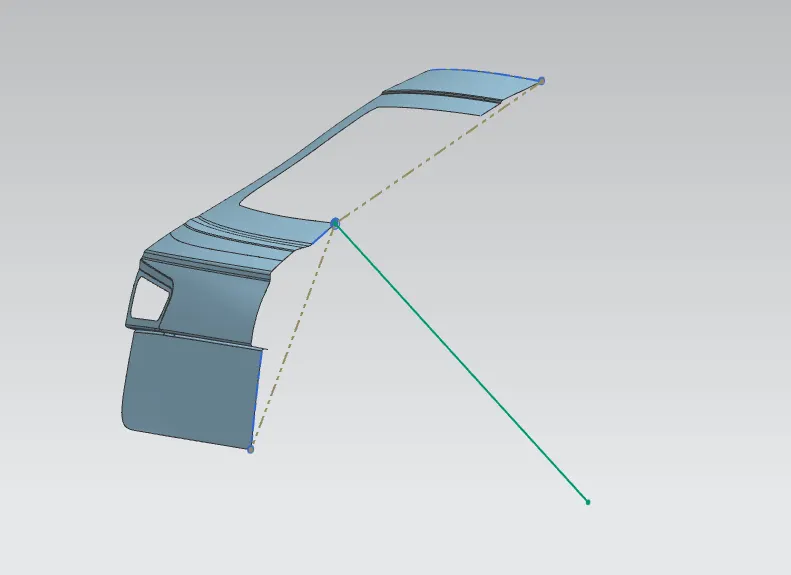
The tooling direction or draft direction is created for easy removal of part using a draft angle (7 deg or more) with deep drawing process. Using sketch, the top, mid and end points of the outer panel are connected and by bisecting the two lines, tooling direction is generated.
Sealing Flange
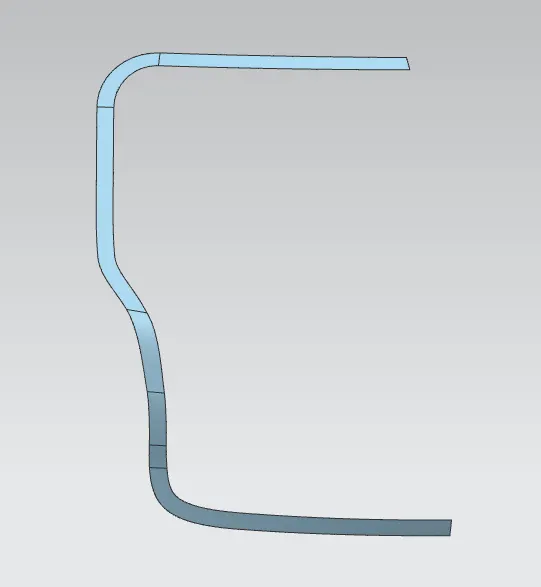
Sealing flange is created by offsetting the surface of inner panel (i.e, at an offset of 0.75mm form outer panel). The offset distances are varied accordingly so as to maintain the tanency continuity of the sealing flange and also to maintain ample space or gap from the inner panel.
Sealing flange acts as an input or reference to Body side engineers from the lateral direction, rear panel engineers from its bottom direction and roof engineers from its top direction.
Connecting flanges and blends are created to form top windshield regions, the mid region for wiper motor and the bottom region for latch.
Mastic Sealant
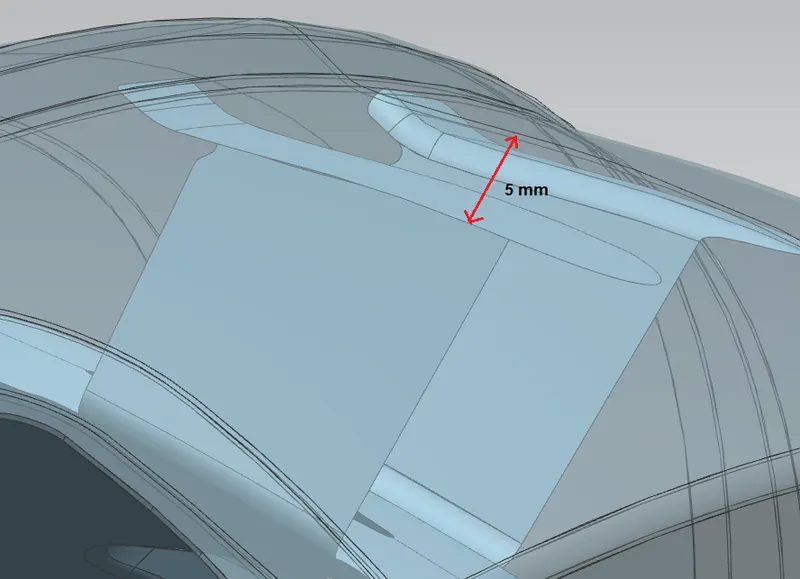
The outer and inner panels of the back door are joined mainly at the borders using hemming and glue, to strengthen the back door further, the panels are bonded on other regions using mastic sealant. To achieve this , a flange is created at distance of 5mm from the outer panel and in this 5mm space, a mastic applied to generate bond between outer and inner panels and strengthen the back door.
Embosses
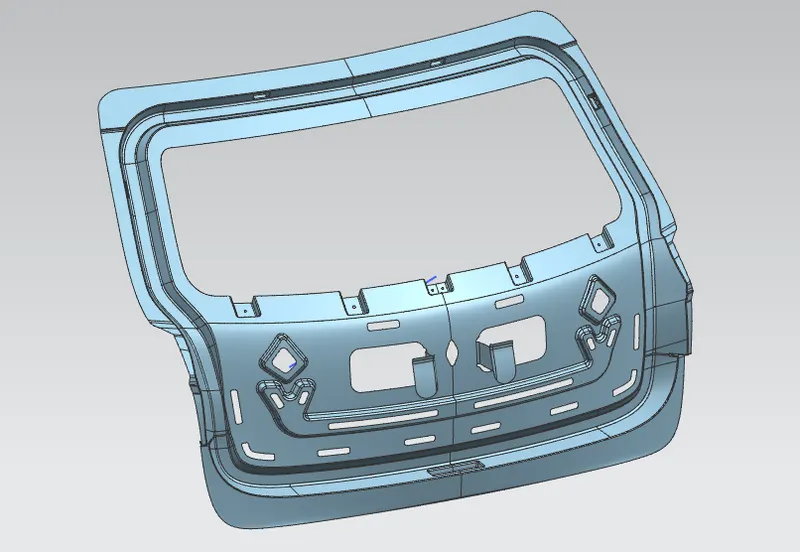
As seen from the above figure, the embosses are created on the bottom side of the back door inner panel to provide strength. The back door is subjected to impacts during closing movement. To avoid the door failure and to distribute the forces, embosses are created to on the panel and this inturn increases the life of the back door.
Reinforcements
The reinforcements are created for hinge, gasstay, wiper motor and latch regions to provide strength to the inner panel.
Hinge reinforcements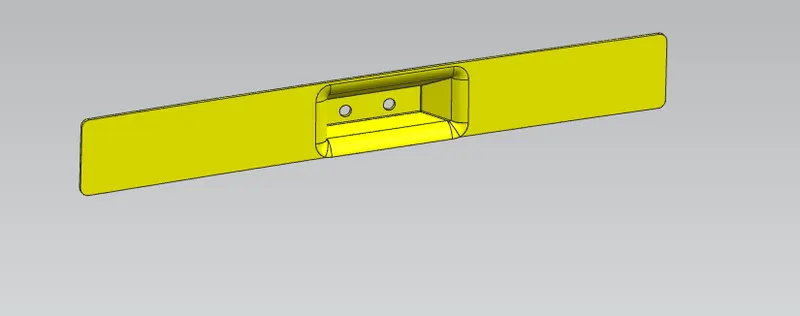
The above fig shows the reinforcement for the hinge
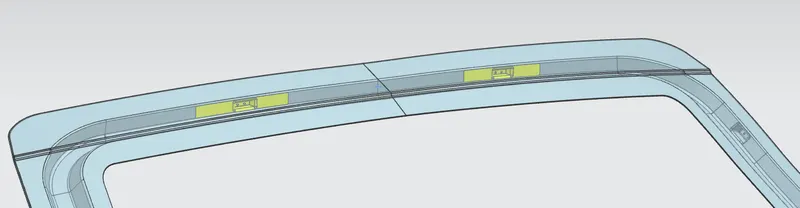
The above fig shows the position of hinge reinforcement in the inner panel
Gasstay reinforcements
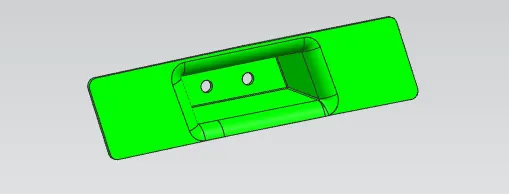
The above fig shows the reinforcement for the gasstay
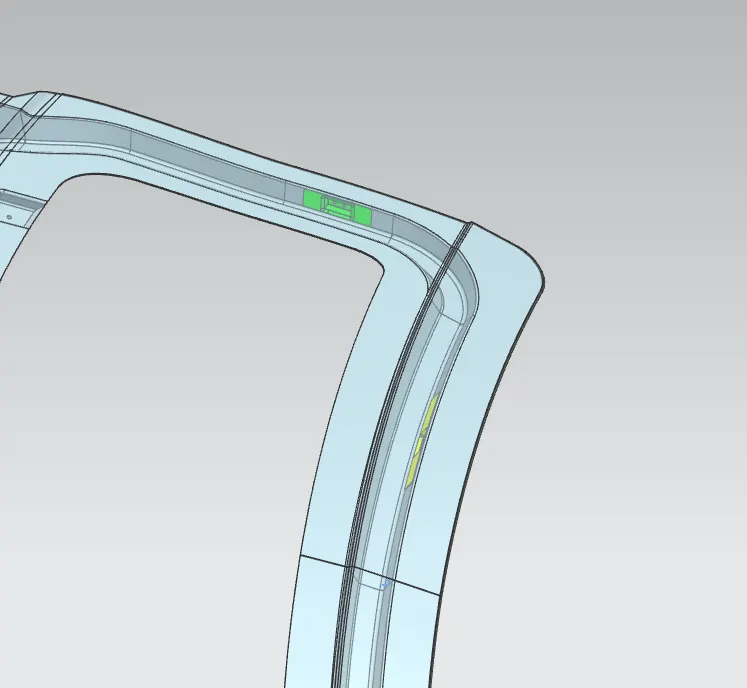
The above fig shows the position of Gasstay reinforcement in the inner panel
Wipermotor reinforcement
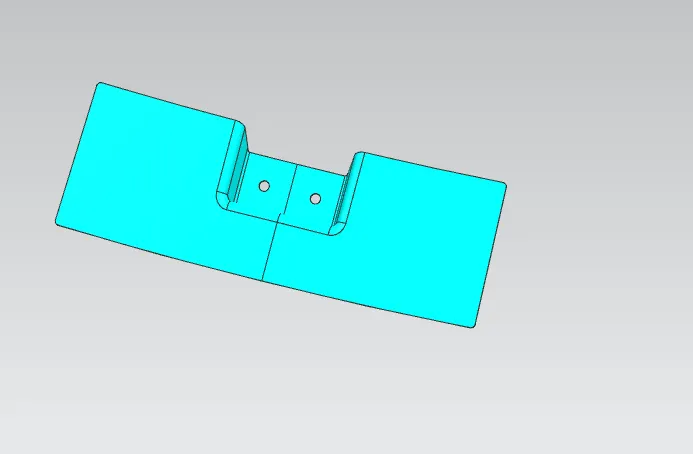
The above fig shows the reinforcement for the wipermotor
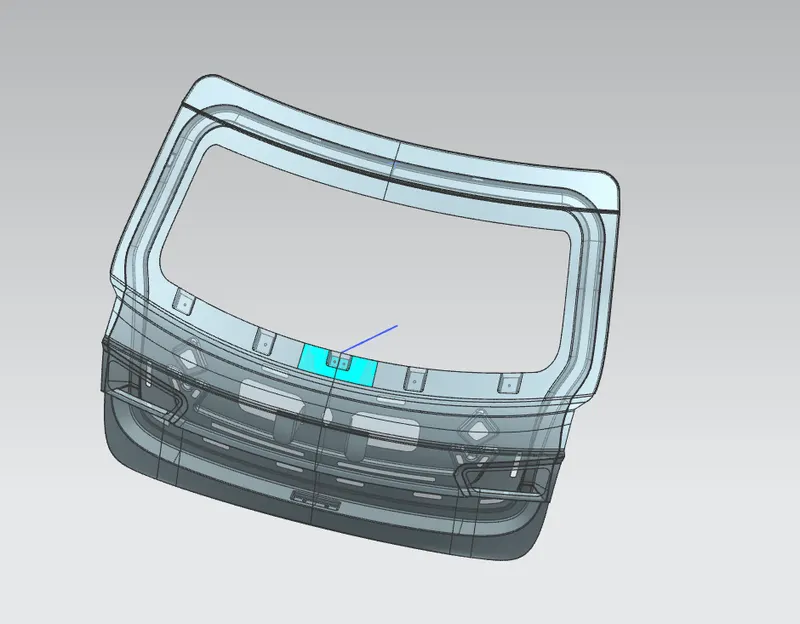
The above fig shows the position of Gasstay reinforcement in the inner panel
Latch reinforcement
To create latch reinforcement, a trajectory is cretaed from the centre of hinge axis, the point of contact of the trajectory with the bottom of the inner panel is considered as position for latch reinforcement.
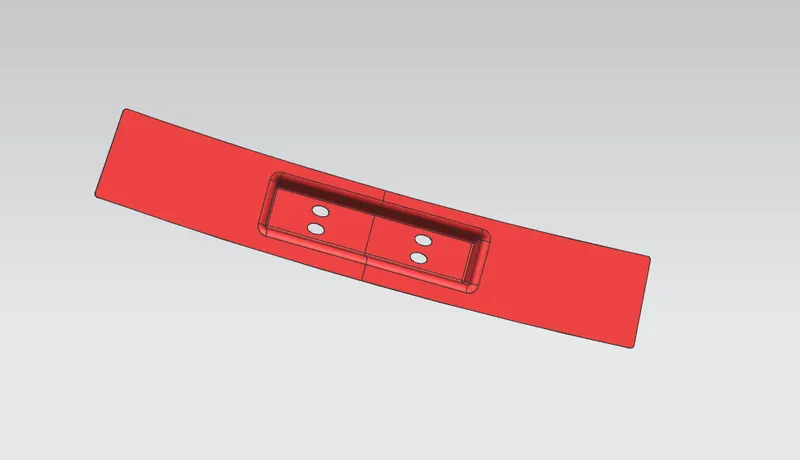
The above fig shows the reinforcement for the Latch
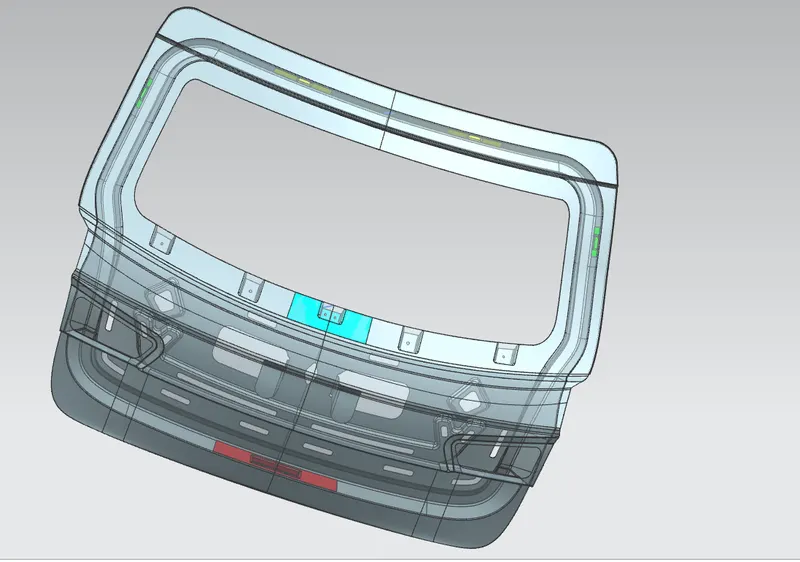
The above figure shows all the reinforcement positions on the back door inner panel
Draft analysis
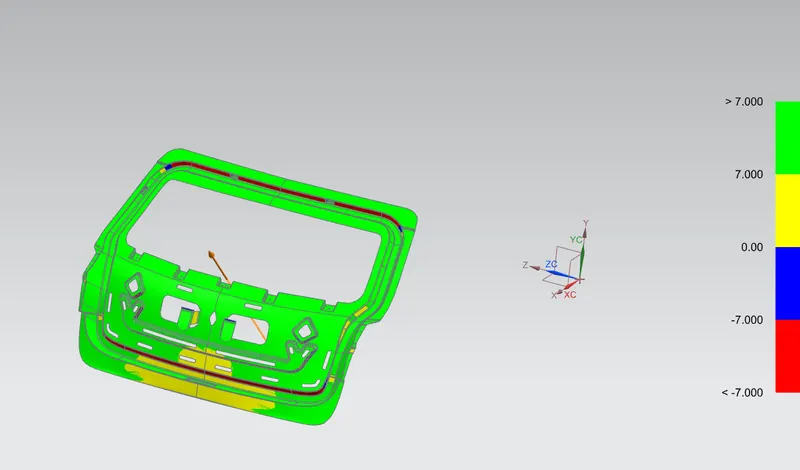
Draft analysis is performed to check for possibility of easy removal of the part after deep drawing process. The above figure shows the draft analysis of the back door inner panel.