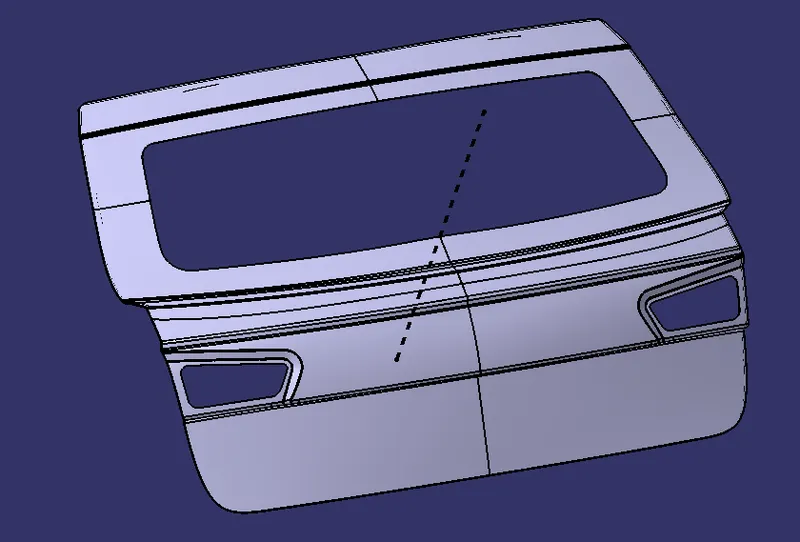
Design of backdoor
Objective:
To develop an inner panel of Back door of a car from the given Class-A surface received from the styling team and create necessary emboss and reinforcements in the inner panel design.
Explanation of a Back door:
A back door of a car provides us with the access to the trunk of a car , and this back door houses a space for tail light , wiper mounting, rear windshield space for hinges and striker.
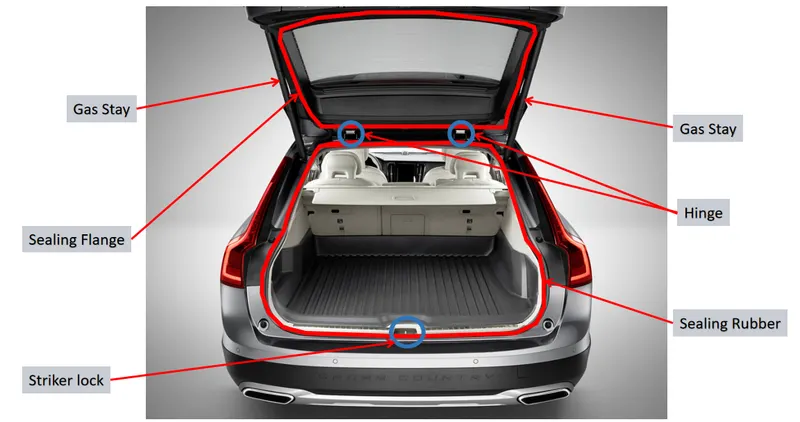
Different sheet metal forming process:
Curling
Curling is a sheet metal forming process that’s used to smooth out the otherwise sharp and rugged edges of sheet metal. Sheet metal often contains sharp edges with “burrs” after it’s initially produced. Curling is a forming process that involves de-burring sheet metal to produce smooth edges.
Bending
Another common sheet metal forming process is bending. Companies typically perform bending on sheet metal using either a brake press or similar machine press. The sheet metal is placed over a die block, at which point a punch presses down onto the sheet metal. Bending doesn’t actually create holes in sheet metal. Rather, it lives up to its namesake by “bending” sheet metal in the shape of the die.
Ironing
Sheet metal may also be ironed to achieve a uniform thickness. Most aluminum cans, for instance, are made of ironed aluminum. In its raw state, the aluminum sheet metal is too thick for beverage cans, so it’s ironed to achieve a thinner, more uniform composition. Ironing involves the use of a punch to force sheet metal between two dies.
Laser Cutting
Laser cutting has become an increasingly common sheet metal forming process in recent years. With laser cutting, sheet metal is exposed to a high-powered laser that burns holes in the metal. It’s a faster and more precise cutting method that can even be performed automatically using a computer numerically controlled (CNC) laser cutting machine.
Hydrforming
A lesser-known sheet metal forming process is hydroforming. Like deep drawing, hydroforming involves stretching the blank over a die. So, what’s the difference between hydroforming and deep drawing? The key difference between these two processes is that deep drawing requires multiple draw reductions, whereas hydroforming is performed in just one step.
Punching
Finally, punching is a sheet metal forming process that involves the use of a punch and die set to create holes in sheet metal. The sheet metal is placed between the punch and die. Next, the punch presses down and through the sheet metal to create a hole.
Procedure:
The given Class-A is initially spiltted as we can work on a sible side and symmetry it to the other side as well. So for that we split it in the centre and we extract the splitted half .
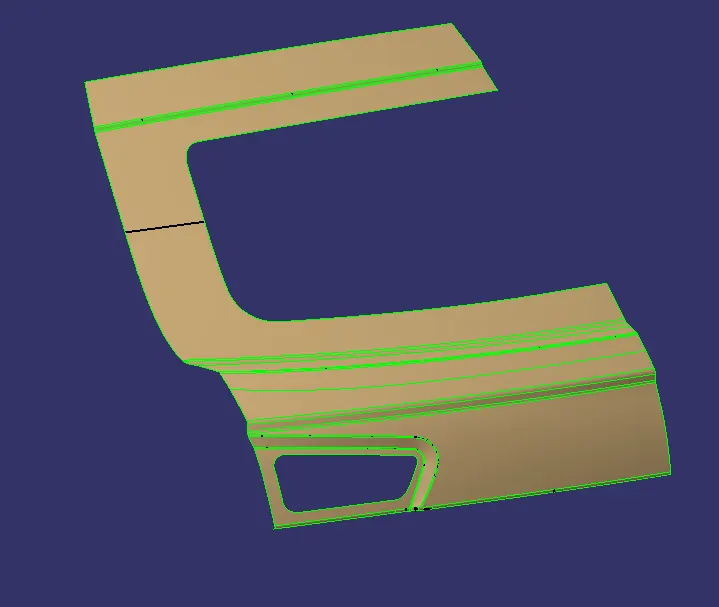
As it is shown in the below image the given Class A has multiple surface at important joints which needs to be surface corrected thus we perform surface correction operation on those parts by removing the unnecessary surfaces and extrapolating and trimming them into one surface and after all the surfaces are worked upon we join them together.
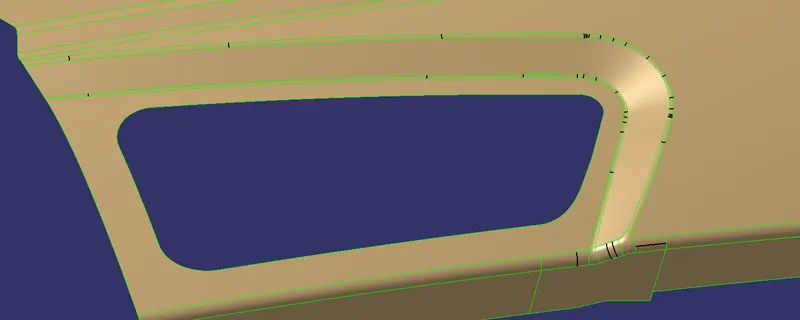
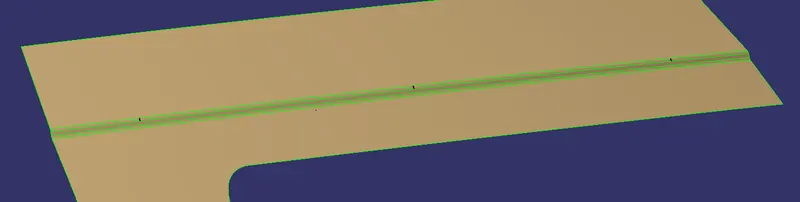
The corrrected surface is shown below.
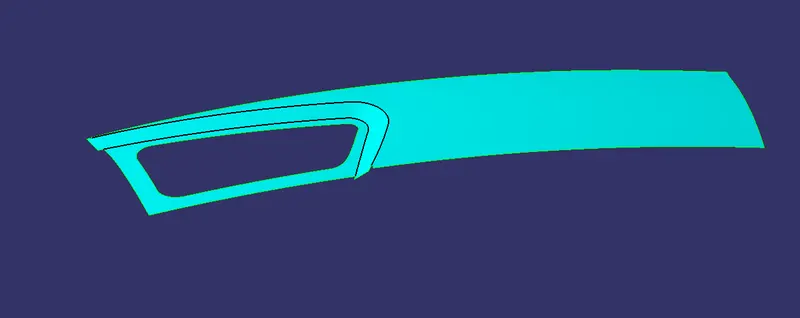
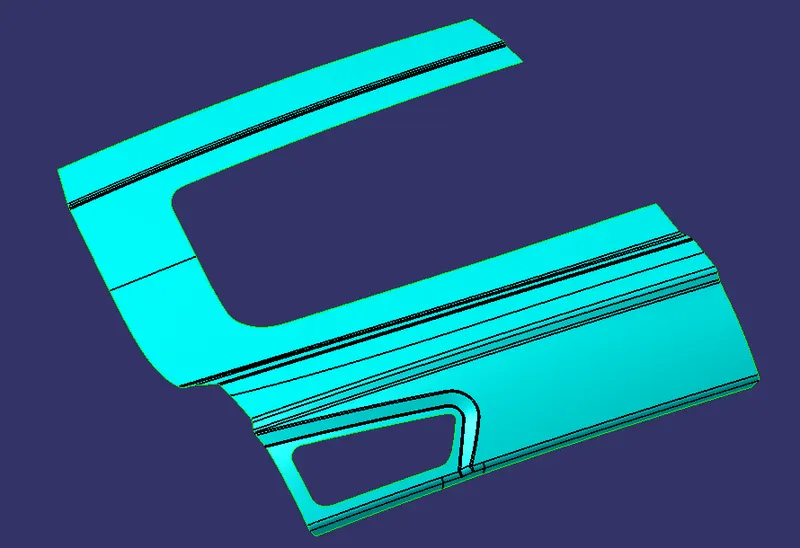
Now that we have the corrected surface we offset it to 25mm to create a the inner panel and we take the surface from inner panel as reference for creations of inner panel.
As shown below the surface is created extracting the surface from the outer panel,
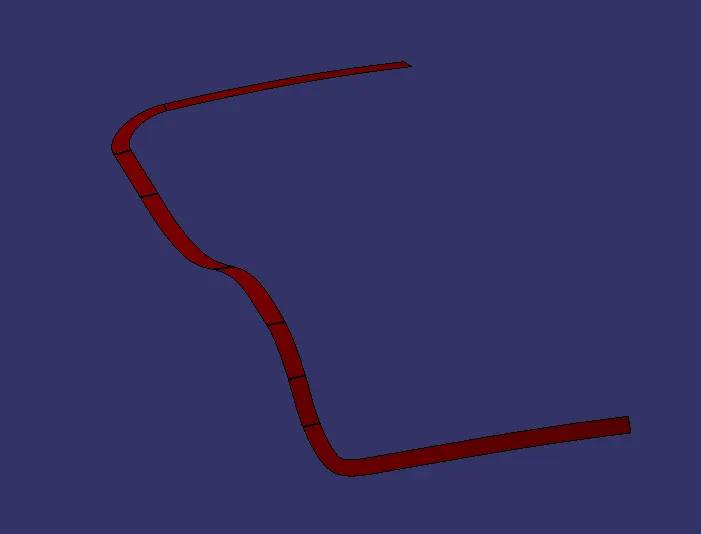
Later the above surface which is developed from the outer panel surface is trimmed with the outer panel to create surface which is shown below.
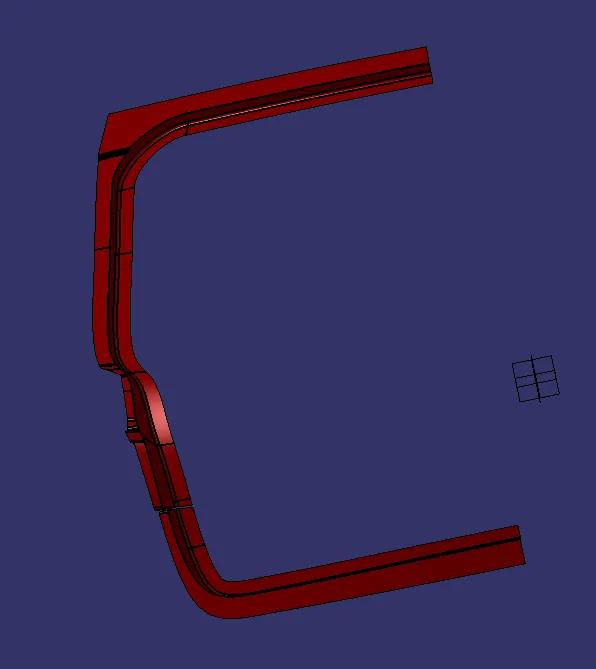
And later sweeping the inner edges of the above surface we develop a surface as shown below . This image which is shown below is the base skin for the inner panel creation. We create hinge space, striker space and taillight emboss on this very surface.
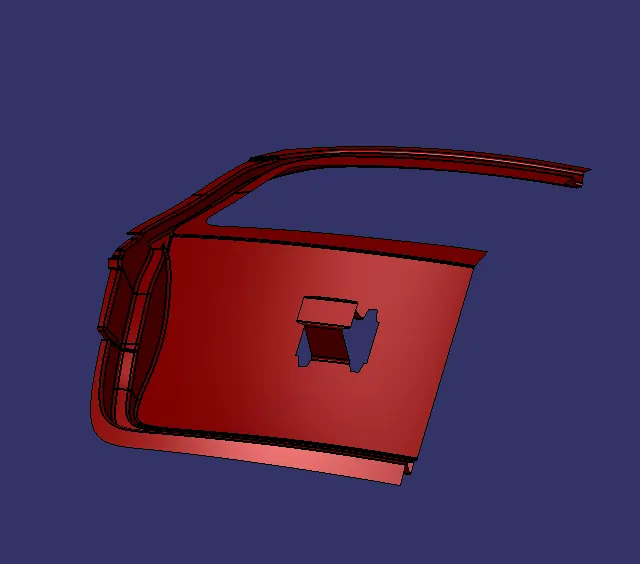
Inorder to attach the inner panel with the outer panel we need mastic points , but to get optimal structural rigidity of both surfaces after attaching we create a surface as shown above considering it will have better rigidity at the centre.
As shown below in order to accomodate tailight , gast stay hinge point and door hinge point and wiper hinge area we create embosses . And in places where reinforcements are joined to the inner panel holes are created for the screw and bolt.Inorder to attach the inner panel flange with the inner panel we use belend corner and we blend them together to make a single attached surface.
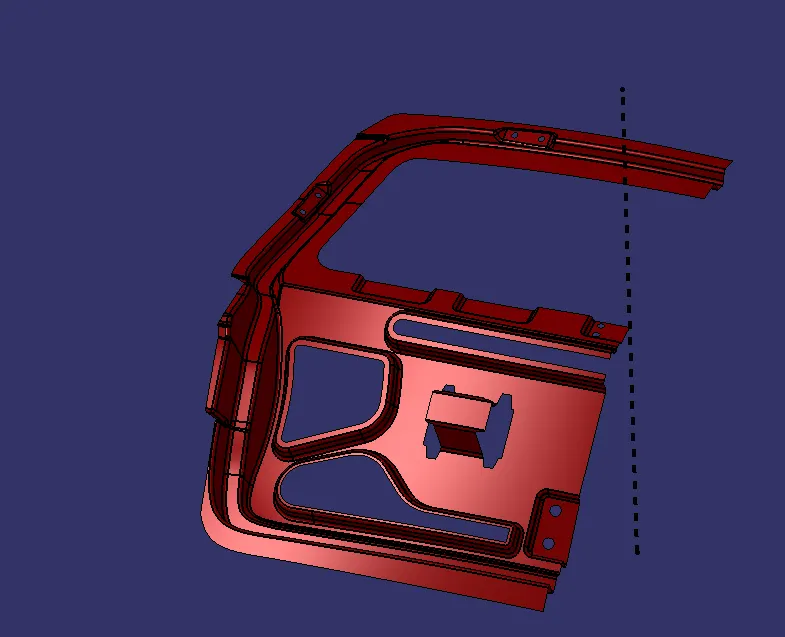
And now we symmetry this side with the other side and join the two surfaces.
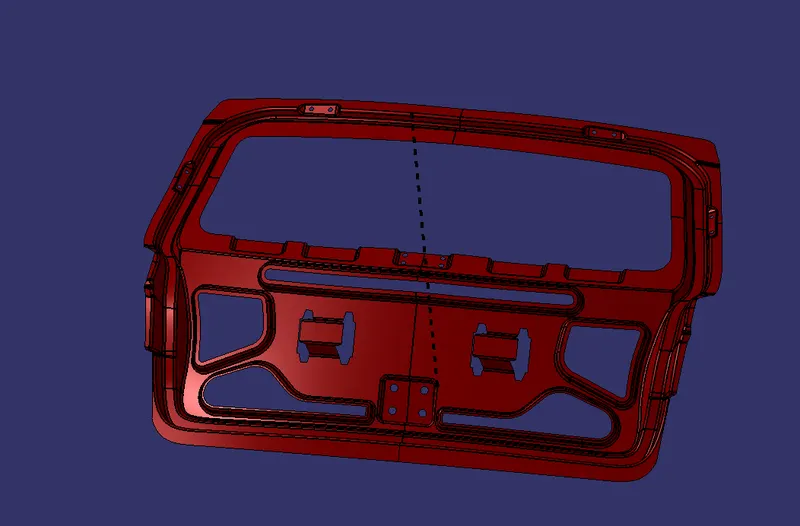
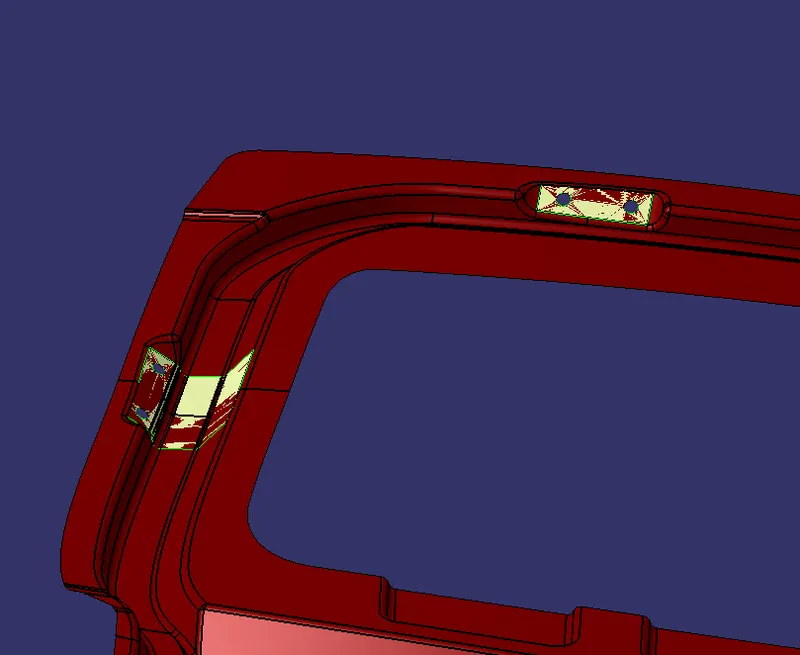
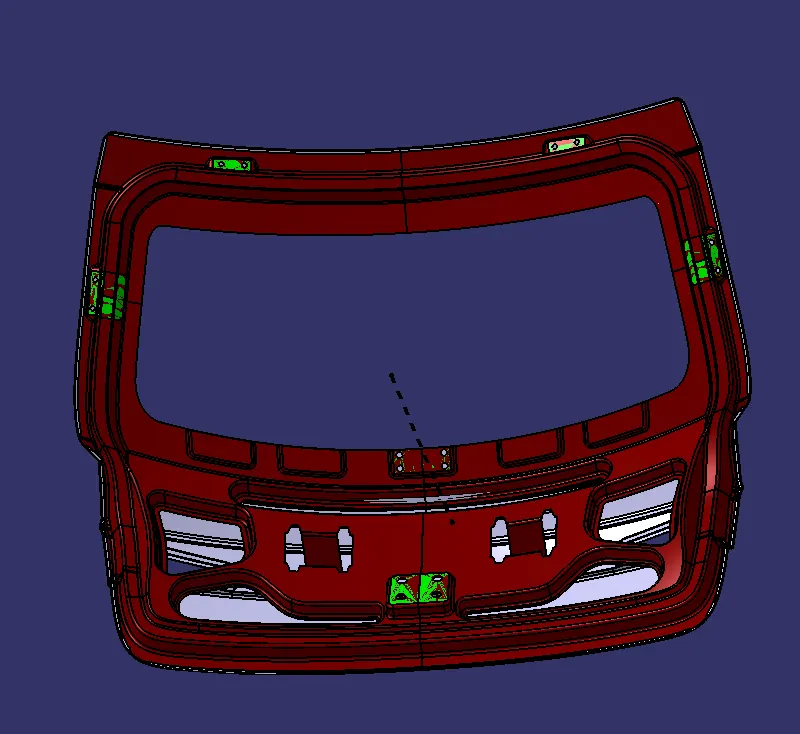
Now we extract the surfaces where the gas stay and hinges are mounted and we create reinforcements. As always we create one side and later symmetry them to the other.
 \
\
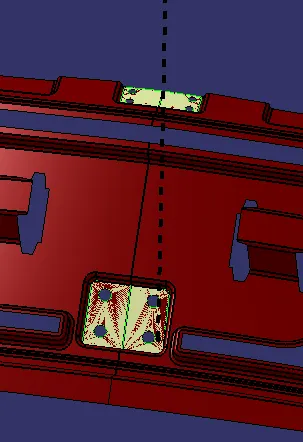
Once we have completed all the reinfrocements for hinge gas stay and striker point we thicken the surface to complete the model and ready for testing and manufacturing.
The thickness of the inner and outer panel is 0.75mm.
The thickness of reinforcements is 1.5mm.
Draft Analysis on the Inner panel:
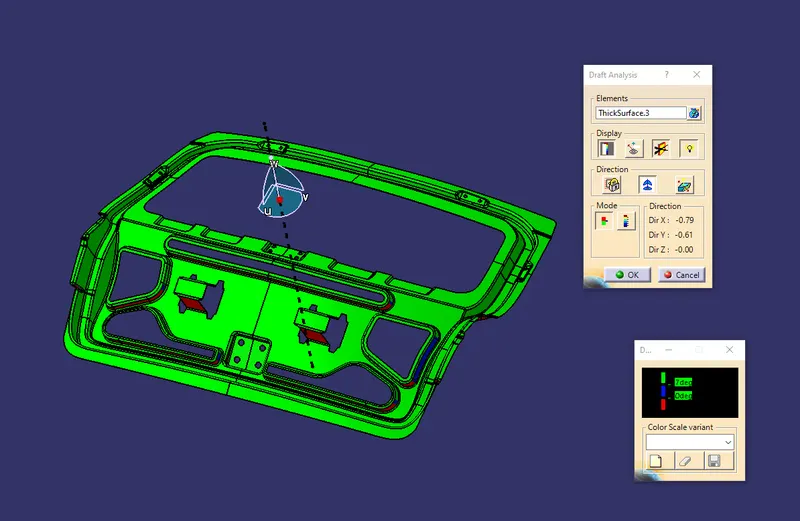
Almost entire surface is under the draftable value.
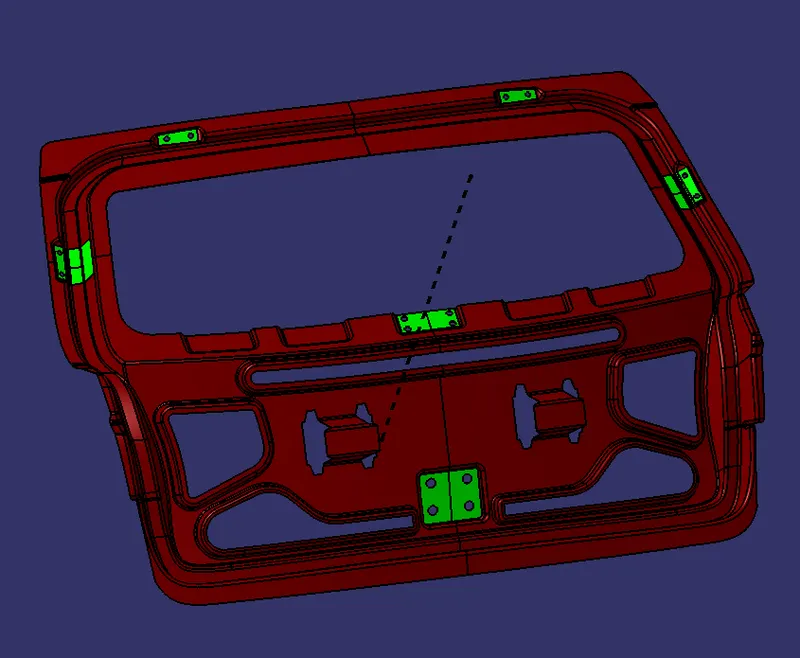
Final Thickened Parts:
Inner Panel
Outer Panel