Design of backdoor
DESIGN OF BACK DOOR
Introduction
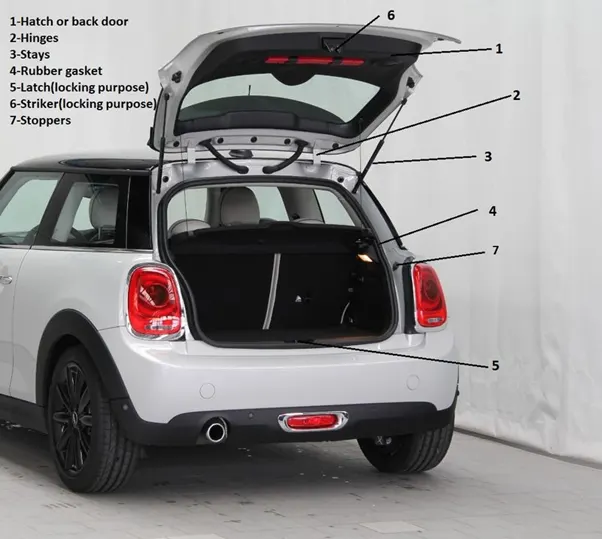
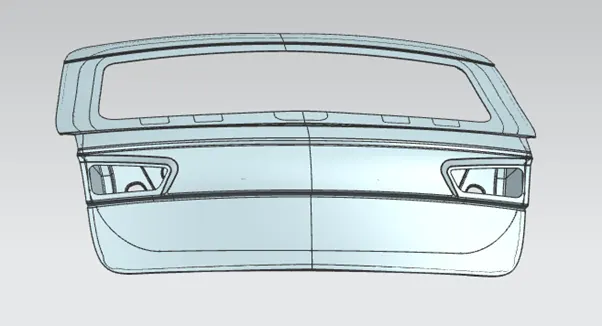
It is the is the door at the back of vehicle also called as Tail gate. Here we are going to develop car back door by following all design consideration with the given styling surface using NXCAD Tool.
Components of Back door
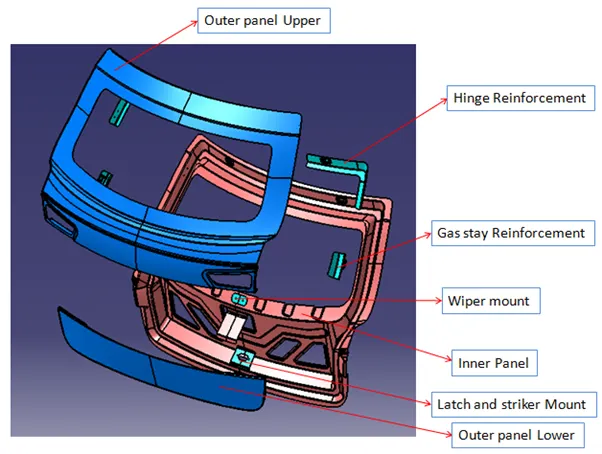
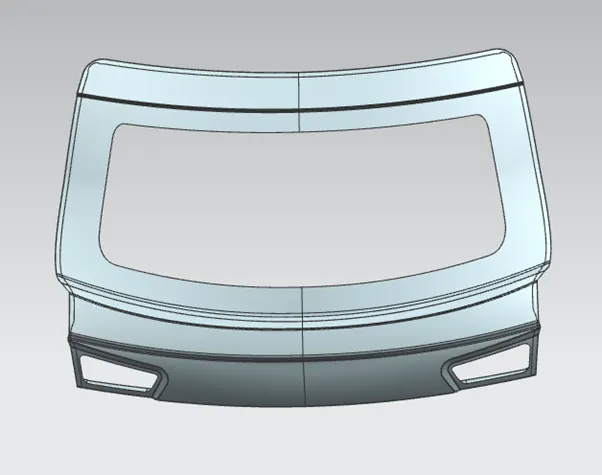
- Back door outer upper panel
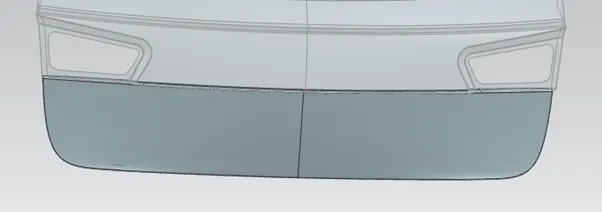
- Back door outer Lower panel
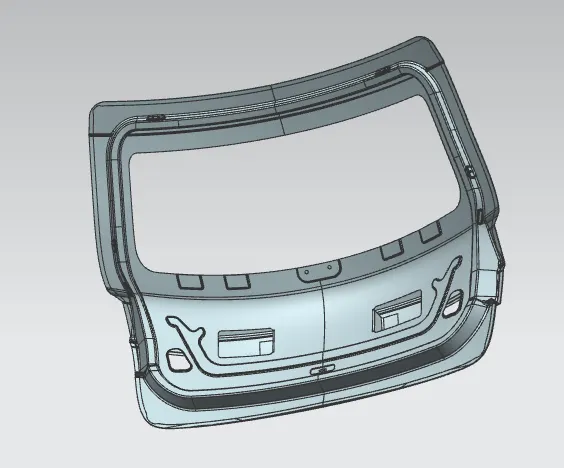
- Back door inner panel
- Hinge Reinforcement
- Gas stays Reinforcement
- Latch and striker Reinforcement
- Wiper motor Reinforcement
Material
Basically Car parts are made up of steel or aluminum based on the budget of car. As aluminum is costly compared to steel.
Using aluminum improves the strength where we can avoid reinforcement. As it is casted so we can vary the thickness of part and here we can avoid numbers of part as compared to steel.
Steel parts are stamped so we can not vary the thickness that’s why we add the reinforcement so that numbers of parts increased which increase the weight of part.
Design consideration
- Rear Visibility
- Boot space and accessibility
- Fit and clearance
- Support structure like Hinge and Gas Stays
- Mounts of Wiper motor ,Tail lamps
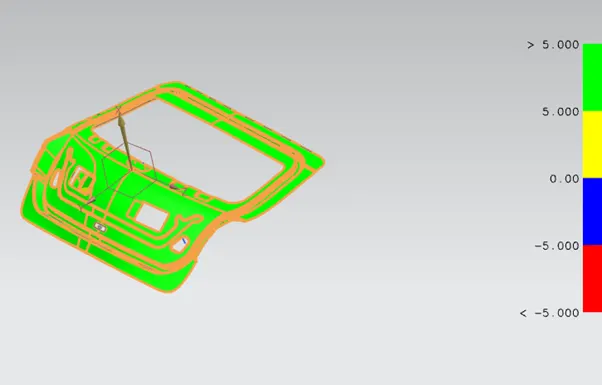
- Draft Analysis
Back door inner panel
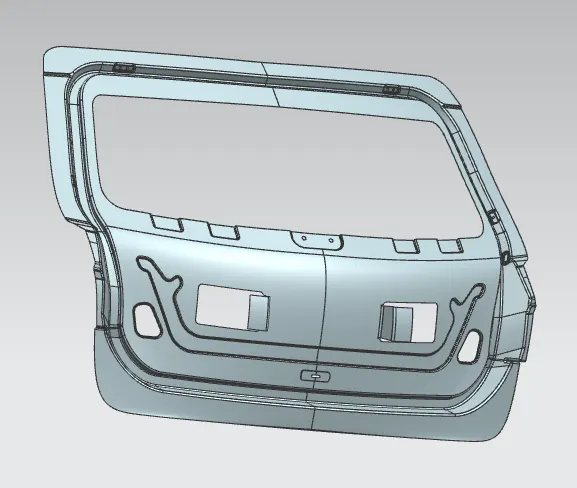
Emboss
sheet metal embossing is a stamping process for producing raised or sunken designs or relief in sheet metal.
This process can be made by means of matched male and female roller dies, or by passing sheet or a strip of metal between rolls of the desired pattern.
It is often combined with Foil Stamping to create a shiny, 3D effect.
Metal sheet is drawn through the male and female roller dies, producing a pattern or design on the metal sheet.
Depending on the roller dies used, different patterns can be produced on the metal sheet.
The pressure and a combination of heat actually “irons” while raising the level of the image higher than the substrate to make it smooth.
The term “impressing” refers to an image lowered into the surface of a material, in distinction to an image raised out of the surface of a material.
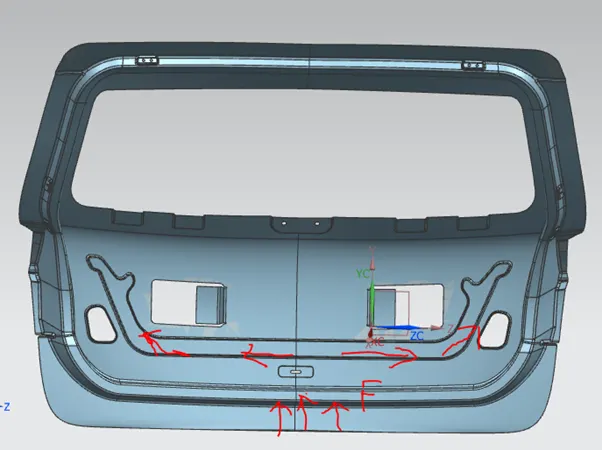
Forced Distribution
When the car hit at rear end, the force which acted should be react outside. The v or Y emboss which helps to move the force to outer end.
Hinge Emboss & Reinforcement
Hinges allows doors to open and close. It is a mechanical bearing that connects two solid.
Objects and allowing a limited angle for rotation between them.
The emboss and reinforcement are given to strengthen the while punching not to tear the sheet.
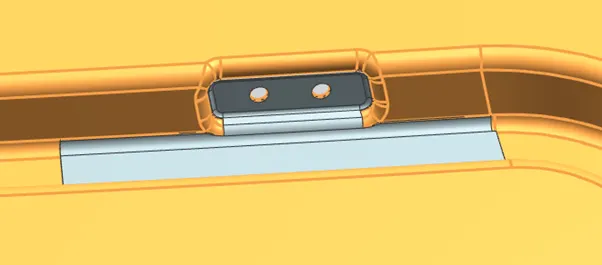
Gas Stays emboss and reinforcement
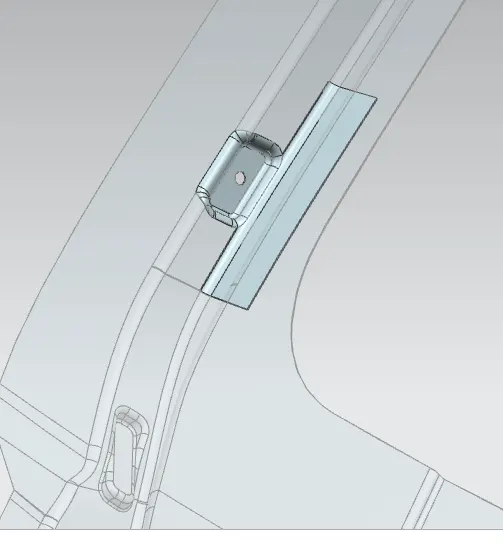
It is used to lift up the back door.
Types
- Manual system
- Power lift system
Latch sand striker reinforcement
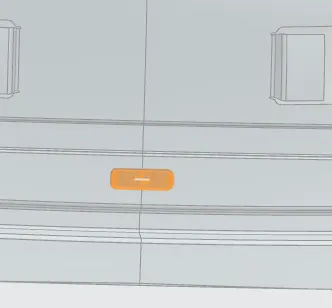
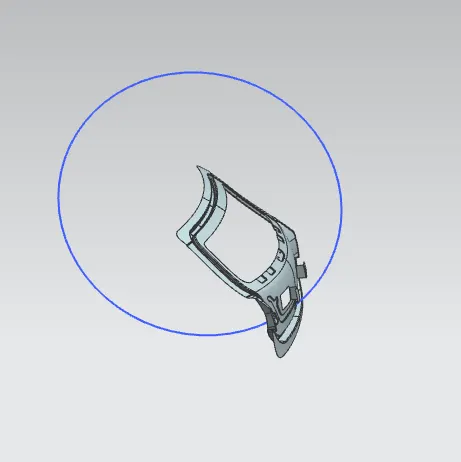
It is used to lock the back door and the position of both should be perpendicular to each other.
Here we draw a circle by using the center of hinge axis and place the latch and striker perpendicular to the circle.
\
Wiper motor emboss and Reinforcement
Here a small electric motor is mounted used to clean wind shield glass for clear visibility
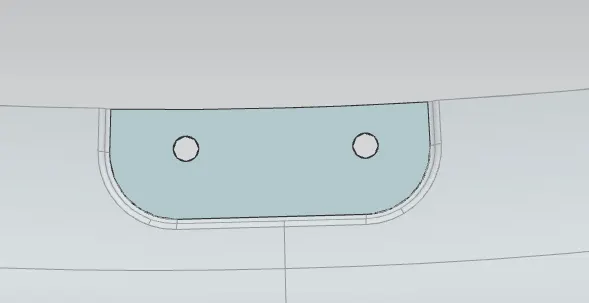
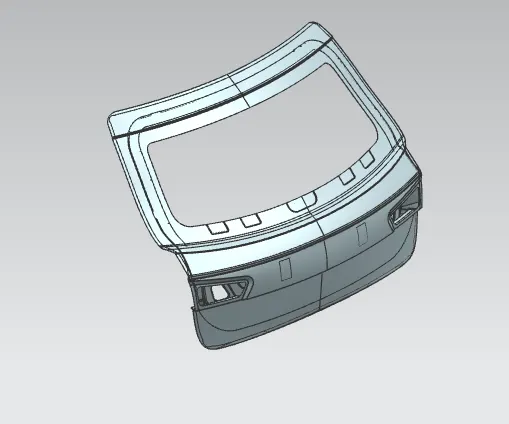
Back door outer upper panel
Back door outer Lower panel
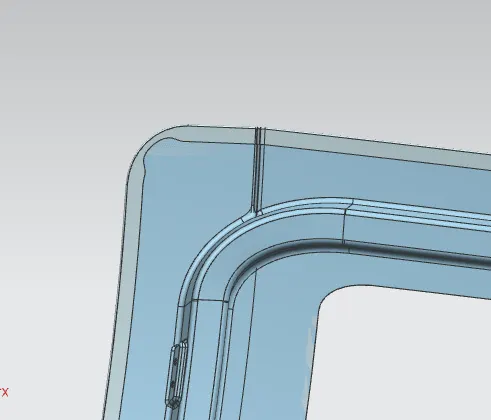
Hemming
Hemming is a forming operation in which the edges of the sheet are folded or folded over another part in order to achieve a tight fit. Normally hemming operations are used to connect parts together, to improve the appearance of a part and to reinforce part edges.
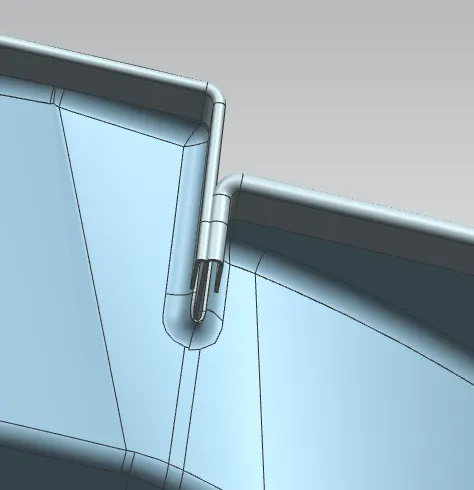
Corner Relief
It control sheet metal behavior to prevent unwanted deformation during hemming.
Draft analysis
Model views
Conclusion
We designed the back door with all design standard and consideration.