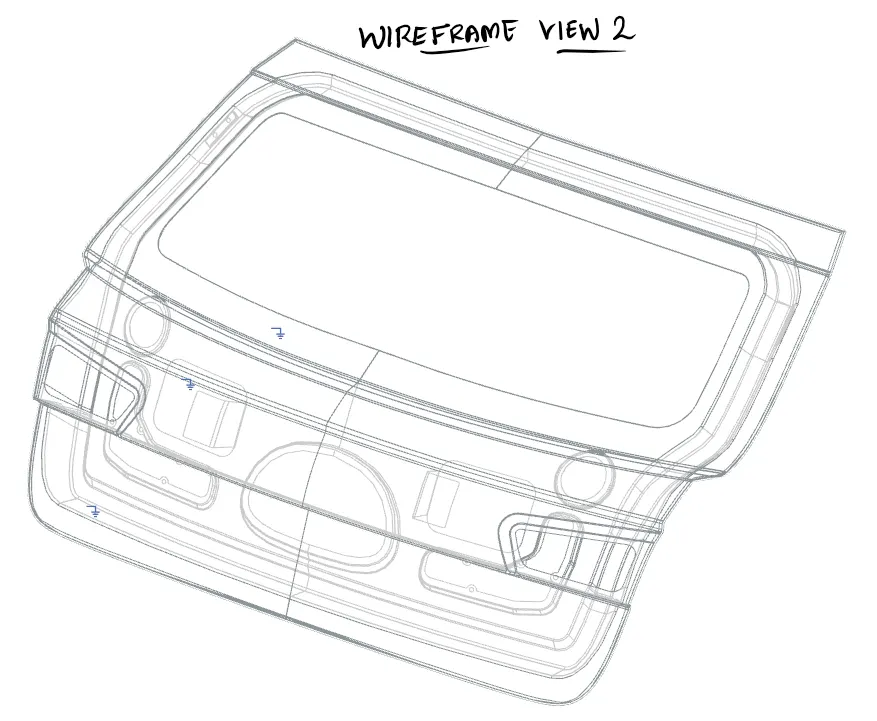
Design of backdoor
Automotive Backdoor Design
The concept of backdoor:
The automotive backdoor, or the rear door or tailgate is used to access the cargo or boot area of the automotive. The backdoor is designed similar to other doors but it includes additional constraints like number plate placement, wiper motor installation, tail lamp access, rear sensors, latch and striker mechanism etc. There are different variations of automotive backdoor. The most common one is top mounted backdoor, where its hinges are mounted on the top side of the vehicle.
Ø Top-Mounted Doors:
In vehicles with top-mounted doors, the backdoor is hinged at the top, which means it swings upward to provide access to the cargo area. This design is commonly found in hatchback cars and SUVs. Top-mounted doors are also known as "liftgates" or "hatchbacks."
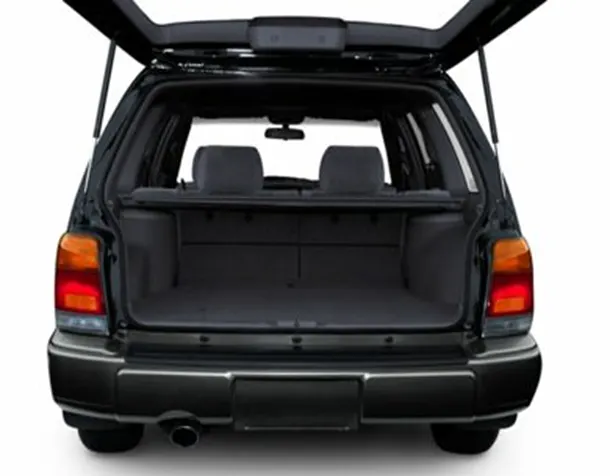
Side-Mounted Doors:
Side-mounted doors have hinges positioned on one side, typically on the left or right side of the vehicle. These doors swing open from the side to allow access to the cargo area. Side-mounted doors are common in some delivery vans and utility vehicles.
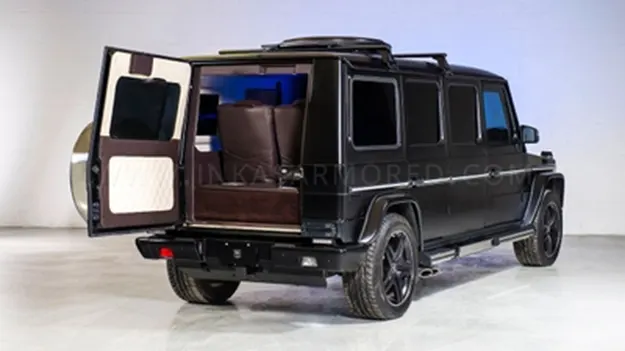
Ø Bottom Type (Tailgate):
A bottom-type backdoor, commonly known as a "tailgate," has its hinges positioned at the bottom. The tailgate swings downward to provide access to the cargo area. Pickup trucks and some SUVs use tailgates to facilitate loading and unloading of cargo. Tailgates are particularly useful for carrying large or heavy items.
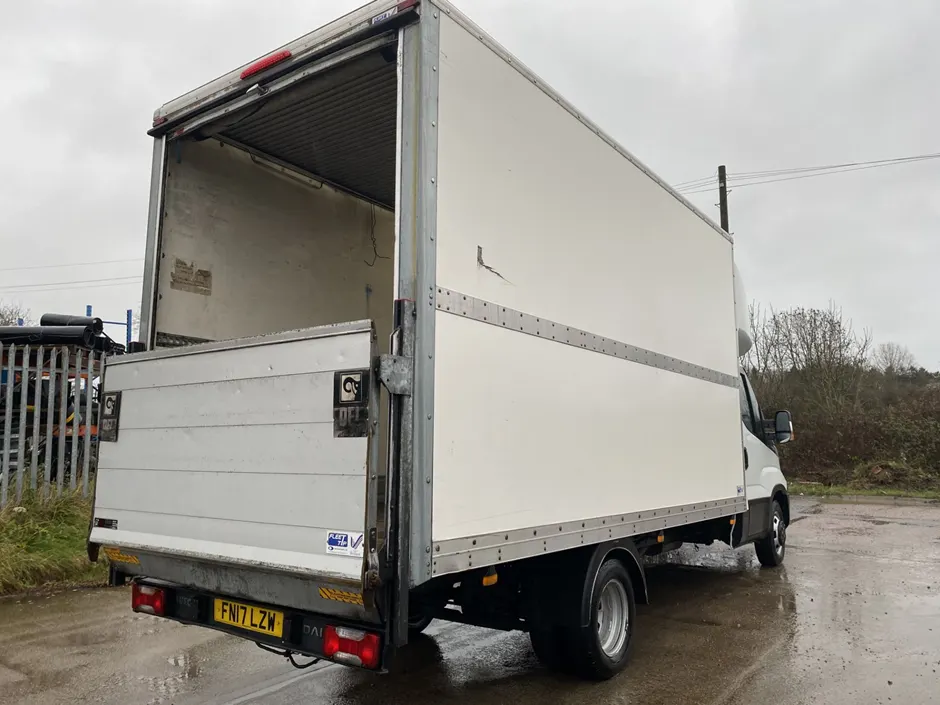
The functionalities of backdoor:
Other than the access to cargo area the backdoor offers other functionalities too, such as;
Ø Passenger Entry/Exit: In vehicles like SUVs and crossovers, the rear backdoors also serve as an entry and exit point for passengers in the back seats.
Ø Versatile Loading: Backdoors can be designed to allow for versatile loading options. Some vehicles offer split-fold rear seats and flexible cargo configurations, enabling larger items to be transported with ease.
Ø Security and Privacy: Backdoors can be used to secure the cargo area, protecting it from theft and the elements. Sedan-style backdoors with a trunk provide a secure storage space for personal belongings.
Ø Power Features: Some backdoors are equipped with power-operated features, like power liftgates and power-closing mechanisms, which add convenience for users and can be operated remotely
Ø Visibility: Rear doors may include windows, which offer improved rearward visibility for the driver and passengers. Rearview cameras and sensors may also be integrated into the backdoor for safety.
Ø Aesthetic Considerations: Backdoors are a significant part of a vehicle's exterior design. They contribute to the overall aesthetics of the vehicle, and the design of backdoors often complements the vehicle's style.
Developing the CAD for automotive backdoor:
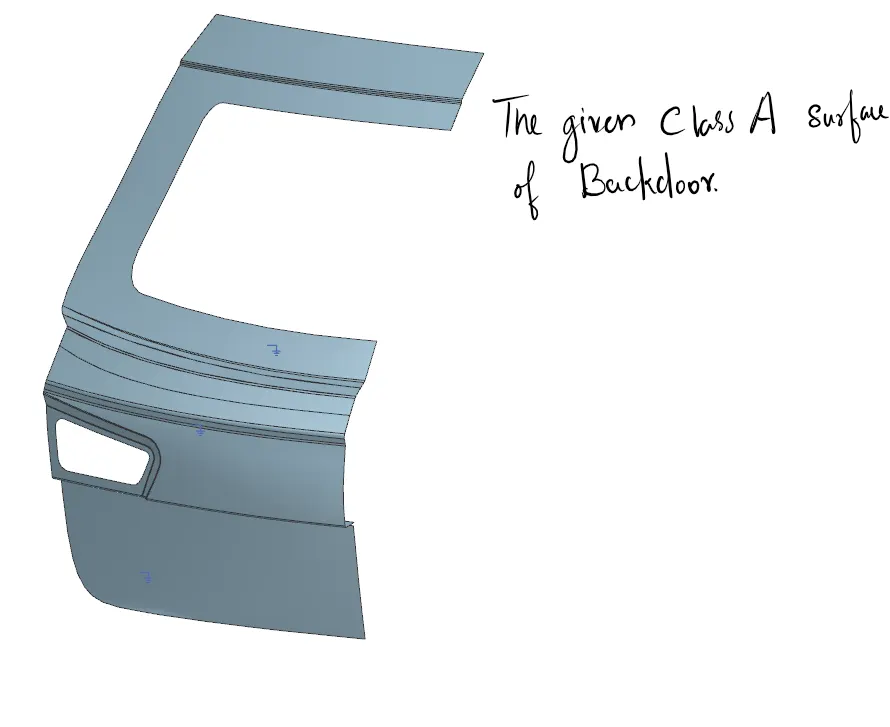
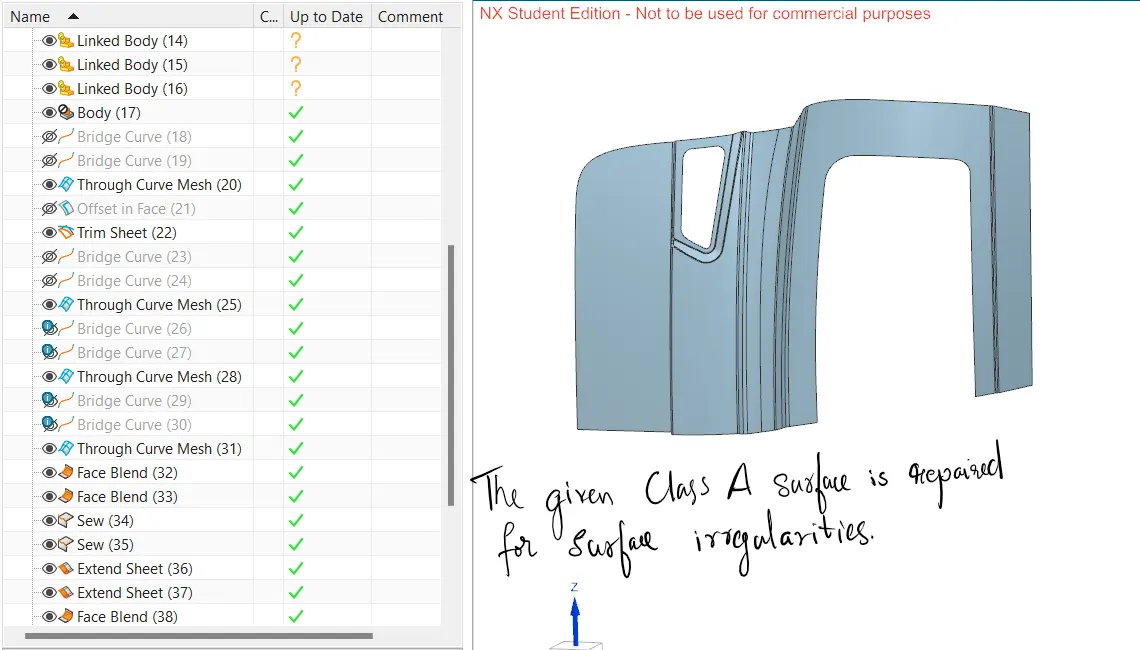
The CAD for automotive backdoor is designed using the styling surface given by the design team. Initially the Class-A surface is checked for irregularities and surface quality and is patched and repaired. After the initial Class-A modification, it is then in turn used as the reference for developing further components for the sheet metal work.
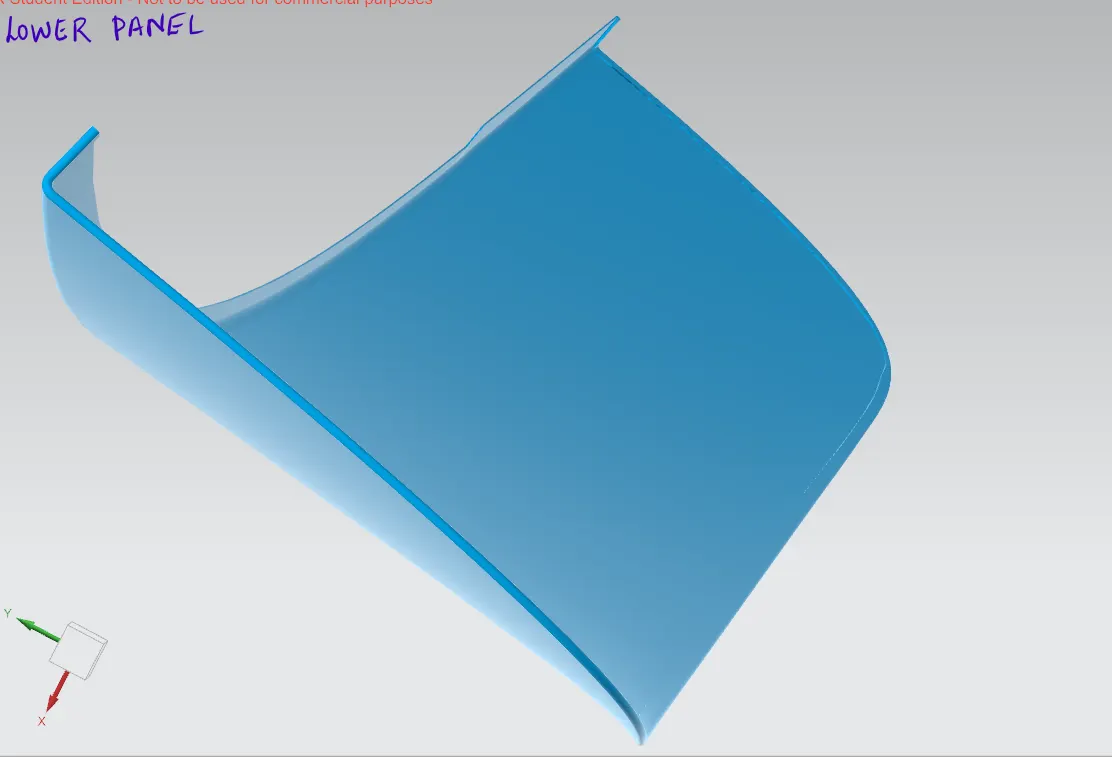
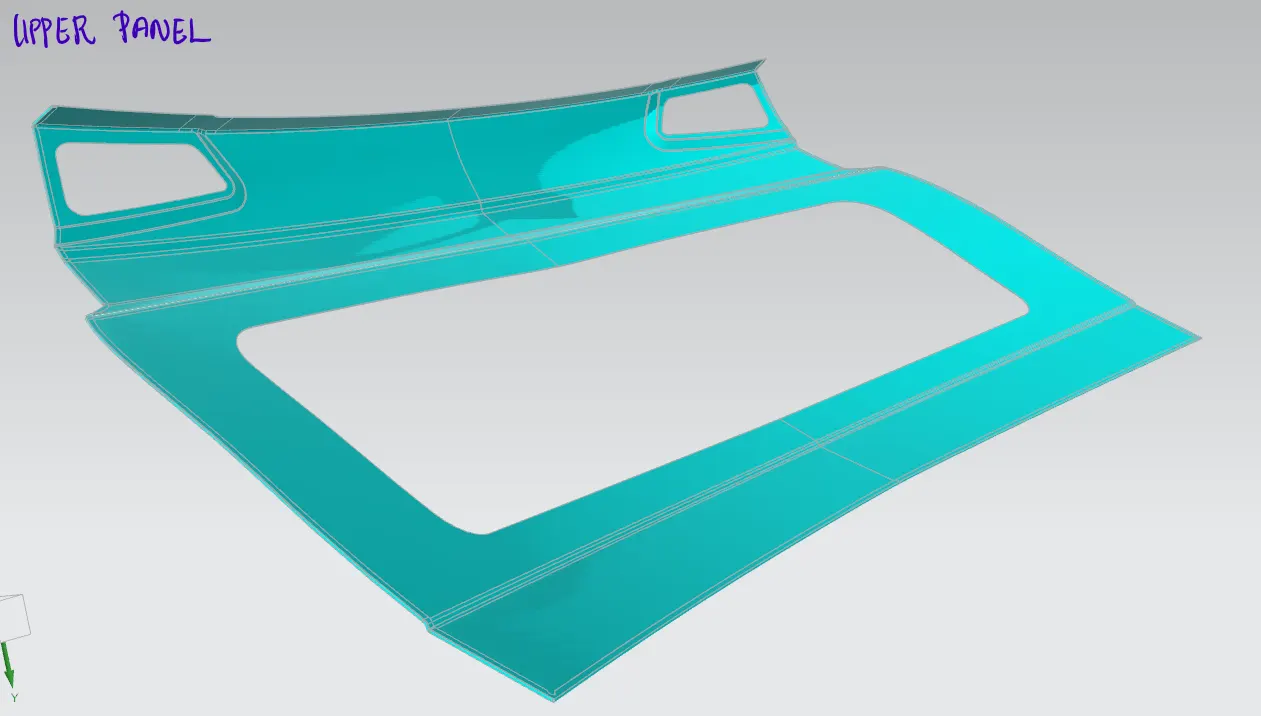
The given Class-A is extracted into two parts such that there is an upper and lower component. Then it is assumed to be joined by spot welding internally therefore an extension is given to them where they meet.
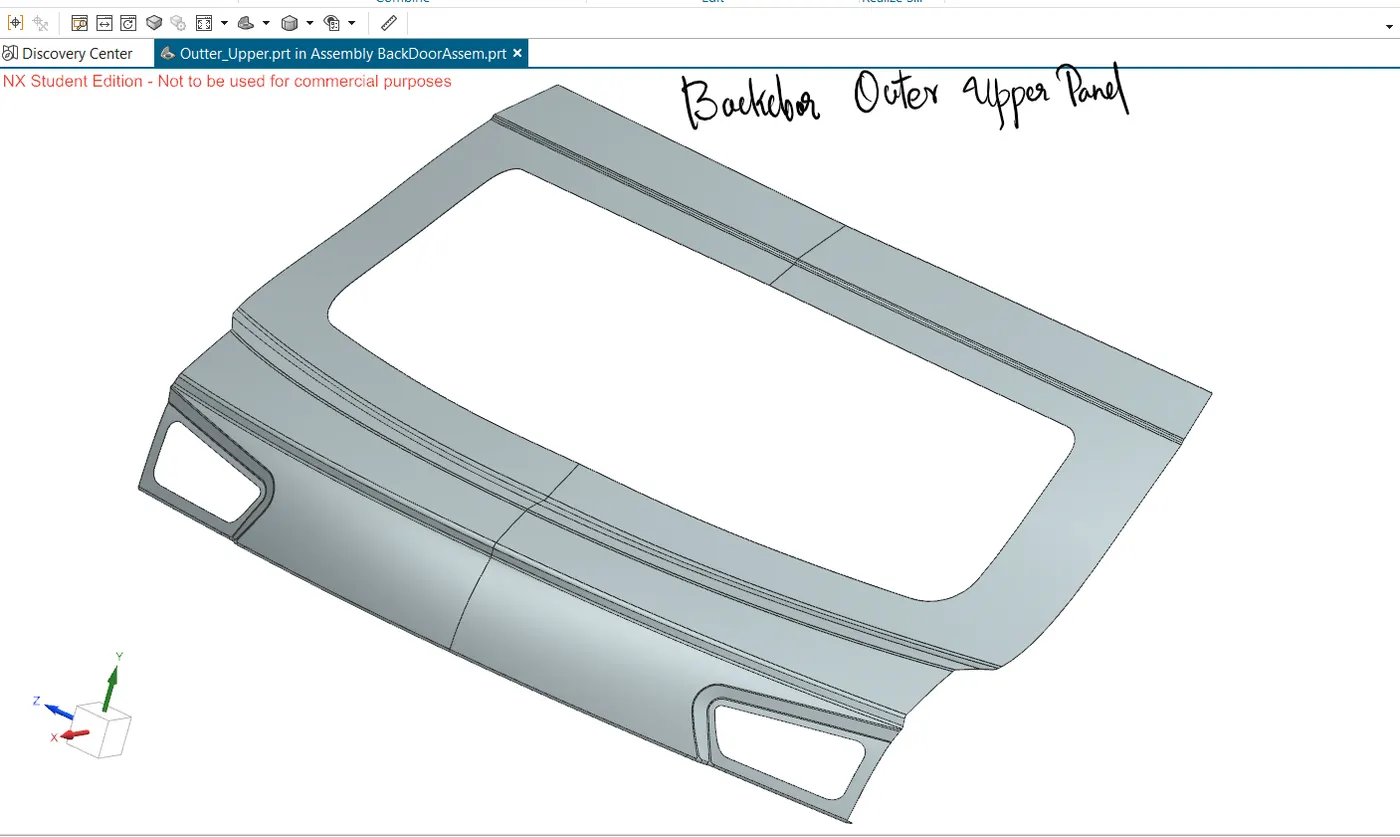
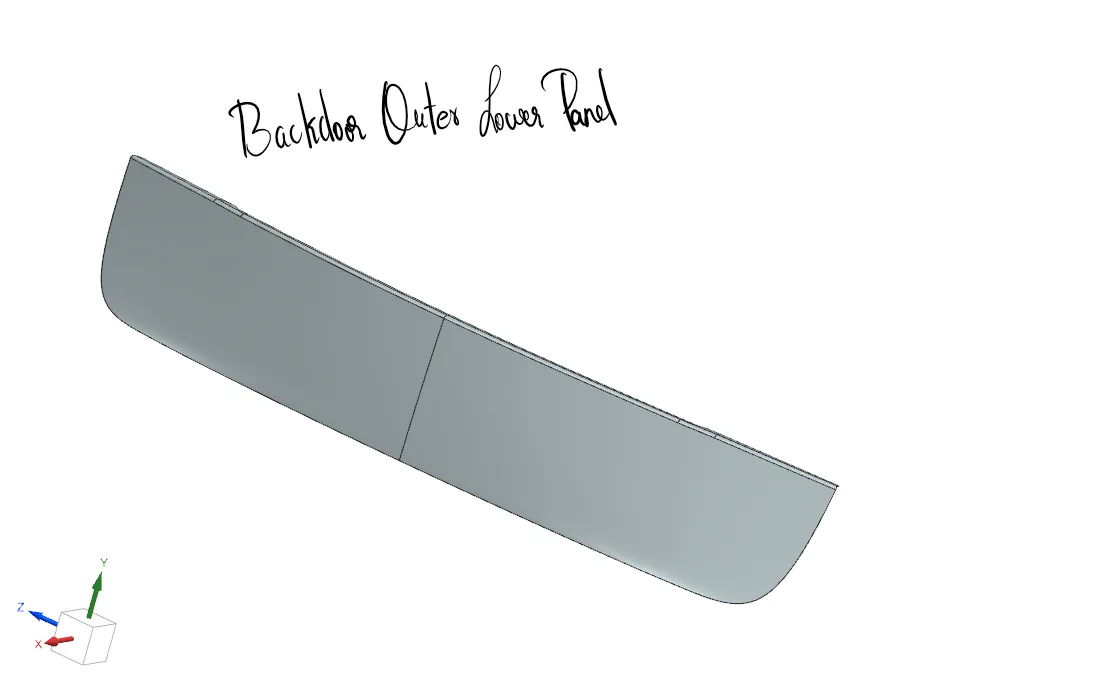
From both the lower and upper portions 8 mm extruded for spot welding surface.
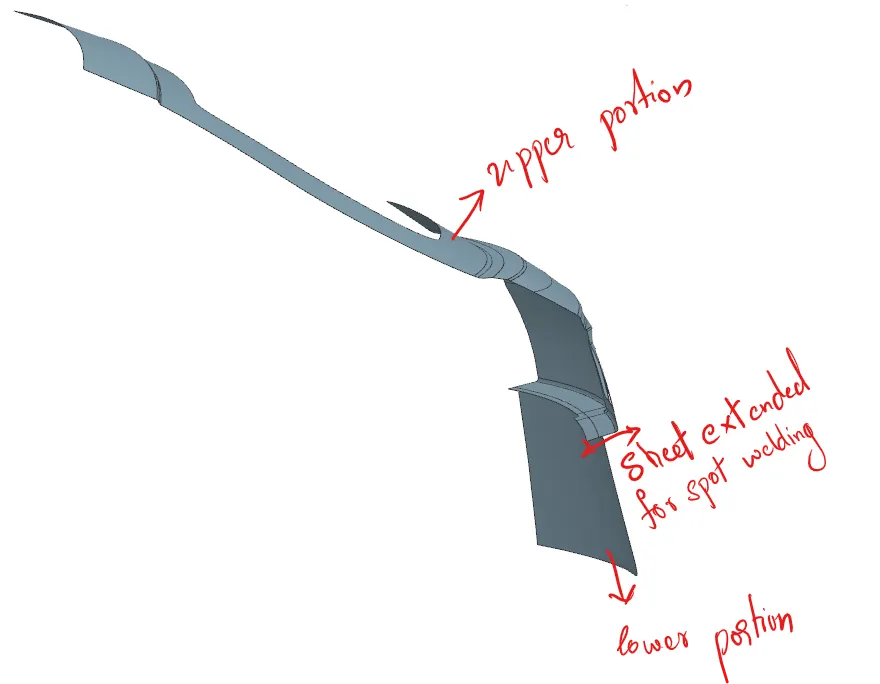
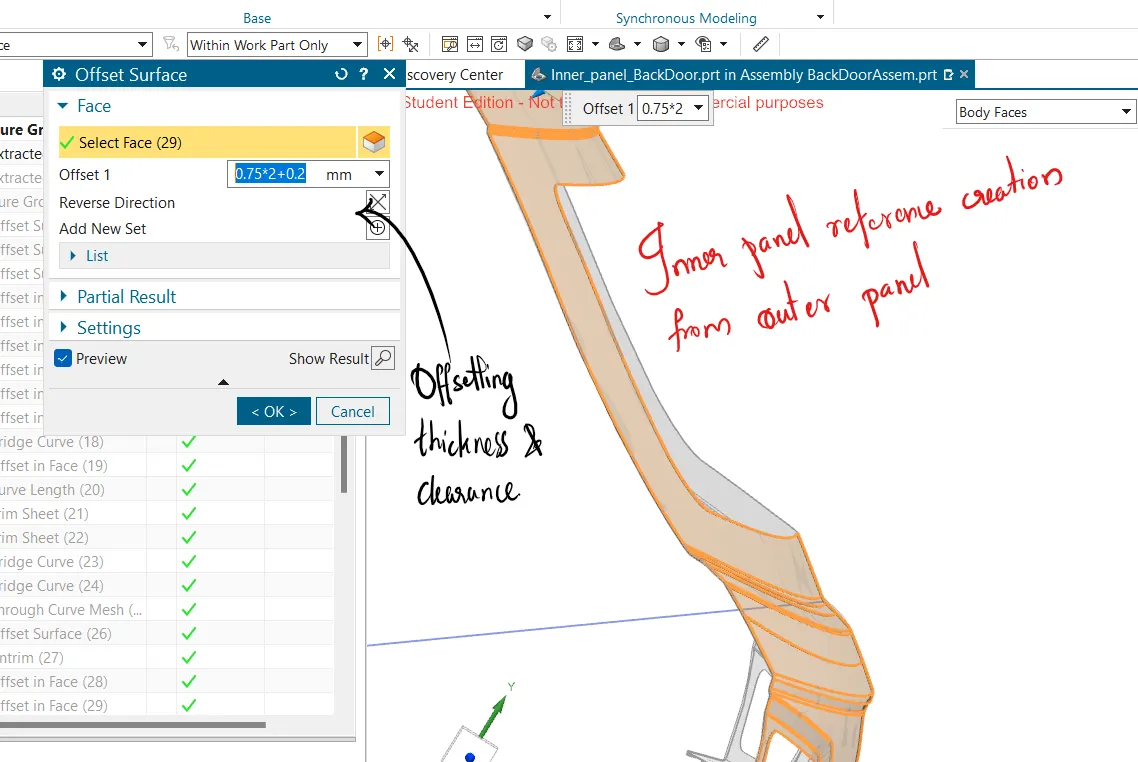
The upper and lower portion of the outer panel is extracted for reference to develop inner panel. It is extracted at distance sufficient to include smooth curvature and spacing for components.
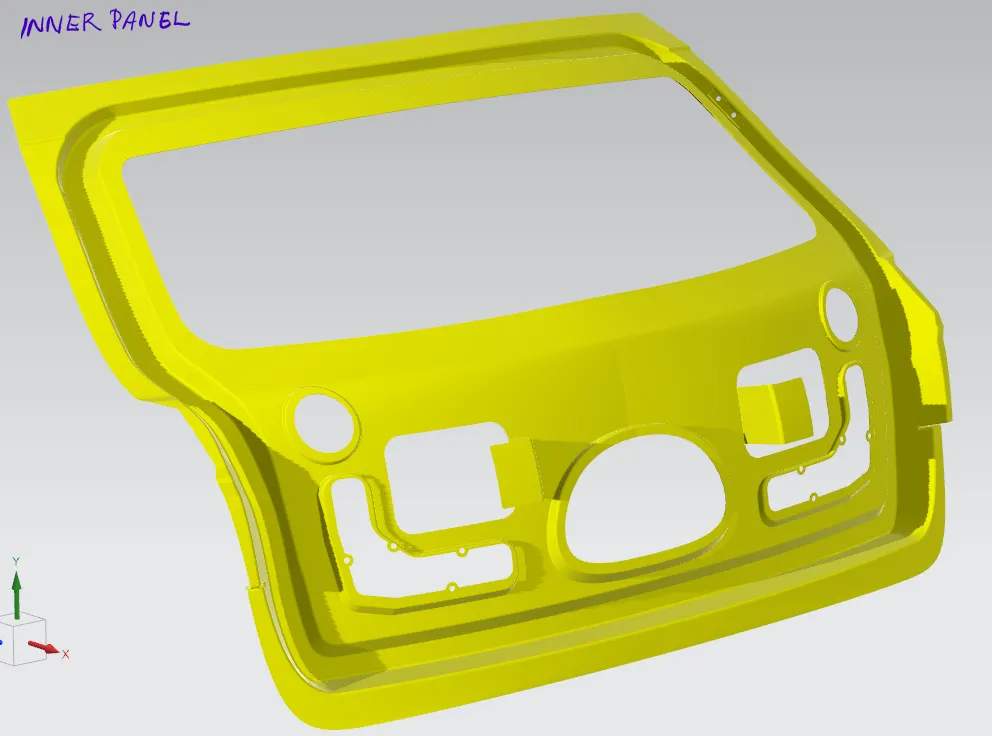
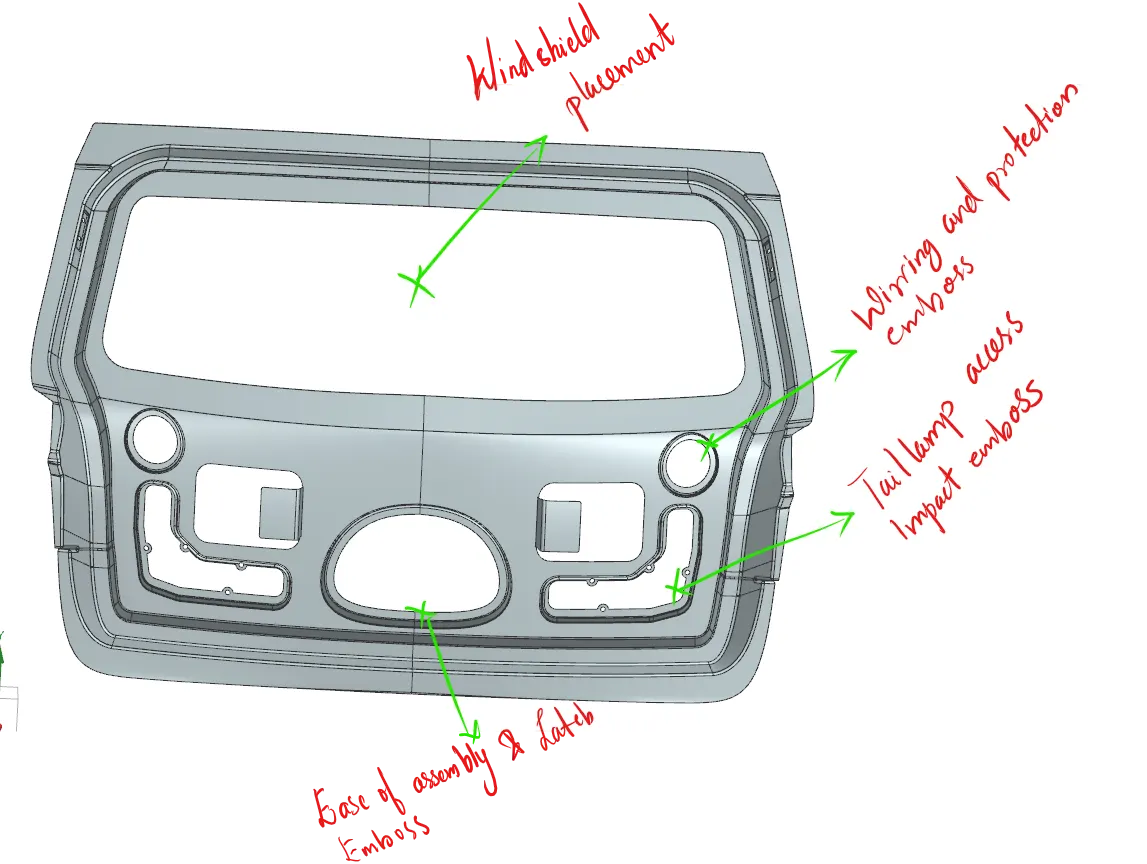
Then trims and embosses are made to accommodate wiring and assembly ease also to reduce impact effect.
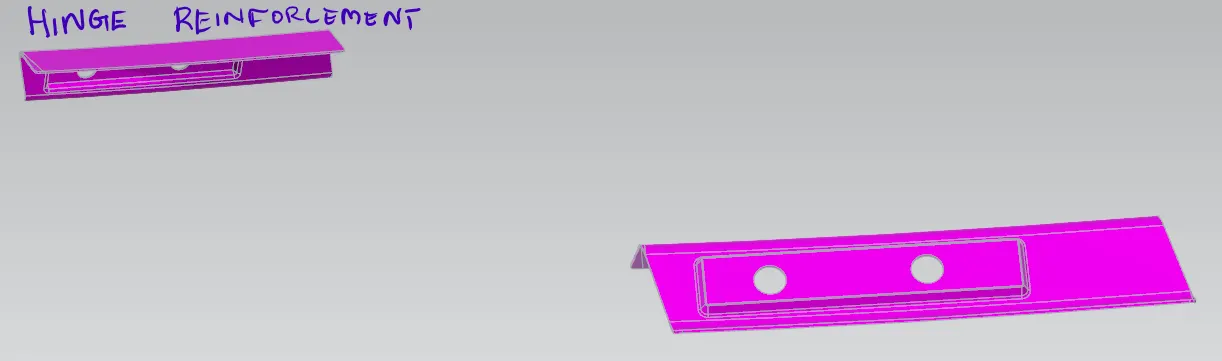
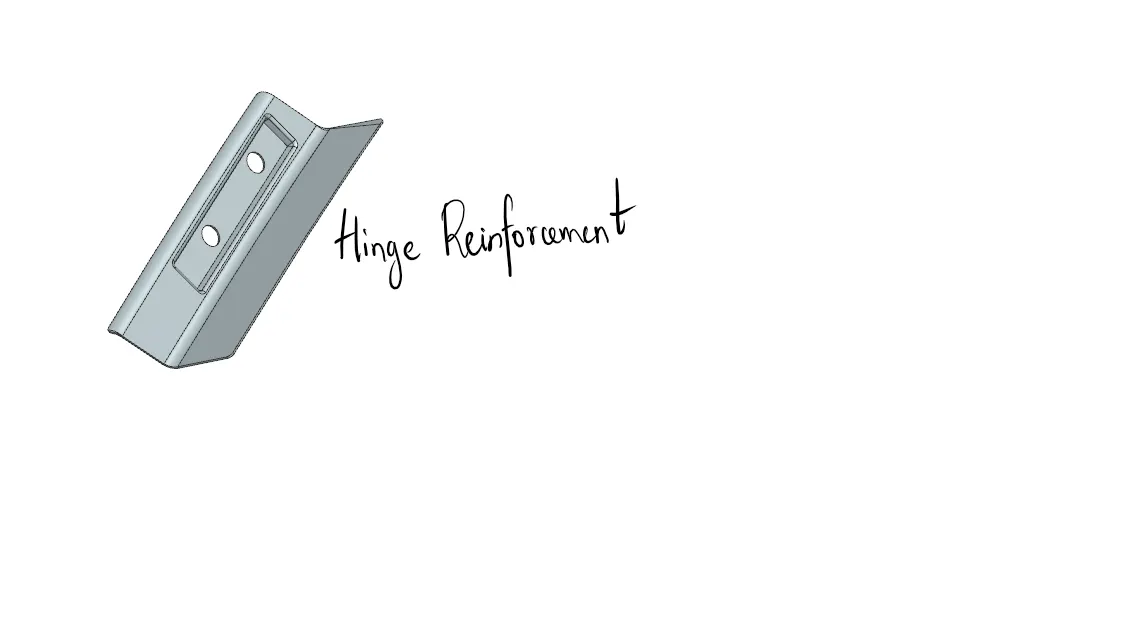
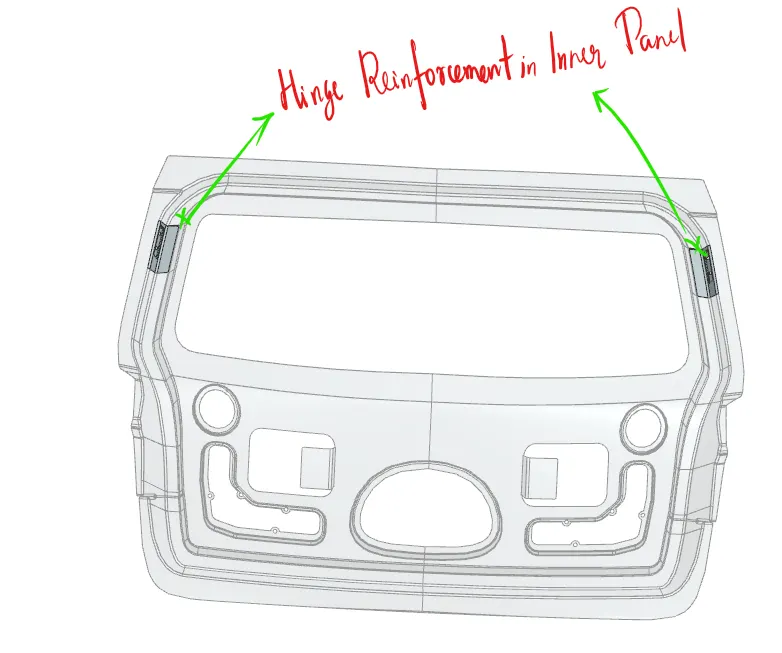
Further hinge reinforce is made and added to strengthen gas stay.
The inner panel is finalised by adding support for mastic sealants (5 mm clearance is needed) and making grooves for the joining portion of upper and lower panels.
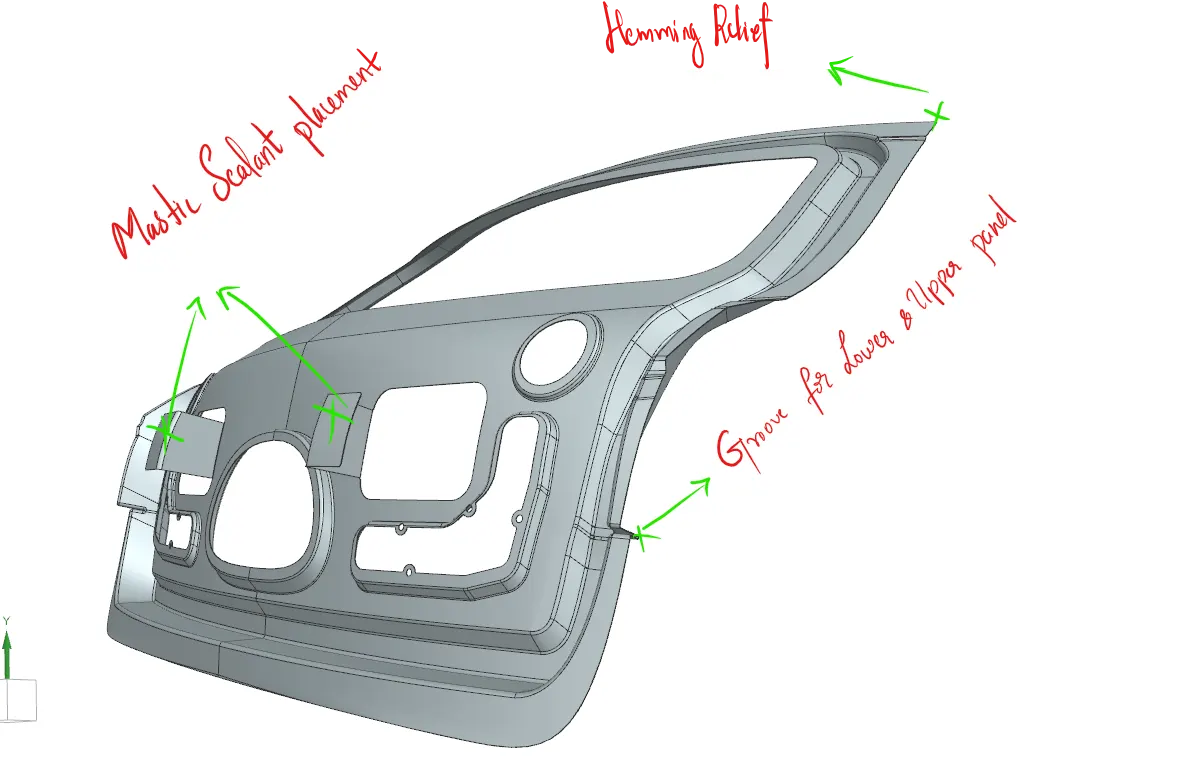
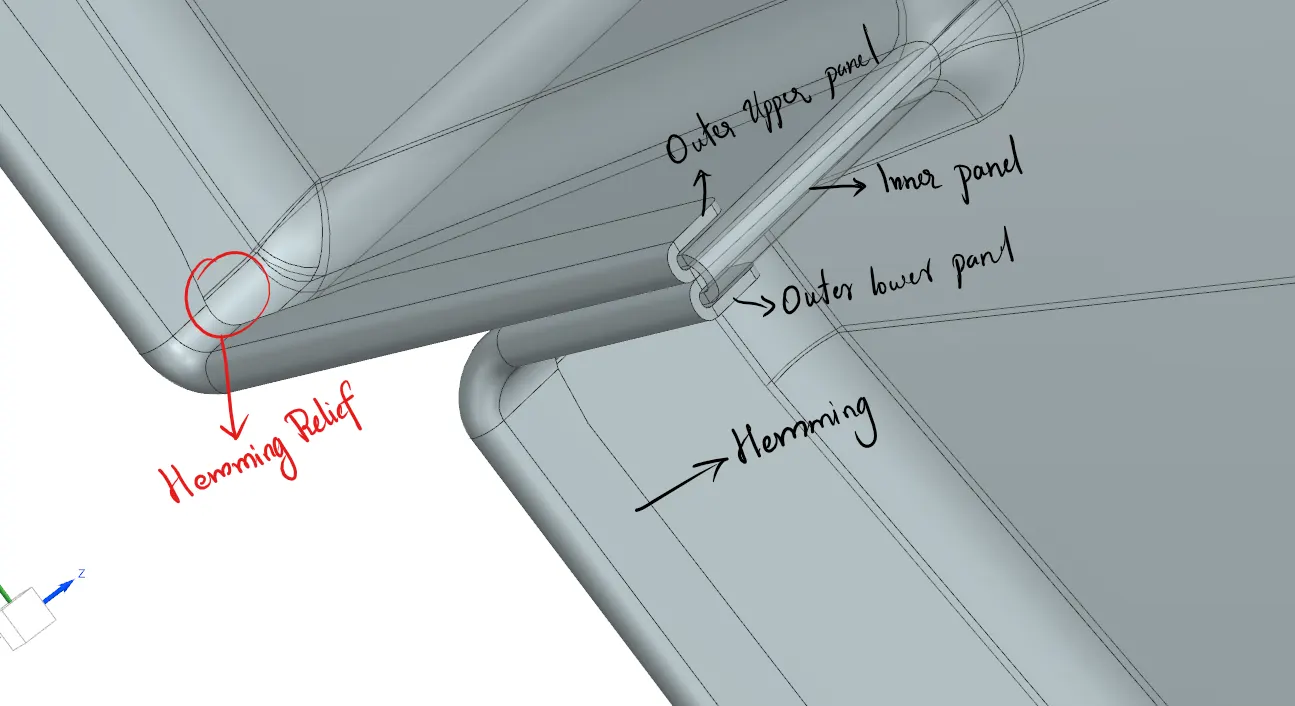
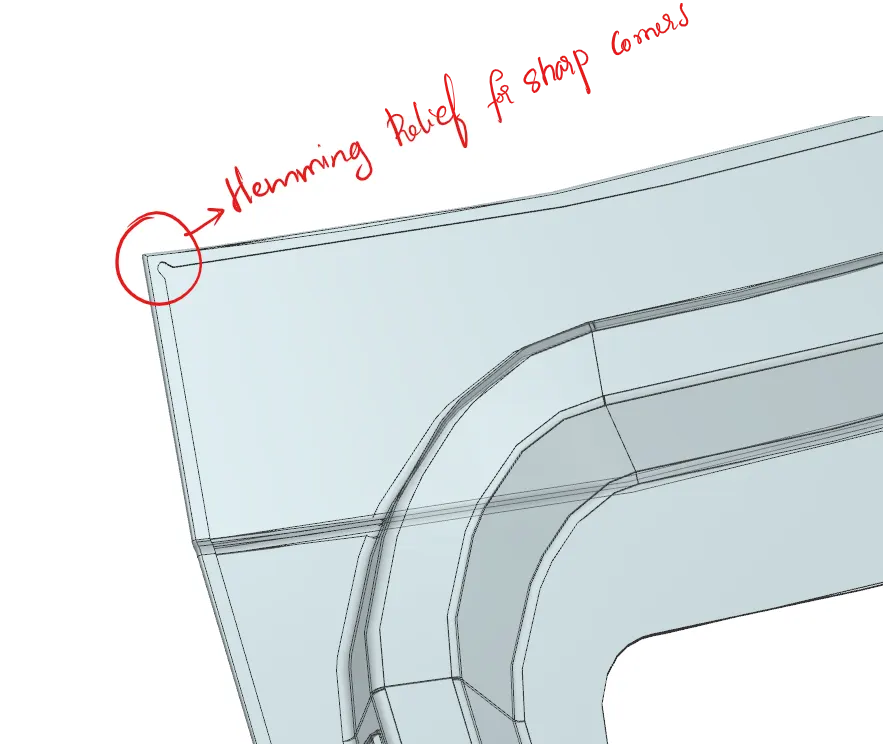
Hemming relief is given to sharp corners to reduce spring back effect and residual stresses, it's deeply explored while in desigining outer panels.
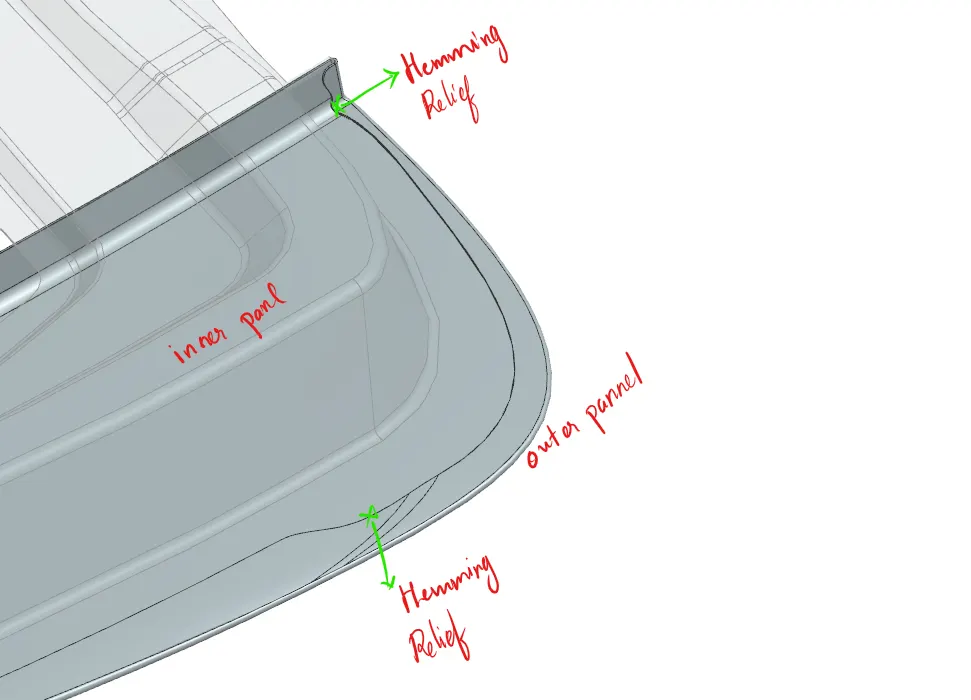
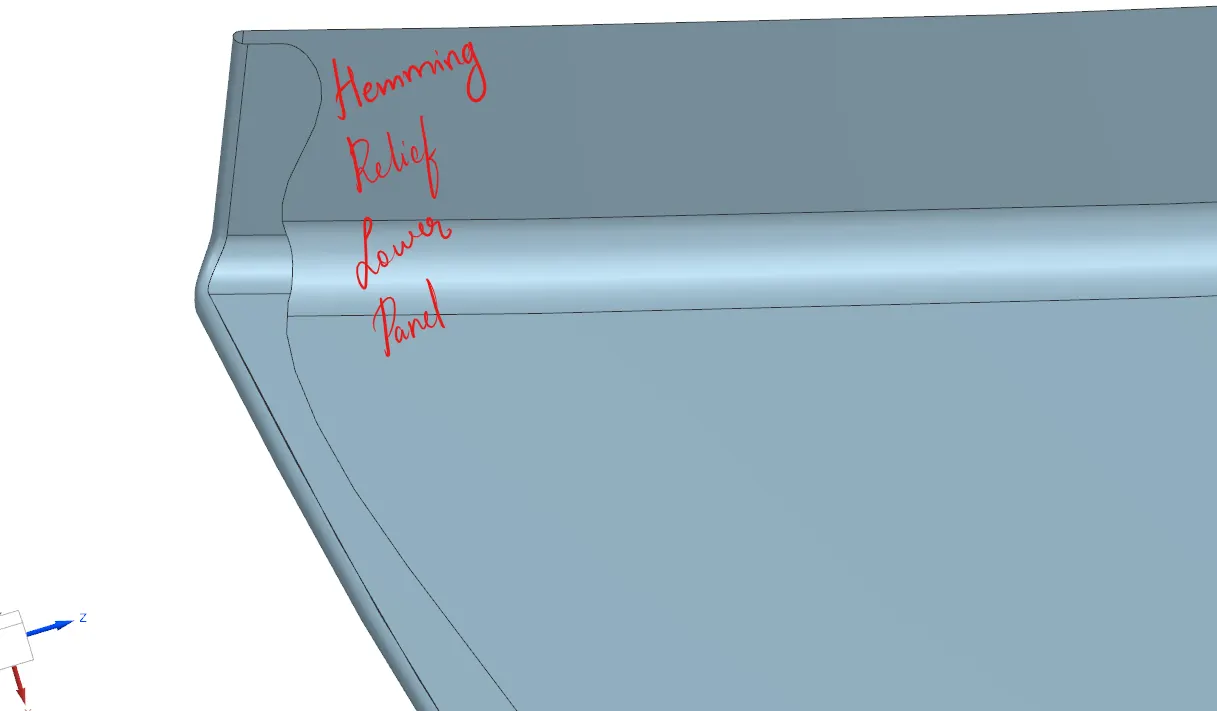
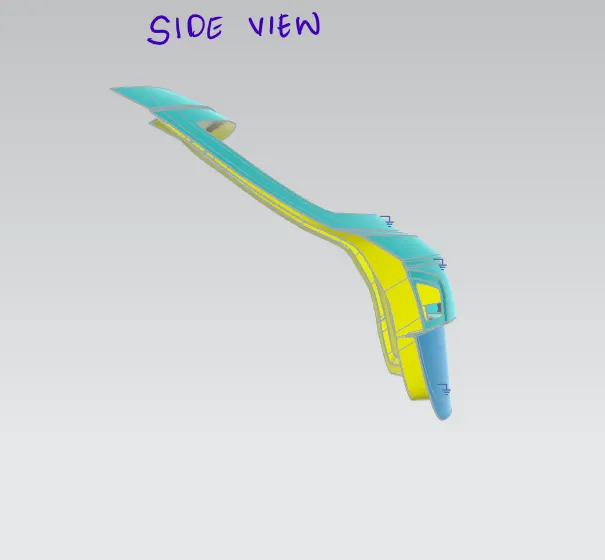
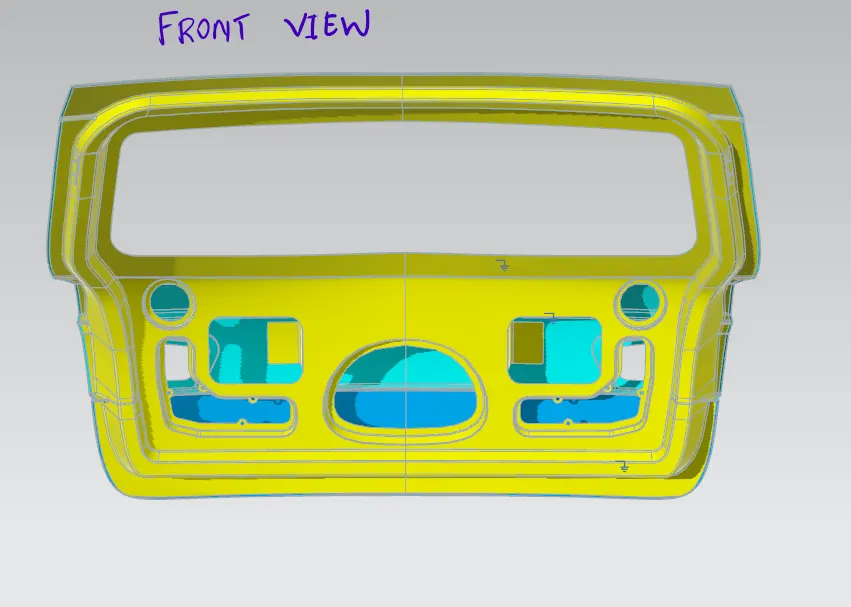
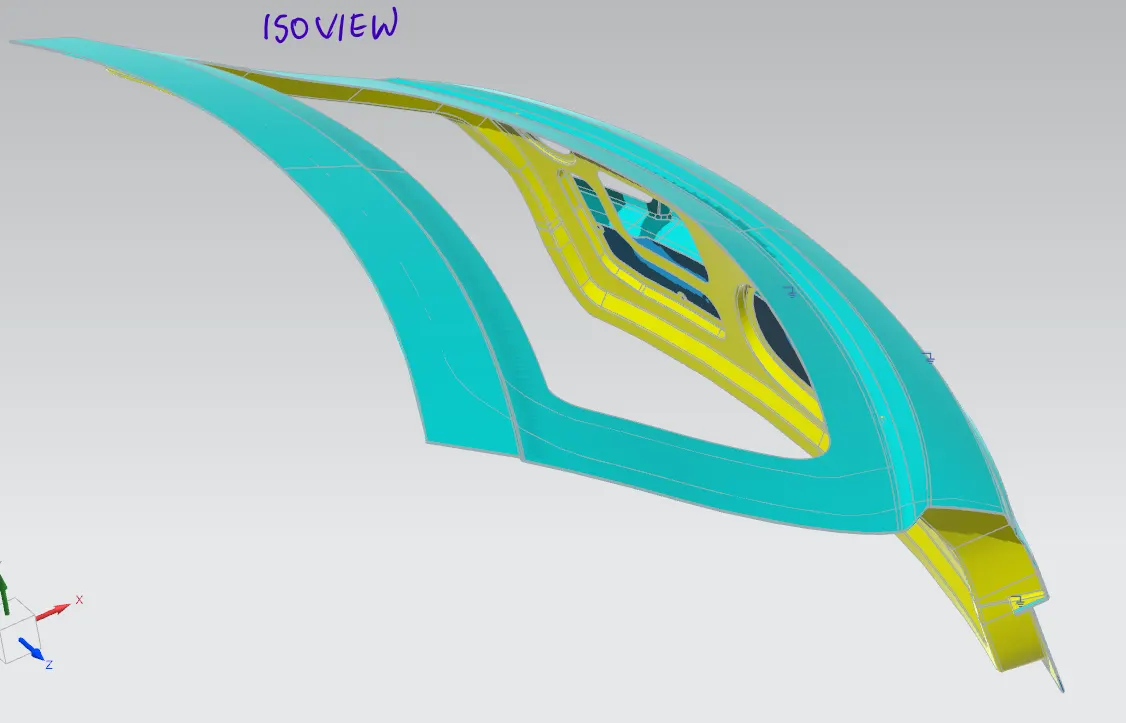
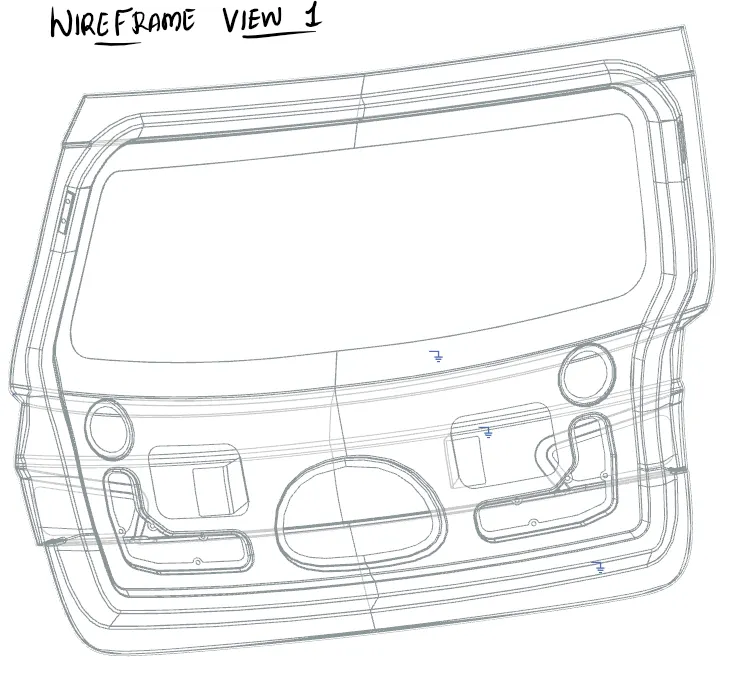
The final Inner panel look like the below the image;
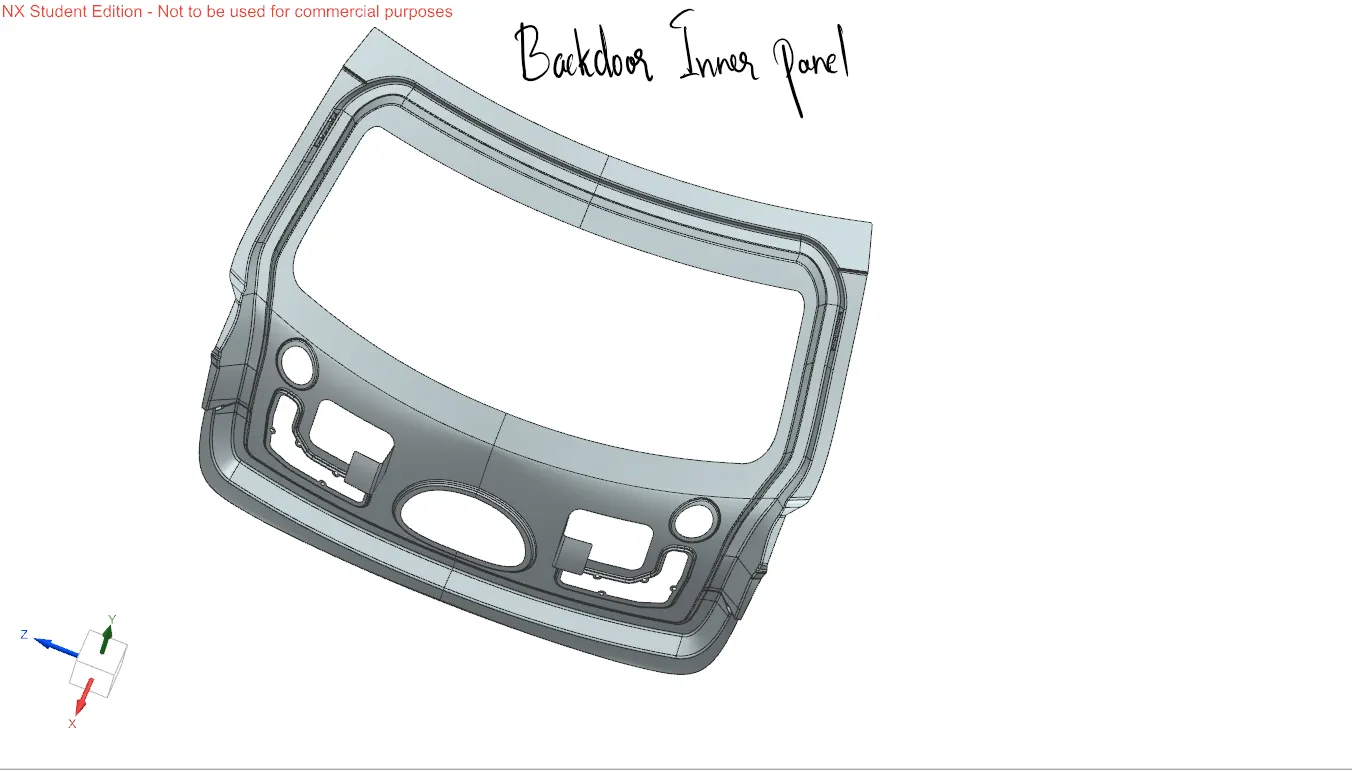
Draft Analysis
The created model is analyzed for draft angle using Draft Analysis Tool in NX. The results are shown below.
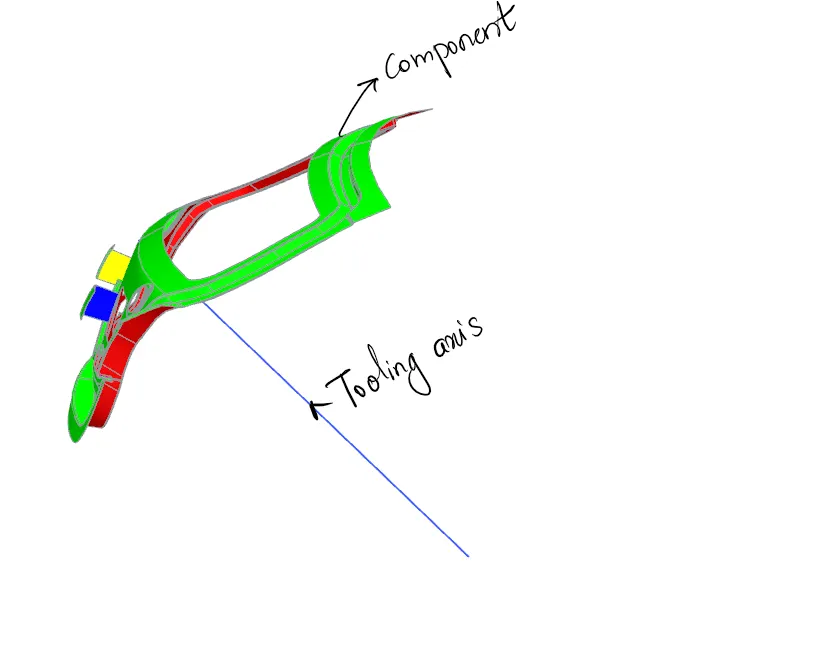
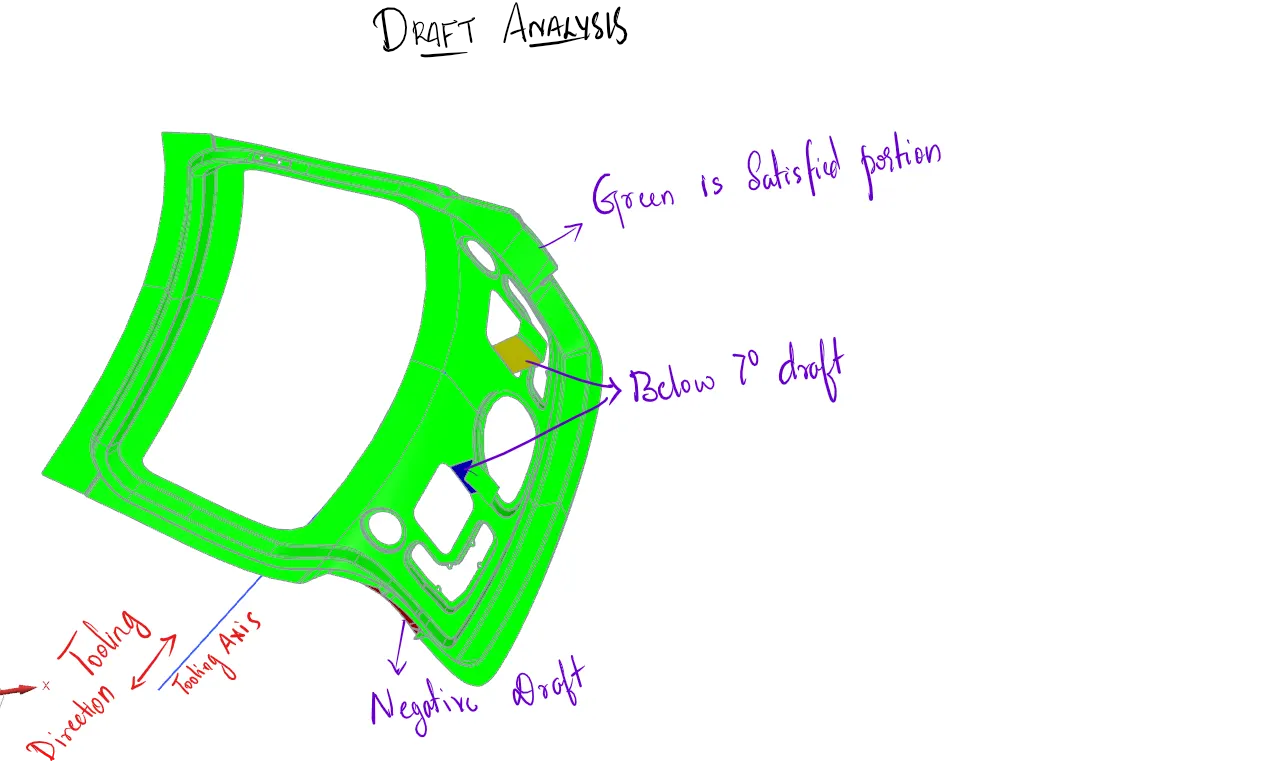
Here, the components are mostly draftable except the groove and mastic support which needs additional side core or seperate manufacturing and assembly.
Parts created in NX for the Back door design;