DC Machine Characteristics
Aim:
1. Implement DC machine torque speed characteristics equations in MATLAB script file.
2. Distinguish between power cables and signal cables.
3. What voltage levels are considered as high & low for a battery pack of electric vehicles?
Answer:
1. DC machine torque speed characteristics equations.
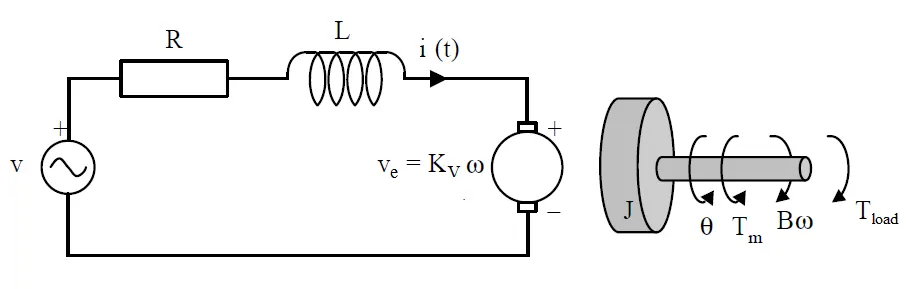
- From Ohm's law, we know that:
`V=I*R` ------(1)
Where,
`V=`Voltage
`I= Current (Ampher)`
`R= Resistance (Ohms)`
- Back `EMF(Eb orVe):`
`Eb=K*omega` ------(2)
Where,
K= Motor constant
`omega`= Angular Speed `(rmp)`or Radians/sec`
- From Torque Equation:
`T=K*I implies I=T/K` -----(3)
- Voltage across the DC Motor `(V):`
`V=IR+Eb` (Volts) ------(4)
Substitue (2) & (3) in (4)
`implies` `V=T/K*R+K*omega`
- Angular Speed `omega:`
`therefore omega= V/K-T /K^2*R`
- Torque `(T):`
`T=V/R*K-K^2/R*omega`
MATLAB CODE:
%Torque Speed characteristrics equation of DC motor
clear all
close all
clc
%Provide Inputs
V=input('Enter the voltage (Volts)= ');
R=input('Enter the Resistance (Ohms)=  ');
K=input('Enter the Motor_constant= ');

%Torque  Equation T=((V*k)/R)
%Speed Equation W=(V/K)-(R/K^2)*T

%Maximum Torque (T_max)
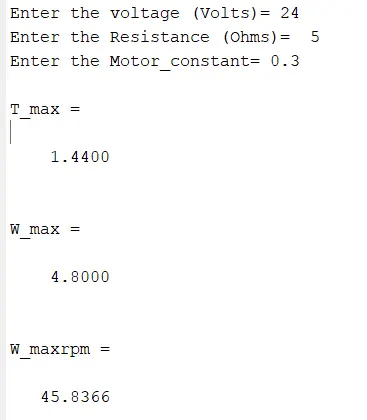
T_max = ((V*K)/R) % at W=0

%Maxium Angular Speed (W_max)
W_max= (V/R) % at T=0

W_maxrpm= ((W_max*60)/(2*pi))

%Operating Torque (T) (N-m)
T=linspace(0,T_max,500);

%Angular Speed (radians/sec)
W=(V/R)-(R/K^2)*T;

%Angular Speed (rpm)
W_rpm= (W*60)/(2*pi);

%Plotting
plot(T,W_rpm,'linewidth',3)
title('Torque (N-m) vs Angular speed (rpm)');
xlabel('Torque (N-m)');
ylabel('Angular Speed (rpm)');
grid on
Procedure:
- Initially defined as ask the user to inputs.
- Next, Calculate the maximum torque and maximum Angular speed at W=0 and T=0 respectively
- And defined the operating Torque using linspace command.
- And defined the angular speed.
- Next, Plot the graph between Torque (N-m) vs Angular speed (rpm).
Output:
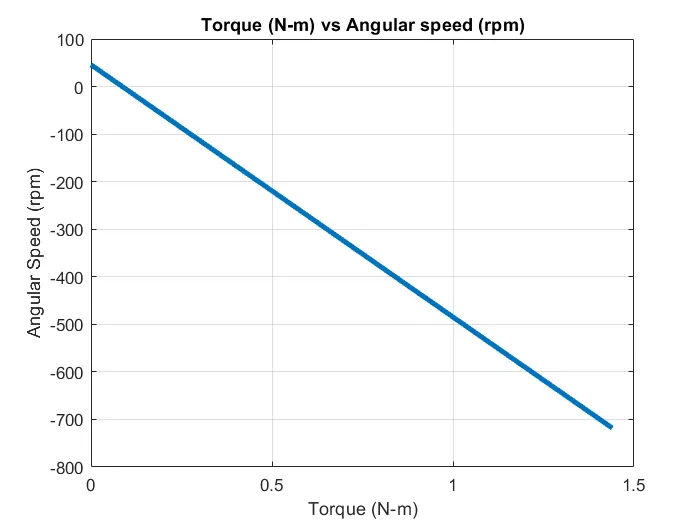
- Plot T vs `omega`
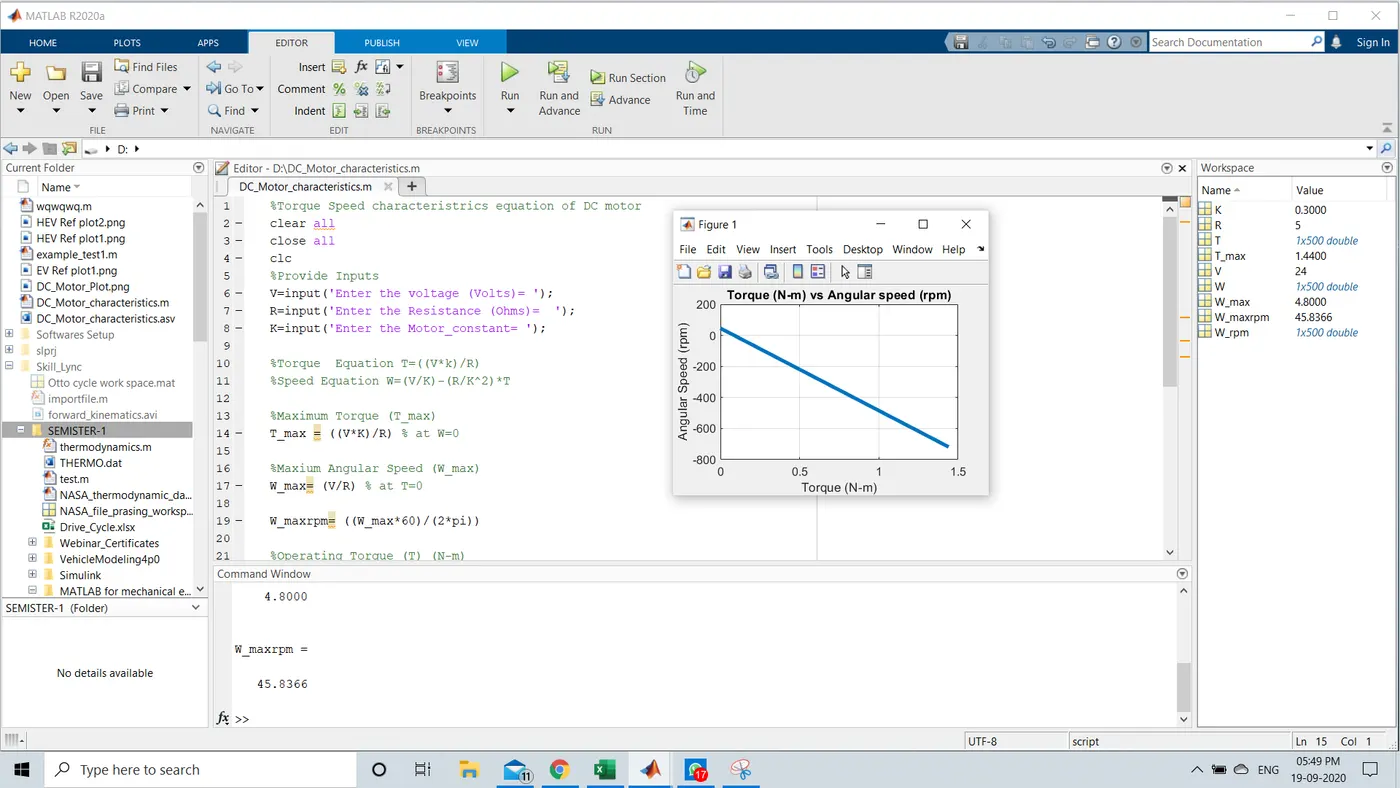
Work Sheet_Screen shoot :
2. Distinguish between power cables and signal cables.
Power cables:
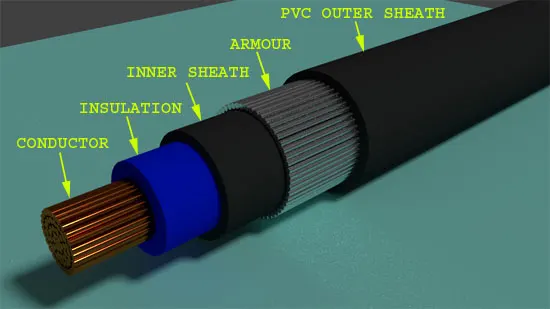
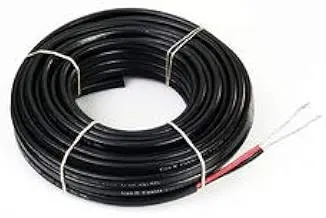
- Power cables are used to transmit and distribute high power energy in main lines of the power system.
- Power cable mainly refered to cable are above 0.6/1kV.The voltage can be up to 500kV.
- The power cable always have thicker sheath ,while control cable have thinner sheath .
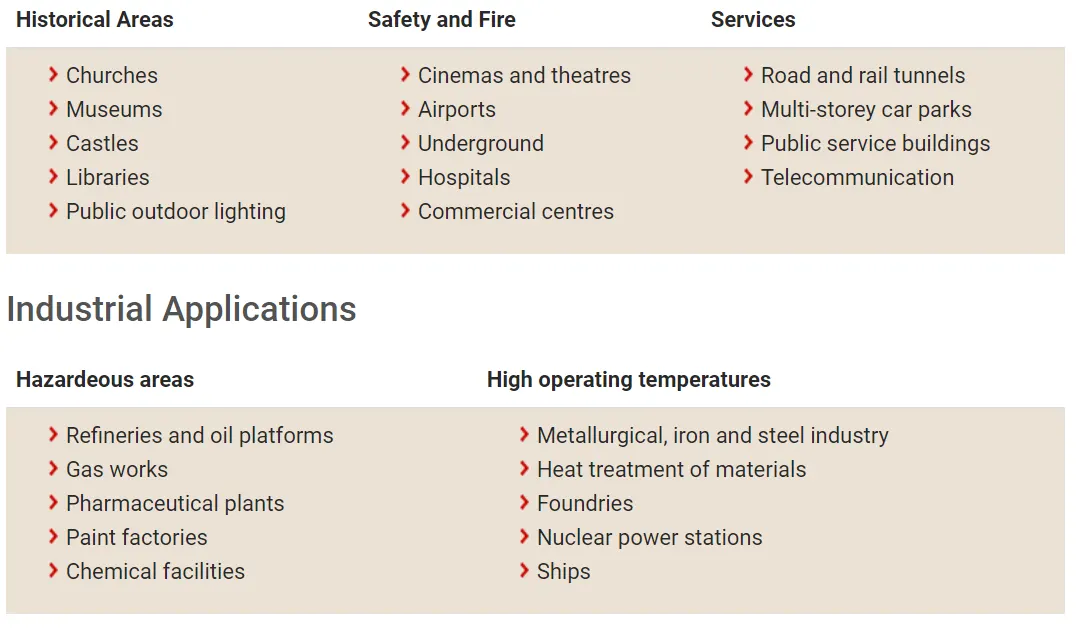
- Applications of power cables:
Signal Cables:
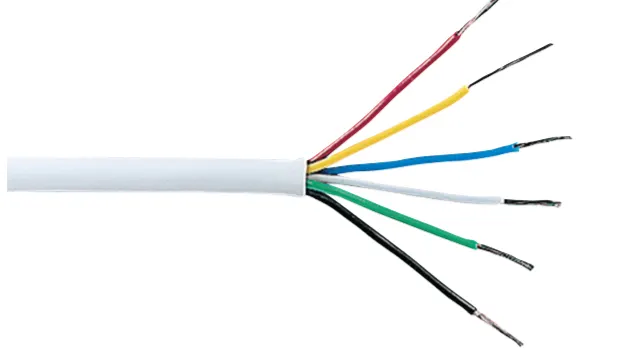
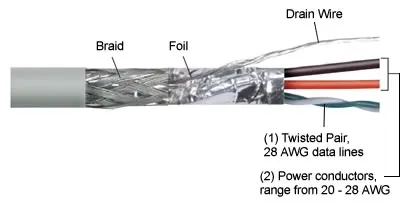
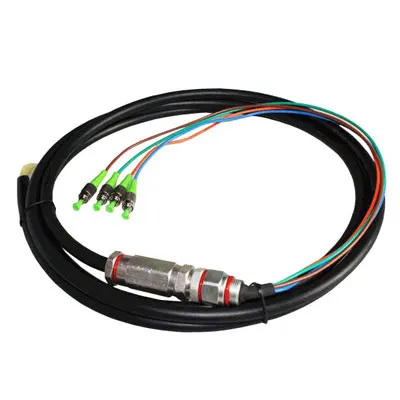
- The signal cable is mainly used to transmit data signals, and the signal cable is shielded to prevent external signal interference.
- The signal cable is mainly not used for power supply, and the voltage is not particularly required.
- The wire and cable used for the information transmission system mainly includes local telephone cable, television cable, electronic cable, radio frequency cable, optical fiber cable, data cable, electromagnetic wire, power communication or other composite cable.
- Benifit of Signal cables is low conductor resistance.
3. What voltage levels are considered as high & low for a battery pack of electric vehicles?
An example EV battery system with individual cells in series.
- The voltage level of electric vehicles' battery systems leads to a multitude of safety issues. Voltages above 60 V DC imply potential danger to the life of persons involved in the assembly, operation, maintenance and recycling of electric vehicles. Current battery systems for electric cars typically use voltage levels between 200 and 800 V. The voltage level is usually not determined by the battery system, but the battery system is defined to operate within the voltage range demanded for by the power electronics and electric engine. With the ISCAD (Intelligent Stator Cage Drive) drivetrain becoming a possible option, new approaches to the battery system topology to work with such a low-voltage, high-power system becomes an interesting demand.
- The question is divided into three topics. Firstly, the optimum cell size, secondly, the battery management system and, thirdly, the system level/battery pack design. After a detailed investigation of those subjects, three voltage levels (24 V, 48 V, 300 V) of a possible battery pack will be examined in terms of costs and technical effects.
- An electric vehicle battery is often composed of many hundreds of small, individual cells arranged in a series/parallel configuration to achieve the desired voltage and capacity in the final pack. A common pack is composed of blocks of 18-30 parallel cells in series to achieve a desired voltage. For example, a 400V nominal pack will often have around 96 series blocks (as in the Tesla Model 3).
Common nominal pack voltages in current vehicles range from,
- 100V-200V for hybrid/plug-in hybrid vehicles.
- 400V to 800V and higher for electric-only vehicles.
-
The reason for this is higher voltages allow more power to be transferred with less loss over the same diameter (and mass) of copper cable.
Common battery capacity ranges:
- Hybrid vehicles: 0.5 to 2 kWh
- Plug-in hybrid vehicles: 4 to 20 kWh
- Electric vehicles: 30 to 100 kWh or more.
Reference: